Thinking about renting out your Monterey Bay home in 2025? It’s a smart move for many owners. With the right plan, your property can become a steady source of income.
However, navigating our unique local market takes more than a "For Rent" sign. This guide is your local owner’s manual. I’ll walk you through everything from tenant laws to finding great renters and protecting your investment.
Is Renting Your Monterey Bay Home the Right Move?
If you own a home in Monterey, Salinas, or Carmel, you’re sitting on an in-demand asset. High mortgage rates are causing more homeowners to lease their properties instead of selling. This choice can turn your house into a cash-flowing investment that grows in value.
The numbers don't lie. In Monterey County, 3-bedroom rentals now average over $5,000 per month, making renting more lucrative than selling for many homeowners. This trend shows why becoming a landlord is a popular choice for long-term financial gain. You can discover more about how Monterey Bay homeowners can profit from renting in 2025 in our latest analysis.
Why Monterey Bay Is a Unique Rental Market
Renting a home here is different than in other parts of California. Our region’s diverse economy—from Salinas agriculture to Monterey tourism—creates a stable pool of potential tenants. Many guides overlook the real challenges of managing a rental from out of town or navigating local rules.
This guide gives you a clear roadmap. It’s for first-time landlords and seasoned investors alike.
Being a successful landlord requires a solid strategy covering a few key areas:
- Staying Legal: Understanding California and Monterey County landlord-tenant laws is essential.
- Prepping Your Property: A home in great shape attracts better tenants and commands higher rent.
- Pricing it Right: Set your rent based on local data to keep your property occupied.
- Screening Smart: A thorough screening process is your best defense for protecting your home.
For many out-of-area owners, managing the property from a distance is the real challenge. A trustworthy local partner can mean the difference between stress and a profitable, hands-off investment.
This guide has the local insights you need. Follow these steps to confidently turn your property into a successful rental.
Navigating Legal and Financial Essentials First
Before listing your home, you must get your legal and financial house in order. This is the foundation of a stress-free rental business. Skipping these steps can lead to expensive mistakes, especially in a regulated market like ours.
Think of it this way: you wouldn't build a house without a solid foundation. The same applies here. Getting your legal and financial details right protects you and your property from day one.
The process boils down to three simple phases.
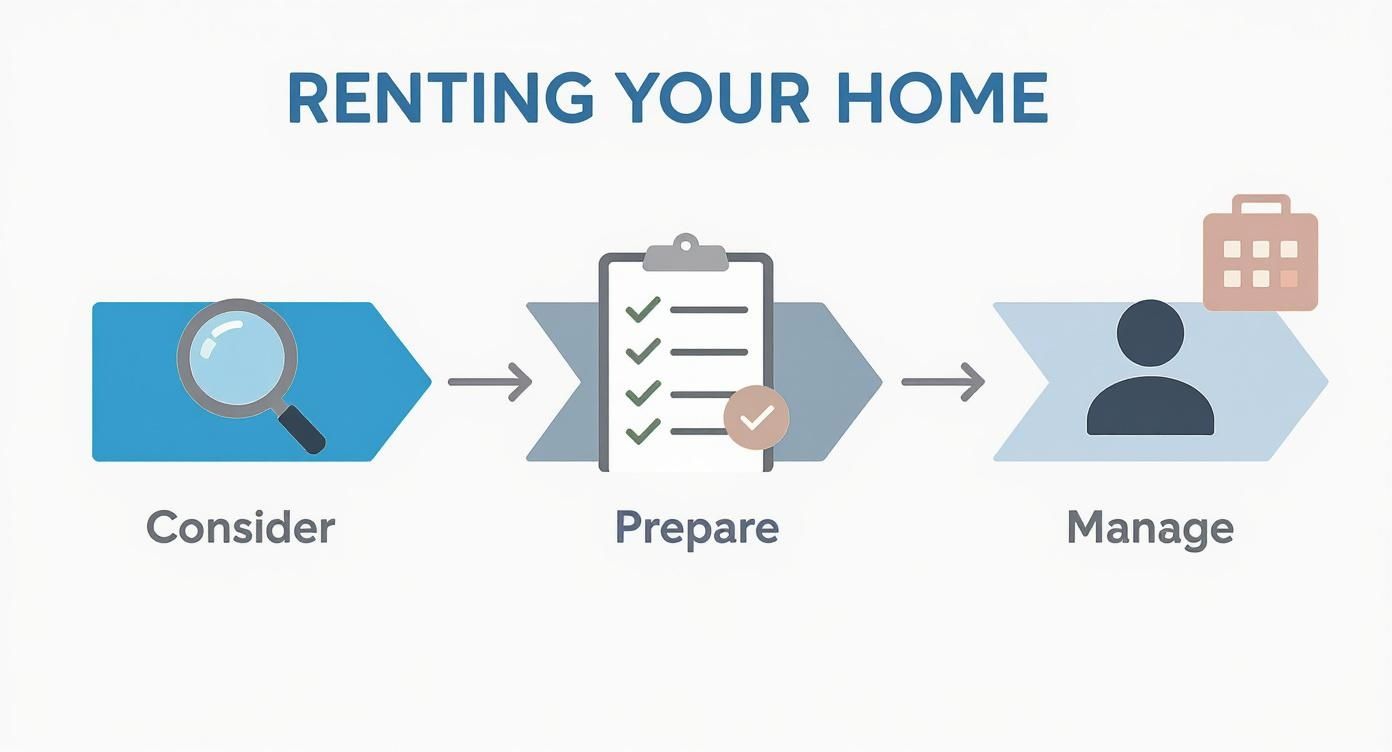
This roadmap helps you focus on the right tasks at the right time.
Getting a Handle on California Landlord-Tenant Laws
California has some of the most complex landlord-tenant laws in the country. A simple mistake can become a legal nightmare. It's vital to know the rules.
The main law to know is the California Tenant Protection Act (TPA). This law sets statewide limits on rent increases and establishes "just cause" eviction rules. Violating these rules can lead to significant penalties.
Local Insight: Mishandling the security deposit is a common and costly mistake. California law is specific: you have 21 days after a tenant moves out to return their deposit or provide an itemized list of deductions. Not a day more.
You must also provide certain disclosures before a tenant signs a lease. These are non-negotiable.
- Lead-Based Paint Disclosure: This is a must for any home built before 1978.
- Pest Control Disclosures: You must tell tenants if you use a regular pest control service.
- Demolition Permit Disclosure: If you plan to demolish the unit, tenants need written notice.
This is just the beginning. Reviewing a detailed breakdown of California landlord-tenant laws is a smart move to ensure you are fully compliant.
Setting Up Your Financial Systems
Treat your rental property like a business for long-term success. First, separate its finances.
Open a dedicated bank account for your rental property. All rental income goes in, and all property expenses come out. This simple step makes bookkeeping and tax prep much easier.
Next is insurance. Your standard homeowner's policy won't cover rental activities. You need a landlord insurance policy, which covers:
- Property Damage: Protection for the building from events like fire or storms.
- Liability Protection: Covers legal and medical costs if someone is injured on the property.
- Loss of Rental Income: Can replace lost rent if the property becomes uninhabitable.
Getting the right insurance is crucial. You can learn more in this essential homeowners insurance guide. Finally, talk to a tax professional who knows real estate to ensure you take all eligible deductions.
Preparing Your Home to Attract Quality Tenants
A well-prepared property attracts high-quality tenants. It shows you're a professional and responsible landlord. This phase is a strategic investment that justifies premium rent and minimizes future maintenance issues.
This isn't about a full remodel. It’s about creating a safe, durable, and inviting space. Renters who see a well-maintained home are more likely to treat it with respect.
Prioritize Safety and Functionality Over Style
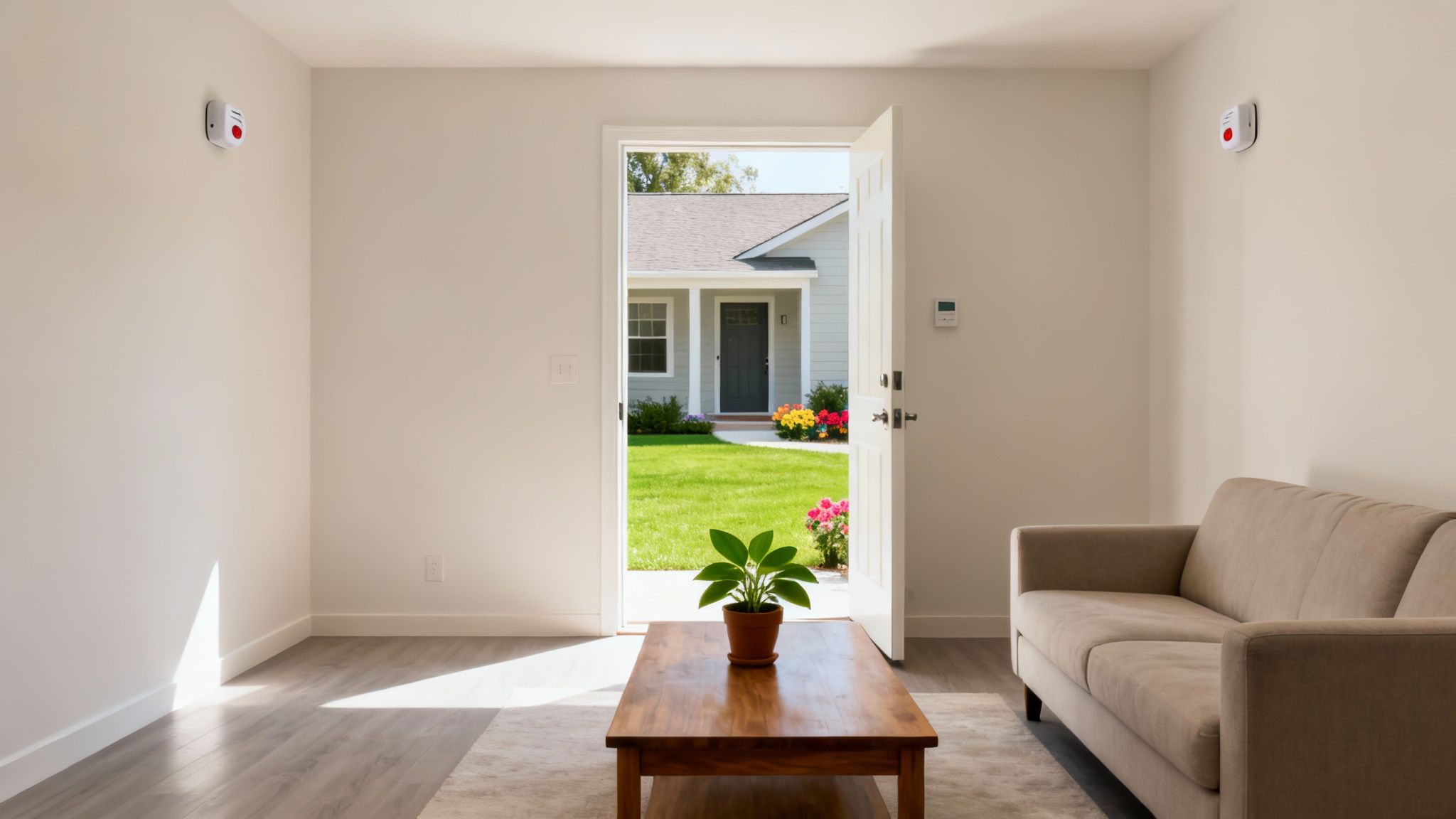
Before any cosmetic upgrades, ensure the home is safe and functional. California has strict habitability standards. A top-down inspection is the best place to start.
Go through the property room by room and test everything. Check that windows lock, faucets don't drip, and outlets work. These details are non-negotiable for a tenant's safety.
Local Owner's Tip: In coastal towns like Monterey and Pacific Grove, moisture is an issue. I always check for leaks around windows and under sinks. Addressing these now prevents bigger problems later.
Your safety checklist should include:
- Smoke Detectors: Install and test them in every bedroom and on each level.
- Carbon Monoxide Detectors: California law requires CO detectors in most homes.
- Secure Locks: All exterior doors must have working deadbolt locks.
- Basic Utilities: Verify that plumbing, heating, and electrical systems are safe and working.
Focus on Durability and a Deep Clean
Once safety is handled, prepare the interior. Choose materials that can withstand wear and tear.
A professional deep clean is a great investment. This means professionally cleaned carpets, scrubbed grout, and spotless kitchens and bathrooms. This sets a high standard from day one.
Consider these durable choices:
- Paint: A fresh coat of neutral paint makes the home feel new. Use a semi-gloss finish in kitchens and bathrooms for easy cleaning.
- Flooring: Hard surfaces like luxury vinyl plank (LVP) are more durable than carpet.
- Appliances: Ensure all appliances are clean and working well. They should be reliable and match the home's quality.
For a more detailed approach, our guide on smart maintenance for rental properties offers a helpful checklist.
Boost Curb Appeal for a Strong First Impression
A potential tenant's first impression happens outside. A well-maintained exterior suggests the inside is also cared for.
Start by mowing the lawn, pulling weeds, and trimming shrubs. A pressure washer can make driveways and walkways look cleaner. Also, ensure all exterior lighting works for security. Look into top pest control services for rental properties to handle any issues before a tenant moves in.
Setting the Right Rent for the Monterey Bay Market
Pricing your rental is a high-stakes decision. Price it too high, and you face a long vacancy. Price it too low, and you leave money on the table. The sweet spot requires data and strategy.
This starts with a professional Comparative Market Analysis (CMA). This is a detailed evaluation of similar homes recently rented in your specific neighborhood, whether it's Salinas or Carmel-by-the-Sea.
Running a Hyper-Local Rental Analysis
A proper CMA weighs all the details that affect price on the Central Coast. You must analyze several key factors.
- Location: A home near the beach in Monterey commands a different price than one further inland. Proximity to top schools in Salinas or downtown Pacific Grove also impacts rent.
- Size and Layout: Square footage is just the start. The number of bedrooms and bathrooms is critical, as is an open floor plan or home office.
- Condition and Amenities: Updated kitchens and bathrooms are huge draws. A fenced yard, two-car garage, or central air can justify a higher rent.
Expert Insight: Seasonality plays a big role here. Rental demand surges in spring and summer. A home listed in June often rents faster and for a higher price than the same home in December.
For a deeper dive, check out our guide on how to price your rental property.
Understanding the Local Market Data
Hard numbers tell the real story. Monterey, CA, remains an expensive rental market. This table provides a quick reference for benchmarking your property.
| Monterey Bay Average Monthly Rent by Property Size (2025 Estimates) |
| :— | :— |
| Property Type / Size | Estimated Average Monthly Rent |
| 1-Bedroom Unit | $2,122 |
| 2-Bedroom Unit | $2,811 |
| 3-Bedroom Unit | $3,190 |
| 4+ Bedroom Home | $3,800+ |
These numbers show that setting the right price is crucial. In 2025, the average rent for a one-bedroom apartment is around $2,122 per month. That is about 30% higher than the national average. For more data, you can learn more about Monterey market trends on Zillow.com.
Crafting a Modern Marketing Plan
Once your price is set, build a marketing plan that attracts great tenants. A strong online presence is non-negotiable today.
Your listing needs to tell a story. This comes down to two things:
- High-Quality Photography: Smartphone photos won't cut it. Professional images that highlight your home’s best features make renters stop scrolling.
- Compelling Listing Descriptions: Don't just list features. Sell the lifestyle. Does your Salinas home have a backyard perfect for barbecues? Paint a picture.
Combining a data-backed price with a polished marketing plan positions your home to attract the best tenants, fast.
Screening Applicants and Crafting Your Lease
Choosing who lives in your home is your most important decision as a landlord. This isn't about a gut feeling. It’s about a methodical, fair, and legal screening process that protects your investment.
A great tenant protects your property's value. A rock-solid lease agreement is your next line of defense. It sets clear expectations for everyone.
A Consistent and Compliant Screening Process
The key to screening is consistency. Apply the same criteria to every applicant. This is required to comply with the Fair Housing Act, which prohibits discrimination.
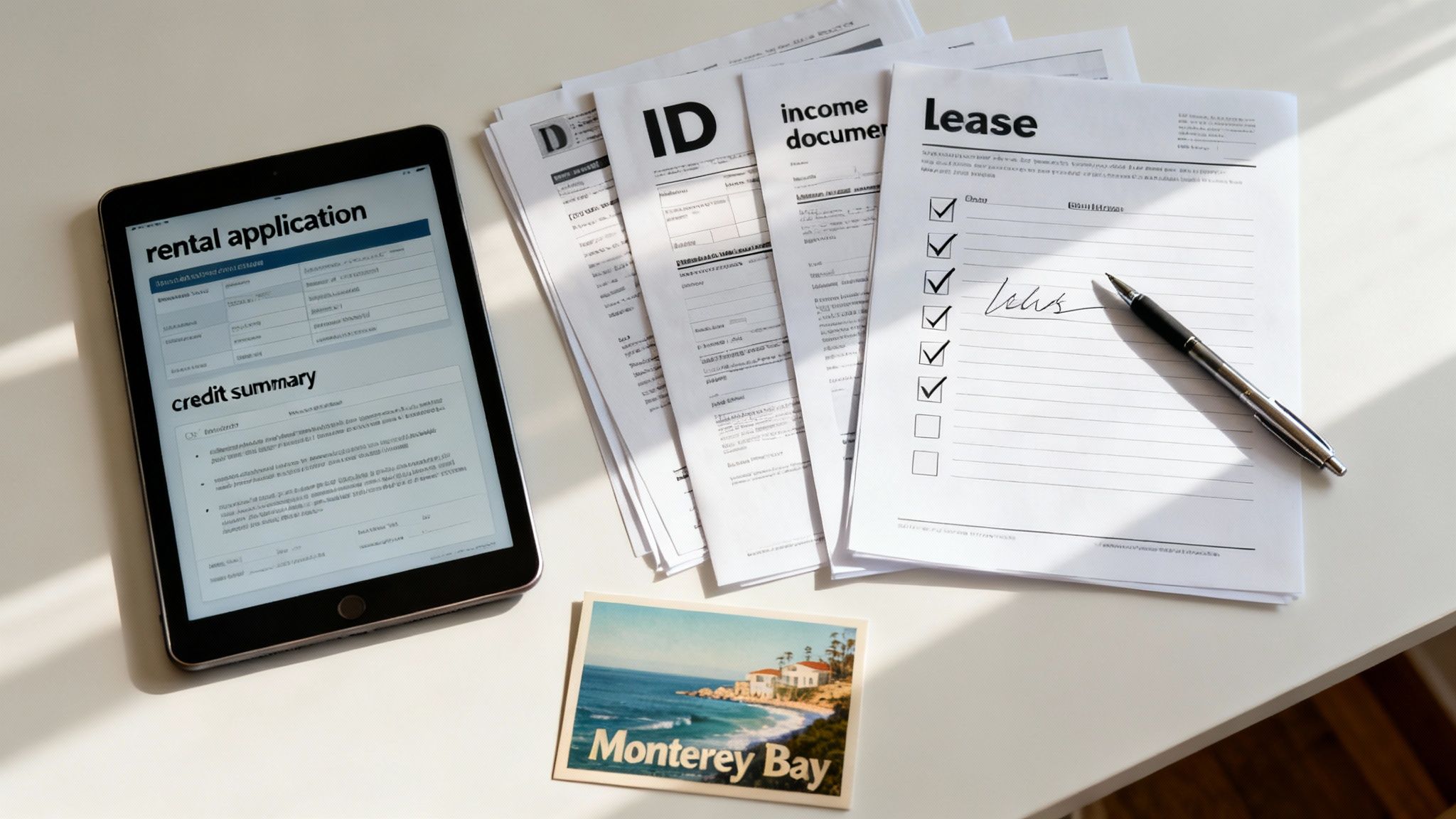
Start with a detailed rental application. It should gather personal details, employment and income verification, rental history, and references.
Expert Tip: Never decide based on one piece of information. A comprehensive screening process looks at the whole picture—credit, income, and background—to help you make a data-driven choice.
Your screening checklist should always include:
- Credit Report: Look for a history of late payments and overall debt-to-income ratio.
- Background Check: A nationwide criminal background check is a standard part of due diligence.
- Income Verification: See recent pay stubs or tax returns. The industry standard is an income of at least three times the monthly rent.
- Rental History Verification: Contact their last two landlords. Ask about payment history and if they would rent to them again.
This process is a lot of work. Many owners use professional tenant placement services to handle this critical step.
Drafting an Ironclad California Lease Agreement
Once you approve an applicant, make it official with a lease. A generic template won't work in California. Your lease must be specific to state law and your property.
A strong lease is clear and comprehensive. It is your primary tool for managing the tenant relationship.
Essential Clauses for Your Monterey Bay Rental Lease
Your lease must clearly define every aspect of the tenancy. Some clauses are non-negotiable for protecting your investment.
Key Lease Components
- Rent and Fees: State the exact rent, due date, and how they can pay. Also, specify the grace period and late fees.
- Security Deposit: Detail the security deposit amount and the conditions for deductions, referencing California Civil Code 1950.5.
- Maintenance and Repairs: Outline who is responsible for what. Tenants handle basic upkeep, while you handle major repairs.
- Property Use and Occupancy: List every adult living in the unit by name. Include clauses on guests, noise, and other rules.
- Pet Policy: Be specific. If you allow pets, define the type, size, and any restrictions. State the pet deposit or rent. If you don't allow pets, state that plainly.
By screening thoroughly and crafting a detailed lease, you set the stage for a successful and low-stress rental experience.
Thinking About a Property Manager? Here’s When It Makes Sense
Managing a rental yourself, especially from out of the area, can feel like a second job. Late-night calls about broken pipes and changing tenant laws can be overwhelming.
This is where a professional property management company helps. Hiring an expert is a strategic move to protect your home's value and profitability. They are your on-the-ground representative, handling everything from rent collection to emergency repairs.
So, What Does a Property Manager Actually Do?
A full-service property management company takes the daily headaches off your plate. They keep your property running smoothly and profitably.
Here’s a quick look at what they typically handle:
- Rent Collection & Financials: They manage billing and collect rent online. You get a detailed monthly statement.
- Maintenance & Repairs: They have a trusted network of local vendors for routine and emergency repairs.
- Tenant Communication: They become the main point of contact for tenants, handling requests professionally.
- Staying Legal: A local expert stays current on state and Monterey County regulations.
This is why over 70% of investors who use a professional manager report higher profitability (Source: IREM). The right team makes your property perform better.
Why Hyper-Local Expertise Is a Game-Changer
In a market like Monterey Bay, local knowledge is your biggest advantage. An experienced local manager knows the difference between renting a home in Salinas and a condo in Monterey. They know which vendors are reliable and fair.
At Torrente Property Management, we treat every home like it’s our own. With over 25 years of real estate experience in this community, we provide stewardship that gives out-of-area owners genuine peace of mind.
Our bilingual team can communicate clearly with a wide range of tenants and vendors. This smooths out potential issues before they start. When you trust your home to a local expert, you gain a partner committed to your success.
Common Questions for New Monterey Landlords
Renting a property in Monterey County brings up many questions. Here are the most common issues new landlords face.
How Do I Figure Out the Right Rent for My Home?
Your rent depends on your home's location, size, and condition. A two-bedroom in Carmel will rent for a different price than a family home in Salinas. A professional comparative market analysis is the best way to set a competitive price that maximizes your income.
What Is the Biggest Legal Mistake New Landlords Make?
Mishandling the security deposit is the most common and costly error. California law is clear: you have a strict 21-day deadline from move-out to return the deposit with an itemized list of any deductions. Getting this wrong can land you in small claims court.
Do I Need a Special License to Rent My Single-Family Home?
For long-term rentals of a single-family home in Monterey County, you generally don't need a special business license. However, you must comply with all state and local landlord-tenant laws. Always check with your specific city, as local rules can add another layer.
I Live Out of the Area. How Can I Possibly Manage Maintenance?
Coordinating repairs from a distance is a major headache. The most effective solution is to hire a local property management company. A good manager provides access to a network of trusted vendors who can handle everything from emergencies to routine upkeep.
If you're considering renting out your home in Monterey, Salinas, or nearby communities, Torrente Property Management offers trusted local expertise. Contact Torrente Property Management today at (831) 582-8916 for a personalized rental readiness assessment. Let our team help you transition from homeowner to successful landlord—stress-free.