
Deployed Military Home Rental Management Monterey | Expert Service
Getting orders for a deployment out of Monterey brings up a big question: what should you do with your home? For many service members, the best answer is professional deployed military home rental management in Monterey. It's a specialized service designed to turn your property into a secure, income-generating asset while you're away, giving you total peace of mind to focus on your mission. With over 20,000 active-duty and reserve personnel in Monterey County (Source: Monterey County), the demand for quality rental housing is constant.
Why Renting Your Home During Deployment Just Makes Sense

When you get those deployment orders, your house shouldn't become another source of stress. Leaving a property vacant is a risky move, but renting it out is a powerful alternative. It flips a major monthly expense into a consistent source of passive income, easily covering your mortgage, property taxes, and insurance.
Here on the Monterey Peninsula, the rental market is incredibly robust. It’s largely driven by the constant flow of military personnel and students at the Defense Language Institute (DLI) and the Naval Postgraduate School (NPS). This creates a steady, high demand for quality housing—a perfect opportunity for service members to make their real estate investment work for them.
Key Insight: A vacant home is a liability. A professionally managed rental property is a performing asset that builds equity and financial security while you serve.
The Financial and Practical Benefits
The upside of renting out your home goes way beyond just covering the mortgage. When you bring in a professional property manager, you gain a local partner who handles every single detail. This completely eliminates the logistical nightmare of trying to manage a property from thousands of miles away.
Just think about these benefits:
- Financial Security: Consistent rental income provides stability and can even put extra money in your pocket.
- Asset Protection: A manager ensures your home is properly maintained, preventing small issues from turning into costly disasters while you're gone.
- Stress Reduction: Forget about finding tenants, chasing down rent, or getting that late-night call about a broken water heater. We handle it all.
- Local Market Expertise: A great manager knows the local rental rates inside and out, including how they align with BAH, to price your property for maximum return.
This hands-off approach is especially critical for military families. To see how we support service members, check out our guide on military family home management in Monterey County. Partnering with an expert means your focus stays where it needs to be—on your duties, not on being a landlord.
Maximizing Your Rental Income with BAH Rates

Preparing to deploy shouldn't feel like a financial gamble. For military homeowners in Monterey, the Basic Allowance for Housing (BAH) provides a built-in advantage that takes the guesswork out of pricing your rental.
Think of BAH as a direct signal of what incoming military personnel can afford. By aligning your rental price with these rates, you tap into a consistent pool of highly qualified tenants. It’s a smart, data-driven strategy that transforms your property into a stable, income-generating asset while you're away.
Understanding Monterey's High-Value BAH
Monterey’s high cost of living means it has some of the most generous BAH rates in the country. The Department of Defense recalculates these rates annually, giving you a reliable benchmark for setting your rent.
The numbers for 2025 highlight the income potential. For enlisted members with dependents, allowances range from $3,114 for junior ranks (E1-E4) up to $4,749 for senior NCOs (E9). Officers with dependents start at $3,327 (O1) and climb to $5,364 (O7).
These figures represent strong, consistent rental income. This reliable financial backing makes military members exceptionally well-qualified tenants—a key reason why deployed military home rental management in Monterey is such a viable strategy.
Strategic Pricing to Attract Quality Tenants
Setting the right rent is about positioning your home to attract the best tenants quickly. When you price your property around the BAH rate for a specific rank, your home immediately becomes a top contender. For example, a three-bedroom house can be targeted to a mid-career officer or senior NCO by matching their allowance.
Expert Tip: Don't get fixated on the absolute highest price. A home that rents a week faster at $100 less per month ultimately earns more over the year than one that sits empty for a month.
This strategic approach accomplishes two crucial goals:
- It widens your applicant pool, making your property instantly appealing to financially secure individuals arriving for assignments at DLI or NPS.
- It cuts down on vacancy time. A well-priced home in a high-demand area like Monterey, Salinas, or Carmel gets snapped up fast, keeping your cash flow steady.
Pulling this off requires deep local market knowledge. For more ideas on how to optimize your rental, check out our other property management tips. We help owners like you handle these details, ensuring your property performs at its peak.
Your Pre-Deployment Home Preparation Checklist
Getting your home "tenant-ready" before deployment is a critical mission. A methodical approach can prevent future emergencies and protect your significant financial investment. This is the checklist military homeowners need to secure their property for a long-term absence.
The process boils down to a thorough property evaluation, careful tenant screening, and establishing clear communication.
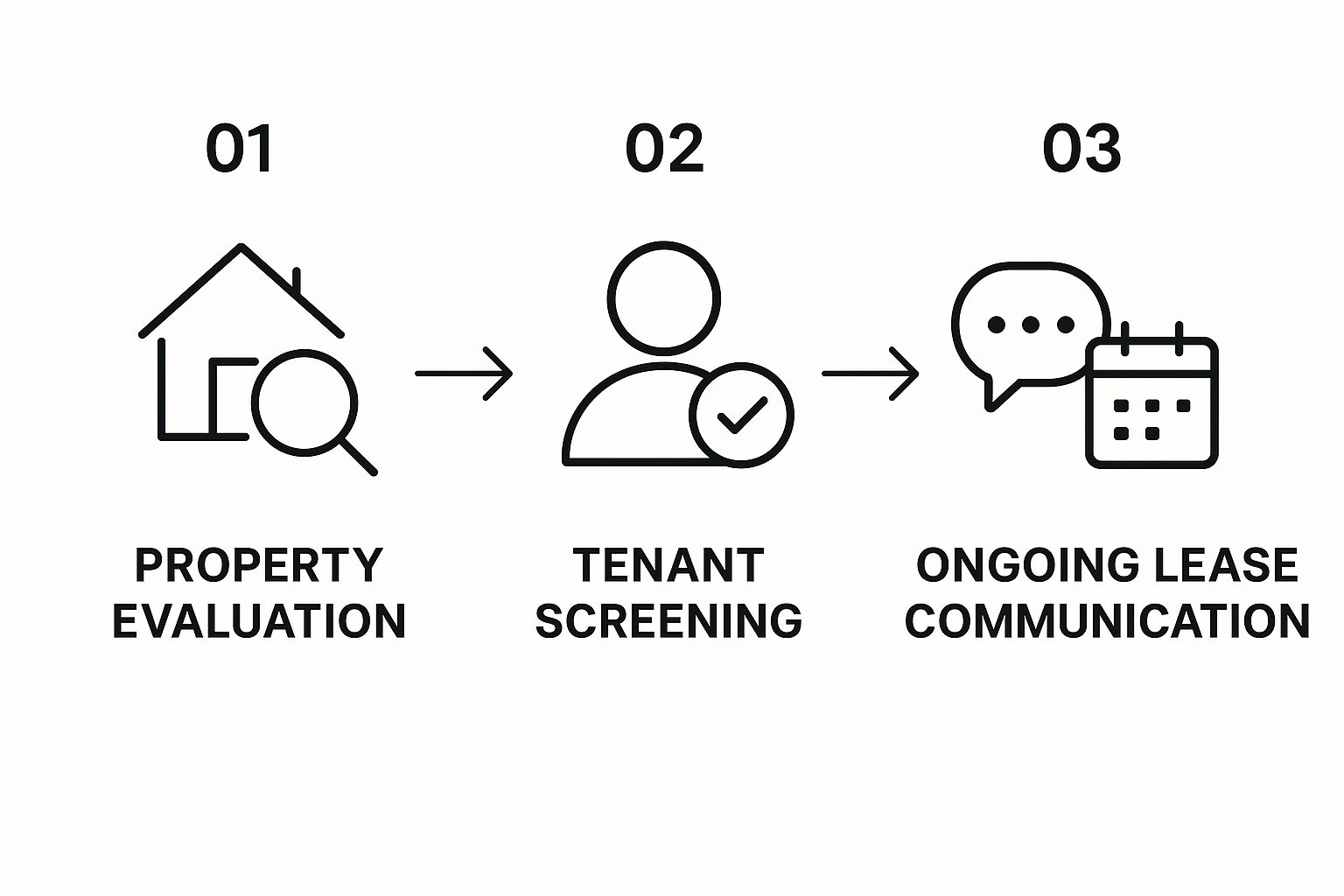
Think of it as a workflow that ensures a seamless transition from homeowner to landlord. Proper preparation is the foundation of successful deployed military home rental management in Monterey. Before listing your home, a clear plan ensures your property is secure, compliant, and appealing to high-quality tenants.
Pre-Deployment Rental Preparation Checklist
| Task Category | Specific Action Items | Why It's Critical |
|---|---|---|
| Physical Preparation | - Deep clean professionally. - Declutter and remove all personal items. - Complete all deferred maintenance (leaky faucets, HVAC service, etc.). - Handle landscaping and curb appeal. | A spotless, well-maintained home attracts better tenants faster and sets a high standard for property care. Fixing small issues now prevents expensive emergencies later. |
| Legal & Financial | - Switch from homeowner's to landlord insurance. - Organize all property documents (deeds, mortgage info, warranties). - Understand the Servicemembers Civil Relief Act (SCRA) from a landlord's perspective. | Standard insurance won't cover rentals, leaving you exposed. Proper documentation and legal understanding protect you from liability and disputes. |
| Documentation | - Conduct a detailed video walkthrough of the entire property. - Take high-resolution photos of every room, appliance, and any existing damage. - Create an inventory list of any items staying with the property. | This creates an indisputable record of the property's condition before move-in, which is invaluable for security deposit claims. |
Following this checklist systematically takes the guesswork out of the process. It's about being proactive to ensure a smooth, hands-off experience while you're focused on your mission.
Secure Your Property and Paperwork
Before listing your home, the first order of business is getting it physically and legally prepared. This proactive work minimizes risks and sets clear expectations.
- Deep Clean and Declutter: Hire a professional cleaning service. A spotless home rents faster and sets a high standard for how tenants should maintain it. Remove all personal belongings, leaving only what is explicitly included.
- Address Deferred Maintenance: That leaky faucet or overdue HVAC service? Now is the time to fix it. Small problems can escalate into costly emergencies when you're thousands of miles away.
- Obtain Landlord Insurance: This is a non-negotiable step. Your standard homeowner's insurance will not cover a rental property. You must switch to a landlord policy that protects you from tenant-related liability and damage.
Document Everything and Understand Your Rights
Documentation is your absolute best defense against potential disputes. Creating a clear, undeniable record of your property’s condition is non-negotiable before handing over the keys.
A detailed video walkthrough of your property before a tenant moves in is invaluable. It serves as undeniable proof of the home's original condition—it's far more effective than photos alone.
You also have responsibilities under the Servicemembers Civil Relief Act (SCRA). While it protects service member tenants, you, as a landlord, must understand how it applies if you rent to another military member. An experienced property manager is a huge asset in navigating these nuances.
If you face a vacancy between your departure and finding a tenant, learn more about professional vacant home caretaker services in Monterey Bay. These services bridge the gap, providing inspections and upkeep so your investment is never left vulnerable.
How a Property Manager Protects Your Investment

What does “peace of mind” really mean when you’re deployed? It means not getting a call about a plumbing disaster from another time zone. It means not having to chase down rent payments. That’s the incredible value a local property manager brings to the table.
Hiring a professional for deployed military home rental management in Monterey is a strategic move to protect your most valuable asset. The management fee is an investment in safeguarding your property and your sanity.
Key Insight: A property manager acts as your local representative, handling the day-to-day complexities so your focus can remain on your duties, not on landlord responsibilities.
For deployed service members, having a trusted partner on the ground isn't a luxury; it's an absolute necessity.
From Emergency Repairs to Tenant Relations
Imagine you’re stationed overseas and get a call about a burst pipe at 2 a.m. With a property manager, that call never reaches you. We dispatch our vetted, reliable vendors to fix the problem quickly and affordably, day or night.
This proactive approach extends to every part of the tenancy. We become the go-to contact for renters, managing all communications and enforcing the lease. This professional buffer protects your time and helps maintain a positive relationship with your tenants.
The Monterey rental market is unique, heavily influenced by the Defense Language Institute and Naval Postgraduate School. With deployments in California averaging 6-12 months, there's a steady flow of military personnel. This dynamic requires expert management to keep properties well-maintained and consistently occupied. You can review current California BAH information to understand how these factors affect local rental rates.
The Real Value of Management Fees
A management fee is an insurance policy against chaos. These fees, typically a percentage of monthly rent, cover a range of services designed to protect your bottom line.
Here’s a glimpse of what that investment gets you:
- Rigorous Tenant Screening: We don't just find any tenant; we find the right tenant. Our process includes comprehensive background checks covering credit, criminal, and eviction histories.
- Consistent Rent Collection: Our systems make paying rent easy for tenants and ensure you get paid on time. If a payment is late, we handle the difficult conversations and necessary legal steps.
- Detailed Financial Reporting: You'll receive clear, monthly statements that break down all income and expenses, which makes tax time a breeze.
Ultimately, these services preserve your property's value and ensure it remains a profitable investment. By entrusting your home to an expert, you can serve with confidence, knowing everything back in Monterey is handled. Learn more about our approach in our guide to professional property management services.
Frequently Asked Questions (FAQs)
Preparing for a deployment brings up many questions about what to do with your Monterey home. To help, we've answered some of the most common ones we hear from military families.
How much does it cost to rent a house in Monterey?
The Monterey rental market is dynamic, but as of late 2024, median rent for a single-family home hovers around $3,200 per month. This cost is closely tied to the Basic Allowance for Housing (BAH) rates for local service members. The Department of Defense approved a 5.4% BAH increase for 2025 to keep pace with rising housing costs, which you can read about here: BAH rate increases in California.
Where can I find military housing in Monterey Bay?
On-base housing is handled by The Parks at Monterey Bay, which offers privatized options. However, many service members prefer living off-base in communities like Monterey, Seaside, or Marina for more separation from work life while still enjoying convenient commutes to the Defense Language Institute (DLI) or the Naval Postgraduate School (NPS).
Can I break a lease for a deployment?
Yes. The Servicemembers Civil Relief Act (SCRA) is a federal law that allows active-duty members to terminate a lease without penalty. You can legally break your lease if you receive orders for a deployment or PCS move lasting 90 days or more. You must provide your landlord with written notice and a copy of your orders.
What does a property manager do while I'm deployed?
Think of us as your "boots on the ground." We handle every detail so you can focus on your mission, including marketing your home, running comprehensive background checks, collecting rent, and managing all maintenance and 24/7 emergency calls. Our goal is to make deployed military home rental management in Monterey a completely hands-off experience for you.
How much are property management fees?
In the Monterey Bay area, property management fees typically range from 8% to 12% of the collected monthly rent. This fee covers all services—from tenant screening and rent collection to maintenance coordination and financial reporting. It’s a small investment for the peace of mind that comes from knowing your biggest asset is in professional hands.
Your Trusted Partner for Military Home Rentals
Getting deployed is demanding enough without worrying about your home in Monterey. Managing a property from thousands of miles away is a massive undertaking. You need a local partner you can trust, one who understands the market and the unique pressures of military life.
At Torrente Property Management, we are deeply committed to serving the Monterey military community. We understand the challenges you face during deployment and are equipped to handle every detail of your property management needs with integrity and responsiveness.
Your Peace of Mind Is Our Mission
Our goal is simple: a seamless and stress-free experience for you. We find and screen reliable tenants, collect rent, handle emergency maintenance, and provide clear financial reports. This comprehensive oversight means you can focus 100% on your duties with confidence that your asset is protected.
Entrusting your home to a professional for deployed military home rental management in Monterey isn’t just about convenience—it’s about ensuring your investment is secure and your peace of mind is preserved.
Think of us as your dedicated local partners. Your property is a critical part of your financial future, and we treat it with that level of respect. For a no-obligation consultation to discuss your property, contact Torrente Property Management today at (831) 582-8916.


Expert Guide to Rental Property Management for Out-of-Town Owners
Owning a Monterey Bay rental property while living miles away is an incredible opportunity. But effective rental property management for out-of-town owners is what turns that opportunity into a successful, stress-free investment.
The core challenge is simple: you can't be in two places at once. That distance creates a gap where minor issues can quickly escalate into major problems without a professional set of eyes on the ground. For the 43% of property owners who live in a different state than their rental, this is a daily reality (Source: Mynd).
The Challenges of Long-Distance Landlording

Managing a property from another city or state introduces a unique set of hurdles. A late-night emergency call about a burst pipe isn't just an inconvenience; it becomes a logistical nightmare from a different time zone.
Coordinating with repair technicians you've never met for your property in Salinas or Carmel adds a layer of uncertainty. This hands-off reality means you lose direct control over your investment's physical well-being.
Common Pitfalls for Remote Owners
Without a trusted local presence, out-of-town owners often face predictable yet damaging issues. These problems don't just hit your bottom line; they drain your peace of mind.
- Delayed Maintenance: A tenant reports a small leak. From afar, it's hard to gauge the urgency or find a trusted vendor quickly, risking major damage.
- Higher Tenant Turnover: When tenants feel their concerns are not being addressed promptly, they are far more likely to leave, creating costly vacancies.
- Compliance Risks: Local ordinances in Monterey County are always evolving. A remote owner can easily miss a crucial update, leading to frustrating legal issues and penalties.
For a remote investor, professional property management isn't a luxury—it's a strategic partnership. It’s what bridges the physical distance, protects your asset, and ensures your investment performs as intended without demanding your constant attention.
The Growing Need for Professional Oversight
The rental market is only getting more complex, which highlights the value of having an expert in your corner. This is especially true for out-of-town investors who need trusted, local support.
Even when your property is empty between tenants, the need for oversight doesn't vanish. Our vacant home caretaker services in Monterey Bay ensure continuous monitoring to protect your asset from vandalism, squatters, or weather damage. Proactive care is the essence of successful long-distance landlording.
How to Find the Right Local Property Manager
Choosing your on-the-ground partner is the most important decision you'll make when managing your property from a distance. The right firm isn't just a service provider; they become a true steward of your investment.
You need a proactive partner who anticipates problems. A reactive manager calls you after a pipe bursts. A proactive manager who understands the Monterey Bay climate has a preventative maintenance schedule to address potential salt air corrosion before it damages your property.
Asking the Questions That Matter
When vetting potential managers, your questions need to be sharp and focused on their actual processes. Vague answers are a major red flag; look for specifics that prove they have a well-oiled system.
- Tenant Screening Process: Ask them to walk you through their exact steps. What is their minimum credit score? How do they verify rental history? A detailed process protects your asset.
- Vacancy and Marketing: What is their average vacancy rate for properties like yours in areas like Salinas or Pacific Grove? A modern manager uses professional photos and targeted digital marketing.
- Maintenance and Vendor Network: What does their network of local, licensed, and insured vendors look like? How do they handle a 2 a.m. emergency call?
A great manager gives you confident, data-backed answers. A poor one offers vague assurances. This first conversation is a preview of the communication you can expect.
Evaluating Communication and Technology
For an out-of-town owner, transparent communication is non-negotiable. The technology a property manager uses is the main bridge connecting you to your investment.
A modern firm must provide an online owner portal, giving you 24/7 access to financial statements, maintenance requests, and inspection reports. This digital access provides the oversight you need for real peace of mind. For more insights, explore our property management tips that help owners make smarter decisions.
Using Technology for Seamless Remote Oversight
If you're an out-of-town owner, modern technology is the single most important bridge connecting you to your Monterey Bay investment. The right tech stack turns abstract data into a real-time picture of your property’s performance.
Effective rental property management for out-of-town owners hinges on this digital infrastructure. These tools build trust and deliver a level of transparency that simply wasn’t possible a decade ago.
Your Digital Command Center
A high-quality online owner portal is the centerpiece of seamless remote management. This secure, cloud-based platform is your go-to resource for all critical information.
- Financial Transparency: Pull up detailed monthly statements and year-end summaries anytime. Track rent payments and scrutinize every expense with attached invoices.
- Maintenance Oversight: Follow repair requests from submission to completion. You’ll see when a vendor is assigned, view quotes, and get confirmation when the job is done.
- Document Access: Lease agreements, inspection reports, and other vital documents are stored securely in one spot, accessible 24/7 from any device.
When you're deciding on a manager, the quality of their tech is a direct reflection of the service you'll receive.
Key Tech Tools for Remote Property Owners
The technology a property manager uses is for your benefit. These tools make long-distance investing possible, profitable, and stress-free.
| Technology Feature | Benefit for Out-of-Town Owner | Why It Matters for Your Investment |
|---|---|---|
| Online Owner Portal | Instant 24/7 access to financial statements, reports, and important documents. | Provides total financial transparency and a real-time pulse on your property's performance. |
| Digital Maintenance Tracking | Real-time updates on repair requests, from submission to completion, with photos and invoices. | Gives you oversight of property upkeep, ensuring issues are handled promptly and cost-effectively. |
| Secure Online Rent Collection | Direct deposit of funds into your account, with automated tracking and reduced late payments. | Stabilizes your cash flow and eliminates the hassle and delays of manual rent processing. |
| E-Leasing and Digital Signatures | Faster vacancy filling as tenants can apply and sign lease documents securely from anywhere. | Minimizes costly vacancy periods by streamlining the entire leasing process, from application to move-in. |
A manager who invests in top-tier technology like AppFolio or Buildium is investing in a better experience for you. It’s a clear signal they value efficiency, communication, and your peace of mind.
Managing Maintenance and Repairs From Afar

A broken water heater at 2 a.m. is a nightmare for any landlord, but it can feel like an impossible crisis for an out-of-town owner. This is where professional rental property management for out-of-town owners turns a potential catastrophe into a calm, managed process.
Instead of you scrambling to find a qualified plumber from another state, your property manager is already dispatching a trusted, local professional. The real long-term value, however, comes from a proactive approach.
Proactive Maintenance for the Monterey Bay Climate
That salty sea air we love can be incredibly harsh on a property’s exterior, accelerating corrosion on metal fixtures, HVAC units, and window frames. A good property manager doesn't wait for these systems to fail.
We implement preventative maintenance schedules specifically designed to combat these local issues.
- Annual HVAC Servicing: We bring in technicians to clean coils and look for early signs of salt air corrosion, adding years to your system's life.
- Gutter and Roof Inspections: Before winter rains, we ensure gutters are clear and the roof is sound to prevent leaks and water damage.
- Exterior Paint and Sealant Checks: We conduct regular inspections to catch peeling paint or cracked sealant before they lead to moisture intrusion.
This systematic approach is essential for any rental, but it’s even more critical for those who own a second home. Our comprehensive approach to Monterey second home property management ensures your investment is protected around the clock.
A Streamlined and Transparent Repair Process
When a repair is needed, our process is built on clarity and keeping you in control.
Tenants submit maintenance requests through their online portal, creating a documented record. We dispatch a licensed, insured vendor from our vetted network to assess the situation. For any significant expense, we present a quote to you for approval—you always have the final say on your budget.
Navigating Legal Compliance and Financials
Landlord-tenant law, especially in California, is a tangled web of regulations. Trying to keep up from hundreds of miles away is a massive financial risk.
This is where a professional manager becomes your essential shield. For us, effective rental property management for out-of-town owners means having an expert on the ground who is intimately familiar with the legal landscape of Monterey County.
Staying Compliant with California Law
California has some of the strictest landlord-tenant laws in the country. An experienced property manager is your first line of defense.
Here are a few key areas where local knowledge is non-negotiable:
- Fair Housing Laws: We ensure all advertising, screening, and tenant interactions are 100% compliant with federal and state fair housing acts.
- Security Deposit Management: California law is notoriously strict about security deposits, with rigid timelines and rules for handling and returning them.
- Eviction Protocols: If an eviction becomes unavoidable, it's a precise legal dance. A good manager ensures every notice is served correctly to protect your rights.
Trying to navigate this legal maze alone from a distance is a high-stakes gamble.
Financial Clarity and Detailed Reporting
Beyond legal protection, your property manager is your financial watchdog. You deserve a clear, transparent view of how your investment is performing.
At Torrente Property Management, we provide a complete financial picture through a secure online owner portal.
- Monthly Income/Expense Statements: See a clean breakdown of all rent collected and every penny spent, with invoices attached for full transparency.
- Year-End Summaries: We provide a comprehensive report that organizes all the year's financial data, making tax time a breeze.
This commitment to financial transparency is a core part of our business and is spelled out in our property management agreement. Our goal is to take the mystery out of the numbers so you can feel confident and in control of your Monterey Bay investment.
Frequently Asked Questions

What is a typical property management fee in Monterey Bay?
In our local market, including Monterey and Salinas, professional management fees typically range from 8% to 12% of the monthly rent collected. It’s crucial to ask what services are included to ensure there are no hidden costs.
How will I stay informed about my property from afar?
A quality property manager provides a secure online owner portal, giving you 24/7 access to financial reports, maintenance updates, and inspection details. This technology, combined with proactive communication, ensures you always feel connected and informed.
Who handles after-hours tenant emergencies?
We do. A core part of our service is handling all tenant emergencies, 24/7. We have a network of trusted local vendors ready to respond quickly to protect your property and keep your tenants safe.
How are tenants selected for my property?
We use a rigorous screening process to find reliable, long-term tenants. This includes comprehensive credit and background checks, income and employment verification, and diligent checks of past rental history.
What happens if an eviction becomes necessary?
While we are not attorneys, we are experts in California's strict legal eviction process. We manage all required notices and filings with precision and coordinate with legal counsel on your behalf if the situation escalates.
Your Partner in Monterey Bay Property Success
Investing in Monterey Bay should be rewarding, not stressful. Successful long-distance ownership is more achievable than ever with solid systems and a trusted local partner.
You don’t have to be physically present to be a savvy, informed landlord. When you have a dedicated partner like Torrente Property Management managing the day-to-day, you're free to focus on the bigger picture: your investment's long-term health and growth. We handle the details so you can enjoy the rewards.
Ready to turn your remote investment into a local success story? Our Monterey Bay property management services can make all the difference.
Contact Torrente Property Management today at (831) 582-8916 or schedule a personalized consultation on our website.

Best Accounting Software for Landlords: A 2025 Guide
Managing rental properties, whether a single-family home in Salinas or a portfolio across Monterey County, demands meticulous financial tracking. Juggling rent payments, maintenance expenses, and tax deductions with manual spreadsheets is a heavy administrative burden. In fact, 23% of independent landlords still use pen and paper or spreadsheets for accounting, according to the National Association of Independent Landlords, highlighting a major opportunity for efficiency.
This guide helps you reclaim that time and gain precise control over your property's finances. We provide practical reviews of the best accounting software for landlords, offering real-world insights for Monterey Bay property owners. We analyze each platform's strengths, weaknesses, and ideal use cases to help you find the perfect fit for your investment properties.
Inside, you will find a detailed breakdown of top solutions like Landlord Studio, Stessa, and Buildium, plus general accounting tools like QuickBooks Online customized for real estate. Each review includes screenshots and direct links, ensuring you have the information to make a confident decision. Our goal is to equip you with a tool that simplifies bookkeeping and delivers the financial clarity needed to maximize your investment's profitability.
1. Buildium
Buildium stands out as a comprehensive, all-in-one property management platform. It's a top contender for the best accounting software for landlords who want more than just bookkeeping. Designed for managers and owners of residential or commercial portfolios, it integrates robust financial tools with operational tasks, creating a unified workflow.
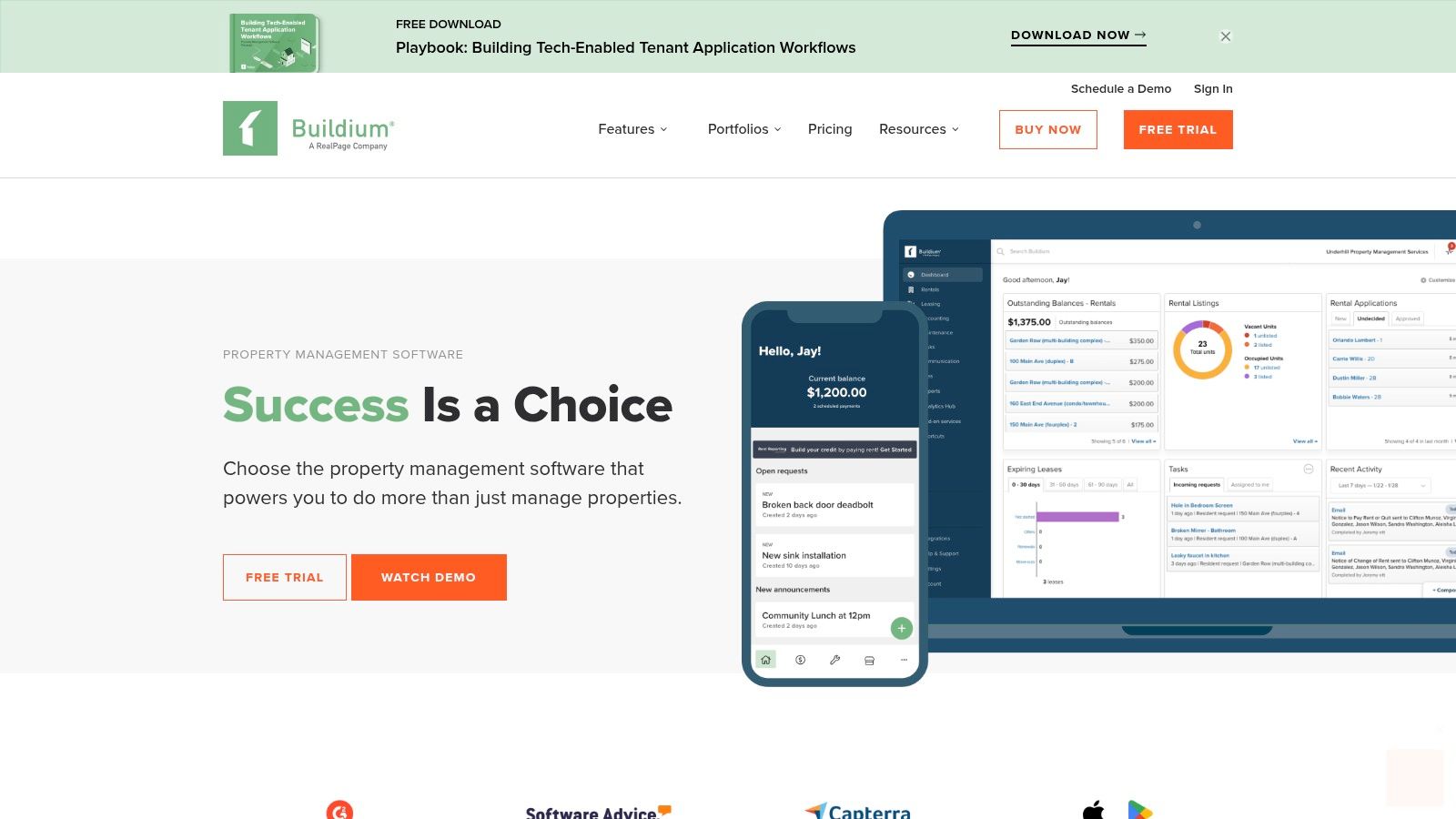
The platform shines with its user-friendly interface, simplifying complex tasks like automated rent collection and generating detailed financial reports. For landlords juggling multiple properties, Buildium provides a clear, real-time overview of their portfolio's financial health, from individual unit profitability to overall cash flow.
Key Features & User Experience
Buildium’s feature set is designed for scalability, serving both new investors and established portfolio owners.
- Integrated Accounting: Automate rent payments, track expenses per property, and manage vendor payments.
- Tenant & Lease Management: Onboard new tenants, store lease documents, and manage communications through a dedicated tenant portal.
- Maintenance Coordination: Tenants can submit maintenance requests with photos, which you can then track and assign to vendors directly within the platform.
Pricing and Limitations
Pricing for Buildium is tiered, starting with the Essential plan at $55 per month. While this cost is higher than some dedicated accounting tools, its value lies in its extensive, all-encompassing features. A potential downside is that some users find the customization options for reports and workflows to be somewhat limited compared to more specialized, standalone accounting software.
Website: https://www.buildium.com/
2. Landlord Studio
Landlord Studio is a streamlined, mobile-first solution, making it one of the best accounting software for landlords who are hands-on and frequently on the go. Specifically designed for individual investors and those with small to mid-sized portfolios, it excels at simplifying income and expense management without the complexity of larger platforms.
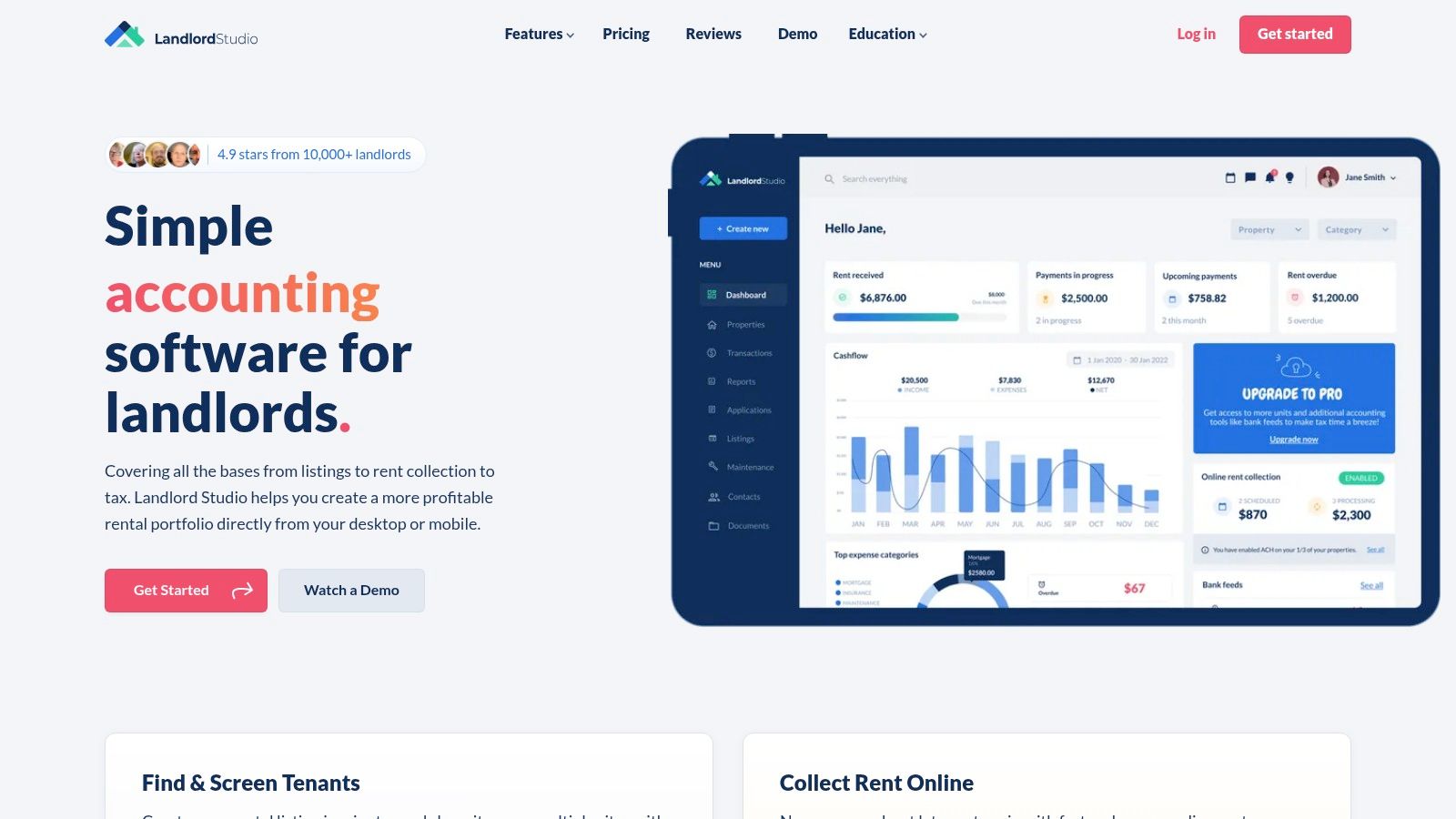
The platform’s strength lies in its robust mobile app, which allows property owners in communities like Salinas or Carmel to digitize receipts, log expenses, and view financial dashboards from anywhere. This immediate access to data helps in making quick, informed decisions.
Key Features & User Experience
Landlord Studio is built for simplicity and efficiency, focusing on core landlord needs.
- Automated Income & Expense Tracking: Connect bank accounts for automatic transaction imports and use smart-scan technology to digitize receipts on the fly.
- Online Rent Collection: Set up automated rent reminders and allow tenants to pay securely online via ACH transfers.
- Tenant Screening & Management: Run comprehensive background checks and keep all tenant communications and lease details organized in one place.
Pricing and Limitations
Landlord Studio offers a compelling free plan for landlords with up to three units, making it highly accessible. Paid plans start at a competitive price point, scaling with the number of units. Its primary limitation is its scope; it may lack the advanced reporting and extensive integrations required by property managers overseeing large or complex assets.
Website: https://www.landlordstudio.com/
3. AppFolio
AppFolio is a premium, cloud-based platform for property managers and investors managing larger portfolios. It has established itself as one of the best accounting software for landlords who require a scalable, all-in-one solution. Its strength lies in combining sophisticated financial management with operational tools for marketing, leasing, and maintenance, making it ideal for those with 50 or more units.
The platform streamlines complex financial workflows through automation, from accounts payable to online rent collection. For landlords overseeing significant portfolios with properties across Monterey County, AppFolio provides deep, actionable insights into financial performance.
Key Features & User Experience
AppFolio is built for growth, providing robust features that support expanding property portfolios with efficiency and professionalism.
- Automated Accounting: Features automated accounts payable, smart bill entry, and online rent payments to reduce manual data entry.
- Tenant & Leasing Workflow: Includes a tenant portal for payments and integrated marketing tools to syndicate listings and screen applicants.
- Maintenance & Communication: Centralizes maintenance requests, vendor management, and communications to ensure timely resolutions.
Pricing and Limitations
AppFolio’s pricing structure is geared toward larger portfolios, with a minimum monthly fee often starting around $280. This higher entry cost makes it less suitable for landlords with just a few properties. Additionally, new users may face a steeper learning curve to master its extensive feature set.
Website: https://www.appfolio.com/
4. Rentec Direct
Rentec Direct offers a powerful, yet remarkably affordable, solution for landlords and property managers. It's often highlighted as one of the best accounting software for landlords who need robust financial tools without a high price tag. The software successfully balances comprehensive accounting features with essential property management functions like tenant screening and online rent collection.

The platform is praised for its straightforward interface that simplifies property accounting. It provides a full ledger accounting system for properties, tenants, and banking, ensuring every transaction is accurately tracked. This focus on financial detail helps landlords maintain pristine records for tax time.
Key Features & User Experience
Rentec Direct’s feature set is designed for efficiency and ease of use, making it accessible even for those without an accounting background.
- Full Ledger Accounting: Manage property, tenant, and bank accounts with detailed general ledger reporting.
- Online Rent Collection: Automate rent payments via ACH or credit card, reducing late payments and administrative work.
- Tenant Screening: Integrated screening services allow you to check credit, criminal, and eviction histories.
- Maintenance Management: Track work orders from submission to completion and manage vendor payments from one central hub.
Pricing and Limitations
Rentec Direct offers two main plans: Rentec Pro for landlords, starting at a very competitive $45 per month, and Rentec PM for property managers, at $55 per month. While its affordability is a major advantage, some users note that its interface feels less modern than some competitors.
Website: https://www.rentecdirect.com/
5. Stessa
Stessa positions itself as a uniquely accessible tool, earning its spot as one of the best accounting software for landlords by offering a powerful, asset-focused platform completely free of charge. It is specifically designed for real estate investors, from those with a single rental to those managing a small portfolio. Its core strength lies in its simplicity and automation.
Stessa helps property owners effortlessly track income and expenses to get a clear, real-time picture of their portfolio's performance. By linking your bank accounts, mortgages, and property management accounts, it intelligently categorizes transactions. This provides instant insights into your net cash flow, appreciation, and overall return on investment.
Key Features & User Experience
Stessa’s interface is clean and intuitive, focusing on delivering key financial metrics without overwhelming the user.
- Automated Income & Expense Tracking: Securely link financial accounts, and Stessa automatically imports and categorizes transactions for each property.
- Real-time Dashboards: Instantly view key performance indicators like cash flow, net operating income, and property valuation.
- Tax-Ready Financial Reports: Generate tax-ready reports, including income statements and capital expense summaries, to simplify tax season.
Pricing and Limitations
Stessa’s core platform is completely free, making it an unbeatable entry point for new investors. However, its focus on financial tracking means it lacks broader property management features like tenant screening, lease management, or maintenance coordination.
Website: https://www.stessa.com/
6. TenantCloud
TenantCloud is a highly accessible, cloud-based solution, making it a strong contender for the best accounting software for landlords managing smaller portfolios. It is especially well-suited for independent landlords who need an affordable yet comprehensive platform. The software integrates essential tasks, from tenant screening to maintenance requests, directly with its accounting features.

The platform's appeal lies in its user-friendly interface and robust mobile apps, which allow landlords to manage properties on the go. When tenants move out, having organized financial records is just as crucial as a physical inspection; you can find more details in our tenant move-out inspection checklist.
Key Features & User Experience
TenantCloud offers a practical feature set that covers the entire rental lifecycle, with a focus on ease of use.
- Online Rent Collection: Automate recurring rent payments with ACH and track payment statuses in real-time.
- Full Accounting Suite: Log income and expenses, generate key financial reports like profit & loss statements, and export data.
- Lease & Tenant Management: Create online lease agreements with e-signing capabilities and communicate with tenants through a dedicated portal.
Pricing and Limitations
TenantCloud is known for its affordability, offering a free tier for up to 75 units, with paid plans starting at just $15 per month. This makes it an excellent choice for new investors. However, a potential limitation is its reporting functionality, which may not be as customizable or in-depth as higher-end systems.
Website: https://www.tenantcloud.com/
7. DoorLoop
DoorLoop is a modern, all-in-one solution that’s easy to use yet powerful enough to scale with a growing portfolio. This makes it a strong choice for the best accounting software for landlords. It excels at combining comprehensive financial management with essential operational tools, creating a unified system that handles everything from rent collection to maintenance requests.
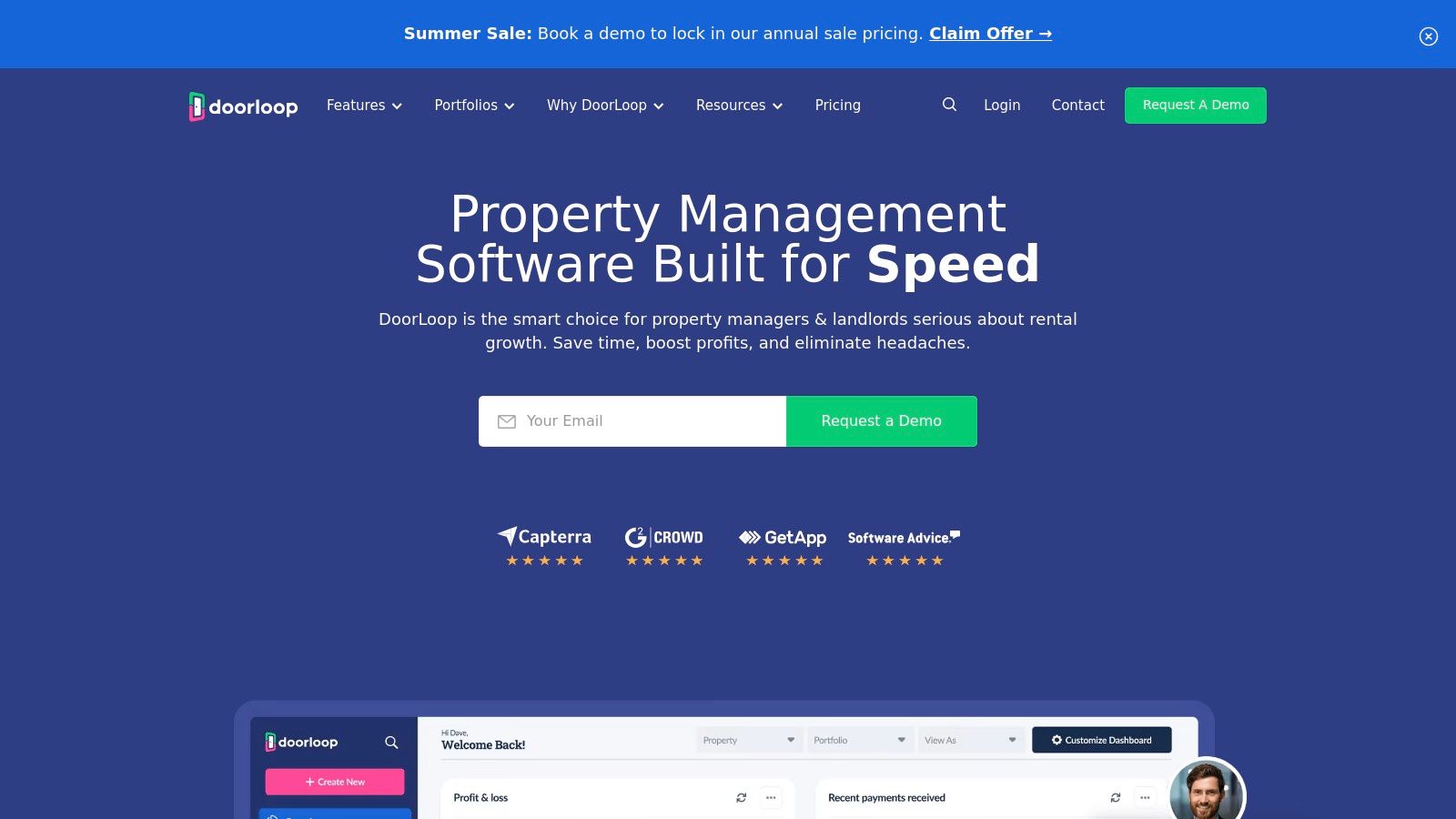
Its clean interface simplifies the management of income and expenses, providing clear financial oversight across all your properties. DoorLoop’s full suite of tools is accessible from any device, allowing landlords to manage their business on the go.
Key Features & User Experience
DoorLoop is celebrated for its user-friendly design and robust feature set that covers the entire rental lifecycle.
- Custom Financial Reports: Generate a variety of income and expense reports, including profit and loss statements and rent rolls.
- Online Rent Collection: Automate rent payments through a tenant portal using ACH or credit cards, which syncs directly with your accounting ledger.
- Integrated Tenant Services: The platform includes tenant screening and a dedicated portal for communication, document storage, and maintenance requests.
Pricing and Limitations
DoorLoop's pricing is transparent and unit-based, starting with its Starter plan at $59 per month for up to 20 units. While its feature set is extensive, a potential limitation is that certain advanced features or integrations may require a higher-tier plan, increasing the overall cost as your needs expand.
Website: https://www.doorloop.com/
8. Quicken
Quicken stands apart by offering a robust desktop software solution specifically tailored for landlords managing their own properties. Its Home & Business plan combines personal finance management with dedicated rental property features. This makes it one of the best accounting software for landlords who prefer a one-time purchase over a monthly subscription.
This integrated approach is ideal for individual investors who want a comprehensive picture of their net worth, including their rental property's performance. The software allows you to track income and expenses using IRS-approved categories, which significantly simplifies tax preparation.
Key Features & User Experience
Quicken’s Home & Business plan provides a feature set designed to give landlords complete financial control.
- Rental Property Management: Track income and expenses by property, manage tenant information, and monitor rent payments.
- Comprehensive Reporting: Generate detailed reports, including tax schedules (like Schedule E), cash flow, and property value assessments.
- Integrated Finances: Manage everything from rental security deposits and mortgages to personal investments and bank accounts in one dashboard.
Pricing and Limitations
Quicken Home & Business is available as an annual subscription, offering an affordable alternative to many cloud-based platforms. However, its rental property management features are exclusive to the Windows version. It also does not include payroll processing, making it less suitable for landlords who employ staff directly.
Website: https://www.quicken.com/
9. Xero
Xero is a powerful, cloud-based accounting platform that offers incredible flexibility for modern landlords. It excels as one of the best accounting software for landlords who prefer to pair a best-in-class accounting engine with specialized property management apps. Its strength lies in its vast integration library, allowing you to create a customized tech stack.

The platform is celebrated for its clean, user-friendly interface and a top-tier mobile app, making on-the-go financial management a reality. Landlords can easily track income and expenses, reconcile bank transactions, and view real-time financial dashboards.
Key Features & User Experience
Xero's feature set is comprehensive, supporting landlords as their portfolios grow. All plans include unlimited user access.
- Extensive Integrations: Connect with over 1,000 third-party apps, including property management systems, to create a seamless workflow.
- Robust Mobile App: Manage invoices, capture receipts with Hubdoc, and reconcile transactions directly from your smartphone.
- Automated Financials: Set up recurring invoices for rent, automate bank feeds, and generate detailed profit and loss statements per property.
Pricing and Limitations
Xero offers several tiered plans, starting with the Early plan at $15 per month. However, this entry-level plan has significant limitations. The Growing plan ($42/month) or Established plan ($78/month) are more practical choices. A notable downside is the lack of inbound phone support.
Website: https://www.xero.com/
10. QuickBooks Online
QuickBooks Online is an accounting powerhouse. While not built specifically for property management, its robust features make it a strong candidate for the best accounting software for landlords who prioritize financial precision. It is ideal for property owners who already use QuickBooks for other business ventures or prefer a universally recognized accounting standard.

Its "Class Tracking" feature is particularly valuable for portfolio owners, allowing them to categorize income and expenses by individual property. This gives landlords in areas like Salinas or Monterey a crystal-clear view of which units are most profitable.
Key Features & User Experience
QuickBooks Online is known for its feature-rich environment and a mobile app that allows for on-the-go financial management.
- Class Tracking: Assign every transaction to a specific property, enabling detailed profit and loss reporting for each unit.
- Automatic Recurring Invoicing: Set up automated monthly rent invoices for tenants, ensuring timely and consistent billing.
- Comprehensive Financial Reporting: Generate professional-grade financial statements essential for securing loans or reporting to investors.
Pricing and Limitations
QuickBooks Online offers several pricing tiers, starting with the Simple Start plan at around $30 per month. However, landlords will likely need the "Plus" plan (around $90 per month) to access the crucial Class Tracking feature.
Website: https://quickbooks.intuit.com/
11. Zoho Books
Zoho Books is a powerful cloud-based accounting solution that offers remarkable flexibility. It excels at core accounting functions and can be tailored to a rental business through its robust automation and integration capabilities. This makes it an excellent option for landlords who need to upgrade their financial tracking.

The platform’s strength lies in its user-friendly interface and comprehensive feature set. Landlords can easily set up recurring invoices for monthly rent and track every expense down to the property level. For those managing properties in diverse areas like Monterey or Salinas, Zoho Books provides the clarity needed to analyze profitability.
Key Features & User Experience
Zoho Books is celebrated for its clean design and intuitive navigation, simplifying complex accounting tasks.
- Recurring Invoices: Automate monthly rent billing and send payment reminders to reduce late payments.
- Payment Gateway Integration: Connect with popular gateways like Stripe and PayPal to give tenants multiple ways to pay online.
- Mobile Accessibility: Manage your finances on the go with a full-featured mobile app for iOS and Android.
- Comprehensive Reporting: Generate detailed profit and loss statements, balance sheets, and cash flow reports.
Pricing and Limitations
Zoho Books offers highly competitive pricing, including a completely free plan for businesses with revenue under $50K per year. Paid plans start at a very affordable rate. A primary limitation is that its free plan is quite restrictive, and it lacks built-in, property-specific features.
Website: https://www.zoho.com/books/
12. FreshBooks
FreshBooks offers a streamlined accounting solution perfect for landlords who prioritize simplicity and professional invoicing. While not designed exclusively for real estate, its user-friendly platform is an excellent choice for managing the finances of a small portfolio. It's one of the best accounting software for landlords who need easy-to-use tools for tracking income and expenses.

The software excels at creating customized, professional-looking invoices for rent and automating payment reminders. Its powerful mobile app allows you to manage your finances on the go, from capturing receipts for tax-deductible expenses to checking an invoice's payment status.
Key Features & User Experience
FreshBooks is celebrated for its intuitive design and exceptional customer support, making it accessible even for those with no accounting background.
- Customizable Invoicing: Create and send professional invoices, set up recurring billing for monthly rent, and automatically send late payment reminders.
- Expense Tracking: Easily track property-related expenses by connecting bank accounts or using the mobile app to snap photos of receipts.
- Comprehensive Reporting: Generate profit and loss statements, expense reports, and other key financial documents.
Pricing and Limitations
FreshBooks provides several pricing tiers, starting with the Lite plan at a competitive monthly rate. However, this entry-level plan has limits on the number of billable clients, which could be a constraint for landlords with growing portfolios.
Website: https://www.freshbooks.com/
FAQs About Landlord Accounting Software
Why do I need specialized accounting software as a landlord?
Specialized software automates income and expense tracking by property, simplifies rent collection, and generates tax-ready reports like Schedule E. This saves significant time, reduces errors compared to spreadsheets, and provides a clear financial picture of your investments.
What is the best free accounting software for landlords?
Stessa is widely regarded as the best free option. It is designed specifically for real estate investors to track property performance, automate financial reporting, and organize documents, making it an excellent starting point for new landlords.
Can I use QuickBooks for my rental properties?
Yes, QuickBooks Online is a powerful tool for rental property accounting, especially when using its "Class Tracking" feature to separate finances by property. While it requires more setup than dedicated landlord software, it offers robust, professional-grade financial reporting.
How does this software help with tax preparation?
These platforms categorize your income and expenses according to tax-deductible categories throughout the year. At tax time, you can generate comprehensive reports, such as a profit and loss statement or Schedule E summary, which you or your accountant can use to file accurately.
What’s the difference between property management software and accounting software?
Accounting software (like QuickBooks or Xero) focuses purely on financial tracking. Property management software (like Buildium or AppFolio) is an all-in-one solution that includes accounting but also adds features for leasing, tenant communication, and maintenance requests.
Choosing the Best Accounting Software for Your Rental Portfolio
Navigating the landscape of landlord accounting software can feel overwhelming. The "best" software is the one that aligns perfectly with your portfolio size, management style, and long-term goals.
Key Takeaways
To move forward with confidence, consider the following:
- Assess Your Portfolio Complexity: A single property in Salinas might be well-managed with a simple tool like Stessa. A larger portfolio across Monterey County will benefit from the comprehensive features of platforms like DoorLoop or Buildium.
- Define Your Core Needs: Is your primary pain point tax preparation? Stessa is an excellent start. Do you need seamless online rent collection? TenantCloud and Landlord Studio excel here.
- Evaluate Your Budget and Scalability: Free tools are great for starting, but think about the future. Choosing a scalable platform like Rentec Direct can prevent the headache of migrating data later.
- Utilize Free Trials and Demos: This is a non-negotiable step. Test key workflows like adding a property, recording rent, and generating reports to see if the interface is intuitive for you.
A Final Word
Once you've made your choice, proper implementation is key. Take the time to import data accurately and connect bank accounts securely. A well-implemented system will save you countless hours and provide the clear financial insights needed to grow your investment portfolio with confidence.
Choosing the right software is a significant step, but the ultimate solution for many Monterey Bay property owners is to delegate the day-to-day complexities entirely. Torrente Property Management uses industry-leading technology alongside local expertise to handle everything from accounting and rent collection to maintenance and tenant relations. If you prefer to focus on your investment strategy, contact Torrente Property Management today at (831) 582-8916.

Military Family Home Management in Monterey: A Guide
Receiving Permanent Change of Station (PCS) orders to Monterey County is an exciting chapter, but it also presents a unique set of challenges. This isn't just any move; it's a military move, bringing a different level of complexity.
Finding the right housing and ensuring your family is settled is mission number one. This is where solid military family home management in Monterey County becomes your most valuable asset. It's about having a real plan to secure a home and maintain stability, allowing you to focus on your new assignment without the stress of housing logistics.
Your Essential Guide to a Smooth PCS to Monterey County
From the Presidio of Monterey to the Naval Postgraduate School, the military presence shapes our community's culture, economy, and, most importantly, its housing market. The U.S. military is the largest employer in Monterey County, creating a consistent demand for quality housing.
Think of this guide as your operational briefing, giving you the local intelligence needed to make your move a success. We're here to make this transition as smooth as possible by walking you through the critical steps from a boots-on-the-ground perspective.
Understanding the Local Impact
The military's footprint here is significant. With nearly 12,000 active military personnel and DoD civilians in the area, the demand for quality housing is always high, as cited by the Monterey Bay Economic Partnership. This high-stakes environment means you need a reliable strategy.
A professional property manager acts as your advance team, providing on-the-ground support. They handle logistics like property readiness and maintenance, freeing you to concentrate on your family and new duties. For a deeper dive, the Monterey Bay Economic Partnership provides great insights into the military's economic influence.
In the sections that follow, we'll cover everything from navigating the rental market to the benefits of professional home management. We will explore:
- Securing a Home: How to find a property that fits your needs and your BAH in a competitive market.
- Professional Partnership: The vital role a property manager plays during a PCS, deployment, or TDY.
- Community Integration: How to connect with local support systems designed for military families.
By the end, you'll have a clear, actionable roadmap for your tour in Monterey County.
Mission Critical Steps for Your Monterey County PCS Move
| Phase | Key Actions | Primary Goal |
|---|---|---|
| 1. Pre-Arrival Planning | Research neighborhoods, define housing needs, get pre-approved for a lease, and connect with a local property manager. | Arrive in Monterey with a solid housing plan already in motion, reducing uncertainty. |
| 2. House Hunting & Securing | Tour properties (virtually or in person), submit applications quickly, and review lease agreements thoroughly. | Secure a suitable and safe home that meets your BAH and family requirements in a competitive market. |
| 3. Move-In & Settling | Conduct a detailed move-in inspection, set up utilities, and get familiar with local resources and community support. | Ensure a smooth transition into your new home and community, setting your family up for success. |
| 4. Ongoing Management | Establish a system for maintenance requests, understand your lease obligations, and build a good relationship with your landlord or manager. | Maintain a stable and stress-free living situation throughout your assignment in Monterey County. |
Following these steps provides a structured approach to what can often feel like a chaotic process, helping you stay organized and focused.
Navigating the Monterey County Rental Market

When you receive your PCS orders, a deep dive into the local rental landscape is your first mission. The Monterey County market is unique, driven by a constant flow from military installations, CSU Monterey Bay, and tourism.
A professional property manager is your local guide, giving you the real story on different neighborhoods and rental costs. They offer insights you can't get from online listings, helping you find a home that fits your family's needs and your Basic Allowance for Housing (BAH).
Rental Hotspots Near Military Installations
Proximity to your duty station is almost always the top priority. Certain communities offer a strategic advantage depending on your assignment.
- Monterey & Pacific Grove: These spots are perfect for those assigned to the Presidio or NPS. They offer a charming, historic vibe but come with higher rents and fierce competition.
- Seaside & Marina: Just north of Monterey, these towns offer a shorter commute without the Monterey price tag. They are popular with military families seeking a balance of convenience and affordability.
- Salinas: Head inland to find Salinas, which offers more available housing and lower rental costs. For families who don't mind a commute, the value is significant. Exploring full-service property management in Salinas can uncover fantastic options that help maximize your BAH.
Decoding Local Rental Costs and Leases
Rental prices across Monterey County can vary significantly. A good property manager provides a detailed rental market analysis so you know what to expect for your housing allowance.
The biggest advantage of professional military family home management in Monterey County is having an expert navigate your lease. A seasoned manager ensures your lease includes a proper military clause. This is non-negotiable, as it protects you from unexpected PCS or deployment orders.
A property manager does more than find you a house; they secure a home base. They vet properties, handle applications, and coordinate move-in details, freeing you to focus on your real mission: getting your family settled.
Why Professional Home Management Is a Force Multiplier
For military families, life is a cycle of service and mobility. Owning a home in Monterey County brings stability but also logistical challenges during a PCS or deployment. This is where professional home management becomes a critical force multiplier for your peace of mind.
A property manager is your personal Logistics Officer for your home. Their mission is to handle every detail—from tenant screening to repairs—so you can focus on your duties. It’s the closest thing to a "fire-and-forget" system for your most valuable asset.
The Core Benefits of Professional Oversight
For a service member, the real value of military family home management in Monterey County is its ability to neutralize problems before they reach you. This dedicated support provides tangible benefits:
- 24/7 Maintenance Coordination: A busted pipe at 2 a.m. is no longer your problem. Your manager fields the call, dispatches a trusted vendor, and ensures the job is done right.
- Rigorous Tenant Screening: They run thorough background and credit checks to find reliable tenants who will treat your home with respect, reducing risks.
- Consistent Rent Collection: Professional systems ensure rent is paid on time, providing a predictable income stream to cover your mortgage and expenses.
The biggest advantage is uninterrupted operational readiness for your family. When you're deployed, the last thing you need is a call about a broken appliance. Professional management ensures the home front is secure.
This same hands-on approach is a game-changer for those who own a second home here. Our strategy for Monterey second home property management ensures your investment is meticulously protected.
DIY vs. Professional Home Management: A Military Perspective
The table below compares managing a property yourself from a distance versus hiring a professional team. For a military family, the "challenges" of DIY can quickly become mission-critical distractions.
| Task | DIY Approach (Potential Challenges) | Professional Management (Benefits) |
|---|---|---|
| Emergency Repairs | Scrambling to find a reliable vendor from afar and coordinating urgent fixes across different time zones. | Access to a pre-vetted network of trusted, local contractors available 24/7 for an immediate response. |
| Tenant Communication | Fielding calls, texts, and emails about minor issues while you're on duty, in training, or deployed. | Acting as the single point of contact for all tenant inquiries, filtering out the noise and only involving you when necessary. |
| Lease Enforcement | Trying to address late rent or lease violations remotely, which is often a stressful and ineffective process. | Enforcing lease terms professionally and legally, including handling delinquencies and, if necessary, the eviction process. |
| Property Inspections | Being unable to conduct regular inspections, which can lead to unnoticed damage, neglect, or lease violations. | Performing routine, documented inspections to proactively identify maintenance needs and ensure tenants are complying with the lease. |
Ultimately, professional management transforms your property from a potential source of stress into a self-sufficient asset.
Partnering With a Property Manager Step-by-Step
Bringing a property manager on board is a straightforward process designed for clarity and confidence. It starts with a conversation and ends with your home being professionally managed, giving you invaluable peace of mind.
That first chat is about us understanding your situation. A good manager listens first, then lays out a clear plan tailored to the pressures and timelines of military life.
The Onboarding Process Explained
Once you give us the green light, we start the official onboarding process. We begin with a detailed property inspection to document your home's condition and protect your investment.
Next, we work with you to gather key documents, including your PCS orders. This is non-negotiable, as it allows us to include the military clause in any lease agreement—a critical protection for military tenants.
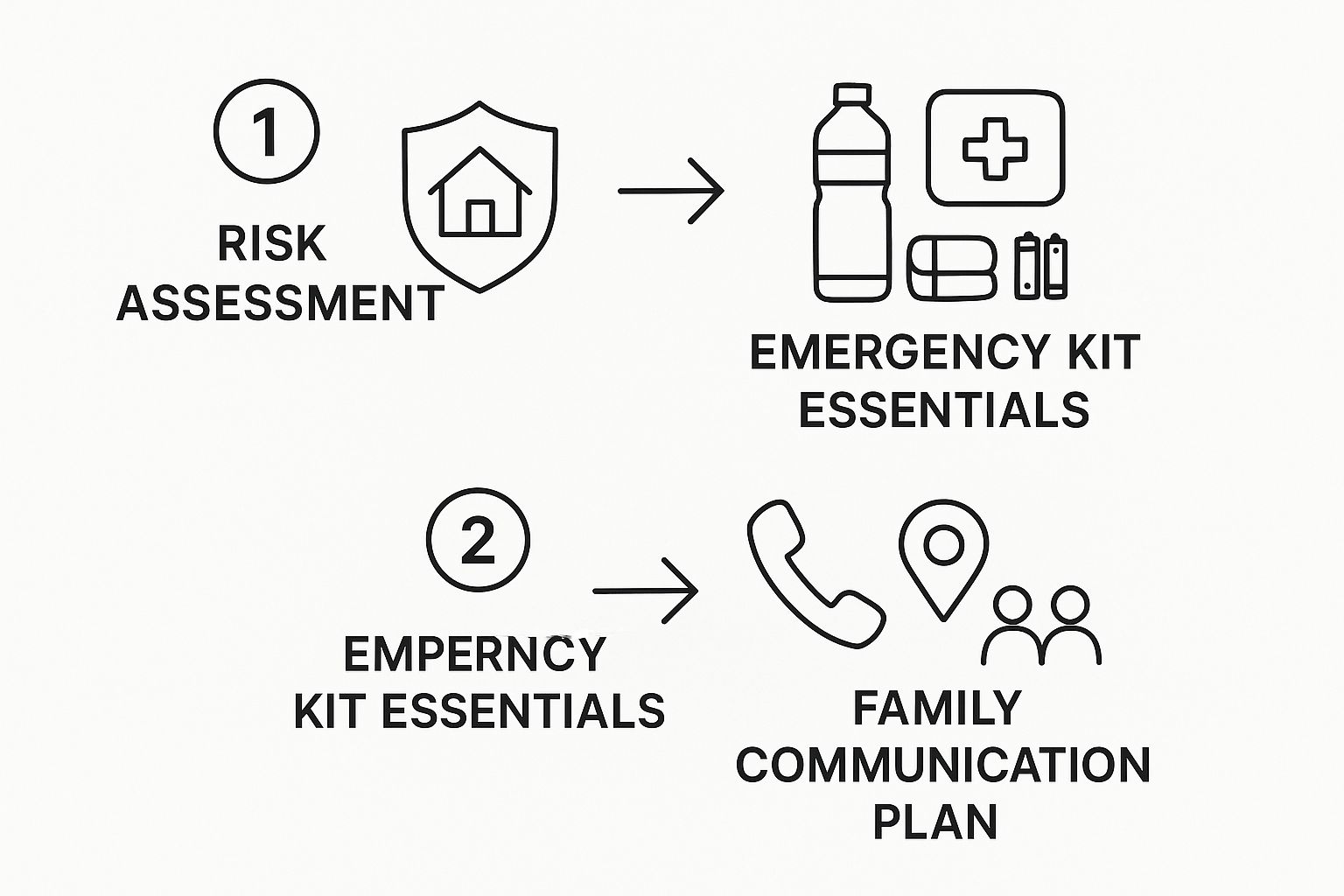
The infographic above highlights core steps for preparing your home, reflecting our proactive philosophy.
Signing the Management Agreement
The final step is signing the management agreement, the legal document that makes our partnership official. It clearly outlines everyone's responsibilities, from rent collection to financial reporting. You can review a standard property management agreement on our site for transparency.
A key advantage with Torrente Property Management is our bilingual (English/Spanish) service. In a community as diverse as Monterey County, clear communication with a wider pool of tenants removes language barriers and leads to smoother operations.
With the agreement signed, we handle all marketing, screen applicants, and find a qualified tenant. This all-in approach to military family home management in Monterey County creates a seamless, worry-free experience.
Legal and Financial Briefing for Military Landlords
Stepping into the role of a landlord requires understanding your rights and responsibilities. The legal and financial landscape has specific rules that, when navigated correctly, protect both you and your military tenants.
At the heart of any military tenancy is the Servicemembers Civil Relief Act (SCRA). This federal law gives active-duty members protections, including the right to break a lease early under specific circumstances like PCS or deployment orders.
The Military Clause Explained
A "military clause" is a non-negotiable part of any lease with a service member. It's more than a courtesy; it officially aligns your lease with the SCRA. This clause creates a clear, legal path for a tenant to end their lease if their military career suddenly takes them elsewhere.
This clause is a cornerstone of responsible military family home management in Monterey County. It shows you operate in good faith and ensures you are fully compliant with federal law, preventing legal headaches.
Financial Best Practices for Your Rental
Managing rental finances demands precision and market knowledge. Setting the right rent price requires a detailed analysis comparing your property to similar local rentals.
Monterey County's median household income is $94,486, with a median age of 35.3 years, according to Data USA. This data, paired with a market analysis, helps you set a competitive rent. You can explore more Monterey County economic trends on Data USA's comprehensive profile.
Here are a few other financial points to keep on your radar:
- Security Deposits: California has strict laws for handling security deposits, including limits and timelines for returns.
- Tax Implications: Rental income is taxable, but many expenses like mortgage interest, property taxes, and management fees are deductible. Meticulous records are essential.
- Move-Out Process: Properly documenting the property's condition is vital. Using a detailed tenant move-out inspection checklist creates a transparent and fair process.
Community and Lifestyle Support for Military Families
A successful PCS move is about more than finding a house; it's about planting roots. The best military family home management in Monterey County extends beyond your front door. It’s about connecting you to an ecosystem that helps your family thrive.
While we handle the nuts and bolts of your home, we also act as your guide to local resources. This community is deeply committed to supporting its service members, and we want to ensure you know where to turn.
Connecting to Local Support Networks
Monterey County has a robust support system designed for military families. Resources like the Fleet and Family Support Center and Army Community Services are lifelines. They offer everything from medical support and therapy to youth programs.
We highly recommend you discover more about the local military family resources that make this area so welcoming. These programs help your family acclimate, forge connections, and create a stable home life.
How We Support Your Transition
Our commitment is to provide you with complete peace of mind. We deliver outstanding property management and act as your knowledgeable local guide.
While you focus on settling in, we ensure your home is secure and well-maintained. This comprehensive approach is at the heart of our professional property management services. This dual focus lets you settle in faster and with less stress.
FAQs About Military Home Management in Monterey County
Navigating property management with the demands of military life brings up many questions. Here are concise answers to some of the most common ones we receive.
How does the military clause work for landlords and tenants?
The military clause aligns your lease with the Servicemembers Civil Relief Act (SCRA). It allows a military tenant to legally terminate their lease without penalty if they receive official PCS or deployment orders. Including this clause is a standard, fair practice that protects both you and your tenant.
What happens if a pipe bursts while I’m deployed?
This is precisely why you hire a property manager. We act as the 24/7 point of contact for all maintenance and emergencies. We coordinate with our network of vetted local vendors to fix the problem quickly and professionally, protecting your property and tenants while you focus on your mission.
Can you find a tenant before I even arrive in Monterey?
Absolutely. We start marketing your property and screening applicants while you're still preparing for your move. Using professional photography and virtual tours, we often have a qualified tenant and a signed lease waiting for you, minimizing vacancy and maximizing your rental income from day one.
How do you determine the right rental price for my home?
We perform a detailed rental market analysis, comparing your property to similar homes in your specific neighborhood. We look at market demand, your home’s condition, and its proximity to military bases. This data-driven approach ensures we price your home competitively to attract top-tier tenants quickly.
What should I look for in a military-friendly property manager?
Look for a manager with proven, hands-on experience with military clients. They must understand the PCS process, BAH rates, and the SCRA. Excellent communication and robust systems for remote management are non-negotiable to ensure the reliability you need to focus on your service.
Are you preparing for a PCS or deployment and need a trusted partner to manage your Monterey County home? Torrente Property Management has the expertise and local knowledge to protect your investment and provide complete peace of mind. Contact Torrente Property Management today at (831) 582-8916 to discuss your needs.

Vacant Home Caretaker Services Monterey Bay: A Guide
Leaving a home empty in the Monterey Bay area is a significant risk. Your unattended property is vulnerable to security threats, surprise maintenance disasters, and environmental damage. Professional vacant home caretaker services in Monterey Bay provide the essential oversight that protects your property’s value and your peace of mind.
In some nearby California communities, data shows 11% of housing units are vacant, highlighting a widespread need for diligent property oversight to maintain neighborhood value and safety (Source: American Community Survey data).
Why Unoccupied Monterey Bay Homes Are Uniquely Vulnerable

An empty home is an open invitation for problems that can quickly become costly headaches. Our beautiful coastline, from Carmel to Salinas, presents specific challenges that make professional oversight a necessity, not a luxury.
Without regular checks, a slow drip under a sink can become a collapsed ceiling and a serious mold infestation. A few pests can escalate into a structural issue. These are common, expensive realities for homes left unattended in our area.
From Small Leaks to Major Damage
The coastal climate, with its persistent fog and seasonal rains, creates a perfect environment for moisture-related problems. A minor issue can easily lead to thousands in repairs if not caught immediately. A professional caretaker acts as your eyes and ears, performing systematic checks to stop these problems cold.
This is especially true for second-home owners away for months at a time. If that's you, understanding second home property management in Monterey is the first step toward true asset protection.
Security and Vandalism Risks
An unoccupied property can attract unwanted attention. An overgrown lawn, a stuffed mailbox, or blinds that never move are clear signs no one is home, making the property a target for:
- Vandalism: Broken windows or graffiti can sink a home's value and require immediate, expensive repairs.
- Squatters: Unauthorized occupants create a legal nightmare, often leading to costly battles and significant property damage.
- Theft: Appliances, copper piping, and valuable fixtures can be stolen from vacant homes.
A professional vacant home caretaker does more than just check on things—they maintain a lived-in appearance. This simple but effective strategy is one of the strongest deterrents against crime, offering security a camera alone cannot provide.
Our diverse Monterey Bay area presents unique challenges across each community. That's why having a dedicated, local expert who understands these specific risks is the only way to truly secure your investment.
What Does a Professional Home Caretaker Do?
A professional caretaker is your property’s health advocate, performing regular check-ups to prevent serious issues before they start. They are your on-site eyes and ears, implementing a proactive strategy to protect your investment from the inside out. This means detailed inspections, preventative maintenance, and immediate coordination of any necessary repairs.
Comprehensive Interior and Exterior Inspections
Quality caretaker service is built on routine, detailed inspections. This isn't a casual walkthrough but a methodical process using a comprehensive checklist to document the property's condition. This creates a baseline, making it easy to spot new problems before they escalate.
These visits are designed to catch the silent problems that cause the most damage. Key inspection points include:
- Signs of Water Intrusion: A meticulous check of ceilings, under sinks, around windows, and in basements for any hint of leaks or moisture.
- Pest and Rodent Activity: Searching for droppings, nests, or entry points that suggest an infestation is starting.
- Security Verification: Ensuring every door, window, and gate is locked and that there are no signs of vandalism or forced entry.
- Appliance and System Functionality: Running faucets and flushing toilets to keep plumbing lines clear and checking that major appliances are operational.
Proactive Systems Management
A vacant home's HVAC, plumbing, and electrical systems need active management to prevent failure. A good caretaker ensures these critical components stay in working order, saving you from the shock of returning to a house with no heat or a flooded basement.
A professional caretaker doesn't just react to problems—they anticipate them. By methodically testing systems and monitoring for subtle changes, they can identify potential failures and address them before they become an emergency.
The infographic below illustrates the three core benefits professional caretaker services provide, showing how asset protection, financial savings, and peace of mind are all connected.
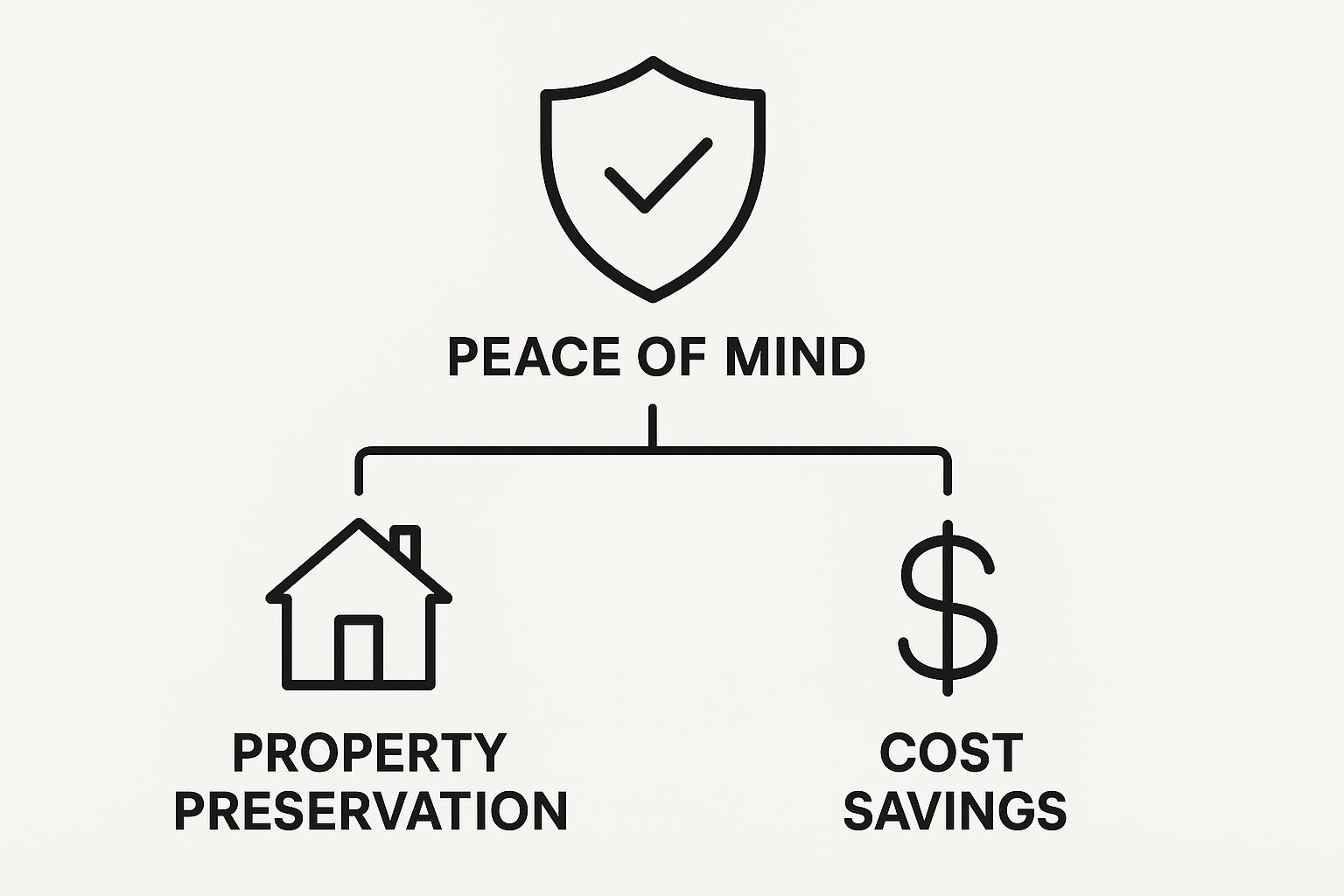
Diligent, professional oversight creates a secure, cost-effective, and stress-free ownership experience. Here is a checklist of essential services a professional caretaker provides.
Essential Caretaker Services Checklist
A professional caretaker service goes far beyond a simple walkthrough. This checklist outlines the typical tasks involved to ensure every aspect of your property is monitored and maintained.
| Service Category | Specific Task Examples | Typical Frequency |
|---|---|---|
| Security & Safety | Verify all windows/doors are locked, check for signs of forced entry, test smoke/CO detectors. | Every Visit |
| Plumbing & Water Systems | Run faucets, flush all toilets, check for leaks under sinks and around appliances. | Every Visit |
| Interior Condition | Check for signs of pests, mold, or unusual odors. Inspect ceilings and walls for water stains. | Every Visit |
| Exterior & Grounds | Check for storm damage, collect mail/fliers, inspect landscaping for overgrowth or issues. | Weekly/Bi-Weekly |
| Systems Management | Check thermostat settings, verify HVAC is operational, inspect electrical panel for tripped breakers. | Bi-Weekly/Monthly |
| Vendor Coordination | Schedule and oversee landscapers, pool service, pest control, or any necessary repair contractors. | As Needed |
This structured approach ensures nothing is overlooked and that your property remains in pristine condition, ready for your return.
Coordinating with Trusted Local Vendors
When a repair is needed, your caretaker’s role shifts to that of a project manager. Their local network of vetted, reliable vendors—from plumbers in Carmel to roofers in Salinas—becomes invaluable.
This coordination is a massive advantage for an absentee owner. Instead of you scrambling to find a trustworthy contractor from miles away, your local expert manages the entire process. They handle:
- Issue Assessment: Providing detailed reports, photos, and professional opinions on the repair's urgency and scope.
- Vendor Dispatch: Calling the right professional for the job and scheduling the service.
- Access and Oversight: Granting property access to the vendor and overseeing the work to ensure it’s done to a high standard.
- Communication: Keeping you informed every step of the way with updates and final reports.
Ultimately, a home caretaker provides a complete shield for your property. It's an active, intelligent service that ensures your Monterey Bay home stays secure, well-maintained, and valuable, no matter how far away you are.
Protecting Your Investment with Proactive Care

Viewing vacant home caretaker services in Monterey Bay as an expense is a mistake. It is a powerful risk management strategy that actively prevents financial loss and delivers a real return on your investment.
An empty home invites expensive problems. Undetected water leaks, pest infestations, or vandalism can spiral into thousands of dollars in emergency repairs and erode your property's value. Proactive care is your financial shield.
Mitigating Costly Damage Before It Starts
A home caretaker is your property’s first line of defense. Their job is to catch small issues before they become financial disasters. A slow drip under a sink in your Carmel home is an easy fix during a weekly inspection; after three months, it could mean replacing subflooring, drywall, and cabinetry.
This preventative approach saves you money in several key ways:
- Avoiding Emergency Rates: Scheduled, proactive maintenance is always more affordable than a last-minute call to a plumber on a holiday weekend.
- Preventing Compounding Damage: A small roof leak caught early might be a few hundred dollars to patch. Left for a season, it could lead to structural rot and interior water damage costing tens of thousands.
- Stopping Pest Infestations: Early detection of termites or rodents can stop an expensive and complicated structural problem.
Investing in regular oversight is a direct investment in your property's physical and financial health.
A Real-World Scenario in Salinas
We worked with an absentee owner of a rental property in Salinas who left town after a tenant moved out. During a routine visit, our team noticed a faint, musty smell in the laundry room.
A closer look revealed a slow leak from the washing machine's supply hose. If unnoticed for a few more weeks, the damage would have required drywall replacement, mold remediation, and new flooring—a bill easily topping $5,000. Instead, an inexpensive hose replacement solved the problem, saving the owner thousands. For homeowners managing this transition, our tenant move-out inspection checklist is an excellent resource.
Preserving Market Value and Satisfying Insurers
A well-maintained property holds and even increases its value. Consistent, professional upkeep ensures your home stays in immaculate, market-ready condition, protecting your equity.
A professional caretaker service acts as a financial guardian for your asset. By maintaining the property, they ensure it doesn't just survive vacancy—it thrives. This meticulous care is often required to keep your homeowner's insurance policy valid.
Furthermore, a good caretaker service can often reduce repair costs by up to 15% through established relationships with vetted local vendors. This oversight ensures small issues are handled before they become major financial headaches.
How to Choose the Right Monterey Bay Caretaker
Choosing a partner to look after your vacant property is a critical decision requiring immense trust. The right choice brings priceless peace of mind; the wrong one could lead to disaster.
To find a true professional for your Monterey Bay home, you need a clear way to vet your options. It's about finding the most trustworthy and capable partner who will treat your property as their own.
Start with the Non-Negotiables
Every legitimate vacant home caretaker must have three credentials. These are the foundation of a professional operation and your protection against liability.
- Licensing: Verify the company is a legitimate California business. Property management firms offering caretaker services typically hold a real estate license from the California Department of Real Estate (DRE).
- Liability Insurance: A professional firm will carry substantial liability insurance to cover potential damage. Ask to see a certificate of insurance.
- Bonding: A surety bond is your safety net against loss from theft or dishonest acts. It is an essential layer of financial security.
If a potential provider hesitates to show proof for all three, walk away. These are basic requirements for providing vacant home caretaker services in Monterey bay.
Scrutinize the Service Agreement
A handshake won't protect your home. A professional will insist on a detailed, written service agreement that outlines the scope of work, responsibilities, and protocols. This document protects both parties by setting clear expectations from the start.
The contract is the blueprint for your partnership. It should define the inspection schedule, communication methods, and emergency procedures. Reviewing a sample property management agreement can help you evaluate contracts effectively.
Ask the Right Questions
Once you've confirmed the essentials, dig into their experience and operations. A potential caretaker's answers will reveal their expertise, especially their knowledge of the Monterey Bay area.
Here’s a checklist of critical questions to ask:
- How long have you provided caretaker services in Monterey County? Local experience is irreplaceable. It means understanding regional risks and knowing the best local vendors.
- Can you provide references from other absentee homeowners? An established provider will happily connect you with satisfied clients.
- What does your standard inspection report look like? Ask for a sample. A good report is detailed, systematic, and includes photos.
- How do you handle emergency situations after hours? There must be a clear, 24/7 protocol for urgent issues.
- Who will be entering my home? You have a right to know who has access to your property and that they are fully vetted employees.
By focusing on credentials, insisting on a detailed contract, and asking sharp questions, you can confidently find a partner to protect your investment.
The Torrente Advantage: Local Expertise & Trust
When you need vacant home caretaker services in Monterey Bay, you’re seeking a partner you can trust completely. Torrente Property Management is not a faceless national chain; we are your neighbors.
Our local, family-operated team is dedicated to protecting your property as if it were our own. Our approach is built on proactive, personalized service. We understand every home is unique, and our goal is to anticipate problems, communicate with clarity, and give you total peace of mind.
A Local Team with Deep Community Roots
What does it mean to be local? For us, it’s a family legacy spanning three generations on the Monterey Peninsula. This heritage is the core of our business and why we bring personal dedication to every home we manage.
This deep connection provides tangible benefits:
- Unmatched Vendor Relationships: We have built a network of the most reliable local vendors. We know who to call to get the job done right, often at preferred rates.
- Proactive Regional Insight: We live here and understand local microclimates, from coastal fog in Pacific Grove to summer heat in Salinas, allowing us to take preventative steps others might miss.
- Community Accountability: Our reputation is everything. As an active part of the Monterey Bay community, we are accountable to our clients in a way a large, impersonal company cannot be.
Seamless Communication and Modern Transparency
Trust is built on transparency. We blend our personal touch with modern technology to keep you completely informed.
You’ll receive detailed digital reports complete with date-stamped photographs after every inspection. This documentation gives you a clear, visual record of your property's condition, so you are never left guessing. It is tangible proof that your home is cared for with meticulous attention to detail.
This combination of technology and personal service is central to providing reliable property management. It guarantees you stay informed and confident, no matter where you are.
A Client Story of Integrity in Action
A client with a second home in Pebble Beach was abroad when a severe winter storm hit. While their security system was offline from a power outage, we were already en route for a post-storm inspection.
We found a large tree branch had punched a hole in the roof. We immediately documented the damage, sent a report to the owner, and contacted their insurance company. Within 24 hours, our trusted roofing crew was on-site for emergency repairs, preventing extensive water damage. This is the Torrente advantage: responsive, decisive, and there when it matters most.
The Bilingual Advantage for Our Community
Monterey County is a diverse community, with over 35% of households speaking Spanish at home. Our team’s bilingual (English/Spanish) skills are a significant asset.
This allows us to communicate clearly with a wider range of trusted local vendors and service providers. It ensures nothing gets lost in translation, leading to smoother, more efficient management of your property.
Take the Next Step to Secure Your Monterey Bay Home
Leaving your Monterey Bay home empty doesn’t have to mean leaving it vulnerable. Professional vacant home caretaker services in Monterey Bay are about protecting your property's value and giving you genuine peace of mind.
A proactive approach is the only one that makes sense. It ensures your investment stays in pristine condition, no matter where you are. Our deep local expertise is here to make that happen.
Proactive care is not an expense—it is a direct investment in protecting your most valuable asset. The smartest strategy for any absentee homeowner is to have a dedicated, local team on the ground.
Take Action Today
Don't gamble with your property. Waiting for a burst pipe, a break-in, or a pest infestation is not a strategy. The next step is simple.
Contact Torrente Property Management to discuss your home's specific needs and create a personalized care plan. Our team has been a trusted community partner for generations, and we're ready to provide the reliable, hands-on service you deserve.
Secure your home. Secure your investment. Call us now at (831) 582-8916.
Frequently Asked Questions About Home Caretaker Services
Here are straightforward answers to the questions we hear most often from property owners in Monterey Bay.
How much do vacant home caretaker services cost in Monterey Bay?
Costs vary based on your property’s size, location, and the level of service you need. Most professional firms create custom plans with a flat monthly fee for predictable budgeting. For a personalized quote for your home in Monterey, Carmel, or Salinas, please contact us directly.
What is the difference between a home caretaker and a house sitter?
A house sitter typically lives in the home to provide a basic presence. A professional vacant home caretaker is a licensed and insured professional focused on property preservation and risk management. We perform systematic, documented inspections and coordinate any needed maintenance or repairs.
Will my insurance cover a vacant property?
Many standard homeowner's policies have a "vacancy clause" that can limit or void coverage if a home is empty for an extended period, often 30 to 60 days. Hiring a professional caretaker service can help keep your policy valid, but you must speak with your insurance provider to understand your specific policy rules.
How often will my vacant home be inspected?
We tailor the inspection schedule to your needs, typically on a weekly or bi-weekly basis. Regular, consistent inspections are essential for early detection of potential problems like water leaks, pest issues, or security breaches before they escalate.
Can you manage repairs if an issue is found?
Yes, this is a core benefit of our vacant home caretaker services in Monterey Bay. If we find an issue, we contact you immediately with a detailed report and photos, then coordinate with our trusted local contractors to manage the repair from start to finish. This service is a key part of what a property management company does.
Protecting your Monterey Bay investment starts with a conversation. Let Torrente Property Management provide the local expertise and reliable service you need for total peace of mind.
Contact Torrente Property Management today for a personalized caretaker plan.
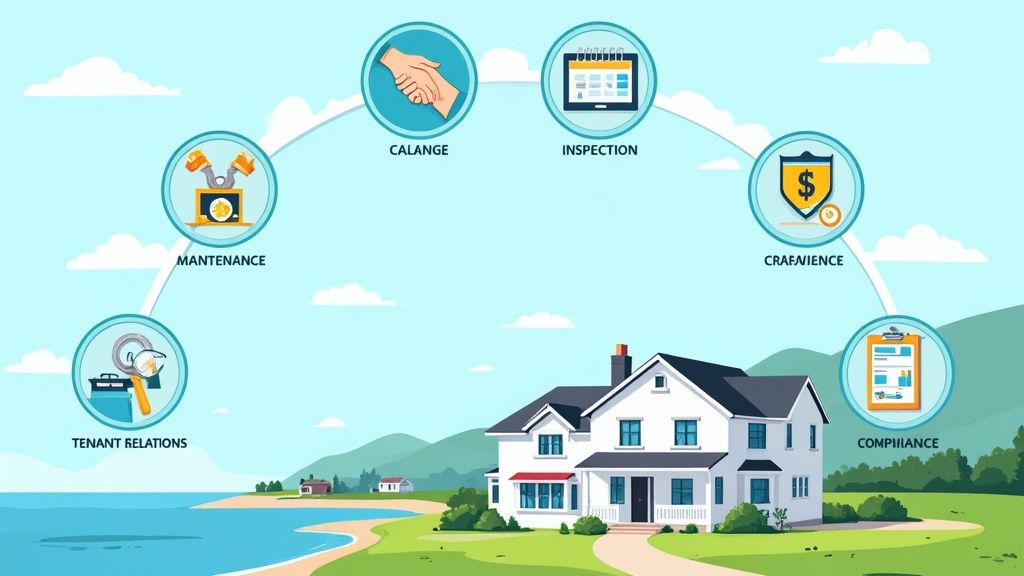
Top 7 Property Management Tips for Monterey Bay Landlords
Owning a rental property in the Monterey Bay area, from Salinas to Carmel, is a significant investment. Turning that asset into a reliable source of income requires strategic oversight and a deep understanding of the local market. With over 44 million U.S. households renting (according to the National Multifamily Housing Council), the demand for quality rentals is high. Effective property management is the key to a thriving investment.
This guide offers actionable property management tips for Monterey County landlords. We’ll cover everything from tenant screening to legal compliance. These insights will help you protect your asset, maximize returns, and build a successful rental business in our unique community.
1. Master Comprehensive Tenant Screening
A proactive, detailed tenant screening process is the single most important defense for your real estate investment. It is the cornerstone of successful property management. This systematic evaluation protects your asset, ensures consistent cash flow, and minimizes future disputes.
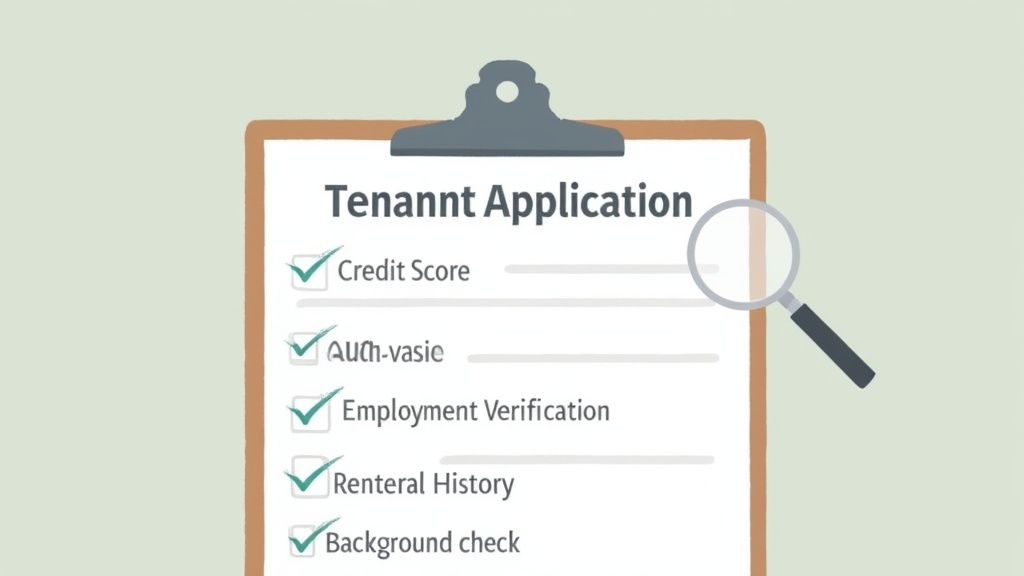
For landlords in competitive markets like Monterey or Salinas, a robust screening protocol is an essential business strategy. It builds a complete picture of an applicant's financial responsibility and rental history.
Key Components of Effective Screening
A comprehensive screening strategy verifies information across several critical areas:
- Credit History: A credit report reveals an applicant's financial habits, debt levels, and payment history.
- Income Verification: This step confirms the applicant has a stable income to afford the rent, typically at least three times the monthly rent.
- Rental History: Contacting previous landlords provides invaluable insight into an applicant's behavior as a tenant.
- Criminal Background Check: This helps identify relevant history that could pose a risk, while adhering to all housing laws.
Actionable Tips for Landlords
Establish standardized screening criteria and apply them uniformly to every applicant to comply with the Fair Housing Act. When verifying income, request recent pay stubs and contact the employer directly. For areas with a large military population like Monterey County, understanding how to read a Leave and Earnings Statement (LES) is a major advantage. This meticulous approach safeguards your investment from the very beginning.
2. Implement a Proactive Maintenance Schedule
Shifting from a reactive to a proactive maintenance schedule is a game-changing property management tip. This strategy involves a systematic calendar for inspections, servicing, and routine upkeep. Addressing potential issues before they become emergencies preserves your property's condition and enhances tenant satisfaction.

This methodical approach turns maintenance into a manageable, budgeted task. For property owners in Monterey Bay, where coastal air can accelerate wear and tear, a preventive plan is a fundamental part of savvy investment management.
Key Components of Proactive Maintenance
A robust preventive maintenance program includes several repeatable tasks:
- Seasonal Checklists: Create detailed checklists for each season, such as cleaning gutters in the fall and servicing HVAC systems in the spring.
- System Servicing: Regularly service major appliances like water heaters and furnaces to ensure efficiency and longevity.
- Safety Inspections: Routinely check smoke detectors, fire extinguishers, and ensure all locks are functioning correctly.
- Exterior Review: Periodically inspect the roof, siding, and drainage to catch early signs of water intrusion or wear.
Actionable Tips for Landlords
Start by building a master maintenance calendar for your property using a simple digital tool. It's recommended to budget 1-3% of the property's value annually for maintenance reserves. Develop relationships with trusted, licensed local contractors for plumbing, electrical, and HVAC needs. Meticulously document every repair with notes and photos to create an invaluable maintenance log. For a deeper look, explore professional property maintenance services in Salinas to see how a structured system works.
3. Conduct Strategic Rent Pricing and Market Analysis
Setting the right rent price is a delicate balance. Strategic rent pricing is a data-driven process that uses market analysis to find the optimal rate. It involves evaluating local conditions, property features, and economic trends to maximize your income without deterring qualified applicants.

This is one of the most powerful property management tips for sustained success. For landlords in dynamic markets like Salinas or Monterey, regular analysis ensures your asset generates its highest possible return.
Key Components of Effective Market Analysis
A robust pricing strategy is built on several layers of market intelligence:
- Comparative Market Analysis (CMA): Analyze currently listed and recently rented properties similar to yours in size, location, and condition.
- Property-Specific Valuation: Assess what makes your property unique, such as recent upgrades, in-unit laundry, or dedicated parking.
- Economic and Seasonal Trends: Monitor local employment rates and seasonal demand shifts, like those around military PCS seasons in Monterey County.
- Vacancy Rate Monitoring: Keep an eye on the local vacancy rate to understand the health of the rental market. According to the U.S. Census Bureau, the nationwide rental vacancy rate was 6.6% in the first quarter of 2024, but local rates can vary significantly.
Actionable Tips for Landlords
Perform a thorough CMA before each new lease or renewal. When renewing a lease, consider gradual, reasonable increases to improve tenant retention. To justify premium pricing, highlight value-added features or services you offer. Staying informed about local economic developments, such as new businesses opening in Salinas, can help you anticipate future demand.
4. Leverage a Digital Property Management System
Managing properties with spreadsheets is no longer efficient. A digital property management system is a software platform that centralizes and automates crucial tasks. These systems act as a digital headquarters for your portfolio, streamlining everything from rent collection to financial reporting.
Adopting this technology is one of the most impactful property management tips for improving efficiency. For landlords with properties across Salinas and Monterey, these platforms provide centralized control and boost tenant satisfaction.
Key Components of Digital Systems
A robust property management software integrates several core functions:
- Online Rent Collection: Automates reminders and allows tenants to pay online, which improves on-time payment rates.
- Maintenance Request Tracking: Tenants can submit work orders with photos through a portal, and you can track the entire process.
- Tenant Communication Hub: Provides a centralized, documented channel for sending announcements and messages.
- Financial Reporting: Generates detailed reports on income and expenses, simplifying tax preparation.
Actionable Tips for Landlords
Choose software that can scale with your growth and has a user-friendly mobile app. Ensure the platform integrates with your banking and accounting tools. Provide clear instructions to tenants during the transition and always follow best practices for data security to protect sensitive information.
5. Uphold Professional Financial Management
Effective property management requires diligent financial oversight. Implementing robust accounting practices is a comprehensive strategy for maximizing profitability and ensuring legal compliance. This systematic approach transforms your rental into a well-run business.
For investors in areas like Salinas or Monterey, professional financial management is one of the most critical property management tips for sustainable success. It provides the clarity needed to make informed decisions.
Key Components of Financial Management
A strong financial strategy is built on several core pillars:
- Dedicated Bookkeeping: Accurately record all income and categorize every expense using specialized software or an organized system.
- Strategic Budgeting: Create an annual budget to anticipate expenses and manage cash flow effectively.
- Reserve Fund Planning: Proactively set aside funds for major future expenses like a new roof or HVAC system.
- Tax Optimization: Proper records are the foundation for maximizing tax deductions and ensuring full compliance with IRS regulations.
Actionable Tips for Landlords
Open a dedicated bank account and credit card for all rental-related income and expenses. Use accounting software designed for landlords, such as Stessa or QuickBooks. Digitally capture and store every receipt and use an app like MileIQ to track property-related travel for tax deductions. This professional approach is fundamental for tracking performance and legal protection.
6. Foster Effective Tenant Communication
One of the most crucial property management tips is cultivating a professional and positive relationship with your tenants. Effective communication is the foundation of this relationship. It involves creating clear, consistent, and respectful lines of communication that make tenants feel valued.
This proactive approach transforms the landlord-tenant dynamic into a more collaborative partnership. For property owners in diverse communities like Salinas or Monterey, establishing a rapport built on trust and responsiveness is key. As a bilingual firm, Torrente Property Management understands the importance of clear communication for all members of our community.
Key Components of Effective Communication
A strong communication strategy is built on several core principles:
- Clarity and Consistency: Establish clear policies in the lease regarding communication methods and response times.
- Responsiveness: Acknowledge tenant inquiries and maintenance requests promptly, ideally within 24 hours.
- Proactivity: Send advance notice for inspections or planned maintenance to keep tenants informed.
- Documentation: Keep a written record of all significant communications with tenants for future reference.
Actionable Tips for Landlords
Define your communication channels from day one in the lease. Using a tenant portal or a dedicated messaging app can centralize non-urgent communications. Offering communication in a tenant's preferred language, like Spanish, improves clarity and builds trust. Creating standardized templates for common notices ensures consistency and compliance.
7. Ensure Comprehensive Legal Compliance
Navigating the complex web of landlord-tenant law is a critical aspect of property ownership. Comprehensive legal compliance involves a deep understanding of all local, state, and federal laws. It is a proactive strategy designed to minimize legal exposure and protect your investment.
For property owners in areas with specific local ordinances, such as Salinas, staying current with evolving regulations is essential. This is one of the most important property management tips to master.
Key Components of Effective Compliance
A robust risk management strategy addresses several interconnected legal areas:
- Fair Housing Laws: Strict adherence to the Fair Housing Act and California's specific protected classes is paramount.
- Lease Documentation: Use an attorney-reviewed, state-specific lease agreement to ensure all clauses are enforceable.
- Safety and Habitability: Comply with all building codes and the implied warranty of habitability to provide a safe environment.
- Procedural Compliance: Properly handle security deposits, tenant notices, and entry rights according to precise legal requirements.
Actionable Tips for Landlords
Join a local landlord association for access to legal updates and resources. Always use state-specific lease agreements reviewed by a local real estate attorney. Meticulously document every tenant interaction and property inspection. Carry adequate liability insurance—a minimum of $1 million in coverage is a common recommendation.
Frequently Asked Questions (FAQs)
1. What is the most important property management tip for new landlords?
The most critical tip is implementing a thorough tenant screening process. Placing a reliable, qualified tenant from the start prevents the vast majority of future problems, ensuring consistent income and protecting your property.
2. How much should I set aside for maintenance and repairs?
A good rule of thumb is to budget 1-3% of your property's value annually for maintenance. For a $700,000 property in Monterey, this would be between $7,000 and $21,000 per year set aside for routine upkeep and unexpected repairs.
3. How often should I inspect my rental property?
Typically, you should conduct inspections upon move-in, move-out, and at least once annually. Always provide proper written notice to your tenants before entering the property, as required by California law (usually 24 hours).
4. What's the best way to handle late rent payments?
Establish a clear policy in your lease agreement regarding late fees and procedures. If rent is late, promptly send a formal written notice as required by law. Consistent enforcement is key to preventing recurring issues.
5. Do I need a property manager for just one rental property?
While not required, a professional property manager can be invaluable even for a single property. They handle the daily tasks, ensure legal compliance, and leverage their expertise to maximize your return, saving you significant time and stress.
Partner with Experts for Peace of Mind
Successfully managing a rental property in Monterey County is a multifaceted job. It requires expertise in tenant screening, maintenance, finance, and law. Implementing these seven essential property management tips will protect your asset and enhance its performance. The most successful landlords are proactive, systematic, and focused on mitigating risk.
Mastering these concepts transforms your role from a reactive landlord into a strategic investor. The ultimate value lies in the peace of mind that comes from knowing your property is well-managed, your tenants are content, and your investment is secure.
The most impactful tip, however, can be recognizing when to bring in a dedicated partner. A professional property manager implements these strategies with expertise, optimizing your property's performance. They handle the daily demands, allowing you to focus on your broader investment goals.
Are you ready to elevate your property's performance and reclaim your time? The team at Torrente Property Management specializes in implementing these expert property management tips for owners throughout Monterey County. Contact us online or call (831) 582-8916 for a complimentary consultation and discover how our professional, trustworthy service can maximize your peace of mind and profitability.

Expert Monterey Second Home Property Management
Owning a second home in Monterey is a dream, but professional monterey second home property management is what keeps it from becoming a nightmare. It’s the critical piece that transforms a distant, high-value asset from a source of anxiety into a secure, well-maintained investment. This is especially true in a market where, according to the California Association of Realtors, less than one-fifth of households can afford the median-priced home, making your property exceptionally valuable.
Why Proactive Oversight is Essential for Your Monterey Investment

When you own a property in Monterey, Carmel, or Pacific Grove, you’re holding a valuable asset in one of the most desirable regions on the coast. The challenge, of course, is managing it when you live hours—or even states—away.
An empty home is a vulnerable one. It’s susceptible to everything from a small, undiscovered leak that turns into a major mold problem to more serious security risks. This is where professional oversight becomes an absolute necessity. The goal isn't just to check the mail; it's about proactive asset protection to ensure your property stays in pristine condition.
The Realities of the Monterey Real Estate Market
The Monterey market demands a higher standard of care. With a median home price hovering around $1.3 million in 2025—an 11.4% increase from the previous year—the financial stakes are incredibly high. You can get a closer look at these market dynamics in this 2025 Monterey real estate update.
This reality calls for foundational services that are non-negotiable for any second home:
- Proactive Maintenance Schedules: A tailored plan is crucial to combat our coastal climate, tackling issues like salt air corrosion before they start.
- Rigorous Tenant Management: If you rent out your home, you need ironclad screening, firm lease enforcement, and on-time rent collection to ensure a steady return from responsible occupants.
- Consistent Communication: You should never have to wonder what's happening. Regular updates and detailed reports provide complete transparency and peace of mind.
A professional partner doesn't just manage tasks; they manage your risk. Their local presence and expertise transform a source of potential stress into a high-performing, well-cared-for asset.
Why Expert Oversight Is Not a Luxury
In a community like Monterey, property upkeep is about more than just curb appeal. It’s about being a good neighbor and preserving the character of the area.
A management partner ensures your home is always presentable and that any issues are handled swiftly. Their established network of vetted local vendors is invaluable, allowing them to dispatch trusted professionals quickly during an emergency. This is all backed by meticulous documentation, providing a clear history of your property’s condition, which is vital during turnovers as detailed in our tenant move-out inspection checklist.
Navigating Monterey's Legal and Financial Landscape

Owning a second home in Monterey involves more than keeping the garden tidy. You're stepping into a complex world of local and state regulations where a single misstep can have serious legal and financial consequences.
California's landlord-tenant laws are notoriously intricate. Partnering with a professional in monterey second home property management isn't a luxury—it's essential for ensuring every lease is ironclad and every action you take is compliant.
Understanding Your Landlord Obligations
As a property owner in California, you're bound by federal Fair Housing laws and a host of state statutes. This means non-discriminatory practices and a legal responsibility to provide a safe and habitable home.
A seasoned property manager lives and breathes these duties. They handle the details, from checking smoke detectors to responding to repair requests promptly, keeping meticulous records to protect you from potential liability. In California, the legal burden falls squarely on the landlord, making professional management your best defense against fines and disputes.
Insurance and Tax Considerations
Your standard homeowner's insurance policy likely won't cover a second home, especially if it's rented out. You'll need specialized landlord or second-home insurance to cover liability, loss of rental income, and other specific risks.
On the financial front, you need a clear system for tracking:
- Property Taxes: Monterey County taxes have firm deadlines and penalties for missing them.
- Rental Income: All income must be reported to the IRS and the California Franchise Tax Board.
- Deductible Expenses: Costs like management fees, repairs, and insurance can often be deducted to lower your tax bill.
A good property manager simplifies this by providing detailed monthly statements and year-end summaries that make tax time much less of a headache.
Budgeting for the Unexpected
A realistic budget must account for both routine maintenance and unexpected capital expenditures, like a new roof or HVAC system. This is especially true in a coastal area like Monterey where salt air and moisture take a toll.
A smart management partner helps you prepare by conducting regular inspections and recommending a capital improvement fund. Proactive financial planning is crucial for maintaining the financial health of your asset. Recent data from the California Legislative Analyst's Office shows that monthly payments for a newly purchased California home can top $5,900—an 82% increase since 2020. This highlights why forward-thinking budgeting is so critical.
How to Choose the Right Property Management Partner
Choosing the right partner for your Monterey second home property management is the most important decision you'll make as an owner. You need a local steward who will protect your home's value and give you genuine peace of mind.
This decision demands a careful evaluation of local expertise, proven systems, and a management philosophy that aligns with your own. A generic, one-size-fits-all approach simply won't work in a market as unique as the Monterey Peninsula.
Vetting for Local Mastery
Deep, boots-on-the-ground knowledge of the area is the most critical trait in a great property manager. This means understanding the subtle differences between managing a coastal home in Carmel versus a family residence in Salinas.
A manager with true local mastery will have:
- A Vetted Vendor Network: A go-to list of trusted, fairly priced plumbers, electricians, and landscapers who will show up for an emergency.
- Neighborhood Nuances: An understanding of how to handle property upkeep to align with specific community standards.
- An Emergency Protocol: A clear plan for handling middle-of-the-night emergencies, like a roof leak during a winter storm.
Proximity is paramount. A management company with a central office in Monterey demonstrates a real commitment to being physically present and responsive across the entire peninsula.
Evaluating Fees, Technology, and Transparency
Once you’ve confirmed local expertise, look at how they run their business. A professional firm should be an open book about its fee structure, technology, and communication.
The management fee is often a focus, but you must understand what it includes. A lower percentage might hide extra costs. Always ask for a clear, itemized breakdown of all potential charges.
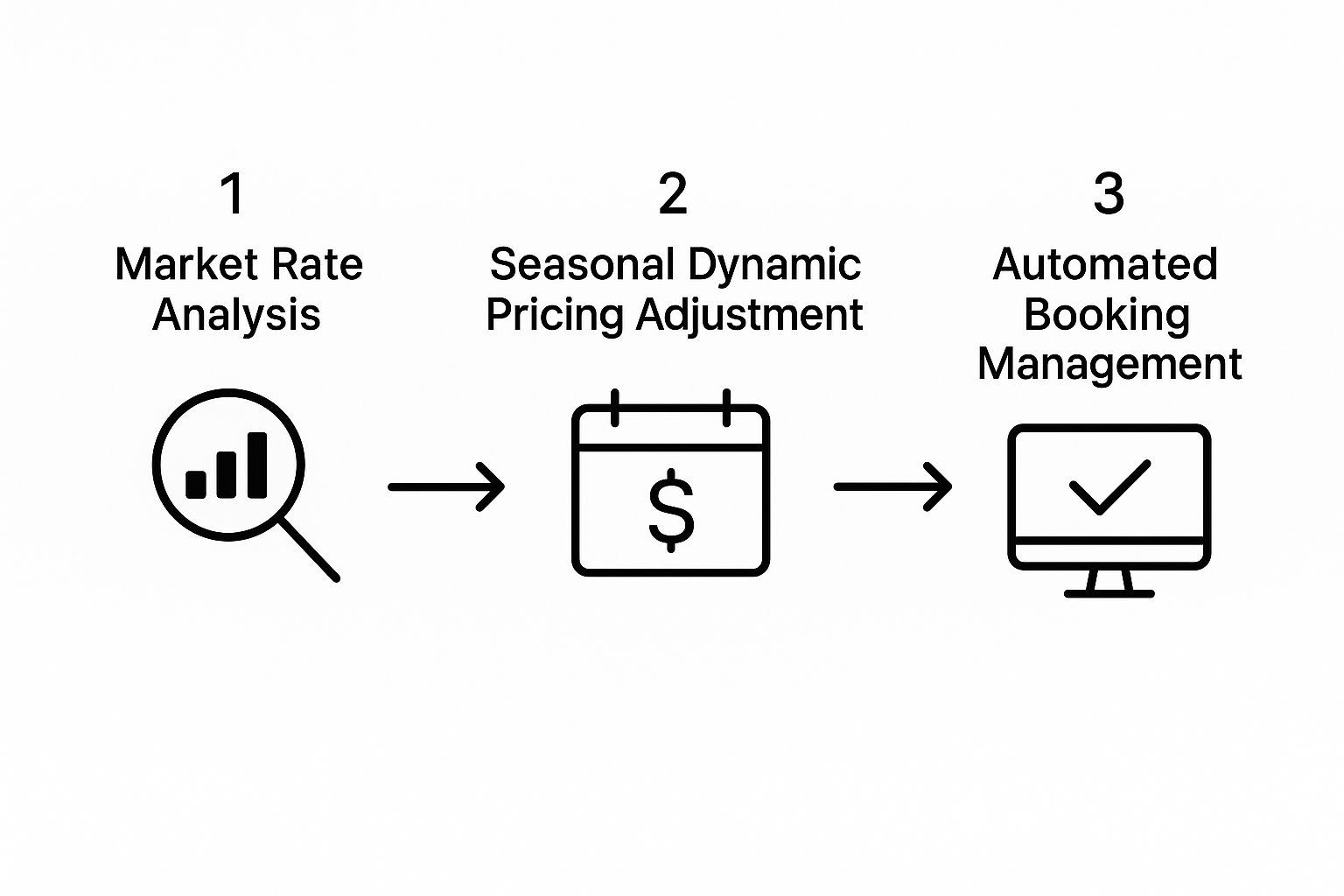
Modern management firms provide a secure online owner portal. This should offer 24/7 access to financial statements, inspection reports, and maintenance requests, providing the transparency you need to feel in control of your investment.
The Importance of the Management Agreement
Your entire partnership is governed by the property management agreement. This legally binding contract spells out the duties and responsibilities of both parties. It is essential that you read and understand every word before you sign.
This agreement should clearly detail everything from the scope of services and fee schedules to cancellation policies and repair authorization limits. A trustworthy firm will take the time to walk you through every clause. For a deeper look at what this contract involves, review the key components of a professional property management agreement.
A clear, comprehensive agreement is the foundation of a strong, lasting partnership. It prevents misunderstandings and ensures everyone is on the same page from day one.
Mastering Proactive Second Home Maintenance

An unoccupied home is uniquely vulnerable. Small issues you’d notice right away if you lived there—a slow drip under a sink or the first sign of ants—can spiral into costly disasters when left unchecked.
Proactive maintenance is the single most effective way to protect your second home’s value. A true partner in Monterey second home property management implements a system built for long-term asset protection.
A Four-Season Maintenance Plan for the Coast
The Monterey Peninsula climate is tough on buildings. The combination of salt air, wet winters, and seasonal pests requires a comprehensive, season-by-season maintenance calendar.
- Winter Readiness: Before the rains hit, gutters must be cleared to prevent water damage, and window and door seals must be inspected to prevent moisture intrusion.
- Spring Refresh: This is the time for pressure washing to remove winter grime and salt buildup, checking irrigation systems, and inspecting for pests.
- Summer Protection: We use this season for exterior paint touch-ups to stop wood rot and to service HVAC systems for efficiency.
- Fall Preparation: This means trimming hazardous tree limbs and running a full safety check on heating systems and fireplaces.
A second home doesn't get a break from wear and tear just because it's empty. In fact, a lack of regular use can accelerate certain problems, making routine, professional inspections absolutely essential.
The Power of a Vetted Vendor Network
When a pipe bursts, the last thing you want is to be scrambling to find a contractor from hundreds of miles away. We've spent years building a trusted network of local, licensed, and insured vendors.
These are the professionals we’d trust in our own homes. Because we provide consistent business, they are responsive, reliable, and offer fair pricing. This network ensures any issue is handled swiftly by a qualified pro. To see how this integrates with our services, explore our approach to property management in Monterey.
Asset Protection Through Modern Security
Securing a vacant property involves more than locking the doors. Regular, physical walkthroughs are the cornerstone of our caretaker service, where we look for unauthorized entry, water leaks, and other issues.
We also integrate modern technology for a comprehensive security net:
- Smart Home Tech: We can remotely monitor and adjust smart thermostats and grant temporary, trackable access to vendors with smart locks.
- Security Systems: We coordinate the installation and monitoring of advanced security systems, providing immediate alerts for unusual activity.
This combination of physical presence and smart technology provides a robust security blanket. This oversight is more important than ever, with recent data showing Monterey County's median home price at $900,000 and sales volume up 9.2% (Source: California housing market report). These numbers underscore the critical need for expert management.
Frequently Asked Questions (FAQs) About Monterey Second Home Management
Here are concise answers to common questions we receive from second home owners.
What are the biggest maintenance risks for a coastal second home?
The biggest risks are from our coastal environment. Salt air causes corrosion on metal fixtures, high humidity can lead to mold, and winter storms can cause water damage. Proactive, seasonal maintenance is essential to mitigate these threats.
How do you screen tenants for a long-term rental?
Our process is rigorous and includes a comprehensive credit check, a national background screening, and verification of income and employment. We also contact previous landlords to get firsthand references, which is the best way to secure a responsible tenant.
Can I use my second home if it has a long-term tenant?
Generally, no. Once a long-term lease is signed, the tenant has the right to "quiet enjoyment" of the property for the entire lease term. This means the owner cannot use the home unless a specific clause was negotiated into the lease beforehand, which is highly uncommon.
What is a typical property management fee in Monterey?
In the Monterey area, management fees are typically a percentage of the collected monthly rent, usually ranging from 8% to 12%. It's crucial to get a clear breakdown of exactly what services are included for that price. You can learn more in our guide on what a property management company does.
How often will I receive updates about my property?
We believe in total transparency. You will have 24/7 access to a secure online owner portal with financial statements, inspection reports, and maintenance updates. For any urgent issues, you will receive a direct call or email from us immediately.
Your Partner in Protecting Your Investment
Smart monterey second home property management is about more than just what happens within your four walls. It’s about being a good neighbor and a respected part of the local community, even when you're miles away. A well-managed home enhances the neighborhood—it never detracts from it.
By choosing to offer your second home as a professionally managed, long-term rental, you actively add a high-quality home to the local housing supply. This helps balance your investment goals with local needs, a concern for 42.92% of residents according to a full Monterey housing survey. Your property manager acts as your community liaison, building relationships and ensuring your property is a positive presence.
Your peace of mind is our priority. To discuss how Torrente Property Management can safeguard your Monterey second home, contact us today at (831) 582-8916 or visit us online at https://torrenteproperties.com.

Tenant Move Out Inspection Checklist for Monterey Bay Landlords
For property owners in the competitive Monterey Bay rental market, a smooth tenant turnover is essential for protecting your investment. The period between tenants is high-risk, where overlooked damage can lead to costly repairs and stressful disputes. A meticulous tenant move out inspection checklist is your most powerful tool for mitigating these risks.
In fact, security deposit disputes are a common issue. Nearly 1 in 10 renters report problems getting their deposit back, often due to disagreements over property condition (Source: Apartment List). A standardized, thorough process removes ambiguity and ensures fairness for both parties.
This guide provides a detailed checklist to ensure nothing is missed, helping landlords in Monterey, Salinas, and Carmel conduct legally sound move-out inspections. Mastering this process safeguards your investment and reinforces your reputation as a professional, trustworthy property manager.
1. Document Existing Condition with High-Fidelity Photos and Video
The most critical step in any tenant move-out inspection checklist is creating irrefutable visual evidence of the property's condition. High-quality photos and videos serve as the foundation of a dispute-proof process, providing a clear, unbiased record. This documentation directly supports any deductions from the security deposit and defends against potential legal challenges.
The Power of Visual Evidence
A written description can be subjective, but a time-stamped, high-resolution photo of a cracked tile or a large carpet stain is definitive. Compare this visual record directly against the move-in condition photos to accurately distinguish between normal wear and tear and tenant-caused damage. Without this baseline, any claims become a matter of "he said, she said."
Torrente Property Management uses detailed, app-based inspections to create professional reports for our clients. You can achieve similar results using smartphone apps that streamline the documentation process and organize photos by room.
Actionable Tips for Flawless Documentation
Follow a systematic approach to create a comprehensive visual record:
- Establish a Baseline: Start with wide-angle shots of each room to capture the overall condition.
- Focus on Details: After wide shots, get close-ups of specific items: appliances, fixtures, flooring, windows, and walls.
- Provide Scale: For damages like holes or deep scratches, place a coin next to them to provide a clear sense of scale in the photo.
- Document Key Components: Photograph utility meter readings, the HVAC filter's condition, and serial numbers on major appliances.
- Leverage Video: Walk through the property while recording video. Narrate what you see, calling out specific conditions and noting that appliances are working.
By creating this detailed visual library, you build a powerful, evidence-based foundation for your entire move-out procedure.
2. Wall and Paint Condition Assessment
After documenting the property's overall state, focus on the walls and paint. This step involves a detailed evaluation of all interior surfaces for damage beyond normal wear and tear, such as holes, deep scratches, unauthorized paint jobs, or significant stains. A meticulous wall inspection is essential for accurately calculating security deposit deductions.
Distinguishing Wear from Damage
The key is to distinguish between acceptable, minor scuffs and tenant-caused damage. For instance, in our Salinas properties, we typically consider a few small nail holes for pictures as normal wear. However, a large hole from a mounted TV or widespread crayon marks are clearly damages.
Also, apply the "useful life" rule. If paint was old at move-in, it may be difficult to charge a tenant for a full repaint, as its value has depreciated over time.
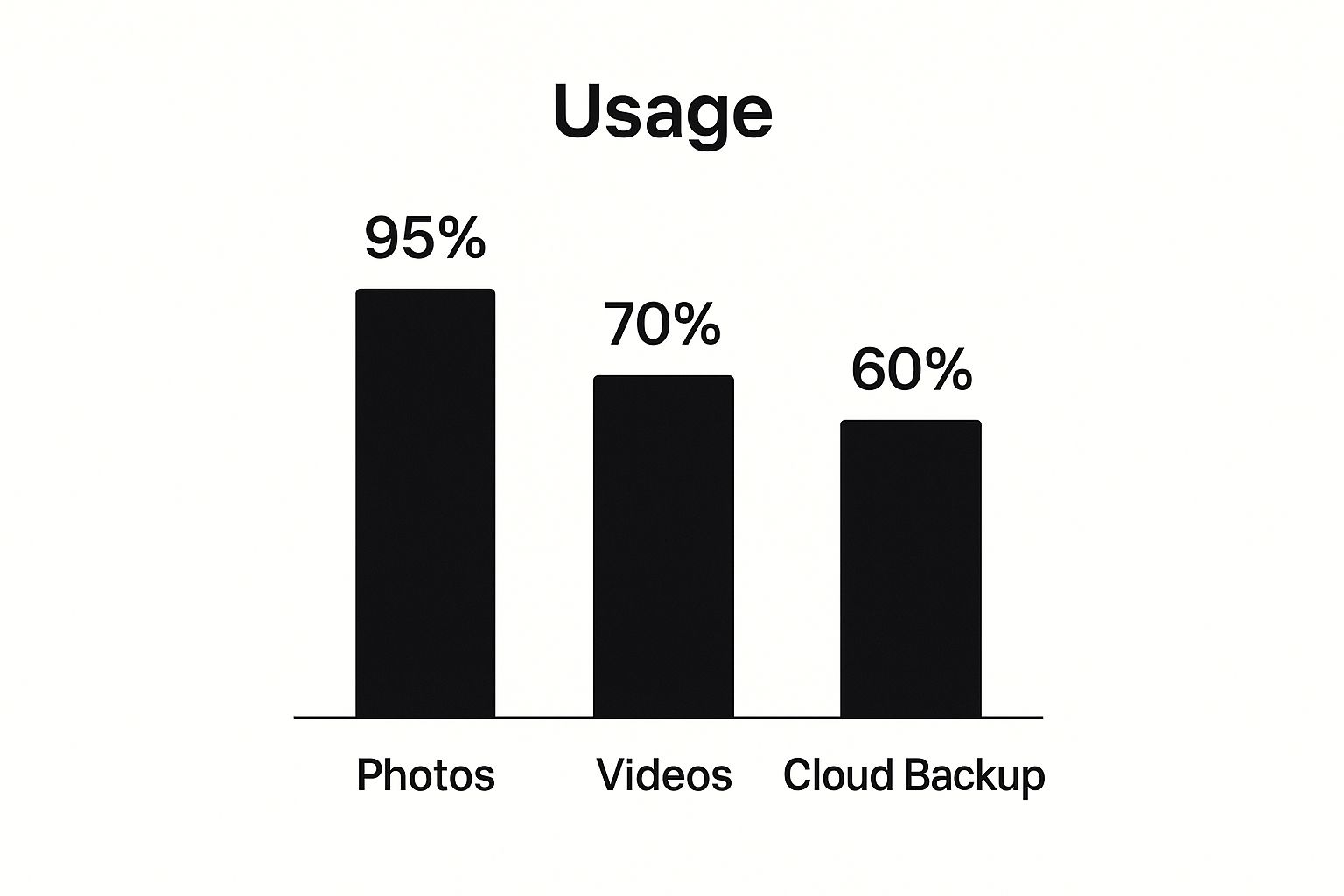
As the data shows, visual proof is paramount. High-quality photos and video walkthroughs create an undeniable record of the property's condition.
Actionable Tips for Accurate Wall Assessment
Implement a systematic approach to inspecting walls and paint:
- Use Proper Lighting: Scan every wall with a bright flashlight held at an angle to reveal imperfections invisible in normal light.
- Know Local Standards: Be familiar with California’s guidelines on normal wear and tear. Generally, small pinholes are acceptable, but larger holes or unapproved paint colors are deductible damages.
- Document Every Flaw: Count and document every hole, scratch, or stain with close-up and wide-shot photos.
- Check Hidden Areas: Inspect behind doors and in areas formerly covered by the tenant's furniture, which often hide impact marks.
- Create a Detailed List: Itemize each issue room by room with a repair cost estimate to provide clear justification for any charges.
3. Appliance Functionality and Cleanliness Check
A crucial part of any tenant move out inspection checklist is evaluating all property-provided appliances. These high-value assets are essential to the unit's function, and their condition directly impacts turnover costs. A systematic check ensures items like the refrigerator, stove, and dishwasher are clean, fully operational, and complete.

Beyond a Simple Glance
Simply looking to see if an appliance is "clean" is not enough. Functionality is paramount. Your inspection must confirm that each appliance performs its core functions as intended, comparing its state to the move-in condition report.
At Torrente Property Management, we use detailed checklists with pass/fail criteria for each appliance function to maintain consistent standards. This professional approach ensures a fair evaluation for both property owners and tenants.
Actionable Tips for a Comprehensive Appliance Audit
Follow a detailed, hands-on testing protocol for every appliance:
- Test All Cycles: Run the dishwasher through a full cycle, checking for leaks and proper drainage. Test both the washer and dryer on various settings.
- Check Temperature Controls: Confirm the refrigerator and freezer are cooling correctly. Test the oven's preheat function, broiler, and timers.
- Inventory All Components: A common oversight is missing accessories. Document that all refrigerator shelves, crisper drawers, oven racks, and burner pans are present and intact.
- Document and Photograph: Take photos of each appliance's interior to show its cleanliness. A short video demonstrating any malfunction is powerful evidence.
This methodical approach creates a clear, defensible record for fair security deposit handling.
4. Flooring Condition Evaluation
A thorough assessment of all flooring is a non-negotiable part of any tenant move out inspection checklist. From carpet to hardwood, the floor's condition is a major factor in determining turnover costs. This evaluation systematically compares the flooring's state at move-out to the move-in report, distinguishing between normal wear and tear and tenant-caused damage.
The Financial Impact of Flooring
Flooring is a significant investment, and its condition directly impacts the unit's appeal to prospective tenants. A stained carpet or a deeply scratched hardwood floor can increase vacancy periods. Properly documenting the floor's condition provides the necessary evidence to hold tenants accountable for damages beyond normal use.
Many professional property managers use a carpet's "useful life" schedule, typically 5 to 7 years, to calculate depreciation when assessing replacement costs. This standard ensures deductions are fair and legally defensible.
Actionable Tips for Accurate Flooring Assessment
Follow these methodical steps for a comprehensive flooring evaluation:
- Inspect All Areas: Do not limit your inspection to high-traffic zones. Check under any remaining furniture for hidden damage or stains.
- Use Bright, Consistent Lighting: Use a powerful flashlight or ensure all overhead lights are on to get a clear view of the entire surface.
- Check for Safety Issues: Walk across the entire floor, feeling for loose tiles, buckled planks, or frayed carpet edges that could be a tripping hazard.
- Document Damage with Precision: For stains, place a plain white paper next to the spot when photographing it for an accurate color reference. Use a coin for scale with scratches.
- Differentiate Damage Types: Note the specific nature of the damage. Pet-related damage, like urine stains, is almost never normal wear and tear and should be documented separately.
A meticulous flooring assessment protects your investment and ensures the property is ready for the next tenant.
5. Kitchen and Bathroom Deep Inspection
Kitchens and bathrooms are high-use areas that reveal the true story of a tenancy. A deep inspection of these rooms is essential for a thorough tenant move out inspection checklist. This process moves beyond surface cleaning to assess fixture integrity and find hidden issues like water damage or mold.

Why Detailed Scrutiny Matters
Small issues in these rooms can escalate quickly. A slow drip under a sink or a cracked grout line in the shower can cause significant water damage. A meticulous inspection protects your investment and ensures the next tenant inherits a safe, sanitary, and functional space.
This level of detail is a standard practice for managing properties in communities like Carmel, where high expectations demand flawless turnover. We use specialized checklists to compare the move-out state directly against move-in reports, leaving no room for error.
Actionable Tips for a Flawless Inspection
Focus on both cleanliness and function for a comprehensive inspection:
- Test All Plumbing: Run every faucet and showerhead to check water pressure and temperature. Flush all toilets to ensure they operate correctly and don't run.
- Inspect Under Sinks: Use a flashlight to carefully inspect cabinets under all sinks. Look for active leaks, water stains, warped wood, or signs of mold.
- Examine Surfaces and Grout: Scrutinize countertops for stains or burns. In bathrooms, check tile grout and caulk lines for mildew or cracking.
- Check Cabinets and Drawers: Open every cabinet and drawer. Check for cleanliness, structural damage, and secure hardware.
- Verify Appliance Functionality: Test every function on all kitchen appliances. This proactive step identifies necessary repairs and justifies deposit deductions fairly.
Frequently Asked Questions (FAQs)
What is "normal wear and tear" in California?
Normal wear and tear refers to the natural deterioration that occurs over time from normal use. This includes minor scuffs on walls, faded paint, or light carpet wear in high-traffic areas. It does not cover tenant negligence, such as large holes, broken fixtures, or pet damage.
How long does a landlord have to return a security deposit in California?
In California, a landlord must return the tenant's security deposit, along with an itemized list of any deductions, within 21 calendar days after the tenant has moved out. Failure to meet this deadline can result in penalties.
Can a landlord charge for a full repaint?
A landlord can typically only charge for painting if it's necessary to repair damage beyond normal wear and tear. If the paint's "useful life" has expired (usually 2-3 years), you generally cannot charge the tenant for a standard repaint.
What's the best way to document property condition?
The best method is a combination of a detailed written checklist, high-resolution photos, and a walkthrough video. This creates a comprehensive, time-stamped record that is difficult to dispute.
Should I be present for the move-out inspection?
It is highly recommended that both the landlord (or their agent) and the tenant be present for the final inspection. This allows for immediate discussion of any identified issues and promotes a transparent, fair process for everyone.
From Checklist to Peace of Mind: Your Next Steps
A comprehensive tenant move out inspection checklist is a cornerstone of professional property management. It transforms the turnover process into a predictable, transparent, and fair procedure for you and your departing tenant. By diligently following this process, you actively preserve your investment's value, minimize disputes, and enhance your reputation in markets like Monterey.
Key Takeaways for Proactive Landlords
To distill this guide into actionable wisdom, focus on these pillars:
- Documentation is Non-Negotiable: A detailed, time-stamped visual record is your most powerful tool. The move-in condition report is the baseline against which all future assessments are measured.
- Consistency is Key: Use the exact same detailed checklist for every move-in and move-out. This consistency demonstrates a fair, unbiased process for every tenant.
- Understand Local Laws: Always stay current with California landlord-tenant laws, especially concerning security deposit timelines and permissible deductions. As noted by the California Department of Real Estate, strict rules govern deposit returns.
A well-executed checklist provides more than just a clean property; it delivers peace of mind. It allows you to confidently manage turnovers, protect your assets, and maintain positive, professional relationships.
A thorough inspection process is vital but also time-consuming. If you prefer to focus on your investment goals, Torrente Property Management Inc. can help. We handle every step of the move-out process with professional precision, ensuring your Monterey Bay property is protected.
Contact Torrente Property Management Inc. today to secure your investment and streamline your operations. Call us at (831) 582-8916.