
Meta Description: Confused about California rent grace periods? Our guide clarifies the rules for Monterey Bay landlords on late fees, notices, and legal compliance to protect your investment.
For Monterey Bay landlords, questions about California rent grace periods and late fees are common. The simple truth is that California state law does not require landlords to offer a grace period.
This means rent is legally late the day after it's due, unless your lease agreement says otherwise. In fact, a 2022 survey found that 21% of renters paid their rent late at least once in the past year, making clear policies essential (Source: Stessa).
The Truth About California Rent Grace Periods

While the law doesn't require it, offering a grace period is a best practice for property owners in communities like Monterey, Salinas, and Carmel. Think of it as a tool for building a positive, professional landlord-tenant relationship.
A grace period is a set number of days after the due date when a tenant can pay rent without a late fee. It is a contractual courtesy, not a legal right, that acknowledges life happens.
Why Offer a Grace Period?
Offering a grace period in your lease sets a reasonable and professional tone. This small bit of flexibility can prevent a minor payment delay from becoming a stressful dispute.
By offering a grace period, landlords show flexibility and understanding. This is crucial for maintaining long-term tenancies and reducing conflicts.
Most experienced landlords include a grace period of three to five days in their agreements. This industry standard helps build trust and encourages tenants to communicate openly about payment issues.
Setting Clear Expectations
Your goal is to balance managing your finances with treating tenants fairly. A well-defined grace period helps you do just that.
- It Prevents Misunderstandings: Tenants know exactly when a payment is officially late and when fees kick in.
- It Encourages Timely Payments: The window is reasonable enough for minor delays but not long enough to encourage chronic lateness.
- It Protects Your Investment: You have a clear, enforceable policy in writing, which is key to consistent rent collection.
Keeping up with local and state regulations is a full-time job. For a complete picture of your responsibilities, explore our guide on California landlord-tenant laws. At Torrente Property Management, we help landlords craft fair and legally solid lease agreements to ensure their rental business runs smoothly.
Crafting Your Lease for Clear Rent Collection
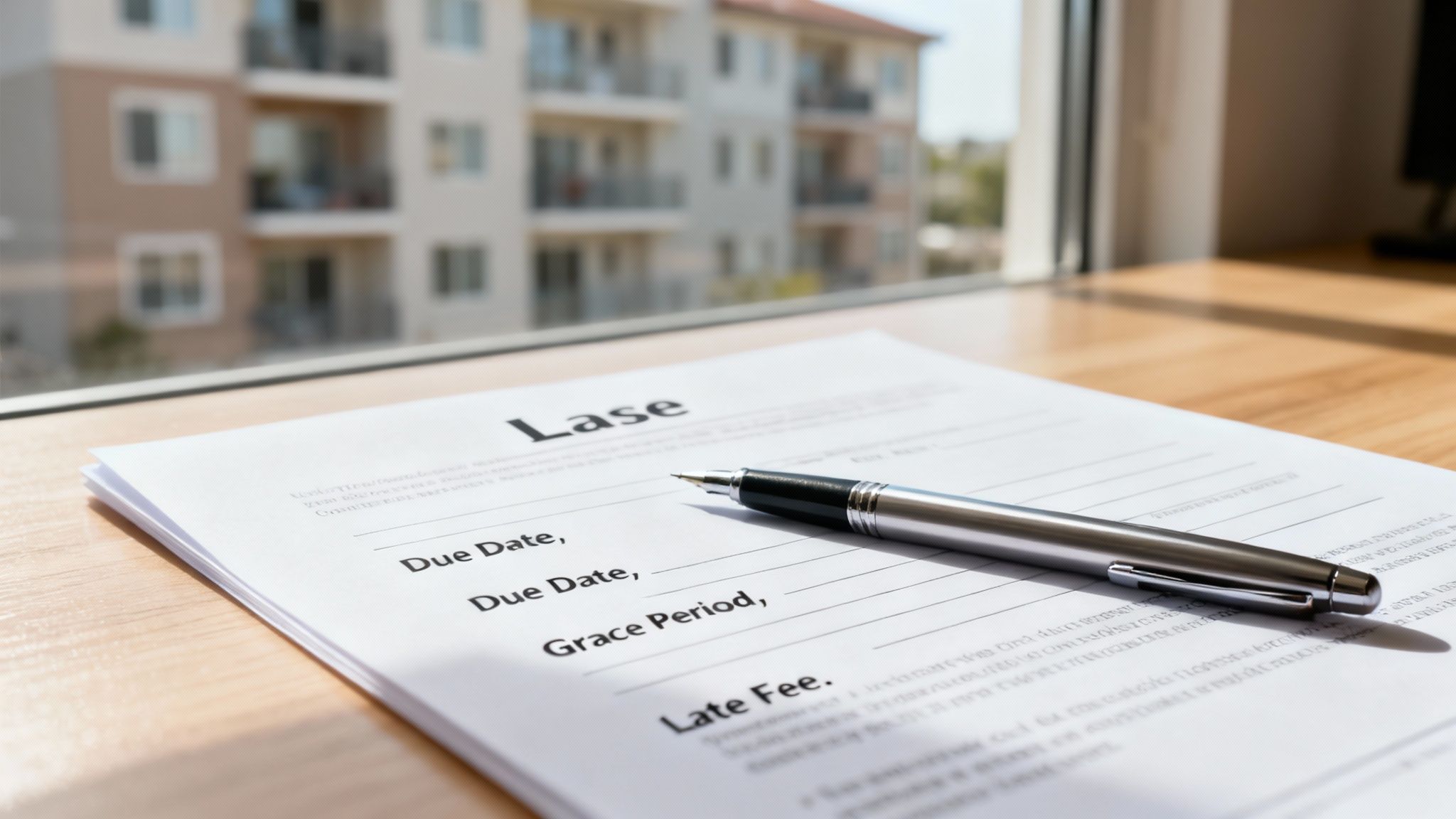
Your lease agreement is the official rulebook for your rental property. It is the most important document for managing your income and avoiding disputes. A clear, detailed lease builds a foundation of professionalism and mutual understanding.
This is your opportunity to formalize your policies on California rent grace periods and late fees. Since state law doesn't require a grace period, your lease is the only place to establish one. Without it in writing, you have no contractual basis to charge a late fee.
Key Details to Include in Your Rent Clause
To avoid confusion, your lease’s rent collection clause must be specific. Vague language leads to tenant disputes and headaches.
Your lease should spell everything out clearly:
- The Exact Due Date: Specify the day rent is due each month (e.g., "rent is due on the 1st day of each month").
- The Grace Period Deadline: Clearly define when the grace period ends, like "Rent is considered late if not received by 5:00 PM on the 5th day of the month."
- The Late Fee Amount: State the exact late fee. For instance, "A late fee of $50 will be assessed if rent is not received by the end of the grace period."
This level of detail leaves no room for interpretation. Both you and your tenant know exactly what to expect.
The Power of a Well-Drafted Lease
A strong lease does more than list rules; it protects your investment and makes your life easier. In a competitive market like Monterey County, including a grace period can reduce arguments over late fees and boost tenant satisfaction, which helps keep occupancy rates high.
Your lease agreement is the cornerstone of a successful landlord-tenant relationship. It turns potential conflicts into clear, agreed-upon procedures.
The process of defining clear expectations in agreements is crucial for landlords. By investing time to craft a detailed lease, you proactively manage your property and foster a professional, respectful environment.
Essential Lease Clauses for Rent Collection
This table outlines the critical components for a legally sound and transparent rent collection policy.
| Lease Clause | What to Specify | Why It's Important |
|---|---|---|
| Rent Due Date | The specific calendar day rent is due (e.g., the 1st of the month). | Establishes a clear, non-negotiable deadline for payment. |
| Grace Period | The exact end date and time (e.g., by 5:00 PM on the 5th). | Defines the window before a payment is officially considered late. |
| Late Fee Amount | The specific dollar amount or percentage charged for late rent. | Ensures the fee is a reasonable, pre-agreed penalty, not a surprise. |
| Accepted Payment Methods | List all acceptable forms (e.g., online portal, check, money order). | Prevents disputes over how rent was paid or if a method is valid. |
| Returned Check Fee | The fee charged for bounced payments (NSF fee). | Covers bank charges and administrative hassle from failed payments. |
Having these details in your lease provides a clear roadmap for you and your tenant. This minimizes the chance of misunderstandings.
For property owners in the Monterey Bay area, ensuring your lease is clear and compliant is vital. At Torrente Property Management, this is our specialty. A well-written lease is your best defense against payment problems and a key tool for a profitable, stress-free rental property.
Calculating Late Fees the Right Way
Figuring out late fees in California isn't as simple as picking a number. The fee must be fair, legal, and based on reality. A late fee cannot be a penalty meant to punish the tenant.
Instead, the fee must be a "reasonable estimate" of the actual costs you face because the rent was late. This is a critical distinction. Charging an excessive fee can be challenged in court, costing you much more than the late rent.
To keep your policy on solid legal ground, you must be able to justify the amount you charge. This means documenting the real costs tied to collecting the overdue payment.
What Are Legitimate Costs?
What counts as a "reasonable" cost? The law looks for direct expenses you can link to the late payment. You cannot add fees that are punitive.
Here are examples of costs you can include in your calculation:
- Administrative Time: The hours you or your staff spend making calls, sending emails, or drafting late notices.
- Communication Costs: The price of paper, ink, envelopes, and postage for sending physical notices.
- Travel Expenses: If you drive to the property to post a notice, you can factor in the cost of mileage.
You cannot include costs that are not a direct result of the late payment. "Emotional distress" or general "inconvenience" do not qualify. The goal is to be precise and fair, not to profit from a tenant's mistake.
How to Calculate a Defensible Late Fee
Calculating a fee that will hold up in court is a logical process. The math behind it must be based on your estimated actual costs. This ensures you stay compliant with rules around California rent grace periods and late fees.
This infographic breaks down a simple, three-step process for calculating a reasonable and legally defensible fee.
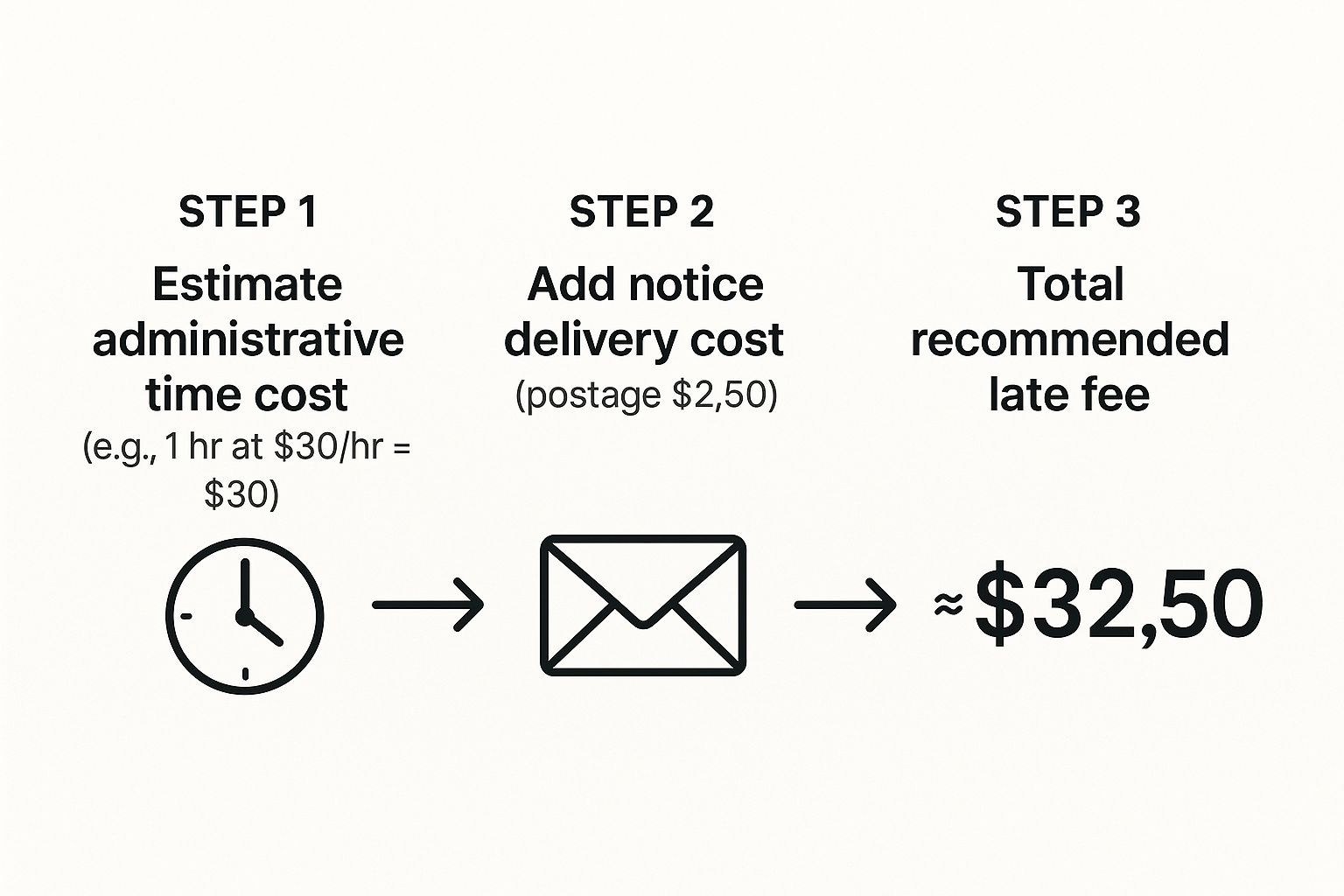
When you break down your costs, you create a fee structure that's transparent and legally sound.
Documenting Your Calculations Is Key
Keeping a record of how you calculated your late fee is your best defense against legal disputes. Create a simple spreadsheet that outlines your estimated costs for each late payment incident.
A common practice is to set a late fee at a small percentage of the monthly rent, often around 5%, as long as it aligns with your estimated costs.
This percentage-based approach is often seen as reasonable. However, you must be ready to show your math if asked.
At Torrente Property Management, we handle rent collection professionally and legally. We set up clear, compliant policies and manage all tenant communications about payments. We help landlords understand the best ways to pay rent electronically, which can dramatically reduce late payments.
Responding When Rent Is Overdue
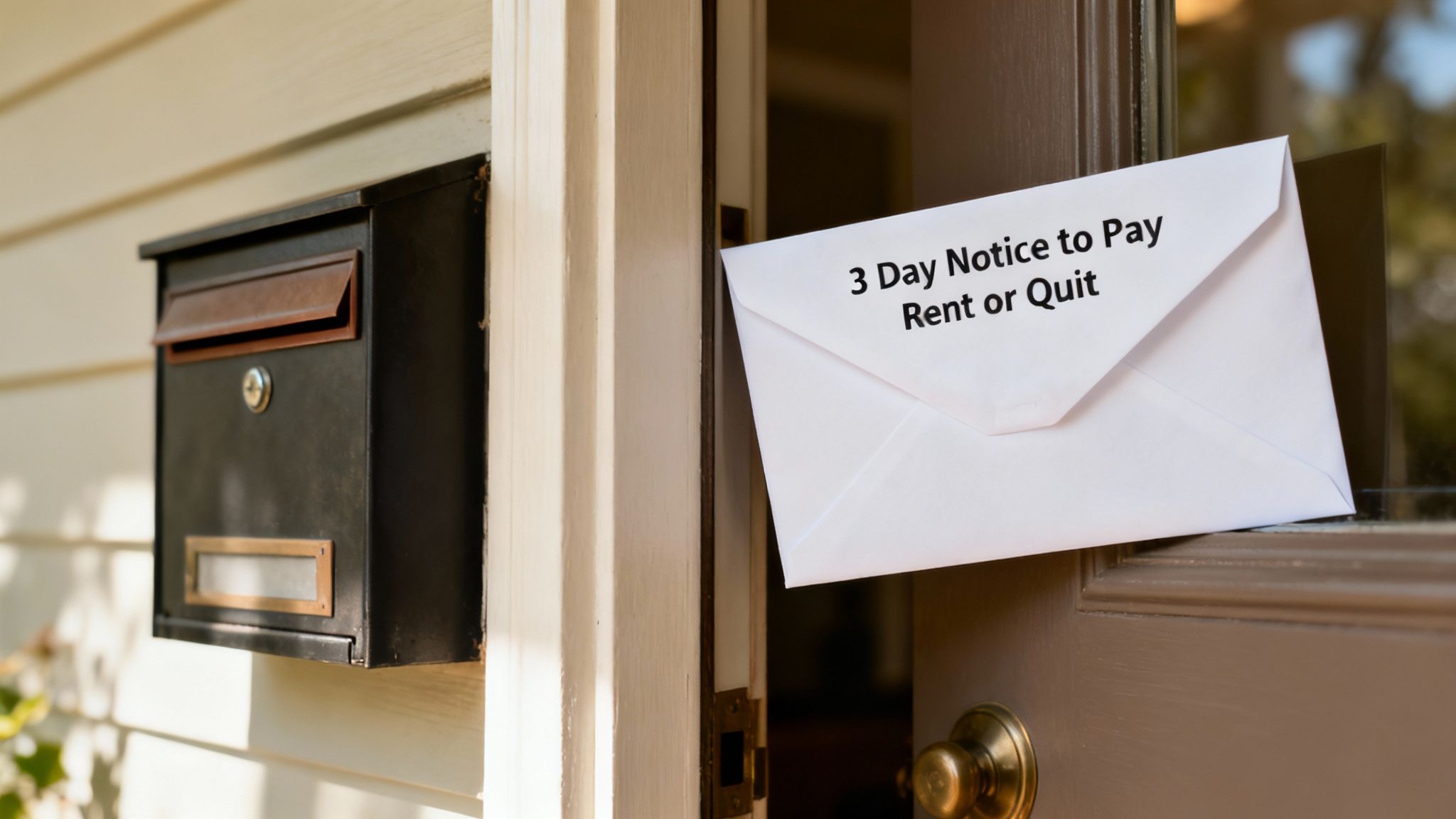
The grace period has passed, but the rent hasn't been paid. Now is the time for formal, professional action. Following the correct legal procedure is everything.
Your next move is to issue a 3-Day Notice to Pay Rent or Quit. This is the official start of the eviction process in California. This legal document tells the tenant they have three days to pay the full amount of rent owed or move out.
What Is a 3-Day Notice?
The 3-Day Notice to Pay Rent or Quit starts a potential eviction. It is a formal written warning that must meet strict legal standards to be valid.
If your tenant does not comply, you can then file an unlawful detainer lawsuit. A small mistake on this form can get your case thrown out, forcing you to start over.
Essential Details for a Valid Notice
To ensure your notice is valid, it must contain specific, accurate information. There is no room for error.
Your 3-Day Notice must include:
- The Tenant’s Full Name: List every adult tenant on the lease.
- The Property Address: Include the full street address, city, and ZIP code.
- The Exact Rent Owed: State the precise amount of rent due. Do not include late fees or other charges.
- A Clear Statement: The notice must state that the tenant must pay the rent within three days or move out.
- Your Information: Include your name (or your property manager's), address, and a phone number.
- Payment Instructions: Be specific about who to pay, where to pay, and what payment methods you accept.
Getting these details right is non-negotiable. Professional property management ensures these sensitive legal documents are handled with precision.
Proper Delivery Is Just as Important
How you deliver the notice is as crucial as what is on it. California law has three acceptable methods for "serving" the notice.
- Personal Service: Hand the notice directly to the tenant. This is the best method.
- Substituted Service: If the tenant isn't there, leave the notice with another competent adult at the property and mail a second copy.
- Posting and Mailing: If you cannot find the tenant or another adult, you can post the notice on the front door and mail a copy.
Documenting how and when you served the notice is vital. Take a photo of the posted notice and keep a record of the date, time, and delivery method. This proof is essential for court.
This process requires a solid grasp of legal protocols. Landlords can better understand their tenants’ protections by reviewing foundational tenant rights in California. This knowledge empowers you to act confidently and legally.
How Professional Management Protects Your Investment
Collecting rent can be a major headache. For property owners in Monterey, Salinas, and Carmel, the stress of chasing late payments and navigating California rent grace periods is draining. This is where a professional manager changes the game.
A good property manager takes the administrative and emotional stress off your shoulders. You no longer have to make awkward calls or send legal notices. Instead, a proven system handles it all.
A Consistent System for Rent Collection
At Torrente Property Management, our rent collection process is professional and consistent. It begins with an ironclad lease that clearly spells out all payment policies.
We make it incredibly easy for tenants to pay. Our modern system includes:
- Simple Online Portals: Tenants can pay instantly online via ACH or credit card.
- Automated Reminders: We send friendly email and text reminders before rent is due and before the grace period ends.
- Clear Communication: Our team, which includes bilingual Spanish-speaking professionals, handles all tenant questions about payments respectfully.
This structured approach ensures rent is handled professionally every single time.
Enforcing Policies with Confidence and Compliance
When rent is late, our approach is firm, fair, and 100% compliant with California law. We have a documented procedure for every step. From applying legally calculated late fees to serving a 3-Day Notice to Pay Rent or Quit, every action is taken with precision.
This consistency shows tenants that the lease terms are serious, encouraging on-time payments. Our meticulous documentation protects you from potential disputes. Of course, protecting your investment also means understanding your financial obligations, and resources like A Landlord's Guide to Taxes on Rental Income are invaluable for that.
A professional manager acts as a buffer, handling difficult conversations and legal procedures so you don't have to. This preserves your time, energy, and the landlord-tenant relationship.
Here’s a quick comparison of handling rent collection on your own versus with our team.
DIY Landlording vs. Professional Management
| Task | DIY Landlord Approach | Torrente Property Management Approach |
|---|---|---|
| Rent Reminders | Manually sending emails or texts, if remembered. | Automated, scheduled reminders sent via email and text. |
| Payment Methods | Limited to checks, money orders, or a single digital app. | Multiple convenient options via a secure online portal. |
| Late Fee Calculation | Guesswork or using a flat fee that may not be legally compliant. | Precise calculation based on the lease and strict state laws. |
| Serving Notices | Unsure of the correct legal format and delivery method. | Professional, legally-compliant notices served correctly. |
| Tenant Communication | Direct, often stressful conversations about late payments. | Professional, objective communication handled by our trained, bilingual staff. |
| Record Keeping | Scattered notes and emails that are hard to track. | Meticulous digital records of all payments and communications. |
The contrast is clear. Handing over rent collection to a professional is an investment in a system built to protect your asset and ensure your rental property runs like a profitable, stress-free business. It helps to understand everything involved in what a property manager does to protect an owner's investment.
Frequently Asked Questions (FAQs)
Is there a mandatory rent grace period in California?
No, California state law does not require landlords to offer a grace period. It is an optional courtesy that must be clearly written into your lease agreement to be enforceable. Without it, rent is legally late the day after it's due.
How much can I legally charge for a late rent fee?
In California, a late fee must be a "reasonable estimate" of the actual costs you incurred due to the late payment. While there is no legal cap, a fee up to 5% of the monthly rent is often considered defensible, provided you can justify it with your administrative costs.
Can I serve an eviction notice the day after rent is late?
Yes. If your lease agreement does not include a grace period, you can legally serve a "3-Day Notice to Pay Rent or Quit" the day after rent is due. However, a friendly reminder first can often resolve the issue without damaging the tenant relationship.
What should I do if a tenant's check bounces?
You should immediately serve a 3-Day Notice for the total unpaid amount. You can also charge a returned check fee and any applicable late fees, but only if these policies are outlined in your lease agreement and comply with state limits.
Can I refuse a partial rent payment from a tenant?
Yes, you have the right to refuse a partial payment. Accepting a partial payment after serving a 3-Day Notice can invalidate that notice and force you to restart the eviction process if the tenant doesn't pay the rest.
Managing rent collection, navigating legal notices, and maintaining positive tenant relationships takes expertise. At Torrente Property Management, we handle this entire process with the professionalism your investment deserves.
Tired of chasing late rent? Contact Torrente Property Management today at (831) 582-8916 or visit us online at https://torrenteproperties.com to learn how our expert services can bring you peace of mind.