
Protecting your second home while you’re away isn’t about just one thing—it’s about a layered strategy. Think of it as combining physical security, smart technology, and professional monitoring.
By making your home a harder target and creating the illusion that someone’s home, you can dramatically cut down the risks. This guide will show you how seasonal and second-home owners can protect their property while away, giving you peace of mind.
Why Your Vacant Monterey Bay Home Needs a Plan
Owning a seasonal home in beautiful Monterey, Carmel, or Salinas is a dream for many. But leaving that dream property empty for long stretches comes with real risks that too many owners underestimate.
An unoccupied home is a magnet for problems. According to FBI data, 65% of burglaries happen during daylight hours, a time when a vacant home is most vulnerable. These issues can spiral into costly disasters if nobody's around to catch them.
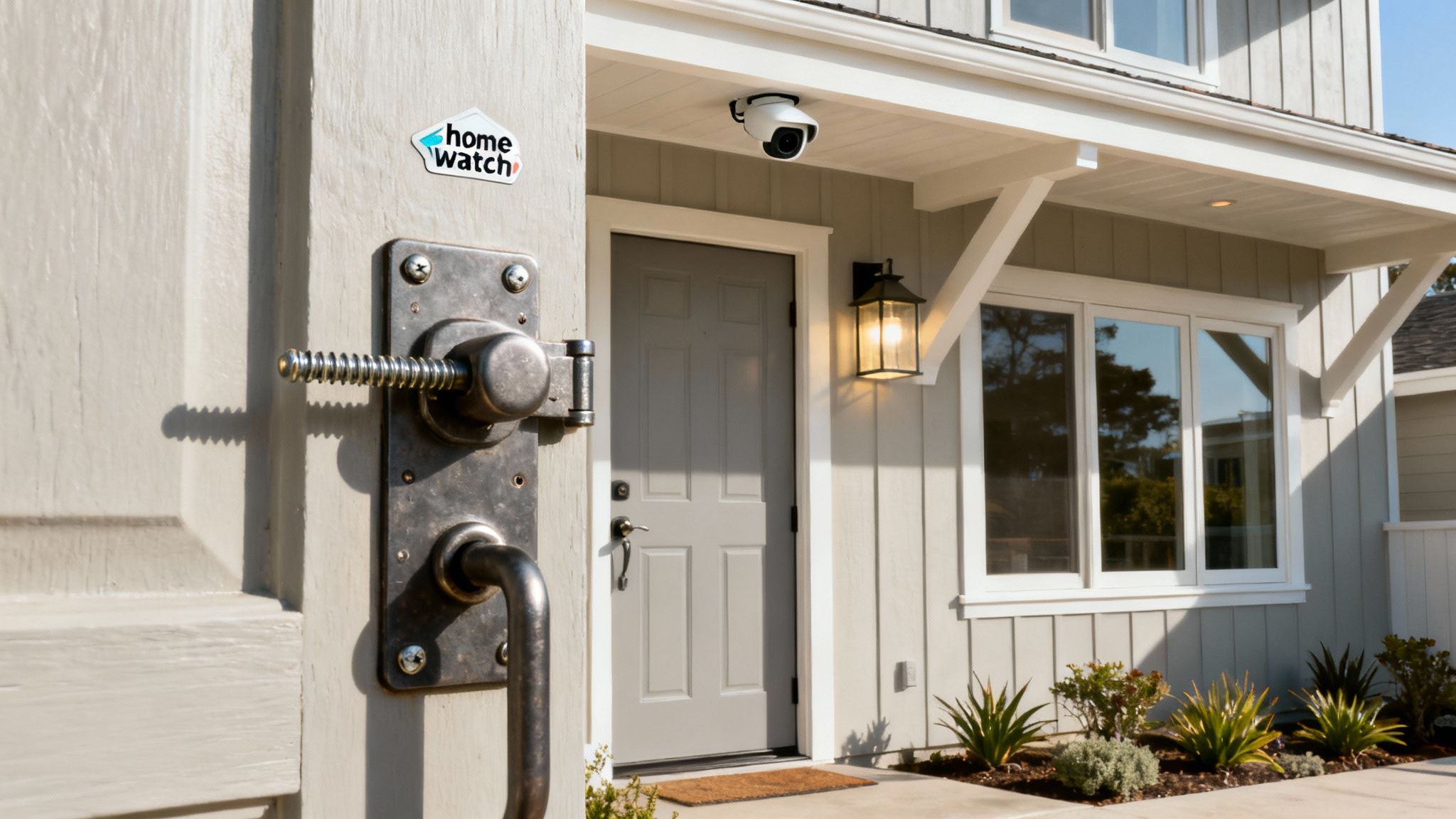
Imagine a pipe bursting during a rare cold snap. A small roof leak from a winter storm can go unnoticed for months, leading to major damage. Pests find their way in, and an overgrown yard practically screams "nobody's home," making your property a prime target.
Understanding the Risks of an Empty Property
Beyond environmental threats, security is a massive concern. While many people worry about forced entry, a shocking 38% of burglars get in through unlocked doors or windows. This simple fact shows how important a solid security routine is.
To get a handle on what you’re up against, it’s helpful to see the threats laid out. Here’s a quick look at the most common issues we see with unoccupied second homes in our community.
Top Risks for Unoccupied Second Homes
| Risk Category | Specific Threat Examples | Potential Consequence |
|---|---|---|
| Security Breaches | Burglary, vandalism, squatting | Theft of valuables, significant property damage, legal battles |
| Environmental Damage | Burst pipes, undetected leaks, storm damage | Major water damage, mold growth, structural issues |
| Maintenance Neglect | Pest infestations, overgrown landscape, HVAC failure | Costly exterminations, curb appeal loss, system replacements |
| Insurance & Liability | Vacancy clause violations, accidents on property | Denied claims, personal liability for injuries, lawsuits |
These risks are why a proactive plan is not just a good idea—it's essential for protecting your investment.
An empty home is a responsibility. Without a proactive plan, you're leaving its safety to chance, risking not only financial loss but also serious insurance complications.
Speaking of insurance, many policies have a "vacancy clause." If your home is empty for an extended period—often just 30 to 60 days—your coverage for things like vandalism or water damage could be limited or denied. This makes proactive protection non-negotiable.
Creating a Foundation for Peace of Mind
The key is to think and act like a full-time resident, even when you're miles away. Safeguarding your property means diving into comprehensive strategies to increase home security.
For out-of-town owners, this can feel like a lot to juggle, but you don't have to go it alone. A solid plan combines physical deterrents and smart monitoring with the peace of mind that comes from having a local expert on your side. You can learn more in our guide to rental property management for out-of-town owners.
Strengthen Your Home’s Physical Security
Before you think about cameras or smart locks, let's talk about the fundamentals. Technology is great for telling you when something’s wrong, but solid physical security can stop a problem before it starts.
Opportunistic burglars look for the path of least resistance. Your job is to make your property look like too much work. You can achieve a lot with some simple upgrades that make a world of difference.
Reinforce Your Doors and Locks
Your main entry points are the most common targets. What might surprise you is how weak standard door frames and locks can be. A few straightforward fixes can drastically increase their strength.
Start with the screws in your doorjamb's strike plate. Replace the short factory screws with three-inch-long hardened steel screws. These anchor the plate deep into the wall stud, not just the flimsy door frame, making the door much harder to kick in.
Once the frame is solid, turn your attention to the locks:
- Install ANSI Grade 1 Deadbolts: This is the top security rating for residential locks. They are built to take a beating and are much harder to pick.
- Add a Door Reinforcement Kit: This is like armor for your door. Metal plates wrap around the door and frame near the lock, preventing the wood from splitting under force.
- Secure Sliding Glass Doors: These are a weak point. The easiest fix is a security bar wedged in the track. You can also add secondary locks to prevent the door from being lifted off its track.
A top-of-the-line deadbolt is useless if the frame around it splinters. You have to reinforce both the lock and the structure it’s attached to.
Clear Sightlines and Secure Perimeters
Overgrown bushes and trees are a burglar's best friend. They provide perfect cover for someone trying to sneak up to your house unseen.
Take a walk around your property with a critical eye. Trim back any large shrubs or low-hanging branches near windows and doors. A clean, well-kept yard sends a clear message: this property is looked after. These foundational steps are the bedrock of any solid security plan. For more ideas, explore these strategies to deter trespassers and intruders.
Using Smart Technology for Remote Monitoring
Modern technology has changed the game for seasonal and second-home owners. It puts the power to protect your property right in your hand, no matter where you are.
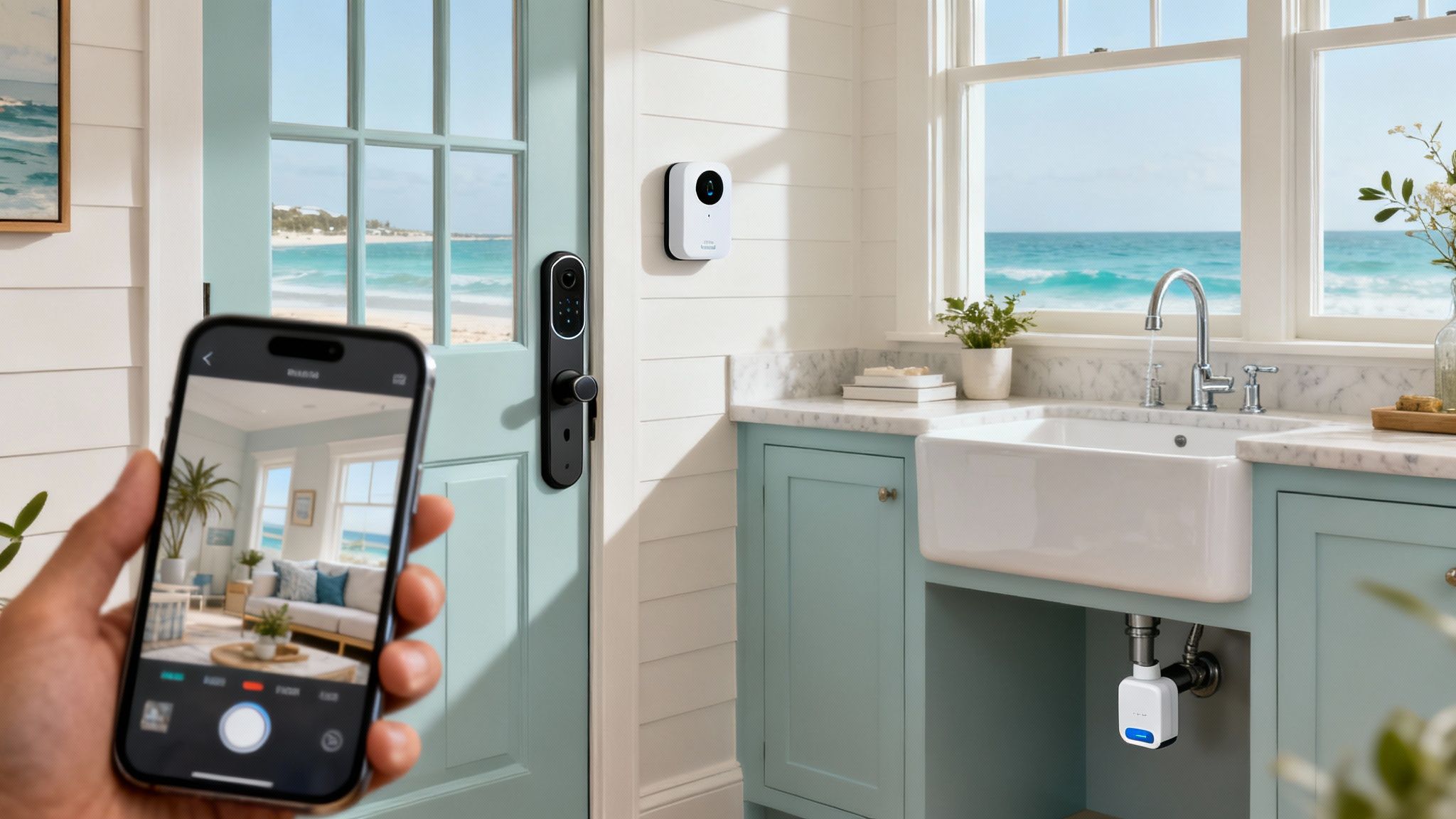
A professionally monitored smart security system is the cornerstone of this strategy. These systems connect everything—motion detectors, door sensors, and cameras—to a 24/7 monitoring center. If a sensor is triggered, a professional team can instantly verify the threat and dispatch local authorities.
Building Your Remote Security Ecosystem
To create an effective remote setup, think in layers. Each device gives you a new level of awareness and control, so you know exactly what’s happening at your property.
- Video Doorbells: See and speak with anyone who comes to your door. It immediately creates the impression that someone is home.
- Smart Locks: Grant temporary, code-based access to trusted people like a maintenance crew or your property manager. You'll get a notification every time the code is used.
- Environmental Sensors: These are your defense against non-human threats. Smart sensors can detect a water leak, freezing temperatures, or the first signs of smoke, sending an alert to your phone.
Package theft is a major concern. With 62% of Americans worried about porch pirates, smart tech offers a direct solution. Learn more by reading these insights on holiday season security.
Smart technology doesn't just alert you to problems—it empowers you to act. You can remotely unlock a door for a plumber in an emergency or check live camera feeds for peace of mind.
Managing alerts from a distance can still be a challenge. For insights on how professionals handle this, our guide on property management software comparison offers valuable information. This is key to how seasonal and second-home owners can protect their property while away.
Maintaining a Lived-In Appearance
A dark house with an overflowing mailbox is a dead giveaway. The goal is to make it look like someone is home, even when it’s empty. This illusion of daily activity is a powerful deterrent.
Smart technology is your best friend for this. Program smart plugs and timers to turn lights, TVs, or a radio on and off at different times. This mimics a natural routine much better than leaving a single light on 24/7.
Managing Your Home’s Curb Appeal
The outside of your house tells the loudest story. A neglected yard or packages on the doorstep screams "nobody's here."
Before you leave, make sure you:
- Pause Deliveries: Put a hold on your mail with the USPS and stop any newspaper subscriptions.
- Arrange for Yard Care: Hire a local service to mow the lawn, trim hedges, or handle snow removal.
- Handle Packages and Flyers: Ask a trusted neighbor or your property manager to clear away any deliveries or flyers left at your entrance.
These simple tasks prevent your home from looking abandoned and vulnerable.
The most effective security strategy is often the simplest: create doubt. If a potential intruder isn't sure whether someone is home, they are more likely to move on.
Trying to manage these details from afar can be a headache. That’s where professional help makes all the difference. Our dedicated vacant home caretaker services in Monterey Bay are designed to handle exactly this, providing peace of mind.
The Value of a Local Home Watch Service
Technology and physical prep work are great, but they can only take you so far. A smart sensor can alert you to a burst pipe, but it’s blind to a slow drip under a sink that’s been feeding a mold problem for weeks.
Nothing replaces the value of having a trusted pair of eyes on the ground. A professional home watch service is the ultimate layer of protection for absentee owners.
Beyond What Technology Can See
A professional home watch service is about scheduled, physical inspections of your property. This is essential for catching the subtle issues that cameras and sensors will always miss.
Think about the little things that signal neglect:
- A faint musty smell that hints at hidden moisture.
- The earliest evidence of pests.
- Minor storm damage to a few roofing tiles.
- Clogged gutters causing water to back up.
A trained professional from a local company like ours knows exactly what to look for. We check under sinks, run faucets, and flush toilets to ensure the plumbing system is working.
A smart device can tell you if a door opens, but it can't tell you if a fallen tree limb has cracked a window on the back of your house. A local home watch expert can.
This simple decision tree illustrates the first steps in creating a "lived-in" appearance—a core task that a home watch service manages for you.
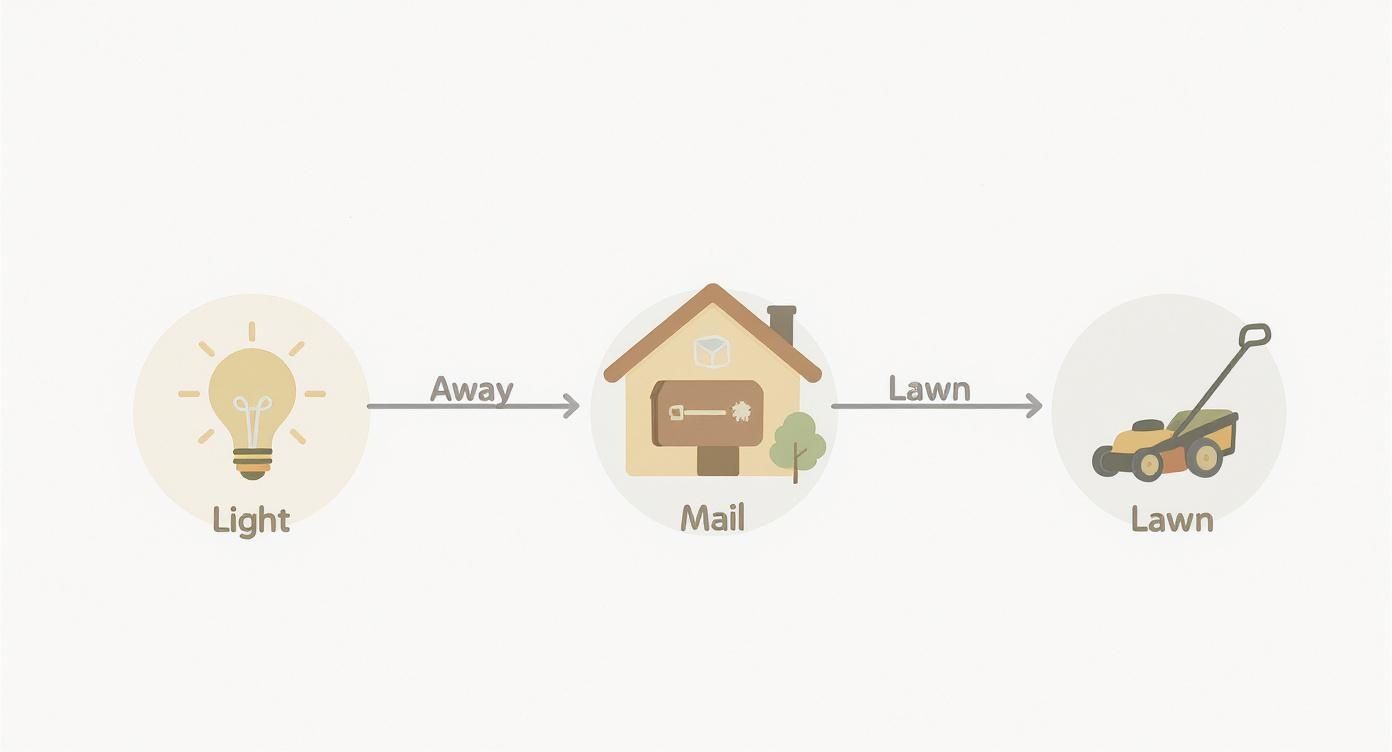
While these are great DIY steps, a professional service automates them, giving you complete peace of mind.
DIY Security vs. Professional Home Watch Services
This table breaks down the advantages of having a dedicated professional managing your property. It shows how a service elevates protection beyond what most owners can manage from afar.
| Security Task | DIY Homeowner Approach | Professional Home Watch Service |
|---|---|---|
| Routine Inspections | Relying on neighbors or family to check in occasionally. | Scheduled, comprehensive interior and exterior inspections with detailed reports. |
| Issue Detection | Dependent on smart home alerts or visible exterior damage. | Proactively identifies subtle signs of trouble (leaks, pests, mold) that technology misses. |
| Emergency Response | Scrambling to find and vet vendors remotely during a crisis. | Immediate on-site response with a network of trusted, local vendors ready to go. |
| Vendor Management | Coordinating repairs and access from a distance. | Manages vendor access, oversees work quality, and ensures fair pricing. |
| "Lived-In" Look | Using basic timers and asking a neighbor to collect mail. | Manages mail, flyers, landscaping, and variable light schedules. |
| Accountability | No formal documentation; relies on informal updates. | Provides detailed digital reports with photos after every visit. |
A professional home watch service provides a proactive, comprehensive strategy that anticipates problems and resolves them efficiently.
The Power of a Local, Bilingual Team
Having a local expert who knows the Monterey Bay community is a game-changer. When an issue comes up, you don't want to be frantically searching online for a reputable plumber from hundreds of miles away.
A local property manager has a network of trusted vendors ready to respond. They can coordinate emergency repairs, manage access, and ensure the work is done right. Our bilingual (English/Spanish) team can communicate effectively with a wider range of local service providers, ensuring nothing gets lost in translation.
After every visit, you receive a detailed inspection report with photos, so you always know the condition of your property. It’s about having a dedicated local partner acting on your behalf. To see how this works, explore Torrente's trusted home watch services in Monterey Bay.
Your Pre-Departure Security Checklist
Before you leave for the season, a final walkthrough is your best defense against surprises. This repeatable process covers all the critical bases for how seasonal and second-home owners can protect their property while away.
Interior Preparation
An empty home hides many risks. These simple steps can prevent the vast majority of disasters.
- Unplug Non-Essential Appliances: Walk through and unplug TVs, coffee makers, toasters, and computers. This protects them from power surges and reduces fire risk.
- Set Your Thermostat Wisely: In winter, set your thermostat to around 55°F to keep pipes from freezing. In warmer months, set it higher (around 80°F) to control humidity.
- Shut Down Your Water Supply: This is the big one. Turning off the main water valve is the single most effective way to prevent massive water damage. After you shut it off, open all faucets to drain the pipes.
Taking ten minutes to unplug devices and shut off the main water valve can save you from tens of thousands of dollars in damages.
Exterior Security
The outside of your home is your first line of defense. A buttoned-up exterior shows the property is cared for.
- Lock All Outbuildings: Don't forget sheds or garages. They often hold tools a burglar could use to break into your house.
- Secure Outdoor Furniture and Grills: High winds can turn patio furniture into dangerous projectiles. Move them into a garage or use a heavy-duty cable to lock them to a fixed object.
- Physically Check All Doors and Windows: Walk the perimeter and physically check every single door and window. Pay special attention to small or second-story windows.
Services and Utilities
Managing your services is about security and logistics. You want to stop the signs that a home is empty.
- Pause Mail and Deliveries: An overflowing mailbox is a giveaway. Use the USPS website to place a hold on your mail and cancel subscriptions.
- Notify Utility Companies: If you're gone for months, give your utility providers a heads-up. You'll want to keep electricity on for your security system and timers.
Communication and Coordination
Finally, good communication ensures you have a support system ready to act if something goes wrong.
- Brief a Trusted Neighbor: Let a neighbor know when you're leaving and when you'll be back. Give them your contact info for emergencies.
- Equip Your Property Manager: Your property manager is your most important partner. Make sure they have keys, alarm codes, and emergency contact information. This allows them to perform thorough vacant property inspections and upkeep in Monterey County and gives you genuine peace of mind.
Frequently Asked Questions (FAQs)
As specialists in vacant property care in Monterey Bay, we get many questions from homeowners. Here are answers to the most common ones.
How often should my vacant property be inspected?
We recommend weekly or bi-weekly inspections. This frequency is ideal for catching small issues—like a slow leak or early signs of pests—before they become costly disasters. It also creates a consistent presence at your home, which helps deter potential trouble.
Will my homeowner's insurance cover damage if my home is vacant?
This is critical. Most insurance policies have a "vacancy clause" that can limit or deny coverage if a home is unoccupied for over 30-60 days. Documented inspections from a professional home watch service can help satisfy your insurer's requirements, but you must review your specific policy to be sure.
What happens if you find a problem during an inspection?
If we spot an issue, we act immediately. We document everything with photos, contact you to explain the situation, and discuss the best way to handle it. From there, we tap into our network of trusted, local Monterey County vendors to coordinate any necessary repairs, keeping you updated throughout the process.
Can a home watch service help with package deliveries?
Yes, absolutely. This is one of the most common services we provide. We can securely accept your packages and bring them inside, keeping your porch clear and protecting your items from theft while you are away.
Can you help even if I don't live in the country?
Yes. We specialize in helping absentee owners, whether they are deployed military, living out of state, or residing abroad. Our local expertise and bilingual team ensure your Monterey or Salinas property is managed professionally, no matter where you are in the world.
Owning a home in Monterey or Salinas but living elsewhere doesn’t have to be a source of stress. Torrente Property Management Inc. offers vacant property care services designed to keep your investment secure and maintained year-round. Contact us today at (831) 582-8916 to learn how we can provide you with complete peace of mind, or visit us online at https://torrenteproperties.com.