Thinking about renting out your property instead of selling? You're not alone. High interest rates have many homeowners holding onto their properties and becoming landlords instead. If you're a new landlord? here’s what to know in 2026.
The shift has created a surge in "accidental landlords"—homeowners who suddenly find themselves managing a rental. Managing a property is more complex than it seems and requires a professional approach to succeed.
The Rise of the Accidental Landlord
With a tricky resale market, many owners in Monterey County are renting their homes instead of selling. This creates a wave of first-time landlords who may not be ready for the responsibilities.
Managing a rental is a business, not a hobby. It requires a different mindset than just being a homeowner. The jump from homeowner to landlord involves a new set of rules and challenges.
From Homeowner to Investor
First-time landlords in Salinas or Carmel often underestimate the work involved. Key tasks include:
- Setting Market Rents: Pricing requires local market analysis to attract good tenants without losing income.
- Screening Tenants: This involves credit checks, background verification, and following fair housing laws.
- Handling Maintenance: Late-night calls about leaky faucets are part of the job.
- Navigating California Laws: State and local laws are complex, and mistakes can be costly.
These tasks are time-consuming and risky without expert support. Your success depends on treating your property like a professional business from day one.
Studies show that over 70% of rental investors see increased profits and less stress after hiring a professional manager. This highlights the value of expert support.
If you're navigating the shift from homeowner to landlord in Monterey, Salinas, or Carmel, Torrente Property Management is here to help. Contact us for personalized support and local expertise to protect your property and income.
Decoding California and Monterey County Rental Laws
For a new landlord, California's rental laws can feel overwhelming. These laws are the rulebook for running a successful and ethical rental business.
Ignoring these rules, even by accident, can lead to serious legal and financial trouble. Understanding them is your first step toward protecting your investment.
California State Laws Every Landlord Must Know
Certain state laws are the foundation of every landlord-tenant relationship. If you’re a new landlord? here’s what to know in 2026 about the most important ones.
- Implied Warranty of Habitability: You must provide a safe and livable home. This includes working plumbing, heat, and a hazard-free structure.
- Security Deposit Rules: California limits security deposits to two months' rent for unfurnished units. You have 21 days after a tenant moves out to return their deposit or provide an itemized list of deductions.
- AB 1482 (Tenant Protection Act): This law establishes rent caps and "just cause" eviction rules. It limits annual rent increases and requires a valid reason for ending a tenancy after 12 months.
These laws create a fair rental market. They protect tenants while setting clear expectations for landlords.
This chart shows the path from owning a home to managing it as a professional investment.
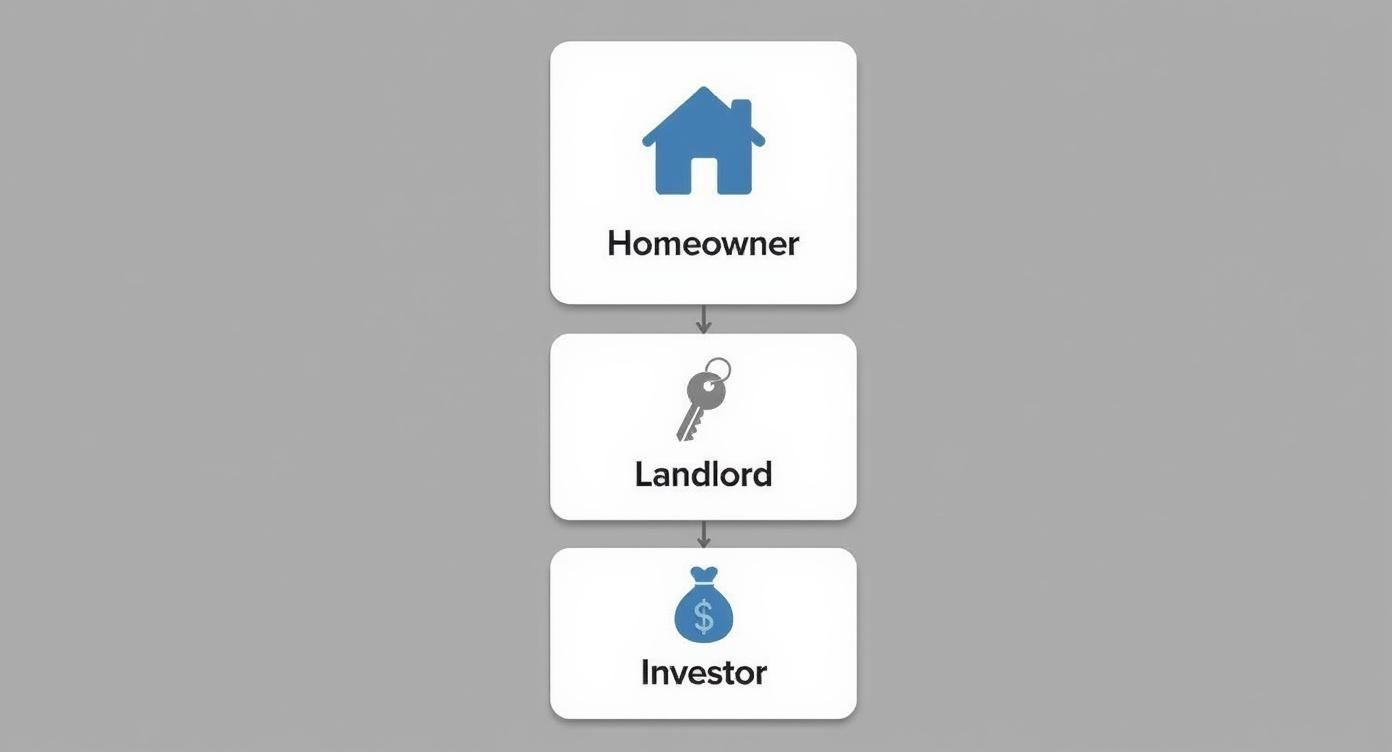
As you move up this ladder, your responsibilities grow.
Local Monterey County Ordinances Matter
State laws are only the beginning. You must also follow local city and county rules in Monterey County.
Cities like Salinas or Monterey have their own regulations for property inspections or health codes. Always check with the city where your rental is located to ensure you are fully compliant.
A legally sound lease agreement is your most important tool. It defines the rights and duties for both you and your tenant, preventing misunderstandings from becoming disputes.
Using a generic online template is a huge risk. Your lease must comply with all state and local laws.
Fair Housing Is Non-Negotiable
Federal and state Fair Housing laws make it illegal to discriminate against tenants based on protected classes like race, religion, or family status. You must apply the same criteria to every applicant.
Consistency is your best defense against a discrimination claim. Create a written screening process and stick to it. This proves you are making decisions based on business factors, not personal bias.
For a deeper dive, read our guide on Landlord-Tenant Laws in California. Getting professional guidance is essential when you're starting out.
How to Price Your Rental for Profit and Occupancy
Setting the right rent is one of your most important decisions. Price it too high, and you risk a long, costly vacancy. Price it too low, and you leave money on the table.
The correct rent is found through a careful rental market analysis. This process helps you understand what similar properties in your Monterey County neighborhood are renting for right now.
Conducting Your Own Rental Market Analysis
To begin, find "comps," or comparable properties. Look for rentals similar to yours in location, size, and condition.
Follow these key steps:
- Identify Competitors: Search for available rental listings in your area. Focus on properties with the same bedroom count and similar square footage.
- Compare Amenities: Does your property have a new kitchen, a fenced yard, or off-street parking? These features can justify a higher rent.
- Assess Condition: Be objective. A modern, well-maintained unit will always command a higher rent than a dated one.
This analysis provides a snapshot of what local renters expect to pay. For a full walkthrough, see our guide on how to accurately price your rental property.
Factors That Directly Impact Your Rental Value
Several factors influence your rental price. For a new landlord? here’s what to know in 2026 about what drives value in Monterey Bay.
Small upgrades like in-unit laundry or a dishwasher can make your property stand out. A fair pet policy can also widen your pool of qualified applicants.
Setting a competitive price is critical. With new housing supply increasing, owners can’t afford long vacancies. Accurate pricing helps minimize downtime.
While 85% of landlords increased rent in 2024, the market is stabilizing. This means tenants are becoming more price-sensitive. You can read more about current rental market trends on Baselane.com.
This table shows key factors that influence rental prices in Monterey County.
Key Factors Influencing Your Monterey County Rental Price
A summary of the primary drivers that determine a competitive and profitable rental rate for your property.
| Factor | Impact on Rent | Local Example (Monterey County) |
|---|---|---|
| Location | High Impact: The single most important factor. Proximity to downtown, beaches, schools, and major employers drives demand. | A 2-bed in Carmel-by-the-Sea will command a significantly higher rent than a similar-sized home in Soledad. |
| Size & Layout | High Impact: Square footage, number of bedrooms/bathrooms, and a functional floor plan are key drivers. | A 3-bed, 2-bath single-family home in Salinas is more valuable than a 3-bed, 1-bath with the same square footage. |
| Condition & Updates | Medium to High Impact: Modern kitchens, updated bathrooms, new flooring, and fresh paint can justify a higher price. | A recently renovated kitchen with stainless steel appliances can add $100-$200 to the monthly rent compared to a dated one. |
| Amenities | Medium Impact: In-unit laundry, A/C, a garage, a fenced yard, or a dishwasher can make your property more desirable. | A property with dedicated off-street parking in Monterey's congested areas is a major selling point. |
| Pet Policy | Medium Impact: Allowing pets can significantly widen your applicant pool, often allowing for a slightly higher rent or pet fees. | Being pet-friendly in a military-heavy area like Marina or Seaside can drastically reduce vacancy time. |
| Utilities | Low to Medium Impact: Including some utilities (like water or trash) in the rent can be an attractive perk for tenants. | If comparable units don't include utilities, offering to cover water can make your property stand out. |
The True Cost of a Vacancy
Every day your property sits empty, you lose money. A vacancy is an active expense, as you still pay the mortgage, taxes, insurance, and utilities.
Consider the math: if your target rent is $3,000 per month, each week of vacancy costs you $750. It is often smarter to price your property competitively to rent it quickly.
Finding Your Ideal Tenant Without Breaking the Law
Finding the right tenant is the most critical part of the process. A thorough, fair, and consistent screening process is your best tool for long-term success. For a new landlord? here’s what to know in 2026, this system protects your investment and follows the law.
The key to a good screening process is consistency. Create a clear, written set of criteria and apply it to every applicant.
Establishing Your Screening Criteria
Before advertising your rental, decide what your ideal tenant looks like on paper. This means setting objective business standards to predict a successful tenancy.
Your criteria should be measurable and legal. Common standards include:
- A minimum credit score (650 or higher)
- Verifiable monthly income that is three times the monthly rent
- Positive references from previous landlords
- A clean background check with no evictions
- A stable employment history
Writing these standards down before you start helps you treat everyone equally, which is essential for Fair Housing compliance.

The Step-by-Step Screening Process
A structured process saves time and ensures fairness. It helps you narrow down applicants based on your qualifications.
- Pre-Screening: A quick phone call can filter out unqualified leads. Ask about income and move-in date before scheduling a showing.
- The Application: Use a standard rental application for every prospect to gather necessary information.
- Income and Employment Verification: Ask for pay stubs and call the employer to confirm their position and salary. The "3x the rent" rule is a proven industry standard.
- Credit and Background Checks: Use a reputable service to run a full report. Look for red flags like past evictions.
- Landlord References: Call their current and previous landlords. Ask if they paid on time and how they maintained the property. The most important question is: Would you rent to them again?
This process is a lot to manage, which is why many owners use professional tenant placement services for expert help.
Avoiding Fair Housing Violations
Federal and California Fair Housing laws are very strict. They prohibit discrimination based on protected classes, including race, color, religion, sex, familial status, and disability.
Your screening process must be based only on legitimate business qualifications. The moment you make an exception for one applicant, you open yourself up to a discrimination lawsuit.
Stick to your written criteria and document your decisions. If you deny an applicant, provide a legitimate, non-discriminatory business reason.
Mastering Day-to-Day Property Operations
Landlording is not passive income; it is active, hands-on management. Once a tenant moves in, your job is to keep the property in great shape and run your rental business smoothly.
You are the go-to person for everything, from a clogged drain to a broken appliance. Handling issues quickly and professionally is key to a good tenant relationship and protecting your asset's value.
Building a Proactive Maintenance Schedule
The best way to avoid expensive emergency repairs is to prevent them. A proactive maintenance schedule keeps your property in top condition and catches small issues early.
This approach saves money and builds goodwill with your tenant. A well-maintained home encourages renters to take better care of it.
Your schedule should include seasonal tasks and regular inspections:
- Twice a Year: Test all smoke and carbon monoxide detectors. Clean out gutters to prevent water damage.
- Annually: Service the HVAC system and schedule a professional pest control inspection.
- Between Tenants: This is the time for deep cleaning, fresh paint, and fixing minor wear and tear.
It's vital to avoid common roofing and gutter maintenance mistakes, as water damage can be destructive. For a complete guide, see our checklist for smart maintenance for your rental property.
Using Technology to Streamline Operations
In 2026, technology makes managing a rental easier. Online tenant portals offer a better experience for you and your renter.
Tenants can pay rent online, submit maintenance requests with photos, and access lease documents 24/7. This system automates rent collection and creates a digital paper trail for all communication.
Clarifying Landlord vs. Tenant Responsibilities
Confusion over responsibilities is a common source of conflict. Your lease should clearly define who is responsible for what.
As a rule, the landlord handles the property's structure, plumbing, and major systems. The tenant is responsible for basic upkeep and cleanliness.
Be specific about tasks like lawn care or changing air filters. This clarity is the foundation of a professional landlord-tenant relationship.
Knowing When to Partner with a Property Manager
Being a landlord is a big job. The laws, maintenance calls, and tenant relationships demand constant attention. It’s time to decide if you should manage it yourself or hire professional support.
Most new landlords find that it takes more time and energy than they expected. Managing a rental is an active business that requires a diverse skill set.
Evaluating Your Capacity for DIY Management
Ask yourself a few tough questions. Do you have time for a 10 PM emergency call? Are you comfortable with the legal aspects of an eviction?
Professional help is a lifesaver if:
- You Live Out of Town: Managing a property in Salinas from another state is nearly impossible. A local manager is your eyes and ears on the ground.
- You Lack the Time: A demanding career or family life can make it hard to manage a rental effectively.
- You Want to Avoid Stress: A property manager handles tenant disputes and emergencies, acting as a buffer so you don't have to.

The Value of Local Expertise and Bilingual Service
A good property manager provides peace of mind. With over 25 years of experience in Monterey County, Torrente Property Management understands the local market, from Carmel to King City.
Our bilingual (English/Spanish) services ensure clear communication with a wider pool of tenants. This local knowledge and personalized approach are crucial for protecting your investment.
Studies show that over 70% of rental investors see increased profits and less stress after hiring a professional manager. In a competitive market, that partnership is a powerful advantage for a new landlord.
Learning how to choose the right property management company is a critical first step. An expert partner helps you avoid costly vacancies and tenant turnover, which are real threats in today's market.
New Landlord FAQ
Here are answers to common questions we hear from new property owners in Monterey County.
What is the most important thing to do before renting out my property?
Understand your legal duties under California state law and local Monterey County ordinances. This includes fair housing rules, security deposit limits, and required tenant disclosures. Consulting with a local property manager early can prevent costly mistakes.
How much should I save for maintenance and repairs?
A good rule is to set aside 1-3% of your property's value each year for maintenance. This fund covers routine upkeep and unexpected emergencies, like a broken water heater. It protects your cash flow and keeps tenants happy.
Do I need special insurance as a landlord?
Yes. Your homeowner's policy is not enough once a tenant moves in. You need a specific Landlord Insurance policy to protect your investment from property damage, liability, and loss of rental income.
Can I manage my rental property myself if I live out of state?
It is extremely difficult and risky. Handling emergencies, inspections, or showings from hundreds of miles away is a logistical nightmare. For out-of-town owners, hiring a local professional manager is highly recommended.
What are the biggest mistakes new landlords make?
The most common mistakes are inadequate tenant screening, not learning landlord-tenant laws, and underestimating maintenance costs. Being proactive and educated in these areas is key to avoiding stress and achieving long-term success.
For more information, you can review these top landlord FAQs.
If you're navigating the shift from homeowner to landlord in Monterey, Salinas, or Carmel, Torrente Property Management is here to help. Contact Torrente Property Management today at (831) 582-8916 or visit our website at https://torrenteproperties.com.