Sending a rent increase notice can feel tricky. However, it is a normal and necessary part of managing a rental property. This letter is your key tool for adjusting rent legally while keeping a good relationship with your tenants.
Think of it less as a demand and more as important business communication. In fact, a recent report showed that renters in 2024 spent nearly 18% more on rent than in January 2023, showing how fast costs are rising for everyone (Source: Nasdaq).
Why Your Rent Increase Letter Matters

A well-written and legal notice protects you from expensive problems. For property owners in the Monterey Bay area, from Salinas to Carmel, getting this letter right is essential.
Let’s be honest: costs like property taxes, insurance, and maintenance always go up. A smart rent increase helps your property stay profitable and well-kept.
Covering Your Costs
The economy affects rental prices. Landlords must adjust to cover rising expenses. The national average rent is now $1,302 per month, a big jump from five years ago.
This shows that rent adjustments are a direct response to higher costs. They help you maintain the property and provide a safe, clean home for your tenants.
Keep Good Tenants and Your Investment Safe
A professional rent increase letter does more than cover costs. It helps you keep good tenants who feel respected.
Here’s why a proper letter is so important:
- Legal Protection: It creates an official record showing you followed state and local laws.
- Maintains Professionalism: A clear, polite letter shows you are a professional property manager.
- Reduces Tenant Turnover: When tenants understand the process, they are more likely to accept the new rent instead of moving out.
Understanding your finances is key to justifying rent increases. For more help, check out our guide on the https://torrenteproperties.com/best-accounting-software-for-landlords/.
California Rent Increase Laws You Must Know
Before you write a rent increase letter, you must understand California law. Sending a notice that is not legal will cause major headaches and force you to start over.
The most important law for Monterey Bay landlords is the Tenant Protection Act of 2019 (AB 1482). This law sets clear rules on how much and how often you can raise rent.
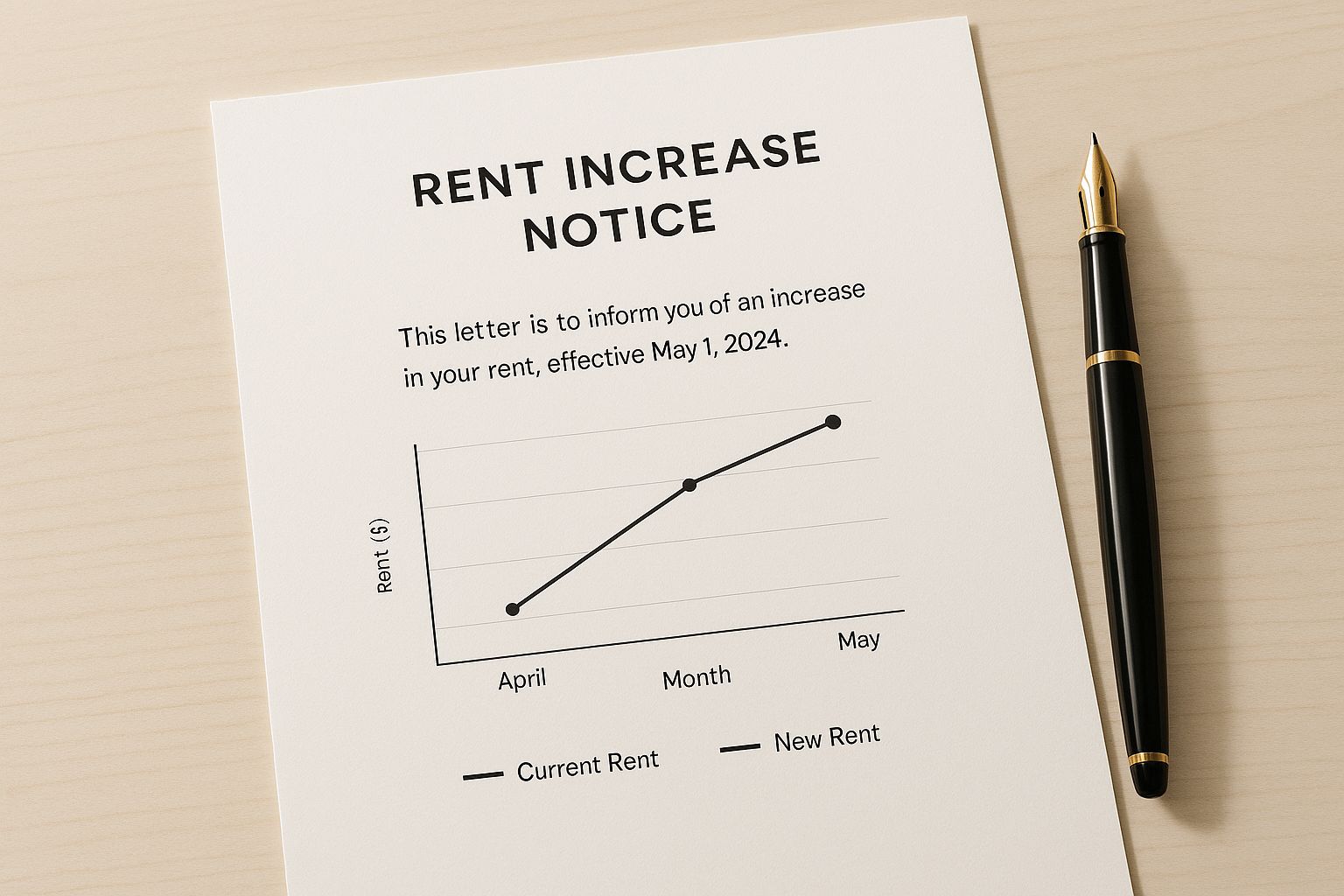
Think of your rent increase notice as a formal document. Every detail matters for legal compliance.
The Statewide Rent Cap
Under AB 1482, you can raise rent by 5% plus the local Consumer Price Index (CPI), or a total of 10%, whichever is lower. This is based on the lowest rent the tenant paid in the last 12 months.
The CPI changes by region, so you must use the correct one for the Monterey Bay area. Some properties, like newer buildings or single-family homes owned by individuals, may be exempt. Always check if your property qualifies.
Required Notice Periods
California law is very specific about how much warning you must give a tenant. The notice period depends on the size of the increase.
Here's a quick guide:
| Rent Increase | Required Written Notice | Best Way to Deliver |
|---|---|---|
| 10% or less | 30 days | Certified Mail or Hand Delivery |
| More than 10% | 90 days | Certified Mail or Hand Delivery |
The clock starts the day after you deliver the notice. For example, a 11% increase on your Salinas rental requires a 90-day written notice.
Failing to give the right notice means your increase is invalid. You will have to serve a new notice and wait again, costing you time and money. For more expert advice, see our property management tips.
How to Write an Effective Rent Increase Letter

Now, let's build the letter itself. A legal rent increase notice needs specific details. Even a small error, like a wrong date, can make the notice invalid.
This letter is the foundation of your rent increase. Make sure every part is accurate.
Key Parts of Your Letter
Your rent increase letter must include these details to be legal:
- Tenant’s Full Name: Use the name from the lease agreement.
- Property Address: Include the full address and unit number.
- Your Name and Contact Info: Make it easy for tenants to contact you.
- Date of the Notice: This starts the legal notice period.
- New Rent Amount: State the exact new monthly rent.
- Current Rent Amount: Show the current rent for clarity.
- Effective Date: Give the exact date the new rent is due.
Getting these basics right is the first step. The next is to use a professional tone.
Setting a Professional and Clear Tone
While this letter is a legal document, its tone matters. A demanding notice can create tension. A polite and professional one helps maintain a good relationship.
Remember, you are communicating a business decision. This is especially important for rental property management for out-of-town owners, where clear communication is key.
Pro Tip: While not required, consider adding a brief reason for the increase. A simple line like, "to cover rising property maintenance costs," adds transparency. This helps tenants understand the change is part of a larger trend, not a random decision.
How to Legally Deliver the Notice
You wrote a perfect rent increase letter. But if you don’t deliver it correctly, it’s legally worthless.
California law is specific about how landlords must serve official notices. Getting this wrong means starting the process over, which costs you money.
Let's review the approved delivery methods.
Approved Delivery Methods
You can't just email the notice or tape it to the door. You must use a formal method to prove the tenant received it.
Here are the three legal ways to serve a rent increase notice:
- Personal Delivery: You or someone else can hand the written notice directly to the tenant.
- Substituted Service: If the tenant is not home, you can leave the notice with another responsible adult at their home or workplace. You must then mail a second copy to their home.
- Posting and Mailing: You can post the notice on the property (like the front door) and mail a copy to the tenant. You must do both for this method to be valid.
Why a Paper Trail is So Important
No matter which method you use, keep records of everything. A tenant might claim they never got the notice. Proof of delivery protects you.
Think of your records as insurance. A signed note from the tenant or a certified mail receipt can quickly end a dispute.
This attention to detail is just as important as getting a property ready for a new tenant, which we cover in our tenant move-out inspection checklist. Proper documents protect your investment.
Talking to Your Tenant About the Rent Increase
The formal letter handles the legal side, but the human side is just as important. A good conversation can help you keep a great tenant.
How you talk about the increase matters. A professional, respectful tone can prevent problems and show tenants you value them. In a diverse community like Salinas, clear communication is key. Our bilingual team can help ensure everyone understands.
Timing and Transparency Matter
When you deliver the news is as important as how. Avoid sending a rent increase notice right before a major holiday. A little consideration can help keep your relationship positive.
California law does not require you to give a reason for the increase. However, you should be ready to answer if your tenant asks.
Keep your answer simple and honest. Say something like, "This adjustment helps us keep up with rising property taxes and maintenance costs." This frames the increase as a necessary business decision.
How to Handle Tenant Concerns
It's normal for a tenant to have questions. If they contact you, listen to them first. Acknowledge their concerns before you explain your reasons again.
For example, a good response is: "I understand that any increase can be a challenge. The new rate is necessary to maintain the property, and I appreciate you sharing your concerns."
This approach shows respect while holding firm on your decision. It also helps to provide context. For example, a recent HousingAnywhere's recent index showed how global rent trends are impacting local markets everywhere.
FAQs on Rent Increase Letters
Here are quick answers to common questions we hear from Monterey Bay landlords about rent increase letters.
What if my property is exempt from the statewide rent cap?
Even if your property is exempt from AB 1482's rent cap, you must still provide proper written notice. This means a 30-day notice for increases of 10% or less and a 90-day notice for increases over 10%. Keeping the increase reasonable is smart for tenant retention.
What happens if I make a mistake on the notice?
A mistake on the letter, like a wrong date or amount, can make the entire notice legally invalid. You would have to create a new notice and restart the notification period from the beginning, which delays the new rent.
Can a tenant refuse to pay the new rent?
Once a legal rent increase notice is served, the new rent becomes part of the lease. If a tenant refuses to pay the new amount, it is a breach of the lease. You would then have the right to start the eviction process for non-payment.
Do I have to explain why the rent is going up?
No, California law does not require you to state a reason in the notice. However, being prepared to offer a simple explanation can help maintain a good relationship with your tenant.
How often can I raise the rent?
Under AB 1482, you can raise the rent up to twice in 12 months, but the total increase cannot exceed the annual cap (5% + CPI, up to 10%). For exempt properties, there is no state limit on frequency, but annual increases are a best practice to avoid tenant turnover.
Let Us Handle the Details for You
Managing rent increases and tenant communication requires time, legal knowledge, and a professional touch. At Torrente Property Management, we handle these tasks for property owners throughout the Monterey Bay.
We ensure every notice is compliant and every tenant interaction is handled with care. If you want to protect your investment and maintain positive tenant relationships, let our experienced team help.
Contact Torrente Property Management today at (831) 582-8916 for a free consultation.