Deciding to rent out your home instead of selling it is a huge decision. It impacts your finances and your lifestyle. If you're wondering, "should I rent my house instead of selling it?" there's no easy answer.
Renting can build long-term wealth. Selling offers immediate cash. The right choice depends on your goals, your money situation, and how much time you want to spend as a landlord.
The Rise of the Accidental Landlord in Monterey Bay
In Monterey Bay, many homeowners are becoming landlords by circumstance, not by choice. High mortgage rates and a strong local rental market make renting seem like a good option when a house doesn't sell quickly.
This trend is happening everywhere. In 2023, about 1 in 10 move-up homebuyers nationwide kept their old home as a rental instead of selling it (cocotherealtor.com). This makes the rent-or-sell question more common and complex.
But being a landlord is more than just collecting rent. It's a new job with legal duties and risks. Before you decide, you need to understand what each path really means.
Renting vs. Selling: A Quick Look
This table shows the main differences between renting and selling your home in today's market.
| Factor | Renting Your Property | Selling Your Property |
|---|---|---|
| Financial Outcome | Creates steady monthly income and builds long-term wealth. | Provides a large, one-time cash payment. |
| Time Commitment | Needs ongoing management of tenants and property care. | Your commitment ends after the sale is final. |
| Risk Level | Involves risks like empty periods, tenant damage, and legal issues. | The main risk is the housing market changing before you sell. |
| Market Dependency | Success depends on local rental demand and home value growth. | Relies on the current real-estate sales market. |
| Tax Implications | Offers tax deductions but needs careful planning. | You might have to pay capital gains tax on the profit. |
This overview is a good start, but the real answers are in the numbers. Let's look at a detailed financial analysis to see which option fits your goals.
Comparing The Financial Outcomes Of Renting vs Selling
Should you rent out your Monterey County home or sell it? This choice comes down to one thing: do you want cash now or wealth over time? It's a single payment versus a long-term asset.
Let's break down the numbers for each option in our local market.
How to Figure Out Your Rental Income
Renting seems simple: collect rent, pay the mortgage, keep the rest. But to know if it's truly profitable, you need to find the net operating income (NOI). This is your total income minus all your operating costs.
To get a clear picture, you must account for real-world expenses. These costs reduce your gross rental income.
Common Rental Expenses Include:
- Mortgage: This is usually your biggest expense.
- Property Taxes: A major cost for any California homeowner.
- Landlord Insurance: This policy costs more than a standard one but is necessary.
- Maintenance & Repairs: Plan to budget 1-2% of the property's value each year for upkeep.
- Property Management Fees: Local fees are usually 8-12% of the monthly rent. This service saves you time and reduces legal risks.
Subtract these costs from your potential rent to find your estimated cash flow. Here in Monterey County, the potential is strong.
With the average rent for a 3-bedroom home in Monterey County at $5,145 per month (attomdata.com), a single property can generate significant income—if managed correctly.
This infographic shows the main trade-offs between renting and selling.
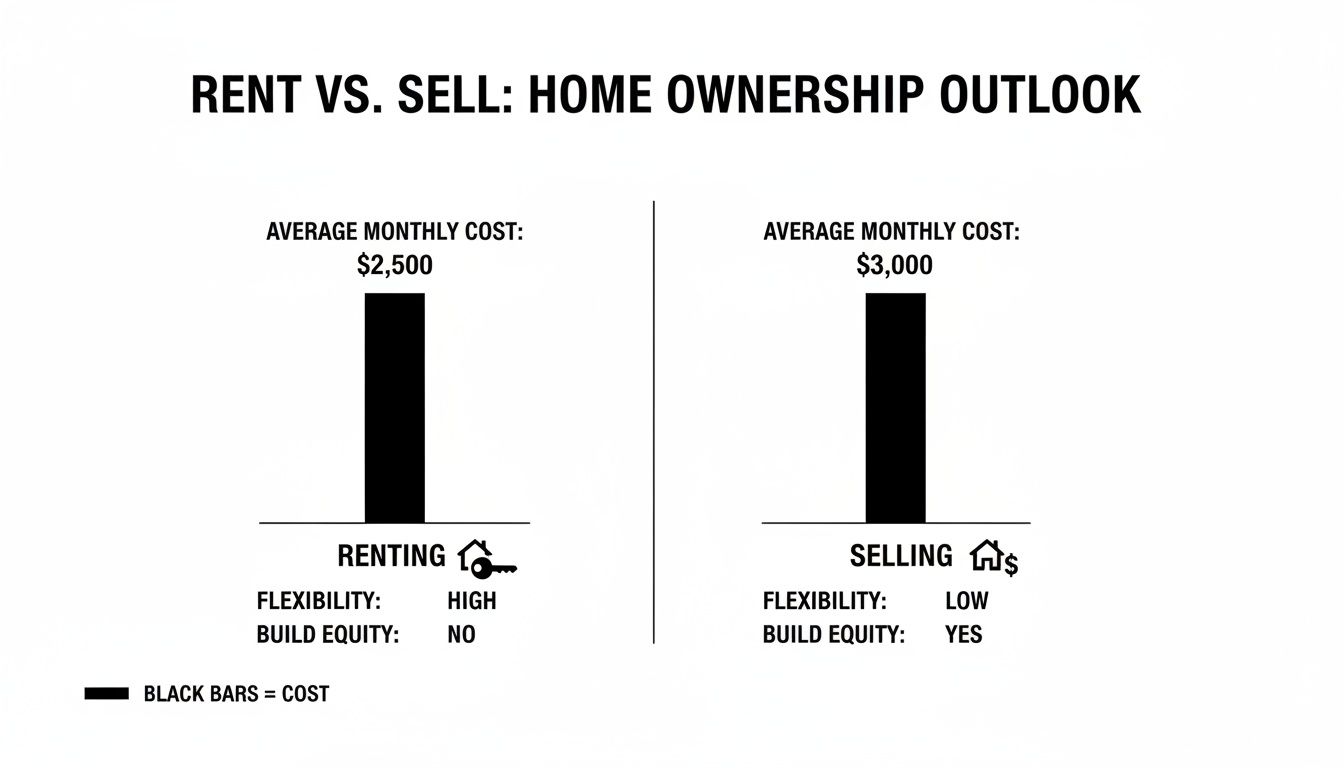
Selling gives you cash right away. Renting creates steady income and long-term growth.
A Sample Financial Scenario in Monterey Bay
Let's look at a sample scenario for a home in our area. This table shows the financial reality of each choice.
| Financial Metric | Renting Scenario (Annual) | Selling Scenario (One-Time) |
|---|---|---|
| Gross Income / Sale Price | $61,740 (based on $5,145/mo rent) | $950,000 (sample price) |
| Vacancy Loss (5%) | ($3,087) | N/A |
| Property Taxes | ($10,000) | N/A |
| Insurance | ($2,000) | N/A |
| Maintenance (1%) | ($9,500) | N/A |
| Management Fees (8%) | ($4,939) | N/A |
| Mortgage Payments | ($36,000) | N/A |
| Agent Commissions (5.5%) | N/A | ($52,250) |
| Closing Costs (2%) | N/A | ($19,000) |
| Remaining Mortgage | N/A | ($400,000) |
| NET INCOME / PROCEEDS | ($3,786) Cash Flow + Equity Paydown | $478,750 Cash Proceeds |
This comparison makes the choice clear. Selling provides a large amount of cash immediately. The renting option, while showing negative cash flow here, builds wealth as the mortgage is paid down and the property value grows.
The Long-Term Financial Power of Renting
Renting your property unlocks powerful wealth-building tools that selling cannot match. These benefits grow over time, turning your former home into a valuable asset.
Key Long-Term Advantages:
- Property Appreciation: Real estate in areas like Monterey, Salinas, and Carmel tends to increase in value over time. Your asset grows while your tenant helps pay for it.
- Building Equity: Every mortgage payment increases your ownership stake. It’s like a forced savings account that builds your net worth.
- Tax Benefits: You can deduct many operating expenses. You can also claim depreciation, a deduction for wear and tear that can lower your taxable income.
Selling gives you a lump sum today. Renting lets your asset keep working for you. Learn more in our guide on what net operating income is.
How to Calculate Your Profit from a Sale
Selling provides a large sum of cash. But the sale price isn't what you'll get in your bank account. You need to calculate your net proceeds to see your actual profit.
Start with the final sale price, then subtract the costs of the sale.
Typical Selling Costs:
- Real Estate Agent Commissions: Usually the biggest cost, around 5-6% of the sale price.
- Closing Costs: These include escrow fees, title insurance, and other charges, adding up to another 2-4% of the sale price.
- Home Prep & Staging: Costs for repairs, paint, or staging to get your home ready for sale.
- Capital Gains Tax: You may owe tax on the profit if the property was not your main home for at least two of the last five years.
Subtracting these costs from the sale price gives you the final amount you’ll receive.
Understanding the Responsibilities of a Landlord
Changing from a homeowner to a landlord is a major shift. Before you decide to rent your home, it's important to understand the legal duties and daily work involved.

Many new landlords lack experience in tenant screening, legal rules, and property maintenance. Simple mistakes in these areas can lead to big legal or financial problems. This can turn a good investment into a source of stress.
Finding the Right Tenant
Your success as a landlord depends on finding a great tenant. This is a careful process to protect your property and ensure you get paid. A good screening process is your best defense against future issues.
A good screening process includes:
- Credit Checks: A credit history shows how financially responsible a person is.
- Background Checks: This confirms their identity and checks for any criminal history.
- Rental History: Calling previous landlords helps you learn if they paid rent on time and took care of the property.
- Income Verification: Make sure the applicant earns enough (usually 3x the monthly rent) to pay reliably.
Taking shortcuts here is a common and costly mistake. One bad tenant can cause months of lost rent, expensive legal fees, and property damage.
Following the Law
California has some of the strictest landlord-tenant laws in the country. As a landlord, you must follow all federal, state, and local rules. This includes fair housing laws that prevent discrimination.
A strong lease agreement is key. It's a legal document that lists the rights and duties of both you and the tenant. It protects you from future arguments.
The law covers everything from handling security deposits to the eviction process. One mistake, like a wrong clause in your lease, can lead to a lawsuit and large fines. Learn more about landlord responsibilities in California.
Handling Daily Property Maintenance
Being a landlord means you are responsible for keeping the property safe and in good condition. This is a 24/7 job.
Your maintenance duties include:
- Routine Upkeep: This covers landscaping, HVAC service, and making sure appliances work.
- Scheduled Repairs: You need to fix non-urgent issues like a leaky faucet in a timely manner.
- Emergency Calls: You must be ready for late-night calls about a burst pipe or a broken heater.
These tasks require a network of trusted professionals like plumbers and electricians. If you live far from your rental, this can be very hard to manage. Failing to maintain the property can lead to legal trouble.
Is Your Monterey Property Truly Rent-Ready?
Before you decide to rent, you need to look at your property honestly. Is it truly "rent-ready?" A home that is ready for tenants attracts better people, gets higher rent, and prevents future problems.
This means checking the home's condition and its appeal in the local Monterey market.
Check Your Home's Physical Condition
First, walk through your property from top to bottom. A clean, safe, and well-kept home is always in demand. Look for any needed repairs that could become bigger issues later.
Your goal is to make the home attractive and safe. All systems must work properly before a tenant moves in.
Key areas to check:
- Essential Repairs: Fix small problems like a leaky faucet or sticky door now to avoid bigger costs later.
- Safety Rules: Make sure smoke and carbon monoxide detectors are working and meet California code. Check that all locks are secure.
- Cosmetic Updates: A fresh coat of paint and clean carpets can make a big difference.
- Curb Appeal: The first impression matters. Knowing the best way to clean your house exterior can help your property rent faster.
A detailed rental property inspection checklist for landlords can help you cover all the bases.
Analyze Local Market Demand
Next, see how your property compares to others in the local rental market. A great house in the wrong location or with the wrong price won't perform well. Think about what renters in Monterey, Salinas, or Carmel want.
Is your home near good schools or major employers? These features are a big draw and can allow for higher rent.
A property’s location is very important. Rental demand in North Salinas can be very different from Carmel, affecting price and how long it takes to find a tenant.
Research what similar homes ("comps") in your area are renting for. This helps you set a competitive price that attracts good applicants.
Make Sure You Are Financially Ready
Finally, do the math. A property is financially ready only if the rent covers all your expenses with a cushion for surprises.
Add up your total monthly costs: mortgage, insurance, and property taxes. Then, set aside a fund for unexpected repairs, like a broken water heater. A good rule is to save 5-10% of the monthly rent for this purpose.
Compare this total cost to the market rent you found. If the rent covers everything with a good margin, your property is ready to be a strong rental investment.
When to Partner with a Property Manager
Deciding to rent your property is a big step. The next question is: should you manage it yourself? For many new or out-of-town landlords, this is when an investment can turn into a stressful second job.
Partnering with a professional property manager is a smart move. It protects your property, increases your return, and gives you back your free time.
Torrente Property Management specializes in helping first-time and out-of-area landlords. From writing legal leases to handling daily tasks, we protect your property and your peace of mind.
Who Should Hire a Property Manager?
There are a few common situations where hiring a property manager makes perfect sense. If any of these points describe you, professional help is likely the right choice.
Consider hiring a manager if you:
- Live far away: Managing a property in Salinas while you live in another state is very difficult. A local manager is your presence on the ground.
- Don't have enough time: A demanding job or family life can make property management overwhelming.
- Don't want to handle daily problems: Many owners want the financial benefit of a rental without the stress of dealing with tenants and repairs.
- Are worried about legal rules: California's landlord laws are complex. A professional manager stays up-to-date on all legal needs, protecting you from mistakes.

A professional presence helps attract good tenants and builds trust.
The Value of Local Monterey Expertise
When renting a home here, local knowledge is key. A management company with deep roots in Monterey Bay, like Torrente Property Management, offers more than just admin support. We understand the local markets in Monterey, Carmel, and Salinas.
This local expertise provides real benefits. We know the right rent to set to find tenants quickly. We have a network of reliable and fair-priced repair professionals. Our bilingual (English/Spanish) services also help us connect with more great applicants.
Learn more about the benefits of professional property management in our guide.
According to leadsimple.com, over 85% of property investors say working with a manager reduces their workload and legal risk. For new landlords, this partnership can be the difference between stress and success.
Knowing the right actionable questions to ask a property management company will help you find the best partner. At Torrente, we provide the integrity and responsive service you deserve.
Making the Right Choice for Your Situation
After looking at the numbers and thinking about being a landlord, the decision to rent or sell is personal. There is no "right" answer for everyone. The best choice depends on your goals, finances, and comfort with risk.
Selling offers a clean break and a large amount of cash. Renting is a long-term plan to build wealth, but it requires your time and effort.
When Renting Makes the Most Sense
Renting is often the best choice if you have a long-term view. If you don't need cash right now and see the potential for your property to grow in value, becoming a landlord may be for you.
You should consider renting if:
- You plan to own the property for a long time. If you can hold it for five years or more, you give it time to appreciate while tenants help pay the mortgage.
- The numbers show positive cash flow. After all expenses, the rent should more than cover your costs.
- You are ready for landlord duties. You must be prepared for the responsibilities, whether you manage it yourself or hire a professional.
When Selling Is the Better Option
In some cases, selling is the smarter and less stressful choice. Not every home makes a good rental, and not every owner is meant to be a landlord. Selling gives you a clean break.
Selling is likely better if:
- You need cash now. If you need the money for a down payment or other major expense, a sale is the fastest way to get it.
- The home needs major repairs. If the property needs a new roof or other big fixes you can't afford, selling "as-is" may be best.
- You want to avoid landlord risks. If the idea of late-night repair calls and tenant issues sounds like a nightmare, selling provides instant peace of mind.
If you’ve decided to rent your former home, don’t go it alone. Torrente Property Management offers local expertise and full-service support for accidental landlords in Monterey, Salinas, and nearby communities.
Contact Torrente Property Management today at (831) 582-8916 for a free rental analysis.
FAQs About Renting vs. Selling Your Home
Here are answers to some common questions we hear from homeowners in Monterey Bay who are deciding whether to rent or sell.
How do I set the right rental price for my home?
To set the right rent, you need to research similar rental properties in your specific Monterey County neighborhood. You should also consider your home's unique features, size, and condition. A professional property manager can do a detailed rental analysis to find the best price that maximizes your income.
What are the main tax benefits of renting out my property?
The biggest tax benefits for landlords come from deductions. You can deduct most operating costs, like mortgage interest, property taxes, insurance, and repairs. You can also claim depreciation, which is a deduction for the property's wear and tear that can lower your taxable income.
Can I manage my property myself if I live far away?
You can, but it is very difficult and risky. Handling emergencies, doing inspections, and showing the property to new tenants is a major challenge from a distance. Most out-of-area landlords find that professional management is necessary to protect their investment.
How long does it usually take to find a good tenant?
In a popular market like Monterey Bay, a well-priced and well-maintained property can often be rented within 30 days. The time of year, asking price, and home's condition can affect this timeline. Professional marketing and a thorough application process help reduce how long the home is empty.
What happens if a tenant damages my property or doesn't pay rent?
You must follow a strict legal process defined by California law. This involves giving proper notices and possibly going to court to handle an eviction or get money for damages. A professional property manager knows how to handle these legal steps correctly to protect your rights. See our guide on common mistakes new landlords often make.