
Relying only on cameras to watch your second home is like having a smoke detector that only flashes a light on your phone. It tells you there's a problem but does nothing to solve it.
Cameras are great for keeping an eye on things. However, they are passive witnesses, not active problem-solvers. They show you a disaster unfolding, but they are powerless to stop it.
Why Your Cameras Give a False Sense of Security
For second-home owners in beautiful Monterey Bay, I hear a common question: “Do I really need an estate caretaker if I already have cameras?” It seems logical, but it overlooks one simple truth: cameras can see, but they can't act.
This disconnect between seeing a problem and solving it is the risk of relying on cameras alone to watch your second home. A recent report shows that water damage and freezing are the second most common cause of home insurance claims (Insurance Information Institute).
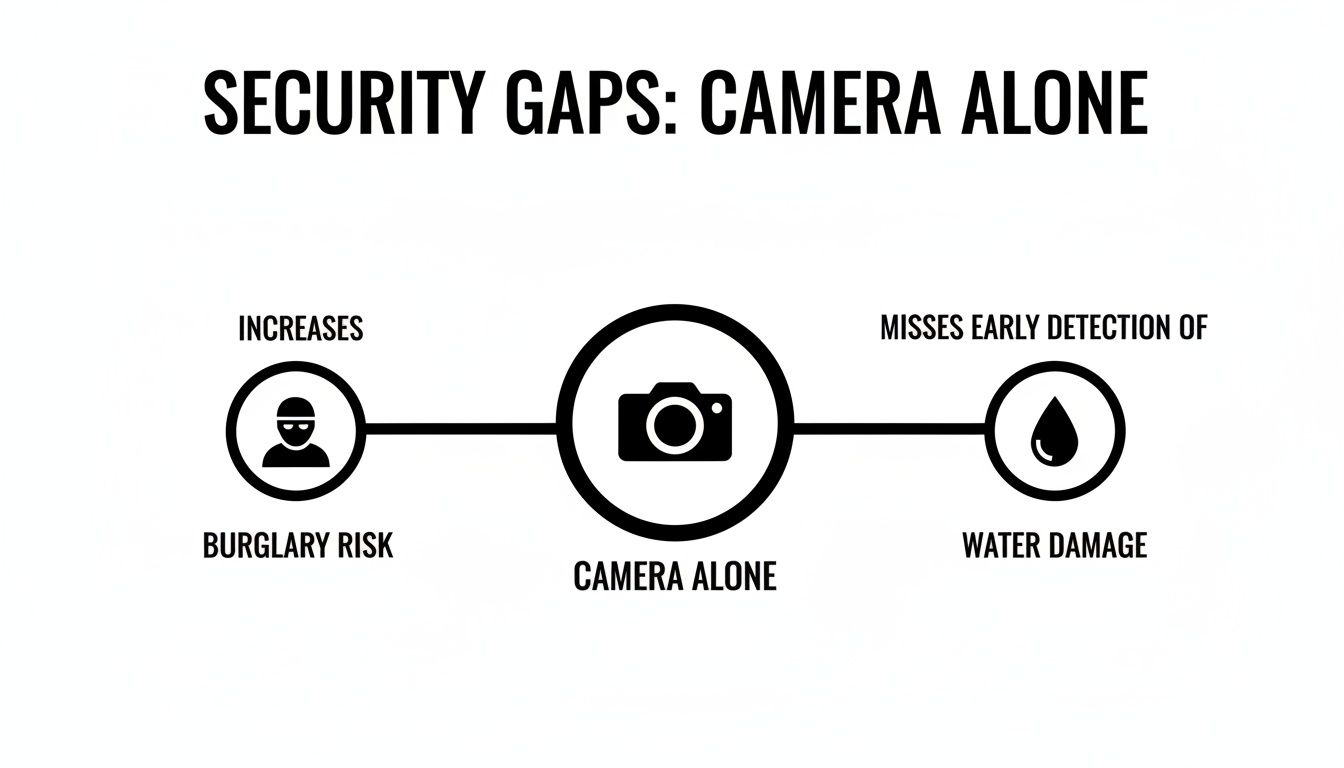
As you can see, a camera is just one piece of the puzzle. It leaves your property exposed to major risks that technology cannot fix from hundreds of miles away.
The Limits of Digital Eyes
Think of your camera system as a silent observer. It's great at recording events but has zero ability to physically step in.
This creates a critical gap between getting an alert on your phone and getting a problem fixed on the ground. Peace of mind comes from knowing someone is there to handle it.
A smart device provides an alert, but a local caretaker provides the solution. Blending technology with in-person human oversight is the only way to truly protect your investment.
From Passive Witness to Active Protector
The most expensive damage to unoccupied homes often comes from issues that never trigger a motion alert.
It’s the slow leak under a sink or the HVAC system that fails during a cold snap. These problems fester quietly, turning minor fixes into major, costly renovations.
This table shows the difference between what your camera can do and what an on-site professional can handle.
Camera Monitoring vs. On-Site Caretaker
| Security Task | Cameras Alone | On-Site Caretaker |
|---|---|---|
| Detect a Break-In | Records video and sends an alert. | Investigates the alert and coordinates with police. |
| Prevent Water Damage | Records a flood as it happens. | Shuts off the water, finds the source, and calls a plumber. |
| Identify Pests | Cannot see subtle signs like nests. | Spots early signs and arranges for pest control. |
| Check HVAC Systems | Cannot confirm if the system is running. | Physically checks the unit and schedules maintenance. |
| Address Storm Damage | May show a fallen branch, not a roof leak. | Walks the property, inspects the roof, and arranges repairs. |
The gap is clear. Technology is a tool, not a total solution.
This is exactly why smart second homeowners rely on local property managers to bridge the gap. Combining your tech with scheduled, in-person inspections creates a powerful defense.
The Silent Dangers Your Security Camera Cannot See
Security cameras are fantastic for catching things you can see, like a person walking up your driveway. But what about the threats that don't make a grand entrance?
These unseen dangers are where the risk of relying on cameras alone to watch your second home becomes a costly reality.
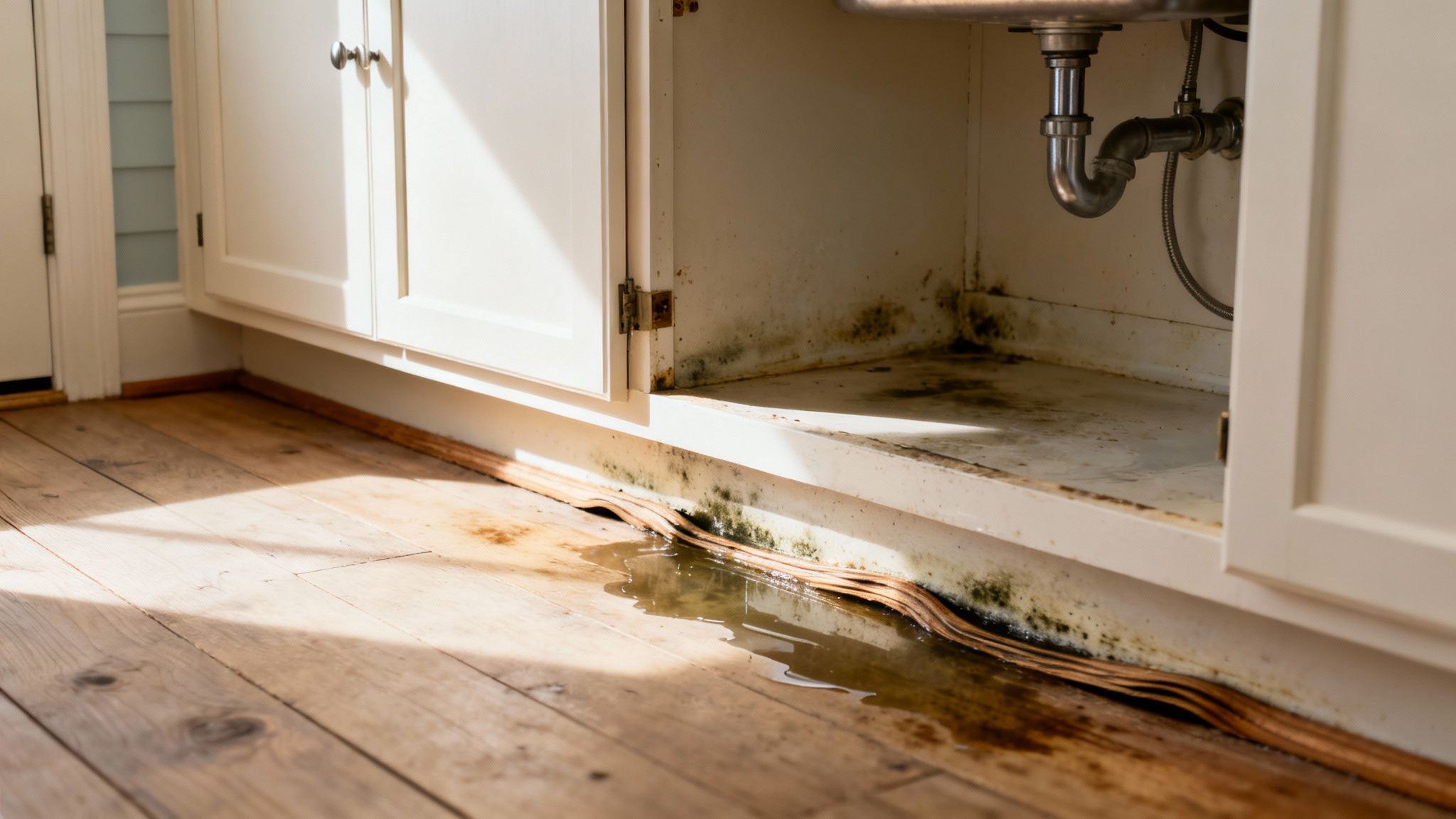
Catastrophic Water Damage from Tiny Leaks
The number one silent threat to any vacant property is water. A camera pointed at your living room won’t see the slow drip from a hidden pipe.
This tiny leak can continue for weeks, completely unnoticed. One online owner said, “no one checked my property for 3 months and a small leak became major damage.”
By the time the damage is visible on camera, it’s too late. These issues silently escalate from a simple fix into a massive renovation project.
HVAC Failures and Frozen Pipes
Imagine a cold snap hitting the Carmel area while you're away. Your smart thermostat might send an alert, but your camera can’t tell you why your home is cold.
If your HVAC system fails, pipes can freeze and burst. A single burst pipe can release hundreds of gallons of water per hour, causing catastrophic flooding.
A physical inspection would catch the temperature drop and allow for an emergency repair, preventing the disaster entirely. For more proactive tips, explore our guide on how seasonal homeowners can protect their property while away.
Subtle Signs of Pest Infestations
Rodents and insects don't announce their arrival. They find small, hidden entry points outside your camera's field of view.
What a camera misses, a person will see. This includes droppings, gnaw marks on wiring, or nesting materials tucked away in corners.
Unseen Roof and Structural Damage
Winter storms can lift shingles or damage flashing. Your camera, aimed at entry points, will never see this.
A small, unnoticed roof leak can lead to wood rot and mold. What could have been a simple repair transforms into a major structural problem.
Why an Alert Is Not the Same As Action
Receiving a notification on your phone is one thing. Getting the problem solved is another. This is where technology falls short.
An alert tells you a disaster is happening. A local professional stops it from getting worse. What this means is tech provides alerts—but not action.
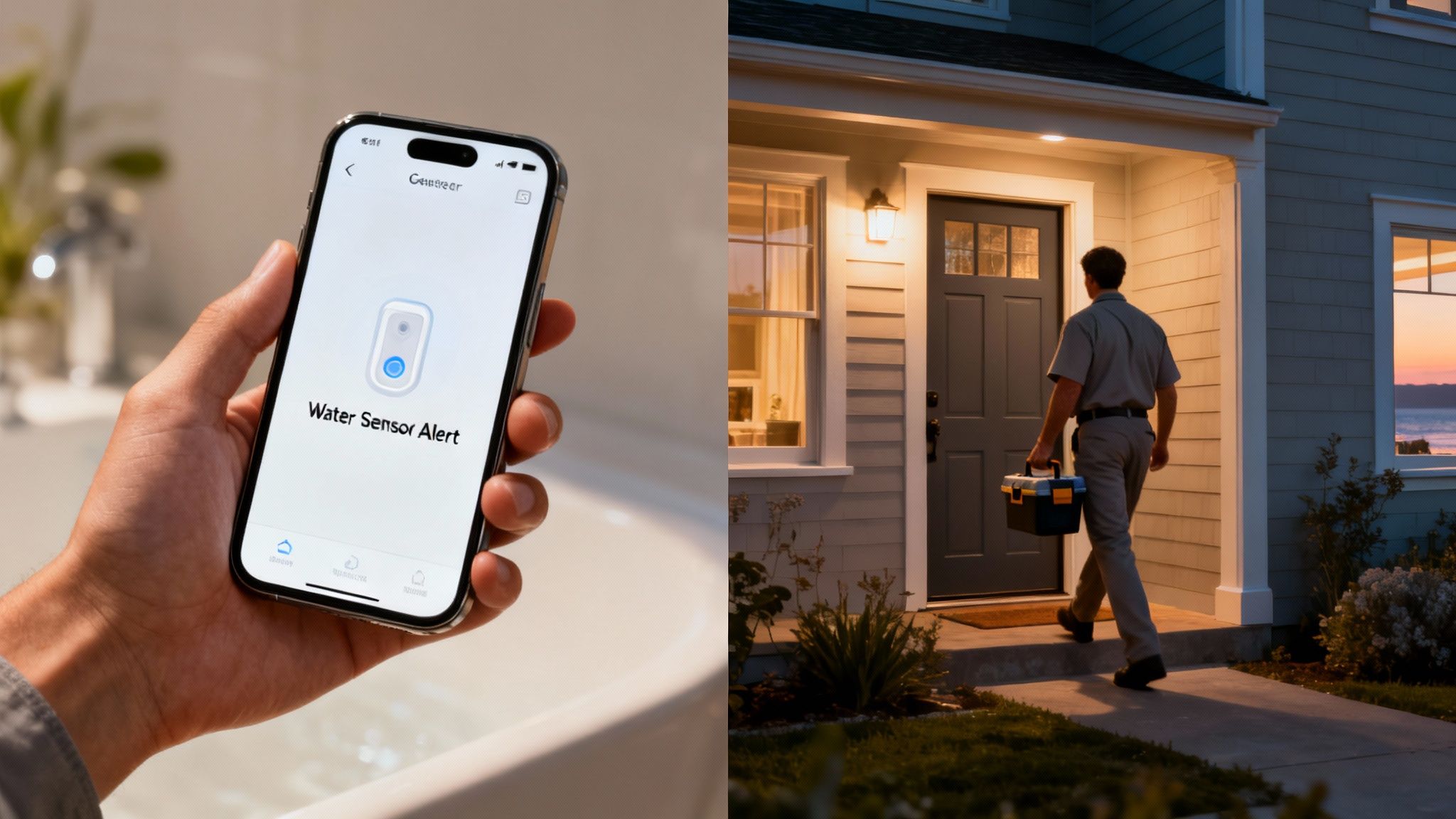
The Helpless Feeling of a Remote Emergency
Imagine you get an alert: a pipe has burst at your Carmel property. You open your camera app and watch in horror as water floods the floor.
Now the panic sets in. You start frantically searching online for an emergency plumber who is available, trustworthy, and willing to go to an unoccupied home.
All the while, you are completely helpless. The alert worked perfectly, but it couldn't solve the actual problem.
From Frantic Scramble to Controlled Response
A professional property manager is your active responder on the ground. Instead of a panicked search for help, the process is simple.
When an alert comes through, you make one call—to your trusted local partner.
A smart device provides an alert, but a local caretaker provides the solution. They turn a stressful, long-distance scramble into a calm, controlled response.
A professional already has a network of vetted, reliable emergency vendors. This quick action can be the difference between a minor cleanup and a catastrophic renovation.
The Critical Difference Between Data and Action
Understanding this difference is key, as many common mistakes in CCTV monitoring security lead to delays.
Technology Provides Data: A camera shows you a broken window.
A Caretaker Provides Action: They board up the window and coordinate with police.
Technology Is Reactive: It alerts you after an event starts.
A Caretaker Is Proactive: They conduct regular inspections to prevent issues.
The core message is simple: technology is a valuable tool, but it is not a complete solution. Pairing your smart devices with professional oversight creates a comprehensive safety net.
Protecting Your Investment and Your Insurance Policy
Beyond physical risks, leaving a second home unmonitored is a major financial gamble. Many insurance policies contain a "vacancy clause" that can put your entire investment at risk.
Insurance companies see empty properties as a higher risk. They have specific rules for what makes a home "vacant," which can kick in after just 30 to 60 days.
Understanding the Vacancy Clause
A vacancy clause can limit or even void your coverage if your home is unoccupied for too long.
For example, if a small leak causes major damage over three months, your claim could easily be denied. This is not just a maintenance nightmare; it's an insurance nightmare.
The Real-World Consequences
When a vacancy clause is triggered, the results can be severe. Your policy might stop covering damage from vandalism or burst pipes.
In the worst case, the insurance company could void your policy entirely. To appreciate the value of protection, it helps to understand how insurance generally works.
The Solution: Documented Inspections
The best way to satisfy insurance requirements is with scheduled, documented inspections by a professional caretaker.
These regular visits prove that the property is being monitored. A professional provides detailed reports that serve as crucial proof, ensuring your home remains fully insured.
This is a key reason that Monterey property owners are turning to professional caretaking. It’s about making sure your financial safety net is there when you need it.
The Smartest Approach: A Human and Tech Partnership
The best way to protect your second home isn't a choice between technology and a caretaker—it's about combining them. This integrated strategy creates a powerful defense that truly covers all the bases.
Think of your smart home system as the first line of defense. Your cameras and leak detectors are fantastic tools for instant alerts.
The crucial next step is to pair your smart system with scheduled, professional walkthroughs. A caretaker can catch what cameras can’t—and act fast to fix it.
From Digital Alert to Decisive Action
When your system sends a notification, a local caretaker can be on-site to investigate immediately. This blend of tech and touch is the most effective way to manage the risk of relying on cameras alone to watch your second home.
Real-world cases show smart tech can’t detect water leaks under sinks, HVAC failure, roof damage, or rodents. Tech provides alerts—but not action.
The Comprehensive Home Watch Checklist
What should a professional caretaker look for? A thorough inspection is a systematic check of your property’s interior and exterior.
Interior Inspection Checklist
- Security: Check that all windows and doors are securely locked.
- Plumbing: Inspect under sinks and behind toilets for leaks or moisture.
- Appliances: Ensure refrigerators and freezers are running correctly.
- HVAC System: Check thermostat settings and confirm the system is operating.
- Electrical: Look for tripped breakers and test smoke detectors.
- Pest Activity: Search for any signs of insects or rodents.
- Overall Condition: Note any unusual odors or sounds.
Exterior Inspection Checklist
- Security: Walk the perimeter to check fences, gates, and outdoor structures.
- Damage: Inspect the roof, siding, and windows for any damage.
- Landscaping: Make sure the yard is maintained to avoid looking unoccupied.
- Pest Entry Points: Check for any gaps or cracks in the foundation.
- Mail & Flyers: Remove any items to maintain a "lived-in" appearance.
This two-pronged approach ensures that no matter the problem, it will be detected quickly and handled effectively.
Frequently Asked Questions
Do I really need an estate caretaker if I have cameras?
Yes. Cameras can only show you a problem; they can't fix it. A caretaker provides the on-site action needed to handle emergencies like water leaks, HVAC failures, or security breaches, protecting your home from major damage.
What do cameras miss that a person would catch?
Cameras can't detect hidden issues like slow water leaks under a sink, the smell of gas, a failing furnace, or subtle signs of a pest infestation. A person performing a physical walkthrough can spot these problems before they become costly disasters.
How do professional inspections help with my insurance?
Many insurance policies have a "vacancy clause" that can reduce or void your coverage if a home is empty for 30-60 days. Regular, documented inspections by a professional service prove the home is being cared for, which helps keep your policy in full effect.
What happens when a problem is found?
A professional caretaker will immediately contact you with a report and photos. With your approval, they will use their network of trusted local vendors to manage the repair from start to finish, saving you the stress of finding help from afar.
Can I just ask a neighbor to check on my house?
Relying on a neighbor can strain your relationship and puts them in a difficult position during an emergency. A professional caretaker is insured, bonded, and has a network of emergency contacts, offering a reliable and comprehensive solution without burdening a friend.
If you’re managing a second home in Monterey or Carmel from afar, don’t rely on tech alone. Torrente offers trusted local estate care services that work with your devices to truly protect your investment. Contact Torrente Property Management today at (831) 582-8916 to let's talk.