
Planning to sell your Monterey home but the market has you hitting pause? You're not alone. The smart move isn't always selling right away. Sometimes, turning your property into a rental is a powerful strategic pause.
Managing a rental in Monterey when you plan to sell means thinking ahead. It’s about setting up a flexible lease, keeping the home in great shape for tenants and future buyers, and knowing when to switch back to a sale.
Rethinking Your Sale in the Monterey Market
Putting a "For Sale" sign on hold doesn't have to be a bad thing. In fact, seeing it as a smart delay can put you in a stronger financial spot later. The Monterey Bay real estate market has its own unique rhythm. If you play it right, those seasonal shifts can work in your favor.
Many homeowners become landlords by accident. A recent report showed that nearly 3 out of 4 landlords (74%) started out this way, usually because of market changes or personal plans. By renting out your home, you can have a tenant cover your mortgage, build equity, and wait for a better seller's market without feeling financial pressure.
The Monterey Advantage: Renting First
Our local market is different. The flow of tourism, military moves, and the school calendar create clear busy and slow seasons for both rentals and sales. Residents of Monterey and Salinas know the market here shifts with the seasons.
- Seasonal Demand: Google searches for “rent my home in Salinas” and “Monterey property management” spike during Q2 and Q3. This is driven by military relocations and families moving before school starts. Listing your home for rent then means you’ll likely find great tenants faster.
- Weather and Curb Appeal: Let's be honest, our famous fog season can make it tough for a home to look its best for buyers. Renting for a bit gives you time to do simple upgrades—like landscaping or new outdoor lights—that will make the home shine when you finally list it.
- Financial Cushion: A rent check is more than just income; it's a tool. You can use that cash for upkeep or save it for your next home. Understanding your property's real income potential is the first step. To do this well, you need to know current market values and have solid strategies for pricing a home for sale.
Shifting from a sale to a rental isn't a failure—it's a financial strategy. In Monterey, it lets a tenant pay down your mortgage while you wait for the perfect moment to sell for top dollar.
This approach is all about balance. You need to keep your tenant happy while also thinking about your long-term sales goals. It depends on smart planning with your lease terms, maintenance, and communication. A big part of that is understanding the numbers. You can learn more about the financial side by reading our guide on what net operating income is.
Crafting a Lease That Keeps Your Sale Options Open
When you rent out your Monterey home but plan to sell it later, the lease agreement is your most important tool. It’s not just a standard contract. It’s a document that must protect you as a landlord today while giving you the flexibility to sell tomorrow.
Get the lease terms right, and the change from landlord to seller can be easy. Get them wrong, and selling can become a huge headache.
This decision tree helps show the choice many Monterey homeowners face—whether to sell right away or become a landlord first.
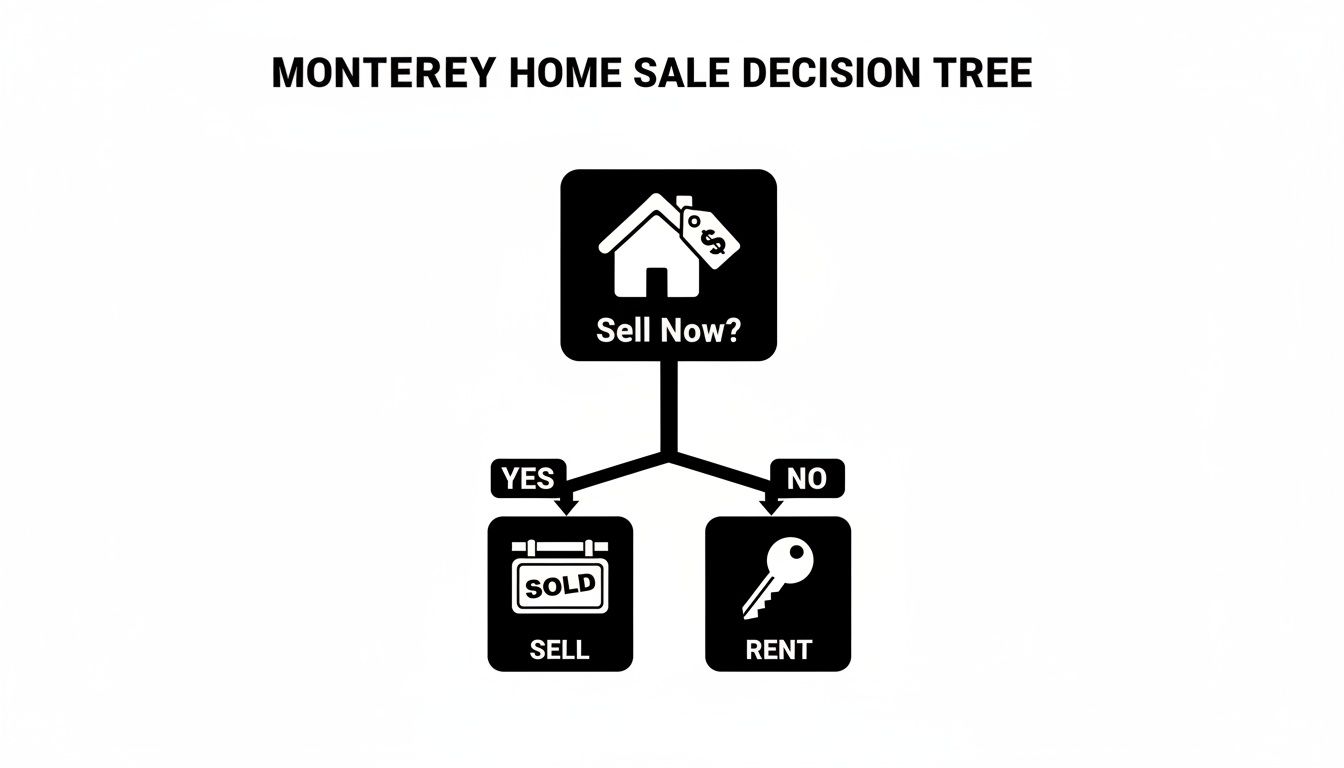
As the graphic shows, renting for a while can be a smart path toward a sale. It all comes down to setting things up correctly from the start.
Fixed-Term vs. Month-to-Month Leases
Here’s the first big reality check: in California, a landlord can't just break a fixed-term lease to sell the property. The lease actually moves to the new owner, who becomes the new landlord. This simple fact shapes your two main options.
A fixed-term lease, usually for one year, offers you stability and guaranteed income. Your tenants feel secure, and you have a predictable cash flow. The big downside is that it makes it very hard to sell to a buyer who wants to live in the home themselves.
On the other hand, a month-to-month lease provides maximum flexibility. When you're ready to sell, you can give the tenant proper notice to leave—usually 30 or 60 days, depending on how long they've lived there. The trade-off is less stability, since the tenant can also leave with the same short notice.
For owners in Monterey and Salinas, a month-to-month lease is often the smarter choice when a sale is on the horizon. It gives you the power to time your listing with peak local demand, like the summer moving season.
The Must-Have "Sale of Property" Clause
No matter which lease you choose, you must include a "Sale of Property" clause. This section clearly explains the process if you decide to put the house on the market. It’s all about removing confusion and preventing problems later.
Your sale clause should clearly state:
- Tenant's Duty to Cooperate: The tenant must allow reasonable access for showings to potential buyers.
- Notice for Showings: California law requires 24-hour written notice for entry. Your clause should restate this legal rule.
- Lease Transfer: It should clarify that if the property is sold, the lease and security deposit will transfer to the new owner.
Having this in writing from day one sets clear expectations. It tells the tenant that a sale is possible and defines their role in the process. Of course, it’s vital to follow all regulations, which you can learn more about in our guide on landlord-tenant laws in California.
Handling Tenants and Showings with Confidence
Showing your home while a tenant is living there can be tricky. Your success depends on two things: clear communication and respecting their rights. A good, cooperative relationship isn't just nice—it’s a strategy that can help you sell faster and for a better price.
The process starts with being open. Let your tenants know you're planning to sell as early as you can, long before a "For Sale" sign appears. This simple heads-up can prevent a lot of stress and surprise, turning a tense situation into a team effort.

Providing Legal Notice for Showings
California law is very clear about a tenant's right to "quiet enjoyment." You can't just drop by with a real estate agent and expect a tour. As the landlord, you must give at least 24 hours of written notice before entering the home for a showing.
This notice must include the date, an approximate time, and the reason for the visit. Even if your tenant verbally agrees to a visit, always follow up in writing. This creates a paper trail that protects everyone from misunderstandings.
In Monterey County, many residents have busy schedules, from military personnel to hospitality workers. Try to work with your tenant to set up a showing schedule that causes the least disruption, like a two-hour window on specific days.
Getting the rules right is essential. For a deeper look at your duties, you should review the specifics on tenant rights in California to make sure you're compliant.
How to Encourage Tenant Cooperation
A tenant who is on your side can make all the difference. When your property is clean and easy to show, it sells faster. To encourage this, think about offering some incentives for their help.
Practical incentives that work well include:
- A Monthly Rent Discount: A small rent reduction while the house is for sale shows you appreciate the inconvenience.
- Gift Cards: A simple gesture, like a gift card to a local coffee shop after a busy week of showings, can build a lot of goodwill.
- Professional Cleaning: Offer to have the home professionally cleaned once or twice a month. This is a win-win: the property is always ready for a viewing, and your tenant has one less chore.
- "Cash for Keys": Sometimes, you need the property empty to attract more buyers. A "cash for keys" agreement, where you offer money to help them move out early, can be a smart investment.
Making Showings Easier for Everyone
Constant visitors are stressful for anyone. The key to keeping a good relationship with your tenants is to minimize that disruption. Luckily, technology can help.
Using tools like virtual tours for realtors can be a game-changer. A great virtual tour lets serious buyers explore the home online. This cuts down on the number of in-person visits, so only the most interested people need to walk through the door.
Another good strategy is to schedule an open house for a few hours on one day of the week, instead of booking many individual appointments. This bundles the disruption into one predictable time block for your tenant.
Maintaining Your Property for Renters and Buyers
A well-kept home does two jobs at once. It attracts great tenants and keeps its value for a future sale. When you manage a rental in Monterey with an eye on the market, upkeep is about more than just fixing things. It's about smart improvements that appeal to both renters today and buyers tomorrow.

This balancing act means focusing on durability, neutral style, and curb appeal. The goal is to make the switch from a rental to a sale-ready listing as smooth as possible.
Prioritizing High-Impact Maintenance
Not all maintenance tasks are equal. When your property has to please two different groups, you need to focus on repairs that give you the biggest bang for your buck. Your focus should be on tasks that prevent costly future problems while also making the home look good.
Regular inspections are your best tool. A simple walkthrough every six months helps you catch small issues—a leaky faucet, a loose gutter—before they become big projects. This proactive approach shows tenants you care and keeps the property in top shape.
The Monterey Curb Appeal Checklist
In coastal towns like Monterey and Pacific Grove, the damp, foggy air can be tough on a home's exterior. Curb appeal is a buyer's first impression and a tenant's daily welcome.
Here are a few low-cost, high-impact tasks for our local climate:
- Combat Fog-Induced Wear: Regularly pressure wash siding and walkways to remove mildew. A fresh coat of paint on the front door can also work wonders.
- Boost Exterior Lighting: Foggy evenings can make a property feel gloomy. Upgrading to brighter, modern outdoor lights enhances safety and makes the home look more inviting.
- Focus on Hardy Landscaping: Choose salt-tolerant, low-water plants that do well in the Monterey Bay climate. A well-kept, low-fuss yard is a huge plus for everyone.
Strategic upkeep is about more than just repairs. It’s about preserving your asset’s value. Every small improvement you make for a tenant is also an investment in your future sale.
Choosing Finishes for Renters and Buyers
When something needs to be replaced, think neutral and durable. Your goal is a clean, welcoming space that lets renters and buyers imagine themselves living there.
- Flooring: Choose durable, easy-to-clean flooring like luxury vinyl plank (LVP) instead of carpet. It holds up well to traffic and has a modern look that buyers love.
- Paint: Stick to neutral paint colors like soft grays or off-whites. These colors make rooms feel larger and brighter.
- Fixtures: Update old light fixtures, faucets, and cabinet hardware with simple, classic designs. These small changes can modernize a whole space on a small budget.
The good news is that keeping your property as a rental is a smart financial move. The Monterey rental market remains strong, making it a profitable choice while you wait for the right time to sell.
Monterey vs. National Rental Market Snapshot
| Metric | Monterey, CA | National Average | Key Takeaway for Owners |
|---|---|---|---|
| Average Rent | $2,842/month | $1,732/month | Monterey's higher rents provide significant income to offset carrying costs. |
| Year-Over-Year Growth | ~9.5% | ~3.1% | The local market is appreciating faster, making it a strong asset to hold. |
| Vacancy Rate | Extremely Low | ~6.6% | Low vacancy means less downtime between tenants and a steady stream of rental income. |
This data shows that with a limited supply of only 99 available rentals for thousands of renter-occupied households, you're in a great position to attract quality tenants.
By focusing on smart maintenance, you create a property that works hard for you as a rental and is ready for a successful sale. For more ideas, check out our guide for smart maintenance tips for your rental property.
Understanding the Financial and Tax Implications
When you rent out your Monterey home, you’re stepping into a new role. You're no longer just a homeowner; you're running a small business. This shift comes with serious financial and tax issues that every new landlord needs to understand.
Getting this right protects your investment and sets you up for a more profitable sale later.
Calculating Your Rental Profit and Loss
Rental profit seems simple: rent collected minus your expenses. But for tax purposes, the details matter. You must keep perfect records of every dollar you spend to maintain the property.
Common expenses you can deduct include:
- Property Management Fees: The cost of hiring a pro to manage the property is fully deductible.
- Repairs and Maintenance: This covers everything from fixing a leaky faucet in a Salinas rental to landscaping in Carmel.
- Property Taxes and Mortgage Interest: These are still major deductions, just like when it was your primary home.
- Insurance Premiums: Your landlord insurance policy is a necessary—and deductible—business expense.
Keeping these records organized does more than just make tax time easier. It also gives you a clear financial picture to show potential buyers when it’s time to sell. Our guide on rental property tax deductions breaks it all down.
Understanding Depreciation
One of the biggest financial perks of owning a rental is depreciation. The IRS lets you deduct a portion of your property's value each year for wear and tear. This is a powerful "on-paper" loss that can lower your taxable rental income.
But there's a catch. When you sell, the IRS requires you to "recapture" all the depreciation you claimed, and that amount gets taxed. You must discuss this with a tax professional to avoid a nasty surprise.
The Capital Gains Exclusion Clock Is Ticking
This is the big one. The Capital Gains Exclusion is a critical tax rule for anyone planning to sell their former home. This rule allows you to exclude up to $250,000 of profit from your home's sale from taxes (or $500,000 if married).
To qualify, you must have owned and lived in the property as your main home for at least two of the five years right before the sale.
This "2-out-of-5-year" rule creates a ticking clock the moment a tenant moves in. If you rent out your Monterey home for more than three years, you lose this huge tax benefit. For many homeowners, this timeline is the biggest factor in their decision to sell.
A common strategy is to rent for less than three years. This lets you earn rental income while the market improves without giving up a valuable tax break. And with our strong local rental market, that income can be large. A quick look at Monterey rent market trends on Apartments.com shows that rental rates are consistently high.
Questions About Renting Before Selling
Deciding to rent out your home before selling it brings up a lot of questions. Juggling the roles of landlord and seller in Monterey County means understanding local rules, tenant rights, and the financial side of things.
Here are quick, clear answers to the most common concerns we hear from property owners.
How quickly can I sell if my tenant has a lease?
The answer is almost always in your lease agreement. If your tenant has a fixed-term lease (like for one year), that lease stays with the property. The new owner becomes the landlord and must honor the agreement.
If your tenant is on a month-to-month lease, you have more freedom. In California, you can give a 30-day notice to tenants who have been there less than a year, or a 60-day notice for those who have lived there longer. This lets you sell the property vacant to a wider range of buyers.
Do I have to tell my tenant I’m selling?
Yes, you absolutely should. Being upfront is a smart move. Let your tenant know you plan to sell as early as you can. This builds trust and helps set expectations for showings. A surprised tenant is often an uncooperative one.
How much notice do I need for showings?
California law is very clear: you must give your tenant at least 24 hours of written notice before entering the property for a showing. The notice needs to state the date, a reasonable time frame, and the reason for entry. Even if your tenant says okay verbally, always follow up in writing.
Can a tenant refuse to allow showings?
Legally, a tenant can't block you from showing the property if you have given proper notice. But in reality, they can make it difficult. This is where a good relationship and a solid lease help. If you have trouble, start with a calm conversation and consider offering a small incentive, like a gift card, for their cooperation.
What happens to the security deposit when I sell?
The security deposit is the tenant's money. When you sell, you have two clear options. You can transfer it to the new owner and notify the tenant in writing. Or, you can return it to the tenant (minus any legal deductions), and the new owner would collect a new deposit. Most sales just transfer the deposit to the new owner.
Is renting before selling a good idea in Monterey?
For many local homeowners, it’s an excellent strategy. The Monterey rental market is very strong. According to RentCafe, 62% of housing units are renter-occupied with an average rent of $2,712. That income can cover your mortgage while you wait for the perfect time to sell. You can explore more about local rental market trends to see the numbers yourself.
If you’re managing a rental in Salinas or anywhere along the Central Coast, Torrente Property Management can help you time it right and manage it well. Reach out today for a no-pressure rental strategy review. Contact us at (831) 582-8916.