
For many Monterey property owners, the question is becoming urgent: is it time to exit the Airbnb market? The short answer is yes—for many, it absolutely is.
With tighter regulations and a saturated market, long-term rentals now offer a more stable and predictable path to profit. According to AirDNA, the Monterey market's high seasonality score of 80 out of 100 shows just how unpredictable short-term income can be.
The Shifting Landscape for Monterey Airbnb Hosts

The dream of high nightly rates once made short-term rentals (STRs) feel like a gold rush in Monterey County. But the ground is shifting under many Airbnb hosts. New local rules and tough competition are making it much harder to earn a reliable profit.
For owners in Carmel, Pacific Grove, and nearby coastal areas, this is a real challenge. The promise of easy income is fading. Instead, owners face regulatory headaches and lower returns. Many are now looking for a better way.
New Rules and Fierce Competition
The biggest challenge comes from new regulations. The California Coastal Commission recently voted to limit vacation rentals on the Monterey County coast. They capped unhosted commercial STRs at just 334 properties.
With around 400 of these rentals now operating, this rule could force dozens of owners out of the market. This pressure creates a clear turning point for property owners.
Those who once relied on tourist income now need a more dependable strategy. This is especially true for those managing properties from a distance, a common setup for many Monterey Bay investors.
Switching from a short-term to a long-term rental is not a setback. It is a smart move toward stability. It means trading the constant work of bookings and cleanings for the peace of mind of steady, hands-off income.
Quick Decision Guide for Monterey Property Owners
This table helps Monterey property owners weigh their options between STRs and long-term leases.
| Decision Factor | Short-Term Rental (Airbnb) | Long-Term Rental (Traditional Lease) |
|---|---|---|
| Income Stream | Varies by season, with high potential but no guarantees. | Consistent monthly payments all year long. |
| Regulatory Risk | High and growing, with permit caps and potential bans. | Low, with clear and established landlord-tenant laws. |
| Management Effort | Very high; requires daily guest communication and turnovers. | Low, especially with a property manager handling tasks. |
| Operating Costs | High, including frequent cleanings, utilities, and supplies. | Lower and more predictable; tenants often pay utilities. |
| Ideal For | Owners who can handle empty periods and manage actively. | Owners seeking stable, passive income and asset protection. |
Seeing the comparison makes the choice clearer. For owners who value predictable income and want to protect their investment, long-term leasing is the smartest play in the Monterey market.
Navigating New Rules and Market Saturation
If you own an Airbnb in the Monterey area, you have likely felt the pressure. What once seemed like a great opportunity is now squeezed by two forces: stricter local rules and a flood of new competition.
This is a tough spot to be in. These changes are altering the short-term rental game, turning a once-reliable income stream into a source of stress. Understanding these challenges is the first step to making a smart decision for your property.
The Walls Are Closing In on STRs
The rules for STRs across Monterey County are getting stricter. The California Coastal Commission’s decision to cap unhosted short-term rentals was a major wake-up call. It signaled that the easy days are over, especially in areas like Big Sur and the Carmel Highlands.
These are not small issues; they are real threats to your business. If your property is in the coastal zone, your permit could be at risk. Local governments are cracking down to address housing shortages, and this trend is not slowing down.
For many owners, this means their STR business has an expiration date. We explain these local rules in our guide on new STR regulations in Carmel and Pacific Grove. The risk of being legislated out of business is pushing savvy owners to find a more stable path.
Key Insight: Relying on a business that local government can restrict or outlaw overnight is a high-stakes gamble. For anyone seeking long-term security, this risk is becoming a deal-breaker.
When the Market Gets Too Crowded
On top of legal headaches, the Monterey Airbnb market has a supply-and-demand problem. A huge increase in new listings has created fierce competition for the same travelers. This naturally pushes down nightly rates and occupancy.
The dream of high prices is fading for all but the most unique properties. The market is splitting. A few top-tier rentals are doing great, while everyone else fights for the rest.
The numbers prove it. As of this September, new Airbnb listings in Monterey have shot up by 99% year-over-year. A concerning 40% of these properties are booked for fewer than 90 nights a year. Only 27% hit high occupancy rates, showing the market rewards only the top performers.
This competition means you are always adjusting prices and spending more on marketing. The "gold rush" is over. It has been replaced by a grind that offers less reward for the average host. Successfully handling these shifts requires a clear plan, like the principles in guides on strategic planning for small businesses.
Financial Reality: Short-Term vs. Long-Term Rentals
Are you looking at your Airbnb numbers and wondering if it is still worth it? This is the biggest question Monterey homeowners face. High nightly rates look tempting, but that is only half the story.
The real financial picture appears when you compare the net profit of an STR against the steady income of a long-term rental (LTR).
An Airbnb can be great during peak season or big events like Car Week. But that income is not stable. It changes with seasons, competition, and even bad weather, making it hard to budget.
A long-term lease provides a consistent check every month. This stability removes the guesswork from your cash flow. It turns your property into a reliable asset instead of a demanding second job.
The True Cost of Short-Term Hosting
The higher income from an STR often gets eaten up by operating costs. These are the ongoing costs of running a mini-hotel.
Many owners are surprised by how quickly these expenses add up:
- Constant Cleaning Fees: After every guest, the property needs a professional cleaning. These costs can be hundreds of dollars per turnover and drain your profits.
- High Utility Bills: As the host, you pay for all utilities. Guests on vacation tend to use more water and electricity, leading to surprisingly high bills.
- Endless Restocking: You must keep everything stocked, from toilet paper to coffee. These small purchases become a major expense over a year.
- Platform Commissions: Airbnb and other platforms take a cut of every booking, typically around 3% for the host. This directly hits your revenue.
These "hidden" costs impact your bottom line. To understand your property's performance, you must calculate its net operating income. If you are new to this, it's worth learning what net operating income is and why it matters.
The data below shows the growing pressures in the Monterey Airbnb market.
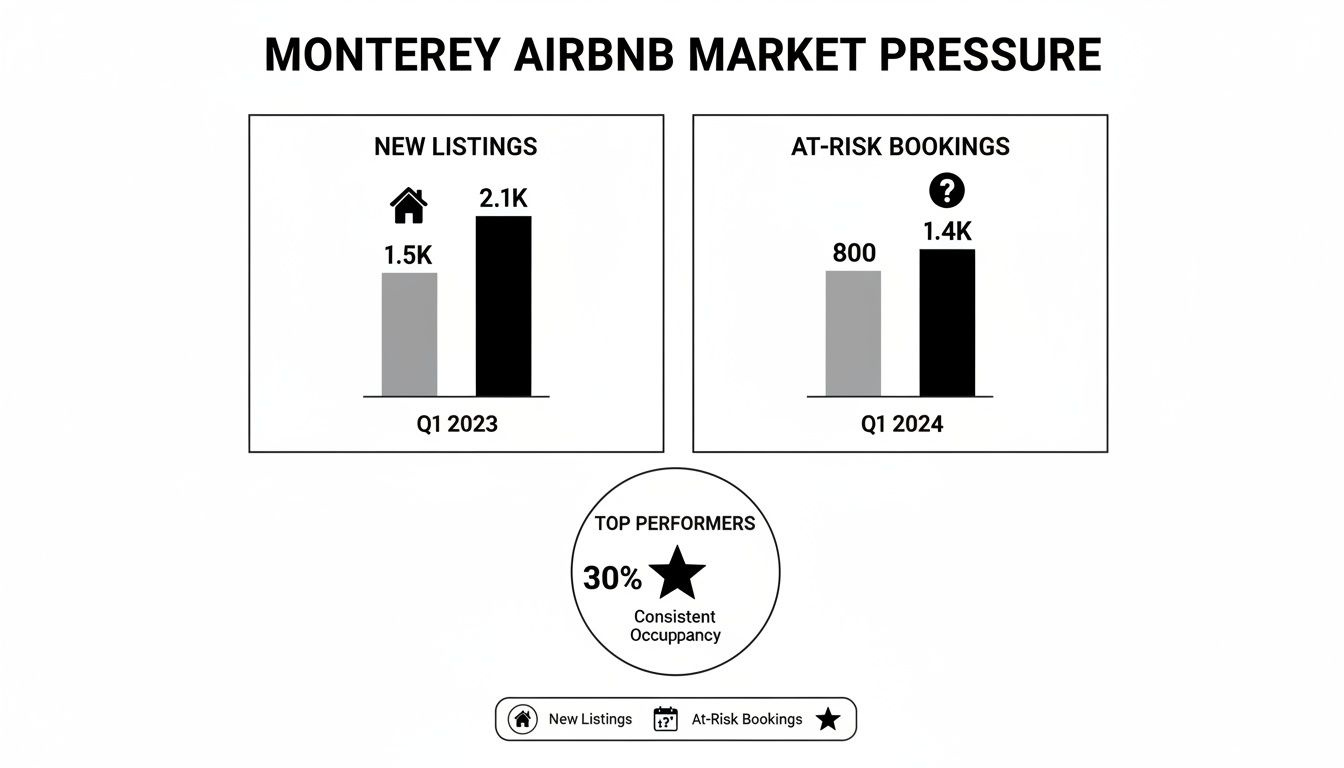
This market saturation means only the most dedicated hosts can succeed. Many others struggle with inconsistent revenue and rising costs.
A Clear Comparison of Profitability
To help you decide, let's look at some real-world numbers. The table below shows a financial model for a typical three-bedroom home in Monterey. It compares its performance as an STR versus an LTR.
Annual Profitability Breakdown: STR vs. LTR in Monterey
| Financial Metric | Short-Term Rental (Airbnb) Example | Long-Term Rental Example |
|---|---|---|
| Gross Annual Revenue | $72,000 (at $300/night, 65% occupancy) | $60,000 (at $5,000/month) |
| Vacancy Loss | Included in occupancy rate | $0 (with a qualified, stable tenant) |
| Management & Platform Fees | -$10,800 (15% combined average) | -$4,800 (8% professional management) |
| Cleaning & Supplies | -$9,600 (avg. $400/turnover, 2x/month) | -$500 (annual deep clean between tenants) |
| Utilities | -$7,200 (owner pays all) | -$0 (tenant pays all) |
| Maintenance & Repairs | -$3,000 (higher wear and tear) | -$1,500 (standard wear and tear) |
| Total Annual Expenses | -$30,600 | -$6,800 |
| Estimated Net Profit | $41,400 | $53,200 |
Key Financial Takeaway: While the Airbnb shows higher gross revenue, its net profit is nearly $12,000 less per year than the long-term rental. The stability and lower operating costs of an LTR often make it the more profitable choice.
The comparison is clear. Once you factor in all costs, the Airbnb model can be less profitable than a stable long-term lease. For Monterey owners seeking reliable returns, the numbers point toward making a change.
The Hidden Costs of Managing an Airbnb
Forget the dream of easy, passive income. The biggest reason Monterey owners are ditching the Airbnb market is sheer burnout. The reality of hosting is like running a small hotel, and you are on call 24/7.
The day-to-day work is nonstop. It starts with endless messages: booking inquiries at 10 PM, sending check-in details, and acting as a concierge. This alone can feel like a part-time job.
The Never-Ending Turnover Cycle
Every checkout starts a race against the clock. You have to schedule cleaners, inspect for damage, and restock everything from coffee to toilet paper. A delay can lead to an unhappy guest and a bad review, which can sink your listing.
This constant churn causes incredible wear and tear. A long-term tenant treats a place like home; a vacationer is just passing through. This means more scuffed walls, stained furniture, and broken items. The real costs of managing your own rental property here are often higher than owners expect.
The Reality of Hosting: Many owners find they have signed up for a high-stress job with no days off. The pressure to deliver a five-star experience never stops.
Market Volatility and Unpredictable Income
Financial stability is another huge issue. The Monterey STR market is seasonal and crowded. This makes for an unpredictable income stream. One slow season or a new hotel opening can cause your revenue to drop without warning.
The data from AirDNA tells the story. The average occupancy rate is just 56%. The average daily rate is $295, which is down 3% over the last year due to competition. The market's high seasonality and regulation risk are red flags for investors.
This volatility makes it hard to budget for your mortgage and other fixed costs. A few bad months can wipe out the profits from your peak season.
Hidden Financial Drains
Less visible costs also eat away at your bottom line. These operational headaches add up over time:
- Higher Insurance Premiums: You will need a more expensive commercial policy to cover an STR.
- Increased Utility Bills: You pay for all utilities, and guests use more than long-term tenants.
- Frequent Furnishing Replacements: Furniture and decor wear out much faster with high turnover.
- Neighbor Complaints: Noise and parking issues are common. Managing these disputes is another stressful part of the job.
When you add up the work, financial uncertainty, and hidden costs, a long-term rental looks much better. You trade the potential for high-but-unreliable income for the peace of mind of a stable, passive investment.
Discovering Stability with Long-Term Leasing

For Monterey owners feeling the pressure, leaving Airbnb is a smart pivot. Long-term leasing offers a path away from the hustle of STRs and toward a stable, hands-off investment. It’s about swapping volatility for predictability.
This change can turn your property from a demanding job into a truly passive asset. You lock in consistent, year-round income from a reliable tenant. That predictable cash flow makes budgeting easy.
The Benefits of a Long-Term Strategy
Switching to a traditional rental model offers powerful advantages that solve the biggest headaches of Airbnb hosting.
You will see key benefits right away:
- Reduced Wear and Tear: Long-term tenants treat a property like home. This means less damage and fewer repair calls.
- Lower Operating Costs: Say goodbye to constant cleanings, restocking supplies, and paying all utilities. Tenants usually pay their own bills, saving you thousands of dollars a year.
- Consistent Monthly Income: A lease means a steady revenue stream for 12 months or more. No more worrying about off-season slumps.
This stability is a game-changer. It is perfect for second-home and absentee owners who need an investment that works for them without constant oversight.
Turning Your Property into a Passive Asset
How do you unlock the full potential of a long-term rental? The answer is professional property management. A skilled local manager handles everything, making the process truly hands-off for you.
Key Takeaway: Professional management is the bridge between a high-effort Airbnb and a high-performing, passive long-term rental. It lets you enjoy the financial rewards without the daily grind.
At Torrente Property Management, we make this transition smooth and profitable for Monterey owners. Our full-service approach protects your asset and maximizes your returns.
Here’s how we do it:
- Expert Rent Pricing: We analyze the local market to set a competitive rent that attracts quality tenants.
- Rigorous Tenant Screening: Our deep screening includes credit checks, background verification, and rental history reviews. Our professional tenant placement services find the right person for your property.
- Full Legal Compliance: We handle all lease agreements and ensure your property follows local and state landlord-tenant laws.
- Ongoing Management: From rent collection to maintenance, we manage daily tasks so you don't have to.
For any Monterey owner wondering if it’s time to leave the Airbnb market, long-term leasing offers a smarter, more secure path. It is a move that prioritizes your financial health and gives you back your time.
How to Make the Switch from STR to LTR
Deciding to leave the Airbnb market is a big step. But for Monterey owners ready for stability, the transition to long-term leasing is straightforward with a plan. This is your roadmap to turn a high-maintenance vacation spot into a profitable, low-stress rental home.
Follow these steps for a smooth and confident switch.
Prepare Your Property for a Resident
First, shift your mindset from "guest" to "resident." Long-term tenants need a functional, comfortable home.
Start by de-personalizing the space. Quirky decor and family photos can make a full-time tenant feel like a visitor. Create a neutral space where they can picture their own life.
Next, handle any maintenance you have been putting off.
- Check major systems: Ensure HVAC, plumbing, and electrical systems are in good working order.
- Fix the small stuff: Repair leaky faucets, sticky doors, and loose handles.
- Think durability: Swap decorative furniture for more practical pieces that can handle daily use.
Understand Leases and Landlord-Tenant Laws
The legal side of long-term rentals is very different from Airbnb's agreements. You must learn California's landlord-tenant laws to protect yourself and run a professional operation.
A solid lease agreement is your most powerful tool. It is a legal contract that outlines all the rules. It should cover rent, due dates, security deposits, and policies on pets or property changes. Using a generic online template is risky, as it may not follow local or California rules.
Crucial Tip: A professionally drafted lease is your best defense against future disputes. It sets clear expectations and can save you from legal headaches.
Set a Competitive Rental Price
Pricing a long-term rental is different from setting a nightly Airbnb rate. You need to find the sweet spot that attracts qualified applicants without losing money.
To find the right price, run a comparative market analysis. This means checking what similar properties in your neighborhood—whether Carmel, Salinas, or Pacific Grove—are renting for. Compare homes with a similar number of bedrooms, bathrooms, square footage, and amenities.
For owners thinking about a complete exit from the rental market, you can find more information on how to sell your house fast in Monterey, California.
Market Your Property and Screen Applicants
Once your property is ready and priced, it is time to find the perfect tenant. Good marketing helps you get a wide pool of qualified renters. Take high-quality photos, write a great description, and post your listing on popular rental sites.
This next step is the most important: thorough tenant screening. A professional screening process must include:
- A comprehensive credit check.
- A national background check.
- Verification of employment and income.
- References from previous landlords (and actually calling them).
Cutting corners here is a costly mistake. Finding a reliable tenant is the most important thing you can do to make your long-term rental a successful investment.
Frequently Asked Questions (FAQs)
Making the move from Airbnb to long-term leasing is a big decision. Here are answers to common questions we hear from Monterey property owners.
Will I make less money with a long-term rental?
This surprises many people. While your gross income may look lower, your actual profit is often higher and more reliable. You will eliminate thousands in expenses from cleanings, supplies, utilities, and platform fees. A stable lease means no more income gaps from seasonal lulls.
How do I find a reliable long-term tenant in Monterey?
Finding a great tenant is about having a professional process. It starts with good marketing and requires rigorous screening. This includes credit checks, background verification, and calling previous landlords. A property manager handles every step to place a trustworthy tenant who will care for your home.
What if I still want to use my property occasionally?
The flexibility of an STR comes at the price of instability and a lot of work. A long-term lease offers steady, year-round income. If you still want to use the property yourself, you can schedule it between lease terms, which usually last one year.
Can I switch my property back to an Airbnb later?
This is a big risk. New rules across Monterey County are limiting the number of STR permits. If you give up your permit now, you might not be able to get another one in the future as the rules get tighter.
How does a property manager help with this transition?
A good local property manager makes the switch seamless. We handle everything from getting your property ready and setting the right rent price to managing tenant placement. Torrente Property Management turns a time-consuming Airbnb into a truly passive long-term investment.
If you're feeling the pressure of changing STR rules, it’s time to consider a smarter, more stable strategy.
Contact Torrente Property Management today at (831) 582-8916 to learn how we can turn your property into a high-performing, stress-free long-term rental. You can also learn more about our property management services on our website.