
Renting your home short-term in Carmel or Pacific Grove was once a simple way to earn extra money. However, if you use sites like Airbnb or Vrbo, new local rules are making it much harder. These changes are causing many property owners to consider long-term leasing as a more stable option.
The Changing Rules for Short-Term Rentals
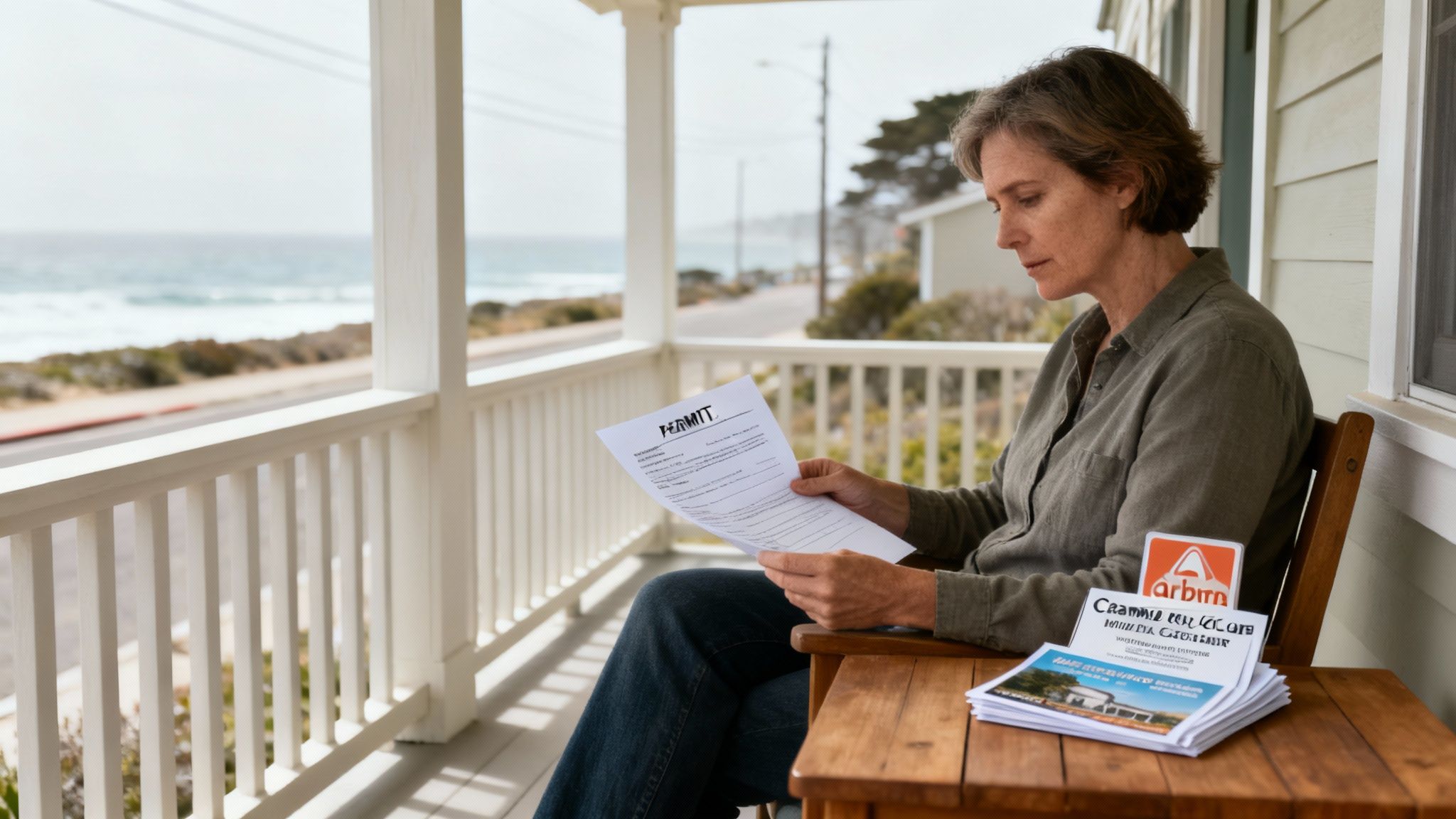
If you own property in Monterey County, you may have noticed changes in the short-term rental (STR) market. Cities like Carmel-by-the-Sea and Pacific Grove are creating stricter rules. This causes a lot of uncertainty for homeowners who rely on vacation rental income.
This shift is a response to community concerns. Residents worry about the lack of available housing and want to keep their neighborhoods quiet. In fact, 46% of Americans believe STRs make it harder to find affordable long-term housing, according to a 2022 survey by the National Association of Realtors. Local governments are now prioritizing long-term housing over temporary tourist lodging.
What’s Changing for Monterey County Property Owners?
For STR hosts, these new regulations bring real challenges. Understanding the changes is the first step to protecting your investment and staying compliant.
Here are a few key updates being considered:
- Permit Limits: Some cities are capping the number of STR permits they issue. This makes it difficult for new hosts to get started.
- Stricter Enforcement: Cities are increasing enforcement and giving large fines to unapproved rentals.
- Primary Residence Rules: New proposals may limit short-term renting to a homeowner's primary residence. This affects owners of second homes or investment properties.
These new rules could significantly affect homeowners who rely on platforms like Airbnb or Vrbo. Those with second homes may find they are no longer eligible for STR permits. This is pushing some owners to consider long-term leasing instead.
STR Regulation Changes at a Glance
This table breaks down the key regulatory shifts affecting short-term rentals, giving homeowners a fast way to grasp the new reality.
| Regulatory Area | Previous Rule | New or Proposed Regulation |
|---|---|---|
| Permit Availability | Generally available with application | Capped or banned in many zones; new permits are scarce. |
| Occupancy Rules | Often based on property size | Stricter rules tied to primary residency, limiting STRs in second homes. |
| Enforcement | Primarily complaint-based | Proactive enforcement with significant fines for violations. |
| Operational Rules | Basic safety and tax requirements | More complex rules on parking, noise, and guest conduct. |
The market has changed a lot. What was once a fairly open market is now a tightly controlled one.
The Big Takeaway: The casual, short-term rental model is becoming a high-risk venture. For many property owners, the best path forward is to switch to the more predictable model of long-term leasing.
Navigating this new environment calls for local expertise. If you still have a short-term rental, staying ready for guests is key. A good short-term rental cleaning checklist can help.
For owners looking for stability, exploring Monterey Bay property management services for long-term leasing offers a clear and stress-free alternative.
Understanding Pacific Grove's New STR Rules
Navigating the short-term rental rules in Pacific Grove can be complex. The city is committed to preserving its community feel. It wants to protect its limited housing for full-time residents.
This commitment is why the city has a strict approach to STRs. The goal is to balance the economic benefits of tourism without losing the neighborhood character that makes Pacific Grove special.
The Reality of STR Permits in Pacific Grove
Pacific Grove has had a tight cap on STR permits for years. This makes getting a new permit extremely difficult, if not impossible, for most property owners.
The city has a very long waitlist for the few available licenses. This means new hosts could wait for years with no guarantee of ever getting a permit. This reality makes short-term renting difficult for new players.
Key Insight: The city's focus is clear: it wants to discourage turning residential homes into "mini-hotels." The policy prioritizes community stability over tourist lodging.
For property owners already in the game, a solid Short-Term Rental Agreement Template is crucial. But with rules getting tighter, many find the effort and risk are no longer worth it.
Who Is Most Affected by These Rules?
Pacific Grove’s regulations affect different owners in different ways. Some groups feel the impact more than others.
Here’s who gets hit the hardest:
- Non-Resident Investors: Owners who do not live in Pacific Grove as their primary residence are most affected. The rules are designed to stop outside investors from buying local homes just for vacation rentals.
- New Homeowners: If you recently bought a home hoping to run it as an STR, you will likely be at the bottom of a long waitlist with little chance of getting a permit.
- Existing Permit Holders: Even current STR operators face an uncertain future. The city is considering stricter enforcement and higher renewal fees.
This tough environment makes the high-risk STR model a real gamble. The potential income is only within reach for a small group of existing hosts.
For most homeowners, fighting for a permit is an uphill battle. A more practical strategy is to explore stable, long-term options. This is where professional Pacific Grove property management becomes a valuable resource.
Navigating Carmel's Strict STR Ban
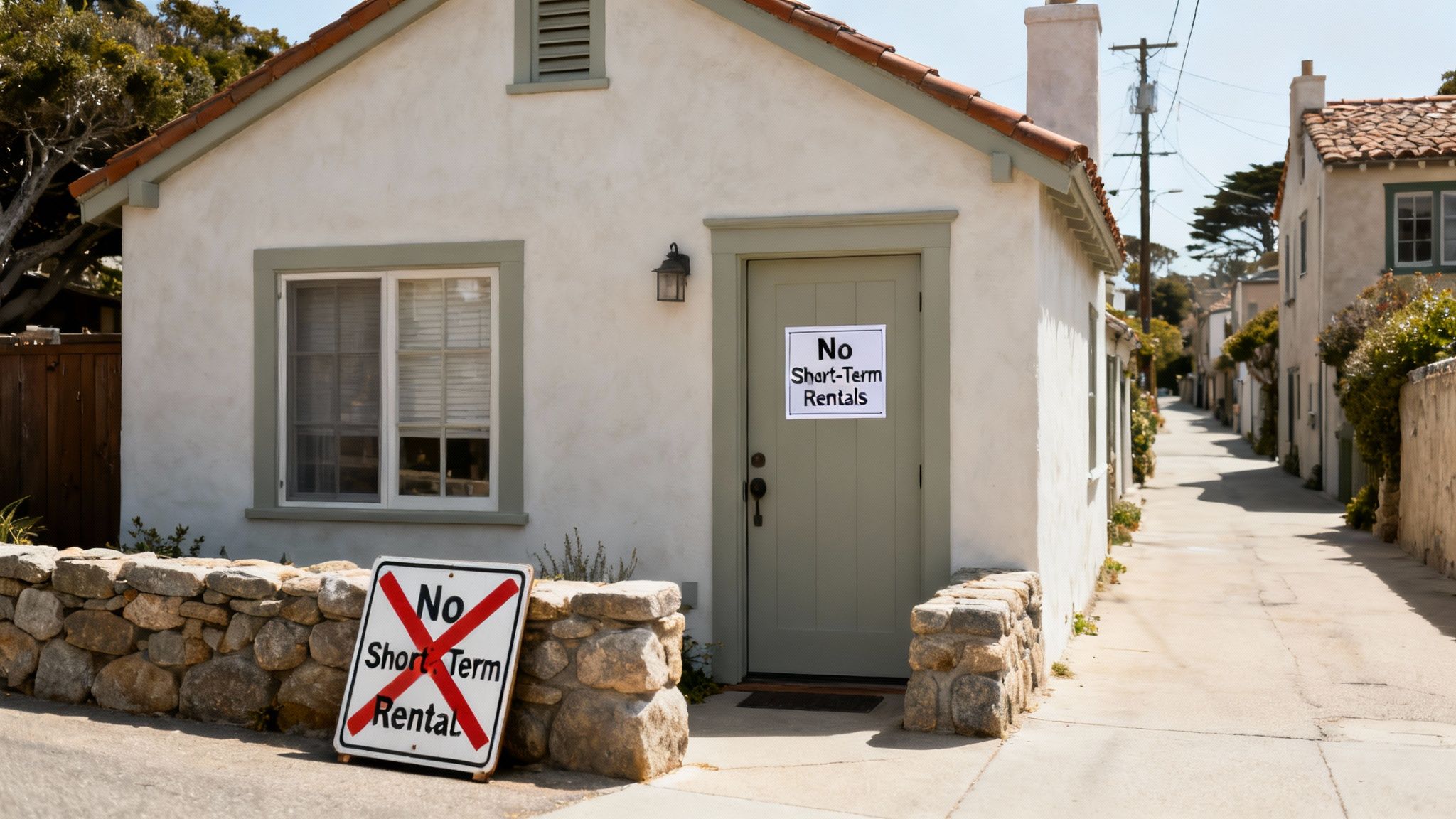
While Pacific Grove has caps and waitlists, Carmel-by-the-Sea keeps it simple: short-term rentals are almost entirely banned. The city has long prohibited rentals of fewer than 30 days to protect its unique village character.
This rule is a core policy. It is designed to keep residential neighborhoods from becoming tourist zones. For homeowners in Carmel, this means listing your home on Airbnb for a weekend is illegal in most areas.
The Financial Risks of Non-Compliance
It is tempting to try and get high nightly rates in a destination like Carmel. But trying to get around the city's rules is a gamble you will likely lose. Carmel’s enforcement is proactive, and the penalties are severe.
Homeowners caught breaking the ban face steep fines that add up daily. These penalties can quickly turn a side hustle into a massive financial headache. Operating "under the radar" is not a good strategy here.
A Critical Reality Check: In Carmel-by-the-Sea, the risk of fines and legal action is much greater than any potential reward from unapproved short-term renting.
This zero-tolerance environment means property owners must find a legal and sustainable way to earn income.
Why a Long-Term Strategy Is the Smartest Path
The most secure path for Carmel property owners is a long-term leasing model. This approach guarantees compliance with city rules. It also delivers a level of stability the vacation rental market cannot offer.
Focusing on a high-quality tenant for a lease of one year or more has several benefits:
- Guaranteed Monthly Income: A long-term lease provides a predictable revenue stream every month.
- Reduced Wear and Tear: Long-term tenants often treat a property like a home, which means lower upkeep costs.
- Zero Regulatory Stress: You can operate with peace of mind, knowing your rental is fully legal.
The high demand for housing in Carmel makes it a great market for long-term rentals. Shifting your focus lets you tap into this stable demand. For owners who want a hands-off approach, professional Carmel property management can handle every detail.
Why Long-Term Leasing Offers a Secure Path Forward
For homeowners caught in this situation, the best solution is a strategic move to stability. Shifting to long-term leasing offers a secure and reliable path forward. This turns the chaos of the STR market into predictable, steady income.
The benefits are clear. A long-term lease provides guaranteed monthly income instead of chasing seasonal bookings. This consistency makes it easier to cover your mortgage and other expenses. A long-term tenant also means less wear and tear on your property.
Most importantly, this approach avoids the new regulatory headaches in Carmel and Pacific Grove. By securing a lease of 30 days or more, you move into a much safer legal category. This eliminates the stress of permit applications and the threat of heavy fines.
The Power of Predictable Income
Predictability is the foundation of a solid investment. STRs promise high nightly rates but come with a lot of uncertainty. Your income can change based on tourist seasons or even bad weather.
A long-term lease removes that guesswork. You lock in a consistent rental rate for a year or more. This stability is crucial for long-term planning, whether you are saving for retirement or covering costs.
Key Takeaway: Long-term leasing transforms your property from a high-maintenance business into a reliable asset. It prioritizes stable annual income and peace of mind over risky nightly rates.
For a deeper dive, our guide explains how to calculate your net operating income and why it's a critical metric. A stable, long-term lease can lead to a stronger financial return.
Making a Smooth Transition to Long-Term Renting

Moving from short-term guests to a long-term lease can feel like a big change. But with the right partner, it’s a smooth and profitable move. At Torrente Property Management, we help homeowners pivot from uncertain STRs to stable, long-term leasing solutions.
Our approach is built on a deep understanding of the Monterey County market. We are your local partner, handling every detail. We help you enjoy consistent rental income without the stress of new laws.
Our Proven Process for Your Property
We use a structured process to minimize vacancy and maximize your returns. It starts with a data-driven look at your property's value in the long-term rental market.
Our full-service transition covers everything:
- Market Analysis: We analyze comparable rentals in your neighborhood to set a competitive monthly rent.
- Property Marketing: We create targeted marketing campaigns to attract qualified tenants.
- Tenant Screening: We conduct thorough background and credit checks to find reliable tenants.
- Lease Management: We draft a compliant lease and handle all ongoing maintenance and communication.
Our Promise: We treat your property as if it were our own. This simple philosophy ensures your investment is always protected.
Our expertise in expert tenant placement services ensures we find responsible residents who will care for your home. We make sure your transition is not just compliant, but also highly profitable.
FAQs: Your Questions About New STR Regulations
Here are clear answers to the most common questions we hear from property owners in Carmel and Pacific Grove.
1. Can I still operate an STR in Pacific Grove or Carmel?
For most homeowners, the answer is no. Carmel-by-the-Sea bans most rentals under 30 days. Pacific Grove has a strict cap on permits with a very long waitlist, making new permits nearly impossible to get.
2. Will I make less money with a long-term rental?
Not necessarily. While STRs have high nightly rates, they also have high costs and vacancy risks. A long-term lease provides guaranteed monthly income and financial stability, often leading to a better annual return.
3. How can I manage a long-term rental if I live out of the area?
A professional property manager is the solution. We handle everything from finding qualified tenants and collecting rent to coordinating maintenance. This allows you to enjoy the benefits of ownership from anywhere.
4. How do you find reliable long-term tenants?
Our comprehensive screening process is key. We perform detailed credit history checks, verify employment and income, review prior rental history, and conduct complete background checks to find high-quality tenants.
5. How quickly can you help me switch from an STR to a long-term lease?
We can start right away. After a consultation and market analysis, we can typically market your home and begin screening tenants within a few days. Our goal is to minimize your vacancy period and get your new income stream flowing quickly.
If you're unsure how new Monterey County short-term rental rules could affect your property, Torrente Property Management can help you evaluate your options and smoothly transition to long-term leasing. Contact us today at (831) 582-8916 for a consultation tailored to your property's location and your financial goals. https://torrenteproperties.com