
For years, owning a second home in Monterey County felt like having a golden ticket for short-term rental income. But with new county rules, many homeowners feel blindsided, wondering what to do next. That reliable asset has suddenly become a source of anxiety.
Simply put, short-term rentals are on the way out in Monterey County for many residential areas. This shift is forcing homeowners to rethink how they generate income from their properties.
Your Vacation Rental Faces a Major Shift
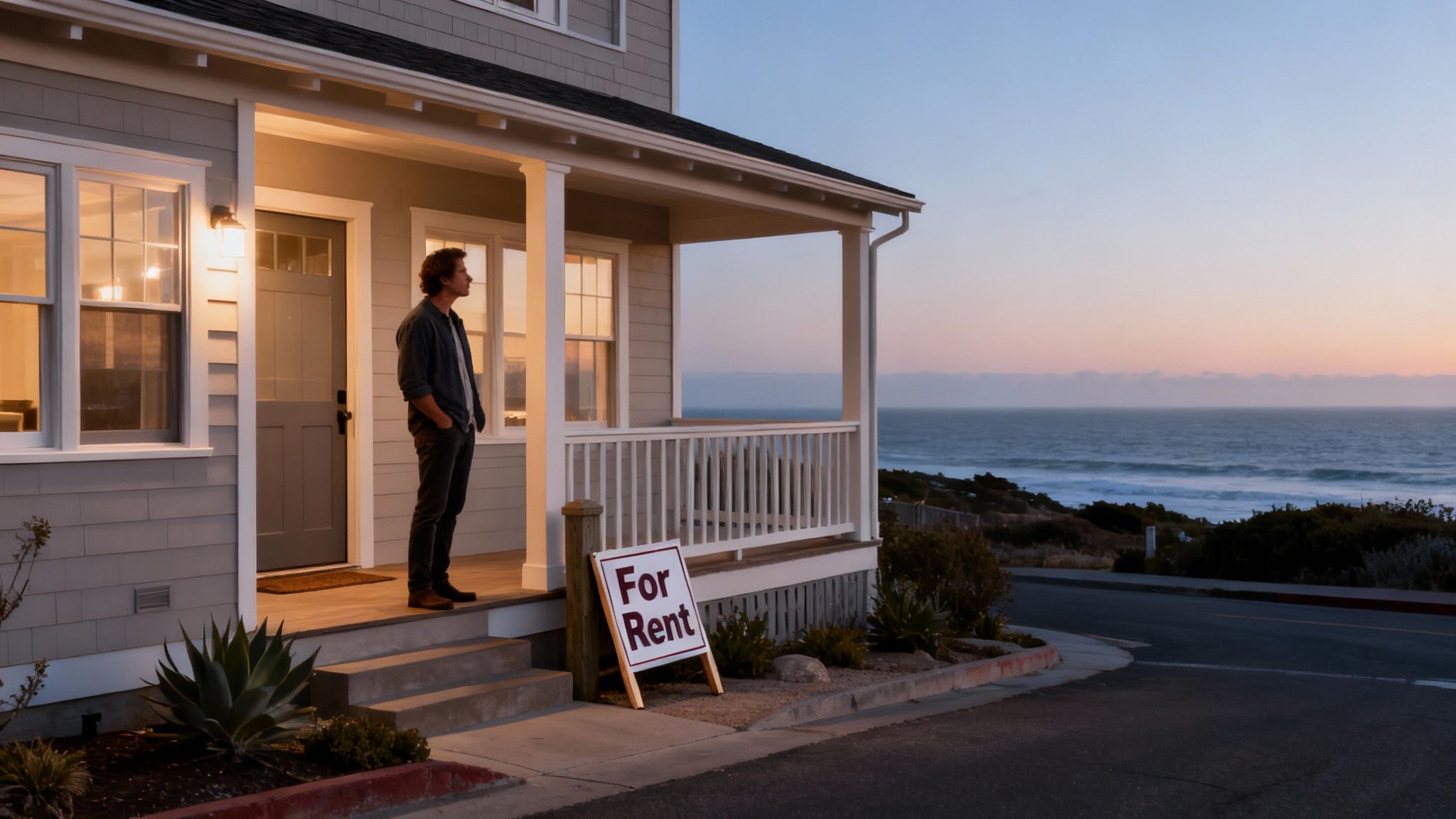
Platforms like Airbnb and Vrbo created a profitable path for property owners. But for many in communities from Pebble Beach to Big Sur, that path is closing. This is not a small rule change—it directly impacts your investment.
It's understandable why so many homeowners feel caught off guard. A dependable income stream seems to be drying up right before their eyes.
Understanding the New Ordinance
So, what is actually changing? Monterey County has decided to ban rentals under 30 days in most unincorporated residential areas. This new rule affects second homes and vacation properties.
This effectively ends the weekend getaways and week-long stays that defined the vacation rental market here for years. You can read more about how new STR regulations may change your rental strategy in our detailed guide.
The Risk of Doing Nothing
This new reality presents a tough choice. Do you risk steep fines by operating illegally, or do you let your valuable property sit empty?
The risk of doing nothing is real. You face uncertain income, possible fines, and a vacant home racking up mortgage, tax, and maintenance bills during prime earning seasons.
The Opportunity in Long-Term Leasing
This challenge also creates a fantastic opportunity for stability. Switching to a long-term leasing model isn’t just a backup plan. It’s a path to stable, protected income with far less stress.
Instead of managing a constant revolving door of guests, you can secure a single, qualified tenant who cares for your property.
You don’t need a stream of strangers to make your home work for you—just one qualified tenant, placed by a professional.
The STR era may be ending in some areas. But your property can still bring in income, retain value, and remain well cared for—with the right partner.
Understanding the New 30-Day Rental Minimum
To understand why short-term rentals are on the way out in Monterey County, we must look at the new ordinance. The rule is simple: for most properties in unincorporated residential zones, renting for fewer than 30 consecutive days is banned.
This change targets the weekend trips and weekly stays that have defined the market. If your property is in one of these areas, you can no longer legally rent it for a quick holiday.
What Is an Unincorporated Area?
An "unincorporated area" is a region not part of an official city. Instead, it is governed directly by the county. Many of Monterey County’s most popular vacation spots fall into this category.
Key communities affected by this ban include:
- Pebble Beach: Famous for its iconic golf courses and beautiful coastline.
- Carmel Highlands: A stunning community known for its dramatic ocean views.
- Parts of Big Sur: The legendary, rugged stretch of California's central coast.
If your property is in one of these residential zones, this new regulation is now your reality. It is a major change that requires a new strategy.
Why the County Made This Change
Monterey County did not make this decision in a vacuum. The main reason for the ban is the severe local housing shortage. A recent report showed that a Monterey County resident earning the median income can afford less than 15% of the homes on the market.
County officials hope to turn vacation rentals back into long-term homes for residents. This isn't just a local issue. Cities across the country are cracking down on short-term rentals to protect their housing stock. As a property owner, it is vital to know the rules. You can learn more about landlord-tenant laws in California to stay informed.
The High Cost of a Vacant Property

As short-term rentals are on the way out in Monterey County, some owners may wait to see what happens. But letting a valuable property sit empty is often the most expensive mistake you can make.
An empty home becomes a liability. It drains your finances and reduces your property’s value day by day.
The Financial Drain of an Empty Home
An unoccupied home can quickly turn into a money pit. The bills keep coming, turning your asset into a recurring expense.
Think about these ongoing costs:
- Mortgage Payments: Your largest monthly bill doesn’t go away when guests do.
- Property Taxes: Monterey County requires taxes to be paid, regardless of rental activity.
- Insurance: Insurers often charge more for vacant properties due to higher risks of damage or break-ins.
- Utilities: Basic utilities are needed to prevent issues like burst pipes in cold weather.
Unseen Dangers in Vacant Properties
An empty home is a magnet for problems that can go unnoticed for weeks. The longer a property sits empty, the higher the chance of something going wrong.
These risks include:
- Water Leaks: A small leak can lead to major water damage and mold.
- Pest Infestations: Rodents and insects love quiet, undisturbed spaces.
- Security Risks: Empty homes are targets for vandals, squatters, and burglars.
A vacant property isn't just an asset that's not earning—it's an asset at risk. Active oversight is the only way to protect your investment.
For owners worried about these issues, Torrente’s vacant property inspections and upkeep services offer peace of mind. We ensure your home is secure and maintained, preventing small problems from becoming expensive disasters.
Pivoting to Profit with Long-Term Leasing
Hearing that short-term rentals are on the way out in Monterey County can be discouraging. But this is a chance to pivot to something more stable: long-term leasing. This is a strategic move to secure your income and lower your stress.
Instead of the endless work of bookings and cleanings, you get one qualified tenant who makes your property their home. This model provides consistent monthly income without seasonal slumps.
The Power of Predictable Income
The biggest benefit of long-term leasing is financial stability. You get a predictable revenue stream that makes budgeting easy.
Consider these advantages:
- Reduced Workload: No more adjusting rates, answering tourist questions, or coordinating check-ins.
- Less Wear and Tear: A long-term tenant is often easier on a property than a stream of vacationers.
- Stable Occupancy: Once you find a great tenant, you can expect a year or more of steady rental income.
One Big Sur client, for example, saw 95% occupancy within two months of switching from a struggling STR to long-term leasing with our help. This highlights the stability that professional management can bring.
Finding the Right Tenant Is Key
The success of a long-term rental depends on finding a quality tenant. This is where professional help is essential.
Rigorous screening—including credit checks, rental history, and background checks—ensures you find a responsible tenant. Our expert tenant placement services handle every step for you. Owners often have questions about legal details, like whether a lease needs to be notarized. An expert partner ensures everything is done correctly.
Making a Seamless Transition with Torrente
The move away from vacation rentals doesn't have to be stressful. It’s a chance to adopt a more stable investment model. Torrente Property Management is a respected, Monterey-based firm ready to help.
We specialize in converting former STRs into thriving long-term rentals. With three generations of local experience, we can guide you through this change profitably. We understand that short-term rentals are on the way out in Monterey County, so we have tailored our services to help you make this switch with confidence.
Your Path to Stable Long-Term Income
Switching from an STR to a long-term rental is about finding the right tenant. We treat your property like our own, finding qualified tenants who will care for your home.
This decision tree breaks down the two paths owners now face.
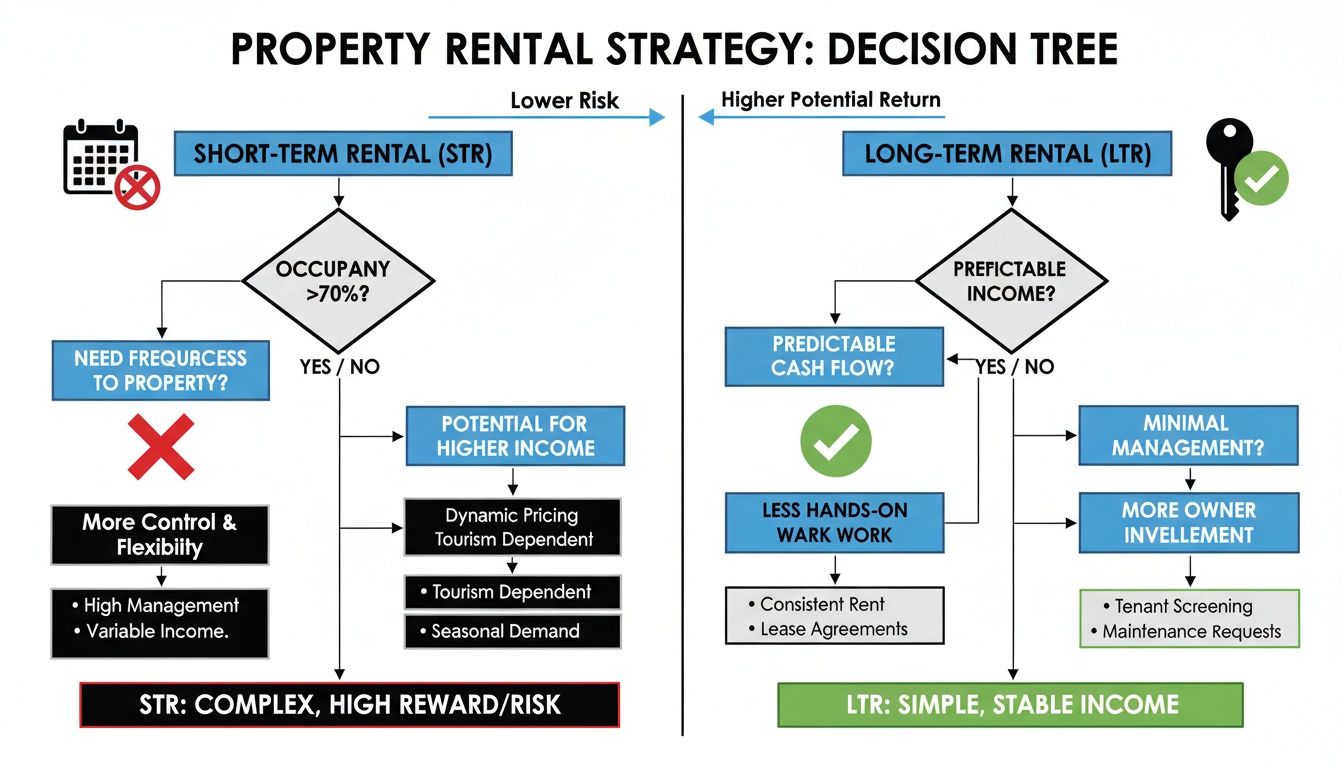
The STR path is now full of risk. The long-term rental route offers a clear line to consistent income and peace of mind. Using the best software for property managers helps streamline the process, something we handle for all our clients.
An Alternative for Seasonal Owners
Not ready for a full-time tenant? Our Vacant Home & Estate Caretaker service is ideal for seasonal owners. It provides active oversight when you're away.
We offer regular property inspections, security monitoring, and maintenance coordination. This ensures your home is safe and cared for, even when it’s empty. Learn more by reading our guide on how to choose a property management company.
What's Your Next Move Before the Ban?

The era of unregulated short-term rentals is ending in parts of Monterey County. But this doesn't mean your property's potential is over. Waiting is a financial risk.
Making a strategic shift to long-term leasing is the clearest path to a stable future. With the right local partner, your property can keep generating income, appreciate in value, and stay well-cared-for.
The STR era may be ending in some areas, but your property can still bring in income, retain its value, and remain well cared for—with the right partner.
Whether you're ready to switch to a long-term rental or prefer our Vacant Home & Estate Caretaker services, we have a solution. The time to decide is now, because short-term rentals are on the way out in Monterey County.
Don’t let your property's future be decided for you. Let Torrente help you make a smooth, profitable transition—before the ban takes effect. Contact Torrente Property Management today at (831) 582-8_9_16.
FAQs About the Monterey County STR Ban
Navigating new regulations can be confusing. Here are answers to common questions from property owners.
1. When does the new STR ban officially start?
The new ordinance, which sets a 30-day minimum rental period in unincorporated residential areas, is set to take full effect in early 2026. This gives property owners a window to plan their transition to a compliant strategy like long-term leasing.
2. Is a long-term rental as profitable as an STR?
While STRs can have high nightly rates, they also come with vacancies and high management effort. Long-term rentals offer consistent, year-round income you can count on, often resulting in a more stable and predictable net annual income with far less hassle.
3. What if I don't want a full-time tenant in my second home?
Our Vacant Home & Estate Caretaker service is the perfect solution. We provide regular inspections, security monitoring, and maintenance coordination to protect your property while it’s unoccupied. This keeps your home in pristine condition, ready for your visits.
4. What should I do with my furnished vacation rental?
You can rent your property fully furnished to attract premium tenants, such as corporate relocations, who will pay more for a move-in-ready home. Alternatively, you can remove the furniture to appeal to a wider range of long-term renters.
5. What are the risks of ignoring the new rules?
Ignoring the ban is a risky strategy. Monterey County is increasing enforcement, and owners of illegal STRs face substantial fines. Complying with the new rules protects your investment and provides peace of mind.