Thinking about switching your rental from short-term to long-term? You are not alone. With Monterey County tightening rules on Airbnbs, many owners are asking if a long-term lease is a better choice.
This guide will show you what to know before switching from short-term to long-term renting. It is a big change, but it can lead to more stable income with fewer headaches. The key is to treat it like a real business from the start.
From Airbnb Host to Full-Time Landlord

If you have an Airbnb in places like Carmel or Pacific Grove, you know the rules are changing. New regulations are making many owners consider long-term rentals for more stability. This pivot is also happening as more “accidental landlords” enter the market to avoid selling their homes.
These new long-term rentals need the right preparation to succeed. A recent study shows that 49% of landlords manage their properties themselves, but many are not prepared for the legal and financial duties involved (Source: Zillow Group). This is why a professional approach is so important.
Key Differences Between Short-Term and Long-Term Rentals
The two rental types are very different. Short-term renting is like running a hotel. Long-term renting is like managing a housing business.
Here is a simple breakdown:
| Aspect | Short-Term Rental (STR) | Long-Term Rental (LTR) |
|---|---|---|
| Income | High nightly rates but can be unpredictable and seasonal. | Steady, predictable monthly rent for more stable cash flow. |
| Management | A hands-on job with constant guest messaging and cleaning. | A more hands-off role focused on tenant relations and maintenance. |
| Rules | Complex local rules that can change quickly. | Governed by stable California landlord-tenant laws. |
| Tenant Vetting | Based on simple platform reviews. | Requires a full legal screening with credit and background checks. |
| Wear & Tear | High turnover can cause more wear on furniture. | Lower turnover means less wear on the property over time. |
Understanding these differences helps you prepare for the switch.
Common Missteps When Making the Switch
Many owners make mistakes when they switch from short-term to long-term renting. They often keep an "Airbnb mindset." This can cause problems.
For example, some owners use stylish but weak furniture that breaks easily. Others use informal tenant screening instead of a full background check. These oversights lead to tenant issues, vacancies, and legal trouble. You can learn more about common mistakes new landlords often make.
Another mistake is not updating your insurance or utilities. You need a landlord policy, not an STR policy. These details are crucial for staying compliant and protecting your investment.
Adopting a Professional Landlord Mindset
To succeed, you must treat your property like a business. This means taking a few key steps from the beginning.
First, get a professional market valuation to find the right rent price. Next, take high-quality photos that show the property as a home, not a vacation spot. Most importantly, use a full tenant screening process and a legally sound lease.
At Torrente Property Management, we help STR owners make this transition smoothly. We know the Monterey County market, from Salinas to Marina. We can handle everything from pricing to tenant placement to help you succeed.
Navigating the New Regulatory Landscape

One of the biggest reasons owners are switching is the changing laws. Cities across the Monterey Peninsula are making short-term rental rules stricter. This creates uncertainty for property owners.
This trend is not just local; it is happening worldwide. The constant worry about new rules and fines makes the stability of long-term renting very attractive.
The Shifting Sands of STR Ordinances
From Carmel to Pacific Grove, local governments are tightening STR regulations. They are adding new permit rules and limiting the number of rentals allowed. This makes it hard for STR owners to plan for the future.
This legal risk is a major reason to consider a switch. A new city rule could suddenly make your property non-compliant. To learn more about local changes, read our guide on new STR regulations in Carmel and Pacific Grove.
This is part of a global trend. Cities everywhere are putting limits on STRs to protect local housing. For example, some cities in France limit STRs to 90 days a year (Source: global STR trends and their impact). Long-term rentals do not face this kind of risk.
The Stability of Landlord-Tenant Law
When you switch, you are no longer in the tourism business. You are in the housing business. This is a key difference.
Long-term rentals are governed by established California landlord-tenant laws. These rules are much more predictable and stable. They provide a clear framework for you and your tenant.
Here’s what that means:
- Legally Binding Leases: A strong lease agreement outlines all rules and responsibilities. It is your main tool for managing the property.
- Tenant Rights: California law clearly defines tenant rights. Understanding these rules helps you maintain a good and legal relationship.
- Clear Processes: There are formal legal processes for everything, including evictions. This protects your rights as an owner.
Switching to a long-term model protects your investment from unpredictable STR rules. It lets you focus on earning steady income without worrying about the next city council meeting.
Rethinking Your Property and Your Finances
Making the switch requires a new way of thinking about your property and your budget. You need to prepare the space for a full-time resident. You also need to understand the financial changes.
This means turning a vacation spot into a durable, functional home. It also means looking beyond high nightly rates to see the real profit numbers.
Preparing Your Property for a Long-Term Resident
A home for a full-time tenant is different from a weekend rental. Tenants need durability and function, not just trendy decor.
Start by replacing stylish but fragile furniture with sturdy items. Here are key areas to focus on:
- Furniture: Choose practical, durable furniture that can handle daily use.
- Appliances: Ensure all major systems like HVAC and plumbing are in excellent working order. Long-term tenants expect quick, professional repairs.
- Storage: Full-time residents need closets and storage space. Make sure your property has enough.
You also need to update your insurance and utilities. Switch from an STR commercial policy to a standard landlord insurance policy. You will also likely transfer utility bills to the tenant’s name.
Analyzing the True Financial Picture
High nightly STR rates do not always mean higher profits. The hidden costs of running an STR can be very high. Management fees for STRs are often 20% to 30%. Long-term management fees are much lower.
Other STR costs add up fast:
- Constant Cleaning: Cleaning after every guest is expensive.
- Restocking Supplies: Toilet paper, coffee, and other supplies are an ongoing cost.
- Higher Utility Bills: The owner usually pays for all utilities.
- Increased Wear and Tear: High turnover leads to more frequent repairs.
With a long-term rental, these costs are much lower or gone completely. The tenant pays for their own utilities and supplies. This leads to more predictable cash flow. For help with calculations, see our guide on what is net operating income.
This financial shift often means your annual profit from a property in Marina or Seaside is higher as a long-term rental—with much less work.
Mastering Tenant Screening and Management

A common mistake is using casual Airbnb vetting for long-term tenants. This is a recipe for disaster. A professional screening process is the most important factor in your success as a landlord.
This process is your best defense against late rent, property damage, and evictions.
The Critical Difference in Vetting
A long-term tenant is entering into a legal contract to live in your property. This requires a much deeper check than for a weekend guest.
A professional screening process includes:
- Credit Report: Shows their bill payment history and financial health.
- Background Check: Looks for any relevant criminal history.
- Eviction History: A past eviction is a major red flag.
- Income Verification: Confirms they have a stable income to afford the rent.
You cannot get this level of detail from an Airbnb review. Taking a shortcut here is a gamble you cannot afford.
Shifting from Host to Landlord
Your management style must also change. The relationship with a long-term tenant is a formal, professional one based on a legal lease.
This means you need clear processes for collecting rent and handling maintenance. You can no longer rely on a platform to process payments. A property management answering service can also help manage calls and emergencies.
This is where professional help makes a big difference. Our expert tenant placement services find reliable tenants for your Monterey Bay property. We handle everything from screening to lease signing, giving you security and peace of mind.
Building a Long-Term Maintenance Strategy
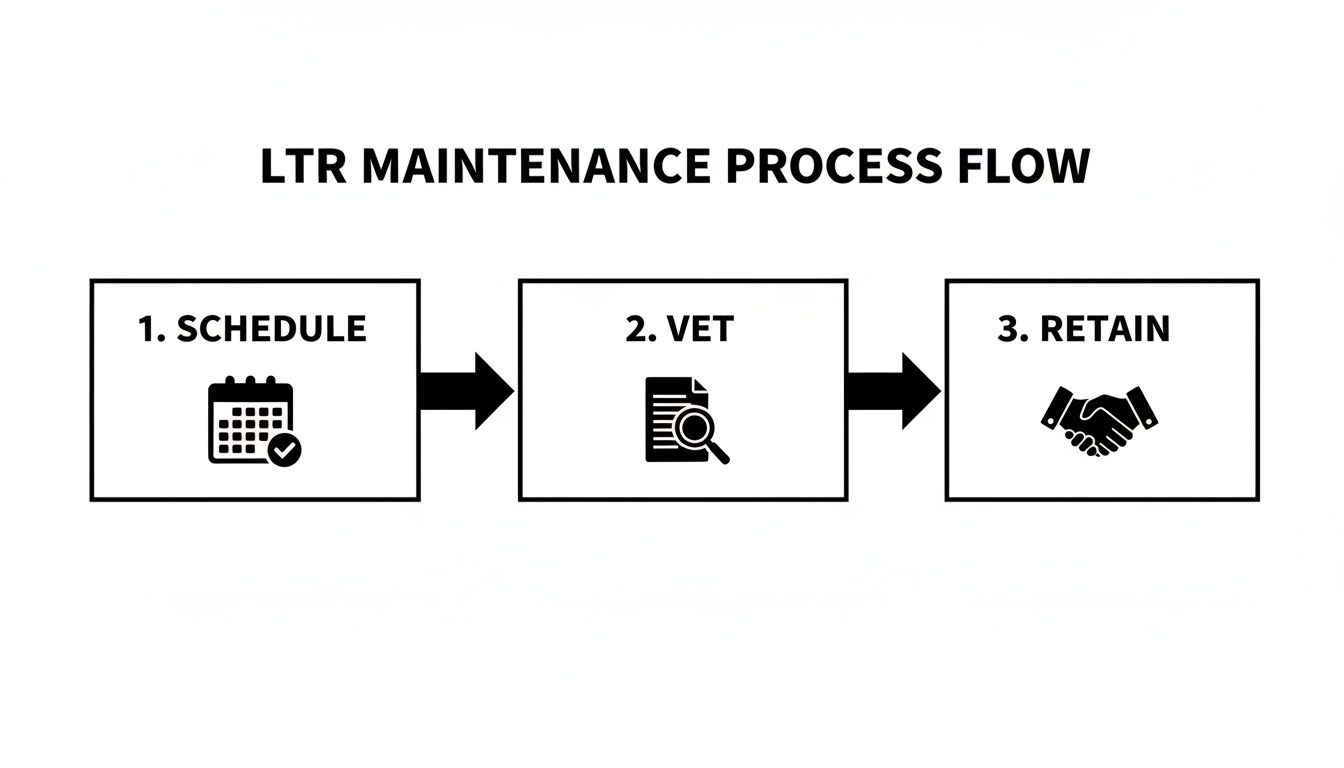
Maintenance is handled very differently in long-term rentals. A weekend guest might not report a small drip. A long-term tenant expects their home to be in good working order.
You need to shift from quick fixes to proactive, planned care. A DIY approach is not enough. You need a reliable plan to protect your property and keep good tenants.
From Quick Fixes to Proactive Care
With a long-term rental, your focus should be on the long-term health of your property. Small problems can turn into expensive emergencies if ignored. A proactive maintenance schedule can prevent this.
Your plan should include:
- Regular HVAC Servicing: Inspect heating and cooling systems twice a year.
- Appliance Checks: Make sure all appliances are working correctly.
- Gutter Cleaning: Clean gutters to prevent water damage.
- System Inspections: Schedule professional checks for plumbing and electrical systems.
This approach saves you money and shows your tenant you are a responsible landlord. Our guide on smart maintenance for rental properties offers more tips.
The Importance of a Vetted Vendor Network
When an emergency happens, you need to act fast. Having a network of reliable, local vendors is essential. This is especially true for owners who live out of the area.
A professional property manager already has a list of trusted contractors. This ensures quality work at a fair price.
At Torrente Property Management, we have built strong relationships with the best vendors in Monterey County. We handle all maintenance coordination, from routine calls to 24/7 emergencies. This protects your property and gives you peace of mind.
Frequently Asked Questions
Switching rental types is a big decision. Here are answers to common questions we hear from property owners like you.
Will I Make Less Money with a Long-Term Rental?
Not necessarily. While gross rent might be lower, your net profit is often higher and more stable. You save money on cleaning, supplies, utilities, and high management fees. This leads to more predictable income without the seasonal ups and downs.
Is It Difficult to Find a Good Long-Term Tenant?
Finding a quality tenant requires a professional process. A thorough screening with credit, background, and income checks is key. This process is the best way to reduce your risk. A good property manager handles this for you.
What if I Want to Use My Property Occasionally?
This is a major difference. Once you sign a long-term lease (usually 12 months), the property is the tenant's legal home. You cannot use it for personal stays during the lease. If you need regular access, a long-term rental may not be the right fit.
What Is the Biggest Legal Mistake to Avoid When Switching?
The biggest mistake is using a generic lease from the internet. You must use a lease that is fully compliant with California and local laws. An improper lease can expose you to huge legal and financial risks. Always use a current, state-specific lease reviewed by an expert.
Do I Need to Change My Property Insurance?
Yes, absolutely. An STR policy is a commercial policy. You must switch to a landlord insurance policy. This policy provides the correct coverage for property damage and liability for a long-term tenancy.
Making the switch from short-term host to long-term landlord can feel like a lot. But you don’t have to do it alone. Torrente Property Management knows the Monterey County regulations and rental demand patterns.
Contact Torrente Property Management today at (831) 582-8916 for a free evaluation of your property’s long-term rental potential.