Meta Description: Feeling overwhelmed by landlord rules in Monterey Bay? This guide breaks down California's new laws, how to avoid common mistakes, and how to stay compliant.
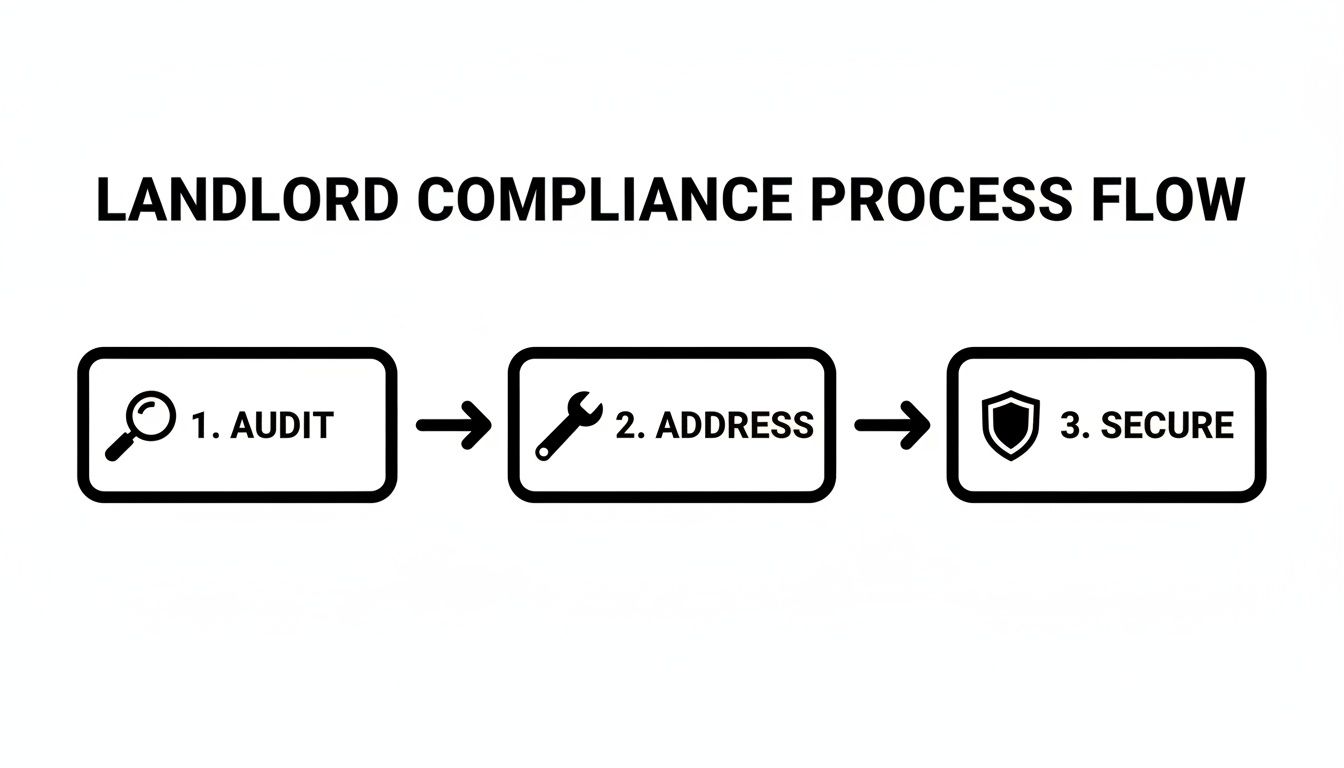
It’s easy to feel buried under landlord rules. The key isn't just knowing the laws; it's having a solid system to track changes, keep your lease current, and document everything. A good process is your best defense before a problem ever starts. According to the National Multifamily Housing Council, 80% of landlords own ten or fewer properties, making compliance a personal and critical task.
Why Landlord Compliance Feels So Hard Right Now
If you're asking, “how do I stay compliant with all these landlord rules?” you're not alone. The legal ground is shifting fast for California property owners. What worked a few years ago might not protect your investment today, and relying on old advice is a huge financial risk.
For anyone with property in Monterey, Salinas, or Carmel, mastering these rules is essential. But with a constant stream of new laws, it can feel like a full-time job.

The Fast Pace of New Regulations
California’s rental laws have become much more complex. The state introduced 11 new rules in 2025 alone, adding more responsibility for landlords. These aren't minor tweaks; they change how you must run your rental.
For example, landlords now have to:
- Take before-and-after tenancy photos to properly document a property's condition for security deposits.
- Respond to nonpayment within 10 days, a change from the old five-day window that affects your timeline.
- Offer to report on-time rent payments to credit bureaus, which adds a new administrative step.
This constant change is why many owners feel swamped. In fact, 60% of property managers say compliance work has noticeably increased. For landlords in Monterey County, this gets even trickier with local city rules that also need attention.
Outdated Leases Create Hidden Risks
A common misstep is using an outdated lease. Owners often Google each law or rely on advice in online forums. But these sources can conflict or miss local rules.
An old lease can easily contain illegal clauses or miss required notices. This is where tenant complaints and lawsuits often start. You don’t need to be a lawyer, but you do need someone who tracks this stuff for you. You can learn more about essential landlord-tenant laws in California.
The best approach is to use a plain-English checklist or talk with a local expert. Key steps include updating your lease, documenting every inspection with photos, and understanding notice timelines.
Building a Strong Foundation with a Compliant Lease
Your lease is more than just a contract. It's the most important legal tool you have to protect your investment. When a dispute comes up, this document is your first line of defense.
A big risk is grabbing a generic template online. These often miss key, state-required clauses that are non-negotiable in California. Your lease must be a living document that you update to reflect the latest legal changes.

The Real Cost of an Outdated Lease
Let me share a quick story. A landlord in Carmel used the same lease for years. When a tenant moved out, he deducted money from the security deposit for what he felt was damage. Simple, right?
Wrong. The lease was missing a new California clause requiring landlords to offer tenants the option to have their rent payments reported to credit bureaus. The tenant challenged the deductions in court, arguing the lease was non-compliant. The judge agreed, and the landlord had to refund the entire deposit plus damages.
Must-Have Clauses for Your California Lease
To avoid a nightmare like that, your lease agreement needs to be airtight and specific to California. At a minimum, your lease must address these key areas:
- Security Deposit Handling: State the deposit amount, where it will be held, and the exact conditions for deductions. You must include the 21-day deadline for returning the deposit or an itemized list of deductions.
- Rent Payment Reporting: As of 2025, you must include a clause that offers tenants the option to have their on-time rent payments reported to a major credit bureau.
- Late Fees and Grace Periods: Spell out the late fee amount and when it applies. California law limits what you can charge, so make sure your terms are legal.
- Right of Entry: Detail the notice period required before entering the property. California requires "reasonable" written notice, usually defined as 24 hours.
Local and Federal Disclosures
Compliance doesn't stop with standard clauses. Your lease must also include specific federal, state, and local disclosures.
Don't forget these critical items:
- Lead-Based Paint Disclosure: If your property was built before 1978, federal law requires you to give tenants an EPA-approved pamphlet.
- Mold Disclosure: You must provide a written disclosure about the health risks of mold and how to prevent it, as required by California law.
- Pest Control Notice: If you use a regular pest control service, you must give tenants a copy of the notice from the company.
Reviewing and updating your lease annually is a key step to answering, "how do I stay compliant with all these landlord rules?" For more on legal agreements, check out this guide on a commercial lease agreement template, which has useful principles for residential leases too.
Mastering Documentation from Start to Finish
In any tenant dispute, the landlord with the best records almost always wins. If your lease is your foundation, then your daily documentation is the framework holding it all together.
This process starts when you approve a tenant and doesn’t end until their security deposit is returned. Keeping great records isn't about being negative; it's about being prepared.

The Power of Detailed Inspections
The move-in inspection is your most important documentation milestone. It sets a clear baseline for the property's condition. In fact, California law now requires landlords to take before-and-after tenancy photos, making this step more critical than ever.
A simple checklist isn't enough. Your move-in report should be detailed, with both you and the tenant signing off on it.
Here’s a real-world example: A Salinas property owner rented to a family who later claimed scratches on the wood floors were already there. Luckily, the owner had time-stamped photos from the move-in inspection showing the floors in perfect condition. That proof saved him from paying for the repairs himself.
What to Document During an Inspection
A good inspection covers everything. Use a detailed checklist and take more photos than you think you need.
Your inspection process should always include:
- Flooring: Photograph every room, noting any stains on carpets or scuffs on floors.
- Walls and Ceilings: Document any nail holes, scuffs, or discoloration.
- Appliances: Test every appliance and confirm it’s working. Photograph the inside and outside.
- Fixtures: Check all lights, faucets, and toilets.
- Windows and Doors: Ensure they all open, close, and lock properly.
This process protects you and sets clear expectations for the tenant. Our tenant move-out inspection checklist is a great template to use.
Serving Notices and Keeping Communication Logs
Another common mistake is improperly serving notices. Whether it’s a 24-hour notice to enter or a notice to pay rent, California has strict rules. A text message or email often isn’t legally enough.
Always document how and when a notice was served. Keep a log of all important communications with your tenant. Exploring real estate document management use cases can offer good ideas for managing your paperwork.
Understanding Tenant Protections and Fair Housing Laws
Tenant protections and Fair Housing laws are a high-stakes part of property management. These are strict legal standards that cover everything from advertising your property to handling rent increases.
At their core, these laws are about providing safe housing and treating everyone equally. The details can get tricky fast.
Avoiding Unintentional Discrimination
The federal Fair Housing Act and California's Fair Employment and Housing Act (FEHA) prevent discrimination based on protected classes. These include race, religion, sex, family status, and disability. California adds protections for sexual orientation, gender identity, and source of income.
Unintentional discrimination is a common pitfall. An ad that says “perfect for a professional couple” could be seen as discriminating against families.
To stay compliant, your process must be:
- Consistent: Use the same screening criteria for every applicant.
- Objective: Base decisions on factors like income, credit, and rental history.
- Documented: Keep records of why each applicant was approved or denied.
California's Tenant Protection Act
Landlords in California must know the Tenant Protection Act of 2019 (AB 1482). This statewide law changed rent increase and eviction rules.
The two main parts of this act are:
- Rent Caps: You can't raise rent more than 5% plus local inflation, or a total of 10%, whichever is lower, in a 12-month period.
- Just-Cause Eviction: After a tenant has lived in a unit for 12 months, you can only end their tenancy for a specific, legal reason.
Some properties are exempt, but you must provide written notice of that exemption in the lease. If you don't, the rules might apply to you anyway. Find more details in our guide on tenant rights in California.
The Importance of Bilingual Communication
In a diverse area like Monterey Bay, where many households speak Spanish, clear communication is key. Providing documents in both English and Spanish is good service and can prevent misunderstandings that lead to legal issues.
With rules changing nationwide and 61% of renters preferring stable annual leases, a compliant lease is more critical than ever. Learn more about these evolving property trends.
Ultimately, landlords must ensure the property is safe. The best way to protect your tenants and your investment is by understanding premises liability and your duty to maintain a safe environment.
When You Need More Than a DIY Approach
At some point, trying to figure out legal jargon on your own just doesn't work anymore. There is often a clear tipping point when managing compliance yourself becomes a major source of stress and risk.
If you’re feeling overwhelmed, that’s the first red flag. When you spend more time worrying about legal mistakes than growing your property's value, you need help.
The Dangers of Unreliable Advice
A common trap for landlords is relying on general advice from online forums. These sources often miss specific ordinances that apply in Monterey, Salinas, or Carmel. A rule that works in another state could get you in trouble here.
Worse, your lease might have illegal clauses without you knowing it. This is when professional help becomes essential. You don't need to be a legal expert, but you need someone on your side who tracks these changes for you.
Signs You Need an Expert
How do you know when you've hit your limit? Certain situations make professional management a smart investment.
Look for these warning signs:
- You're Facing a Tenant Dispute: A formal complaint is a clear sign your current system isn't working.
- You Manage from Out-of-State: Being a remote landlord makes it hard to keep up with local rules.
- You Own Multiple Properties: The more units you manage, the more complex compliance gets.
- You Lack the Time: If you can't dedicate time to tracking new laws, you're already falling behind.
Thinking you're saving money by managing your own rental can be a costly mistake. The risks of non-compliance often outweigh the cost of professional management.
This is the problem Torrente Property Management solves. We offer fully compliant leases, handle legal documentation, and keep up with Monterey County and state regulations—so you don’t have to. We even provide photo reports and compliance audits as part of our plans. If you’re renting out a home in Monterey, Salinas, or Carmel, Torrente knows the specific local ordinances and handles the paperwork for you.
Frequently Asked Questions (FAQs)
Here are quick answers to common questions we hear from property owners in the Monterey Bay area.
What's the biggest security deposit mistake landlords make?
The most common error is failing to return the security deposit correctly. Landlords must provide an itemized list of deductions within the strict 21-day timeframe after a tenant moves out. Missing that deadline can force you to return the entire deposit, even if there were real damages.
Do I have to accept a service animal in my "no pets" property?
Yes, absolutely. Under Fair Housing laws, assistance animals are not legally considered pets, so a "no pets" policy doesn't apply. You must provide a reasonable accommodation and cannot charge a pet deposit for them.
How much notice do I need for a rent increase?
For a rent increase of 10% or less, you must give a 30-day written notice. For an increase of more than 10%, the required notice is 90 days in writing. Always check for additional local rules in cities like Salinas.
Can I screen tenants based on their source of income?
No, you cannot. California law prohibits "source of income" discrimination. You must consider all forms of lawful income, including Section 8 housing vouchers or other government subsidies, when you review an application.
What happens if my lease has an illegal clause?
An illegal clause in your lease is unenforceable and can weaken your position in a dispute. It’s a key reason why using a professionally reviewed, compliant lease agreement is so important to protect your property.
Take the Next Step
Keeping up with landlord rules can feel like a full-time job, but you don't have to do it alone. A solid, compliant process protects your investment and gives you peace of mind. Torrente Property Management is here to handle the details for you.
Call today to schedule a compliance review—before a tenant calls with a complaint. Contact Torrente Property Management today at (831) 582-8916.