The world of California property management is changing fast. A rental property used to be a simple investment, but now it demands serious legal awareness. For landlords, this isn't just a small update—it's a whole new playbook.
Understanding the New Landlord Playbook
The legal shifts across California are making casual landlording a thing of the past. As tenant rights expand, the state is adding new rules that require proactive compliance, detailed records, and clear communication.
For property owners in Monterey, Salinas, or Pacific Grove, understanding these changes is the only way to avoid expensive legal trouble.
This isn't just a local trend. A recent analysis shows states like California are focusing more on billing fairness and resident protections. Just collecting rent is no longer enough; landlords must now act with a higher degree of professional oversight.
The Shift from 'Nice to Have' to 'Must Do'
Until recently, many landlord tasks were just good business practices. The 2025 updates changed that. Two new rules show how much the ground has shifted:
- Mandatory Credit Reporting Offers: Landlords must now offer tenants the option to have their on-time rent payments reported to a major credit bureau. This helps renters build credit with their largest monthly expense.
- Required Photo Documentation: Taking move-in and move-out photos used to be a smart way to handle security deposit disputes. Now, it's a mandatory step to create an official visual record.
These laws turn optional best practices into required duties for every landlord in California.
This isn’t just about more paperwork. It’s about raising the professional standard for the entire industry. The state now views landlords as regulated service providers with strict rules.
The Widening Compliance Gap
With every new law, the gap between professional property managers and DIY landlords gets wider and more dangerous. Many self-managing owners use outdated lease templates from the internet or simply don't know their new obligations. That kind of mistake is a lawsuit waiting to happen.
For a refresher on the basics, you can review our guide on key landlord-tenant laws in California.
Failing to follow even one of these new rules can cause serious problems, including:
- Hefty Fines: State and local agencies are increasing enforcement and issuing penalties.
- Costly Tenant Lawsuits: Tenants are more informed about their rights than ever before.
- Voided Lease Clauses: An improper lease can make it impossible to enforce critical terms.
Staying ahead of the legal curve is about protecting your entire asset from legal battles. For property owners here in Monterey County, deep local expertise is your best defense.
Key Legal Shifts for Landlords At a Glance
| New Legal Requirement | What This Means for You | The Risk of Getting It Wrong |
|---|---|---|
| Mandatory Credit Reporting Offer | You must give all tenants the option to have their rent payments reported to a credit bureau. | Failure to offer this can lead to fines and tenant disputes over fair housing practices. |
| Required Photo Documentation | Taking detailed photos at move-in and move-out is no longer optional; it's legally required. | Without a visual record, you could easily lose a security deposit dispute and face penalties. |
| Strict Just-Cause Eviction Rules | You must have a legally valid, documented reason to end a tenancy for anyone who has lived in a unit for 12 months. | An improper eviction can lead to a wrongful eviction lawsuit, costing you thousands in damages. |
| Statewide Rent Increase Caps | Annual rent increases are capped at 5% plus local CPI, or 10% total, whichever is lower. | Exceeding the cap can void the increase and expose you to legal action. |
These changes represent a major shift in how rental properties must be managed. Informal agreements are gone, replaced by a legal framework that demands professionalism.
Navigating Rent Control and Fee Transparency Rules
For California property owners, figuring out rent increases and fees has become a real challenge. The old way of setting a price and adding fees no longer works. New laws now define how much you can raise rent and what you can charge for.
The main law is the Tenant Protection Act (AB 1482). This statewide law puts a firm cap on annual rent increases. As a landlord, you can raise rent by no more than 5% plus the local Consumer Price Index (CPI), or a flat 10%, whichever is lower.
How Rent Caps Work in Practice
That "5% plus CPI" rule isn't a fixed number. For example, the CPI in Monterey County could be different from Santa Cruz County. This means properties just a few miles apart could have different maximum rent hikes.
It’s also critical to get the timing and notices right. You can't just raise the rent anytime. Proper written notice is mandatory. For a deep dive into the timelines, our guide on California rent grace periods breaks down everything you need to know.
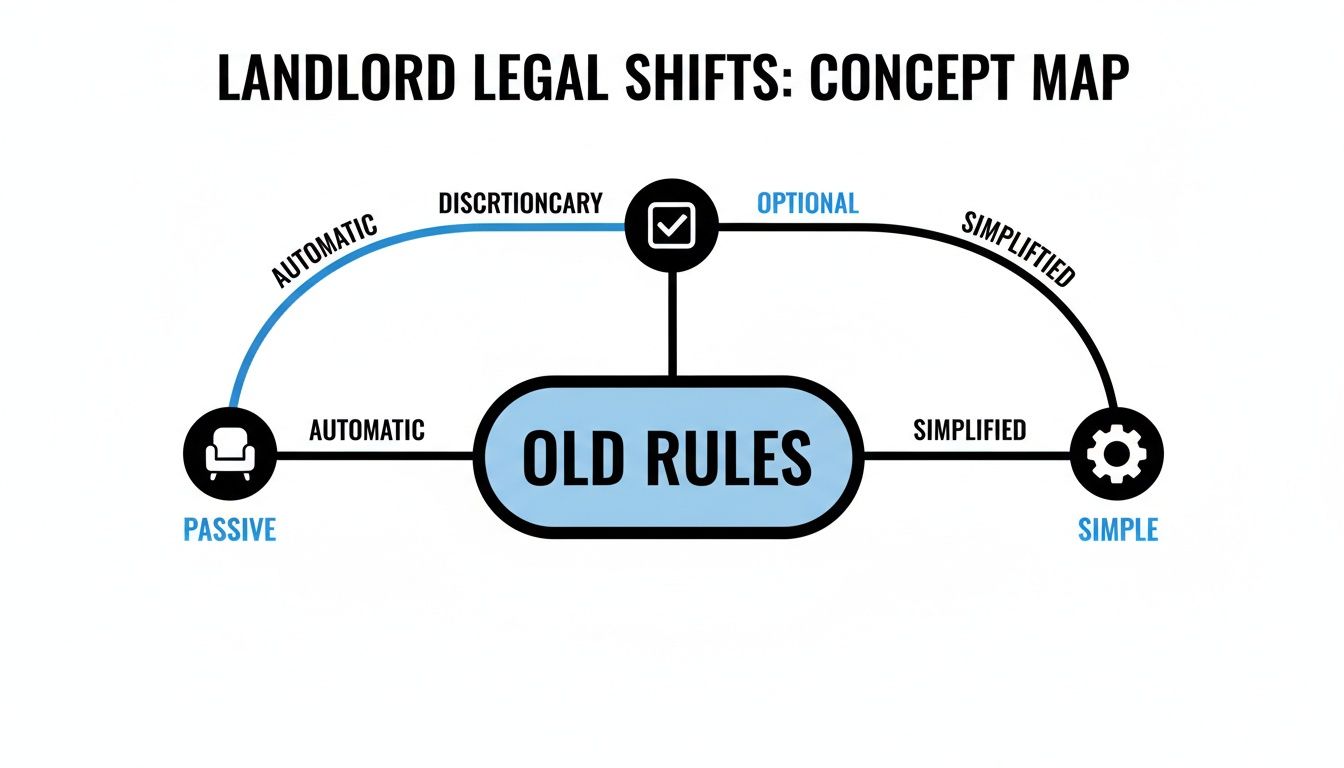
This visual shows the shift from a passive management style to one that demands active legal compliance.
The End of Hidden "Junk Fees"
One of the biggest legal shifts is the new ban on "junk fees." This change is about giving tenants a clear, all-in price for a rental unit from the start.
A new law requires that any advertised rental price must include all mandatory, recurring fees. If you require a monthly pet fee or landscaping charge, you must bundle it into the single rent price you advertise.
The goal here is total transparency from the very first advertisement. It's a shift from 'price plus fees' to just 'price.'
To stay compliant, property owners should review their fee structures now. It’s essential to know the difference between mandatory and optional fees.
- Mandatory Recurring Fees: These must be included in your advertised rent. Think monthly pet fees or required parking charges.
- Optional or One-Time Fees: These don't need to be in the base rent, but you must disclose them clearly. This includes things like late fees or returned check fees.
For landlords in competitive markets like Carmel and Pacific Grove, this transparency helps attract good tenants. Getting this wrong could lead to accusations of false advertising.
The Growing Risks of DIY Landlord Management
For years, managing your own rental in Monterey or Salinas seemed like a smart way to save money. But recent legal changes have turned this simple side hustle into a high-stakes job. The risks for DIY landlords have never been higher.
Many self-managing owners fall into costly traps. The most dangerous is using outdated lease templates from the internet. These generic documents rarely include the specific clauses now required by California law.
A small mistake—like forgetting to offer credit reporting—can quickly become an expensive dispute or lawsuit. As tenant rights expand, so does your personal liability.
The Gap Between Casual and Compliant
The difference between a casual landlord and a professional one is now a huge legal and financial gap. Treating your rental as a side business is no longer safe in California’s strict regulatory climate.
The burden isn’t just legal; it hits your bottom line. Understanding strategies for improving cash flow can impact your ability to meet new obligations. Proper management protects both your compliance and your profit.
The new laws assume a professional level of knowledge. Ignorance of a new rule is no excuse in court. Your rental property is a business, and it must be run like one.
This new reality creates risks for landlords who aren't legal experts. We explore this more in our article on the hidden costs of managing your own rental.
Common Pitfalls for Self-Managing Landlords
Many landlords are unprepared for today's legal requirements. Here are some of the most frequent errors we see:
- Improper Record-Keeping: Failing to document everything, from maintenance requests to move-in/move-out reports. This makes defending against security deposit claims nearly impossible.
- Outdated Lease Agreements: Using a lease that lacks mandatory disclosures on rent control and tenant rights. A single missing clause can make your lease unenforceable.
- Ignoring Local Ordinances: Focusing only on state laws while missing stricter rules in Monterey, Pacific Grove, or Salinas.
Each of these mistakes creates an opening for legal challenges that can wipe out years of rental income.
Mastering New Habitability and Security Deposit Rules
A tenant's right to a safe home has always been a key part of California law. But recent updates have tightened the rules around "habitability" and security deposits. For landlords in the Monterey Bay area, this is a critical update to your operations.
These legal shifts impact what you must provide. An appliance like a stove, once an amenity, is now often seen as a required part of a livable unit. You must keep these core features in good working order.

The Evolving Definition of Habitability
California’s implied warranty of habitability means your rental must be fit to live in. This always covered big things like working plumbing. But the scope is widening to a more modern view of what "livable" means today.
Managing these standards involves budgeting for maintenance. For instance, knowing dryer vent cleaning prices in California helps you plan for this essential safety task.
This means you have a clear duty to:
- Keep gas, heating, plumbing, and electrical systems safe.
- Maintain any major appliances included in the lease.
- Ensure common areas are clean.
- Handle pest problems and make repairs in a timely manner.
Our complete guide to the warranty of habitability in California breaks down what landlords must provide.
New Rules for Security Deposit Handling
Security deposits are now under a much brighter legal spotlight. The process for returning a deposit has strict deadlines and documentation rules.
The most important rule is the 21-day deadline. After a tenant moves out, you have 21 calendar days to return their deposit or provide an itemized statement of deductions. Missing this deadline could force you to return the entire deposit.
Landlords can no longer treat the 21-day deposit return window as a flexible guideline. It is a hard deadline with significant consequences.
The Power of Ironclad Documentation
If you deduct from a security deposit, you need proof. Meticulous documentation is no longer just good practice; it's your only defense. The state requires detailed records to justify any claim of damage beyond normal wear and tear.
Your documentation strategy should include:
- A Detailed Move-In Checklist: Walk through the unit with the tenant and have them sign a checklist noting the condition of everything.
- Dated Photos and Videos: Take photos and videos of the property's condition before the tenant moves in.
- Thorough Move-Out Inspection: When they move out, conduct a final walkthrough to compare and document any new damage.
- Itemized Receipts: If you make deductions for repairs, you must provide the tenant with copies of invoices or receipts.
Without this proof, you'll find it nearly impossible to defend your deductions in a dispute. The burden of proof is on the landlord.
Your Proactive Compliance Strategy in Monterey Bay
Keeping up with California’s rental laws isn't just about avoiding fines—it’s about protecting your real estate investment. A reactive approach is a recipe for disaster. Property owners in Monterey Bay need a proactive strategy that anticipates legal changes.
This means replacing outdated practices with a system built on expertise. As the legal shifts reshaping rental management in California continue, professional oversight is the only way to protect your profitability.
Your Compliance Shield in Action
Think of a professional partner like Torrente Property Management as your compliance shield. Our approach is built on legally-sound processes that protect you from common landlord traps. We stay current on legal updates so you don’t have to.
Our strategy includes:
- Legally-Vetted Lease Agreements: Our leases are drafted and updated by legal experts to include every new state and local disclosure.
- Rigorous Photo Documentation: We have a strict protocol for photo and video documentation at move-in and move-out. This creates a clear visual record.
- Routine Compliance Audits: We regularly review your property’s paperwork to catch potential issues before they become costly disputes.
Staying Ahead of the Legal Curve
Staying current is a full-time job. California's Tenant Protection Act (AB 1482) continues to enforce strict rent increase caps. Looking ahead, the rules limit annual hikes to 5% plus the local Consumer Price Index (CPI), or a 10% total, whichever is lower.
This is the kind of detailed knowledge that separates proactive management from reactive problem-solving. It’s not just about knowing the laws exist; it’s about understanding how they apply to properties in Monterey, Pacific Grove, and Salinas. For a broader look at what's on the horizon, you can explore California's evolving property management laws.
By entrusting your property to a team that puts compliance first, you minimize risk. It lets you focus on your investment's income and growth.
The Local Advantage in Monterey, Salinas, and Carmel
Navigating state law is only half the battle. Many cities in the Monterey Bay area have their own specific ordinances. Our local expertise ensures your compliance strategy is tailored to both state mandates and local rules.
If you’re renting out a property in Monterey, Pacific Grove, or Salinas, Torrente’s team is ready to review your current processes for compliance. Start 2026 ahead of the legal curve with a local expert.
FAQs: California Rental Law Changes
What is the biggest mistake a self-managing landlord can make?
The most costly mistake is using an old or generic lease template from the internet. California law now demands specific disclosures be included in the lease agreement. A missing clause can make your lease unenforceable.
How does the 'just cause' eviction rule work?
Once a tenant has lived in your property for 12 months, you can only end their tenancy for a specific, legally-approved reason. These reasons include "at-fault" causes (like not paying rent) or "no-fault" causes (like you deciding to move in). For "no-fault" evictions, you must provide financial relocation assistance.
Do these new laws apply to my single-family home rental?
Many single-family homes are exempt from statewide rent caps and "just cause" rules, but this is not automatic. The home must not be corporate-owned, and you must provide the tenant with a specific written disclosure of this exemption in the lease. If you forget this notice, the laws apply to your property.
What documentation is essential to stay compliant?
Your best defense is a strong paper trail. Your compliance toolkit must include dated photos/videos from inspections, signed copies of all notices, itemized receipts for any deposit deductions, and a written log of tenant communications. Explore our resources on understanding tenant rights in California for more info.
How can Torrente help if I already have a tenant?
It's never too late to get compliant. We can perform a full audit of your current lease and practices. If we find gaps, we’ll create a plan to fix them, often by drafting a new, compliant lease addendum for your tenant to sign.
Navigating California's complex rental laws doesn't have to be a burden. With a proactive approach and expert guidance from Torrente Property Management, you can protect your investment and focus on its growth. We are ready to review your processes and help you stay ahead of the legal curve.
Contact Torrente Property Management today at (831) 582-8916 to reduce risk and gain peace of mind. https://torrenteproperties.com