
Direct Answer: Most Monterey Bay rental properties aren’t ready for a Super El Niño winter. Deferred maintenance, clogged gutters, and aging roofs become expensive emergencies fast when heavy rain arrives — especially if you’re not local.
When a Super El Niño pattern develops in the Pacific, Monterey Bay doesn’t get a normal wet season — it gets a sustained battering. The hills above Salinas flood. Drainage systems in older Pacific Grove neighborhoods back up. Roofs that have been leaking slowly for two years start failing all at once.
If you own a rental property on the Central Coast and you’re not local, that scenario plays out at 2am on a Tuesday — and your tenant is the one calling. What happens next depends almost entirely on what you did, or didn’t do, before the first storm hit.
This isn’t about worst-case panic. It’s about looking at your property through the lens of what a wet El Niño winter actually does to rental homes in this region, and deciding what’s worth fixing before October turns into February.
What a Super El Niño Actually Means for Monterey Bay
El Niño is a recurring Pacific Ocean warming pattern that shifts storm tracks southward. For Northern and Central California, that typically means drier-than-normal winters. But a Super El Niño — one with unusually strong sea surface temperature anomalies — reverses that pattern for the Central Coast.
Monterey Bay sits at an inflection point in California’s geography. When strong El Niño conditions steer the jet stream directly at the coast, the region can see 150–200% of normal annual rainfall compressed into a few storm cycles between December and March. The Santa Lucia Range forces that moisture upward rapidly, which intensifies rainfall totals in Carmel Valley, Seaside, and the hillside neighborhoods above Salinas.
What that looks like on the ground:
- Salinas River flooding affecting properties near Boronda and the Alisal area
- Storm drain overload in flat Marina and Seaside neighborhoods
- Hillside erosion and runoff impacting properties in Carmel Highlands and Pebble Beach
- Coastal surge and spray affecting waterfront and near-coast homes in Pacific Grove and Monterey
None of this is rare. The 1997–98 El Niño caused over $550 million in damage statewide, with Monterey County among the hardest-hit regions. A property that looked fine through the drought years can show its weaknesses very quickly when three inches of rain falls in 48 hours.
The Most Common Storm Damage in Monterey County Rentals
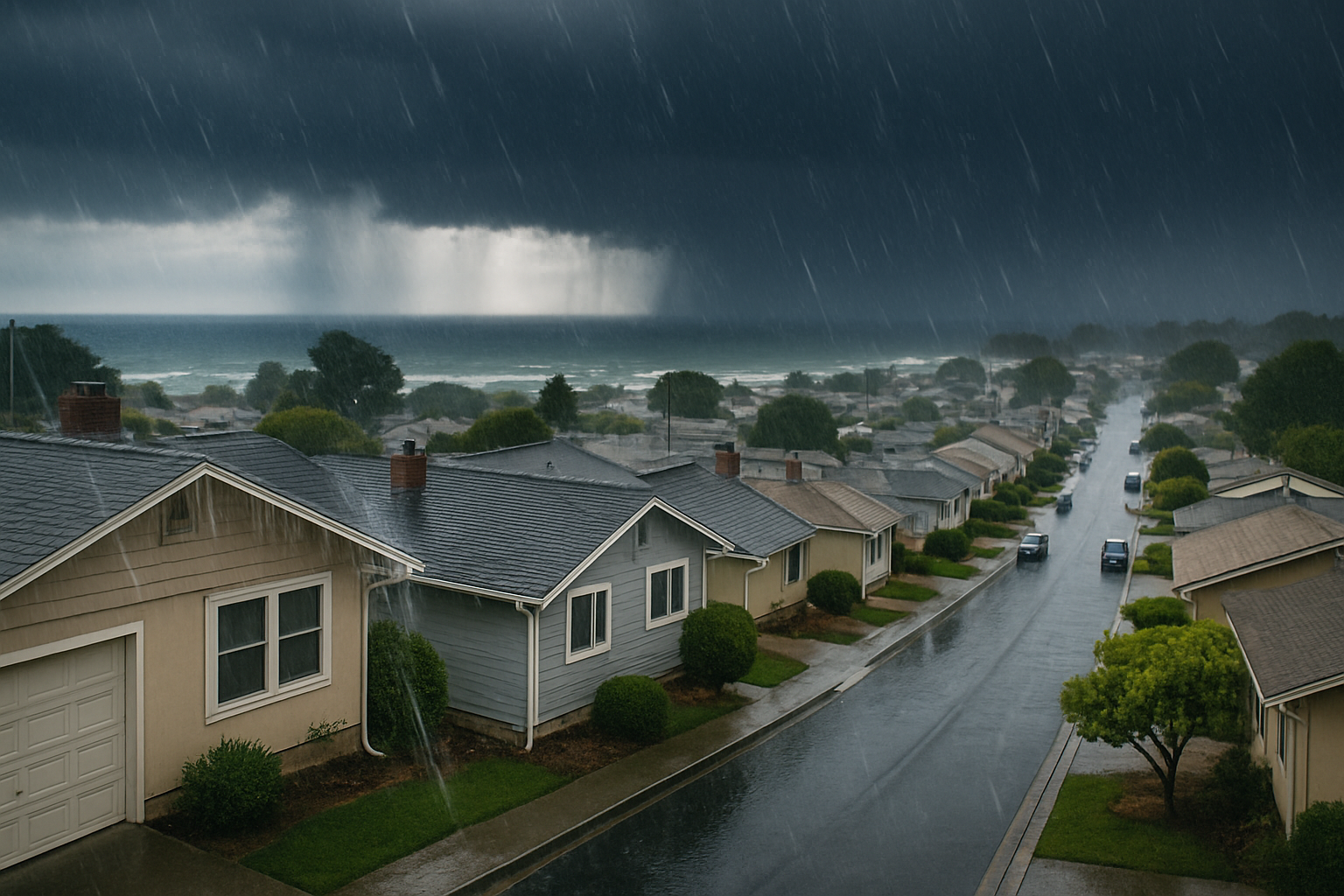
After a significant rain event, property managers and contractors across Monterey County see the same failure points repeat themselves. Most of them are predictable. And most of them were preventable.
Roof leaks are the most frequent call. Monterey Bay’s coastal climate is hard on roofing materials — the salt air degrades flashing and sealants faster than inland areas. A roof that has another two years of normal life can fail in its first heavy storm if the flashing around a chimney or vent is already compromised.
Gutter and drainage failures come next. Gutters packed with debris from Monterey cypress and pine needles are essentially useless in a downpour. Water overflows at the fascia, soaks the exterior wall below, and begins working its way inside — often without anyone noticing until the drywall is already damaged.
The less obvious ones:
- Foundation seepage in older Salinas and Seaside homes with marginal grading that sends water toward the foundation rather than away from it
- Window and door seal failure in homes that haven’t had their weatherstripping checked in years
- Crawl space flooding in properties with inadequate vapor barriers or blocked crawl space vents
- Water intrusion at chimneys — common in Carmel and Pacific Grove where older homes have aging mortar joints
Every one of these problems has a warning sign that shows up during a dry-weather property inspection. The issue is whether anyone actually looks.
Pre-Storm Property Inspection: What Gets Checked
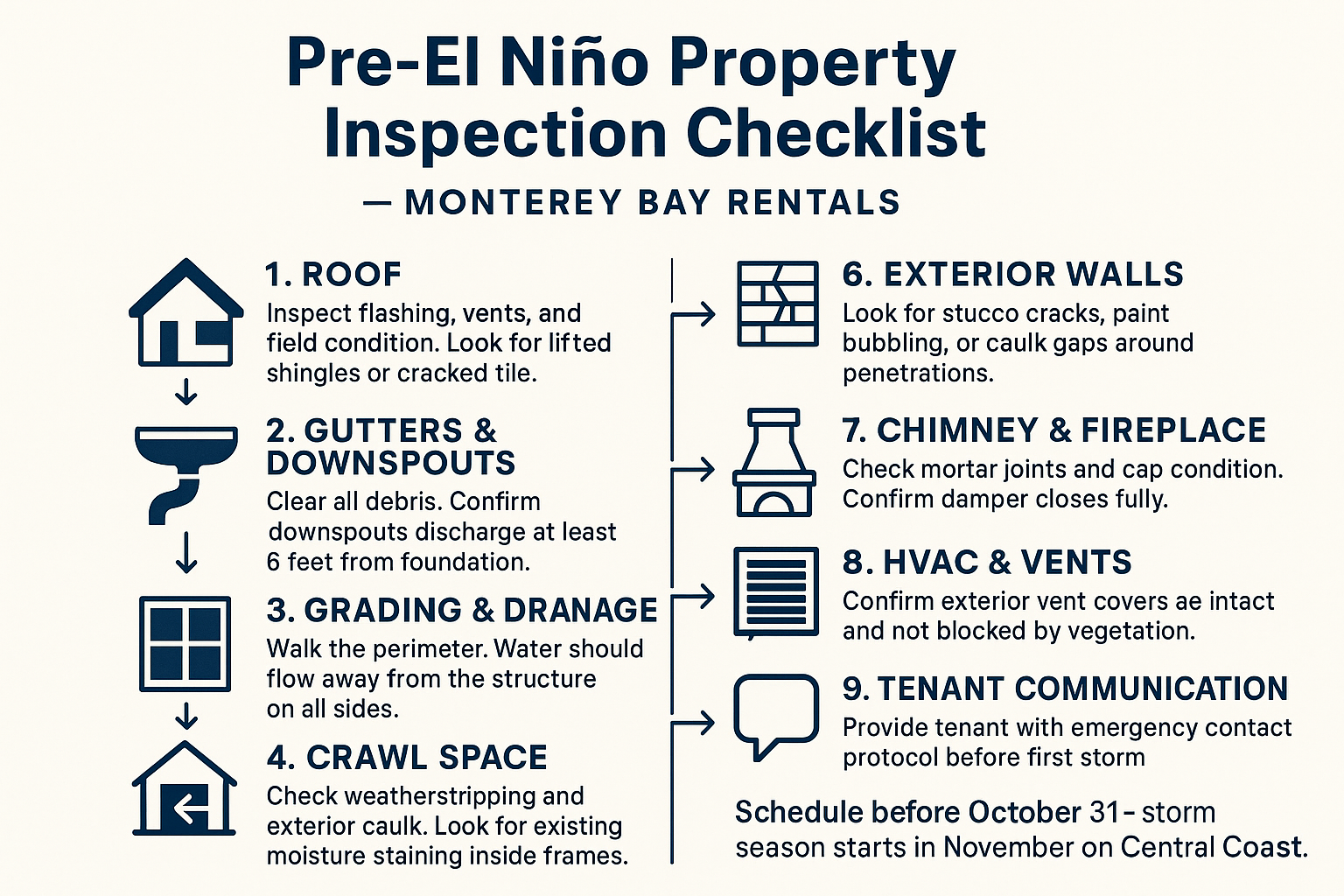
A proper pre-winter inspection covers specific systems in a specific order. Here’s what a thorough walkthrough should include before El Niño season arrives.
Why Deferred Maintenance Gets Very Expensive in a Wet Year
Most rental property owners know there are things on the property that need attention. A gutter that hangs slightly off-pitch. A bathroom caulk line that’s starting to separate. A crack in the stucco above the garage door that’s been there since last year. In a dry year, these stay on the to-do list without causing much harm.
El Niño doesn’t give you that grace period.
A slow drain that’s been moving poorly all summer becomes a backed-up crawl space after two days of heavy rain. That hairline stucco crack lets water in during the first big storm, and by February you’re looking at damaged insulation and the beginning of a mold situation. Deferred maintenance items don’t just cost more to fix after storm damage — they often trigger secondary damage that multiplies the original repair cost by three to five times.
A roof repair that would have cost $800 before the storm can turn into a $4,000–$6,000 emergency patch job plus interior water damage remediation. In Carmel and Pebble Beach, where labor costs run higher than the rest of the county, those numbers climb further.
If you’re managing your property from out of state, you may not even know the damage has happened until your tenant calls — or until it shows up on your next inspection report. As we’ve written about before, the hidden costs of managing a Monterey home from out of state go well beyond management fees. Storm season is where those costs tend to surface all at once.
Deferred Maintenance vs. Emergency Repair Costs — Monterey County Estimates
Here’s a rough comparison of what common pre-storm fixes cost versus what the same problems cost after water damage has occurred. Costs reflect general contractor pricing in the Monterey Bay area as of 2024–2025.
| Issue | Pre-Storm Fix | Post-Storm Emergency Cost |
|---|---|---|
| Roof flashing repair | $300–$600 | $1,500–$4,500 + interior damage |
| Gutter cleaning & reattachment | $150–$300 | $600–$2,000 fascia/soffit repair |
| Stucco crack sealing | $200–$500 | $1,200–$3,500 water intrusion repair |
| Crawl space vapor barrier | $800–$1,500 | $3,000–$8,000 mold remediation |
| Window weatherstripping | $100–$250 | $500–$2,000 frame and drywall damage |
| Grading correction | $400–$900 | $2,500–$6,000+ foundation moisture repair |
Why Absentee Owners Face the Highest Risk
If you live in Monterey and own a rental two blocks away, a storm emergency is inconvenient. If you live in Phoenix, Portland, or San Jose and own a rental in Seaside, a storm emergency is a full logistical crisis that unfolds without you.
Tenant leases in California require landlords to maintain habitable conditions. That obligation doesn’t pause because you’re out of state or because it’s midnight. When a roof fails in a heavy storm, your tenant has a right to expect a response — and if that response doesn’t come, you have potential habitability liability exposure on top of the repair bill.
The problem isn’t just legal. It’s practical. Emergency contractors prioritize local clients and property managers with established vendor relationships. An owner calling from out of state at 3am, without an existing vendor relationship, is going to wait longer, pay more, and have less visibility into what’s actually being done.
If you own a vacant or seasonal property, the risk is different but just as real. A roof leak in an unoccupied home can go undetected for weeks. By the time someone checks on it, the interior damage is far worse than it would have been with early intervention. We’ve covered what that looks like in detail — what can go wrong in an empty house is worth reading before the rainy season starts.
Having a local property manager with vendor relationships and scheduled inspections means the gap between storm damage and response is measured in hours, not days. That difference often determines whether a repair costs $500 or $5,000.
Frequently Asked Questions About El Niño Winter Prep for Rental Properties
How do I know if my Monterey County rental property is actually at risk this winter?
The clearest indicators are age and maintenance history. If your property is over 20 years old and hasn’t had a roof inspection, gutter service, or exterior caulking check in the last two years, it has risk. Properties in low-lying areas of Salinas, flat sections of Marina, and hillside neighborhoods in Carmel and Pacific Grove face additional drainage and runoff risk. A pre-storm inspection will tell you specifically where you stand.
What’s the difference between a regular wet year and a Super El Niño for this region?
A regular wet winter in Monterey Bay might bring 20–25 inches of rainfall spread across five months. A strong El Niño year can deliver that same total in two to three concentrated storm cycles, often with high wind. It’s the intensity and concentration that cause damage — drainage systems and aging roofs that handle normal rain can’t keep up with that volume arriving in 48-hour windows.
My tenant says everything looks fine. Isn’t that good enough?
Tenants notice what affects them directly — water on the floor, a draft from a window, a drip from the ceiling. They usually don’t check gutters, inspect flashing, or look under the crawl space. A tenant reporting ‘no problems’ isn’t the same as a property that’s been inspected by someone who knows what to look for before a storm.
Can I just schedule a handyman to do a pre-storm check?
You can, but a general handyman will focus on what you specifically ask them to check. A property manager doing a structured inspection works from a defined checklist, documents conditions with photos, and flags items you might not think to ask about — like grading issues, crawl space conditions, or window seal failures that aren’t visible from inside the home.
Is El Niño covered by standard landlord insurance?
Storm damage from rain and wind is generally covered under standard landlord property insurance, but flood damage from rising water is not — that requires separate flood insurance. Properties near the Salinas River or in low-elevation areas of Marina and Seaside should review their policies before storm season. Water intrusion from a failed roof or window seal is typically covered; water that enters from ground-level flooding usually isn’t.
How often should someone be checking on my rental property during a wet winter?
For occupied rentals, a post-storm check within 24–48 hours of a major storm event is a reasonable standard — especially in a heavy El Niño year. For vacant or seasonal properties, the frequency should be higher. We’ve written a full breakdown of how often someone should check on a vacant home in Monterey Bay that’s worth reviewing if you have an unoccupied property heading into winter.
Want Someone Local to Walk Your Property Before the Rain Hits?
Torrente Properties works with landlords and property owners across Monterey County — from Salinas and Seaside to Carmel and Pacific Grove — who want eyes on their property before storm season, not after. If you’d like to talk through what a pre-winter inspection or ongoing management looks like for your rental, reach out to our team at (831) 582-8916 or through the contact form at torrenteproperties.com.