
Direct Answer: Empty homes face water damage, break-ins, insurance voids, and undetected maintenance failures. Responsibility usually falls on the owner — unless someone is actively watching the property.
Most property owners think an empty house is a safe house. No tenants, no wear and tear, no complaints. But a vacant home on the Monterey Peninsula or in Salinas can deteriorate faster — and cost more — than a fully occupied one.
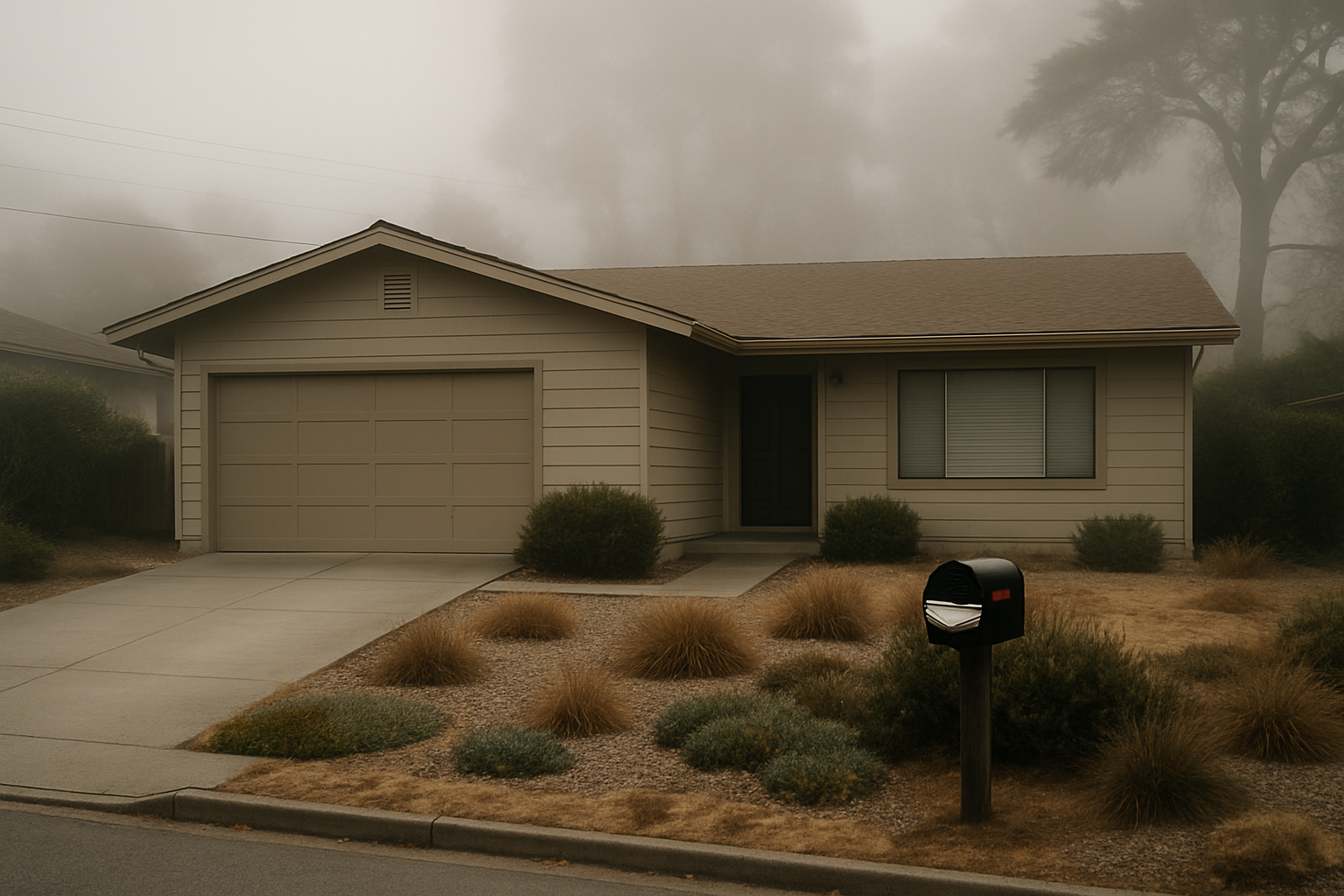
The Monterey Bay’s marine air is hard on buildings. Moisture finds gaps in rooflines, around windows, and under doors. A slow drip under a sink that a tenant would notice in a day can go undetected for weeks in a vacant home, quietly rotting the subfloor.
This article covers the two things that matter most when a home sits empty: what actually goes wrong, and who is financially and legally on the hook when it does.
The Damage That Builds Up When No One Is Watching
Water is the number-one enemy of an empty house in Monterey County. A small roof leak, a failed supply line, or a dripping water heater can go unnoticed for 30, 60, even 90 days if no one is checking. By the time the owner finds out — often because a neighbor called, or because they flew in from out of state — the damage is already deep.
A basic water damage remediation job in the Monterey area typically runs $3,500 to $12,000 depending on how long the moisture sat. If mold has set in, that number climbs fast.
But water isn’t the only problem. Here’s what we see happen to vacant homes regularly:
- Pest intrusion — roof rats and mice move in quickly once a home stops being disturbed. Chewed wiring is an electrical hazard and often not covered by standard insurance.
- Vandalism and break-ins — a dark, quiet house with no activity is an invitation. This is a real issue in parts of Seaside and certain Salinas neighborhoods.
- HVAC failure — systems that sit idle for months can develop issues that only surface when turned back on. A failed capacitor in summer heat can mean a $400 repair or a full unit replacement.
- Landscape overgrowth — Carmel and Pacific Grove have strict property maintenance codes. Overgrown hedges and dead grass can generate code complaints and even fines.
- Plumbing dry-out — P-traps in sinks and toilets can dry out over time, allowing sewer gas to enter the home. Easy to fix if caught early; a real problem if the home is being shown to prospective tenants.
None of these problems announce themselves. They accumulate while the owner is living their life somewhere else.
Who Is Actually Responsible When Something Goes Wrong
This is the question most owners don’t ask until they’re already in a dispute with their insurance company.
California law and most homeowner insurance policies treat vacancy very differently from occupancy. Standard HO-3 policies — the most common type — typically include a vacancy clause that suspends or limits coverage after 30 to 60 consecutive days of vacancy. The exact window depends on your carrier and policy language.
That means if a pipe bursts on day 45 and your policy has a 30-day vacancy clause, your claim may be denied entirely — even if you’ve been paying premiums for years without filing a claim.
Owners who inherit property in Salinas or Carmel, or who relocate and can’t immediately sell or rent, often don’t realize their coverage has quietly lapsed. Some find out only after filing a claim. At that point, the financial responsibility falls entirely on them.
If the property has a tenant, the picture shifts somewhat. A tenant who causes damage is potentially liable for it — but collecting from a tenant is a legal process that takes time and doesn’t guarantee recovery. And if the damage happened because the owner failed to maintain the property, the liability can reverse entirely.
The honest answer to “who’s responsible” is almost always: the owner, unless they’ve taken steps to protect themselves. Those steps include maintaining proper vacant property insurance, keeping documentation of regular inspections, and having a written record of who is responsible for what.
If you’re managing a property from a distance, what happens to your Monterey property when you’re 500 miles away walks through how quickly problems compound without someone on the ground.
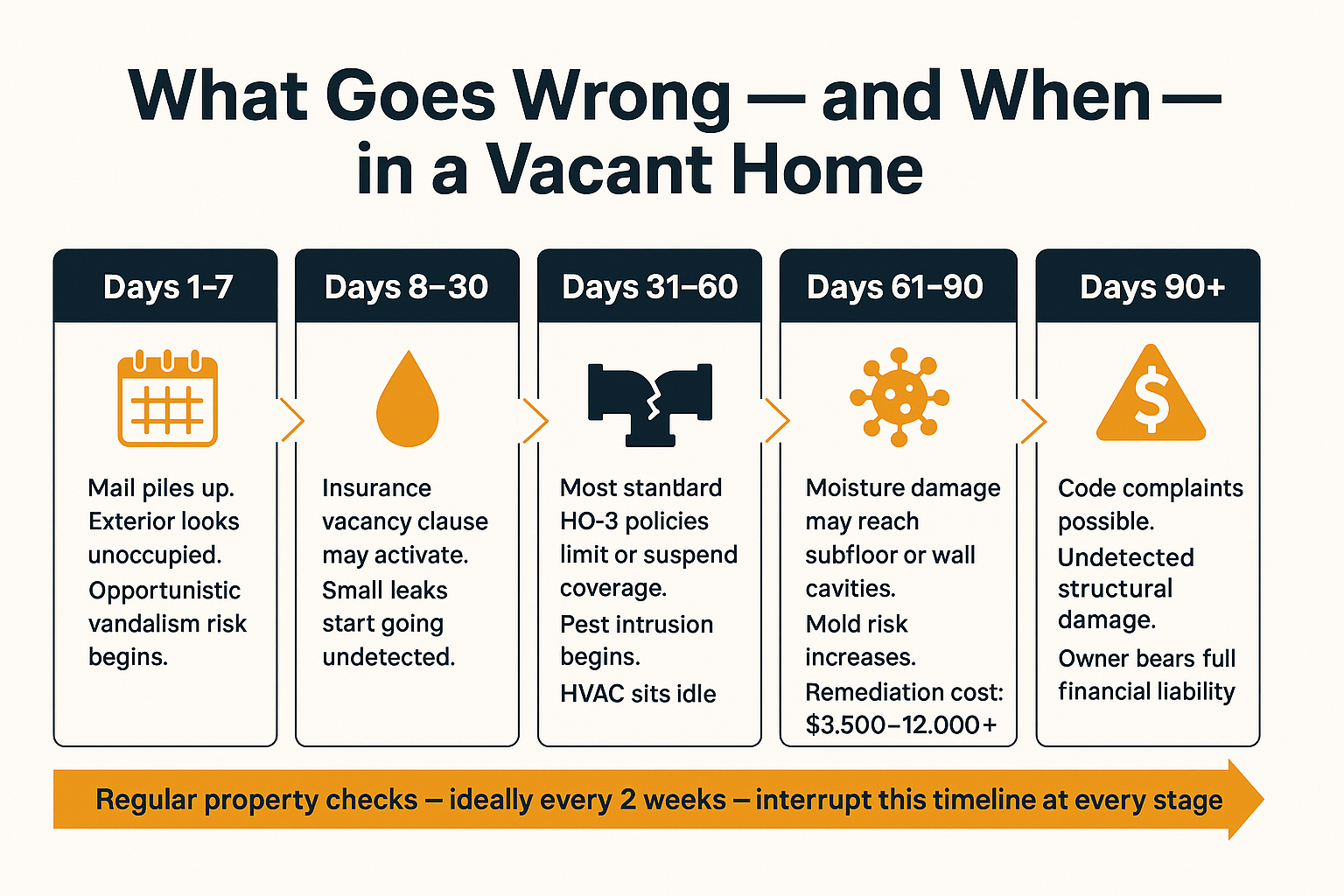
The Vacant Home Risk Timeline
This shows how risk and potential cost increase the longer a home sits unmonitored.
The Insurance Gap Most Owners Don’t Know About
Let’s be specific about the insurance issue because it’s the one that surprises owners the most.
A standard California homeowner policy is written with the assumption that someone lives in the home. The moment a home becomes vacant, insurers consider it a higher-risk property — and most policies reflect that.
Here’s what the vacancy clause typically does:
- Suspends coverage for vandalism and malicious mischief — one of the most common claims on vacant homes
- Limits or denies claims for water damage caused by undetected leaks
- May void glass breakage coverage
- Can affect liability coverage if someone is injured on the property
The fix is a vacant home endorsement or a standalone vacant property policy. These run roughly $800 to $2,500 per year in California depending on the property value, location, and how long it will be vacant. That’s real money, but it’s a fraction of what a single uncovered water claim costs.
Owners of second homes in Pebble Beach or Carmel-by-the-Sea are often surprised that their high-value policy still has this gap. Policy language matters more than premium size.
One thing that can help preserve your standard coverage — or reduce your vacant policy premium — is documented evidence of regular property monitoring. Some insurers will modify their vacancy terms if you can show scheduled inspections are happening. How Carmel homeowners are protecting properties without living in them covers some of the practical approaches owners use.
Common Vacant Home Problems: What They Cost and Who Pays
These are real-world cost ranges for issues we see in vacant Monterey County properties, along with how insurance typically responds.
| Problem | Typical Cost in Monterey County | Insurance Response (Standard Policy) |
|---|---|---|
| Water damage from undetected leak | $3,500 – $12,000+ | Often denied if home vacant 30–60+ days |
| Mold remediation | $5,000 – $25,000 | Frequently excluded; vacancy clause applies |
| Vandalism / break-in | $800 – $5,000 | Vandalism coverage typically suspended during vacancy |
| Pest damage (rodents, termites) | $1,500 – $8,000 | Rarely covered; considered maintenance issue |
| HVAC failure | $400 – $6,000 | Covered if mechanical failure; excluded if neglect |
| Code violation fines (landscape, maintenance) | $100 – $500/month | Not insurable; owner’s direct liability |
How Regular Monitoring Changes the Equation
The reason problems compound in empty homes isn’t that they’re empty — it’s that no one is catching issues early.
A leak found in week one is a plumber call and a $200 repair. The same leak found in week six is a remediation project. That’s the whole story.
How often someone should check on a vacant home in the Monterey Bay area gets into the specifics, but the general answer is every one to two weeks at minimum for a vacant property — more often during the rainy season from November through March when roof and window issues are most likely to surface.
A check-in isn’t just a walk-around. It should include:
- Looking under sinks and around water heaters for moisture
- Running faucets briefly to keep P-traps wet and check water pressure
- Checking the exterior for signs of entry attempts or vandalism
- Verifying that mail isn’t accumulating visibly
- Noting any changes to the roof, gutters, or foundation areas
- Confirming utilities are functioning as expected
Owners who live in San Jose, Los Angeles, or out of state entirely often try to rely on neighbors for this. And neighbors are kind — but they’re not accountable. They’ll notice if a window is broken, but they won’t know what to look for inside, and they won’t document it in writing.
If you’re managing a seasonal second home on the Monterey Peninsula, our caretaker services guide for seasonal homes breaks down what a formal home watch arrangement actually involves.
Frequently Asked Questions About Vacant Home Risk in Monterey County
How long can a home sit vacant before my homeowner’s insurance stops covering it?
Most standard policies in California have a vacancy clause that kicks in after 30 to 60 days, depending on the carrier. After that point, coverage for vandalism, water damage, and other common claims may be suspended or denied. Read your policy’s definitions carefully — ‘unoccupied’ and ‘vacant’ often mean different things legally, and that distinction matters for claims.
My neighbor said they’d keep an eye on my Carmel property while I’m gone. Is that enough?
Probably not for insurance or legal purposes. A neighbor’s check-in is informal and undocumented. If you need to show a pattern of monitoring for an insurance claim — or to defend yourself in a liability situation — you need written records with dates, findings, and photos. A professional home watch service provides exactly that.
If my vacant property gets vandalized in Seaside, am I responsible for the repair costs?
If your policy’s vandalism coverage is suspended due to vacancy, yes — the cost falls on you. Vacant property policies or endorsements can restore that coverage. Given that vandalism claims on vacant homes in Seaside and parts of Salinas are not uncommon, this gap is worth addressing before it’s relevant.
What’s the biggest mistake owners of inherited properties make?
Assuming their coverage automatically transferred or continued from the previous owner. When a property is inherited in California, the homeowner’s policy doesn’t transfer. Many families in this situation have no valid policy on the home at all during probate — sometimes for months. Getting vacant property coverage in place immediately is one of the first things to sort out.
Does Torrente Property Management handle vacant homes, or only rental properties?
We handle both. Our home watch and property caretaker services are specifically designed for vacant, seasonal, and second homes — not just occupied rentals. We do scheduled property inspections, utility oversight, vendor coordination, and written documentation for homeowners who are away for extended periods. You can read more about what that service involves on our caretaker services page.
Have a Property Sitting Empty in Monterey County?
If your home in Carmel, Pacific Grove, Seaside, or anywhere on the Peninsula is sitting vacant — even temporarily — it’s worth a conversation about what monitoring makes sense. Torrente Property Management works with owners of vacant, seasonal, and inherited properties across Monterey County to keep homes protected and documented. You can reach our team at (831) 582-8916 or through the contact form at torrenteproperties.com.