Direct Answer: Before listing a Monterey Bay rental, owners need to address habitability standards, safety compliance, deferred maintenance, and move-in documentation — in that order. Skipping steps costs more later.
One of the most common situations I see when an owner first reaches out is this: they’ve already decided on a rental price, sometimes they’ve already taken photos, and they want help placing a tenant. The property prep conversation hasn’t happened yet. And that order — price first, fix things later — is exactly backwards from how a successful tenancy starts.
The preparation phase is where you set the financial and legal baseline for everything that follows. A property that goes to market before it’s truly ready tends to sit longer, attracts applicants who expect a discount for visible deferred maintenance, and creates documentation gaps that become expensive problems after move-in. I’ve watched this play out enough times across Monterey County that it’s not a theory — it’s a pattern.
This article focuses on the parts of rental property preparation that owners most often underestimate or sequence wrong: habitability requirements that changed in 2026, safety compliance items that are easy to overlook, and the move-in documentation process that California’s new one-month security deposit cap has made far more consequential than it used to be.
The Sequence Matters More Than the Individual Tasks
When I walk a property before it goes on the market, I’m not just making a to-do list. I’m thinking about sequence — what has to happen before what, and why.
The most common mistake I see is owners who want to start marketing while repairs are still pending. The reasoning makes sense on the surface: get the listing up early, find a tenant, then finish the work before they move in. But what actually happens is that applicants see the unfinished condition, form a price expectation based on it, and the owner either settles for a lower rent or starts over after losing time.
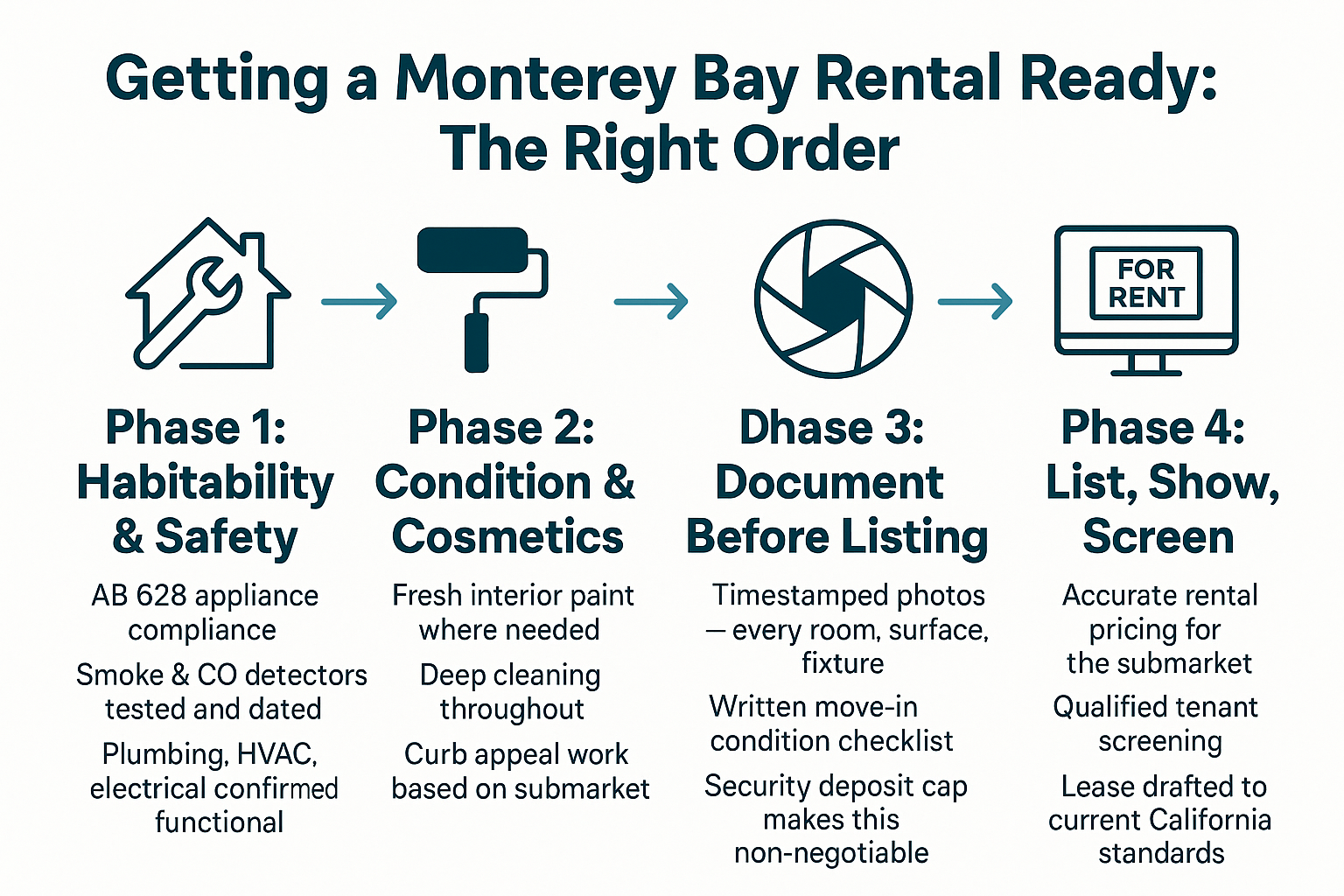
The right order looks like this:
- Address any habitability or safety issues first — these are non-negotiable before a lease can be signed
- Complete cosmetic work that directly affects the rental price in your specific submarket
- Document the finished condition with thorough, timestamped photos before marketing begins
- Then list, show, and screen
That last point about documentation matters more now than it did two years ago. Since California’s security deposit cap dropped to one month’s rent in July 2024, there’s less financial cushion if a tenant causes damage. The move-in photo record is what determines whether a damage claim holds up — not the lease language, not verbal agreements. A thorough photo record taken before the tenant’s first day is now one of the most important things an owner can do.
What California’s 2026 Habitability Law Actually Changed
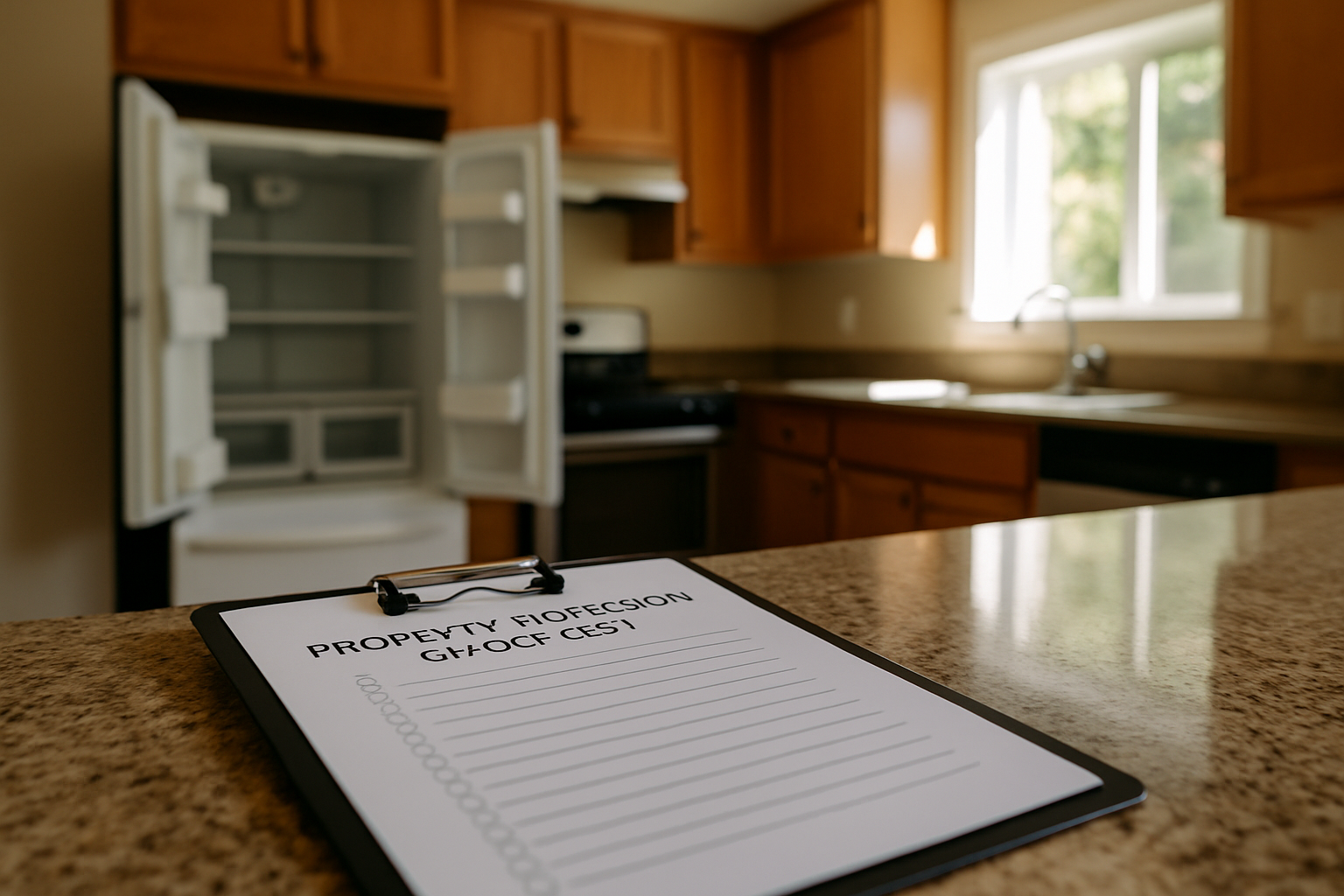
Starting January 1, 2026, California’s definition of a habitable rental unit expanded under AB 628. The most practical change for owners preparing a property: landlords are now required to provide working stoves and refrigerators as a baseline habitability standard in most residential rentals.
This was previously a gray area. Some owners provided appliances, others didn’t, and the legal line was unclear. That line is clear now.
For owners turning over a unit after a long-term tenancy — or putting a property on the market for the first time — this means appliance condition is no longer optional to evaluate. A refrigerator that technically runs but is clearly at the end of its life, or a range with two working burners out of four, creates real legal exposure before anyone signs a lease.
I’d encourage owners to walk the kitchen the way a tenant or inspector would, not the way someone who’s lived in the space for years would. When you’re used to a room, you stop seeing what’s worn out. Fresh eyes matter here.
For a full breakdown of what the 2026 law requires, our article on California’s 2026 habitability law changes covers the details that directly affect Monterey Bay landlords.
Smoke and CO Detectors: Small Cost, Serious Consequences
This is the item I see missed most often in owner-managed property preparation. It’s also one of the most consequential.
California law requires:
- Working smoke detectors in each bedroom
- Smoke detectors in the hallway outside sleeping areas
- Smoke detectors on every level of the home
- Carbon monoxide detectors on every level that has a bedroom
Beyond placement, detectors must be tested and documented before a tenant takes possession. And here’s the part most owners don’t know: in Monterey County, a detector that’s over 10 years old should be replaced regardless of whether it beeps when you press the test button. The sensor itself degrades with age. A unit that passes a button test can still fail to detect actual smoke or CO.
Replacing outdated detectors typically costs between $15 and $40 per unit depending on the model. It’s one of the lowest-cost compliance items on the preparation list and one of the most skipped. I’ve walked properties where the detectors were original to a 1990s remodel. The owners had no idea how long they’d been there.
The California State Fire Marshal’s residential detector requirements are publicly available and worth a read if you want the statutory language.
The Rental Preparation Sequence at a Glance
This overview shows the four phases of property preparation in the order they should actually happen — and what belongs in each phase.
Where to Spend and Where to Hold Back
One question I hear from owners is: what’s the most economical way to get my property ready? That’s exactly the right question. And the honest answer is that not every improvement pays off equally in the Monterey Bay market.
A few principles I’ve seen hold up consistently across Monterey County:
Fresh interior paint and deep cleaning almost always return more than they cost. A clean, freshly painted unit photographs better, shows better, and signals to applicants that the owner maintains the property. This matters everywhere from Salinas to Pacific Grove.
Landscaping and curb appeal carry more weight in Carmel and Pacific Grove, where exterior presentation is built into rental price expectations. A property on a tree-lined street in Pacific Grove that hasn’t had its front beds maintained will rent below its potential even if the interior is flawless.
Kitchen and bathroom cosmetics matter more in Salinas, where competition among similarly priced units is tighter and applicants are comparing options closely. A clean, functional kitchen in a Salinas rental is a stronger differentiator than it might be in a market with less inventory.
Owners with long-term tenants vacating after five, ten, or even thirty years need to look at their property especially carefully. What feels livable to someone who’s grown used to it often has water heater age issues, slow drains, failing weatherstripping, and surfaces that are technically functional but visually tired. The Monterey Bay’s marine layer accelerates exterior wear — roofs, gutters, and siding here take more abuse than they would inland, and those items deserve close attention before the first showing.
For more on how submarket conditions affect what you can actually charge, how Monterey Bay rental prices get set is worth reading before you decide where to put your preparation dollars.
Preparation Tasks by Priority and Typical Cost Range
These are the preparation items that come up most consistently when we walk a property in Monterey County, organized by their likely impact and approximate cost range. Actual costs vary by property size, contractor, and condition — get a specific quote before budgeting.
| Task | Why It Matters | Typical Cost Range (Monterey County) |
|---|---|---|
| Smoke & CO detector replacement | Legal requirement; sensors degrade after 10 years | $15–$40 per unit |
| Interior paint (full unit) | Highest ROI cosmetic item; affects photos and first impression | $800–$2,500+ depending on size |
| Professional deep cleaning | Move-in condition baseline; supports documentation | $200–$600+ depending on size |
| Appliance inspection or replacement | Required under AB 628 as of January 1, 2026 | Varies; budgeted per appliance condition |
| Plumbing drain inspection | Slow drains in long-tenanted homes are common; prevents early complaints | $75–$200 for a basic assessment |
| Exterior/gutter cleaning | Marine layer accelerates moisture issues; gutter failures cause water intrusion | $150–$400 depending on roofline |
| Move-in photo documentation | Critical under one-month security deposit cap; determines damage recovery | Low cost; professional service varies |
Why the Move-In Documentation Step Is No Longer Optional
I want to come back to the security deposit issue because it’s changed the risk math in a way that a lot of owners haven’t fully absorbed yet.
Before July 1, 2024, California allowed landlords to collect up to two months’ rent as a security deposit for unfurnished units. That changed with the new one-month cap. For a property renting at $2,800 a month in Seaside or $3,200 in Monterey, that’s a meaningful reduction in the financial cushion available if a tenant causes damage.
With less deposit to draw from, the move-in condition record has become the single most important document in a tenancy. A timestamped photo record of every room, every surface, every fixture, and every appliance — taken before the tenant’s first day — is what a damage claim actually rests on. If the documentation is thin or casual, a legitimate claim becomes very hard to enforce, regardless of how thorough the lease is.
Owners who skip this step or do it with a few quick phone photos are essentially reducing their own recovery rights before the tenancy even begins.
This is also why the preparation sequence matters. If you document the property before the cosmetic work is finished, you’ve created a record of the property in substandard condition. You need to document after everything is done and before the tenant takes possession.
For owners thinking about what else changes when you’re not present to manage a property day-to-day, what changes when you’re not around covers the oversight side of that equation.
Frequently Asked Questions About Rental Property Preparation in Monterey County
Does a property really need to be fully ready before I start showing it?
In most cases, yes. Applicants form price expectations based on what they see during a showing. A property with visible unfinished work — even minor things — tends to attract applicants who assume the rent should be lower to reflect the condition. You’ll get better applicants and stronger offers from a property that shows as move-in ready. The exception might be a minor item you can complete between application and lease signing, but even then, document the finished condition before the tenant takes possession.
What does AB 628 actually require me to provide in terms of appliances?
As of January 1, 2026, California requires landlords to provide a working stove and refrigerator in most residential rentals as a baseline habitability standard. ‘Working’ means fully functional — not partially operational. A range with only some burners working, or a refrigerator that runs but doesn’t maintain safe temperatures, would create legal exposure. Our 2026 habitability law guide covers the specifics in plain language.
How old is too old for a smoke detector?
Ten years is the general industry standard, and the one we apply in Monterey County. After a decade, the electrochemical sensor inside the detector degrades — meaning the unit can pass a button test but still fail to detect actual smoke. Check the manufacture date on the back of the unit. If it’s more than ten years old, replace it before the property is listed.
I have a tenant who’s been there for over ten years. What should I expect when they leave?
More than most owners expect. Long-tenanted properties often have accumulated deferred maintenance that’s invisible until someone looks closely: slow drains, aging water heaters, weatherstripping that’s been failing for years, and interior surfaces that are functional but visually worn. The Monterey Bay’s marine layer is also harder on exteriors than inland climates — gutters, siding, and roofing take more abuse here. Plan for a methodical walkthrough that covers exterior, plumbing, HVAC, appliances, and safety devices before you budget for the turnover.
Does preparation actually affect what I can charge in rent?
In some submarkets more than others. Salinas has more direct competition among similar rental units, so presentation there has a measurable effect on pricing and days on market. In Carmel and Pacific Grove, curb appeal is part of the rental price expectation — properties with neglected exteriors rent below their potential even when the interiors are fine. In all markets, a clean, freshly painted property with documented move-in condition commands more confidence from qualified applicants. That’s not just aesthetics — it affects who applies and whether they accept your terms.
Is there a difference between what I need to do for a first tenancy versus a turnover?
The habitability and safety standards are the same either way. The practical difference is that a first tenancy on a property you’ve occupied yourself often involves more deferred items — things you’ve adapted to over years that a tenant will notice immediately. A turnover after a long-term tenant involves understanding what wear was normal versus what the departing tenant is responsible for, which is exactly what the move-in documentation from the previous lease was supposed to establish.
Questions About Getting Your Property Ready to Rent?
Our team has been preparing rental properties across Monterey County for over 25 years — from single-family homes in Salinas to townhouses near the Naval Postgraduate School in Monterey, where military families often need move-in-ready housing on a tight timeline. If you have questions about the right preparation sequence, which repairs actually affect your rental price in your specific submarket, or what current habitability standards require, we’re happy to talk it through. Reach us by phone at (831) 582-8916 or through the contact form at torrenteproperties.com.