
Guide to Real Estate Management in Monterey Bay
Real estate management is more than just collecting rent. It's about having a trusted partner who protects your investment and ensures it performs at its best. It means handing over the daily tasks—from marketing to maintenance—so you don't have to.
According to a 2022 survey, nearly half (48%) of small residential landlords manage their own properties. (Source: National Rental Home Council). For property owners in Monterey Bay, this can quickly become a stressful, full-time job.
What Real Estate Management Really Is
For most owners in Monterey Bay, a rental home is a major asset. But managing it yourself involves late-night repair calls, confusing legal rules, and the constant stress of finding good tenants. This is where professional real estate management helps.
A property manager acts as the CEO for your investment. Their main job is to keep your property profitable and in great shape. This changes your role from a hands-on landlord to a smart investor focused on the big picture.
A Smarter Way to Manage Property
Modern property management uses technology to make things easier for everyone. The industry is growing fast, thanks to these new tools.
For example, 80% of tenants now prefer to pay rent online, and 72% want to use digital channels for maintenance requests. (Source: Zillow Group). For property owners in Salinas or Carmel, using a management company with this tech gives you a big advantage. It is an investment in efficiency, tenant happiness, and your own peace of mind.
Key Benefits of Professional Management
A great management partner does much more than fill empty units. They bring a professional approach to protecting and growing your asset.
Here’s what that looks like:
- Better Finances: We set the right rent price, collect it on time, and give you clear financial reports to boost your return.
- Property Protection: We use proactive maintenance and regular checks to find small issues before they become expensive problems.
- Reduced Risk: We know the local landlord-tenant laws. We make sure you follow all the rules and avoid legal trouble.
When you trust a local team with these tasks, you get your time back. You can focus on what matters most, knowing your investment is in good hands.
Core Services of Real Estate Management
So, what does a property manager actually do? Effective real estate management is a complete service built on four key pillars. These pillars work together to protect your investment, increase your income, and give you back your time.
Think of these as the four legs of a table holding up your property. If one is weak, the whole thing wobbles. A professional manager makes sure each one is strong.
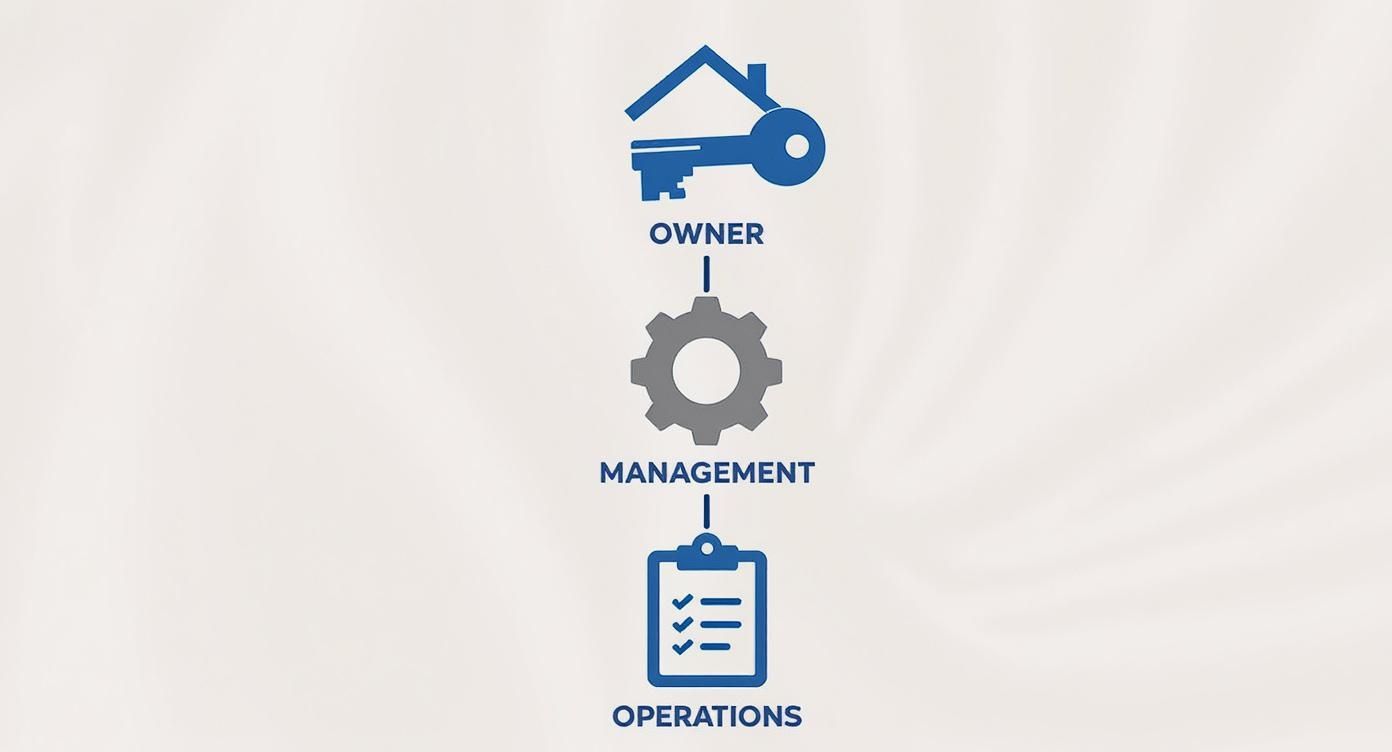
A manager is the vital link between your financial goals and the daily actions needed to protect and grow your property.
Tenant Management and Relations
Finding the right tenant is the most important part of a successful rental experience. The process starts with great marketing and ends with a positive, professional relationship.
First, we market your property to attract many qualified people. Then, our tough screening process begins.
Our tenant screening includes:
- Full Credit and Background Checks: We look for any red flags that could cause problems later.
- Income and Job Verification: We confirm applicants have a steady income to pay the rent.
- Previous Landlord References: We talk to past landlords to learn about an applicant's reliability.
Once we find a great tenant, we handle the lease and move-in. We stay their main contact, creating a respectful environment that encourages good tenants to stay longer.
Financial Oversight and Reporting
Your rental property is a business, and every business needs clean financial records. We manage the entire financial cycle for you. We make sure every dollar is accounted for so your cash flow is strong.
It starts with collecting rent on time. We offer online payment portals, which is a feature that modern renters expect more of these days. If payments are late, we have proven systems to enforce the lease.
We also handle all property-related bills. From utilities to repair invoices, we track every expense. Each month, you get a clear financial statement showing all income and costs. This transparency helps you see exactly how your investment is doing.
Proactive Maintenance and Asset Protection
A property's condition directly affects its value and its appeal to good tenants. Our approach to real estate management is about being proactive, not just reactive. We fix small issues before they become big, expensive disasters.
We conduct regular property inspections to check the home's condition. These checks are a key tool for protecting your asset from damage or neglect.
When something breaks, we coordinate with our network of trusted local vendors in the Monterey Bay area. We manage the entire repair process, from scheduling the work to making sure it’s done right. We also provide a 24/7 emergency response service, so if a pipe bursts at night, your tenant calls us, not you.
Legal Compliance and Risk Management
Landlord-tenant law is complex and always changing. A simple mistake with a lease or security deposit can lead to serious legal and money troubles. A key part of our job is to keep your property compliant with all local, state, and federal rules.
This includes navigating:
- Fair Housing Laws: Making sure all marketing and screening are fair and legal.
- Lease Agreements: Using strong lease documents that protect your interests.
- Eviction Procedures: Following the strict legal process if an eviction is necessary.
By handling these legal details, we protect you from risk. This expertise is a foundation of professional real estate management, letting you enjoy the benefits of ownership without the legal stress.
How Management Helps Every Property Owner
Professional real estate management is a partnership designed to solve your specific challenges. Here in Monterey Bay, every owner has different goals and needs. The right management strategy provides real value, no matter your situation.
Let's look at a few common owner types we see in our community.

For the Accidental Landlord in Salinas
Maria is a teacher in Salinas who inherited a home. She never planned to be a landlord. The idea of advertising, screening tenants, and handling repairs is overwhelming for her.
For Maria, professional real estate management provides peace of mind. We handle every detail, turning a source of stress into a steady, passive income. Her inheritance becomes the blessing it was meant to be.
For the Busy Professional in Carmel
David is a doctor in Carmel with a demanding job and family. He owns a condo as an investment but has no time to manage it. For him, the key benefit is time-saving convenience.
- No More Interruptions: We handle all tenant calls so his workday isn't interrupted.
- Streamlined Operations: We manage everything efficiently, giving him back his free time.
- Proactive Care: He doesn't have to worry about maintenance, as we handle it for him.
By partnering with us, David can focus on his family and career. He knows his investment is managed professionally.
For the Seasoned Investor with Multiple Properties
Robert is an investor with properties from Monterey to King City. He knows managing a growing portfolio is a big challenge. For an investor, the main benefit is strategic partnership and scalability.
We provide the systems needed to manage multiple properties well. This allows an investor to focus on finding their next property. They know their current assets are performing at their best.
Our article on the benefits of property management gives a deeper look at how our services help. No matter your story, the right management partner makes your life easier and your investment more successful.
Understanding the Monterey Bay Rental Market
Effective real estate management requires deep local knowledge. The Monterey Bay rental market is unique. To succeed here, you need to understand the differences in rental demand between Salinas and Pacific Grove.

Our local market has a steady stream of high-quality tenants. This comes from several key local institutions.
Key Drivers of Local Tenant Demand
The Monterey Bay area is a hub for education, the military, and agriculture. These sectors create a strong rental market.
- Naval Postgraduate School (NPS) & Defense Language Institute (DLI): Military families rotate through the area, providing a stream of responsible tenants.
- CSU Monterey Bay (CSUMB): The university brings thousands of students and staff who need housing. This drives demand in nearby cities like Marina and Seaside.
- Agriculture and Tourism: The large agricultural industry in Salinas and tourism in Carmel keep the local economy strong, attracting a diverse workforce.
This consistent demand creates a competitive market. It is similar to other desirable areas where low vacancy rates keep rental income stable.
Navigating Local Rules and Challenges
While demand is high, owning property here comes with specific rules. Each city has its own ordinances on everything from rent to maintenance. Trying to keep up with these rules can be hard, especially for owners who live out of state. Read our guide on how remote landlords are managing from afar for more on this.
An expert in local real estate management guides you through these complex laws. This protects you from fines and legal issues. Modern marketing is also key. Smart owners use tools like virtual staging for rental properties to make their homes stand out online.
Choosing the Right Management Partner
Picking a real estate management company is a big decision. The right partner can lead to years of passive income and peace of mind. The wrong one can cause headaches and financial strain.
Look beyond the monthly fee. Dig into the company’s character, processes, and local expertise. Think of it like hiring a financial advisor—you want someone trustworthy and knowledgeable.
Your Checklist for Choosing a Manager
Before signing a contract, do your homework. A few checks can tell you a lot about a company's professionalism.
Start with the basics: licensing and insurance. In California, a property management company must be licensed by the Department of Real Estate (DRE). Also, ask for proof of General Liability and Errors & Omissions (E&O) insurance. This protects you if an accident happens.
Understanding Fee Structures
Management fees can seem confusing, but they usually follow a few common models. Most firms in Monterey Bay charge a percentage-based fee, typically 8-12% of the monthly rent collected.
Other common charges may include:
- Leasing Fee: A one-time charge for finding and placing a new tenant.
- Maintenance Markup: A small surcharge on vendor invoices for coordinating repairs.
- Lease Renewal Fee: A small fee for handling the paperwork when a tenant renews their lease.
Transparency is the most important factor. A trustworthy partner will give you a clear list of all potential charges upfront. If a company is vague about fees, walk away.
Key Questions to Ask Any Potential Partner
Once you've covered the basics, ask questions to understand how they operate. For a full list, see our guide on how to choose a property management company.
At a minimum, ask these critical questions:
- How do you handle after-hours maintenance emergencies? Look for a 24/7 system. A burst pipe can't wait until Monday morning.
- What is your process for late rent payments? The process should be firm, fair, and legal. It should start with professional communication.
- How often will I get financial reports? You should expect detailed, easy-to-read financial statements every month.
At Torrente Property Management, we believe in being completely transparent. Our bilingual team is a big advantage in our diverse community. By setting clear expectations, we build partnerships that last.
FAQs About Real Estate Management
Hiring a professional to manage your property is a big step. It’s normal to have questions about how it works and what it costs. Here are answers to some of the most common questions we hear.
What does a real estate management company do?
We act as your professional partner, handling the daily work of managing your rental. This includes marketing your property, screening applicants, collecting rent, and coordinating maintenance. We also ensure your property follows all local and state laws.
How much does property management cost in Monterey Bay?
Fees in the Monterey Bay area are usually between 8% and 12% of the monthly rent collected. Some companies also charge a one-time fee for placing a new tenant. At Torrente Property Management, our fees are simple and transparent, with no surprise costs.
How do you screen potential tenants?
Our screening process is very thorough to protect your asset. It includes full background and credit checks. We also verify income and employment and speak with previous landlords for references.
What happens if a tenant pays rent late?
We follow a professional and legal process for late rent. Our process begins with clear communication and official notices. If the issue continues, we are prepared to manage the entire eviction process for you.
How involved can I be with my property?
You can be as involved as you want. Some clients prefer a hands-off approach, while others like to stay informed. We provide detailed monthly statements and consult you on major decisions, and our online owner portal gives you 24/7 access to your property's information.
Ready to make your property a truly passive investment? The experienced, bilingual team at Torrente Property Management is here to help. Contact us today at (831) 582-8916 to learn more. https://torrenteproperties.com


5 Reasons to Hire a Property Manager in 2026
meta_description: Is your Monterey Bay rental property causing you stress? Learn the 5 key reasons to hire a property manager in 2026 to maximize your ROI and reclaim your time.
Owning a rental property in Monterey, Salinas, or Carmel should be a path to financial freedom. But many landlords find themselves overwhelmed by tenant calls, maintenance, and complex legal rules.
With California's rental laws always changing, the DIY approach is riskier than ever. According to the National Association of Realtors, nearly 40% of rental properties are managed by the owner. This often leads to burnout and costly mistakes. This article breaks down the 5 key reasons to hire a property manager in 2026.
1. Legal Headaches Are Getting Worse
For California property owners, the legal landscape is more complicated than ever. Keeping up with new state and local laws can feel like a full-time job. A single misstep, even an honest one, can lead to tenant disputes and hefty fines.
A seasoned property manager is your first line of defense. They are experts in landlord-tenant law, from statewide acts to local rules in Salinas or Carmel. This ensures your rental process is handled correctly, protecting you from risk.

Why Local Legal Expertise Matters
The cost of a mistake can be huge. An out-of-town owner might not know a specific Salinas rule, leading to a preventable legal battle. Torrente Property Management helps you navigate local and state regulations, reducing your liability.
A manager helps by:
- Drafting Compliant Leases: Using up-to-date agreements that follow all current laws.
- Following Fair Housing Rules: Screening tenants properly to avoid discrimination claims.
- Handling Proper Procedures: Managing sensitive issues like evictions with the correct legal steps.
At Torrente, our local experience is your shield. By entrusting your property to a legally savvy manager, you turn a major source of stress into a protected asset. Learn more about landlord-tenant laws in California.
2. DIY Management Costs More Than You Think
The cost of managing a property yourself isn't just about money. It's about your time, stress, and the hidden expenses of mistakes. From late-night emergency calls to chasing down rent, self-management eats into your returns and your personal life.
A professional property manager handles everything efficiently. Their systems for rent collection, maintenance, and tenant communication often mean a lower net cost for you. They prevent small issues from becoming expensive problems.
Reducing Your Hidden Costs
A vacant property is a direct financial drain. While you spend weeks trying to find a tenant, a manager uses proven marketing strategies to fill vacancies quickly. Their network of trusted, affordable vendors also saves you money on repairs.
Here's how a manager saves you money:
- Minimized Vacancies: Faster turnover means more consistent rental income.
- Cost-Effective Maintenance: Access to vetted professionals at negotiated rates.
- On-Time Rent Collection: Consistent enforcement of lease terms improves cash flow.
Our full-service model is designed to handle every detail. This frees you from the daily hassles while protecting your bottom line. Check out our expert tenant placement services to see how we fill vacancies fast.
3. Tenants Expect More—And Faster
In 2026, renters expect a modern, convenient experience. They want online portals for paying rent, fast responses to maintenance requests, and professional communication. If you can't provide this, they will find a landlord who can.
A professional property manager delivers the tech-enabled service that keeps good tenants happy. This leads to higher satisfaction, longer lease terms, and fewer costly turnovers. Happy tenants are more likely to care for your property and renew their lease.

The Value of Professional Tenant Relations
A manager acts as a professional buffer between you and your tenant. They handle complaints and repair requests with a calm, systematic approach. This prevents emotional decisions and maintains a positive relationship.
Key benefits of professional tenant management include:
- 24/7 Responsiveness: Tenants feel heard and supported, even during emergencies.
- Clear Communication: A single point of contact for all questions and concerns.
- Convenient Technology: Online portals make payments and requests simple and easy.
At Torrente Property Management, we build positive relationships that encourage long-term stays. Our bilingual team ensures clear communication with all tenants, creating a respectful and professional environment for everyone.
4. Maximizing ROI Takes Strategy, Not Guesswork
Getting the most out of your investment requires more than just collecting a check. Every decision—from setting the right rent price to managing tenant turnover—affects your profit. Guessing can cost you thousands.
Property managers use data-driven strategies to protect your asset and grow its value. They analyze the local Monterey Bay market to price your rental correctly. This ensures you get the highest possible rent without long vacancies.

How a Manager Boosts Your Financial Performance
A professional knows how to balance income and expenses to boost your bottom line. They implement proactive maintenance to prevent costly emergency repairs. They also provide clear financial reports so you always know how your investment is performing.
A manager enhances your ROI by:
- Optimizing Rent: Setting competitive rental rates based on real-time market data.
- Controlling Expenses: Using a network of reliable vendors to keep maintenance costs down.
- Providing Detailed Reports: Giving you transparent monthly statements on your property's financials.
We treat your property like the valuable financial asset it is. Our goal is to increase your income, reduce your costs, and build long-term value. For an overview of our duties, see our guide on what a property manager does.
5. Your Time Is Worth More
Your time is your most valuable asset. Do you want to spend it dealing with clogged toilets and tenant complaints, or with your family, career, and other investments? This is one of the biggest reasons to hire a property manager in 2026.
Hiring a manager frees you from the day-to-day work of being a landlord. Whether you live out of town or just want peace of mind, a professional handles the hassles for you. You stay informed with detailed reports and transparent communication, without being involved in every minor issue.
Gaining True Peace of Mind
Imagine your rental property running smoothly without your constant attention. Rent is collected on time, maintenance is handled promptly, and your tenants are happy. This is the peace of mind that professional management provides.
With a manager, you can:
- Focus on what matters most to you and your family.
- Live anywhere without worrying about being close to your property.
- Grow your portfolio without adding more work to your plate.
Torrente gives you back your time while ensuring your investment is protected. We keep you in the loop without bogging you down in the details. A landlords' property inspection checklist is one of the many tools we use to keep things running smoothly.
Frequently Asked Questions
1. What does a property manager do?
A property manager handles the daily operations of a rental property. This includes marketing vacancies, screening tenants, collecting rent, managing maintenance, and ensuring legal compliance.
2. Is hiring a property manager worth the cost?
For most owners, yes. A good manager can increase your property's income and reduce expenses, often covering their own fee. They also save you valuable time and prevent costly legal mistakes.
3. How do you find a trustworthy property manager in Monterey County?
Look for a company with deep local experience, positive online reviews, and professional credentials. Ask about their communication, financial reporting, and how they handle tenant issues.
4. Can a property manager help with difficult tenants?
Absolutely. Managers are trained to handle tenant disputes and enforce the lease professionally. They can manage the entire eviction process if necessary, ensuring it is done legally.
5. What is the average property management fee?
Fees vary, but they typically range from 8% to 12% of the monthly rent collected. Some companies may also charge separate fees for placing a new tenant or overseeing major repairs.
Make 2026 the Year You Go Hands-Off—with Confidence
As we look ahead, managing a rental in Monterey Bay is more complex than ever. The five reasons to hire a property manager in 2026 are about making a strategic choice to protect your investment, boost your income, and reclaim your time. From navigating California's tricky laws to keeping tenants happy, a professional manager is an invaluable partner.
The DIY approach often has hidden costs, from lost rent to legal fines. By entrusting your investment to a professional, you are not adding an expense—you are investing in efficiency and peace of mind. Let 2026 be the year you move from being an overwhelmed landlord to a confident investor.
Ready to unlock your property's full potential without the daily stress? Contact Torrente Property Management to see how our expert care can boost your income and protect your investment. Visit us at Torrente Property Management Inc. or call us today at (831) 582-8916.

3 Mistakes Accidental Landlords Should Avoid in 2026
In today’s unique real estate market, more Monterey County homeowners are becoming “accidental landlords.” With high mortgage rates making it difficult to sell and local rents for a 3-bedroom home averaging over $5,000, renting out a property seems like a smart financial move. However, this transition comes with significant challenges that can turn a valuable asset into a liability.
This guide helps you navigate this new reality by highlighting the top 3 mistakes accidental landlords should avoid in 2026. According to a 2025 survey, 93% of property managers see tenant turnover as a key threat to profitability. For new landlords, navigating California's complex laws and managing a property can quickly become overwhelming.
We will break down each critical misstep, from poor tenant screening to legal pitfalls, and provide actionable solutions. By understanding these common mistakes, you can protect your investment, ensure compliance, and build a successful landlord experience from the start.
1. Skipping Thorough Tenant Screening
One of the biggest mistakes an accidental landlord can make is rushing the tenant screening process. The desire to fill a vacancy quickly, especially with Monterey Bay's high holding costs, can lead to poor decisions. Cutting corners on background checks, credit reports, and rental history reviews is a major gamble.
This shortcut is one of the costliest mistakes accidental landlords should avoid in 2026. It can lead directly to unpaid rent, property damage, and difficult eviction proceedings. A single bad tenant can wipe out years of profit and create immense stress.

Why Proper Screening Matters
The Monterey Bay rental market is competitive, but economic uncertainty means tenant financial stability is not guaranteed. Accepting an applicant based on a "good feeling" is a recipe for disaster.
For example, a Salinas landlord might accept a tenant without verifying their income. Two months later, the rent stops. It turns out the tenant was between jobs, and the landlord now faces a lengthy eviction process, losing thousands in rent and legal fees.
Key Insight: A vacant property costs you money, but a problem tenant costs you far more in lost rent, legal fees, and repairs.
How to Screen Tenants Correctly
To protect your investment, you must establish a consistent and legally compliant screening process for every applicant. This system removes emotion from the decision and helps you find a reliable tenant.
Follow these practical steps:
- Set Written Criteria: Before listing your property, define your minimum qualifications. This includes credit score, income-to-rent ratio (e.g., income must be 3x the monthly rent), and rental history.
- Verify Income: Always request recent pay stubs or an offer letter. Call the employer to confirm the applicant's employment and stated income.
- Run Background Checks: Use a professional service to run a full background check, including criminal history, eviction history, and a credit report.
- Contact Past Landlords: Ask for the addresses of their last two residences and contact those landlords. Ask specific questions like, "Did they pay rent on time?" and "Would you rent to them again?"
Navigating fair housing laws during screening can be tough. Professional tenant placement services streamline this process and ensure your methods are compliant with California's strict regulations. For more information, explore Torrente's expert tenant placement services.
2. Using a Weak or Non-Compliant Lease
Another major pitfall for accidental landlords is using a generic or outdated lease agreement. Grabbing a free template online might seem efficient, but it can undermine your rights as a property owner. A poorly written lease opens the door to disputes over everything from late fees to property alterations.
This is one of the most dangerous mistakes accidental landlords should avoid in 2026. A non-compliant lease can be deemed unenforceable in a California court. This leaves you with little legal standing if a tenant disputes rent or damages the property.

Your Lease is Your First Line of Defense
California’s landlord-tenant laws are complex and change often. What was legal a few years ago may not be compliant today. Using a generic national template almost guarantees you will miss critical state-specific clauses.
Imagine a new landlord in Monterey uses a simple online lease. The tenant brings in a pet that causes thousands in damage. Because the lease lacked a specific, compliant pet policy, a judge rules in the tenant’s favor. The landlord must return the full deposit and cover the damages out of pocket.
Key Insight: Your lease is the single most important legal document protecting your property, your income, and your rights.
How to Create a Strong Lease
Your lease must be clear, comprehensive, and fully compliant with all current California regulations. A professional agreement sets clear expectations and provides a legal framework for resolving issues.
Follow this checklist:
- Use a California-Specific Lease: Start with a lease created for California. Resources like the California Association of Realtors (CAR) offer up-to-date templates.
- Include Required Disclosures: California law requires disclosures on lead-based paint, Megan's Law, and other potential hazards. Forgetting one can lead to major penalties.
- Define Financial Terms: Specify the rent amount, due date, payment methods, and any late fees in accordance with state limits.
- Outline Clear Rules: Be explicit about policies on pets, smoking, guests, and property alterations. Ambiguity is a common source of conflict.
Drafting a lease that covers every legal detail is difficult. To learn more about local regulations, explore our guide to California's landlord-tenant laws. Using a professional ensures your lease is compliant and gives you peace of mind.
3. Ignoring Maintenance and Repairs
For many accidental landlords, delaying maintenance seems like an easy way to save money. However, skipping routine inspections and ignoring small repair requests is a ticking time bomb. It leads to worse property conditions and expensive emergency repairs down the road.
This is one of the most financially devastating mistakes accidental landlords should avoid in 2026. Ignoring a small leak not only violates your legal duties but can result in lawsuits, voided insurance claims, and significant damage to your asset.

Why Proactive Maintenance is a Necessity
With tenants having more legal awareness, failing to maintain a safe property is a massive liability. A landlord in Marina who ignores a roof leak might end up paying $30,000 for mold remediation, all while the tenant legally withholds rent. This single oversight erases years of profit.
Key Insight: Proactive maintenance is not an expense; it is an investment in protecting your property's value and ensuring tenant safety.
How to Create a Maintenance Plan
A systematic approach to maintenance is crucial for protecting your rental property. This system helps you address issues before they escalate and keeps good tenants happy.
Follow this practical checklist:
- Schedule Preventive Maintenance: Don't wait for things to break. Schedule regular tasks like cleaning gutters, servicing the HVAC system, checking for leaks, and testing smoke detectors.
- Keep a Repair Fund: Budget at least 1% of your property's value annually for maintenance. This ensures you have funds ready for unexpected issues.
- Conduct Regular Inspections: Perform documented inspections at move-in, move-out, and at least once a year during the tenancy (with proper notice). For a comprehensive guide, use a rental property inspection checklist for landlords.
- Build a Vendor Network: Establish relationships with reliable, insured local contractors in the Monterey Bay area before you need them.
- Respond to Requests Quickly: Acknowledge all maintenance requests from tenants within 24 hours. Quick communication shows you are a responsive landlord.
Managing ongoing maintenance can be a full-time job. Professional property managers handle this entire process, using their networks to provide cost-effective and timely care.
Frequently Asked Questions (FAQs)
How much should I charge for rent in Monterey County?
Research comparable properties in your specific area (e.g., Monterey, Salinas) to set a competitive rent. Factors include location, size, and amenities. A property manager can provide a professional rental analysis.
What insurance do I need as a landlord?
You need a specific landlord insurance policy, not a standard homeowner's policy. This covers property damage, liability for tenant injuries, and loss of rental income.
How can I make sure my lease is legal in California?
Use a lease template from the California Association of Realtors (CAR) or have an attorney review your document. Torrente Property Management also provides attorney-drafted, compliant leases for our clients.
What are the biggest hidden costs of being a landlord?
Vacancy and tenant turnover are the biggest hidden costs. Other expenses include emergency repairs, legal fees for evictions, and property management fees.
Do I need a property manager if I only have one property?
Even one property requires significant time and legal knowledge. A property manager handles tenant screening, rent collection, maintenance, and legal compliance, which is especially valuable for first-time landlords.
From Accidental to Successful Landlord
Becoming a landlord by circumstance doesn't mean you have to learn through costly mistakes. The transition from homeowner to landlord in 2026 is full of opportunities, but it also carries risks. Success comes down to preparation and understanding the demands of the Monterey Bay rental market.
Let's recap the essential takeaways. Avoiding the top 3 mistakes accidental landlords should avoid in 2026 comes down to three core pillars:
- Rigorous Vetting: Your tenant screening process is your first line of defense. A thorough, compliant background check protects your asset from day one.
- Ironclad Agreements: Your lease is a legally binding contract. Using a generic template can leave you exposed to costly disputes.
- Proactive Maintenance: A consistent maintenance schedule preserves your property's value and fosters positive tenant relationships, reducing turnover.
Mastering these areas transforms you from a stressed owner into a confident investor. It’s the difference between worrying about your property and enjoying the peace of mind that comes with a well-run, profitable rental. You don’t have to become a full-time property management expert overnight.
If you’ve recently become a landlord in the Monterey Bay area—or you’re planning to rent out your home—Torrente Property Management can help you protect your investment and maximize income. Contact us today to learn more about our local expertise and full-service management.
Ready to turn your accidental landlord role into a professional, stress-free success? Let the local experts at Torrente Property Management Inc. handle the complexities for you. Call us today at (831) 582-8916 to secure your peace of mind.

Full Service Property Management: A Guide
Do you own a rental property in the Monterey Bay area? If so, you know it's a valuable asset. But managing it can feel like a full-time job. In fact, a recent report shows the U.S. property management industry generated $136.2 billion in revenue last year, a sign that many owners are seeking professional help (Source: IBISWorld).
This is where full service property management comes in. It’s an all-in-one solution where a professional company handles every task your rental requires. Think of it as hiring a CEO for your real estate investment, allowing you to enjoy the income without the daily stress.
What Full Service Property Management Truly Means
For property owners here in Monterey Bay, a rental home is more than just a building. It's a key part of your financial future. But keeping it profitable and well-maintained demands constant work and a deep understanding of California's complex rental laws.
A full service property management company acts as your partner. We handle the entire lifecycle of your rental, from marketing the property to move-out inspections. This professional oversight protects your investment and ensures a steady income.
The core promise of full service management is simple: to preserve and enhance the value of your asset while delivering consistent, passive income and complete peace of mind.
This model is a perfect fit for owners who value their time. It shields your investment from common issues like tenant disputes, long vacancies, or accidental legal mistakes. Exploring various property management use cases can show just how beneficial this approach is.
A Strategic Partnership for Your Investment
Viewing this service as a partnership is key. More and more investors agree. The global property management market is expected to grow from $21.17 billion to $23.21 billion in just one year, showing a clear trend toward professional management.
This complete support system is built on a few critical functions:
- Marketing and Leasing: Creating attractive listings and showing the property to find the best applicants.
- Tenant Screening: Running background, credit, and rental history checks to find reliable tenants.
- Rent Collection and Financials: Ensuring rent is paid on time and providing you with clear monthly statements.
- Maintenance and Repairs: Coordinating all upkeep with trusted local vendors to protect your property's value.
Ultimately, a full service manager takes on the burdens of property ownership for you. You can learn more about specific duties in our guide on what a property manager does. This lets you focus on your career or family, knowing your Monterey or Salinas property is in capable hands.
The Four Pillars of Full Service Management
A successful rental property needs a strong foundation. A complete full service property management package rests on four key pillars. They work together to protect your asset, maximize your income, and give you peace of mind.
These pillars show why professional management is more than just collecting a check. Each one addresses a critical part of the rental cycle. Let's explore how they create a stable, profitable investment.
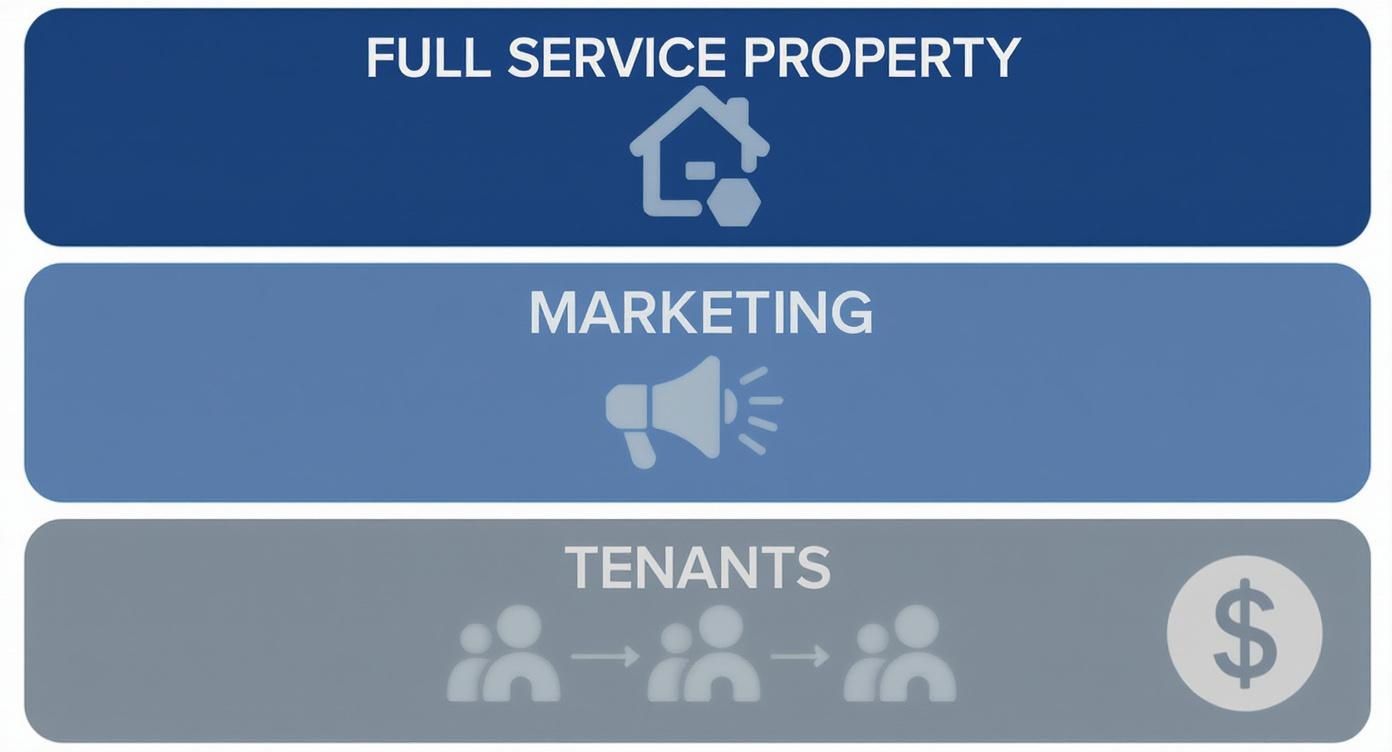
As you can see, the process starts with great marketing to attract applicants. It then moves into careful tenant placement and financial oversight, all supported by ongoing property care to produce reliable income.
Pillar 1: Marketing and Leasing
You can’t find a great tenant without a great marketing strategy. This first pillar is all about showcasing your property to attract a wide pool of qualified applicants. This is how we minimize costly vacancy periods.
An empty property costs you money every day in utilities, insurance, and taxes. Our approach is proactive. We don't just put up a sign and wait.
Our leasing process includes:
- Strategic Pricing Analysis: We analyze the Monterey, Salinas, and Carmel markets to set a competitive rent price. This helps attract tenants quickly without leaving money on the table.
- Professional Photography and Listings: High-quality photos and compelling descriptions make your property stand out online. We post these listings on all the top rental websites.
- Responsive Showings: We handle all calls and messages, scheduling and conducting professional showings that highlight your property’s best features.
This active effort gets your property filled faster with a better tenant.
Pillar 2: Rigorous Tenant Screening
Placing the right tenant is the most important step in protecting your investment. A bad tenant can cause thousands in damages and months of lost rent. Our thorough screening process is designed to prevent these problems before they start.
We do more than just a quick credit check. We conduct a detailed investigation into an applicant's background. This ensures they are reliable and can meet their lease obligations.
A thorough screening process is your first line of defense against future headaches. It verifies not just financial stability, but also a history of responsible tenancy.
Our multi-point screening covers all the bases:
- Comprehensive Credit Reports: To assess financial responsibility.
- Nationwide Criminal Background Checks: To help ensure the safety of the property and neighborhood.
- Eviction History Searches: To identify applicants with a history of lease violations.
- Income and Employment Verification: To confirm the applicant has stable income to afford the rent.
This rigorous process is the foundation of a stable rental income. If you just need help finding a great tenant, you can learn more about our dedicated tenant placement services.
Pillar 3: Rent Collection and Financial Reporting
Consistent cash flow is the main goal of owning a rental property. This pillar focuses on making the financial side simple and reliable. We ensure rent is collected on time and provide you with clear financial reports.
We handle the awkward task of chasing down late payments. Our system is professional but firm. We enforce the lease agreement every time.
We use modern tools that make paying rent easy for tenants. This also makes financial reporting straightforward for you. You’ll always know how your investment is performing with clear monthly statements.
Pillar 4: Responsive Maintenance and Repairs
Your property is a physical asset that needs ongoing care to hold its value. The fourth pillar is a responsive and cost-effective maintenance system. It protects your investment and keeps your tenants happy.
Putting off small repairs often leads to bigger, more expensive problems. It's also a top reason good tenants choose not to renew their lease.
We treat your property like our own. This means handling everything from a leaky faucet to emergency repairs. We have a trusted network of licensed and insured vendors right here in the Monterey Bay area who do quality work at fair prices.
Beyond the Basics: Advanced Asset Protection

While the four pillars are the foundation of full-service property management, the best managers go further. They actively shield your asset from risk. This means protecting it from legal threats, securing it during vacancies, and giving you a clear view of your investment.
This proactive approach is where true peace of mind is found. For owners living outside the Monterey Bay area, these services are essential. They are critical safeguards for your investment.
Navigating Legal Compliance and Evictions
California has some of the most complex landlord-tenant laws in the country. One simple mistake can lead to major financial penalties. A full-service manager is your compliance expert, ensuring every action follows state and local regulations.
This expertise is most critical during an eviction. Handling an eviction is a precise legal process. It must be executed perfectly to be successful.
Evictions are not just about removing a tenant; they are a legal proceeding that requires meticulous documentation and adherence to the law. One wrong step can jeopardize the entire process and cost you months of lost rent.
We manage this difficult process from start to finish. This includes serving proper notices and working with legal counsel. We handle all court filings and appearances on your behalf.
Vacant Home Caretaking: A Vital Service
An empty home is a vulnerable one. A property in Carmel or Monterey sitting vacant is exposed to risks like break-ins or undiscovered water leaks. Specialized vacant home caretaking is a critical part of asset protection.
This service transforms an empty house into a monitored asset. It creates the appearance of occupancy, deterring problems before they start. You can learn about our approach to vacant property inspections and upkeep in Monterey County.
Technology and Transparent Communication
Technology is a powerful tool for asset protection. Modern full-service property management uses software that gives you a clear view of your investment’s performance at all times.
The global property management software market is projected to more than double from $24.18 billion to $52.21 billion by 2032. This growth shows the industry's shift toward tech to improve communication. You can read the full research on the property management market to see this trend.
This technology offers key benefits:
- Secure Owner Portals: Log in 24/7 to access financial statements and maintenance updates.
- Digital Rent Collection: Tenants pay online, which improves on-time payment rates.
- Electronic Maintenance Requests: Tenants can submit repair requests online, creating a clear communication log.
These tools enhance personal service, not replace it. They are a cornerstone of protecting your asset.
The True Value of Property Management Fees
When considering a property manager, it's natural to focus on the cost. However, it's better to view this fee as an investment. It's an investment that protects your property, boosts your income, and buys back your time.
How Management Fees Work
The fee structure for most residential properties is straightforward. It’s designed to align our goals with yours. We only succeed when you do.
The two main fees are:
- The Management Fee: This is an ongoing cost for day-to-day operations. It's typically a percentage of the monthly rent collected, usually 8% to 12%. If a tenant doesn't pay, we don't get paid.
- The Leasing Fee: This is a one-time fee to find and place a new tenant. It covers marketing, showings, and our screening process. This fee is usually a portion of the first month's rent.
Understanding how this impacts your bottom line is important. You can learn how to calculate cash flow on rental property to see the full picture.
The Return on Your Investment: An Example
Let’s look at a home in Salinas that rents for $3,000 per month.
A DIY landlord might leave the property vacant for six weeks, losing $4,500 in rent. They might then rush to place a tenant who moves out after one year, starting the expensive process all over again.
A professional manager's true value isn't just in the tasks they handle, but in the costly mistakes they help you avoid. Reduced vacancy, better tenant retention, and preventative maintenance create a powerful financial upside.
Now, consider that same house managed by us. Our marketing could cut the vacancy to two weeks, saving you $3,000. Our screening process lands a tenant who stays for three years, saving you turnover costs for two of those years.
If we spot a minor roof leak and fix it for $400, we prevent $5,000 in future water damage. In this scenario, our fee is more than covered by the savings we generated. Learn more by reading our guide on thinking you're saving money by self-managing.
How to Choose a Monterey Bay Property Manager

Choosing a partner to manage your rental property is a big decision. In Monterey Bay, with its unique markets from Salinas to Carmel, it's even more important. You need a firm that acts as a true steward of your asset.
The property management industry is huge and growing. You can discover more insights about the property management industry on ibisworld.com. Your job is to find a firm with local expertise, great communication, and a strong network.
Ask About Local Market Expertise
A manager’s knowledge of your property's specific town is crucial. A manager with deep local roots will set the right rent prices and navigate city-specific rules.
When interviewing a potential manager, ask specific questions:
- What are the current rental market trends in this neighborhood?
- How do you determine the optimal rent price for a property like mine?
- What is your experience with local landlord-tenant laws?
Their answers will show if they have the knowledge needed to succeed.
Evaluate Their Communication and Technology
Clear, consistent communication is the foundation of a good partnership. Modern technology plays a huge role in this. Look for a company that offers an online owner portal.
This portal is your 24/7 window into your investment. It provides access to financial statements, maintenance updates, and inspection reports. It’s a level of transparency that builds trust.
The best property managers use technology to enhance personal service, not replace it. A secure online portal combined with a commitment to responsive, one-on-one communication is the gold standard.
Inquire About Vendor Relationships
A property manager is only as good as their network of vendors. An established local firm has built relationships with trusted plumbers, electricians, and other contractors.
This network provides two key advantages:
- Cost Savings: Long-term relationships often lead to better pricing.
- Priority Service: In an emergency, a manager with a loyal network can get a pro to your property fast.
Don't hesitate to ask how they vet their vendors. For more ideas, check our guide on 10 expert questions to ask a property management company.
Consider Community Connection and Inclusivity
A manager’s connection to the local community is a powerful asset. In a diverse region like Monterey County, a bilingual team is a game-changer. It widens the pool of qualified tenants and ensures clear communication. A firm that is an active part of the community is a trusted local partner.
Frequently Asked Questions (FAQs)
What is the main difference between full service property management and just leasing services?
A leasing service is a one-time transaction to find and place a tenant. After the lease is signed, you are on your own. Full service property management is an ongoing partnership that covers everything from rent collection to maintenance for the entire life of the tenancy.
How do you handle maintenance requests and emergencies?
Tenants can submit routine requests through our online portal. For emergencies like a burst pipe, we have a 24/7 emergency line to ensure an immediate response. Our network of vetted Monterey County vendors is always ready to help.
Can I be involved in the tenant selection process?
Yes, you always have the final say. We handle the marketing, showings, and a comprehensive screening process. We then present the most qualified applicants to you with our recommendation for your final approval.
What happens if a tenant needs to be evicted?
While our screening process helps prevent evictions, we manage the entire legal process if one becomes necessary. We work with legal counsel to handle all notices and court filings. This ensures the situation is resolved as quickly and lawfully as possible.
How will I know what is happening with my property?
We provide a secure online owner portal where you can access financial statements, repair invoices, and other documents 24/7. This technology, combined with our responsive team, ensures you are always in the loop.
Partnering with the right property management firm is key to unlocking your investment's full potential. At Torrente Property Management, we combine local Monterey Bay expertise with modern, transparent practices to protect your asset and deliver true peace of mind.
If you're ready to experience the benefits of a professional, hands-on approach, we're here to help. Contact Torrente Property Management today at (831) 582-8916 or visit us online to schedule a consultation.

Renting Out Your Monterey Bay Home in 2025? Here's the Guide
Thinking about renting out your Monterey Bay home in 2025? It’s a smart move for many owners. With the right plan, your property can become a steady source of income.
However, navigating our unique local market takes more than a "For Rent" sign. This guide is your local owner’s manual. I’ll walk you through everything from tenant laws to finding great renters and protecting your investment.
Is Renting Your Monterey Bay Home the Right Move?
If you own a home in Monterey, Salinas, or Carmel, you’re sitting on an in-demand asset. High mortgage rates are causing more homeowners to lease their properties instead of selling. This choice can turn your house into a cash-flowing investment that grows in value.
The numbers don't lie. In Monterey County, 3-bedroom rentals now average over $5,000 per month, making renting more lucrative than selling for many homeowners. This trend shows why becoming a landlord is a popular choice for long-term financial gain. You can discover more about how Monterey Bay homeowners can profit from renting in 2025 in our latest analysis.
Why Monterey Bay Is a Unique Rental Market
Renting a home here is different than in other parts of California. Our region’s diverse economy—from Salinas agriculture to Monterey tourism—creates a stable pool of potential tenants. Many guides overlook the real challenges of managing a rental from out of town or navigating local rules.
This guide gives you a clear roadmap. It’s for first-time landlords and seasoned investors alike.
Being a successful landlord requires a solid strategy covering a few key areas:
- Staying Legal: Understanding California and Monterey County landlord-tenant laws is essential.
- Prepping Your Property: A home in great shape attracts better tenants and commands higher rent.
- Pricing it Right: Set your rent based on local data to keep your property occupied.
- Screening Smart: A thorough screening process is your best defense for protecting your home.
For many out-of-area owners, managing the property from a distance is the real challenge. A trustworthy local partner can mean the difference between stress and a profitable, hands-off investment.
This guide has the local insights you need. Follow these steps to confidently turn your property into a successful rental.
Navigating Legal and Financial Essentials First
Before listing your home, you must get your legal and financial house in order. This is the foundation of a stress-free rental business. Skipping these steps can lead to expensive mistakes, especially in a regulated market like ours.
Think of it this way: you wouldn't build a house without a solid foundation. The same applies here. Getting your legal and financial details right protects you and your property from day one.
The process boils down to three simple phases.
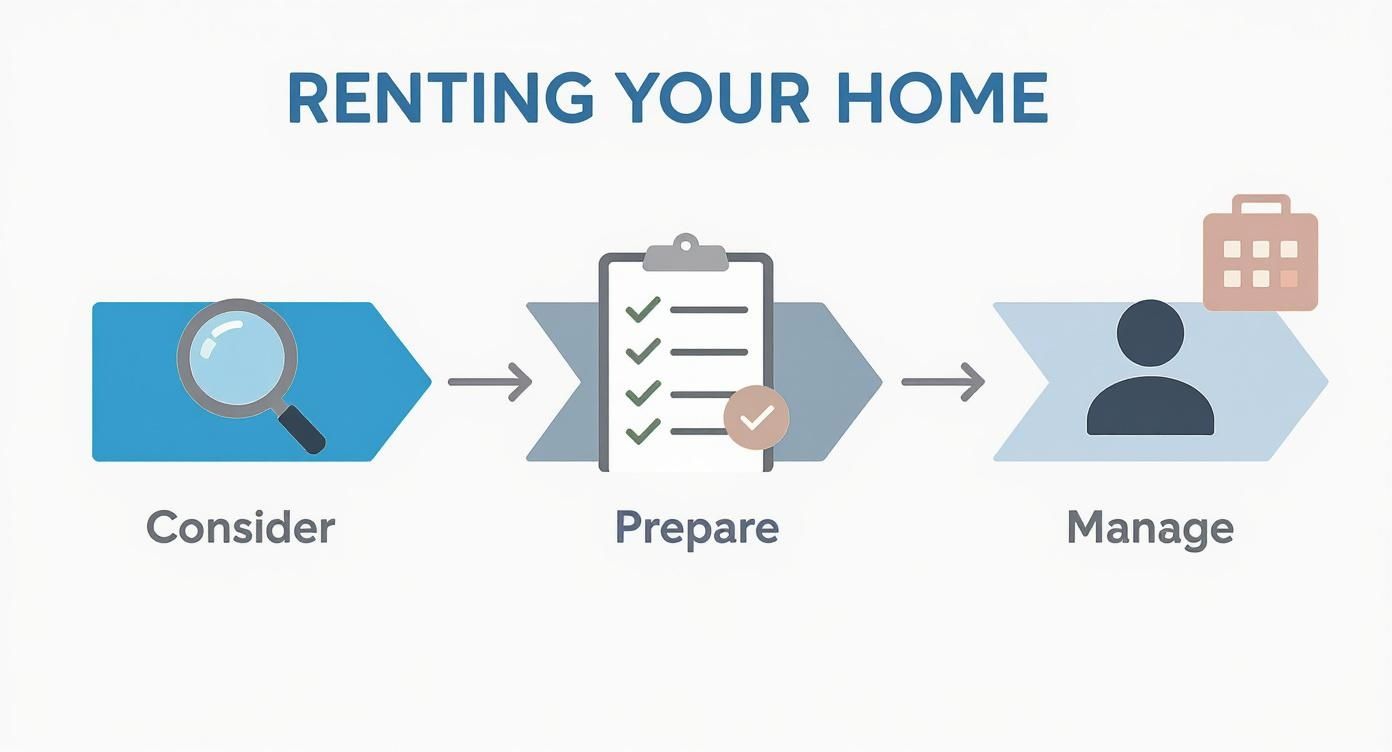
This roadmap helps you focus on the right tasks at the right time.
Getting a Handle on California Landlord-Tenant Laws
California has some of the most complex landlord-tenant laws in the country. A simple mistake can become a legal nightmare. It's vital to know the rules.
The main law to know is the California Tenant Protection Act (TPA). This law sets statewide limits on rent increases and establishes "just cause" eviction rules. Violating these rules can lead to significant penalties.
Local Insight: Mishandling the security deposit is a common and costly mistake. California law is specific: you have 21 days after a tenant moves out to return their deposit or provide an itemized list of deductions. Not a day more.
You must also provide certain disclosures before a tenant signs a lease. These are non-negotiable.
- Lead-Based Paint Disclosure: This is a must for any home built before 1978.
- Pest Control Disclosures: You must tell tenants if you use a regular pest control service.
- Demolition Permit Disclosure: If you plan to demolish the unit, tenants need written notice.
This is just the beginning. Reviewing a detailed breakdown of California landlord-tenant laws is a smart move to ensure you are fully compliant.
Setting Up Your Financial Systems
Treat your rental property like a business for long-term success. First, separate its finances.
Open a dedicated bank account for your rental property. All rental income goes in, and all property expenses come out. This simple step makes bookkeeping and tax prep much easier.
Next is insurance. Your standard homeowner's policy won't cover rental activities. You need a landlord insurance policy, which covers:
- Property Damage: Protection for the building from events like fire or storms.
- Liability Protection: Covers legal and medical costs if someone is injured on the property.
- Loss of Rental Income: Can replace lost rent if the property becomes uninhabitable.
Getting the right insurance is crucial. You can learn more in this essential homeowners insurance guide. Finally, talk to a tax professional who knows real estate to ensure you take all eligible deductions.
Preparing Your Home to Attract Quality Tenants
A well-prepared property attracts high-quality tenants. It shows you're a professional and responsible landlord. This phase is a strategic investment that justifies premium rent and minimizes future maintenance issues.
This isn't about a full remodel. It’s about creating a safe, durable, and inviting space. Renters who see a well-maintained home are more likely to treat it with respect.

Prioritize Safety and Functionality Over Style
Before any cosmetic upgrades, ensure the home is safe and functional. California has strict habitability standards. A top-down inspection is the best place to start.
Go through the property room by room and test everything. Check that windows lock, faucets don't drip, and outlets work. These details are non-negotiable for a tenant's safety.
Local Owner's Tip: In coastal towns like Monterey and Pacific Grove, moisture is an issue. I always check for leaks around windows and under sinks. Addressing these now prevents bigger problems later.
Your safety checklist should include:
- Smoke Detectors: Install and test them in every bedroom and on each level.
- Carbon Monoxide Detectors: California law requires CO detectors in most homes.
- Secure Locks: All exterior doors must have working deadbolt locks.
- Basic Utilities: Verify that plumbing, heating, and electrical systems are safe and working.
Focus on Durability and a Deep Clean
Once safety is handled, prepare the interior. Choose materials that can withstand wear and tear.
A professional deep clean is a great investment. This means professionally cleaned carpets, scrubbed grout, and spotless kitchens and bathrooms. This sets a high standard from day one.
Consider these durable choices:
- Paint: A fresh coat of neutral paint makes the home feel new. Use a semi-gloss finish in kitchens and bathrooms for easy cleaning.
- Flooring: Hard surfaces like luxury vinyl plank (LVP) are more durable than carpet.
- Appliances: Ensure all appliances are clean and working well. They should be reliable and match the home's quality.
For a more detailed approach, our guide on smart maintenance for rental properties offers a helpful checklist.
Boost Curb Appeal for a Strong First Impression
A potential tenant's first impression happens outside. A well-maintained exterior suggests the inside is also cared for.
Start by mowing the lawn, pulling weeds, and trimming shrubs. A pressure washer can make driveways and walkways look cleaner. Also, ensure all exterior lighting works for security. Look into top pest control services for rental properties to handle any issues before a tenant moves in.
Setting the Right Rent for the Monterey Bay Market
Pricing your rental is a high-stakes decision. Price it too high, and you face a long vacancy. Price it too low, and you leave money on the table. The sweet spot requires data and strategy.
This starts with a professional Comparative Market Analysis (CMA). This is a detailed evaluation of similar homes recently rented in your specific neighborhood, whether it's Salinas or Carmel-by-the-Sea.
Running a Hyper-Local Rental Analysis
A proper CMA weighs all the details that affect price on the Central Coast. You must analyze several key factors.
- Location: A home near the beach in Monterey commands a different price than one further inland. Proximity to top schools in Salinas or downtown Pacific Grove also impacts rent.
- Size and Layout: Square footage is just the start. The number of bedrooms and bathrooms is critical, as is an open floor plan or home office.
- Condition and Amenities: Updated kitchens and bathrooms are huge draws. A fenced yard, two-car garage, or central air can justify a higher rent.
Expert Insight: Seasonality plays a big role here. Rental demand surges in spring and summer. A home listed in June often rents faster and for a higher price than the same home in December.
For a deeper dive, check out our guide on how to price your rental property.
Understanding the Local Market Data
Hard numbers tell the real story. Monterey, CA, remains an expensive rental market. This table provides a quick reference for benchmarking your property.
| Monterey Bay Average Monthly Rent by Property Size (2025 Estimates) |
| :--- | :--- |
| Property Type / Size | Estimated Average Monthly Rent |
| 1-Bedroom Unit | $2,122 |
| 2-Bedroom Unit | $2,811 |
| 3-Bedroom Unit | $3,190 |
| 4+ Bedroom Home | $3,800+ |
These numbers show that setting the right price is crucial. In 2025, the average rent for a one-bedroom apartment is around $2,122 per month. That is about 30% higher than the national average. For more data, you can learn more about Monterey market trends on Zillow.com.
Crafting a Modern Marketing Plan
Once your price is set, build a marketing plan that attracts great tenants. A strong online presence is non-negotiable today.
Your listing needs to tell a story. This comes down to two things:
- High-Quality Photography: Smartphone photos won't cut it. Professional images that highlight your home’s best features make renters stop scrolling.
- Compelling Listing Descriptions: Don't just list features. Sell the lifestyle. Does your Salinas home have a backyard perfect for barbecues? Paint a picture.
Combining a data-backed price with a polished marketing plan positions your home to attract the best tenants, fast.
Screening Applicants and Crafting Your Lease
Choosing who lives in your home is your most important decision as a landlord. This isn't about a gut feeling. It’s about a methodical, fair, and legal screening process that protects your investment.
A great tenant protects your property's value. A rock-solid lease agreement is your next line of defense. It sets clear expectations for everyone.
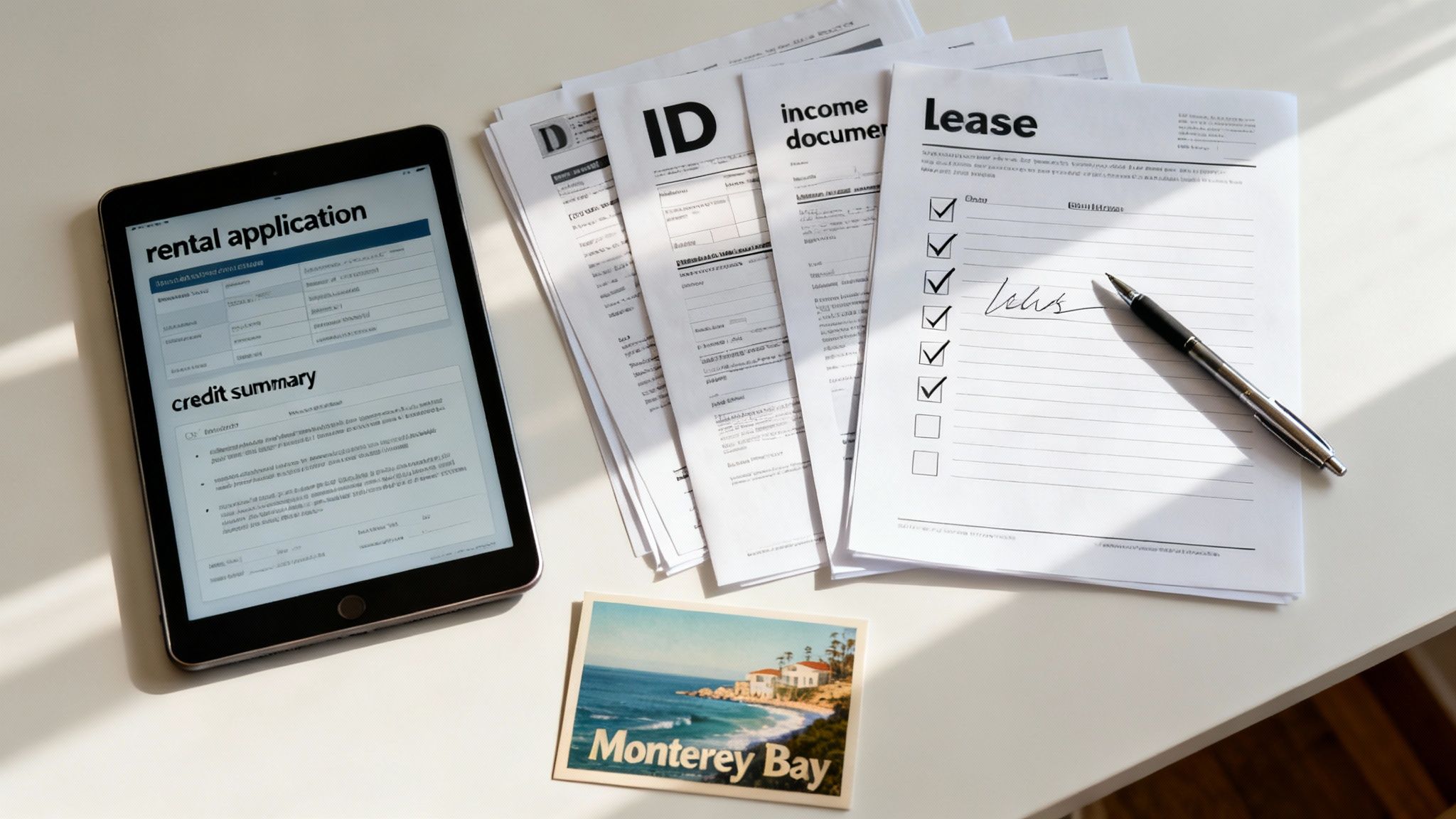
A Consistent and Compliant Screening Process
The key to screening is consistency. Apply the same criteria to every applicant. This is required to comply with the Fair Housing Act, which prohibits discrimination.
Start with a detailed rental application. It should gather personal details, employment and income verification, rental history, and references.
Expert Tip: Never decide based on one piece of information. A comprehensive screening process looks at the whole picture—credit, income, and background—to help you make a data-driven choice.
Your screening checklist should always include:
- Credit Report: Look for a history of late payments and overall debt-to-income ratio.
- Background Check: A nationwide criminal background check is a standard part of due diligence.
- Income Verification: See recent pay stubs or tax returns. The industry standard is an income of at least three times the monthly rent.
- Rental History Verification: Contact their last two landlords. Ask about payment history and if they would rent to them again.
This process is a lot of work. Many owners use professional tenant placement services to handle this critical step.
Drafting an Ironclad California Lease Agreement
Once you approve an applicant, make it official with a lease. A generic template won't work in California. Your lease must be specific to state law and your property.
A strong lease is clear and comprehensive. It is your primary tool for managing the tenant relationship.
Essential Clauses for Your Monterey Bay Rental Lease
Your lease must clearly define every aspect of the tenancy. Some clauses are non-negotiable for protecting your investment.
Key Lease Components
- Rent and Fees: State the exact rent, due date, and how they can pay. Also, specify the grace period and late fees.
- Security Deposit: Detail the security deposit amount and the conditions for deductions, referencing California Civil Code 1950.5.
- Maintenance and Repairs: Outline who is responsible for what. Tenants handle basic upkeep, while you handle major repairs.
- Property Use and Occupancy: List every adult living in the unit by name. Include clauses on guests, noise, and other rules.
- Pet Policy: Be specific. If you allow pets, define the type, size, and any restrictions. State the pet deposit or rent. If you don't allow pets, state that plainly.
By screening thoroughly and crafting a detailed lease, you set the stage for a successful and low-stress rental experience.
Thinking About a Property Manager? Here’s When It Makes Sense
Managing a rental yourself, especially from out of the area, can feel like a second job. Late-night calls about broken pipes and changing tenant laws can be overwhelming.
This is where a professional property management company helps. Hiring an expert is a strategic move to protect your home's value and profitability. They are your on-the-ground representative, handling everything from rent collection to emergency repairs.
So, What Does a Property Manager Actually Do?
A full-service property management company takes the daily headaches off your plate. They keep your property running smoothly and profitably.
Here’s a quick look at what they typically handle:
- Rent Collection & Financials: They manage billing and collect rent online. You get a detailed monthly statement.
- Maintenance & Repairs: They have a trusted network of local vendors for routine and emergency repairs.
- Tenant Communication: They become the main point of contact for tenants, handling requests professionally.
- Staying Legal: A local expert stays current on state and Monterey County regulations.
This is why over 70% of investors who use a professional manager report higher profitability (Source: IREM). The right team makes your property perform better.
Why Hyper-Local Expertise Is a Game-Changer
In a market like Monterey Bay, local knowledge is your biggest advantage. An experienced local manager knows the difference between renting a home in Salinas and a condo in Monterey. They know which vendors are reliable and fair.
At Torrente Property Management, we treat every home like it’s our own. With over 25 years of real estate experience in this community, we provide stewardship that gives out-of-area owners genuine peace of mind.
Our bilingual team can communicate clearly with a wide range of tenants and vendors. This smooths out potential issues before they start. When you trust your home to a local expert, you gain a partner committed to your success.
Common Questions for New Monterey Landlords
Renting a property in Monterey County brings up many questions. Here are the most common issues new landlords face.
How Do I Figure Out the Right Rent for My Home?
Your rent depends on your home's location, size, and condition. A two-bedroom in Carmel will rent for a different price than a family home in Salinas. A professional comparative market analysis is the best way to set a competitive price that maximizes your income.
What Is the Biggest Legal Mistake New Landlords Make?
Mishandling the security deposit is the most common and costly error. California law is clear: you have a strict 21-day deadline from move-out to return the deposit with an itemized list of any deductions. Getting this wrong can land you in small claims court.
Do I Need a Special License to Rent My Single-Family Home?
For long-term rentals of a single-family home in Monterey County, you generally don't need a special business license. However, you must comply with all state and local landlord-tenant laws. Always check with your specific city, as local rules can add another layer.
I Live Out of the Area. How Can I Possibly Manage Maintenance?
Coordinating repairs from a distance is a major headache. The most effective solution is to hire a local property management company. A good manager provides access to a network of trusted vendors who can handle everything from emergencies to routine upkeep.
If you're considering renting out your home in Monterey, Salinas, or nearby communities, Torrente Property Management offers trusted local expertise. Contact Torrente Property Management today at (831) 582-8916 for a personalized rental readiness assessment. Let our team help you transition from homeowner to successful landlord—stress-free.

Rent Your Monterey Property: Is Now the Time?
If you own a home in Monterey County, you might be sitting on a source of extra income. A mix of high rental demand and a slow sales market has created a great opportunity. It’s a chance to earn steady cash flow without selling your property.
According to RentCafe, the average rent in Monterey has climbed to $2,750, which is 33.5% higher than the national average. This shows just how strong the local rental market is right now.
A Landlord's Market in Monterey County
The real estate market in Monterey County can seem complex, but one thing is clear: it's a great time to be a landlord. High tenant demand and a slow sales market have created a 'perfect storm' for property owners. With today's mortgage rates, many homeowners are holding off on selling. This makes renting out their property an incredibly smart move.
This shift is a big opportunity for homeowners in places like Salinas, Monterey, or Carmel. The potential is huge, but you need the right plan to make the most of it. Many first-time landlords risk underpricing their property or making mistakes with tenant laws.
Why Is Rental Demand So High?
Several key factors are driving this strong market for landlords. Understanding them shows how good your position as a property owner truly is.
- Limited Housing Supply: For years, Monterey County has not built enough new homes to keep up with its growing population. This shortage pushes up demand for existing properties, especially rentals.
- High Mortgage Rates: With current mortgage rates making it hard to buy, more people are renting for longer. This creates a bigger pool of qualified tenants looking for a great place to live.
- Population Growth: People are always moving to the beautiful Monterey Bay area. This steady flow of new residents keeps vacancy rates low and demand high.
These conditions mean that a well-maintained property is more valuable than ever.
The Monterey County Rental Market at a Glance
| Market Factor | What It Means for You (The Property Owner) |
|---|---|
| High Tenant Demand | Your property will likely rent quickly, with less time sitting empty. |
| Rising Rental Prices | You can charge a higher monthly rent, which boosts your income. |
| Slow Sales Market | Renting offers a profitable alternative to selling in a tough market. |
| Limited Housing Supply | Your property is a valuable asset in a market with few options. |
The market is in your favor. But even with great conditions, you need a smart approach to succeed.
The Numbers Tell the Story
The proof is in the numbers. Rents in Salinas and other parts of Monterey County have reached historic highs. For example, some three-bedroom homes now command well over $5,000 per month. This isn't just a random spike; it reflects our region's intense demand and tight supply. You can learn more about these local rental market trends and what they mean for your property.
This puts you, the property owner, in a great position. However, with great opportunity comes risk if you're not prepared. Too many first-time landlords make costly mistakes—they underprice their homes, get tangled up in tenant law, or simply mismanage the process.
Today’s market is not just about collecting rent; it's about optimizing a valuable asset. The difference between a stressful side job and a profitable investment often comes down to professional management and local expertise.
This guide will show you how to turn this unique market into a win. We'll cover everything from setting the right price to finding the best tenants, giving you the steps for a successful rental journey.
What's Your Financial Opportunity in Today's Market?
Let's look at the numbers that matter to your bank account. Right now, there is a rare chance for property owners in Monterey County. Your property can become more than just a home—it can become a powerful, income-generating business.
This opportunity comes from a unique economic situation. While the market for selling homes has cooled, the rental market is hotter than ever. This gives you the chance to build wealth without selling your valuable asset in a less-than-ideal market.
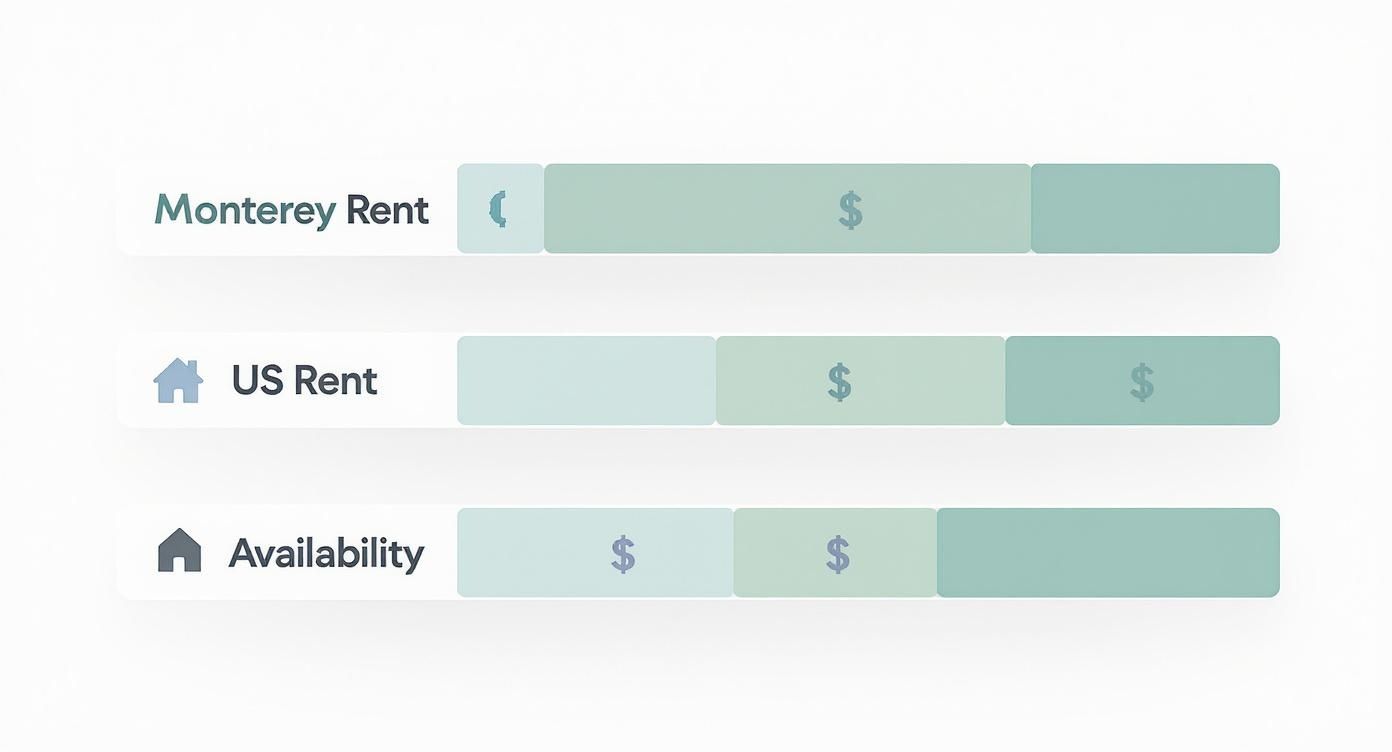
As you can see, local rents are much higher than the national average. The lack of available rental homes keeps demand strong. This classic supply-and-demand situation fuels your potential for high rental income.
Turn Your Property Into a High-Performing Asset
Thinking about renting out your property is a strategic financial move. We’re seeing a strange trend where home values have dipped slightly, yet the rental market has stayed very strong.
This gap between sale prices and rental income creates a golden opportunity for owners. With an average rent of $2,750 in Monterey—a figure that’s 33.5% above the national average—the potential for excellent returns is clear. This is the perfect time to see your home as a business ready to generate income.
Calculate Your Potential Cash Flow
To truly understand the opportunity, you need to look at cash flow. That's the money left in your pocket each month after all bills are paid. It's your actual profit.
Your typical monthly expenses will include things like:
- Property Taxes: A recurring cost for any homeowner.
- Homeowners Insurance: You’ll need a landlord policy, which is different from a standard one.
- Maintenance and Repairs: Set aside about 1% of your property's value each year for upkeep.
- Property Management Fees: If you hire a pro, this fee covers all day-to-day management.
Let’s run a quick example. Imagine you own a home in Salinas that could rent for $3,500 per month. After subtracting monthly expenses for taxes, insurance, and maintenance, you can see your net income.
For example, if your monthly expenses total $1,200, your positive cash flow would be $2,300 per month. That's over $27,000 in extra income per year from an asset you already own.
This simple math shows the powerful income potential waiting for you. To learn more, check out our guide on how to calculate rental yield for your property. Understanding these figures is the first step toward making a smart decision.
Your Responsibilities as a First-Time Landlord
Deciding to rent out your property is a big step. It’s like launching a small business. While the financial rewards in Monterey County are attractive, the daily duties can be a surprise if you’re new to being a landlord.
Successfully renting your property means shifting your mindset from homeowner to landlord. This brings a new set of responsibilities that go beyond just collecting a check. From legal paperwork to late-night emergency calls, being prepared is key to protecting your investment.

Core Duties Every Landlord Must Handle
Becoming a landlord means you have to wear many different hats. One day you're a marketer, the next a legal expert, and the next a maintenance coordinator. Mastering these core duties is essential.
- Effective Tenant Screening: This is your most important job. A solid screening process—including credit checks, background reports, and rental history—is your best defense against late payments and property damage.
- Creating a Strong Lease Agreement: The lease is your most important legal tool. This document outlines the rules for you and your tenant, from rent due dates to pet policies.
- Coordinating Maintenance and Repairs: When a pipe bursts at 2 a.m., you’re the one who gets the call. Having a network of trusted vendors in Salinas or Monterey is crucial for fixing issues quickly.
The reality of being a landlord is that you are on call 24/7. How quickly you respond to tenant needs affects their happiness and the health of your investment.
Avoid Common First-Time Landlord Mistakes
It’s easy to make mistakes that cost you time and money. One of the biggest errors is underpricing a property. In a hot market like Monterey County, setting the rent too low means you’re leaving income on the table every month.
Another common mistake involves handling security deposits. California has very specific laws about these funds, and not following them can lead to legal trouble. It’s smart to learn about the various mistakes new landlords often make so you can avoid them. Also, using free rental agreement templates can be a good starting point to ensure you cover all the legal bases.
DIY vs. Professional Property Management
Many new landlords wonder if they should manage the property themselves or hire a professional. It comes down to how much time and stress you're willing to handle. The choice becomes clearer when you see the responsibilities side-by-side.
DIY Landlord vs. Professional Property Management
| Landlord Responsibility | DIY Approach (The Hard Way) | Torrente Property Management (The Smart Way) |
|---|---|---|
| Marketing Your Property | Juggling listings, taking your own photos, and posting on multiple sites. | Professional photography and strategic marketing across top rental platforms. |
| Tenant Screening | Running credit and background checks, then trying to understand the results. | Full screening including rental history, income verification, and reference checks. |
| Rent Collection | Chasing down late payments and having difficult, awkward conversations. | Secure online payments, automated reminders, and professional follow-up. |
| Maintenance Requests | Scrambling to find and vet contractors for every issue, big or small. | Access to our network of trusted, pre-vetted local vendors available 24/7. |
| Legal Compliance | Spending hours trying to keep up with changing landlord-tenant laws. | Expert guidance from a team that knows these rules, keeping you compliant. |
While the DIY approach might seem cheaper, professional management often leads to better tenants, less vacancy time, and freedom from daily stress. It’s not just about managing a property; it’s about maximizing an investment.
Stay Compliant with California Rental Laws
One of the biggest hurdles for new landlords is the complex web of state and local rental laws. When you rent out your property, you're not just a homeowner anymore—you're a business operator. That means you have a new set of rules to follow.
These laws are strict requirements designed to protect both you and your tenants. A single mistake can lead to big fines or legal disputes. This is where having an expert in your corner is essential for building a successful rental business.
Key California Landlord-Tenant Laws
California has some of the most detailed landlord-tenant laws in the country. We are not lawyers, but knowing the main compliance areas is the first step toward protecting your investment.
Here are a few of the most important areas you'll need to know:
- Fair Housing Regulations: You cannot discriminate against tenants based on race, religion, sex, family status, or other protected classes. This applies to your rental ads and screening process.
- Security Deposit Rules: State law is clear on security deposits. You can charge a maximum of two months' rent for an unfurnished unit. You have a strict 21-day deadline to return it after a tenant moves out.
- Proper Eviction Procedures: You can't just change the locks on a tenant. The legal eviction process requires serving specific notices and getting a court order. One mistake can force you to start the whole process over.
To add another layer of protection, many landlords are now requiring renters insurance in California. It’s a smart move that helps cover costs from tenant property damage or liability claims.
Local Rules in Monterey County
On top of state laws, you must also follow any local rules in your city, whether it's Salinas, Monterey, or Carmel. These local rules can cover anything from rent control to specific health and safety codes.
For new landlords, keeping track of these overlapping state and local rules can feel like a full-time job. A single outdated practice or missed legal update can put your entire investment at risk.
Staying current with these changing rules is key. For a deeper look at these regulations, our team has put together a guide on key landlord-tenant laws in California. Understanding your legal duties is non-negotiable for a successful rental property.
How Professional Management Boosts Your Income
Juggling landlord duties can feel like a second job, especially in a competitive market like Monterey County. It’s easy to think you can save money by managing your own property. However, that path often leads to unexpected costs and missed opportunities.
Professional property management is a strategic investment in your asset. It turns the challenges of being a landlord into a simple solution that lets you enjoy the financial rewards without the daily headaches. Torrente Property Management helps owners in Salinas and Monterey County take full advantage of high rental demand—without the stress.

Set Market-Accurate Rent from Day One
One of the biggest mistakes a new landlord makes is guessing the rent. Price it too low, and you lose money every month. Set it too high, and your property sits empty.
We use local, real-time data to do a detailed rental market analysis. We look at similar properties in Salinas, Monterey, and Carmel to find the sweet spot. This is the perfect rate that attracts great tenants quickly while ensuring you get the maximum return.
Find Qualified and Reliable Tenants
Finding a tenant is easy. Finding the right tenant is an art. A bad tenant can cause a nightmare of late payments and property damage. A thorough and consistent screening process is your single best defense.
Our tenant placement service is built on a tough, multi-step screening process. We go beyond a simple application and conduct:
- Comprehensive Credit Checks: To see a person's financial responsibility.
- Criminal Background Reports: For the safety of your property and the neighborhood.
- Eviction History Search: To spot red flags from past rentals.
- Income and Employment Verification: To make sure the tenant can afford the rent.
By placing reliable people who pay on time, we protect your income and the value of your home.
Professional management acts as a buffer between you and your tenants. This neutral party handles difficult talks, enforces the lease, and manages maintenance professionally.
The Financial Benefits of Expert Help
Is professional management worth the cost? When you add up the financial benefits, the answer is clear. An expert manager doesn't just save you time; they actively boost your bottom line.
We handle everything from rent collection to enforcing late fees. You get detailed monthly financial statements, so you always know how your investment is doing. Plus, our network of local vendors means maintenance is handled quickly and affordably.
Hiring a professional is about optimizing your investment. To see a detailed breakdown of costs you might be missing, check out our article, Think You're Saving Money Managing Your Own Rental? Think Again! It shows how professional help can lead to higher profits and peace of mind.
FAQs: Renting Your Monterey County Property
Stepping into the world of rental property ownership is a big move. It’s normal to have questions, especially in a unique market like Monterey County. Here are clear answers to some common questions we hear from property owners.
How much can I rent my Monterey County home for?
Rental rates vary based on location, size, and condition. For example, some three-bedroom homes in Salinas now rent for well over $5,000 per month. A professional property manager can run a free rental market analysis using real-time local data to find the most accurate and competitive price for your specific home.
Is it better to sell my home or rent it out right now?
The right answer depends on your long-term financial goals. With today's high mortgage rates, the sales market has cooled down. Renting allows you to earn significant monthly income while your property continues to grow as a long-term asset, letting you wait for better sales conditions.
What is the biggest mistake first-time landlords make?
The most common and costly mistake is improper tenant screening. It’s tempting to rush and place the first applicant, but this can lead to late rent, property damage, and difficult evictions. A thorough screening process that checks credit, rental history, and income is your best defense.
How much work is involved in managing a rental myself?
Self-management is a major time commitment. Your new job includes marketing the property, showing it to tenants, running background checks, drafting legal leases, and being on call 24/7 for maintenance emergencies. For most owners, the time and stress make professional management a worthwhile investment.
How does a property manager find qualified tenants?
A professional manager uses a proven system to find the best tenants. It starts with a marketing strategy to attract many qualified applicants. Then, a rigorous screening process checks credit, background, eviction history, employment, and references to place reliable tenants who will care for your home.
If you own a home in Salinas, Monterey, or nearby and want to explore its rental potential, now might be the perfect time. The team at Torrente Property Management offers a free market analysis and personalized guidance. Contact us today at (831) 582-8916 to see how we can turn today’s market demand into steady income for you.

The Hidden ROI of High-Tech Property Management for One-Rental Owners
Owning a rental in Monterey Bay should feel like an investment, not a second job. The real value of modern property management isn't flashy software. It’s about getting your time back, cutting vacancies, and finding quality tenants.
It’s how you turn a hands-on headache into a hands-off asset. As of 2025, 97% of renters say seamless digital interactions make them more likely to renew. This shows that technology is no longer a luxury—it's essential for keeping your property profitable.
Beyond Rent Checks: The Untapped Value of Modern Management
Many owners with just one rental think professional management is only for big portfolios. So they stay stuck in the old cycle: chasing late rent and scrambling to find a plumber on a Saturday.
This manual approach is full of hidden costs—stress, burnout, and unpaid work. But what if your single rental could have the same power as a large investment firm? This is where a high-tech approach changes the game, especially for out-of-area owners or military families managing a property from a distance.
From Manual Hassles to Automated Efficiency
Instead of you checking your bank app to see who paid, an automated system collects rent and sends polite reminders. Instead of a 10 p.m. call about a leaky faucet, your tenant submits a request with photos through an online portal.
This system doesn't just make your life easier. It creates a better, more professional experience for your tenants. A happy tenant who can easily pay rent online and get a quick repair response is far more likely to stay, which cuts down on your biggest expense: vacancy.
How Technology Directly Boosts Your Bottom Line
For a one-rental owner, every dollar and every empty day matters. High-tech property management delivers real returns by solving common pain points:
- Faster Leasing: We don't just put a sign in the yard. Automated marketing blasts your vacancy across dozens of top rental sites, pulling in a larger pool of qualified applicants.
- Smarter Tenant Screening: Gone are the days of a simple credit check. AI-powered screening offers data-driven background checks that lower the risk of a costly eviction.
- Complete Transparency: A 24/7 online owner portal acts as a real-time window into your investment. You can log in anytime to see financial statements, inspection reports, and maintenance updates.
By blending these tools with hands-on, local service, you get big-firm efficiency with the dedicated care your Monterey Bay property deserves. It's about finally turning that rental into a reliable source of passive income.
Traditional vs. High-Tech Management for a Single Rental
| Management Task | Traditional Approach (The Hidden Costs) | High-Tech Approach (The ROI) |
|---|---|---|
| Marketing a Vacancy | Posting a "For Rent" sign, maybe a Craigslist ad. You manually field every call and email, spending hours on unqualified leads. | Your listing is instantly syndicated across dozens of top rental sites. Leads are pre-screened, saving you hours of wasted time and filling the unit faster. |
| Collecting Rent | Waiting for a check in the mail or coordinating a drop-off. You manually track payments and have to personally chase down late rent. | Tenants pay online via ACH or card. The system sends automatic reminders and applies late fees per the lease, ensuring consistent cash flow. |
| Handling Maintenance | A late-night call from a panicked tenant. You scramble to find a reliable vendor, coordinate access, and hope the job gets done right. | Tenants submit a ticket with photos through a portal. A vetted vendor is dispatched, and you track progress online. Better service means happier tenants. |
| Financial Reporting | Juggling receipts and a messy spreadsheet. You spend a weekend trying to get everything ready for your accountant at tax time. | The owner portal provides 24/7 access to real-time financial statements (P&L, rent roll). Tax documents are generated automatically. |
| Tenant Screening | You run a basic credit check and call a few references, hoping for the best. It's easy to miss red flags. | AI-powered screening analyzes credit, criminal, and eviction history, providing a data-driven risk score. This reduces eviction risk by over 50%. |
The comparison is clear: the traditional approach is full of unpaid labor. A modern, tech-enabled strategy improves your bottom line, reduces your stress, and makes your investment perform better.
Calculating Your True ROI: A Practical Guide for Owners
Figuring out your property’s real return on investment (ROI) goes beyond "rent collected minus mortgage." For single-rental owners, the biggest costs are your own time, stress, and money lost to small operational issues.
To grasp the hidden ROI of high-tech property management, you have to value what you get back. It starts by putting a price tag on your own sweat equity.
The Real Cost of Self-Management
Think about the hours you pour into being a landlord each month. There’s screening applicants, taking late-night maintenance calls, and keeping up with paperwork. This is your "time equity," and it has a real dollar value.
Let's say you spend just five hours a month managing your Monterey Bay rental. If you value your time at a modest $50 per hour, you're "spending" $250 every month on unpaid labor. That’s $3,000 per year that doesn't show up on a spreadsheet but is a real cost to you. We dig deeper into the hidden costs of managing your own rental.
Beyond your time, two other silent ROI killers are always lurking:
- Vacancy Days: Every day your property sits empty, it's costing you. If your rent is $3,000 per month, each vacant day burns $100 in lost income.
- Maintenance Delays: A slow response to a leaky faucet can quickly turn a simple fix into a major expense. Tech-driven systems catch small problems before they become costly disasters.
A Practical Monterey Bay Example
Let's run the numbers for a typical rental home in Salinas or Monterey.
- Monthly Rent: $3,200
- Annual Gross Rent: $38,400
Now, let's compare the costs of the old-fashioned, manual way versus a modern, tech-enabled approach. This is where you see the difference between slow, reactive phone calls and efficient, automated systems.
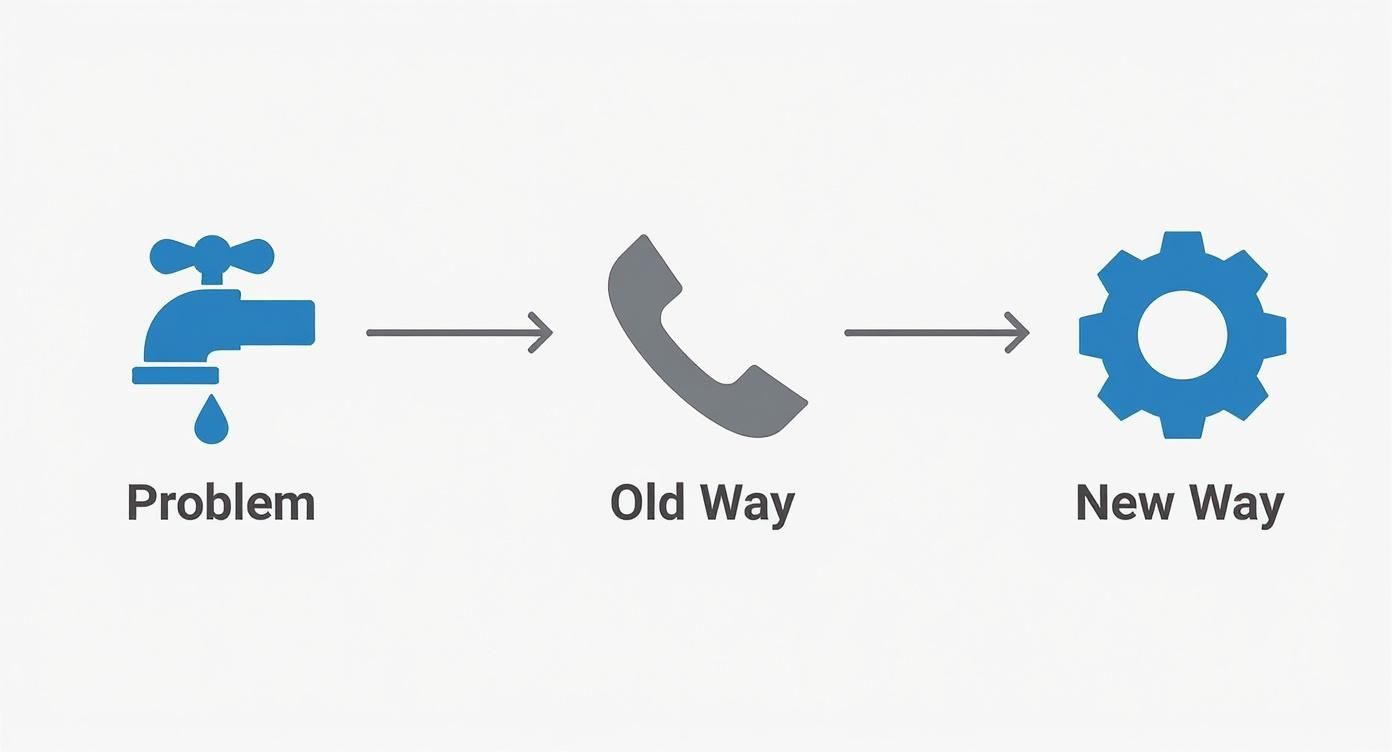
The idea is simple: technology replaces clunky, manual steps with a smooth workflow that saves time and money.
Your Simple ROI Formula
By cutting down on this friction, technology directly boosts your net income. When automation trims operating expenses, cash flow can jump without you investing another dime.
Here’s a simple formula to see the shift:
True ROI = (Annual Rent - All Expenses - Value of Your Time) / Total Investment
When a tech-forward partner like Torrente Property Management steps in, the "Value of Your Time" cost drops to zero. At the same time, expenses from vacancies and delayed repairs shrink. This simple shift provides a concrete return that will change how you view your investment.
The Five Pillars of High-Tech Property Management
So, what does "high-tech management" actually look like for a landlord in Monterey or Salinas? It’s not about flashy gadgets. It’s about smart, proven tools that make your investment work harder so you don’t have to.
To grasp the hidden ROI of high-tech property management, you have to see how these tools support the five key areas of your rental business.
1. Automated Leasing and Marketing
Getting your property in front of the right people—fast—is the first defense against lost rent. The old way meant a sign in the yard and hoping a great tenant drove by.
A modern approach is strategic. High-tech marketing blasts your listing across dozens of top rental sites like Zillow and Trulia instantly. This casts a huge net, pulling in a larger, more qualified pool of applicants while saving you hours of phone tag.
2. Digital Tenant Screening and Onboarding
The screening process is your best defense against future problems. Technology takes the guesswork out of this critical step. Instead of a simple credit score, AI-powered screening dives deep into an applicant’s history.
This includes:
- Detailed Credit History: Analyzing payment patterns, not just a score.
- Nationwide Eviction Search: Uncovering past issues a reference might forget to mention.
- Criminal Background Check: A key step for ensuring a safe environment.
After a tenant is approved, the move-in process is handled electronically. Leases are signed online, creating a secure, legally-binding start to the tenancy.
3. Centralized Owner and Tenant Portals
This is where true transparency comes to life. A secure online portal is your 24/7 window into your property’s performance. It empowers you with all the information you need, without the daily grind.
From your owner portal, you can access financial statements, leases, and maintenance updates. Tenants get their own portal to pay rent and submit repair requests. This convenience leads to happier tenants and better retention rates.
4. Streamlined Maintenance Coordination
A leaky faucet at midnight is stressful. A tech-driven maintenance system makes handling repairs faster and more accurate. Tenants submit a digital work order with photos through their portal.
That ticket is instantly routed to a vetted, local vendor in the Monterey Bay area. You can approve work orders and watch the repair's progress online. For a deeper dive, see how we’ve built our property management workflow automation around this principle.
5. AI-Powered Financial Tools
Technology ensures your property’s finances are managed with precision. Modern property management relies on automation for rent collection. Understanding the benefits of accounts receivable automation shows how much this improves cash flow.
Key Takeaway: Digital rent collection with automatic reminders drastically reduces late payments. The system handles awkward follow-ups, ensuring consistent income while keeping the landlord-tenant relationship professional.
These tools also generate detailed financial reports that make tax time a breeze. They can analyze local market data to set competitive rental rates, making sure you’re not leaving money on the table.
Giving Out-of-Area Owners Peace of Mind

Owning a rental in Monterey Bay should be rewarding, not a source of anxiety. This is especially true for military families stationed far away or investors living hundreds of miles away. Every time an unknown local number rings, your stomach drops.
For an absentee owner, trust is everything. In the past, that meant blind trust. Modern tech replaces blind faith with verifiable transparency, bridging the physical distance with real-time data.
Turning Miles into an Advantage
Imagine you’re stationed across the country when a storm rolls through Carmel. Instead of wondering if your property is okay, you get a digital inspection report on your phone, complete with photos. That’s the new reality.
This technology gives absentee owners something priceless: confidence. The anxiety of the unknown evaporates. You’re no longer just an out-of-town landlord; you’re a connected, informed investor. To see how this works, check out our guide on rental property management for out-of-town owners.
Your Property, Right in Your Pocket
The owner portal is the command center for this peace of mind. It’s a secure, 24/7 dashboard where you can see everything happening with your property.
This digital hub puts everything at your fingertips:
- Maintenance Updates: See every repair request, approve quotes from local vendors, and track the job’s progress.
- Financial Clarity: Instantly review monthly statements, see when rent comes in, and access documents for tax time.
- Leasing Activity: When your property is vacant, monitor showings, review applicant screening, and e-sign the new lease from anywhere.
The Key Insight: Technology doesn't mean giving up control. It means gaining smarter, more efficient control. You make the big decisions, while the system handles the day-to-day grind.
This digital connection is what makes it all work. It ensures you remain the confident director of your investment, no matter where life or military duty takes you.
Why Technology Needs a Human Touch in Monterey Bay

Technology is an incredible tool, but it can’t tell you about the unique rhythm of the Monterey Bay rental market. A software algorithm doesn't understand the seasonal demand in Carmel or the housing needs of families in Salinas.
This is where the combination of "high-tech" and "high-touch" unlocks the hidden ROI of high-tech property management. Without a human expert, technology is just a collection of apps.
The Best of Both Worlds
An automated system can process a maintenance ticket, but our team makes sure the person who shows up is a trusted, local, and often bilingual contractor. AI can screen an applicant, but an experienced property manager makes the final, informed decision.
Our Philosophy: We believe technology should empower our team, not replace it. Our tools are sophisticated, but our service is rooted in the community we serve.
This approach is becoming more critical as the industry evolves. While tools like AI-powered business agents simplify processes, they require a thoughtful hand to enhance the essential human touch.
Navigating Local Realities
No software can replicate the knowledge gained from navigating city regulations or building relationships with reliable vendors.
- Local Ordinance Knowledge: From Monterey to Salinas, each city has its own rules. Our team stays current on these laws to protect you from missteps.
- Vetted Vendor Network: We have long-standing relationships with plumbers and electricians who are reliable, fairly priced, and accountable to us.
- Bilingual Advantage: Serving our Spanish-speaking tenants and owners is essential for clear communication and a larger pool of qualified applicants.
Our team’s hands-on stewardship ensures our powerful tools are always applied with context and care.
Where Human Insight Makes the Difference
A major industry shift is underway, with over 34% of property management firms now using AI and automation. You can discover more insights about how it's shaping the industry. Torrente embraces this change but recognizes where human judgment remains irreplaceable.
This balance is vital for financial oversight. Managing finances requires more than collecting rent; it requires a human eye for detail. Learn more in our guide to why the right manager beats the right app for bookkeeping. It's the human touch that transforms a good investment into a great one.
Frequently Asked Questions
Is tech-enabled management too expensive for just one rental?
Not at all. The efficiency it creates often saves more money than the management fee costs. Faster leasing, fewer vacancies, and timely rent payments mean a higher net income for you, revealing the true hidden ROI.
Will I lose control of my property?
You’ll actually gain smarter control. A 24/7 online owner portal gives you a real-time window into your investment. You can see financials, maintenance, and reports anytime, from anywhere, so you stay informed without being buried in daily tasks.
How does technology help find better tenants?
It tackles the problem from two angles. First, it markets your property across dozens of top rental sites, attracting a larger, more qualified applicant pool. Second, AI-powered screening provides a deep, data-driven analysis of credit and background history, significantly reducing risk.
I live out of state. How will I know what's happening?
Modern management is perfect for out-of-area owners. Digital tools like virtual inspection reports, an always-on owner portal, and a dedicated local team on the ground keep you fully connected and confident in your investment’s care.
What if my tenants aren't very tech-savvy?
Today’s platforms are built to be very user-friendly. We also provide full support to walk tenants through the process in both English and Spanish. Of course, we always keep traditional lines of communication open for anyone who needs them.
Let Us Handle the Details for You
Tech-enabled property management isn’t just a luxury—it’s becoming essential. It saves you time, cuts vacancies, secures better tenants, and gives you peace of mind. Whether you're a first-time landlord or managing a home from out of state, Torrente makes it easy to stay confident in your investment.
Ready to modernize how you manage your Monterey Bay property?
Contact Torrente Property Management today at (831) 582-8916 to discuss a smarter way to manage your investment.

New Landlord? What to Know in 2026
Thinking about renting out your property instead of selling? You're not alone. High interest rates have many homeowners holding onto their properties and becoming landlords instead. If you're a new landlord? here’s what to know in 2026.
The shift has created a surge in "accidental landlords"—homeowners who suddenly find themselves managing a rental. Managing a property is more complex than it seems and requires a professional approach to succeed.
The Rise of the Accidental Landlord
With a tricky resale market, many owners in Monterey County are renting their homes instead of selling. This creates a wave of first-time landlords who may not be ready for the responsibilities.
Managing a rental is a business, not a hobby. It requires a different mindset than just being a homeowner. The jump from homeowner to landlord involves a new set of rules and challenges.
From Homeowner to Investor
First-time landlords in Salinas or Carmel often underestimate the work involved. Key tasks include:
- Setting Market Rents: Pricing requires local market analysis to attract good tenants without losing income.
- Screening Tenants: This involves credit checks, background verification, and following fair housing laws.
- Handling Maintenance: Late-night calls about leaky faucets are part of the job.
- Navigating California Laws: State and local laws are complex, and mistakes can be costly.
These tasks are time-consuming and risky without expert support. Your success depends on treating your property like a professional business from day one.
Studies show that over 70% of rental investors see increased profits and less stress after hiring a professional manager. This highlights the value of expert support.
If you're navigating the shift from homeowner to landlord in Monterey, Salinas, or Carmel, Torrente Property Management is here to help. Contact us for personalized support and local expertise to protect your property and income.
Decoding California and Monterey County Rental Laws
For a new landlord, California's rental laws can feel overwhelming. These laws are the rulebook for running a successful and ethical rental business.
Ignoring these rules, even by accident, can lead to serious legal and financial trouble. Understanding them is your first step toward protecting your investment.
California State Laws Every Landlord Must Know
Certain state laws are the foundation of every landlord-tenant relationship. If you’re a new landlord? here’s what to know in 2026 about the most important ones.
- Implied Warranty of Habitability: You must provide a safe and livable home. This includes working plumbing, heat, and a hazard-free structure.
- Security Deposit Rules: California limits security deposits to two months' rent for unfurnished units. You have 21 days after a tenant moves out to return their deposit or provide an itemized list of deductions.
- AB 1482 (Tenant Protection Act): This law establishes rent caps and "just cause" eviction rules. It limits annual rent increases and requires a valid reason for ending a tenancy after 12 months.
These laws create a fair rental market. They protect tenants while setting clear expectations for landlords.
This chart shows the path from owning a home to managing it as a professional investment.
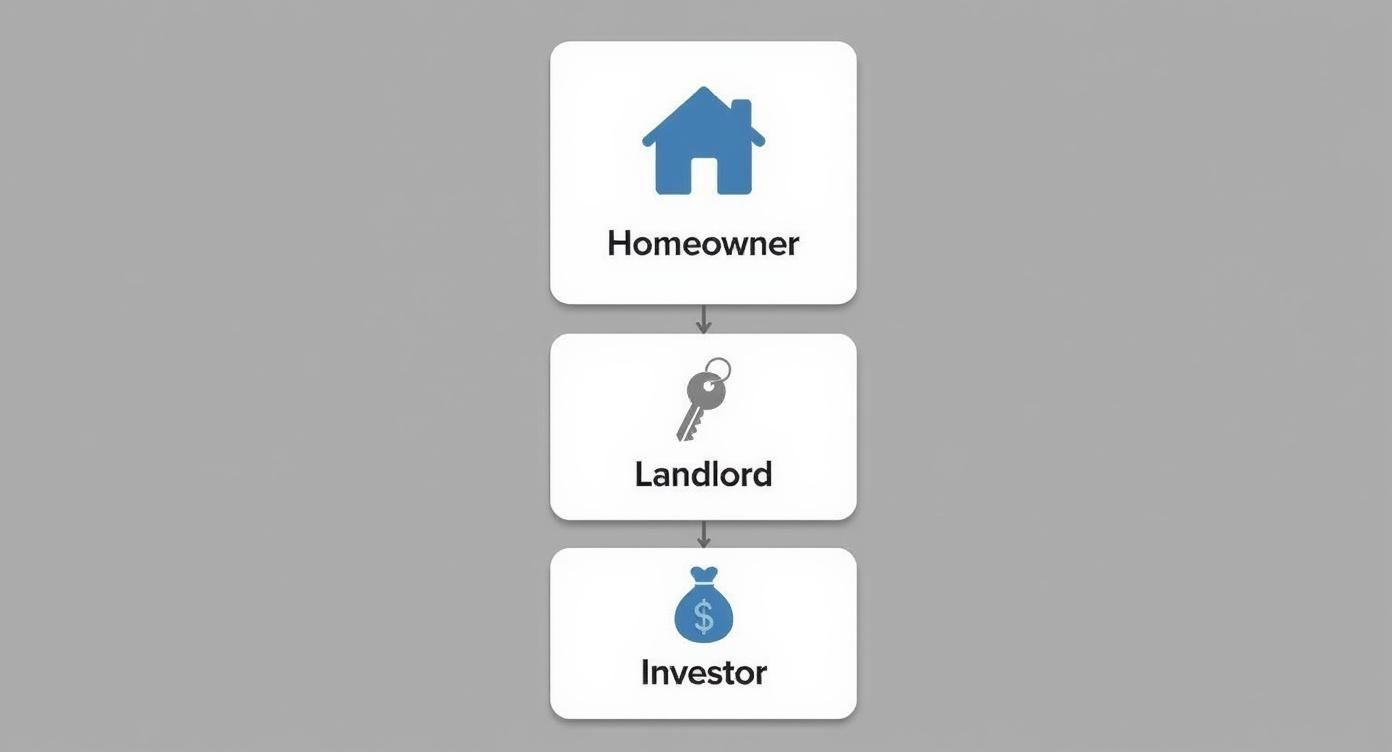
As you move up this ladder, your responsibilities grow.
Local Monterey County Ordinances Matter
State laws are only the beginning. You must also follow local city and county rules in Monterey County.
Cities like Salinas or Monterey have their own regulations for property inspections or health codes. Always check with the city where your rental is located to ensure you are fully compliant.
A legally sound lease agreement is your most important tool. It defines the rights and duties for both you and your tenant, preventing misunderstandings from becoming disputes.
Using a generic online template is a huge risk. Your lease must comply with all state and local laws.
Fair Housing Is Non-Negotiable
Federal and state Fair Housing laws make it illegal to discriminate against tenants based on protected classes like race, religion, or family status. You must apply the same criteria to every applicant.
Consistency is your best defense against a discrimination claim. Create a written screening process and stick to it. This proves you are making decisions based on business factors, not personal bias.
For a deeper dive, read our guide on Landlord-Tenant Laws in California. Getting professional guidance is essential when you're starting out.
How to Price Your Rental for Profit and Occupancy
Setting the right rent is one of your most important decisions. Price it too high, and you risk a long, costly vacancy. Price it too low, and you leave money on the table.
The correct rent is found through a careful rental market analysis. This process helps you understand what similar properties in your Monterey County neighborhood are renting for right now.
Conducting Your Own Rental Market Analysis
To begin, find "comps," or comparable properties. Look for rentals similar to yours in location, size, and condition.
Follow these key steps:
- Identify Competitors: Search for available rental listings in your area. Focus on properties with the same bedroom count and similar square footage.
- Compare Amenities: Does your property have a new kitchen, a fenced yard, or off-street parking? These features can justify a higher rent.
- Assess Condition: Be objective. A modern, well-maintained unit will always command a higher rent than a dated one.
This analysis provides a snapshot of what local renters expect to pay. For a full walkthrough, see our guide on how to accurately price your rental property.
Factors That Directly Impact Your Rental Value
Several factors influence your rental price. For a new landlord? here’s what to know in 2026 about what drives value in Monterey Bay.
Small upgrades like in-unit laundry or a dishwasher can make your property stand out. A fair pet policy can also widen your pool of qualified applicants.
Setting a competitive price is critical. With new housing supply increasing, owners can’t afford long vacancies. Accurate pricing helps minimize downtime.
While 85% of landlords increased rent in 2024, the market is stabilizing. This means tenants are becoming more price-sensitive. You can read more about current rental market trends on Baselane.com.
This table shows key factors that influence rental prices in Monterey County.
Key Factors Influencing Your Monterey County Rental Price
A summary of the primary drivers that determine a competitive and profitable rental rate for your property.
| Factor | Impact on Rent | Local Example (Monterey County) |
|---|---|---|
| Location | High Impact: The single most important factor. Proximity to downtown, beaches, schools, and major employers drives demand. | A 2-bed in Carmel-by-the-Sea will command a significantly higher rent than a similar-sized home in Soledad. |
| Size & Layout | High Impact: Square footage, number of bedrooms/bathrooms, and a functional floor plan are key drivers. | A 3-bed, 2-bath single-family home in Salinas is more valuable than a 3-bed, 1-bath with the same square footage. |
| Condition & Updates | Medium to High Impact: Modern kitchens, updated bathrooms, new flooring, and fresh paint can justify a higher price. | A recently renovated kitchen with stainless steel appliances can add $100-$200 to the monthly rent compared to a dated one. |
| Amenities | Medium Impact: In-unit laundry, A/C, a garage, a fenced yard, or a dishwasher can make your property more desirable. | A property with dedicated off-street parking in Monterey's congested areas is a major selling point. |
| Pet Policy | Medium Impact: Allowing pets can significantly widen your applicant pool, often allowing for a slightly higher rent or pet fees. | Being pet-friendly in a military-heavy area like Marina or Seaside can drastically reduce vacancy time. |
| Utilities | Low to Medium Impact: Including some utilities (like water or trash) in the rent can be an attractive perk for tenants. | If comparable units don't include utilities, offering to cover water can make your property stand out. |
The True Cost of a Vacancy
Every day your property sits empty, you lose money. A vacancy is an active expense, as you still pay the mortgage, taxes, insurance, and utilities.
Consider the math: if your target rent is $3,000 per month, each week of vacancy costs you $750. It is often smarter to price your property competitively to rent it quickly.
Finding Your Ideal Tenant Without Breaking the Law
Finding the right tenant is the most critical part of the process. A thorough, fair, and consistent screening process is your best tool for long-term success. For a new landlord? here’s what to know in 2026, this system protects your investment and follows the law.
The key to a good screening process is consistency. Create a clear, written set of criteria and apply it to every applicant.
Establishing Your Screening Criteria
Before advertising your rental, decide what your ideal tenant looks like on paper. This means setting objective business standards to predict a successful tenancy.
Your criteria should be measurable and legal. Common standards include:
- A minimum credit score (650 or higher)
- Verifiable monthly income that is three times the monthly rent
- Positive references from previous landlords
- A clean background check with no evictions
- A stable employment history
Writing these standards down before you start helps you treat everyone equally, which is essential for Fair Housing compliance.

The Step-by-Step Screening Process
A structured process saves time and ensures fairness. It helps you narrow down applicants based on your qualifications.
- Pre-Screening: A quick phone call can filter out unqualified leads. Ask about income and move-in date before scheduling a showing.
- The Application: Use a standard rental application for every prospect to gather necessary information.
- Income and Employment Verification: Ask for pay stubs and call the employer to confirm their position and salary. The "3x the rent" rule is a proven industry standard.
- Credit and Background Checks: Use a reputable service to run a full report. Look for red flags like past evictions.
- Landlord References: Call their current and previous landlords. Ask if they paid on time and how they maintained the property. The most important question is: Would you rent to them again?
This process is a lot to manage, which is why many owners use professional tenant placement services for expert help.
Avoiding Fair Housing Violations
Federal and California Fair Housing laws are very strict. They prohibit discrimination based on protected classes, including race, color, religion, sex, familial status, and disability.
Your screening process must be based only on legitimate business qualifications. The moment you make an exception for one applicant, you open yourself up to a discrimination lawsuit.
Stick to your written criteria and document your decisions. If you deny an applicant, provide a legitimate, non-discriminatory business reason.
Mastering Day-to-Day Property Operations
Landlording is not passive income; it is active, hands-on management. Once a tenant moves in, your job is to keep the property in great shape and run your rental business smoothly.
You are the go-to person for everything, from a clogged drain to a broken appliance. Handling issues quickly and professionally is key to a good tenant relationship and protecting your asset's value.
Building a Proactive Maintenance Schedule
The best way to avoid expensive emergency repairs is to prevent them. A proactive maintenance schedule keeps your property in top condition and catches small issues early.
This approach saves money and builds goodwill with your tenant. A well-maintained home encourages renters to take better care of it.
Your schedule should include seasonal tasks and regular inspections:
- Twice a Year: Test all smoke and carbon monoxide detectors. Clean out gutters to prevent water damage.
- Annually: Service the HVAC system and schedule a professional pest control inspection.
- Between Tenants: This is the time for deep cleaning, fresh paint, and fixing minor wear and tear.
It's vital to avoid common roofing and gutter maintenance mistakes, as water damage can be destructive. For a complete guide, see our checklist for smart maintenance for your rental property.
Using Technology to Streamline Operations
In 2026, technology makes managing a rental easier. Online tenant portals offer a better experience for you and your renter.
Tenants can pay rent online, submit maintenance requests with photos, and access lease documents 24/7. This system automates rent collection and creates a digital paper trail for all communication.
Clarifying Landlord vs. Tenant Responsibilities
Confusion over responsibilities is a common source of conflict. Your lease should clearly define who is responsible for what.
As a rule, the landlord handles the property's structure, plumbing, and major systems. The tenant is responsible for basic upkeep and cleanliness.
Be specific about tasks like lawn care or changing air filters. This clarity is the foundation of a professional landlord-tenant relationship.
Knowing When to Partner with a Property Manager
Being a landlord is a big job. The laws, maintenance calls, and tenant relationships demand constant attention. It’s time to decide if you should manage it yourself or hire professional support.
Most new landlords find that it takes more time and energy than they expected. Managing a rental is an active business that requires a diverse skill set.
Evaluating Your Capacity for DIY Management
Ask yourself a few tough questions. Do you have time for a 10 PM emergency call? Are you comfortable with the legal aspects of an eviction?
Professional help is a lifesaver if:
- You Live Out of Town: Managing a property in Salinas from another state is nearly impossible. A local manager is your eyes and ears on the ground.
- You Lack the Time: A demanding career or family life can make it hard to manage a rental effectively.
- You Want to Avoid Stress: A property manager handles tenant disputes and emergencies, acting as a buffer so you don't have to.

The Value of Local Expertise and Bilingual Service
A good property manager provides peace of mind. With over 25 years of experience in Monterey County, Torrente Property Management understands the local market, from Carmel to King City.
Our bilingual (English/Spanish) services ensure clear communication with a wider pool of tenants. This local knowledge and personalized approach are crucial for protecting your investment.
Studies show that over 70% of rental investors see increased profits and less stress after hiring a professional manager. In a competitive market, that partnership is a powerful advantage for a new landlord.
Learning how to choose the right property management company is a critical first step. An expert partner helps you avoid costly vacancies and tenant turnover, which are real threats in today's market.
New Landlord FAQ
Here are answers to common questions we hear from new property owners in Monterey County.
What is the most important thing to do before renting out my property?
Understand your legal duties under California state law and local Monterey County ordinances. This includes fair housing rules, security deposit limits, and required tenant disclosures. Consulting with a local property manager early can prevent costly mistakes.
How much should I save for maintenance and repairs?
A good rule is to set aside 1-3% of your property's value each year for maintenance. This fund covers routine upkeep and unexpected emergencies, like a broken water heater. It protects your cash flow and keeps tenants happy.
Do I need special insurance as a landlord?
Yes. Your homeowner's policy is not enough once a tenant moves in. You need a specific Landlord Insurance policy to protect your investment from property damage, liability, and loss of rental income.
Can I manage my rental property myself if I live out of state?
It is extremely difficult and risky. Handling emergencies, inspections, or showings from hundreds of miles away is a logistical nightmare. For out-of-town owners, hiring a local professional manager is highly recommended.
What are the biggest mistakes new landlords make?
The most common mistakes are inadequate tenant screening, not learning landlord-tenant laws, and underestimating maintenance costs. Being proactive and educated in these areas is key to avoiding stress and achieving long-term success.
For more information, you can review these top landlord FAQs.
If you're navigating the shift from homeowner to landlord in Monterey, Salinas, or Carmel, Torrente Property Management is here to help. Contact Torrente Property Management today at (831) 582-8916 or visit our website at https://torrenteproperties.com.

Not All Property Managers Are Equal: What Sets Torrente Apart
Choosing a property manager in Monterey County is a big decision for your investment. With over 50% of landlords worried about unexpected costs or losing control, finding a trustworthy partner is key. This guide will show you what truly great property management looks like in our unique local market.
We will explore why not all property managers are equal. We'll look at the important qualities that make a real difference, from deep local knowledge to bilingual service. You will see what sets the best apart, whether you are a local investor or an owner living far away.
This article breaks down what makes Torrente Property Management different in Monterey County. Forget the sales pitches—this is a real look at what it takes to protect your investment, boost your income, and give you peace of mind. The right partner doesn't just manage a property; they build a profitable, stress-free investment for you.
1. Deep Local Roots: A 25+ Year Advantage
In a place as diverse as Monterey County, general advice doesn't work. The rental rules in Carmel are different from those in Monterey, and the tenant market in Salinas needs its own strategy. This is where local knowledge becomes a vital tool to protect your investment.
Torrente Property Management is different. We have a family legacy and over 25 years of hands-on experience in the area. This isn't just knowing the neighborhoods; it's a deep understanding of the local market that directly helps your bottom line. This is a key reason why not all property managers are equal.

Why Local Expertise Matters
A management company with deep community roots offers real benefits that newer or out-of-area firms can't match. It’s about making smarter choices for your property.
- Smart Rent Pricing: Using 25+ years of data, we set the best rental rates by analyzing trends in places like Pacific Grove and Salinas. This means you don't lose money by pricing too low or having your property sit empty.
- Trusted Local Vendors: Need a good plumber on a holiday weekend? Our long-term relationships mean we have a network of trusted, affordable vendors who provide quality work and quick service.
- Staying Compliant: Understanding local laws in Monterey and Carmel is crucial to avoid costly mistakes. Our experience keeps your property compliant and protects you from legal issues.
- Finding the Right Tenants: We know how to market your property effectively. An ad for a family home in Monterey will be different from one for an apartment in Salinas, helping you find qualified tenants faster.
This deep local knowledge ensures your investment is managed with care and precision. You can learn more about how our expertise gets results and see our market advantage on torrenteproperties.com.
Website: https://torrenteproperties.com
2. Hands-On, Owner-Operated Service
Many large property management companies treat your property like just another number. An owner-operated firm like Torrente offers a completely different experience. We manage every property as if it were our own, a core value that shows what sets Torrente apart in Monterey County.
This personal approach means you get direct accountability. You are not dealing with a revolving door of staff members. You have a dedicated partner who knows you, your property, and your financial goals.

The Benefit of a Personal Touch
When your property manager has a personal stake in their reputation, you see the results in every detail.
- Proactive Communication: We believe in keeping you informed. You will receive regular updates and clear financial reports, so you always know how your investment is performing.
- Quality Tenant Screening: We don't just fill vacancies; we find the right tenants. Our thorough screening process helps ensure your property is respected and rent is paid on time.
- Quick Problem Solving: When issues arise, we handle them quickly and efficiently. Our hands-on style means we can make fast decisions to protect your property and keep tenants happy.
This commitment to personal service builds trust and delivers better outcomes. It’s about creating a true partnership built on integrity and responsiveness.
Website: https://torrenteproperties.com
3. Bilingual Service: Connecting with Our Community
Monterey County is a diverse community with a large Spanish-speaking population. A property manager who can only communicate in English is missing a huge opportunity to connect with excellent potential tenants. This is another key area where not all property managers are equal.
Torrente Property Management is proud to offer fully bilingual services in both English and Spanish. This isn't just about translation; it's about building bridges and creating clear, respectful communication for everyone involved.
Why Bilingual Communication is a Powerful Tool
Offering services in multiple languages provides a significant advantage for your rental property. Good communication is at the heart of successful property management.
- Wider Tenant Pool: By marketing and communicating in both English and Spanish, we can reach a larger group of qualified applicants for your property.
- Clearer Leases and Expectations: We ensure that all tenants, regardless of their primary language, fully understand their lease agreements and responsibilities. This prevents misunderstandings and disputes.
- Better Tenant Relationships: When tenants can communicate comfortably in their preferred language, it builds trust and leads to longer, more stable tenancies. Strong communication can be supported by the best multi-language tools for rental hosts.
This inclusive approach not only serves our community better but also helps you find and keep great tenants. Learn more about the right way to search for a partner in our guide on how to find a good property manager.
Website: https://www.allpropertymanagement.com/property-management/ca/monterey/
4. Transparent Technology and Reporting
In today's world, technology is essential for efficient property management. However, technology should make things easier for you, not create a barrier between you and your manager. We use modern tools to provide full transparency and keep you connected to your investment.
Torrente uses a secure online portal where owners can access financial statements, maintenance records, and important documents 24/7. This commitment to transparency is a clear sign that not all property managers are equal.
How Technology Empowers Owners
The right tech tools give you control and peace of mind, no matter where you are. We believe in using technology to build trust, not replace human connection.
- 24/7 Access to Information: Log in anytime to see real-time updates on your property. There are no hidden fees or surprises.
- Easy Financial Tracking: Our detailed, CPA-ready reports make tax time simple. You can easily track income and expenses throughout the year.
- Efficient Maintenance: Tenants can submit maintenance requests online, and we can quickly dispatch our trusted vendors. This keeps your property in great shape and your tenants happy. In some cases, technology like remote video monitoring can add an extra layer of security.
We combine powerful technology with our personal service to give you the best of both worlds. This blend of modern tools and a human touch is part of how to choose a property management company that truly works for you.
Website: https://www.zillow.com/professionals/property-manager-reviews/monterey-ca/
5. What to Look for and Red Flags to Avoid
Now that you know what sets a great property manager apart, it’s important to know what questions to ask and what warning signs to watch for. Making an informed choice will save you time, money, and headaches down the road.
Before you hire anyone, do your homework. Check online reviews, ask for references, and make sure they are a licensed and insured professional. Remember, what sets Torrente apart in Monterey County is our commitment to integrity and clear communication from day one.
Key Questions to Ask a Potential Manager
- How long have you been managing properties in my specific city (e.g., Salinas, Carmel)?
- What is your process for screening tenants?
- How do you handle late rent payments and evictions?
- Can I see a sample of your monthly financial report?
- What are your management fees, and are there any hidden charges?
Red Flags to Watch For
- Vague Answers: If a manager can't give you clear, direct answers, it may be a sign of inexperience or a lack of transparency.
- Hidden Fees: Be wary of unusually low management fees. They are often balanced out with extra charges for things like maintenance coordination or lease renewals.
- Poor Communication: If they are slow to respond to your initial inquiry, imagine how they will be when a real problem arises.
- No Local Office: A manager without a physical presence in Monterey County will struggle to handle issues effectively. A local manager knows the market and can respond to emergencies quickly. Modern firms use technologies that boost tenant retention, but local presence remains key.
Choosing wisely means finding a partner who aligns with your values and goals.
Website: https://agdavi.com
Frequently Asked Questions (FAQs)

How does Torrente's local experience help my property?
Our 25+ years of experience in Monterey County means we know how to price your rental correctly, find reliable local vendors, and navigate city-specific regulations. This deep knowledge helps maximize your income and protect you from risk.
What kind of properties do you manage?
We specialize in managing long-term residential properties, including single-family homes, condos, and multi-family units. We focus on providing stable, high-quality management for owners seeking reliable, long-term income.
How do you handle property maintenance?
Tenants can submit requests online 24/7. We use a network of trusted, vetted local vendors to perform high-quality repairs quickly and cost-effectively, keeping your property in great condition and tenants happy.
Is bilingual service really that important?
Yes. In a diverse area like Monterey County, communicating in both English and Spanish allows us to reach a wider pool of qualified tenants. It also ensures clear communication, which reduces misunderstandings and builds better tenant relationships.
What makes an owner-operated firm different?
As an owner-operated firm, we treat your property like our own. You get direct accountability, personalized service, and a partner who is personally invested in your success—not a large, impersonal corporation.
Website: https://www.calpropertymanagement.com
Make the Right Choice for Your Monterey County Property
Choosing a property manager is one of the most important decisions you will make for your investment. As we have seen, not all property managers are equal. The right partner does more than just collect rent; they provide a strategic advantage built on local knowledge, proactive care, and a true commitment to your success.
One-size-fits-all solutions don't work in a market as unique as ours. From Salinas to Carmel, each community has its own rules and rental dynamics. A manager who understands these details is essential for protecting your asset.

Key Takeaways for Your Investment
As you consider your options, remember what truly matters:
- Deep Local Expertise: A manager with roots in Monterey County protects you from risks and maximizes your revenue.
- Hands-On Service: An owner-operated approach ensures accountability and a higher level of care.
- Transparent Technology: Modern tools should keep you informed, not at a distance.
- Bilingual Communication: Speaking both English and Spanish broadens your tenant pool and fosters positive relationships.
Your property deserves a team that treats it with the same dedication as you would. When you recognize that not all property managers are equal, you can choose a partner who will truly protect and grow your investment for years to come.
If you’re looking for a property manager who brings both professional polish and local care, Torrente Property Management Inc. is ready to help. We serve Monterey, Salinas, and surrounding areas with the kind of trusted service that’s built to last.
Contact Torrente Property Management today at (831) 582-8916 to see how we can treat your property like our own. Visit us at Torrente Property Management Inc. to schedule a consultation.

Leasing Your Home in 2026: A Monterey Landlord's Guide
Staring at an empty property in Monterey County can feel overwhelming. You might hear stories about difficult tenants or confusing laws. But what if leasing your home was a smart financial move instead of a headache?
For many homeowners in Carmel, Salinas, and Monterey, today's high mortgage rates make selling a tough choice. Luckily, rental demand is stronger than ever. In fact, a national shortage of 6.5 million housing units keeps the rental market very competitive. This guide gives you a clear plan to lease your property successfully in 2026.
Why Leasing Is a Smart Move in 2026
If you're thinking about renting out your Monterey County home, you're on the right track. More homeowners are leasing their properties instead of selling. This turns their real estate into a source of steady income.
High home prices push more people into the rental market. This creates a huge opportunity for property owners. With the right strategy, you can meet this growing demand and protect your investment.
Your Blueprint for Success
The secret to how to lease your home in 2026 without the headaches is preparation. A smart plan turns a stressful process into a profitable one. It’s about getting your property ready and finding the right tenants from the start.
This visual shows a simple three-step approach: Plan, Prepare, and Profit.
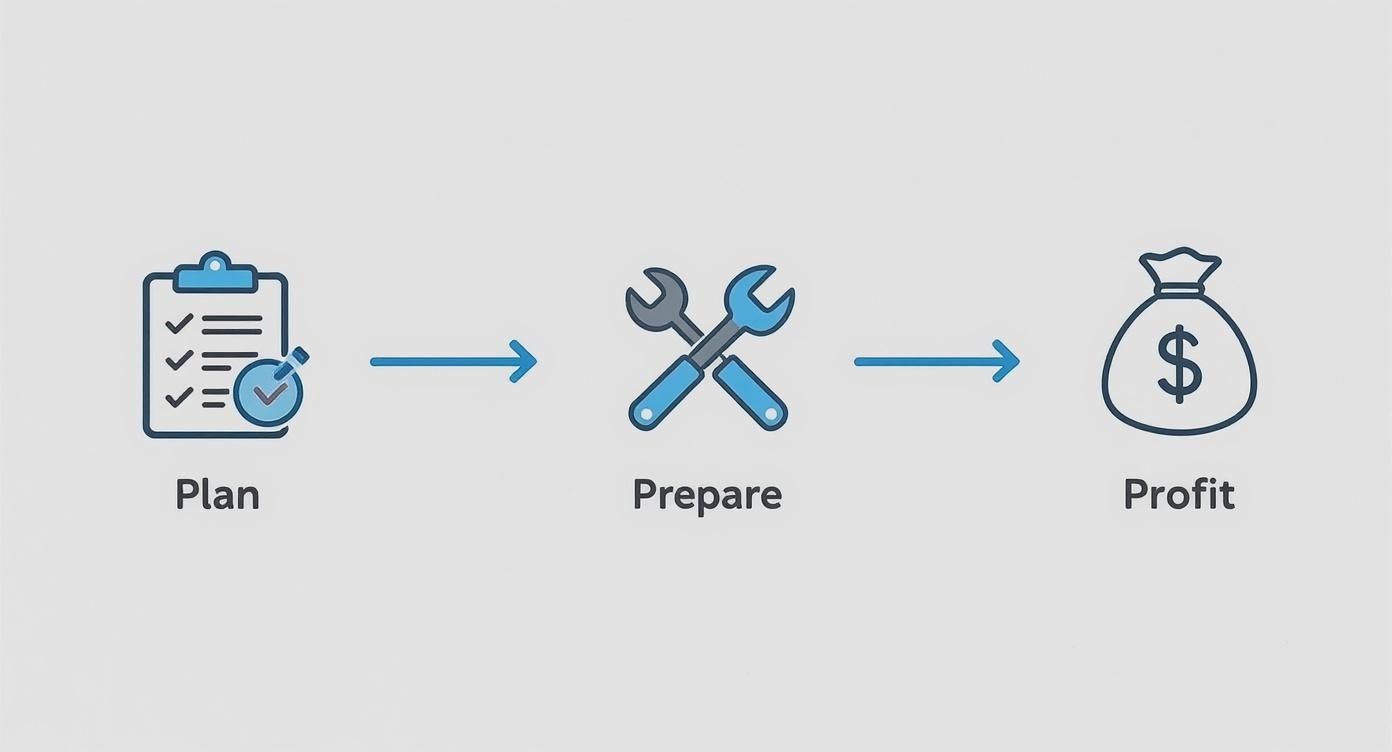
Profitability doesn't happen by luck. It comes from careful planning and preparation.
For homeowners in Carmel and Salinas, this means making your property a high-quality rental. A great home attracts responsible, long-term tenants. This protects your investment for years to come.
By focusing on preparation, you prevent problems before they start. This mindset is the key to stress-free landlording in the competitive Monterey Bay market.
If you are new to this, learning the basics is the best place to start. For more foundational knowledge, check out our guide on how Monterey Bay homeowners can profit from renting.
Your 2026 Landlord Checklist
Here is a quick summary of the essential steps. Think of this as your roadmap before putting up a "For Rent" sign.
| Phase | Key Action Item | Why It Prevents Headaches |
|---|---|---|
| Phase 1: Planning & Prep | Get the property rent-ready and set a competitive rent price. | A well-maintained home attracts better tenants and justifies your asking price. |
| Phase 2: Marketing & Screening | Create compelling listings and implement a thorough tenant screening process. | Great marketing shortens vacancy periods, while careful screening weeds out potential problems. |
| Phase 3: Leases & Compliance | Draft a solid lease and understand current California landlord-tenant laws. | A clear, legal lease is your best defense against future disputes and trouble. |
The following sections will walk you through each phase. We provide actionable advice tailored for our local market.
Getting Your Property Ready for High-Quality Tenants

Getting your home ready for renters involves more than a quick cleanup. Your goal is to attract responsible tenants who will care for your property. Nailing this first step is key to learning how to lease your home in 2026 without the headaches.
Let’s talk about what works for properties here in Monterey County. We will focus on smart improvements that give you the best return.
Start with an Inspection
Before you take photos, inspect your property thoroughly. A pre-listing inspection helps you find and fix issues early. This saves you from expensive problems later.
Many new landlords skip this step and regret it. Finding a slow leak or faulty wire now will save you stress and money. It also shows potential tenants that you are a responsible owner.
Prioritize High-Impact Updates
Not all improvements are equal. A full kitchen remodel is rarely worth it for a rental. Small, visible upgrades make a big difference in how tenants see your property.
Focus your budget on low-cost items that people notice right away. These updates signal that your property is well-maintained and can justify a higher rent.
Top ROI Improvements for Rentals:
- Fresh Paint: A neutral coat of paint makes a home feel clean and new. Stick to light, inviting colors.
- Updated Fixtures: Swap out dated light fixtures, faucets, and cabinet pulls. Modern options like brushed nickel or matte black instantly update a room.
- Professional Cleaning: This is a must. A deep clean includes windows, carpets, and appliances. A sparkling home shows professionalism.
- Curb Appeal: First impressions matter. Tidy the yard, clean the entryway, and make sure the front door looks welcoming.
A well-maintained property attracts better tenants. When a home looks cared for, it encourages residents to keep it that way.
Staging for Remote and Local Landlords
An empty house can feel cold. Staging helps people imagine themselves living there. This doesn't have to be expensive, even for out-of-area landlords.
You can coordinate simple staging from afar. Consider leaving neutral window treatments or using virtual staging for online photos. Help applicants see the property as their future home.
A smart approach to upkeep sets successful landlords apart. To build a better plan, read our guide on smart maintenance for your rental property.
Setting a Competitive Rent Price
Pricing your rent correctly is critical. If you price it too high, your home sits empty. If you price it too low, you lose money every month.
You need to stop guessing and start analyzing data. A comparative market analysis (CMA) is essential. It shows what similar properties in your Monterey County neighborhood are renting for right now.
Understand Your Market Value
To set a good price, you must look at "comps," or comparable listings. These are rentals that are similar to yours.
What to Look for in Comps:
- Location: Look at your specific neighborhood, not just the city. A home a few blocks away can have a different value.
- Size & Layout: Compare your 3-bed, 2-bath home to other 3-bed, 2-baths with similar square footage.
- Condition & Amenities: Be honest. Is your kitchen modern or dated? Factor in extras like a garage or fenced yard.
- Active vs. Rented: Look at what properties actually rented for. Listing prices are often just a starting point.
Setting the right rent is not a one-time task. The Monterey Bay market changes, so a local, data-backed approach is key to attracting good applicants quickly.
Avoid Common Pricing Mistakes
Many landlords let emotions guide their pricing. They calculate their mortgage and decide the rent needs to be a certain amount. But the market only cares about supply and demand.
Another mistake is overvaluing personal touches. A custom bookshelf might not convince a tenant to pay extra. Stick to the hard data from your CMA to find a price that is both competitive and profitable.
This step is too important to leave to chance. For a detailed breakdown, explore our guide on how to price your rental property.
Marketing Your Rental to Attract Top Applicants

Once your property is priced right and looks great, it’s time to advertise. A "For Rent" sign is not enough anymore. Your goal is to get many great applicants so you can choose the best one.
Mastering your digital first impression is key. This is a big part of how to lease your home in 2026 without the headaches. You are selling a lifestyle, and it starts with great marketing.
Craft a Compelling Online Listing
Your online listing is your property’s resume. It needs to tell a story and help tenants imagine living there.
Start with a catchy headline. Instead of "3 Bed/2 Bath House for Rent," try "Charming Carmel Home with Ocean Views."
In the description, be specific. Mention local perks like being near CSUMB or beautiful Monterey beaches. Highlight special features, like new appliances or a home office.
Why Professional Photos Are a Must
Poorly lit smartphone pictures get ignored. The quality of your photos and videos is everything.
Investing in professional photography is one of the best decisions a landlord can make. It's an investment that pays for itself with a shorter vacancy period and better tenants.
High-quality photos make your property look bright and spacious. They attract more views from serious people.
A virtual tour is even better. It is a game-changer for attracting tenants who are relocating. It lets them experience the home online and widens your applicant pool.
Choose the Right Listing Platforms
Be where tenants are looking. Your listing should be on Zillow, Trulia, and HotPads. These sites send your ad to a huge network.
Don't stop there. Other channels can also help you find great tenants:
- Facebook Marketplace: A popular spot for local renters.
- Military Housing Websites: Sites like AHRN.com are great for reaching military families if your home is near a base.
Managing inquiries can be a lot of work. Use a dedicated email address to stay organized and respond quickly. Fast replies show you are a responsive landlord. For more tips, read these proven, click-worthy tips for marketing rental properties.
Marketing your rental is a big job. Our expert tenant placement services handle everything for you. We take care of photos, marketing, and screening to find the best tenant without the stress.
Airtight Tenant Screening and Lease Agreements

After your marketing brings in applicants, the real work starts. Screening tenants and drafting the lease is where you prevent most future headaches. This step protects your investment.
Relying on a gut feeling is a gamble. A consistent and legal screening process is your best defense. This is the foundation of learning how to lease your home in 2026 without the headaches.
A Fair and Thorough Screening Process
A strong screening process is about verification. It helps you confirm an applicant's reliability using objective data.
Consistency is key. You must apply the same criteria to every applicant to comply with Fair Housing laws.
Your Screening Checklist Should Include:
- Credit Check: This shows a person's history of paying debts on time.
- Criminal Background Check: This helps ensure the safety of your property and the neighborhood.
- Income Verification: Call the employer to verify income. An applicant's income should be at least three times the monthly rent.
- Rental History: Call their past landlords. Ask if they paid on time and maintained the property.
The goal is to find a reliable tenant, not a perfect one. Screening helps you make an informed decision that protects your asset.
Crafting a Rock-Solid Lease Agreement
Once you find your tenant, the lease is your most important document. A generic online template is risky. Your lease must be specific to California law and your property.
A strong lease does more than state the rent amount. It sets clear expectations and is the legal backbone of your relationship with the tenant.
Must-Have Clauses for Your California Lease
To make sure your agreement is solid, you need to understand how to draft effective contracts. For any rental in Monterey County, your lease must address specific state and local rules.
Essential Lease Provisions:
- Rent and Fee Policies: Clearly state the rent amount, due date, payment methods, and late fee policies.
- Maintenance Procedures: Outline how a tenant should submit a maintenance request.
- Property Rules: Be explicit about rules on noise, guests, and parking.
- Pet Policy: Use a detailed pet addendum specifying the type, breed, and size of allowed animals.
- Landlord's Right to Enter: State your right to enter the property for inspections or repairs with proper notice.
Navigating these legal documents can be tough. For a deeper dive, check our guide to California landlord-tenant laws. Taking time now to perfect your screening and lease will save you countless problems.
DIY vs. Torrente Property Management
Deciding to manage the leasing process yourself or hire a professional is a major choice. The DIY approach can seem cheaper, but mistakes can be very costly. Here’s a comparison.
| Leasing Task | DIY Approach (Potential Headaches) | Torrente's Professional Solution |
|---|---|---|
| Tenant Screening | Using generic online checks and inconsistent criteria, which can miss red flags and violate Fair Housing laws. | We use a rigorous screening process with direct landlord and employer verification, ensuring full legal compliance. |
| Lease Drafting | Using a template that misses crucial California-specific clauses, leaving you open to legal disputes. | Our attorney-reviewed leases are tailored to your property and current Monterey County laws, protecting you from pitfalls. |
| Legal Compliance | Trying to keep up with changing landlord-tenant laws. A single mistake can lead to fines. | We are experts in local and state regulations, including 2026 changes, ensuring your process is always compliant. |
| Time & Stress | Juggling applications, calls, background checks, and legal research can be a full-time job. | We handle every detail, from marketing to move-in, saving you time and giving you peace of mind. |
The choice depends on your experience, time, and comfort with risk. For many owners, the value of having our dedicated, bilingual team manage these high-stakes tasks is worth it. It’s about securing a successful, long-term investment.
FAQs: Leasing Your Home in 2026
Here are answers to common questions from homeowners across Monterey County.
How much rent can I charge for my home?
Setting the right rent is a science, not a guess. It depends on your home's location, size, and condition. A professional comparative market analysis (CMA) is the only way to find a price that attracts great tenants without leaving money on the table. For example, 3-bedroom homes in Monterey County can rent for over $5,000 per month, so data-driven pricing is key.
What is the biggest mistake first-time landlords make?
The biggest mistake is poor tenant screening. Relying on a "gut feeling" often leads to late rent, property damage, or eviction. A consistent, data-driven screening process that verifies income, credit, and rental history is the best way to find a reliable, long-term tenant.
Do I need a property manager for just one rental?
While not required by law, a professional property manager can be a game-changer. This is especially true if you live out of the area or lack the time to manage it yourself. A manager handles everything from marketing to maintenance, turning your property into a source of passive income and giving you peace of mind.
How do I handle maintenance if I live out of town?
For remote landlords, this is a huge challenge. A local property manager is the perfect solution. They provide tenants with a 24/7 emergency contact and have a network of trusted vendors ready to handle repairs quickly and affordably.
Are virtual tours necessary to lease my home?
Yes. In today's market, a high-quality virtual tour is an essential marketing tool. It opens your property to a wider pool of applicants, including military families and relocating professionals, and helps you lease your home much faster.
If you’re preparing to rent out a home in Monterey, Carmel, or Salinas in 2026, the right partner can make all the difference. The team at Torrente Property Management offers local expertise, proven strategies, and stress-free leasing support to protect your investment. Contact us today at (831) 582-8916 to learn more about our services.