
Direct Answer: For a 4 to 20 unit building in Monterey County, walk the exterior and common areas quarterly, with the fall visit before the first rain. Unit interiors get seen once or twice a year.
A long time tenant in the Monterey Bay area once wrote in about a rental she had lived in for years. The owner had let the landscaper go about twelve months earlier, said he would replace him, and never did.
By the time she put it in writing, the grounds were overgrown, the irrigation system was broken while the water bill kept running, poison oak had taken hold, and ground squirrels had tunneled under the patio areas. She was worried the fire department would show up over defensible space.
None of that happened overnight. It happened because nobody walked the property on a schedule. This article covers one question only: how often someone should physically walk your Salinas apartment building, who should do it, and what a real walk actually covers.
The three layers owners tend to blur together
When an owner tells me they “check on the building,” they usually mean they drove past it. That is one layer out of three, and it is the easiest one.
A real walk breaks into three separate jobs:
- Exterior and common areas. Roof edges, gutters and downspout discharge, siding, site drainage, stairs and railings, exterior lighting, parking areas, and the trash enclosure.
- Building systems. Water heaters, shared plumbing runs, sub area moisture under raised floors, and electrical panels.
- Unit interiors. The hardest layer to access, the least frequently seen, and the one where small leaks quietly become dry rot.
Most 4 to 20 unit buildings in Salinas and Seaside get layer one a few times a year by accident, layer two when something breaks, and layer three almost never.
That gap is where the money goes. A downspout dumping against a foundation costs nothing to redirect in October. The same downspout costs a framing repair by March.
It also helps to be clear on who is actually responsible for each of these layers, because owners, managers, and vendors each own a different piece and things fall through the seams.
A cadence that works for a 4 to 20 unit building
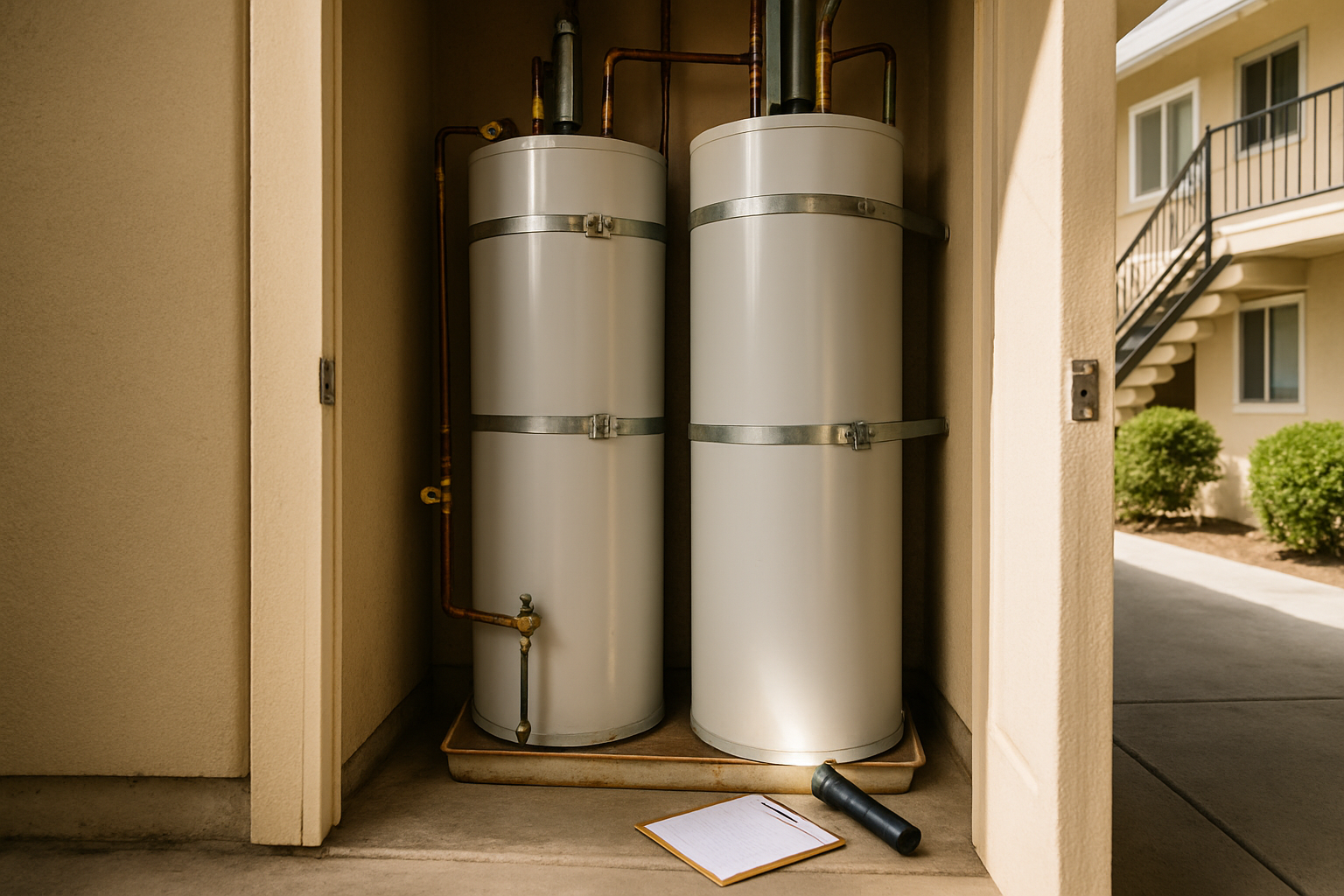
Here is the rhythm I would run on a small multifamily building anywhere from Salinas to Marina: exterior and common areas every quarter, four times a year. Building systems get looked at on the same visits, with a closer pass in late fall and again in spring.
The fall walk is the one that carries the most weight. It needs to happen before the first real rain, which on the Central Coast usually means booking it in October, not waiting until the forecast turns.
This fall that timing matters more than usual. NOAA’s Climate Prediction Center has carried an El Nino Advisory with better than 90 percent odds of a very strong event for fall and winter 2026-27, and a strong El Nino historically tilts California toward a more active storm track.
Read that as planning, not alarm. The gutter, downspout, drainage, dry rot, and water heater items on a fall walk are the exact items that turn into insurance claims after a wet January.
One thing a quarterly walk does not cover: exterior elevated element inspections. SB 721 requires a qualified inspection of balconies, landings, and elevated walkways at buildings with three or more units, AB 2579 pushed the first deadline to January 1, 2026, and repeat inspections run on a six year cycle. That is a separate legal requirement with its own schedule.
Inspection cadence at a glance
This is the schedule I would hand an owner with a 12 unit building in Salinas. Adjust for building age, roof age, and how much deferred work is already on the list.
| Layer | How often | What gets checked | Best timing |
|---|---|---|---|
| Exterior and common areas | Quarterly | Roof edges, gutters, downspout discharge, siding, drainage, stairs and railings, lighting, parking, trash area | Fall visit lands before the first rain |
| Building systems | Quarterly, closer pass twice a year | Water heaters, shared plumbing, sub area moisture, electrical panels | Late fall and spring |
| Unit interiors | Once or twice a year | Smoke and CO detectors, under sink leaks, moisture staining, unreported damage | Batched over one or two weekdays |
| Balconies and elevated walkways | On the SB 721 cycle, not the quarterly walk | Structural review by a qualified inspector | Per the statutory deadline and every six years after |
What the fall walk actually covers
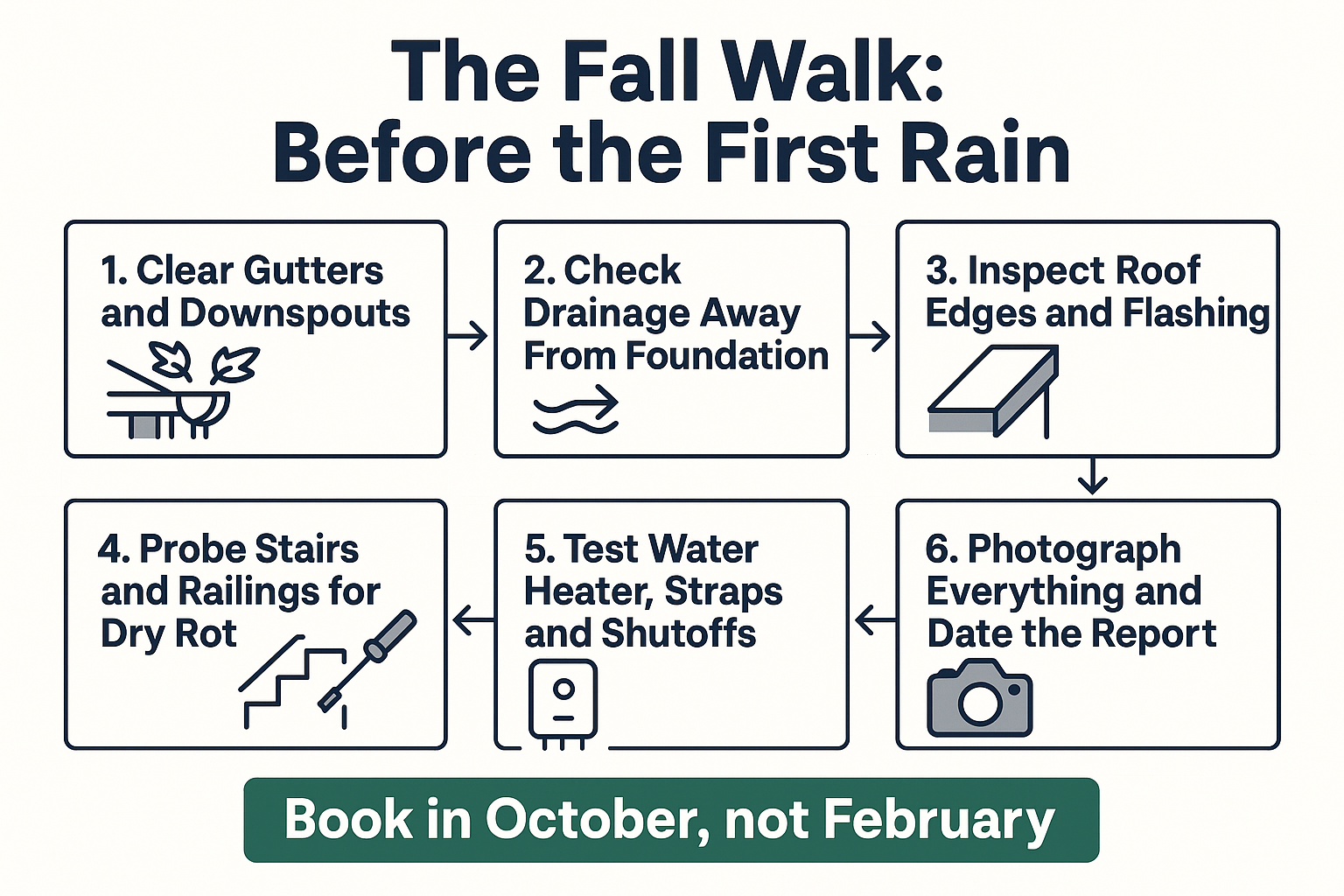
The October pass is the highest value walk of the year on the Central Coast. These are the items I want photographed before the first storm.
Unit interiors are where owners get tripped up legally
This is the part owners get wrong most often, and it is worth being careful about.
Under California Civil Code 1954, a landlord generally needs to give 24 hours of written notice before non emergency entry. The notice has to state the date, the approximate time, and the purpose, and entry is normally limited to regular business hours on weekdays.
Just as important: a routine “let me look around” inspection is not a standalone permitted purpose under the statute. Interior visits usually have to ride along with something legitimate, such as:
- An agreed repair or maintenance call
- A smoke and carbon monoxide detector check
- A showing to a prospective tenant or contractor
- The tenant’s own agreement to the visit
That sounds restrictive, and it is why so many owners simply stop going inside. Three years pass and nobody has seen unit 6.
A manager gets around the problem with logistics, not loopholes. We batch the whole building into one or two scheduled weekdays, send proper written notices to every unit, pair the visit with detector checks and any open work orders, and knock out all twelve interiors in a week. In a Salinas building where some households speak Spanish at home, those notices go out in both languages so nobody is surprised at the door.
Why inspections are where the return is this year
Rent growth is not doing the work for anyone this cycle. Market trackers put average apartment rent in Salinas somewhere around $2,350 and Monterey near $2,795, both up less than one percent year over year, with some readings showing Monterey flat to slightly down.
You cannot raise the ask to pay for a deferred roof. So the return this year comes from three places:
- Damage caught in October instead of February, before it becomes a claim with a deductible and a displaced tenant
- Turnover you never pay for, because tenants who see the building being cared for tend to renew
- Vendor work scheduled instead of dispatched, since emergency rates on a Saturday in January cost real money
That last point compounds. A slow unit turn already carries a heavy price in lost rent, and an emergency repair mid tenancy is the same math with worse timing.
Winter is also the honest window for this work. Turnover is low from November through February on the Peninsula, which makes it the right stretch for inspections and capital planning rather than leasing sprints.
And when a unit sits empty between tenants, the walk schedule should not pause. Vacant space hides problems the same way an unoccupied home in Monterey Bay does.
Documentation is what turns a walk into an asset
A walk with no record is just a memory. A dated photo record of the roof, the drainage, the water heater, and the common areas is what makes the routine worth paying for.
That record gives you three things:
- A baseline for an insurance claim, showing condition before the storm
- A defensible timeline if a habitability complaint ever surfaces
- A real capital plan instead of a guess about when the roof goes
For Salinas owners, the paperwork carries extra weight. The city runs a residential rental registration program, and buildings constructed before February 1, 1995 sit in the rent stabilized tier with a higher per unit registration fee.
When your units are rent stabilized and registered, planned capital work and clean condition records stop being an afterthought and become part of the operating picture. Fees and requirements change, so confirm current details with the city directly.
One more practical note on who does the walking. A driveby by a family member is not an inspection, and a resident manager has a different role entirely, which is worth understanding if your building is near the size where on site staffing rules apply.
Frequently Asked Questions About Apartment Building Inspections in Monterey County
How often should someone actually walk a small apartment building?
For a 4 to 20 unit building, quarterly for exterior and common areas is the practical standard, with the fall walk scheduled before the first rain. Unit interiors get seen once or twice a year, batched into a scheduled day or two with proper notice.
Can I inspect a tenant’s unit whenever I want?
No. California Civil Code 1954 generally requires 24 hours of written notice stating the date, approximate time, and purpose, and limits entry to normal weekday business hours. A general look around is not a standalone permitted purpose, so interior visits usually need to accompany a repair, a detector check, a showing, or the tenant’s agreement.
Does a quarterly walk satisfy the balcony inspection requirement?
It does not. SB 721 inspections of exterior elevated elements at buildings with three or more units are a separate legal requirement performed by a qualified inspector on their own multi year cycle. A routine walk can flag obvious rot or a soft landing, but it is not a substitute for the statutory inspection.
I live out of the area. What should I expect to receive after each walk?
At minimum, a dated photo report covering the roof and gutters, the drainage, the water heater, the stairs and railings, and the common areas, plus a short list of what needs attention now versus what to budget for. Without photos, you are relying on someone’s memory a year later.
What happens if nobody inspects on a schedule?
The tenant becomes your inspection system by default. Tenants report problems late, incompletely, and usually after the problem has gotten expensive, which is exactly how a dropped landscaper turns into overgrown grounds, a broken irrigation line, and a defensible space worry a year later.
Want a walk schedule your building actually gets?
Our team runs a quarterly inspection routine and sends the owner a photo documented report four times a year, which is the kind of coverage out of area and hands off multifamily owners in Monterey County rarely get from a national firm. Broker owner Aurelia Torrente has spent more than 25 years in Monterey County real estate, holds the Accredited Residential Manager designation, and our team works in English and Spanish, which matters when entry notices and maintenance coordination have to reach every tenant in a Salinas building. As one owner put it in a review, “Whenever maintenance issues came up, their coordination and follow-through were timely and effective.” If you want to talk through a cadence for your property, we are reachable at (831) 582-8916 or through the contact form at torrenteproperties.com.