
Direct Answer: You can charge pet rent monthly and require a pet deposit, but any pet deposit counts inside California’s one month security deposit cap. Assistance animals cannot be charged either one.
Roughly one in twelve rental inquiries that reach our contact form bring up a pet before anyone asks about it. People list their dog’s weight, their cat’s age, and their references in the same sentence, almost apologizing. One household relocating to the Monterey and Pacific Grove area flagged that they needed pet friendly before asking about price or availability.
That tells me something owners should pay attention to. Pet owners in this market screen themselves out, which quietly shrinks your applicant pool before the first showing ever happens.
So the real question is not whether pets are a hassle. It is what a pet policy costs you in vacancy, what California actually lets you charge, and where the legal lines sit. That is what I want to walk through here.
A no pets rule is really a vacancy decision
Rents around Monterey Bay have gone mostly sideways. Apartment averages in Salinas have been sitting somewhere in the mid $2,000s, with Monterey running in the high $2,000s, and year over year movement under one percent in recent market reporting. Figures shift by unit and submarket, so treat those as context rather than a price for your property.
What that flat picture means is simple. You are not going to improve your return by asking for more rent.
Returns come from two places instead:
- Filling the unit faster
- Keeping a good tenant longer
- Avoiding a second turnover you did not plan for
I have watched a no pets rule add real weeks to a lease-up on a single family home in Seaside or Marina, where families with dogs make up a big slice of the demand. Three extra weeks of vacancy on a home renting in the high $2,000s usually costs more than replacing the carpet you were protecting.
If you want a sense of the normal timeline before you narrow your pool further, our breakdown of how long it takes to rent out a Monterey Bay home lays out the weeks involved.
What the one month deposit cap left room for
This is where I see owners get it wrong most often. Since July 1, 2024, the total security deposit for most residential tenancies in California is capped at one month’s rent.
That cap covers everything you collect up front as a deposit. A pet deposit is not a separate bucket that sits on top of it. It has to fit inside the same one month ceiling.
So if you rent a Monterey home at $3,000 and want to hold $500 against pet damage, your general deposit drops to $2,500. The total does not change.
There is a narrow exception. Certain small owners who are natural persons with limited holdings may collect more, and that exception does not apply when the tenant is a service member. In a market with tenants from the Presidio of Monterey and the Naval Postgraduate School, that matters more here than it does in most of California.
I am not rehashing general deposit rules in this piece. If you want the full picture, our guide to what Monterey Bay landlords can collect now covers it. The question here is narrower: once the cap is applied, how much room is actually left for pet risk? Usually less than owners assume.
Pet rent works differently than a pet deposit
Pet rent is a recurring monthly charge, not money you hold in trust for the tenant. Because it is rent and not a deposit, it does not count against the one month cap.
Two conditions come with that. It has to be written into the lease in plain language, and it has to be applied the same way to every applicant.
I am not going to quote a dollar figure for the Monterey Peninsula, because the right number depends on the property. What drives it:
- Flooring type. Carpet carries more risk than tile, vinyl plank, or sealed hardwood.
- Yard condition. A fenced yard with established landscaping is a different exposure than a bare side lot.
- Unit size and layout. A three bedroom house absorbs a dog differently than a small second floor unit.
- What comparable listings are asking. Pacific Grove, Salinas, and Carmel do not price the same way.
One warning worth bolding. Calling a move in charge “nonrefundable” does not make it nonrefundable under California rules. If the money functions as a deposit, it gets treated as one, cap and all, and you will owe an accounting at move out. Pet rent charged monthly is the cleaner structure.
If you are unsure where your property sits in the market, how rental prices actually get set here explains the comparison work behind the number.
Pet charges and where they land
Here is the quick reference I give owners when they ask what they can actually collect.
| Charge type | Counts inside the one month cap? | What owners should know |
|---|---|---|
| Pet deposit | Yes | Reduces the general deposit dollar for dollar. Must be accounted for at move out. |
| Pet rent (monthly) | No | Recurring charge, not held in trust. Must be stated in the lease and applied consistently. |
| “Nonrefundable” pet fee | Usually treated as a deposit | The label does not control. If it functions as a deposit, it falls under the cap. |
| Assistance or support animal | No charge allowed | Not a pet under the law. No pet rent, no pet deposit, no breed or weight exclusion. |
| Damage caused by any animal | Charged against the deposit | Requires documented move in condition to support the deduction. |
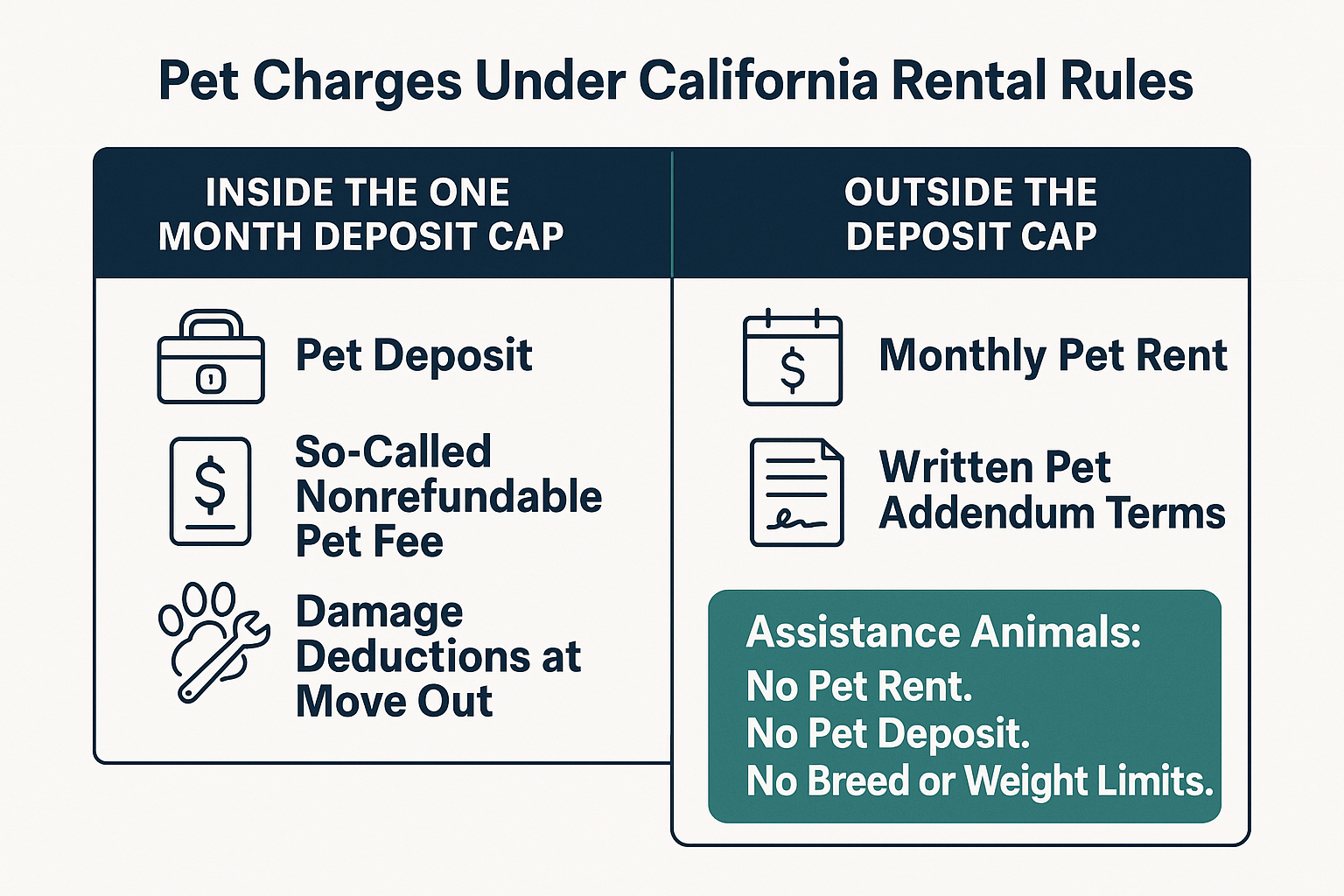
Pet charges at a glance
This breaks down which pet charges sit inside California’s deposit cap and which do not.
Assistance animals are not pets, and that line matters
This is the mistake that turns into a fair housing complaint, and it happens to well meaning owners.
A service animal or a documented support animal is not a pet under the law. That means:
- No pet rent and no pet deposit
- No breed restriction and no weight limit
- No blanket “no animals” denial
The tenant still stays responsible for any damage the animal causes. You can document condition, and you can deduct for real damage at move out using the standard deposit process.
What you cannot do is price the animal differently or screen it out on breed. The protection that works best here is boring and simple: a written pet policy applied the same way to every applicant, with the assistance animal exception stated in it. Consistency is what holds up if anyone ever questions a decision.
One bill worth watching, not following yet
A bill moving through the Legislature this session, SB 1296, would change how pet terms get disclosed. As written, it would require owners who do not allow pets to say so clearly in advertising and rental documents, and would require pet addenda to itemize upfront fees, refundable deposits, and monthly pet rent separately.
The proposed operative date is April 1, 2027. It had not become law as of this summer, so treat it as something to track rather than a rule to follow. You can read the official bill text on the California Legislature’s site.
The practical takeaway is reassuring. Owners who already spell out their pet terms in writing will not have to change much of anything if it passes.
The part self-managing owners skip: documentation
Applicants with animals tend to lead with their credentials. A version of “we have great credit and excellent references” shows up in inquiry after inquiry, and it is often true.
But good references at move in do not protect you at move out. Records do.
Three things make the difference:
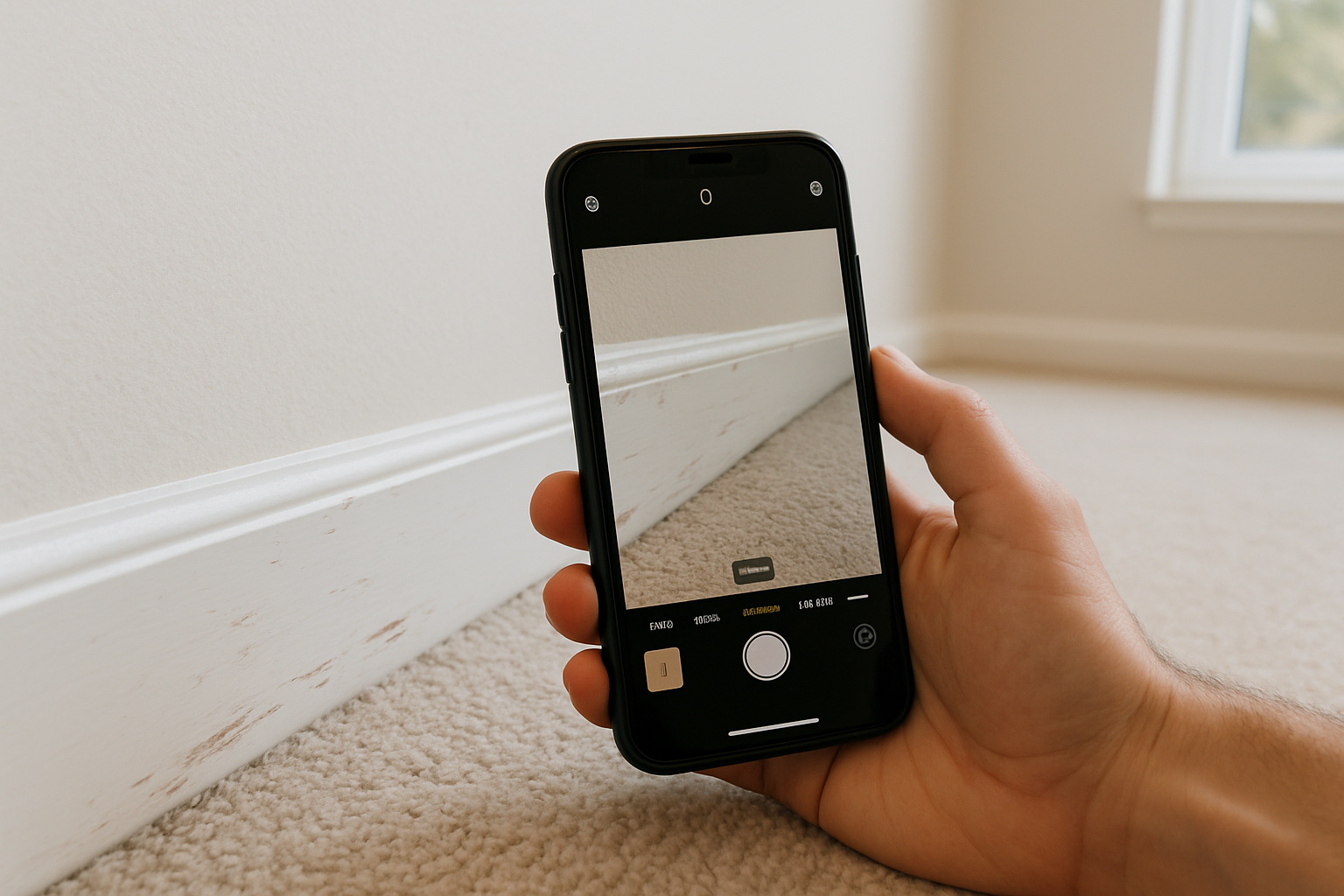
- A detailed move in condition report with photos, room by room, including flooring, baseboards, doors, and yard
- A pet addendum that names the specific animal, not just “one dog,” so a swapped or added pet is obvious
- A move out inspection compared against that same record, not against memory
Our team runs move in and move out inspections with photo documentation on the properties we manage. That file is usually the entire difference between a clean deposit accounting and a six week argument over carpet.
If you want the deduction side in more detail, we covered what owners must document after move-out separately.
Frequently Asked Questions About Pet Policies in Monterey Bay Rentals
Can I charge a pet deposit on top of the regular security deposit?
No. Since July 1, 2024, the total collected up front is capped at one month’s rent for most residential tenancies. A pet deposit has to fit inside that number, not sit on top of it.
Is pet rent legal in California?
Yes, when it is written into the lease and applied consistently. Because it is a recurring monthly charge rather than money held in trust, it falls outside the deposit cap. Just do not use it to price one applicant differently than another.
What if a tenant shows up with an emotional support animal after signing a no pets lease?
A documented support animal is not a pet, so a no pets clause does not apply to it. You cannot charge pet rent or a pet deposit for it, and you cannot exclude it by breed or weight. The tenant is still on the hook for damage the animal causes, which is exactly why your move in photos matter.
Does allowing pets actually help me rent faster in Salinas or Marina?
In my experience, yes, especially for single family homes with yards. A pet friendly listing pulls from a much larger pool, and with rents flat across the area, filling the unit sooner is one of the few levers you have left.
How do I charge for pet damage without a fight?
Photograph everything at move in, name the specific animal in a pet addendum, and compare the move out walkthrough against that same record. Normal wear is not chargeable, but documented damage usually is.
Thinking through a pet policy for your property?
Every property in Monterey County handles animals differently, and the right answer for a Carmel condo is not the right answer for a Marina house with a fenced yard. If you would like a second opinion on your pet terms, your lease language, or your move in documentation, our team is reachable at (831) 582-8916 or through the contact form at torrenteproperties.com. No pressure either way.