Direct Answer: As of January 1, 2026, California law requires landlords to provide working stoves and refrigerators in rental units. Any lease signed, renewed, or amended after that date must meet this standard.
For most of the time I’ve been working with landlords in Monterey County, appliances were a handshake deal. Some owners included them, some didn’t, and both approaches were legally fine. That changed on January 1, 2026.
Assembly Bill 628 moved working stoves and refrigerators into California’s legal definition of a habitable rental unit. It is no longer a courtesy or a marketing decision, it is a compliance requirement. And if you own rental property in Salinas, Seaside, Marina, or anywhere else in Monterey County, the timing of when this applies to you depends on your lease situation right now.
This article walks through what the law actually requires, the one narrow carve-out that exists, and why the appliance recall provision is the piece most out-of-area owners are going to miss.
What AB 628 Actually Changed, and When It Applies to Your Lease
Before AB 628, California’s habitability standards required things like weatherproofing, plumbing, heating, and working electrical systems. Appliances were not on that list. Landlords could rent a unit without a stove or fridge and remain fully compliant, as long as the tenant knew upfront.
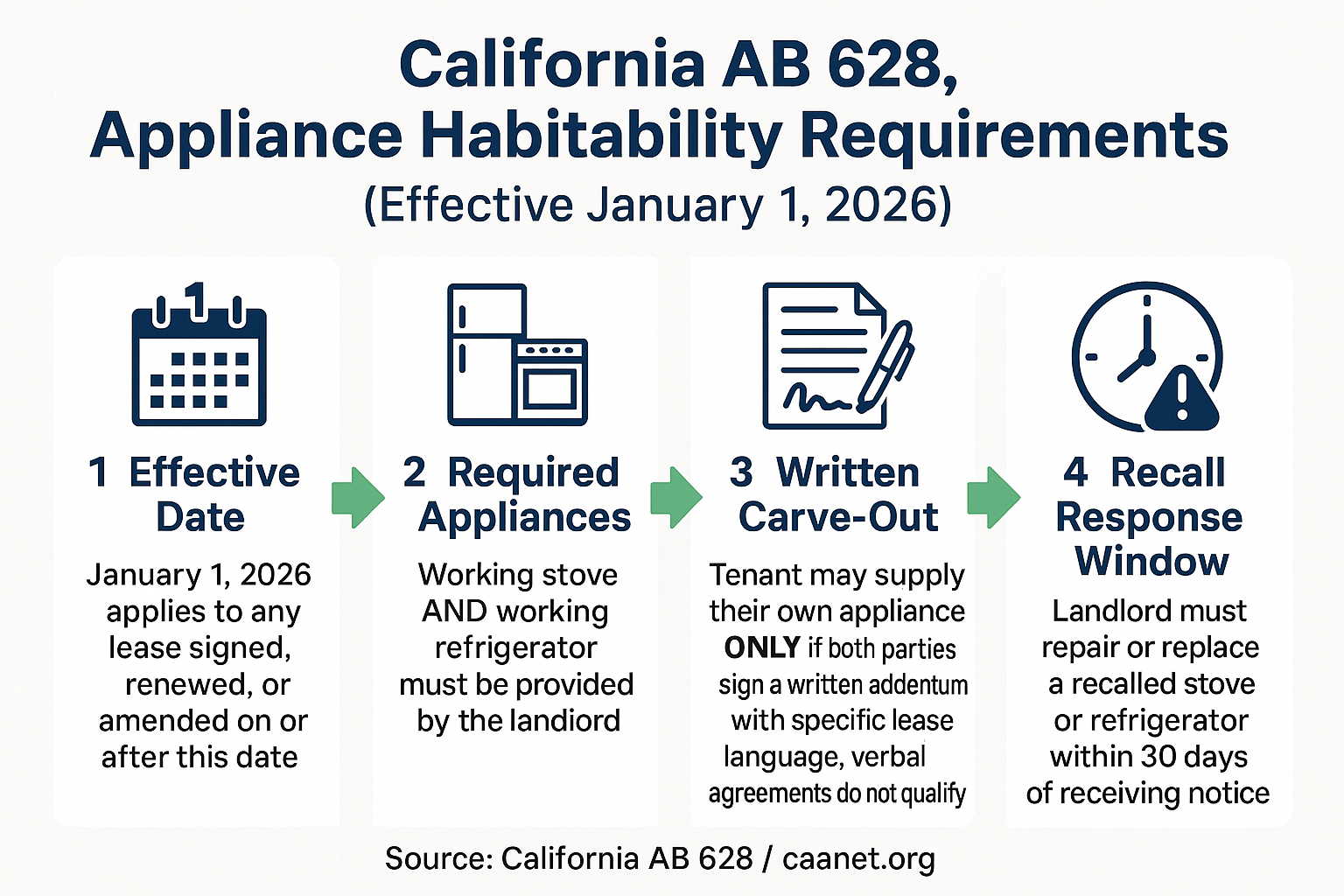
That gray area is gone. A working stove and a working refrigerator are now legally required components of a habitable unit under California Civil Code. For a fuller breakdown of how California habitability law changed in 2026, the key threshold is simple: the obligation attaches to any lease that is entered into, amended, or extended on or after January 1, 2026.
If you have a tenant mid-lease and nothing has changed, you may not be obligated yet, but the moment that lease renews or you sign any kind of amendment, the requirement kicks in. I’ve already spoken with several Salinas landlords who assumed their older leases were untouched by this law. Most of them have renewals coming up in 2026, and they need to be ready.
The California Apartment Association’s 2026 compliance update confirmed the law’s scope and introduced a new Refrigerator Request Addendum form for situations where a tenant voluntarily provides their own appliance. That form matters, more on that below.
The Written Carve-Out, and Why Verbal Agreements Don’t Work Anymore
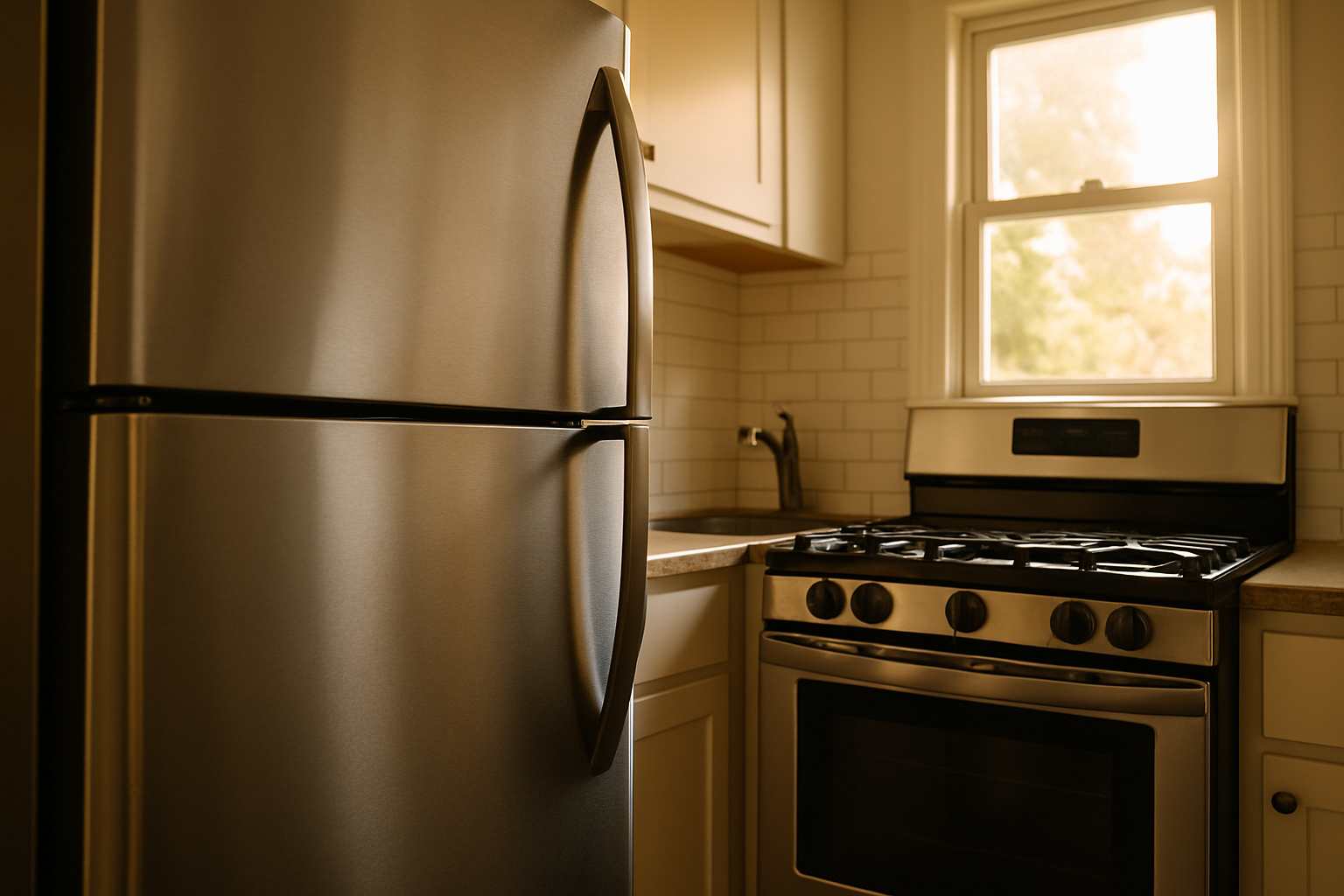
There is one way out of the appliance requirement: a mutual written agreement between the landlord and tenant stating that the tenant will supply their own refrigerator or stove. But the agreement has to be documented in the lease itself, with specific language that makes the arrangement clear.
Verbal understandings don’t count. An email from three years ago doesn’t count. If it isn’t in the signed lease with language that satisfies AB 628, the landlord is still on the hook.
I’ve seen this exact situation come up with older multifamily units in Salinas and some aging single-family rentals in Seaside. The prior arrangement was informal, owner bought the house without appliances, tenant moved in knowing that, and everyone was fine with it for years. When that lease renews now, the landlord either needs to provide the appliances or get a properly documented waiver into the new lease before signing.
If you’re not sure whether your current lease language satisfies the new requirement, reviewing it before the next renewal is the right move. This is exactly the kind of detail that gets missed when owners are managing from out of the area, something I write about in more depth in how out-of-area owners actually manage a Monterey Bay rental.
AB 628 at a Glance: What Monterey County Landlords Need to Know
Here is a quick reference for the key obligations and deadlines under AB 628.
The 30-Day Recall Rule Is the Part Most Remote Owners Will Miss
This is the provision I think about most when I work with owners who live outside the area. AB 628 requires landlords to repair or replace a recalled stove or refrigerator within 30 days of receiving notice of the recall.
Appliance recalls are not rare. Manufacturers issue them regularly for gas range ignition failures, refrigerator compressor issues, fire risks, and other defects. If a notice goes to the rental unit address and the tenant doesn’t forward it, or goes to an old owner address, the 30-day clock can start without the owner even knowing.
For a landlord in the East Bay or out of state managing a Salinas rental remotely, 30 days is a short window. Finding a licensed appliance technician or coordinating a replacement, ordering the unit, and scheduling delivery can eat up most of that time even when things move quickly.
What this practically means: appliance maintenance should now be tracked as a compliance item, not just a service request. A tenant living in a unit where the stove or refrigerator fails has grounds to raise a habitability claim if the landlord doesn’t act. That is a much more serious situation than a maintenance complaint used to be. If you want to understand how habitability failures interact with broader landlord obligations in California, the section on raising rent in 2026 has useful context on how compliance gaps can affect your options as a landlord.
AB 628 Quick Reference: Before and After the Law
This table summarizes what changed for California landlords on January 1, 2026.
| Situation | Before January 1, 2026 | After January 1, 2026 |
|---|---|---|
| Renting a unit without a stove or fridge | Permitted, no habitability violation | Not permitted unless written waiver is in the lease |
| Tenant supplies their own appliance | Informal agreement acceptable | Requires signed written addendum with specific lease language |
| Appliance recall received | No mandatory repair timeline | Landlord must repair or replace within 30 days of notice |
| Mid-lease with existing tenant | Not affected yet | Obligation attaches at next renewal or lease amendment |
| Appliance failure during tenancy | Maintenance request, not a legal obligation | Must be repaired, landlord has habitability liability if ignored |
What This Means for Older Rentals in Salinas, Seaside, and Marina
The owners most likely to run into AB 628 problems mid-tenancy are those with older rental stock. Aging single-family homes in Seaside, older multifamily units in Salinas, and 1970s-era apartments in Marina often have appliances that are well past their expected lifespan.
When a 15-year-old refrigerator gives out in the middle of July, it was always a problem. Now it is also a habitability issue with a legal time clock attached. The tenant doesn’t have to be flexible while the owner researches options.
For owners managing properties from a distance, I think the honest answer is that this law raises the bar for how closely you need to track appliance condition. It is one more reason that regular inspections, not just responding when something breaks, matter more than they used to. Our Seasonal Property Maintenance Program is built around exactly that kind of proactive tracking, including appliance condition checks during quarterly walkthroughs.
And if you have been self-managing a property while weighing whether to bring in help, appliance compliance is a reasonable moment to take stock of what you are tracking on your own, and what might be slipping through. When self-managing stops making sense is a useful read if you are at that point.
Frequently Asked Questions About AB 628 and Rental Appliances in California
Does AB 628 apply to leases that were already signed before January 1, 2026?
If the lease has not been renewed or amended since January 1, 2026, the requirement has not attached yet. But the moment the lease renews, even a standard annual renewal, the new law applies. Owners with long-term tenants should not assume their older lease insulates them indefinitely.
What counts as a ‘working’ stove or refrigerator under the law?
The appliance needs to be functional, burners that heat, a refrigerator that maintains safe food storage temperatures. A unit with a broken burner or a fridge that runs warm is not compliant. The standard is basic functionality, not brand new or cosmetically perfect.
Can I just raise the rent to cover the cost of adding appliances?
Rent increases are governed by separate rules, and in some Monterey County cities those rules are more restrictive than others. Adding appliances is a cost you may absorb or build into pricing going forward, but it cannot be treated as a standalone justification for an immediate mid-lease rent increase in most situations. The article on raising rent in 2026 covers what the current rules actually allow.
What if a tenant damages the stove or refrigerator, am I still required to replace it?
Tenant-caused damage is different from normal wear and the landlord’s habitability obligation. If a tenant breaks an appliance through misuse, that is a cost that can be charged back to the tenant through the security deposit or other means. But the unit still needs a working appliance, you cannot leave the unit without one while the dispute is sorted out.
I own a fourplex in Salinas. Does this law apply to all my units?
Yes. AB 628 applies to residential rental units regardless of the property type, single-family homes, condos, duplexes, and multifamily buildings are all covered. For multifamily owners in Salinas who are also navigating the city’s Rental Registration Program, it is worth confirming that appliance compliance is reflected in your unit records.
Questions About How AB 628 Applies to Your Rental?
If you own rental property in Monterey County and you are not sure whether your current leases and appliances meet the new standard, we are happy to talk through your situation. Our team works with owners across Salinas, Seaside, Marina, Pacific Grove, and the broader Monterey Bay area every day, including many who manage their properties from out of state. Reach us at (831) 582-8916 or through the contact form at torrenteproperties.com.