
Real Estate Management in Salinas: Your Expert Roadmap
Turning your Salinas property into a successful rental investment starts with a clear plan. It's more than just collecting rent; it's about smart market knowledge, good tenant relationships, and understanding local laws. This guide is your roadmap to walk you through each step, from getting the property ready to managing daily operations.
Your Foundation for Salinas Real Estate Success
For new investors or landlords feeling overwhelmed, the Salinas real estate market can seem complex. Real success is a process that needs local know-how, a solid plan, and consistent effort. It's about turning your property into a profitable, well-run rental business.
This guide comes from our direct experience managing properties across Monterey County. According to the U.S. Census Bureau, over 47% of households in Salinas are renters, showing a strong demand for quality rental homes. We want to help you master the basics to build long-term success.
First, Understand the Local Landscape
The Salinas market is unique. Recent data shows the average home value is around $738,764, a 2.9% increase over the past year. Properties here often go under contract in about 14 days.
But while nearly 34% of homes sell above their list price, 47.5% sell below it. This shows a competitive market where pricing and presentation are key. You can explore more market trends on platforms like Zillow.
This is our expert property management roadmap, showing the steps from analysis to financial reporting.
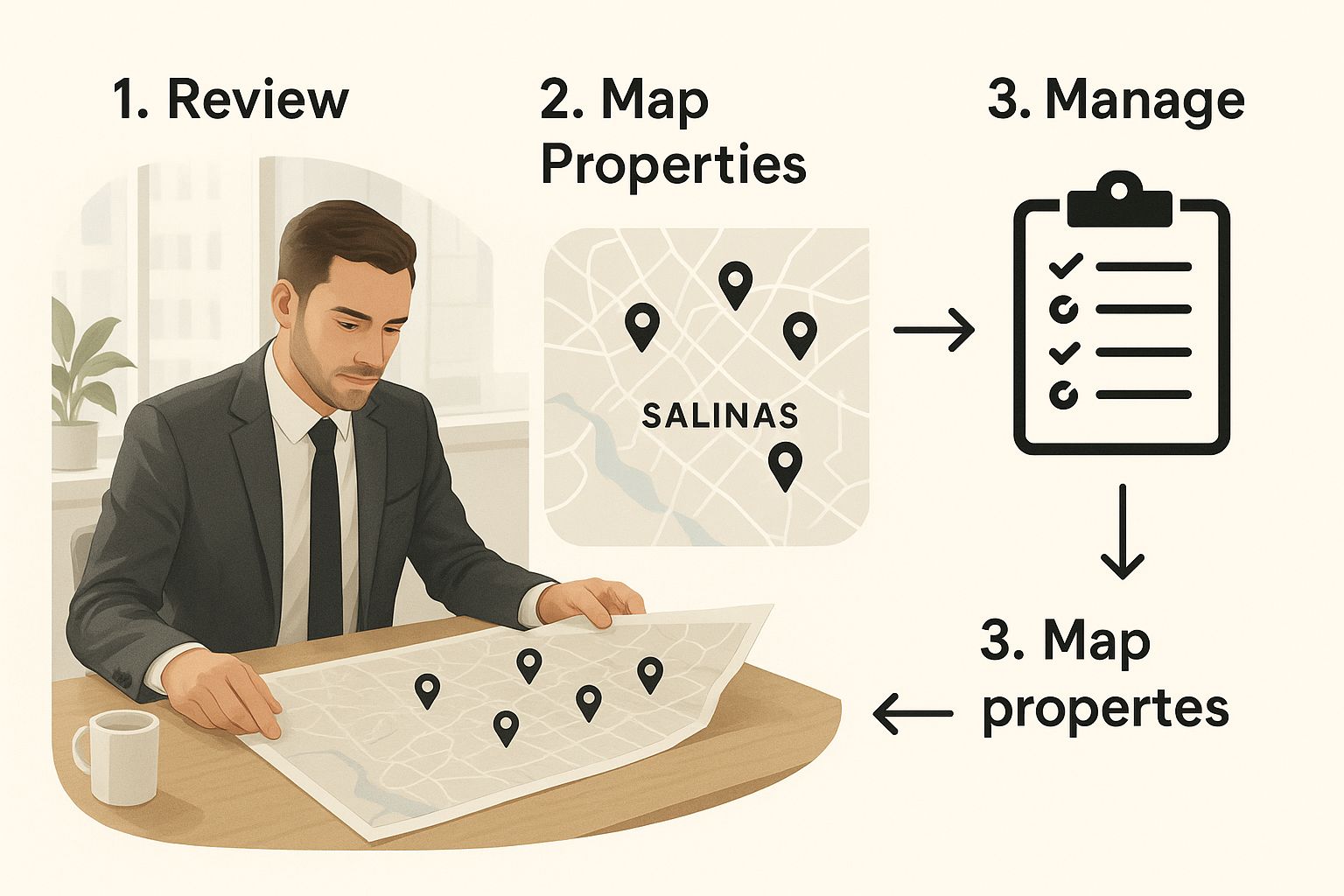
As you can see, each step connects to the next. Good market analysis leads to better property prep, which helps you find great tenants. This makes day-to-day management much smoother.
Your Salinas Property Management Roadmap
This table outlines the key phases for successful real estate management in Salinas. It gives you a quick overview of the expert roadmap we cover in this guide.
| Phase | Key Objective | Critical Action Item |
|---|---|---|
| Market Analysis & Prep | Attract high-quality tenants and set a competitive rent price. | Conduct a thorough Comparative Market Analysis (CMA) and complete all necessary repairs and upgrades. |
| Tenant Placement | Find reliable, responsible occupants who will care for the property. | Implement a rigorous, multi-step screening process that is fully compliant with Fair Housing laws. |
| Ongoing Operations | Ensure smooth, stress-free day-to-day management. | Establish automated systems for rent collection and a responsive protocol for maintenance requests. |
| Compliance & Financials | Protect your investment and maintain clear financial oversight. | Maintain meticulous records and stay current on all local, state, and federal landlord-tenant laws. |
This roadmap provides the structure. Mastering each phase is what drives success and protects your investment.
The Key Phases of Your Management Journey
A winning strategy is built on a few core pillars. Getting each one right protects your investment and maximizes returns. Our approach is thorough but simple, covering every part of the rental cycle.
Here’s how we break it down:
- Market Analysis and Property Prep: This means knowing local rental rates and getting your property ready to attract the best tenants.
- Tenant Placement and Screening: This is a solid, legal process for finding reliable people to live in your property.
- Ongoing Operations and Maintenance: This covers daily tasks like streamlining rent collection and handling repairs smoothly.
- Financial and Legal Compliance: This involves keeping perfect records and following all local and state rules.
Focusing on these areas creates a system that generates steady income and preserves your property's long-term value.
Of course, knowing the differences between neighborhoods is also a huge advantage. For investors targeting families, check out our guide on the best neighborhoods for families. Our bilingual team's deep roots in the Salinas community help us find the perfect match for your property.
Get to Know the Real Salinas Rental Market
To succeed as a landlord in Salinas, you must understand that there isn't just one "Salinas market." It's a collection of unique neighborhoods, each with its own character, tenant pool, and rental prices. A strategy that works in one area might fail just a few blocks away.
Forget generic online rent estimators. Real success comes from a street-level analysis. You need to know which areas attract families looking for good schools and which appeal to young professionals who need an easy commute.
It’s All About the Neighborhood
The differences across Salinas are significant. The city has 11 distinct neighborhoods, and property values vary greatly between them. For example, a home in the family-friendly Harden Ranch area might have a median list price of $880,000, while a similar property in the Eastside could be closer to $549,000.
This price gap is why a one-size-fits-all approach to setting rent or marketing fails. The city-wide median listing price is around $799,000, but that's just an average. You can see these differences on the Salinas real estate landscape on Realtor.com. Your job is to find the specific value of your property in its neighborhood.
A Real-Deal Comparative Market Analysis
A Comparative Market Analysis (CMA) is your best tool for pricing. It helps you find the sweet spot for charging a competitive rent without leaving money on the table. A professional CMA is a deep dive into similar, recently rented properties in your immediate area.
An expert analysis compares your property based on what local tenants value.
- Property Condition: How does your place look compared to other rentals nearby? Are the finishes and upkeep better?
- Unique Features: Do you offer something extra, like a fenced yard, a new kitchen, or an in-unit washer and dryer?
- Location, Location, Location: How close is your property to good schools, parks, shopping, and major employers like Salinas Valley Memorial Hospital?
- The Layout: A smart, functional layout can be a huge selling point for tenants.
Nailing the price from day one is critical. If you price too high, your property could sit empty, costing you money. Price too low, and you cut into your monthly cash flow. For more on this, see our post on how to price your rental property.
Picture Your Ideal Tenant, Then Go Find Them
Once you know your property's market position, think about who you want to attract. This isn't about discrimination; it's about smart marketing. Are you targeting a family that needs a big yard or a professional who wants modern features?
Let's say your rental is in a quiet area known for great schools. Your listing should highlight this. Talk about the school district, mention the nearby park, and show off the backyard in your photos. This focused approach is a key part of effective real estate management in Salinas.
Preparing Your Property for Maximum ROI
Getting your Salinas rental ready for tenants is more than a quick cleaning. Think of it as preparing a premium product for a customer with many choices. The best tenants want homes that feel clean, safe, and professionally maintained.
This is your chance to maximize your return. A few smart upgrades can boost your rental income and reduce vacancy time. A well-prepared property attracts better tenants and sets a high standard for how the home should be treated.
The Non-Negotiable Rent-Ready Checklist
Before taking listing photos, walk through the property with a critical eye. The goal is to see the space as a potential tenant would and fix everything. Being proactive now saves you from headaches later.
Here is our must-do list:
- A True Deep Clean: This is the foundation. We mean a professional-level clean on every surface, from baseboards to ceiling fans. Kitchens and bathrooms must be spotless.
- Patch and Paint: A fresh coat of neutral paint is one of the best upgrades you can make. It makes a space feel brighter and newer. This includes patching any holes or scuffs first.
- Flooring Inspection: Check all flooring. Carpets need a professional deep clean. For hard surfaces, repair any broken tiles or damaged planks.
- Appliance and Systems Check: Test every appliance to ensure it's working perfectly. We also check the HVAC system, water heater, and all outlets and light switches for safety and function.
Your Top Priority: Safety and Compliance
Beyond looks, your most important job is to ensure the property is safe and legal. Cutting corners on safety in California can lead to serious legal and financial trouble. This is a critical step in professional real estate management in Salinas.
Your property must have working safety devices. This includes:
- Smoke Detectors: California law requires working smoke alarms in every bedroom, in hallways outside sleeping areas, and on each level of the home.
- Carbon Monoxide Detectors: If the home has fuel-burning appliances, a fireplace, or an attached garage, you must have CO detectors.
A safe home is a marketable home. Checking all safety features protects your tenants and shields you from liability. This is a non-negotiable part of our process. These checks are vital, especially for vacant properties. For more, our guide on vacant property inspections and upkeep explains how we manage this period.
Don't Underestimate Curb Appeal
The first impression starts at the curb. If the outside of a property looks neglected, potential tenants will assume the inside is too. A little effort on curb appeal can make a huge difference.
Focus on simple tasks with big results. Mow the lawn, trim bushes, pull weeds, and add fresh mulch. Make sure the front door is clean and welcoming. These small details show you are a landlord who cares.
Attracting and Securing the Right Tenants

A reliable tenant is the foundation of a successful rental investment. Once your property is ready, the next step is a smart, legal strategy to market your rental and screen every applicant. This is where you shift from property prep to people.
Think of it as part marketing, part careful vetting. The goal is to attract a large pool of applicants, then use a fair process to find the best fit. Skipping steps here is a costly mistake that can lead to late rent, property damage, or eviction.
Crafting a Winning Marketing Strategy
Your marketing needs to reach potential tenants where they are, which today means a strong online presence. High-quality photos and a great description are your best tools for a killer first impression.
To tap into this demand, your marketing plan should cover a few key areas:
- Premium Online Listings: Most renters search on platforms like Zillow and Apartments.com. Your listing needs professional photos, a detailed description, and clear info on rent and policies.
- Local Community Networks: Don't forget the power of local connections. Great tenants can come from community centers, local social media groups, and job boards.
- Clear and Welcoming Showings: Whether you do private tours or open houses, make sure the property is spotless and you're ready to answer questions professionally.
The Art and Science of Tenant Screening
Once applications arrive, your focus must shift to a strict, consistent screening process. This is the most important thing you can do to protect your investment. A thorough screening is the heart of effective real estate management in Salinas.
Finding the right tenants means digging into the details. There's a lot of critical information to know about potential residents. Your process must be objective and comply with all Fair Housing laws.
Client Success Story: An out-of-state owner was overwhelmed after three bad tenants in two years left damages and unpaid rent. We implemented our comprehensive screening process. We placed a qualified family who has now renewed their lease for a third year, pays on time, and treats the home like their own.
Our screening method is built on four pillars:
- Credit and Background Check: This shows financial responsibility and any relevant criminal history.
- Income and Employment Verification: We confirm they have a stable income of at least three times the monthly rent.
- Rental History Verification: We call previous landlords to ask about payment history and how they cared for the property.
- Personal Interview: This gives us a chance to ask follow-up questions and get a feel for the applicant.
This detailed approach minimizes your risk and sets the stage for a positive landlord-tenant relationship. Learn more about our professional tenant placement services.
Getting into the Rhythm of Day-to-Day Management
After placing a great tenant, the real work begins. This is about creating smooth, repeatable systems for successful property management. The goal is to build an efficient rhythm that protects your property, keeps tenants happy, and ensures rent is paid on time.
Great management is proactive, not reactive. It's about having systems that prevent problems from happening. This approach to real estate management in Salinas separates overwhelmed landlords from successful investors. It all starts with the basics, like easy rent payments.
Making Rent Collection Effortless
Consistent, on-time rent is the lifeblood of your investment. Chasing down checks is a major headache. The secret is to make paying rent easy and automatic for your tenants.
Online payment portals are now the standard. They are convenient for tenants, who can set up automatic payments. For you, this automation creates predictable cash flow you can count on.
Proactive Maintenance Is Your Best Defense
Waiting for something to break is a costly mistake. Proactive maintenance is about fixing small issues before they become disasters. This is especially true in Salinas, where the local climate has unique demands.
A simple seasonal maintenance plan is your best tool. It helps you stay ahead of wear and tear and shows tenants you're a responsible landlord.
A Salinas-Specific Seasonal Maintenance Checklist
Here’s a practical checklist tailored to our local climate to keep your property in top shape.
- Spring (March-May):
- Gutter and Roof Check: Clear gutters and check the roof for any damage from winter storms.
- Irrigation System Tune-Up: Test the sprinkler system for leaks or broken heads to avoid high water bills.
- Exterior Paint and Sealant Inspection: Look for peeling paint or cracked sealant around windows and doors.
- Fall (September-November):
- HVAC Servicing: Have a professional tune up the heating system for safety and efficiency.
- Weatherstripping and Insulation: Check for drafts around windows and doors to improve energy efficiency.
- Yard Cleanup: Trim trees and clear dead leaves to reduce fire risk and keep pests away.
Handling Maintenance Requests Like a Pro
Even with a good plan, things will break. How you respond to a tenant's call impacts your relationship with them. A prompt, professional response shows you take your responsibilities seriously.
The key is having a list of trusted, local vendors before you need them. Building relationships with a reliable plumber, electrician, and handyman is invaluable. It means you can get quality work done quickly and at a fair price.
Strong tenant relationships are built on clear communication and responsive action. When tenants feel heard, they are more likely to take care of the property and renew their lease.
Navigating Finances and Legal Compliance

Running a successful rental in Salinas is more than keeping tenants happy. The real work happens behind the scenes with careful financial tracking and following the law. This protects your investment and shows you if you're making money.
This is where many landlords get overwhelmed. But with the right systems, you can manage the numbers and California's complex laws with confidence. Think of your financial records as a health chart for your property.
Keeping Your Financials in Order
Clean, organized bookkeeping is the foundation of a well-run rental business. You need a solid system to track every expense, from a $1,500 appliance to a $5 hardware store trip. This helps you understand your cash flow and make smart decisions.
When seeking financing, lenders will examine these numbers. It's important to understand metrics like the Debt Service Coverage Ratio (DSCR). This ratio helps a bank see if your property's income can cover its debt payments.
You should review these key financial reports regularly:
- Monthly Cash Flow Statements: This is your profit-and-loss snapshot for the month.
- Income and Expense Reports: This itemized list is valuable for tax prep and budgeting.
- Rent Roll: This is your at-a-glance list of tenants, lease terms, and payment status.
These documents are powerful tools that help you adjust your strategy and measure your return on investment.
Staying Compliant with Landlord-Tenant Laws
The legal landscape for landlords in California is complex and always changing. A small mistake, like mishandling a security deposit, can lead to costly legal battles. Staying current on state and local rules is essential.
Your first line of defense is a strong lease. This legal contract outlines the rights and responsibilities for you and your tenant. It should cover everything from rent payments to rules about property changes.
Handling sensitive issues like security deposits and evictions requires following legal steps exactly. California has specific rules on how much you can charge, where to hold the deposit, and the timeline for returning it. Following these laws precisely is the best way to avoid disputes.
FAQs on Salinas Property Management
How do you determine the right rent for my property?
We start with a detailed comparative market analysis (CMA) focused on your specific Salinas neighborhood. We compare your property's size, condition, and amenities to similar local rentals. This data-driven approach helps us set a competitive price to attract quality tenants quickly.
What is the most important part of tenant screening?
Every step is important, but income verification and checking landlord references are the most critical. Verifying income tells us if they can afford the rent consistently. Talking to past landlords gives us a real story about how they will treat your property.
How often should my Salinas rental property be inspected?
We recommend a full inspection once a year, in addition to move-in and move-out assessments. We always provide proper legal notice to the tenant. These regular "wellness checks" help us catch small maintenance issues before they become expensive problems.
What happens if a tenant pays rent late?
We follow a professional and legally compliant process outlined in the lease agreement. The first step is to issue a formal notice. We then maintain open communication to resolve the issue, but we are prepared to manage the legal eviction process if necessary to protect your investment.
Why is having a local Salinas manager so important?
Local expertise is everything in property management. A local manager understands Salinas's unique neighborhoods, rental rates, and has a network of trusted local vendors. Our bilingual team is also a huge advantage, ensuring clear communication with everyone in our diverse community.
Your property is a major asset. It deserves a management team with the local expertise and commitment to protect it.
Give Torrente Property Management Inc. a call today at (831) 582-8916 for a no-obligation chat. Let's discuss your property and show you the peace of mind that comes with having a true local expert on your side.


10 Expert Questions for a Property Management Company
Choosing a property management company is a huge decision for your Monterey Bay investment. The right partner boosts your returns and gives you peace of mind. But the wrong one can cause vacant months, legal issues, and major stress.
With over 44% of U.S. rental properties now professionally managed, owners see the value in expert help (Source: IREM). However, not all managers are the same, especially in unique markets like Salinas and Monterey.
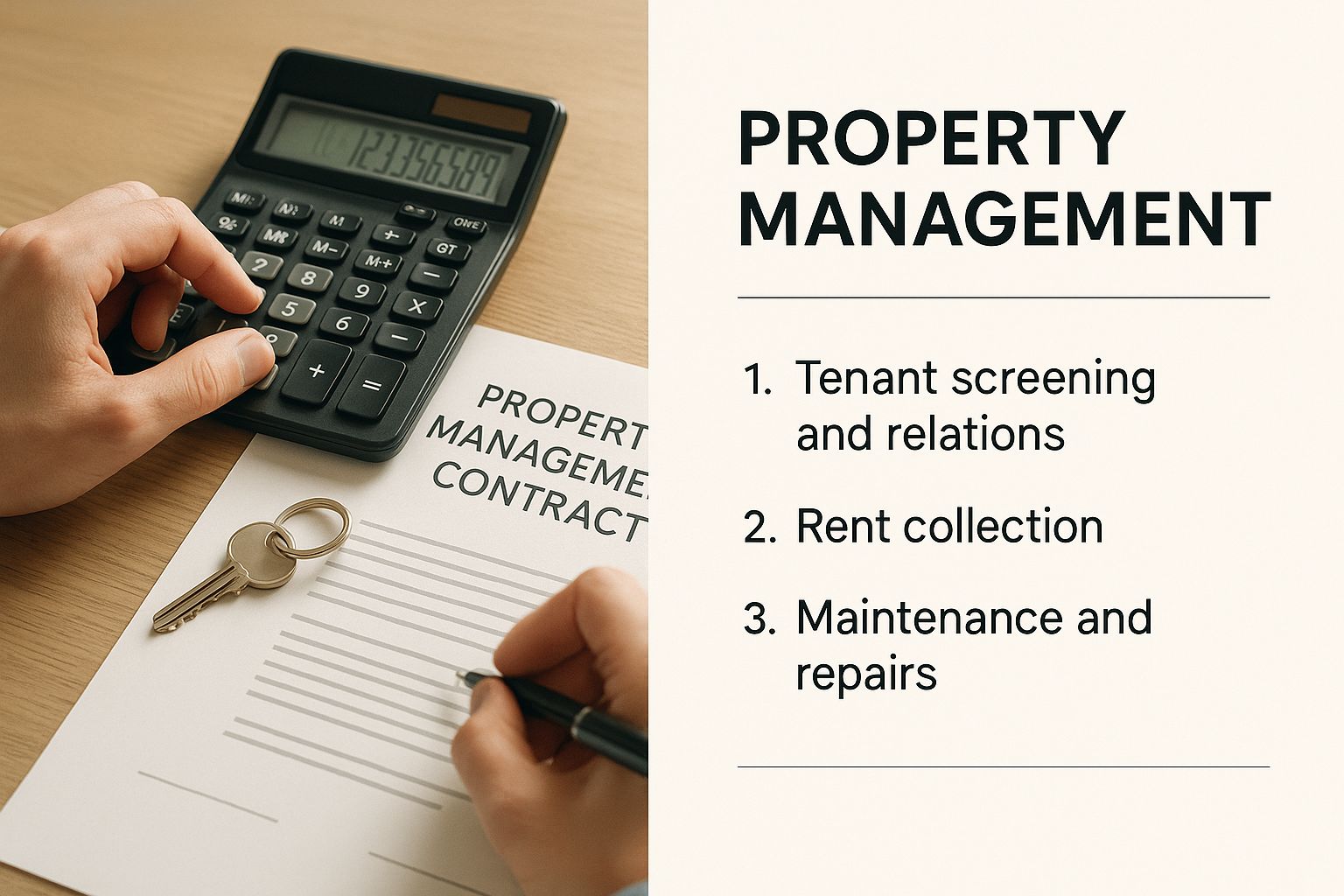
This guide is different. Based on over 23 years as a licensed broker in Monterey County, I’ve gathered the 10 expert questions to ask a property management company before you hire them. These questions reveal how a company truly operates, from screening tenants to handling your money. They will help you spot red flags and find a trustworthy partner to protect your property.
1. What is your tenant screening process?
The quality of your tenant directly affects your profit. A poor screening process leads to late rent, property damage, and evictions. This is a big risk for owners in Salinas and Monterey.
A vague answer here is a major red flag. A professional manager should have a written policy they can share with you. This policy must follow all Fair Housing laws while still being tough enough to protect your property.
What to Look For in a Screening Process
A great screening process is consistent for every applicant. Look for a company that checks:
- Income: Do they require proof of income that is at least 2.5 to 3 times the rent? How do they check it (pay stubs, bank statements)?
- Credit History: A company must run comprehensive credit checks to see if an applicant is financially responsible. Ask about their minimum credit score.
- Rental History: Do they call past landlords to ask about payment history and how the tenant cared for the property?
- Criminal Background Check: A national criminal background check is a standard step for good property managers.
Expert Insight: A manager who relies on a "gut feeling" is putting your investment at risk. The best tenant screening uses data and follows the law.
To learn more about what makes a great vetting system, see our proven tenant selection and screening tips. Make sure the company you choose has a strong process to find reliable tenants.
2. How do you handle maintenance and repairs?
Good maintenance keeps tenants happy, reduces turnover, and protects your property's value. A slow or messy repair process leads to frustrated tenants and a run-down property. This is a big worry for owners in the Monterey Bay area.

A professional manager should have a modern system for tracking maintenance issues. They should be able to explain their process from start to finish. This ensures nothing gets missed and keeps everyone informed.
What Makes a Strong Maintenance Process?
A solid maintenance plan shows a company cares about your investment. Ask for details on how they handle both routine and emergency repairs. Look for a manager who offers:
- Organized Requests: Do they use an online portal for tenants to submit and track requests? This creates a clear digital record.
- Trusted Vendors: A network of insured and reliable contractors is a must. Ask how long they have worked with their main vendors.
- Preventative Care: Do they offer services like HVAC tune-ups or gutter cleaning to stop expensive problems before they start?
- Clear Billing: Ask if they add extra charges to vendor invoices. The best companies pass through the exact cost with a detailed invoice.
Expert Insight: How a manager handles a 2 a.m. emergency call shows their real ability. Ask about their specific after-hours plan to see how prepared they are.
A clear maintenance plan is key to protecting your property. Learn about our approach to estate caretaker and maintenance services to see how a proactive plan can help.
3. What are your fees and how clear is your financial reporting?
Hidden fees and confusing financial statements can drain your rental income. You must understand every single cost of managing your property. This question helps you learn how a company handles your money.
A good manager will give you a complete fee schedule in writing. If they are vague about costs for leasing or maintenance, it's a big red flag. You need a partner who is transparent about finances so you always know where your money is going.
What to Look For in Financials
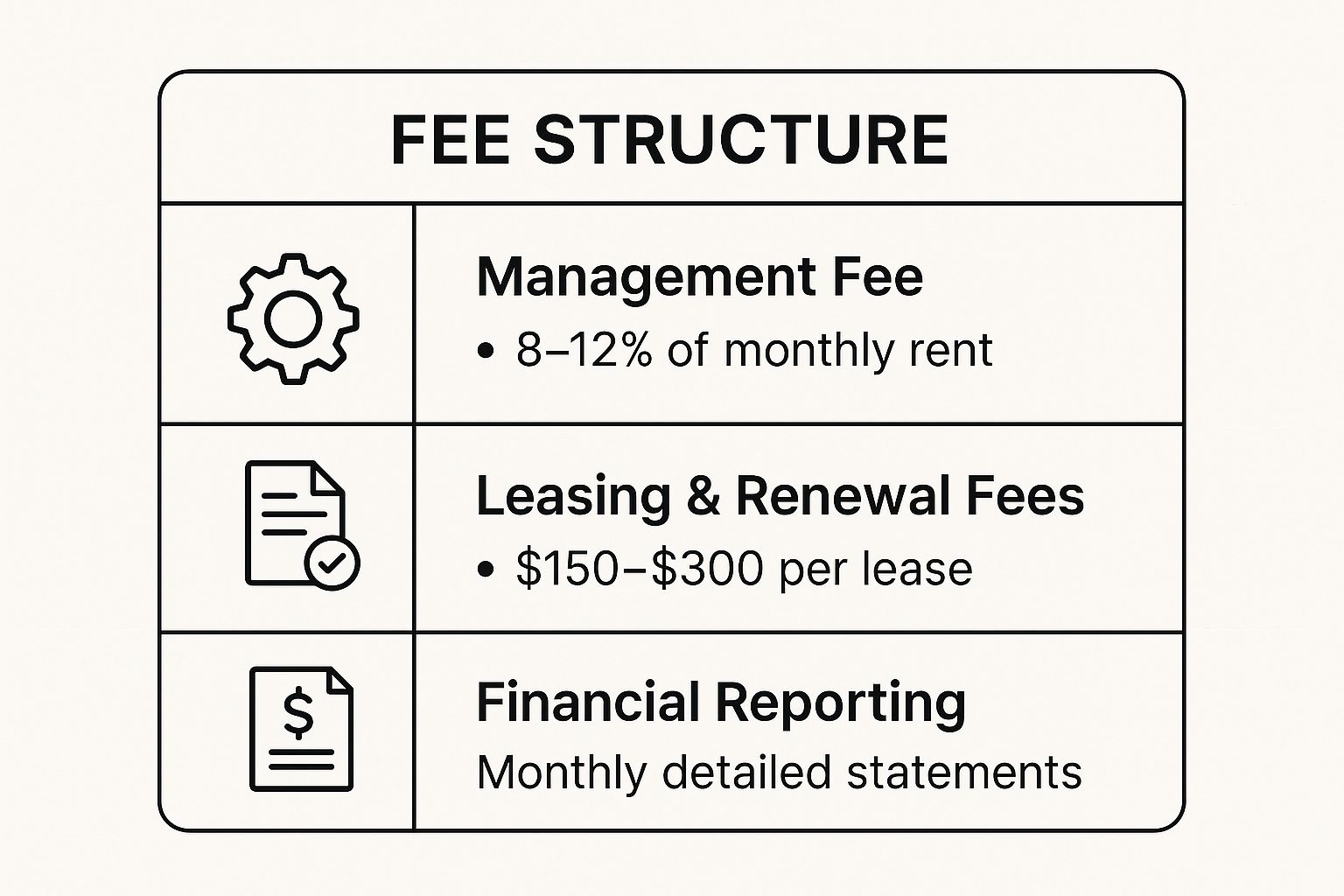
A transparent company has clear, predictable pricing and simple financial reports. Ask about their entire fee structure, not just the monthly percentage.
- Management Fee: Is it a flat fee or a percentage of rent collected? It is usually 8-12%.
- Leasing & Renewal Fees: Are there extra charges for finding a new tenant or renewing a lease?
- Maintenance Markups: Does the company add a fee to vendor invoices for repairs?
- Owner Portal: Do they offer a 24/7 online portal where you can see statements, invoices, and updates?
Expert Insight: The lowest management fee is rarely the best deal. A cheap company might make up for it with high fees for leasing or inspections. Always ask for a sample owner statement to check their reporting quality.
4. What is your average vacancy rate and how do you market properties?
Every day your property is empty, you lose money. This question checks how well a company can fill vacancies. They need a good marketing plan, smart pricing, and an efficient process.
A great manager should provide data on their average vacancy rate. A vague answer means they either don't track it or the numbers aren't good. Look for a company with a proactive marketing plan to attract good applicants fast.
What Makes a Strong Marketing Strategy?
A good leasing plan is more than just a "For Rent" sign. Top companies use technology and local knowledge to fill vacancies quickly. Ask about their process for:
- Pricing: How do they set the rent? They should do a market analysis based on current listings in Salinas and Monterey.
- Marketing: Do they use professional photos? Where do they advertise? They should be on major sites like Zillow and Trulia.
- Efficiency: Ask about their average "days on market." Do they pre-market the property before the current tenant moves out?
Expert Insight: Vacancy is the biggest profit killer for rental properties. A manager who can’t explain their marketing plan and show you the data is not ready to protect your income.
Effective marketing reaches the most qualified tenants in the least amount of time.
5. How do you handle rent collection, late payments, and evictions?
Consistent cash flow is key to a successful investment. A company's process for collecting rent and handling late payments shows if they can protect that income. Without a solid system, you risk delays and financial loss.

You need a manager with a firm but fair policy. A relaxed approach to rent collection is a sign of inexperience. The process should be automated, clear, and strictly followed to protect your money.
What Makes an Effective Collection Policy?
A professional manager uses technology and legal rules to manage rent. Their system should be easy for both tenants and owners. Ask about:
- Payment Methods: Do they offer an online payment portal for tenants? This makes it easier for tenants to pay on time.
- Late Fee Policy: Is their late fee policy clear in the lease? They should have a system that automatically applies fees when rent is late, following California law.
- Eviction Process: When and how do they start an eviction? A good company has a clear, legal timeline, from serving notices to working with lawyers if needed.
Expert Insight: The goal is to keep cash flowing. A strong policy uses clear communication and easy technology to prevent late payments before they happen.
Ask for their rent collection rate and a copy of their late payment policy. This is one of the most important questions to ask a property management company.
6. What technology do you use?
Modern property management uses technology. An efficient company uses software to streamline everything from rent collection to maintenance requests. This gives you 24/7 access to your property's performance.
A manager who struggles with this question or describes an old, manual process is a red flag. Top companies invest in good software that gives owners their own online portal. This lets you access financial statements and track repairs from anywhere.
What a Good Tech System Includes
A professional management company should use software to manage properties well. Look for platforms that offer:
- Owner Portal: Does it give you access to monthly financial statements and other important documents?
- Tenant Portal: Can tenants pay rent online and submit maintenance requests with photos?
- Maintenance Tracking: Does the system track work orders from start to finish?
- Financial Reports: Can you easily get detailed reports on income and expenses?
Expert Insight: Transparency builds trust. A company with a real-time owner portal shows they are confident in their process and want to keep you informed.
Good technology is key for efficiency. Learn how the right software can boost returns in our guide to property management workflow automation.
7. Can you provide references from current clients?
Marketing can promise anything, but client experiences show the truth. A good firm should be proud of its work and willing to let you talk to current clients. This is a key step to confirm their claims.
If a company hesitates to provide references, it's a big red flag. An established manager will happily connect you with satisfied clients and show you properties they manage in Salinas or Carmel. This transparency builds trust.
How to Check References
Verifying a company’s work is more than a quick phone call. A good approach gives you a full picture.
- Similar Properties: Ask for references from owners with properties like yours. Their experience is most relevant.
- Portfolio Review: Ask for addresses of properties they manage. Driving by can show you their maintenance standards.
- Specific Questions: When you talk to references, ask about communication, financial reports, and how they handled a tough situation.
- Client History: Ask why a past client might have left. An honest answer shows integrity.
Expert Insight: A company's portfolio is proof of their ability to maintain property value. Look for a manager with a strong presence in your local market.
Hearing from other investors gives you valuable insight you can't find on a website.
8. What is your approach to property inspections?
Proactive maintenance is cheaper than reactive repairs. A company that only fixes problems after they happen can leave your property open to major damage. Understanding their inspection strategy is key to protecting your long-term investment.
A top manager won't wait for a tenant to report a leak; they will have a system to prevent it. You need a partner with a clear plan for routine inspections and seasonal maintenance. This protects your property’s value and avoids surprise costs.
What Makes a Strong Inspection Program?
A good inspection plan is proactive and detailed. Look for a company that can explain its process for:
- Inspection Frequency: How often do they do inspections (move-in, move-out, annually)? Do they provide detailed reports with photos?
- Preventive Maintenance: Do they have a checklist for seasonal tasks like HVAC servicing or checking smoke detectors?
- Vendor Management: How do they manage their contractors to ensure quality work at fair prices?
- Technology: Do they use apps to streamline inspections and document everything?
Expert Insight: A great property manager takes care of your property like it's their own. Their maintenance plan should feel like a long-term strategy, not just a repair service.
Ask if they use a comprehensive rental property inspection checklist for consistency. You can also review our tenant move-out inspection checklist to see what a final inspection should cover.
9. How do you stay compliant with landlord-tenant laws?
Landlord-tenant law is complex and always changing. Not following the rules can lead to big fines and legal problems. This is especially true in California, where laws are very strict.
A good property manager will have systems to ensure they always follow the law. Their answer should show they understand everything from Fair Housing rules to local eviction laws. This proves they prioritize your legal protection.
How to Check for Legal Compliance
A legally sound approach to management is essential. Look for a company that can show their commitment to staying current.
- Continuing Education: How do they train their staff on new laws? Are they certified by groups like the Institute of Real Estate Management (IREM)?
- Legal Help: Do they work with a qualified landlord-tenant lawyer for tough issues?
- System Updates: What is their process for changing things when a new law passes?
- Insurance: Ask about their Errors & Omissions (E&O) insurance. This protects you if the company makes a mistake that costs you money.
Expert Insight: An amateur manager might say, "We follow the law." An expert will tell you how they follow it, mentioning their specific training and legal resources.
Navigating property law is a core part of management. For more details on local rules, learn about key landlord-tenant laws in California.
10. What is your tenant retention strategy?
High tenant turnover kills profits. It causes vacancy losses, marketing costs, and repair expenses that hurt your return. A proactive tenant retention plan is essential for long-term success, especially in a competitive market like Monterey.
An experienced manager knows keeping a good tenant is cheaper than finding a new one. Their answer should show they have a clear system for building positive relationships and making lease renewals easy.
What Makes a Strong Retention Strategy?
A successful plan is built on communication and responsiveness. Look for a company with clear processes for:
- Proactive Communication: How far in advance do they contact tenants about renewing? A 60-90 day notice is standard.
- Responsive Maintenance: Do they handle repair requests quickly and professionally? This is often the #1 reason tenants stay.
- Smart Rent Increases: How do they decide on rent increases for renewals? They should balance market rates with the value of keeping a good tenant.
- Incentives: Do they offer small perks for renewing, like a gift card or carpet cleaning?
Expert Insight: A manager who treats tenants as partners will always have higher retention. Their strategy should focus on building a professional relationship that makes tenants want to stay.
Learn more about our dedicated property management services that focus on keeping good tenants.
Frequently Asked Questions
What does a property management company do?
A property management company handles the daily operations of a rental property. This includes marketing vacant units, screening tenants, collecting rent, managing maintenance, and ensuring legal compliance for the property owner.
How much do property managers charge in Monterey County?
Fees vary, but most companies in Monterey County charge a monthly management fee of 8-12% of the collected rent. There may be additional fees for leasing a new unit, lease renewals, or overseeing major repairs.
Is hiring a property manager worth it?
For many owners, yes. A good manager can increase your property's profitability by minimizing vacancies, securing reliable tenants, and handling maintenance efficiently. They also save you significant time and reduce the stress of being a landlord.
What makes Torrente Property Management different?
As a licensed broker with over 23 years in Monterey County, our local expertise is unmatched. We are IREM-certified, offer bilingual services (English/Spanish), and use modern technology to provide transparent, responsive service that protects your investment.
Can I manage my own property?
Yes, but it requires significant time, market knowledge, and an understanding of landlord-tenant laws. Self-management can be risky if you are not prepared for tenant issues, emergency repairs, and potential legal disputes.
Your Next Step to Peace of Mind
Choosing the right property management company is a critical decision for any real estate investor. It’s not just about hiring someone to collect rent; it’s about finding a trustworthy partner. Armed with these 10 expert questions to ask a property management company, you are ready to evaluate potential partners based on what truly matters: competence, transparency, and a proven system for success.
The right management company acts as a strategic advisor. They help you maximize your property's potential and turn a hands-on headache into a passive income stream. This diligence now is the best investment you can make in your property's future.
Ready to partner with a team that has the answers? Torrente Property Management Inc. was built on three generations of local Monterey County expertise. We welcome these tough questions because our systems deliver the peace of mind you deserve. Contact Torrente Property Management Inc. today or call us at (831) 582-8916 to see how our experience can protect and grow your investment.

Smart Maintenance for Rental Property: A Landlord's Guide
Meta Description: Discover key tips and a checklist for smart maintenance for your rental property. Boost tenant retention and protect your Monterey Bay investment.
For property owners in the Monterey Bay area, good maintenance is more than just fixing leaks. It is the key to a profitable and stress-free investment. Taking care of your property ahead of time protects its value and keeps your tenants happy.
Unresolved maintenance issues are a major reason why 46% of tenants choose not to renew their lease, according to Zillow. A vacant property in Monterey or Salinas means lost income. This makes a system for smart maintenance for rental property essential to your success.
This guide gives you key tips and a checklist to help you lower costs, keep tenants happy, and increase your returns. We will cover preventive scheduling, digital records, budgeting, and smart home technology. These tips are designed for the unique needs of coastal California properties.
1. Create a Proactive Maintenance Schedule
Waiting for an emergency call about a broken water heater is a stressful and expensive way to manage your property. The core of smart maintenance for a rental property is to be proactive, not reactive. This means creating a schedule to fix small issues before they become big problems.
This strategy is the best way to protect your investment. Regular checks on systems like HVAC and plumbing make them last longer. It also turns your maintenance budget from a series of surprises into a predictable, manageable expense.
Key Insight: A well-documented maintenance schedule saves money and creates a history of care for your property. This increases its value and attracts quality tenants.
How to Build a Proactive Schedule
For properties in coastal areas like Monterey, your schedule must account for salt air and moisture. In sunnier Salinas, you might need more frequent HVAC filter changes and exterior paint checks.
Your proactive plan should include:
- Seasonal Checklists: Schedule specific tasks for each season. For example, clean gutters in the fall and service the HVAC system in the spring. This is especially important for coastal California homes.
- Digital Reminders: Use a calendar to set reminders for tasks like checking smoke detector batteries twice a year.
- Trusted Vendors: Build a list of reliable, insured local vendors in Monterey County. Having a go-to plumber or electrician ready saves you from scrambling during an emergency.
Adopting this forward-thinking approach keeps your property in great shape and boosts tenant satisfaction. For owners who prefer a hands-off approach, exploring the benefits of professional property management can provide access to established systems and vetted local contractors.
2. Conduct Detailed Move-In and Move-Out Inspections
The time between tenants is perfect for checking your property’s condition. A detailed inspection when a tenant moves in and another when they move out creates an official record. This simple practice is crucial for smart maintenance for a rental property, as it protects both you and the tenant from disputes over the security deposit.
This process sets a clear baseline for the property's condition. It prevents new tenants from being blamed for old issues. It also allows you to accurately charge for any damages they cause, protecting your investment.
Key Insight: Detailed move-in and move-out reports are your best defense against security deposit arguments. They provide clear evidence, saving you time, money, and stress.
How to Do Thorough Inspections
For properties across Monterey County, consistent documentation is key. A small scratch on a floor can become a big issue without proper records.
Your inspection process should include:
- Use a Checklist: A standardized checklist ensures you inspect every room, appliance, and fixture the same way every time.
- Take Photos and Videos: Capture wide shots of each room and close-ups of appliances, floors, and any existing damage. Timestamped images are powerful evidence.
- Involve the Tenant: Walk through the property with the tenant during both inspections. Have them sign the completed report to show they agree on the property's condition.
By systemizing your inspections, you protect your property and build a transparent relationship with your tenants. To ensure you cover all points, a detailed tenant move out inspection checklist is an essential tool.
3. Build a Network of Reliable Contractors
When a pipe bursts at 2 AM, you need a trusted professional on speed dial. Smart maintenance for a rental property means building a network of reliable and insured contractors before you need them. This network is your key to handling both emergencies and routine repairs efficiently.
Searching for a plumber at the last minute often leads to high costs and poor work. A pre-approved network ensures you get fast service from pros who understand rentals. This also helps you get consistent quality and fair pricing.
Key Insight: A strong vendor network protects your property's value and improves tenant satisfaction. Quick, professional repairs show tenants you care, which helps with retention.
How to Build Your Professional Network
Building a reliable team takes effort. Start by finding top plumbers, electricians, and handymen who serve the Monterey Peninsula.
Your plan for building this network should include:
- Check Credentials: Always confirm that vendors have the proper licenses and insurance. Check online reviews and ask for references.
- Start with a Small Job: Before a big repair, try a new contractor on a smaller task. This is a low-risk way to check their quality and communication.
- Set Clear Expectations: For ongoing work like landscaping, create a service agreement. This should outline the work, frequency, and costs to avoid confusion.
By building these relationships, you ensure that any maintenance issue is handled quickly and professionally. For property owners seeking a turnkey solution, leveraging a firm that already has these networks in place is invaluable; learn more about the benefits of a professional estate caretaker and maintenance network on the Monterey Peninsula.
4. Keep Digital Maintenance Records
Using paper receipts and sticky notes to track maintenance is risky. Smart maintenance for a rental property requires a digital system for all records. This creates a complete archive of every request, repair cost, and warranty.
This organized approach turns scattered info into useful data. It helps with tax deductions and offers protection in tenant disputes. A good system is key for managing your finances and proving you take good care of the property.
Key Insight: Digital records create a detailed history of your property. This can increase its value by showing potential buyers a consistent standard of care.
How to Set Up a Digital System
A digital system is vital for managing properties in Monterey County, from moisture-related repairs in Pacific Grove to HVAC service in Salinas.
Your documentation plan should include:
- Choose a Tool: Independent landlords can start with a simple Google Drive folder. Owners with multiple properties might use software like Stessa or TenantCloud. To make an informed choice, it's wise to review a detailed property management software comparison.
- Use a Naming System: Create a clear file naming system for invoices and photos (e.g., "123LighthouseAve_Plumbing_Oct2023"). This makes finding documents easy.
- Back Up Your Data: Set up automatic cloud backups to protect your records. Services like Google Drive or Dropbox keep your data safe and accessible.
5. Use Smart Home Technology for Remote Monitoring
Visiting your rental property often can be time-consuming. Smart maintenance for rental property uses modern technology for remote oversight and early problem detection. Smart devices can alert you to problems before your tenant even notices them.
This tech-driven approach reduces surprises and gives you real-time data. Smart thermostats can save energy, and water leak sensors can prevent major floods. These tools protect your investment and lower operating costs.
Key Insight: Smart home technology changes property management from a reactive task to a proactive, data-driven strategy. This gives you peace of mind and more control over your asset.
How to Implement Smart Home Technology
For a property in Carmel, where fog and moisture are common, a smart leak sensor can be a lifesaver. In a hotter area like Salinas, a smart thermostat offers big energy savings.
Your smart home plan should include:
- Start with High-Impact Devices: Begin with smart smoke detectors and water leak sensors near water heaters and washing machines.
- Respect Tenant Privacy: Be clear in the lease about which devices are installed and what they monitor. Focus on property health (leaks, temperature), not tenant activity.
- Set Up an Alert System: Configure devices to send notifications to your phone. Immediate alerts for a water leak can save you thousands in repairs.
To truly achieve remote oversight for your rental property, it's paramount to understand how to set up secure remote access to your smart home system from anywhere. This ensures you can manage your property efficiently and safely.
Frequently Asked Questions (FAQs)
What is smart maintenance for a rental property?
Smart maintenance is a proactive approach to property care. It uses scheduled tasks, technology, and planning to prevent major issues, reduce costs, and keep tenants happy.
How often should I inspect my rental property?
You should conduct detailed inspections at move-in and move-out. Additionally, plan for semi-annual or annual inspections to check on smoke detectors, filters, and overall property condition.
Why is a 24/7 maintenance system important?
Emergencies don't wait for business hours. A 24/7 system ensures urgent issues like major leaks or no heat are addressed immediately, protecting your property and keeping tenants safe. This rapid response can prevent a small problem from turning into a costly disaster.
How does good maintenance improve tenant retention?
Responsive and effective maintenance is a top reason tenants renew their leases. When tenants feel cared for and their home is well-maintained, they are more likely to stay long-term, reducing your vacancy costs.
Can smart home devices really save me money?
Yes. Smart thermostats can lower energy bills, and water leak sensors can prevent thousands of dollars in water damage. These devices provide an excellent return on investment by preventing costly repairs.
Conclusion: Turn Your Checklist into Peace of Mind
Moving from a reactive to a proactive maintenance strategy is the most powerful change a landlord can make. Smart maintenance isn't just about fixing things. It's about building a system that protects your asset and improves the tenant experience.
By using the key tips and checklist in this guide, you are creating a plan for long-term success. From seasonal maintenance tailored to our coastal climate to building a network of trusted Monterey Bay contractors, each step helps you run your property better. With a 24/7 maintenance plan, you can reduce costly long-term repairs and support tenant satisfaction.
Key Takeaways
- Be Proactive: A seasonal checklist and regular inspections prevent expensive emergency repairs.
- Stay Organized: Digital records and a clear reporting system for tenants save time and reduce stress.
- Happy Tenants Stay Longer: Quick and professional maintenance is the number one way to encourage good tenants to renew their lease.
Mastering a smart maintenance for rental property: key tips & checklist approach gives you control over your investment. You replace costly emergency calls with planned service appointments and financial anxiety with predictable cash flow. Your property is a significant investment; give it the structured, professional care it deserves.
Ready to implement a professional, 24/7 maintenance system without the hands-on hassle? Torrente Property Management’s real-world system protects your investment and keeps tenants happy. Contact Torrente Property Management today at (831) 582-8916 to learn how our smart maintenance strategies can bring you peace of mind.

Affordable Property Management in Salinas: What to Expect
Finding affordable property management in Salinas can feel tricky. Many property owners focus only on the monthly fee. But the lowest price tag doesn't always mean the best value for your investment.
True affordability comes from a partner who offers a clear, all-in-one fee. They protect your property from surprise costs that can hurt your profits. According to a comprehensive Salinas housing analysis from HUD, the local vacancy rate hovers around 4.5%, making it crucial to minimize downtime and unexpected expenses.
What Real Value Looks Like

It’s easy to focus on the management percentage, but that number can be misleading. A good management company saves you money in ways you won't see on a bill. They prevent costly legal mistakes, reduce vacancy times, and use trusted local vendors for fair-priced repairs.
The goal is to find a partner who acts as a financial guardian for your property. Their expertise should be an asset that grows your return, not just another monthly expense.
Why Professional Management Matters in Salinas
In a market like Salinas, professional oversight is essential. A great manager helps you follow local rules, find high-quality tenants, and keep your property profitable. This is how you protect and grow your investment’s value over time.
A truly affordable property manager plugs the financial leaks many DIY landlords don’t even see. Their service pays for itself by:
- Cutting Vacancy Time: They use smart marketing to rent your property faster, so you have less time with no income.
- Ensuring Legal Compliance: California's landlord-tenant laws are complex. A pro keeps you compliant, helping you avoid expensive fines and legal issues.
- Placing Quality Tenants: A deep screening process is your best defense against evictions, property damage, and unpaid rent.
Choosing the right manager secures your peace of mind and the long-term health of your investment. It’s about making the best choice for your Monterey-Salinas area rental property.
All-Inclusive vs. Fragmented Fees
When looking for affordable property management in Salinas, you’ll see two main fee structures: fragmented and all-inclusive. Understanding the difference is key to protecting your rental income from surprise costs.
The fragmented model often advertises a low base fee to catch your eye. But this is an "à la carte" approach. You pay extra for nearly everything, from finding a new tenant to coordinating a simple repair.
The Problem with Hidden Fees
This model can create a conflict of interest. If a manager earns more from tenant turnover or maintenance calls, they may not be motivated to find a stable, long-term tenant. Your monthly statement can become a maze of unexpected charges.
Common extra fees in a fragmented model include:
- Leasing Fee: Often 50% to 100% of the first month's rent.
- Maintenance Markup: A 10-20% surcharge added to contractor invoices.
- Lease Renewal Fee: A charge for getting a good tenant to sign a new lease.
- Inspection Fees: Extra costs for routine property visits.
This makes it almost impossible to predict your actual return on investment.
A Clear Comparison of Pricing Models
Let's compare the two models to see how costs can add up.
| Service | Typical Fragmented Model Cost | Torrente's All-Inclusive Model |
|---|---|---|
| Monthly Management Fee | 6-8% (Looks low) | 10% (Clear & upfront) |
| New Tenant Leasing Fee | 50% of 1st Month's Rent | Included |
| Lease Renewal Fee | $250-$500 | Included |
| Maintenance Markup | 10-20% on all invoices | $0 Markup |
| Routine Inspections | $50-$100 per visit | Included |
The fragmented model's "low" fee is just a starting point. The extras often cost you far more over the year.
Why All-Inclusive is Better
An all-inclusive or full-service property management model offers one simple, predictable fee. At Torrente Property Management, our fee covers all essential services without the nickel-and-diming. This aligns our goals with yours: keeping your property filled with a great tenant while controlling costs.
Core Services an Affordable Plan Should Include

Affordable property management is about getting the most value, not the lowest price. A great plan delivers core services that protect and grow your investment. It maximizes your returns and minimizes your stress.
It starts with renting your property quickly to a high-quality tenant. An effective manager uses strategic marketing to attract many applicants. Then, a tough screening process checks credit, rental history, and income to find reliable residents.
What to Expect From Your Manager
Beyond placing a tenant, daily operations are where a great manager proves their worth. These are the essential services that keep your property running smoothly.
Your plan should always include:
- On-Time Rent Collection: Solid systems make it easy for tenants to pay, ensuring consistent cash flow for you.
- Clear Financial Reporting: You should get detailed monthly statements and year-end summaries to see how your asset is performing.
- Responsive Maintenance: A good manager handles repair requests quickly using a network of trusted local vendors. Learn more about our approach to https://torrenteproperties.com/property-maintenance-services-salinas/.
- Regular Inspections: Proactive visits help find and fix small issues before they become expensive emergencies.
The Value of Local, Bilingual Service
In a diverse community like Salinas, a manager who speaks both English and Spanish adds huge value. It expands your pool of potential tenants and leads to clearer communication. This helps create happier, long-term residents.
Modern tools also improve efficiency. Learning about the best property management apps shows how technology can support these core services.
Smart Maintenance Saves You Money
Maintenance is often a landlord's biggest unknown expense. One surprise repair can wipe out a month's profit. A key part of affordable property management in Salinas is controlling these costs without sacrificing quality.
A great manager uses a network of trusted local vendors. These pros provide quality work at fair prices because of the steady business they receive. You benefit from their expertise without paying high, one-off rates.
Proactive Care Stops Problems Early
The best way to save money on maintenance is to prevent problems. Regular inspections are key. They help catch small issues, like a tiny leak, before they turn into costly disasters like water damage.
This approach does more than save money on repairs. A well-maintained property attracts higher rent and better tenants. It is a direct investment in your property's stability and value.
A transparent process is also crucial. Every step, from a tenant's request to the final invoice, should be clear and documented. This ensures you are never overcharged and that work is done right. Tools for property management workflow automation help make this process smooth and efficient.
Boost Profits by Keeping Good Tenants
Tenant turnover is a silent profit killer. Every time a unit becomes vacant, you face costs for lost rent, marketing, cleaning, and repairs. This is why a core part of affordable property management in Salinas is keeping the great tenants you already have.
Responsive communication and prompt maintenance are powerful financial strategies. When tenants feel respected, they are more likely to renew their leases. This creates a stable income stream for you.
Why Tenant Retention is Key in Salinas
Holding onto good tenants is especially important in the Salinas market. Even a short vacancy can take a big bite out of your annual return. That makes responsive management a vital cost-saving tool.
This comprehensive Salinas housing analysis from HUD provides excellent data on our local market dynamics.
A management company that focuses on the tenant experience is an asset that protects your cash flow. By preventing turnover, they directly boost your bottom line.
Strategies for building tenant loyalty include:
- Fast Maintenance: Addressing repairs quickly shows tenants you care about their comfort.
- Clear Communication: Keeping residents informed builds trust.
- Fair Lease Renewals: Offering reasonable terms gives good tenants a reason to stay.
Focusing on these simple tactics helps ensure your property remains a profitable, low-stress investment. You can learn more in our guide to creating happy tenants.
FAQs About Property Management in Salinas
Here are answers to some of the most common questions we hear from property owners in Salinas.
What if a tenant doesn’t pay rent?
When a tenant misses a payment, our process starts right away with professional communication. We serve all legally required notices. While we aim to resolve the issue, we are fully prepared to manage the eviction process, following all California laws to protect you.
How are after-hours emergencies handled?
We have a 24/7 emergency line for tenants. For urgent issues like a major leak, we dispatch a trusted local vendor immediately. We act fast to protect your property and keep your tenants safe, day or night.
How often will my property be inspected?
We conduct a detailed move-in inspection to document the property's condition. We then perform periodic inspections during the tenancy. You receive a full report with photos after each visit, so you always know your property is being cared for.
How do you screen potential tenants?
Our tough screening process finds reliable residents who will treat your property with respect. We check credit history, run a nationwide criminal background check, search for prior evictions, and verify income and employment. This is your first line of defense against future problems.
What does your management fee cover?
We believe in transparent, all-inclusive pricing. Our management fee covers all the day-to-day services needed to run your rental property. This includes marketing, tenant screening, rent collection, maintenance coordination, and detailed financial reports, with no hidden markups. A strong lease is also vital, and understanding the essential clauses to look for in a lease agreement is part of that protection.
Ready for stress-free property management that protects your investment? Contact Torrente Property Management today at (831) 582-8916 to get started.

A Landlord's Guide to Rental Property Inspections
Meta Description: Protect your Monterey Bay investment with the best rental property inspection checklist for landlords, covering everything from plumbing to safety.
For property owners in Monterey Bay, keeping your rental in top shape is about more than just fixing things. It’s about protecting your investment for the long run. A good inspection checklist helps you find small problems before they become expensive disasters and ensures your tenants have a safe home.
A recent U.S. Census Bureau report shows that over 44 million households in the U.S. are renters. With so many rental properties, having a professional inspection process is more important than ever. Without a checklist, it’s easy to miss details, which can lead to arguments over security deposits or surprise repair bills. This guide offers the best rental property inspection checklist for landlords and property managers to protect your investment.
This checklist will walk you through every key area of your property. By following these steps, you create a clear record of your property’s condition. This helps you manage your rental with confidence and peace of mind. Let’s get started.
Why Regular Property Inspections Are Essential
Regular inspections are key to successful property management. They help you catch small issues, like a minor leak, before they cause major water damage. This preventative maintenance saves you money and protects your property’s value.
Inspections also ensure tenants are following the lease agreement. Checking for unauthorized pets or property damage helps maintain a respectful and responsible tenancy. Most importantly, regular checks keep the property safe for everyone living there.

What to Include in a Rental Property Inspection Checklist
A complete checklist covers every part of your property, both inside and out. A systematic approach ensures you don't miss anything important. Here’s a breakdown of what to check.
Interior Checklist
The inside of the property is where your tenants live, so it needs to be safe and functional.
- Appliances: Test the stove, oven, refrigerator, and dishwasher to make sure they work correctly.
- Plumbing: Check under all sinks for leaks. Run the faucets and flush toilets to check for good water pressure and proper drainage.
- HVAC System: Change the air filter. Test both the heating and air conditioning to ensure they are working.
- Safety Devices: Test all smoke and carbon monoxide detectors. Make sure fire extinguishers are accessible and charged.
- Walls and Floors: Look for any damage beyond normal wear and tear, like large holes in walls or stained carpets.

Exterior Checklist
The exterior is the first line of defense against weather and wear.
- Roof and Gutters: Look for missing or damaged shingles. Make sure gutters are clear of leaves and debris so water can flow freely.
- Siding and Paint: Check for cracks, rot, or peeling paint that could let water in.
- Landscaping: Ensure the yard is tidy and that trees or shrubs are not damaging the building.
- Windows and Doors: Test all windows and doors to make sure they lock securely and are properly sealed.

Safety and Legal Compliance
Safety checks are non-negotiable for protecting your tenants and your investment.
- GFCI Outlets: Test all Ground Fault Circuit Interrupter (GFCI) outlets, which are usually in kitchens and bathrooms, to prevent electric shock.
- Handrails: Make sure all handrails on stairs and balconies are secure.
- Pest Concerns: Look for any signs of pests like rodents or insects, especially in basements, attics, and kitchens. Early detection is key.
How Torrente Property Management Conducts Thorough Inspections
At Torrente Property Management, we have a proven process for inspections that protects your property at every stage. We handle everything, so you don't have to worry.
Move-In and Move-Out Inspections
We conduct a detailed inspection with the tenant at the start of the lease to document the property's condition. When the tenant moves out, we use this report to assess any new damage beyond normal wear and tear. This makes handling security deposits fair and transparent. For more details, check out our guide on the tenant move-out inspection checklist.
Routine Inspections
We also perform routine inspections during the tenancy. This allows us to catch maintenance issues early and ensure the property is being well-cared for. We always provide proper notice to tenants and work around their schedules.
Detailed Documentation and Follow-Up
Every inspection includes a detailed report with photos. This creates a clear record of the property’s condition over time. If we find an issue, we act fast, using our network of trusted local vendors in Salinas and Monterey to get repairs done right. This focus on clear processes is why we value things like property management workflow automation.
Why Torrente Is Your Best Choice for Reliable Property Oversight
Choosing the right property manager is one of the most important decisions you can make for your investment. Here’s why Torrente Property Management is the trusted choice for owners in Monterey County.
Over 23 Years of Local Experience
We have been managing properties in Monterey and Salinas for over 23 years. Our deep local knowledge means we understand the unique challenges of the area, from coastal weather to local regulations. We are a part of this community, and we are committed to its success.
Clear Communication
We believe in keeping you informed every step of the way. Our detailed reports give you a clear picture of your property’s health. As a bilingual (English/Spanish) team, we ensure clear communication with both owners and tenants, building trust and preventing misunderstandings.
24/7 Emergency Response
Property issues don’t always happen during business hours. Our 24/7 emergency maintenance response ensures that any urgent problems found during an inspection are addressed immediately. This quick action protects your property from further damage and keeps your tenants safe and happy. Leading firms know that constant availability is key, often using tools like a dedicated answering service for apartment properties to ensure nothing is missed.
Frequently Asked Questions (FAQs)
Here are answers to some common questions about rental property inspections.
1. How often should I inspect my rental property?
Most landlords conduct inspections at move-in, move-out, and at least once a year during the tenancy. Some also perform drive-by inspections quarterly to check on the exterior.
2. Do I need to give my tenants notice before an inspection?
Yes. In California, you must provide reasonable written notice, which is generally considered 24 hours, before entering a rental property for a non-emergency inspection.
3. What is the difference between normal wear and tear and damage?
Normal wear and tear includes minor issues like faded paint or worn-out carpet from regular use. Damage is caused by negligence or abuse, such as large holes in the wall or broken appliances.
4. Can I take photos during an inspection?
Yes, taking photos is a great way to document the property’s condition. However, be sure to respect the tenant’s privacy and avoid taking pictures of their personal belongings.
5. Who is responsible for paying for repairs found during an inspection?
The landlord is responsible for repairing issues related to normal wear and tear. If the damage was caused by the tenant or their guests, the tenant is typically responsible for the cost of the repair.
Protect Your Investment with Expert Management
A thorough inspection checklist is one of the best tools a landlord can have. It helps you protect your property, keep your tenants safe, and avoid costly surprises. By regularly checking the interior, exterior, and safety systems, you can ensure your investment remains profitable for years to come.
But managing inspections and follow-up repairs takes time and expertise. For property owners in the Monterey Bay area, partnering with a professional team can make all the difference.
Ready to protect your investment without the stress? Let Torrente Property Management Inc. handle your property inspections with the care and professionalism your investment deserves. Contact us today at (831) 582-8916 to learn how we can help you achieve peace of mind.

A Guide to Buying Multifamily Property in Monterey County
Are you thinking about buying a multifamily property in Monterey County? It's a smart move. Owning a duplex, triplex, or small apartment building here means creating multiple streams of income and building long-term wealth in a high-demand area. In fact, multifamily properties often have lower vacancy rates compared to single-family homes, making them a stable choice.
Why Multifamily Properties Are a Smart Investment
Investing in real estate is about building a secure financial future. For both new and experienced investors, multifamily properties in Monterey County are a powerful way to build wealth. They offer steady cash flow and reduce the risks that come with single-family rentals.
Our area has a strong economy, from tourism in Carmel to farming in Salinas. This creates a reliable rental market you can count on.
Diversify Your Income and Reduce Risk
The biggest benefit of owning a multifamily property is spreading out your risk. If you own one single-family rental and the tenant moves out, your income drops to zero. That's a tough situation.
With a duplex or a four-unit building, one empty unit doesn't stop your cash flow. It gives you a financial safety net. A vacancy in a four-unit building is only a 25% loss of income, not a total loss. This simple math makes multifamily investments much more stable.
Build Equity and Long-Term Wealth
Every month, your tenants help pay down your mortgage. As you pay off the loan and build equity, property values in places like Monterey County tend to go up. This gives your net worth a powerful boost.
Multifamily properties offer two key benefits: steady cash flow from rent and long-term value growth. This combination is a proven way to build lasting wealth.
Tap into Strong Local Rental Demand
Monterey County has a diverse and stable group of renters. The demand for good rentals is always high because of our local economy.
- Military Presence: The Naval Postgraduate School and Defense Language Institute bring a steady stream of military families looking for housing.
- Higher Education: California State University, Monterey Bay (CSUMB) means there is a constant need for student and faculty housing.
- Tourism & Hospitality: Attractions in Monterey and Carmel create thousands of jobs for local residents who need rental homes.
- Agriculture Sector: The Salinas Valley supports a large, stable workforce that is the foundation of the rental market.
This strong economy keeps rental demand high and vacancy rates low. For more general tips, you can read about Investing in Apartment Buildings: Key Tips for Success. But working with a local expert who understands these dynamics is key to success.
Key Steps to Buying a Multifamily Property

Before you start looking at properties, you need a clear plan. Successful investors always start with a vision of what they want to achieve.
First, define your investment goals. Are you looking for steady monthly cash flow, or are you focused on long-term appreciation? Your answer will guide your search.
Define Your Goals and Financing
Knowing your main goal is the most important decision you will make. It helps you filter out properties that don't fit your financial plan.
Once you know your goal, it's time to arrange your financing. For most investment property loans, you will need a down payment of 20–25%.
However, there are other options. An FHA loan lets you buy a two- to four-unit property with as little as 3.5% down, as long as you live in one of the units for at least a year. You can also explore options like buying real estate in an IRA.
Work with a Local Real Estate Broker
A local broker who knows the Monterey County market is a huge advantage. They can find off-market deals you won't see online.
At Torrente, our licensed brokers have over 23 years of experience. We understand the best areas for investment and can guide you through the entire buying process. To see what's available, check out our current real estate listings.
Perform Due Diligence and Analysis
After your offer is accepted, the due diligence period begins. This is your chance to inspect the property and check the finances.
Your checklist should include:
- Lease Audits: Make sure the rent rolls match the actual leases.
- Physical Inspections: Hire professionals to check the roof, foundation, plumbing, and electrical systems.
- Financial Review: Look at the property's income and expense statements for the last two years.
It is also important to analyze the property's cash flow. You need to understand metrics like what Net Operating Income is and how to calculate the cap rate for apartments. These numbers tell you if the investment will be profitable.
What to Look for in the Monterey Bay Area Market

Each city in Monterey County has its own unique market. Understanding these differences will help you find the right investment.
Knowing the local rental trends and laws is also very important. This knowledge helps you make smart decisions and avoid problems later.
Popular Areas for Multifamily Investments
- Salinas: Offers more affordable prices and steady rental demand from the agricultural workforce. This is a great area for consistent cash flow.
- Marina & Seaside: These growing coastal cities are near major employers and CSUMB. They are ideal for both student and workforce housing.
- Monterey: This is a premium market with higher rents, driven by tourism, education, and the military. It offers strong potential for long-term appreciation.
Understanding Local Regulations and Tenant Laws
California has specific rules for landlords and tenants. It is vital to understand these laws before you buy a rental property.
Working with a knowledgeable partner can help you navigate these rules. Our team stays up-to-date on all landlord-tenant laws in California to protect your investment.
Making an Offer and Closing the Deal
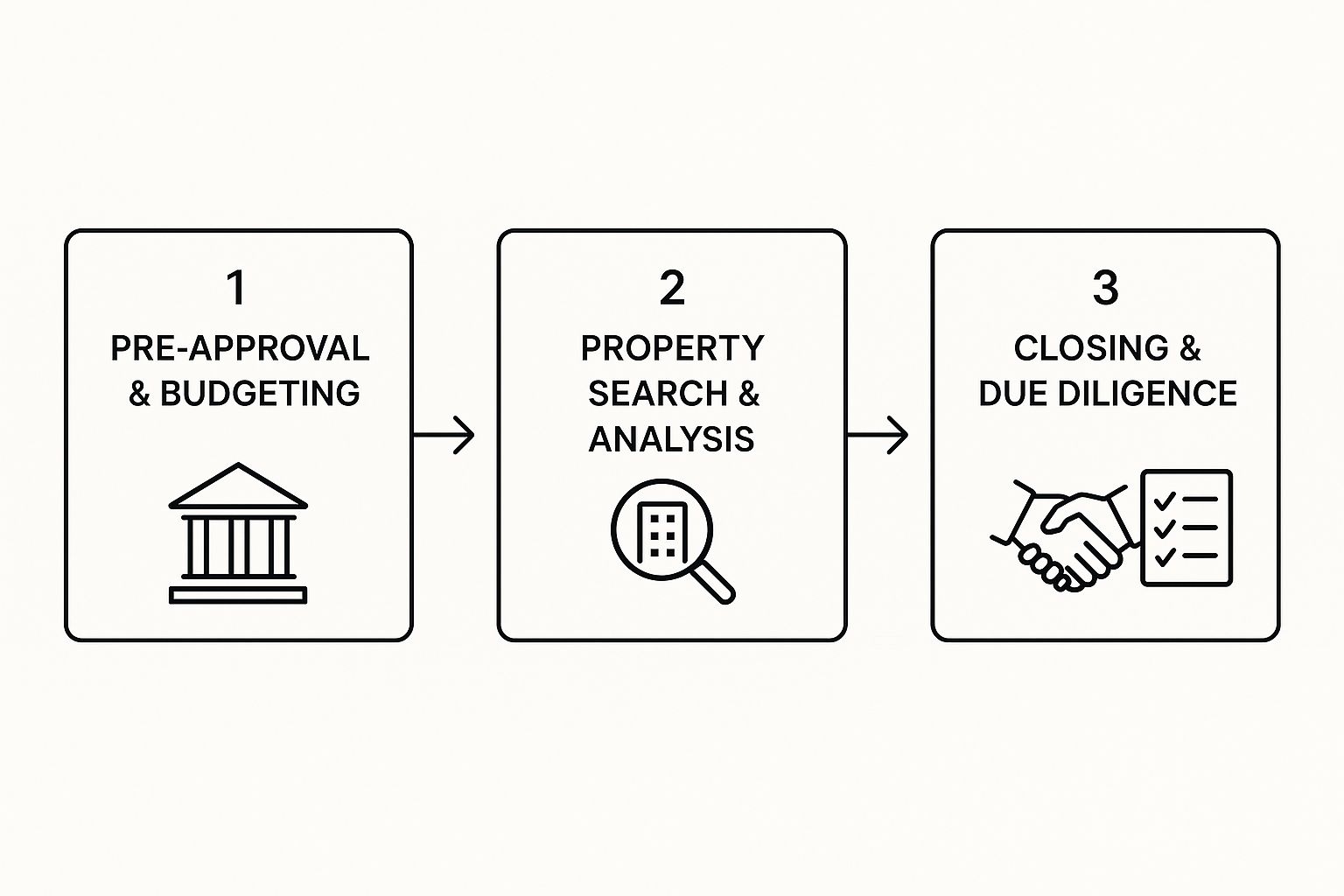
You've done your research and found the right property. Now it's time to make a compelling offer. In a competitive market like Monterey County, your offer needs to stand out.
A strong offer includes a good price, a significant earnest money deposit, and a pre-approval letter from a lender. This shows the seller you are a serious and qualified buyer.
Navigating the Closing Process
Once your offer is accepted, you enter the escrow period. This is usually a 30 to 45-day window where all the final details are handled.
During this time, you will complete property inspections, get a final appraisal, and review all seller disclosures. Staying organized is key to a smooth closing. As the closing date nears, you will sign the final loan documents and transfer the remaining funds.
Why Torrente Is Your Best Partner for Buying and Management

Buying a property is just the first step. Turning it into a profitable investment requires expert management. A local property manager who knows Monterey County is essential.
With 23+ years of experience, Torrente Property Management provides the insider knowledge you need. We can help you find and buy the right property, then manage it to maximize your returns.
More Than Just Rent Collection
A great property manager does more than collect checks. We handle everything from finding and screening tenants to coordinating maintenance.
Our bilingual (English/Spanish) services help you reach a wider pool of qualified applicants. We also provide clear financial reports each month so you always know how your investment is performing. For more tips, read our guide on how to choose a property management company.
Frequently Asked Questions
Here are quick answers to some common questions about buying multifamily property in Monterey County.
What is a good cap rate for Monterey County?
A good cap rate can vary by neighborhood. In general, a rate between 4% and 6% is considered solid for this area, but it depends on the property's condition and location.
How do I analyze a multifamily property's potential?
Look at the Net Operating Income (NOI), cash-on-cash return, and cap rate. Also, review the current rent roll and compare it to market rents to see if there is room for growth.
What are the biggest risks of buying multifamily property?
The biggest risks include unexpected maintenance costs, tenant vacancies, and changing local laws. Thorough due diligence and a healthy cash reserve can help you manage these risks effectively.
Can I manage the property myself?
Yes, but it requires a lot of time and expertise. A professional property manager handles daily operations, tenant issues, and legal compliance, freeing you to focus on your investment strategy.
Why should I work with a licensed broker like Torrente?
A licensed broker with local expertise provides end-to-end support. We help you find the right property, negotiate the best deal, and can seamlessly transition to managing it for you after the purchase.
Ready to take the next step in your investment journey? With over 23 years of local experience, Torrente Property Management is your dedicated partner for finding, purchasing, and managing profitable multifamily properties. Contact us today at (831) 582-8916 to start the conversation.

Top 7 Trusted Home Watch Services in Monterey Bay
Owning a home in beautiful Monterey Bay is a dream. But when you are away from your Carmel or Pebble Beach property, that dream can cause worry. You might wonder: What if a pipe bursts? What if a storm causes damage?
This is why finding one of the best trusted home watch services in Monterey Bay is so important. These services are your eyes and ears when you're gone. They make sure small problems don't turn into big, expensive ones.
According to the Insurance Information Institute, water damage and theft are very common homeowner insurance claims. The risk of these problems goes up when a home is empty. This guide will show you the top local companies that can give you peace of mind and keep your home safe.
What Are Home Watch Services?
Home watch services are professional companies that check on your property when you are not there. This is especially important for second homes or if you travel often. They look for problems like leaks, pests, or signs of a break-in.
Leaving a home empty in areas like Monterey or Salinas can be risky. Storms can cause damage, and empty houses can attract thieves. A good home watch service helps prevent these issues. They offer regular inspections and manage any needed repairs.
What to Look for in a Home Watch Provider
When choosing a service, look for a few key things. Make sure the company is licensed and insured. This protects you and your property.
The best providers offer customized plans. They should let you choose how often they visit and what they check. Clear reports with photos are also a sign of a professional, trustworthy service.
1. Torrente Property Management: Monterey Bay’s Trusted Estate Caretaker
Torrente Property Management, Inc. is a top choice for home watch services. They have over 23 years of local experience and a personal, family-led approach. Their program is made for owners of vacant or seasonal homes in the Monterey Bay area.
They offer full oversight to protect your property's value. This gives homeowners real peace of mind. Torrente acts as a dedicated guardian for your investment.

Why Torrente Offers the Best Home Watch Services
Torrente's service is more than just a quick walkthrough. They have a strong program that covers all key parts of home security and maintenance. It is also smart to understand your Vacation Home Insurance, as a professional caretaker can help meet insurance rules.
Their service has three main parts:
- Regular Inspections: They perform detailed checks inside and outside your home. This includes looking for leaks, pests, storm damage, or security issues.
- System Checks: They make sure your heating, plumbing, and electrical systems work correctly. This helps prevent costly surprises like burst pipes.
- Vendor Management: They use their network of trusted local vendors for landscaping, pool service, or emergency repairs. Their team oversees all the work.
A Local Reputation Built on Trust
What makes Torrente special is their mix of modern tools and community trust. Owners who live far away love their online owner portal. It gives real-time updates and makes communication easy.
Their "treat it like our own" philosophy has guided their family business for over 23 years. They also offer bilingual (English/Spanish) services, which helps them communicate clearly with everyone. This makes them one of the best trusted home watch services in Monterey Bay.
| Feature | Benefit |
|---|---|
| 23+ Years Local Experience | Deep knowledge of local risks and a trusted network of vendors. |
| Bilingual Services | Clear communication for all clients and service providers. |
| Cloud-Based Owner Portal | 24/7 access to property status, reports, and updates. |
| Tailored Care Plans | A single contact for all property needs, from security to landscaping. |
For homeowners in Carmel, Pebble Beach, or Pacific Grove, Torrente's estate caretaker services provide amazing care. You can learn more about their programs for the Monterey Peninsula on torrenteproperties.com.
Website: torrenteproperties.com
2. Always Home Services (Monterey Bay) — Home Watch Program
Always Home Services has over 25 years of local experience. They offer a structured Home Watch Program for owners of second homes. Their service uses detailed checklists and clear communication to monitor your property. They serve Carmel, Pebble Beach, and the greater Monterey Bay area.

Key Features and Offerings
Always Home Services combines regular inspections with helpful concierge options. This makes them one of the best trusted home watch services in Monterey Bay. Their program prepares your home for your arrival and secures it when you leave.
- Customizable Inspections: You can choose weekly, biweekly, or monthly visits.
- Detailed Reporting: Clients get reports with photos and updates for total transparency.
- Concierge Services: They can handle pre-arrival cleaning, grocery shopping, and more.
- Vendor Management: They coordinate with local vendors for maintenance or repairs.
Pros and Cons
| Pros | Cons |
|---|---|
| Deep Local Roots: 25+ years of experience in the Monterey Bay community. | Quote-Based Pricing: You must contact them for a price quote. |
| Structured Program: Their checklist-driven service ensures consistent inspections. | Dispersed Information: Website information is spread across multiple pages. |
| All-in-One Convenience: Concierge services make returning to your home easy. |
Always Home Services is a great choice for homeowners who want a reliable system. Their local knowledge and concierge options offer a complete solution.
Website: https://www.alwayshomeservices.com
3. Premier Home Watch and Concierge (Carmel-by-the-Sea)
Premier Home Watch and Concierge is a boutique service that offers very personal care. They focus on Carmel and Pebble Beach. Their hands-on approach is designed for the needs of second-home owners in the area.

Key Features and Offerings
This service mixes careful weekly property checks with many concierge options. Their clear service descriptions and easy online scheduling make them a top choice. They offer both reliability and convenience.
- Boutique Home Watch: They provide weekly inspections and vendor scheduling with a personal touch.
- Concierge Add-Ons: Services include mail handling, holiday decorating, and move-in setup.
- Project Oversight: They can manage renovations and repairs with their network of vendors.
- Online Scheduling: Their website makes it easy to book consultations and visits.
Pros and Cons
| Pros | Cons |
|---|---|
| Highly Personalized Service: The boutique model means services are tailored to each client. | Consultation-Based Pricing: You need a consultation to get pricing details. |
| Strong Local Focus: Deep knowledge of the Carmel and Pebble Beach markets. | Potential Capacity Limits: As a smaller team, they might be busy during peak seasons. |
| Flexible and Comprehensive: Offers a wide range of options for total convenience. |
Premier Home Watch and Concierge is perfect for homeowners who want a dedicated, high-touch service. Their blend of home watch and concierge support offers a complete solution.
Website: https://www.phwcarmel.com
4. Vintage Property Management (Carmel) - Home Management
Vintage Property Management is based in Carmel. They offer a Home Management program for second-home owners. Their services focus on regular oversight and vendor coordination. This ensures your property stays secure and well-maintained.

Key Features and Offerings
Vintage is a great option for owners who might rent out their second home later. They can easily switch from a simple home watch plan to full rental management. This flexibility makes them one of the best trusted home watch services in Monterey Bay.
- Tailored Management Programs: They customize inspection schedules to fit your needs.
- Concierge Coordination: They manage vendors for maintenance and repairs.
- Single Point of Contact: A local office ensures clear and simple communication.
- Rental Service Expansion: They can help you transition to long-term rental management.
- Luxury Home Expertise: They have a lot of experience with high-value homes in the area.
Pros and Cons
| Pros | Cons |
|---|---|
| Deep Local Knowledge: As a Carmel firm, they have great local expertise. | Requires Direct Outreach: You must contact them for pricing and service details. |
| Supports Evolving Needs: They can adapt if you decide to rent out your property. | Rental Focus: The website focuses more on rentals than home watch services. |
| Personalized Service: A dedicated contact provides a personal management experience. |
Vintage Property Management is ideal for homeowners who want a personal relationship with their manager. Their ability to customize plans is a big plus for any absentee owner.
Website: https://carmelvpm.com
5. Central Coast Home Concierge (Monterey Peninsula)
Central Coast Home Concierge takes a lifestyle-focused approach. Their programs mix property checks with high-end concierge services. They make sure your home is not only secure but also ready for your return. Their service is about creating a seamless, luxury home experience.

Key Features and Offerings
This service treats home watch as part of a larger hospitality experience. This makes them a great choice for owners who value comfort and convenience. Their flexible menu lets you build a service package that fits your exact needs.
- Arrival & Departure Programs: They can stock the pantry and prepare the home for your arrival.
- Flexible Menu: You can choose from many options, like personal chef services or event catering.
- Home Checks: They offer basic property checks to make sure everything is okay while you're away.
- Local Concierge Access: A single phone call connects you to dinner reservations or home maintenance.
Pros and Cons
| Pros | Cons |
|---|---|
| Enhances Second-Home Experience: Focuses on comfort, making visits feel easy. | Not a Formal Home Watch Company: They are not licensed home watch professionals. |
| Highly Flexible & Customizable: You only pay for the services you need. | No Published Pricing: You must contact them directly for cost details. |
| Local Expertise & Support: Strong local connections give you access to premium services. | Scope Varies by Agreement: Service details must be clearly defined upfront. |
Central Coast Home Concierge is best for the owner who wants a luxury arrival experience. It's less about security-focused inspections and more about comfort.
Website: https://coastconciergeservices.com
6. Rover — House Sitting in Monterey/Pebble Beach/Carmel-by-the-Sea
Rover is a good solution for homeowners who also need pet care. It connects you with local, background-checked house sitters. This is great for short trips where having someone stay overnight adds security and keeps pets happy at home.
Key Features and Offerings
Rover's strength is its large network and easy-to-use app. While not a formal home watch company, it's a practical option for pet owners who want their home to look occupied.
- Vast Sitter Network: You can search and compare many house sitters in Monterey and Carmel.
- Integrated Platform: You can book, message, and get photo updates all through the Rover app.
- Background Checks: Sitters on the platform have passed a background check.
- Transparent Pricing: Rates are set by each sitter and shown clearly on their profiles.
- The Rover Guarantee: Bookings include the Rover Guarantee for extra peace of mind.
Pros and Cons
| Pros | Cons |
|---|---|
| Combines Pet and Home Care: A great option for pet owners on short trips. | Not a Formal Home Watch Service: Sitters are not trained property managers. |
| Transparent and Easy Booking: The platform makes it easy to find and book a sitter. | Quality Varies: Service depends on the individual sitter you choose. |
| Clear Pricing and Reviews: You can see sitter rates and reviews upfront. |
Rover is a strong choice for shorter trips when you need pet care and a home presence. For more dedicated home care, consider other trusted home watch services in Monterey Bay on torrenteproperties.com.
Website: https://www.rover.com/monterey--ca--house-sitting/
7. Santa Cruz County Sheriff’s Office — Vacation House Check (Free, unincorporated areas)
For homeowners in unincorporated Santa Cruz County, the Sheriff’s Office has a free Vacation House Check program. Volunteers or deputies will do drive-by and perimeter checks while you are away. This is a great no-cost option to add to your security plan, but it doesn't replace a full home watch service.
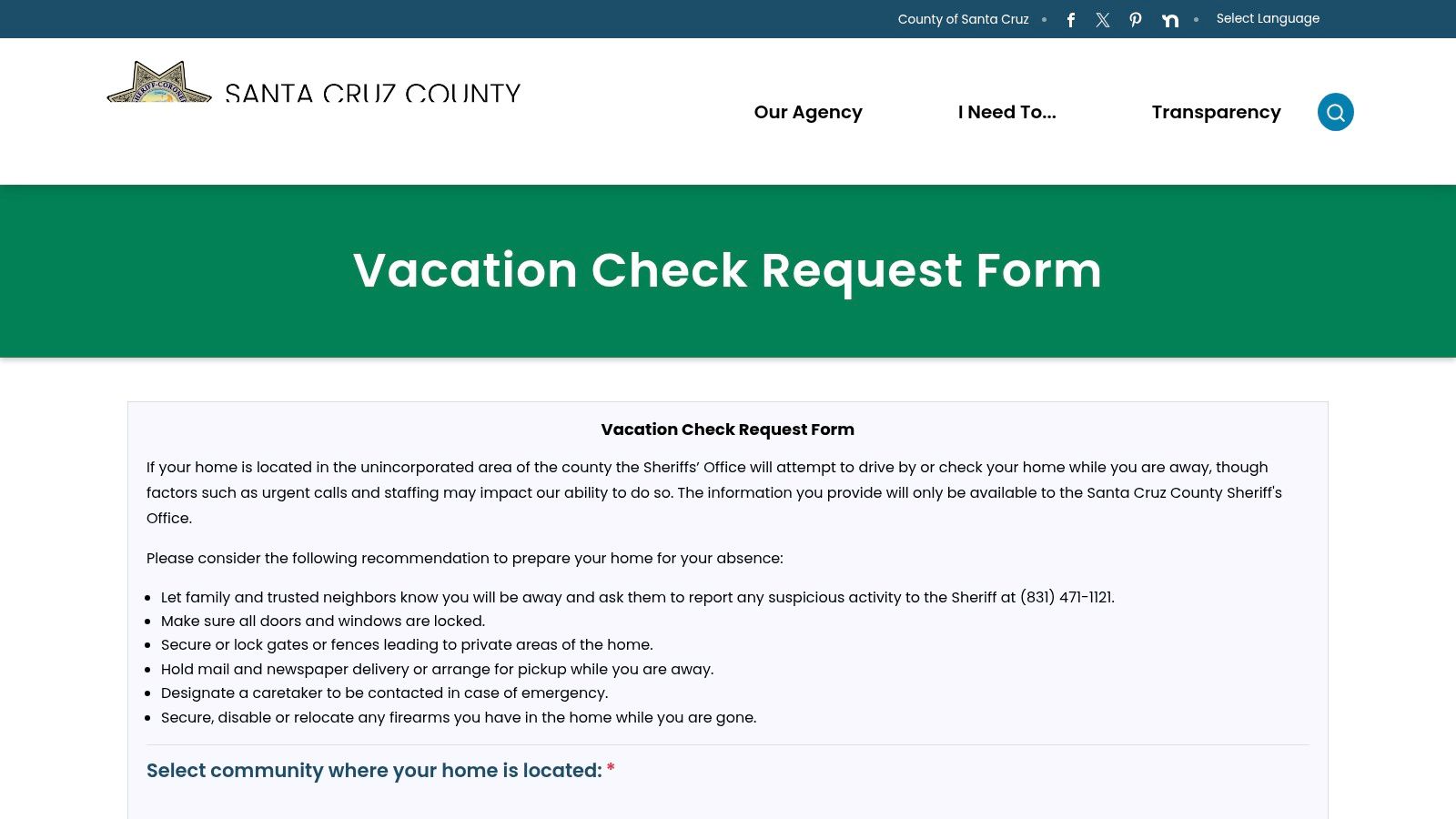
Key Features and Offerings
This program is a unique, community-focused security measure. It's designed to provide a visible law enforcement presence at no charge to you.
- Free Service: There is no cost to request a vacation house check.
- Official Oversight: The program is run by the Santa Cruz County Sheriff’s Office.
- Easy Online Request: You can easily submit a request online before you travel.
- Perimeter Security Checks: Officials will check the outside of your property for any signs of trouble.
Pros and Cons
| Pros | Cons |
|---|---|
| Completely Free: Adds a layer of security at no cost. | Limited Geographic Area: Only for homes in unincorporated Santa Cruz County. |
| Easy to Arrange: A simple online form is all you need. | No Interior Access: The service does not check inside for leaks or other issues. |
| Pairs Well with Other Services: A great addition to a professional home watch program. | Subject to Availability: Checks depend on staffing and emergency call volume. |
The Sheriff’s Vacation House Check is a smart, free resource. While it's not a substitute for the best trusted home watch services in Monterey Bay, it's a great supplementary tool.
Frequently Asked Questions (FAQs)
What is the main difference between a house sitter and a home watch service?
A home watch service is a professional company with licensed and insured staff who perform scheduled inspections. A house sitter is usually an individual who lives in the home temporarily, providing a presence and often caring for pets.
How often should a home watch service check my property?
This depends on your needs and insurance requirements. Many homeowners choose weekly or bi-weekly visits to catch potential issues like water leaks or pest problems early.
What happens if a home watch service finds a problem?
A professional service will immediately contact you with a report and photos. They will then follow your instructions and can coordinate with trusted local vendors to fix the issue.
Is a home watch service expensive?
Costs vary based on the size of your property and the frequency of visits. However, the service is often very affordable compared to the high cost of repairing damage from a burst pipe or break-in.
Can a home watch service help with preparing my home for my arrival?
Yes, many top services offer concierge options. They can stock your fridge, adjust the thermostat, and prepare the home so it's ready for you the moment you walk in the door.
Secure Your Peace of Mind Today
Choosing the right home watch service means trusting someone with your valuable property. It's about finding a partner with local roots, a proven track record, and a promise to care for your home. This choice protects your investment and gives you peace of mind.
We've looked at many options, from full-service caretakers to free vacation checks. To make the best choice, consider what level of care you need. Think about your budget and the unique needs of your Monterey Bay home.
Key Takeaways for Selecting Your Home Watch Partner:
- Verify Credentials: Always choose a service that is licensed, bonded, and insured.
- Request Customization: The best services offer plans tailored to your home's specific needs.
- Prioritize Communication: Look for a provider who offers clear, consistent reports and updates.
Finding the best trusted home watch services in Monterey Bay means finding a partner who will protect your home as if it were their own. By checking your options, you can leave your home knowing it is in good hands.
Ready to protect your home with a team that has served Monterey Bay for over 23 years? Contact Torrente Property Management today at (831) 582-8916. Let us give your home the professional care it deserves.

A Seasonal Home Maintenance Checklist for Monterey Bay
Owning a home in the beautiful Monterey Bay area is a big investment. The coastal climate, from Salinas to Carmel, brings misty mornings and winter rains. This weather means your home needs regular care to stay safe and valuable.
Putting off maintenance can be a silent threat to your property. According to a study by the National Association of Realtors, neglecting routine upkeep can decrease a home's value by as much as 10% over time. This seasonal home maintenance checklist gives you a clear plan to turn big chores into simple, year-round tasks.
Following this guide helps protect your home from coastal challenges like moisture, salt air, and pests. By staying ahead of repairs, you can avoid costly surprises and keep your property in great shape. This checklist breaks down jobs by season, from HVAC care to getting your yard ready. It’s a smart way to protect your investment.
1. Spring Maintenance Checklist
As the weather warms up, it’s the perfect time to tackle outdoor tasks and prepare your home for the year ahead.
Check HVAC System and Filters
Your home's heating and air conditioning (HVAC) system is like its lungs. It works best when it can breathe easily. A dirty air filter makes the system work harder, which raises your energy bills.
A clogged filter also hurts your indoor air quality. For families with allergies, clean filters are a must. Swapping old filters for new ones can make a big difference.
Actionable Tips for HVAC Care:
- Check Filters Monthly: Look at your filter each month. If you can't see light through it, it's time to replace it.
- Schedule a Tune-Up: Book a professional check-up in the spring. Technicians are often less busy, making it easier to get an appointment.
- Keep Records: Write down when you change filters or have the system serviced. This is helpful for warranty claims.
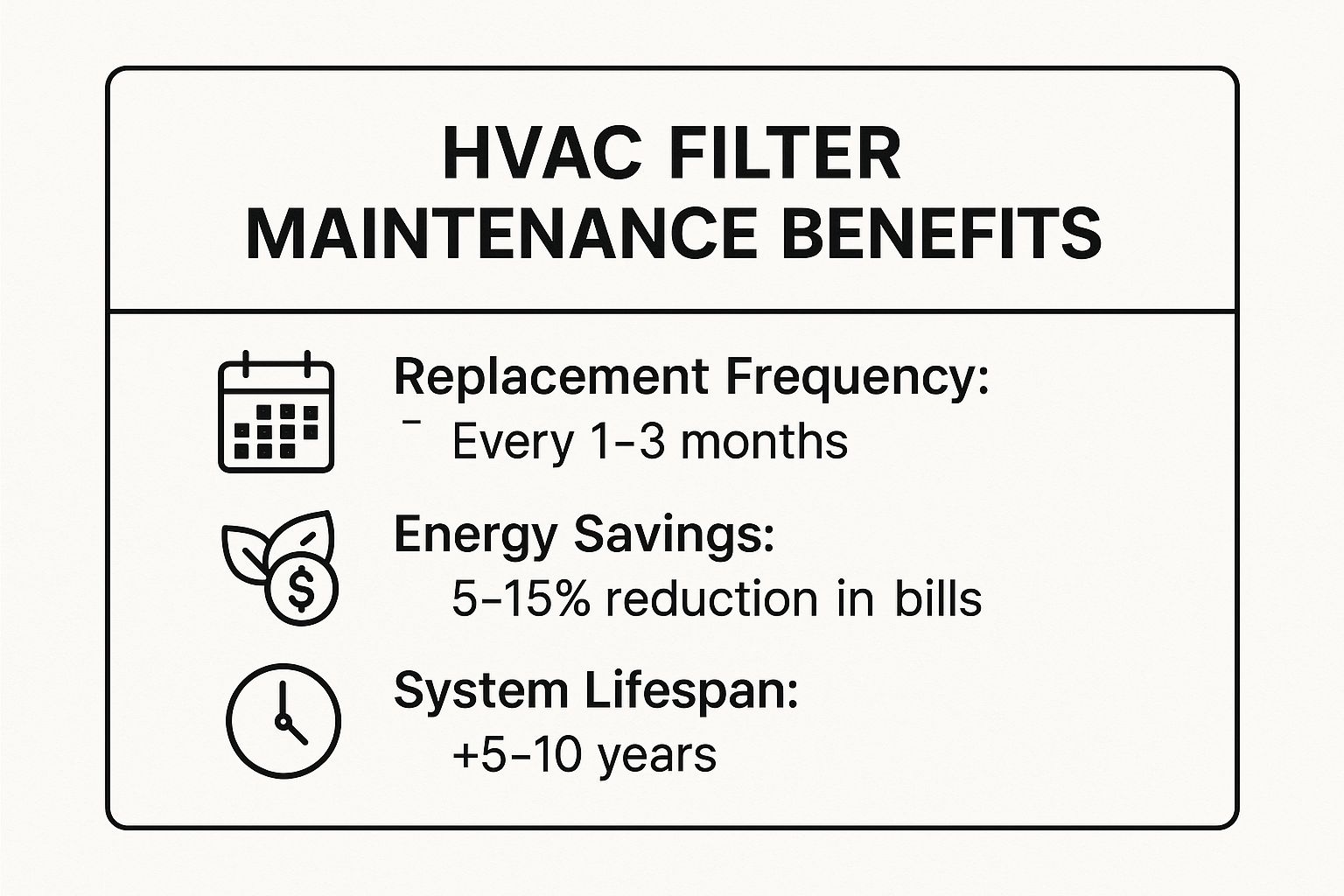
These simple steps save you money on energy bills and help your expensive system last longer. For a deeper look, check out this ultimate HVAC preventative maintenance checklist.
Inspect Your Roof
Your roof protects your home from rain, wind, and sun. Giving it a regular check is a key part of your seasonal home maintenance checklist.
A small problem like a cracked shingle can let water in, leading to big damage. Finding and fixing a small leak might cost a few hundred dollars. If you ignore it, the repair could cost thousands.
Actionable Tips for Roof Care:
- Inspect from the Ground: Use binoculars to safely look for cracked or missing shingles from the ground.
- Get a Professional Check: Have a pro inspect your roof every few years, or after a big storm.
- Fix Small Issues Fast: Don't wait to fix a loose shingle. A quick repair prevents a bigger, more expensive problem later. For more tips, review these 7 easy steps for a long-lasting roof.
Clean Gutters and Downspouts
Your gutters direct rainwater away from your home, protecting your foundation and siding. When they get clogged with leaves and debris, they can't do their job.
Clogged gutters can cause water to pool around your foundation, leading to serious cracks. They can also cause roof leaks and rot.
Actionable Tips for Gutter Care:
- Clean Gutters Twice a Year: Clean them in late spring and again in the fall.
- Check for Good Flow: After cleaning, run a hose in the gutter to make sure water flows freely through the downspouts.
- Check After Storms: Look for damage or clogs after any major storm.
2. Summer Maintenance Checklist
Summer is the time to focus on your home's exterior and keep things running smoothly during the warmer months.
Maintain Decks and Patios
Your deck and patio are important outdoor living spaces. They need regular care to stay safe and look good.
Ignoring your deck can lead to rot, splinters, and other hazards. Regular cleaning and sealing prevent these issues and keep the space safe for your family. A clean deck also reduces the risk of slips and falls, especially in our damp coastal climate.
Actionable Tips for Deck and Patio Care:
- Inspect and Clean Yearly: Check for loose boards or wobbly railings. Clean the surface to remove dirt and mildew.
- Seal or Stain Wood Decks: Seal or stain wood decks every two or three years to protect them from moisture.
- Clear Debris Quickly: Don’t let wet leaves pile up. They trap moisture and can cause rot.
Check Exterior Paint and Siding
Your home's paint and siding are its shield against the weather. Keeping them in good shape is a critical part of your seasonal home maintenance checklist.
Small cracks in paint can let water in, causing rot and other damage. A well-kept exterior also boosts your home's curb appeal and value.
Actionable Tips for Exterior Care:
- Inspect Each Year: Walk around your home and look for peeling paint or damaged siding.
- Wash Gently: Use a power washer on a low setting to clean away dirt and grime.
- Seal Gaps: Check the caulk around windows and doors. Apply a fresh bead if it's cracked or old.
Service Your Lawn and Landscape
Your yard is the first thing people see. Good landscaping boosts your home's value and can prevent problems like pests and soil erosion. For second-home owners in Monterey, a tidy yard makes the property look occupied and secure.
Actionable Tips for Landscape Care:
- Water Smart: Water your lawn deeply but less often. This builds strong roots that can handle dry spells.
- Prune Plants: Trim trees and shrubs to keep them healthy and away from your house.
- Add Mulch: A layer of mulch helps your soil hold moisture and keeps weeds down.
At Torrente, we can manage these tasks for you. Learn more about our lawn and landscape seasonal care on torrenteproperties.com.
3. Fall Maintenance Checklist
As cooler, wetter weather approaches, prepare your home for the Monterey Bay winter.
Winterize Your Plumbing
Your plumbing can be at risk when temperatures drop. A frozen pipe can burst and cause major water damage. That's why winterizing your plumbing is a key step in your seasonal home maintenance checklist.
Taking a few simple steps can prevent an expensive disaster. For example, a homeowner in Monterey County who drained their outdoor faucets avoided thousands in potential flood damage after a surprise freeze.
Actionable Tips for Plumbing Care:
- Drain Outdoor Faucets: Disconnect garden hoses. Turn off the water to outside spigots and let them drain.
- Insulate Pipes: Use foam sleeves to protect pipes in cold areas like garages or crawl spaces.
- Know Your Main Shutoff: Make sure everyone in your home knows where the main water shutoff valve is.
Inspect Windows and Doors
Windows and doors keep your home secure and energy-efficient. Check them for drafts and damage before winter.
Worn-out weatherstripping can make your energy bills go up. Replacing it is a cheap and easy fix that makes a big difference. This is especially important for absentee owners who need peace of mind. Services like a trusted home watch in Monterey Bay can handle these checks for you.
Actionable Tips for Window and Door Care:
- Check Weatherstripping: Look for cracked or missing seals around doors and windows and replace them.
- Lubricate Moving Parts: Use a silicone spray on hinges and tracks to keep them working smoothly.
- Test All Locks: Make sure every lock on your windows and doors is working correctly.
Check Caulking and Weatherstripping
Gaps around windows, doors, and pipes let in drafts and moisture. Sealing them is an easy way to save money and protect your home. According to the U.S. Department of Energy, air sealing your home can save up to 15% on heating and cooling costs.
Actionable Tips for Sealing Your Home:
- Remove Old Caulk: Always scrape off old, cracked caulk before applying a new layer.
- Use the Right Material: Choose silicone caulk for wet areas like bathrooms and windows.
- Apply in Good Weather: Caulk works best when applied in mild temperatures, between 40°F and 80°F.
4. Winter Maintenance Checklist
Winter tasks are focused on safety and preparing for the spring thaw.
Inspect Your Chimney and Fireplace
A cozy fire is great, but a dirty chimney is a major fire hazard. Creosote, a substance from burning wood, can build up and catch fire.
The National Fire Protection Association reports that failing to clean chimneys is a leading cause of home heating fires. A professional inspection can also spot structural problems before they get worse.
Actionable Tips for Chimney Care:
- Get It Cleaned Annually: If you use your fireplace often, have it professionally cleaned once a year.
- Use a Chimney Cap: A cap keeps rain, animals, and debris out of your chimney.
- Burn the Right Wood: Use only dry, seasoned hardwood. It creates less creosote.
Test Smoke and CO Detectors
This is a simple but life-saving task. Test all your smoke and carbon monoxide detectors to make sure they are working properly. Replace the batteries at least once a year.
Look for Pests
Pests often try to find a warm place to hide during the winter. Check your attic, basement, and crawl spaces for any signs of unwanted guests. Sealing up any cracks or holes can help keep them out. For high-end properties, professional estate caretaker and maintenance services in Monterey often include pest monitoring.
Frequently Asked Questions (FAQs)
How often should I clean my gutters?
It’s best to clean your gutters at least twice a year. Do it once in the late spring and again in the late fall after most of the leaves have fallen. If you have a lot of trees, you might need to do it more often.
Can I do all this maintenance myself?
Many tasks, like changing air filters and cleaning gutters, are great for DIY. However, jobs like roof inspections or HVAC tune-ups are best left to professionals. They have the right tools and training to do the job safely.
What’s the most important winter maintenance task?
Preventing frozen pipes is one of the most critical winter tasks. A burst pipe can cause thousands of dollars in water damage. Always disconnect your hoses and insulate any exposed pipes before the first freeze.
How much can I save with regular maintenance?
Regular maintenance saves you money in many ways. It lowers your energy bills, prevents expensive emergency repairs, and helps your appliances last longer. It also protects your home's value over time.
Why is a seasonal checklist important for a second home?
For a second home or vacation property, a maintenance checklist is vital. Since you aren't there all the time, small problems can become big disasters. A property manager can handle these tasks for you, giving you peace of mind.
Let Torrente Handle Your Checklist
Following this seasonal home maintenance checklist helps protect your property's value and safety. By breaking down the work into four seasons, you can stay on top of your home's needs without feeling overwhelmed. From checking your HVAC system in the spring to cleaning your chimney in the fall, these steps prevent small issues from becoming costly emergencies.
For homeowners in the Monterey Bay area, especially those with second homes or investment properties, managing this list can be a challenge. That’s where we come in. Torrente Property Management acts as your trusted partner, ensuring every task is done right and on time. Our bilingual team understands the unique needs of our coastal community.
Protect your investment and enjoy peace of mind. To learn how we can manage your property's seasonal needs, Contact Torrente Property Management Inc. or call us today at (831) 582-8916.
Find Best Rental Property Services in Salinas, CA
Owning a rental property in Salinas, CA is a great way to earn income. But managing it yourself can be a full-time job. You have to deal with legal issues, late-night repair calls, and finding good tenants. According to the National Association of Residential Property Managers (NARPM), 89% of owners felt less stress after hiring a professional manager. This guide will help you find the best rental property services near you in Salinas, CA.
We will show you the top services and companies to protect your investment. This list will help you understand your options and make a smart choice. We'll cover everything from online listing sites to full-service local experts.
To pick the right partner, you need to ask the right questions. Knowing what to look for helps you find a team that treats your property like their own. This guide will give you the foundation to make a great decision for your Salinas rental.
Why Salinas Property Owners Need Professional Management
Managing a rental in a growing market like Salinas is tough. Self-managing means handling complex legal rules, emergency maintenance, and financial tracking. A professional property manager takes care of these tasks for you.
They handle rent collection, tenant issues, and property upkeep. This frees up your time and reduces stress. A good manager ensures your property follows all California landlord-tenant laws, protecting you from costly mistakes.
What to Look For in a Salinas Property Management Company
When choosing a company, look for a few key things. Make sure they are licensed and have deep knowledge of the Salinas area. They should have a strong process for screening tenants to find reliable renters.
Good communication and quick responses are also vital. The best companies use technology like online portals for owners and tenants. This makes it easy to see financial reports and track maintenance requests.
1. Torrente Property Management: The Best Local Option
For property owners who want a trusted local partner, Torrente Property Management Inc. is a top choice. With over 23 years of experience in Monterey County, this family-run firm knows the Salinas market inside and out. Their guiding principle is to "treat it like our own property."

Torrente offers full-service support for your rental. This includes marketing your property, finding and screening tenants, collecting rent, and handling all maintenance. Their dedicated Salinas team has deep roots in the community, providing hands-on support.
Why Torrente is Trusted by Owners
Torrente is a trusted partner for both local investors and absentee owners. Their long history in the area gives them unique insight into pricing rents correctly and finding qualified tenants quickly. Their bilingual (English/Spanish) team is a huge plus in the diverse Salinas community.
- Over 23 Years of Local Experience: Deep knowledge of Salinas rental trends, laws, and the community.
- Bilingual Service: Clear communication with a wider pool of potential tenants, reducing vacancies.
- Full-Service Management: They handle everything from leasing and rent collection to emergency repairs and financial reporting.
- Technology-Driven Service: Online portals give owners 24/7 access to financial statements and property updates.
Their commitment to treating every property like their own provides peace of mind. This philosophy, combined with modern technology and transparent reporting, has earned them a 5-star reputation for efficient and trustworthy service.
Pros:
- Over 23 years of family-driven expertise in Monterey County.
- Bilingual services (English/Spanish) improve communication.
- Comprehensive, all-in-one management from leasing to financials.
- 24/7 emergency maintenance and convenient online portals.
- Personalized, hands-on management approach.
Cons:
- Does not manage short-term vacation rentals or HOAs.
- Service is focused on the Monterey Bay region.
Website: https://torrenteproperties.com
2. Zillow Rentals (Salinas, CA)
Zillow is a great place to start your search for rental services. It's one of the biggest real estate websites, so it has a huge number of listings. This makes it a powerful tool for advertising your property and finding tenants.
Key Features for Landlords and Tenants
Zillow offers tools that help both property owners and renters. The large number of listings means your property will be seen by many people. Renters get a wide selection of homes and apartments to choose from.
- Large Inventory: Zillow has a massive number of rentals all over Salinas.
- Detailed Filters: You can search by price, number of bedrooms, pet rules, and other features.
- Market Data: The site shows average rent prices, which helps landlords set competitive rates.
- Virtual Tours: Many listings have 3D tours, so you can see the property from your computer.
Tips for Using Zillow
To get the most out of Zillow, landlords should use high-quality photos and write a good description. It's also important to respond quickly to people who are interested.
Renters should set up email alerts for new listings. While Zillow is great for finding places, you often apply through the property manager. Understanding what managers look for in tenant selection and screening tips can help your application succeed.
Pros and Cons
| Pros | Cons |
|---|---|
| Vast Inventory: Unmatched selection of Salinas rental properties. | Listing Inaccuracies: Sometimes has outdated or duplicate listings. |
| Robust Search Tools: Excellent filters and neighborhood data. | Inconsistent Applications: The application process is different for each landlord. |
| High Visibility: Great for landlords seeking a wide applicant pool. | High Competition: Popular listings get many inquiries. |
Zillow is a key tool for anyone in the Salinas rental market because of its size and search features.
Website: https://www.zillow.com/salinas-ca/rentals/
3. Apartments.com (Salinas, CA)
Apartments.com is another great resource, especially if you're looking for professionally managed apartment buildings. The site focuses on multi-unit properties, which often have on-site support and clear rental policies.
Key Features for Landlords and Tenants
This platform connects renters with established apartment complexes. It is known for having verified listings and useful information about different neighborhoods.
- Verified Listings: Many listings are confirmed as accurate, which reduces the risk of scams.
- Local Guide Data: The Salinas guide shows current rent prices, helping you budget.
- Lifestyle Scores: You can see Walk Score and Transit Score to understand a neighborhood's convenience.
- Viewing Tools: Listings often have 3D tours, photos, and floorplans.
Tips for Using Apartments.com
Tenants can use the "Local Guide" to check rent prices in different Salinas neighborhoods. When you find a place you like, you can schedule a tour directly through the site.
Landlords with apartments will find that this site reaches the right audience. Making sure your listing is "Verified" helps build trust with potential renters.
Pros and Cons
| Pros | Cons |
|---|---|
| Professionally Managed Properties: Good selection of apartments with on-site management. | Fewer Standalone Homes: Not the best place to find single-family houses. |
| Trend and Lifestyle Data: Great for researching rent prices and neighborhoods. | Fragmented Applications: You may have to apply on a separate website. |
| Verified Listings: Provides extra trust for renters. | Niche Focus: Less ideal for those seeking private landlords. |
Apartments.com is perfect for renters who prefer professionally managed apartments in Salinas.
Website: https://www.apartments.com/local-guide/salinas-ca/
4. Realtor.com Rentals (Salinas, CA)
Realtor.com is a trusted platform for finding rentals. It is connected to the National Association of Realtors and lists a wide variety of apartments and single-family homes.
Key Features for Landlords and Tenants
Realtor.com makes it easy to compare properties. The site also has helpful information about different Salinas neighborhoods.
- Targeted Search: You can easily filter for "Apartments" or "Houses" or search by ZIP code.
- Community Profiles: The site gives good overviews of apartment communities, including prices and specials.
- Direct Contact: It's easy to contact the property manager or landlord for more information.
- Detailed Listings: You can quickly find information on pet policies, size, and amenities.
Tips for Using Realtor.com
Landlords should make sure their listings are complete and accurate. Because the site is trusted, good details will attract serious renters.
Renters can use the platform to compare prices and features across different properties. Be aware that you might have to fill out an application on a separate website.
Pros and Cons
| Pros | Cons |
|---|---|
| Detailed Community Info: Excellent for comparing apartment complexes. | Third-Party Applications: Application links often go to other websites. |
| Good Coverage: Features a strong mix of both apartments and houses. | Mobile App Prompts: Can have annoying pop-ups on mobile devices. |
| Trusted Source: Affiliation with the NAR adds credibility. | Listing Overlap: Some listings may be on other rental sites too. |
Realtor.com is a solid choice for finding rentals in Salinas due to its reliable listings and detailed information.
Website: https://www.realtor.com/apartments/Salinas_CA
5. Zumper (Salinas, CA)
Zumper offers a modern, renter-friendly experience. It has a clean design and provides detailed information about specific neighborhoods. It's a great place to find rentals in smaller buildings or newly updated units.
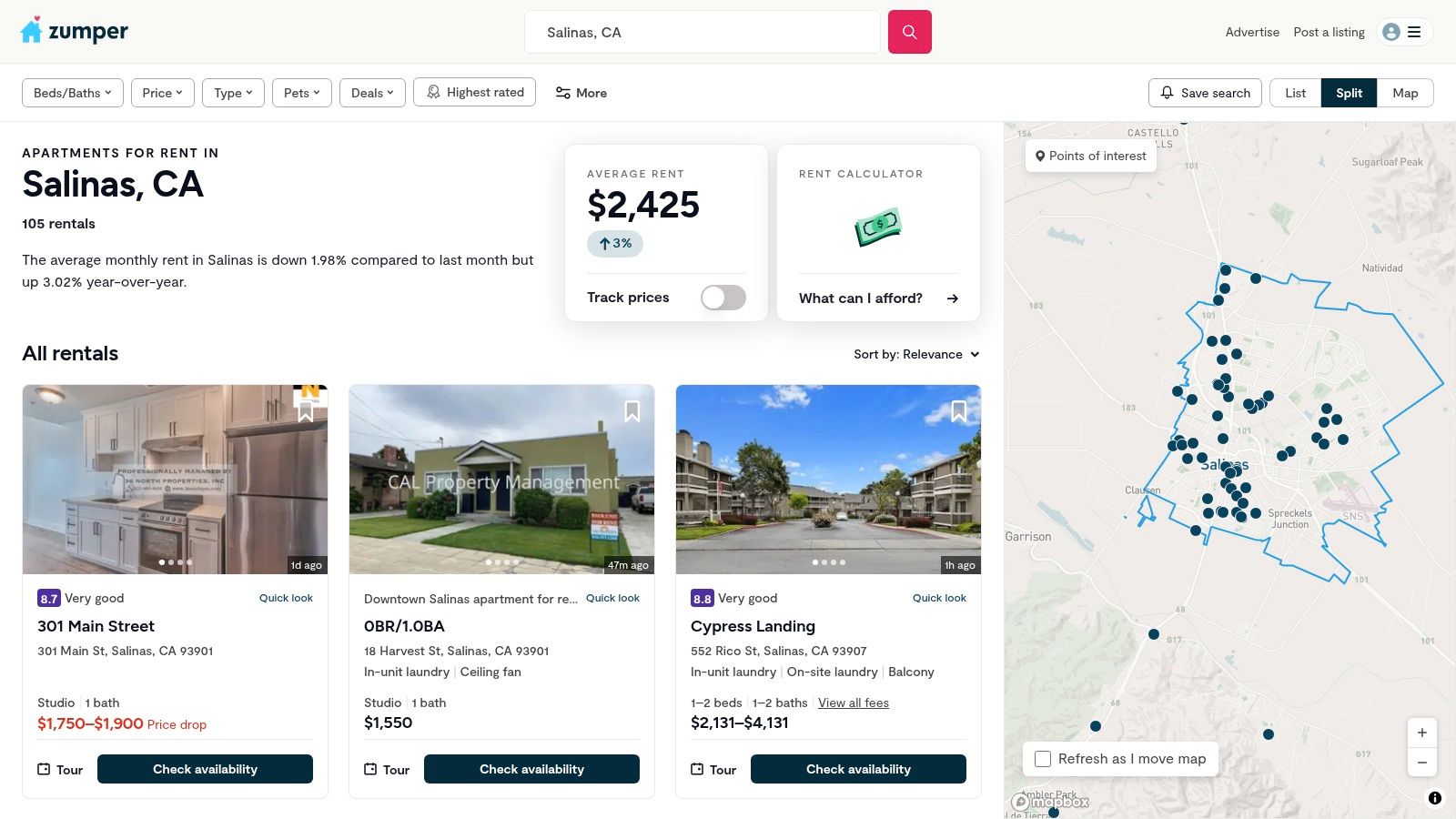
Key Features for Landlords and Tenants
Zumper focuses on providing neighborhood-level data. This helps renters understand local market conditions.
- Neighborhood Pages: See average rent prices in specific areas like Downtown or North Salinas.
- Amenity Filters: Easily search for properties with features like parking or a dishwasher.
- Real-Time Availability: The "Check availability" feature lets you get quick updates on a unit.
- Market Insights: Zumper shows data like what percentage of listings are pet-friendly.
Tips for Using Zumper
Landlords with updated units should show them off with good photos. Zumper’s design is great for showcasing modern properties.
For tenants, the neighborhood rent data is very helpful for budgeting. When you find a place you like, be ready to act fast.
Pros and Cons
| Pros | Cons |
|---|---|
| Surfaces Unique Listings: Great for finding smaller or recently renovated units. | Sponsored Placements: Some listings are promoted and may appear first. |
| Neighborhood-Level Data: Helps you understand rent prices in specific areas. | Redirected Applications: You may have to apply on a different website. |
| User-Friendly Interface: The website and app are simple and easy to use. | Inventory Can Be Smaller: May have fewer listings than larger sites. |
Zumper is a strong choice for its modern design and local market insights.
Website: https://www.zumper.com/apartments-for-rent/salinas-ca
6. Craigslist Monterey Bay (Salinas area)
Craigslist is a classic resource for finding local rentals. It's a classifieds site where private landlords often post unique listings. You can find single rooms, in-law units, and other options not found on bigger platforms.
Key Features for Landlords and Tenants
Craigslist is simple and direct. It connects landlords and tenants without a middleman.
- Diverse Listings: Find everything from apartments to rooms for rent.
- Direct Communication: You can email or call the owner directly.
- Simple Filters: Search by area, price, and number of bedrooms.
- Updated Daily: New listings are posted all the time.
Tips for Using Craigslist
Using Craigslist requires you to be careful. Landlords should post clear photos and descriptions to get good responses.
Tenants should check the site often and be ready to contact landlords right away. Never send money before seeing a property in person and meeting the landlord. Be cautious to avoid scams.
Pros and Cons
| Pros | Cons |
|---|---|
| Budget-Friendly Options: A great source for affordable rentals. | Higher Risk of Scams: You must be careful to avoid fraud. |
| Direct Landlord Contact: Fast and direct communication. | Lack of Standardization: No formal application process on the site. |
| Fast-Moving Inventory: Good for finding a place quickly. | Inconsistent Listing Quality: Posts can have few details or poor photos. |
Craigslist is still a useful tool for finding rentals directly from private landlords in Salinas.
Website: https://monterey.craigslist.org/search/apa
7. Coast & Valley Properties (Local Property Management – Salinas/Monterey County)
Working with a local company like Coast & Valley Properties is another great option. They offer a hand-picked list of rentals that their team manages. This means you work directly with local experts.
Key Features for Landlords and Tenants
This company uses an online portal to make things easy for owners and renters. Their focus on Salinas and Monterey County gives them deep local knowledge.
- 'Available Properties' Page: Their website has an easy-to-use list of available rentals.
- Online Applications: You can apply for a property directly on their website.
- Resident Portal: Tenants can pay rent and request maintenance online.
- Local Expertise: The team knows Salinas neighborhoods and rental laws well.
Tips for Using Coast & Valley Properties
Their inventory is smaller than on big sites, but every property is professionally managed. Tenants should check the "Available Properties" page often.
For property owners, a firm like this offers a complete solution. You can learn more about the benefits of full property management services for owners in Salinas to see the value they provide.
Pros and Cons
| Pros | Cons |
|---|---|
| Direct Local Communication: Speak directly with a team that knows Salinas. | Limited Inventory: Selection is restricted to the properties they manage. |
| Clearer Timelines: The application and move-in process is often simpler. | Fewer Rental Choices: Not a full market overview like larger sites. |
| Professional Management: All listed properties are professionally managed. | Niche Focus: May not have properties in every neighborhood. |
This company is a great choice for those who want direct, professional service and local expertise.
Website: https://coastandvalleypm.com/
Frequently Asked Questions (FAQs)
What do rental property services in Salinas typically cost?
Fees vary, but most full-service companies charge a percentage of the monthly rent, usually between 8-12%. Some may also have a one-time fee for placing a new tenant.
How do property managers screen potential tenants?
They typically run background checks, credit reports, and verify employment and income. They also check rental history and references to find reliable tenants.
What are my responsibilities as an owner if I hire a manager?
Your main jobs are to make decisions on major repairs, approve new tenants, and ensure funds are available for expenses. The manager handles all the day-to-day operations.
Can a property manager help me set the right rent price?
Yes, a good local manager analyzes the Salinas market to set a competitive rent price. This helps attract tenants quickly while maximizing your income.
Why is local expertise so important in Salinas?
A local expert understands neighborhood trends, city regulations, and has a network of trusted local vendors for maintenance. This knowledge is key to managing your property effectively.
Your Next Step to Stress-Free Property Management
Choosing the right support for your Salinas rental is key to your success. We've looked at online platforms like Zillow and local firms like Torrente Property Management. Each has its own benefits, from wide reach to hands-on expertise.
The main takeaway is this: while technology is helpful, it can't replace the full service of a professional manager. The best rental property services near you in Salinas, CA blend modern marketing with deep local knowledge. This ensures your property is not just listed—it’s managed, protected, and profitable.
To find the best fit, ask yourself if you have the time, legal knowledge, and local contacts to manage your property well. If not, a professional partnership is a wise investment. By leveraging modern property management technology through an expert firm, you can enjoy the benefits of ownership without the hassle.
Ready to make your rental property a truly passive investment? Let a professional team handle the details.
Contact Torrente Property Management today to see how our 23+ years of local expertise can help you succeed in Salinas. Call us at (831) 582-8916 for a consultation.

Top Tenant Retention Strategies for Landlords
Keeping good tenants is key for Monterey Bay property owners to protect their investment and ensure steady income. High tenant turnover is more than a hassle; it’s a major expense. According to the National Apartment Association, the cost to turn over a single rental unit can be more than $4,000. This includes lost rent, marketing, repairs, and your time.
In competitive markets like Monterey, Salinas, and Carmel, focusing on tenant retention is a smart business move. It is more profitable to keep reliable tenants than to constantly search for new ones. This guide will provide proven strategies to build tenant loyalty and create a stable rental business.
We will explore the best tenant retention strategies for rental property owners. These tips range from prompt maintenance to fair pricing and positive communication. Each strategy offers practical steps you can use right away to encourage your best tenants to stay, securing your income and protecting your property's value.
1. Proactive Maintenance and Property Upkeep
One of the best tenant retention strategies is to be proactive with maintenance. Instead of waiting for things to break, create a plan for regular inspections and quick repairs. This keeps the property safe and in great condition.
A well-maintained property shows you respect your tenants and their home. It stops small issues, like a leaky faucet, from becoming big problems that make tenants want to leave. Proactive upkeep builds trust and makes tenants want to stay long-term.
Why This Strategy Works
Tenants often say poor maintenance is a top reason for not renewing their lease. By staying ahead of problems, you show you care about providing a quality home. This keeps current tenants happy and attracts great new applicants.
For example, many large property management firms use tenant apps for instant repair requests. They often guarantee a 24-hour response time, which greatly boosts resident satisfaction. This model has proven to be very effective.
This infographic shows how a proactive maintenance plan can help your rental business.
As the data shows, being proactive can lower expensive emergency repair costs by up to 40%. It is a key reason why some properties achieve tenant retention rates of 90% or higher.
How to Implement Proactive Maintenance
Putting this strategy into action requires good organization. Follow these steps to build a strong maintenance system:
- Create Seasonal Checklists: Make detailed lists for spring, summer, fall, and winter. For example, check the A/C in the spring and inspect for drafts in the winter.
- Build a Vendor Network: Find reliable plumbers, electricians, and other contractors in the Monterey area before you need them. Make sure they are licensed and insured.
- Use Technology: Use a tenant portal or property management software to handle maintenance requests. This keeps everything documented and organized.
- Keep Good Records: Document all inspections, repairs, and tenant communications. This is important for tracking the property's history and for legal protection.
A hands-on approach to maintenance directly impacts a tenant’s quality of life. It is one of the most important tenant retention strategies for any rental property owner.
2. Fair and Market-Based Rent Pricing
Setting the right rent price is a balance. You want to make a profit but also keep good tenants. A smart pricing strategy involves analyzing the local market and understanding the true cost of turnover.
This strategy ensures your rent is competitive. It helps you attract and keep great tenants who feel they are getting fair value. When tenants believe their rent is reasonable for the area, they are less likely to move.
Why This Strategy Works
A sudden, large rent increase is a quick way to lose a good tenant. The cost of finding a new tenant—including lost rent and marketing—can often be more than the extra income from a rent hike.
Small, predictable increases build goodwill. They make it an easy financial decision for your current tenants to stay. This is a core part of the best tenant retention strategies for rental property owners.
Key Insight: A 5% rent increase might seem good, but if it causes one month of vacancy, you lose over 8% of your annual income. This erases any gain.
How to Implement Strategic Pricing
A successful pricing strategy requires research and clear communication. Follow these steps to set rent that encourages tenants to renew their lease:
- Analyze the Market Regularly: Don't just check rents once a year. Research similar rental properties in your Monterey or Salinas neighborhood monthly to stay current.
- Know Your Turnover Costs: Add up all the expenses of a vacancy. This includes lost rent, advertising, cleaning, repairs, and your time showing the unit.
- Offer Modest Increases: If you must raise the rent, consider a smaller amount, like 3-5%. This shows tenants you value them and want them to stay.
- Give Plenty of Notice: Inform tenants of any rent change at least 60 to 90 days in advance. This gives them time to budget and decide without feeling rushed.
- Offer Renewal Incentives: You can soften a small rent increase with a perk, like a professional carpet cleaning or a new smart thermostat. This adds value and shows appreciation.
3. Clear Communication and Tenant Relationships
A good landlord-tenant relationship is a powerful tool for retention. This strategy focuses on building trust through consistent, clear, and responsive communication. It makes tenants feel valued and heard.
This approach turns the relationship into a partnership. When tenants feel respected, they are more likely to take care of the property and report issues quickly. A positive relationship is a cornerstone of the best tenant retention strategies for rental property owners.

Why This Strategy Works
Tenants who feel ignored will not hesitate to leave when their lease is up. Good communication prevents problems and builds a sense of stability. This positive environment makes your rental more attractive than others.
At Torrente Property Management, our bilingual staff helps us communicate clearly with the diverse communities in Salinas and Monterey. This personalized service improves understanding and builds stronger tenant relationships.
How to Implement Open Communication
Building a good communication system requires clear processes. Follow these steps to improve your landlord-tenant relationships:
- Set Clear Expectations: On day one, give tenants a welcome packet. Include contact info, property rules, and how you prefer to communicate.
- Be Proactive: Send occasional check-in emails or newsletters. Share property updates or seasonal reminders, like winter safety tips.
- Listen and Acknowledge: When a tenant reports a problem, respond quickly. A simple, "Thanks for letting me know, I'm looking into it," shows you are paying attention.
- Ask for Feedback: Send a simple tenant satisfaction survey once a year. Ask what they like and what could be better. This gives you valuable information.
Using an online portal for payments and maintenance requests also helps. It offers convenience and transparency, making communication easier for everyone.
4. Flexible Lease Terms and Renewal Options
Life is unpredictable. Offering flexible lease terms is a powerful strategy that goes beyond the standard one-year lease. This method involves providing different lease lengths and reasonable renewal choices.
This flexibility shows tenants you value them as partners. When tenants know you are willing to work with them through life changes, they are more likely to stay. This approach builds goodwill and helps create long-term, stable tenancies.
Why This Strategy Works
Rigid lease agreements are a common reason for tenant turnover. A good tenant might need to move for a new job or want a shorter renewal term. If no options are available, they are forced to leave.
By providing choices, you make it easier for good tenants to stay. This adaptability leads to lower vacancy rates and more consistent income. It is one of the best tenant retention strategies for rental property owners.
How to Implement Flexible Lease Options
This strategy requires clear policies and proactive communication. Follow these steps to offer flexibility without losing stability:
- Offer Renewal Choices: About 90 days before a lease ends, contact your tenant with options. Offer a 12-month, 6-month, or even a month-to-month term.
- Create Clear Policies: Have a written policy for common requests, like adding a roommate. Outline any required screening or fees so expectations are clear.
- Include a Fair Termination Clause: Instead of banning lease breaks, include a fair early termination option. This usually involves a set fee (like two months' rent) that protects you financially.
- Handle Rent Changes with Care: Be transparent about any rent adjustments when offering a renewal. To handle this correctly, it helps to use professional rent increase letters.
5. Incentive Programs and Tenant Rewards
Rewarding tenant loyalty is one of the best tenant retention strategies. Incentive programs provide real value, making tenants feel appreciated. This encourages good habits, like paying rent on time, and motivates them to renew their lease.
A good rewards program benefits everyone. Tenants get perks, and landlords reduce the high costs of turnover. A small investment in tenant rewards can lead to big returns in stability and profit.

Why This Strategy Works
Everyone likes to feel appreciated. When tenants feel valued, they are more likely to take care of their home and stay long-term. Showing appreciation is much more effective than only contacting tenants when rent is due.
For example, many apartment communities in Salinas host tenant appreciation events like summer BBQs. They often report a noticeable improvement in renewal rates, sometimes as much as 15%.
How to Implement Incentive Programs
A good rewards program needs careful planning. Follow these steps to create a system that works for your property:
- Know the ROI: First, calculate your average turnover cost. Compare that number to the cost of your proposed incentives. A $100 rent credit for renewing is much cheaper than a month of vacancy.
- Create Tiered Rewards: Reward tenants for how long they stay. A tenant renewing for a second year might get a carpet cleaning. A five-year resident could get a smart-home device.
- Offer Non-Monetary Perks: Not all rewards need to be cash. Consider offering a reserved parking spot or letting them paint an accent wall.
- Partner with Local Businesses: Work with nearby Monterey or Carmel shops to offer your tenants discounts. This builds community and provides a unique perk at little cost to you.
- Reward Good Behavior: Thank tenants who always pay on time. A simple thank-you note with a small gift card can build a lot of goodwill.
6. Property Upgrades and Modern Amenities
Investing in property improvements is another great tenant retention strategy. This goes beyond basic repairs by actively making the property more desirable. Adding features that fit modern lifestyles gives tenants a strong reason to stay.
Thoughtful upgrades show you are invested in providing a great living experience. Whether it's adding in-unit laundry or smart home features, these improvements make your property stand out. Tenants will be less likely to leave for a similar but less-equipped rental.
Why This Strategy Works
Today's renters want convenience and comfort. Properties that don't keep up with modern expectations risk losing good tenants. Strategic upgrades increase tenant satisfaction and the perceived value of your rental.
This approach works. Studies show that adding an in-unit washer and dryer can increase retention by as much as 35%. Modern features like smart thermostats and package lockers have been shown to reduce move-outs by 25%. These are not just expenses; they are investments.
How to Implement Amenity Enhancements
This strategy requires balancing cost and impact. Choose upgrades that offer the most value to tenants and the best return for you.
- Survey Your Tenants: Before you spend money, ask your tenants what improvements they want most. A simple survey can reveal high-demand, low-cost ideas.
- Focus on High-Impact Upgrades: Prioritize things that add daily convenience. In-unit laundry, new kitchen appliances, or a smart thermostat are often top choices.
- Create a Phased Plan: You don't have to upgrade everything at once. Make a multi-year plan to spread out the costs and keep the property feeling fresh.
- Calculate the ROI: Analyze the cost of an upgrade against the savings from avoiding a vacancy. A new dishwasher is often cheaper than one month of lost rent.
- Promote Your Improvements: At lease renewal time, remind tenants about the new amenities you've added. This reinforces the value you provide.
7. Efficient and Fair Conflict Resolution
Even with good relationships, disagreements can happen. Having a professional way to handle tenant concerns is one of the best tenant retention strategies. This approach can turn a negative experience into a chance to build trust.
A clear process for resolving conflicts shows tenants you take their concerns seriously. Instead of letting problems grow, you create a path to a positive solution. This makes tenants feel valued and more likely to stay.
Why This Strategy Works
Unresolved conflicts are a top reason for tenant turnover. When tenants feel ignored, they get frustrated and start looking for a new home. A formal system for handling issues de-escalates problems and proves you are a fair landlord.
Property managers in the Monterey area who use structured complaint procedures report up to 40% fewer move-outs related to disputes. This shows the direct impact on retention.
How to Implement Efficient Conflict Resolution
A fair and effective system needs clear rules and professional communication. Follow these steps to manage conflicts well:
- Establish Clear Procedures: Create a formal process for submitting complaints, such as through an online portal or email. Explain this process to all new tenants.
- Set Response Timelines: Define a clear timeline for responding, like acknowledging a complaint within 24 hours. This shows the tenant their issue is being addressed.
- Practice De-escalation: The goal is to listen, stay calm, and focus on a solution, not on blame. This professional approach helps resolve issues faster.
- Document Everything: Keep detailed records of every complaint, conversation, and action taken. This helps you track issues and provides a record if a dispute gets worse.
- Follow Up: After an issue is resolved, check in with the tenant to make sure they are happy with the outcome. This final step shows you care about their satisfaction.
Frequently Asked Questions (FAQs)
What is the most important tenant retention strategy?
Prompt and effective maintenance is often the most critical factor. When tenants know their repair requests will be handled quickly and professionally, it builds immense trust and satisfaction, making them much more likely to stay.
How much should I increase rent to keep a good tenant?
Keep rent increases modest and predictable, typically between 3-5% annually. This is usually seen as fair and is often less than the cost of moving, which encourages tenants to renew their lease without feeling forced out by a large price hike.
Do small gifts or rewards for tenants really work?
Yes, small gestures of appreciation can be very effective. Things like a small gift card for paying rent on time consistently or a renewal bonus show tenants you value them, which strengthens loyalty and goodwill.
How often should I communicate with my tenants?
Communicate proactively but not excessively. A quarterly newsletter, seasonal maintenance reminders, and a check-in 90 days before lease renewal are good touchpoints. The key is to be responsive and accessible when they reach out.
Why is hiring a property manager good for tenant retention?
A professional property manager implements these strategies consistently. They handle maintenance 24/7, ensure fair practices, and manage tenant communication professionally. This leads to happier tenants, higher retention rates, and less stress for you.
Partner with Torrente for Better Tenant Retention
Keeping great tenants is the secret to a profitable, low-stress rental property. We've covered the best tenant retention strategies for rental property owners, from proactive maintenance and fair rent pricing to clear communication and flexible leases. Each strategy helps create a stable and positive living environment.
When tenants feel respected and secure, they are more likely to renew their lease and care for your property. Implementing these strategies requires dedication and an understanding of the local market.
Key Takeaways for Monterey Bay Landlords
- Prioritize Responsiveness: Quickly handling maintenance is the number one factor in a tenant's decision to stay. A well-kept property shows you care.
- Embrace Technology: Tenants today expect convenience. Online portals for rent payments and maintenance requests make their lives easier. For true 24/7 availability, especially for emergencies, consider a specialized answering service for property management.
- Be a Partner: Treat your tenants with respect. Clear communication and fair solutions build loyalty that lasts.
For many property owners in Monterey County, partnering with a local expert is the best way to protect their investment. A property manager like Torrente handles all the details, from maintenance to tenant relations, with expertise. This professional oversight boosts retention and gives you peace of mind.
Ready to stop worrying about vacancies and start maximizing your rental income? The team at Torrente Property Management has over two decades of experience helping owners across Monterey Bay. We put our “treat it like our own” philosophy to work for you.
Contact Torrente Property Management today at (831) 582-8916 to learn how we can help you keep your best tenants.