
Best Rental Property Management Services in Salinas, CA
Finding the best rental property management services in Salinas, CA boils down to finding a partner. You need someone with deep local roots, a full suite of services, and a commitment to protecting your investment. For most landlords, this means finding a firm that treats your property like it's their own.
In a market where nearly 46% of California households are renters (according to the U.S. Census Bureau), having professional management isn't a luxury; it's a necessity. This guide will show you how to find a trusted partner to maximize your returns and minimize your stress.
Why Salinas Landlords Need Professional Management

Owning a rental property in Salinas holds incredible potential. But the day-to-day grind of marketing, screening tenants, and handling late-night repair calls can become overwhelming. What starts as a passive investment can quickly turn into a stressful, full-time job.
Going it alone often leads to common and costly mistakes. Without a professional partner, landlords face risks that can hurt their bottom line and cause major headaches. A great property manager acts as your shield against these problems.
Avoiding Common Landlord Pitfalls
Without professional support, property owners often run into challenges that harm their investment. A great property manager helps you avoid these common issues.
Here are some frequent hurdles landlords face:
- Lengthy Vacancies: Every day your property sits empty is a day of lost income. An expert manager uses targeted marketing to attract qualified tenants—fast.
- Problem Tenants: A poor screening process can leave you with tenants who pay late, cause property damage, or force you into costly eviction proceedings.
- Legal Missteps: California’s rental laws are complex. One mistake in a lease agreement or security deposit handling can lead to significant legal fees and penalties.
- Maintenance Headaches: Juggling repairs with reliable vendors who charge fair prices is a constant balancing act. Professional managers have a vetted network of contractors ready to respond.
Managing a property effectively is about more than just collecting a check. It is about protecting the long-term value of your asset with a proactive strategy. Professional management isn't an expense—it's a partnership designed to boost your returns.
To learn more about the risks of going it alone, explore the common property ownership challenges many landlords face without a property management company.
Torrente’s Local Advantage in Salinas
In a place like Salinas, local knowledge is everything. Choosing a property management company with deep community roots gives you a powerful advantage. An out-of-area firm simply can’t match the expertise of a lifelong local guide.
This hyper-local expertise directly impacts your bottom line. A manager who lives and breathes the Salinas market understands the subtle differences between neighborhoods. They know what local renters want and how to price your property to attract the best applicants.
Understanding the Salinas Rental Landscape
To succeed here, a property manager must have a firm grasp of local supply and demand. The Salinas rental market is dynamic, which makes having an expert crucial for maximizing your return. A locally-rooted manager knows why a property near Natividad Medical Center commands a different rent than one closer to the agricultural fields.
This local insight allows for a smarter, more effective rental strategy. A manager with deep community roots is an investment in stability and efficiency.
Bilingual Support and a Trusted Network
A true connection to the community means more than knowing street names. In Salinas, where a large portion of the population speaks Spanish, bilingual support is essential. It breaks down barriers, builds trust with tenants, and ensures everyone feels heard.
Furthermore, a company with over two decades of local experience, like Torrente Property Management, has a trusted network of local vendors. This is a curated group of reliable plumbers, electricians, and handymen who provide quality work at fair prices.
This local network gives you three key benefits:
- Cost-Effective Repairs: Our established relationships often lead to better pricing, saving you money on maintenance.
- Quality Workmanship: We use vetted professionals we trust to get the job done right the first time.
- Faster Response Times: Local vendors can respond to emergencies quickly, minimizing potential damage and keeping tenants happy.
To see how this local insight works across the city, you can learn more about how we approach property management in Salinas's diverse neighborhoods.
Full-Service Management for Owner Peace of Mind
When you partner with one of the best rental property management services in Salinas, CA, you are investing in a complete system. This system is built to shield your asset, boost your income, and give you back your time. True full-service management is an all-encompassing solution.
It takes care of every step in the rental cycle. This comprehensive approach means every detail, from marketing to maintenance, is handled with professional precision.
From Leasing to Tenant Screening
The journey begins with making your property shine for qualified renters. A top-tier manager uses professional photography and strategic online listings to make your property stand out. Once applications arrive, the most critical part begins: rigorous tenant screening.
A thorough screening process always includes:
- Credit and Background Checks: To verify an applicant's financial responsibility and check for red flags.
- Income Verification: To confirm the applicant has a stable income to comfortably cover rent.
- Rental History Review: To contact previous landlords and confirm they paid on time and cared for the property.
This meticulous process is your best defense against late payments, property damage, and the stress of an eviction. It lays the groundwork for a stable and profitable tenancy.
Rent Collection and Maintenance Coordination
Once a great tenant moves in, the day-to-day work begins. A full-service manager handles all the ongoing tasks that can consume a landlord's time. This includes timely rent collection, enforcement of late fees, and coordinating all maintenance requests.
A full-service property manager acts as the CEO of your rental property. They oversee all operations, manage relationships, and deliver clear financial results. For a detailed breakdown, explore what full-service property management includes.
Full-Service Property Management Checklist
| Service Category | Key Responsibilities | Benefit to Owner |
|---|---|---|
| Marketing & Leasing | Professional photos, online listings, property showings, lease preparation. | Minimizes vacancy time and attracts a wider pool of applicants. |
| Tenant Screening | Background, credit, income, and rental history verification. | Reduces risk of late payments, damages, and evictions. |
| Rent Collection | Timely collection, enforcement of late fees, online payment options. | Ensures consistent cash flow and removes awkward conversations. |
| Maintenance & Repairs | 24/7 emergency response, coordinating vendors, preventative maintenance. | Protects property value and keeps tenants happy and safe. |
| Financial Reporting | Monthly statements, expense tracking, year-end tax documentation. | Provides total transparency into your investment's performance. |
| Legal Compliance | Adherence to landlord-tenant laws, Fair Housing, eviction procedures. | Avoids costly legal mistakes and protects you from liability. |
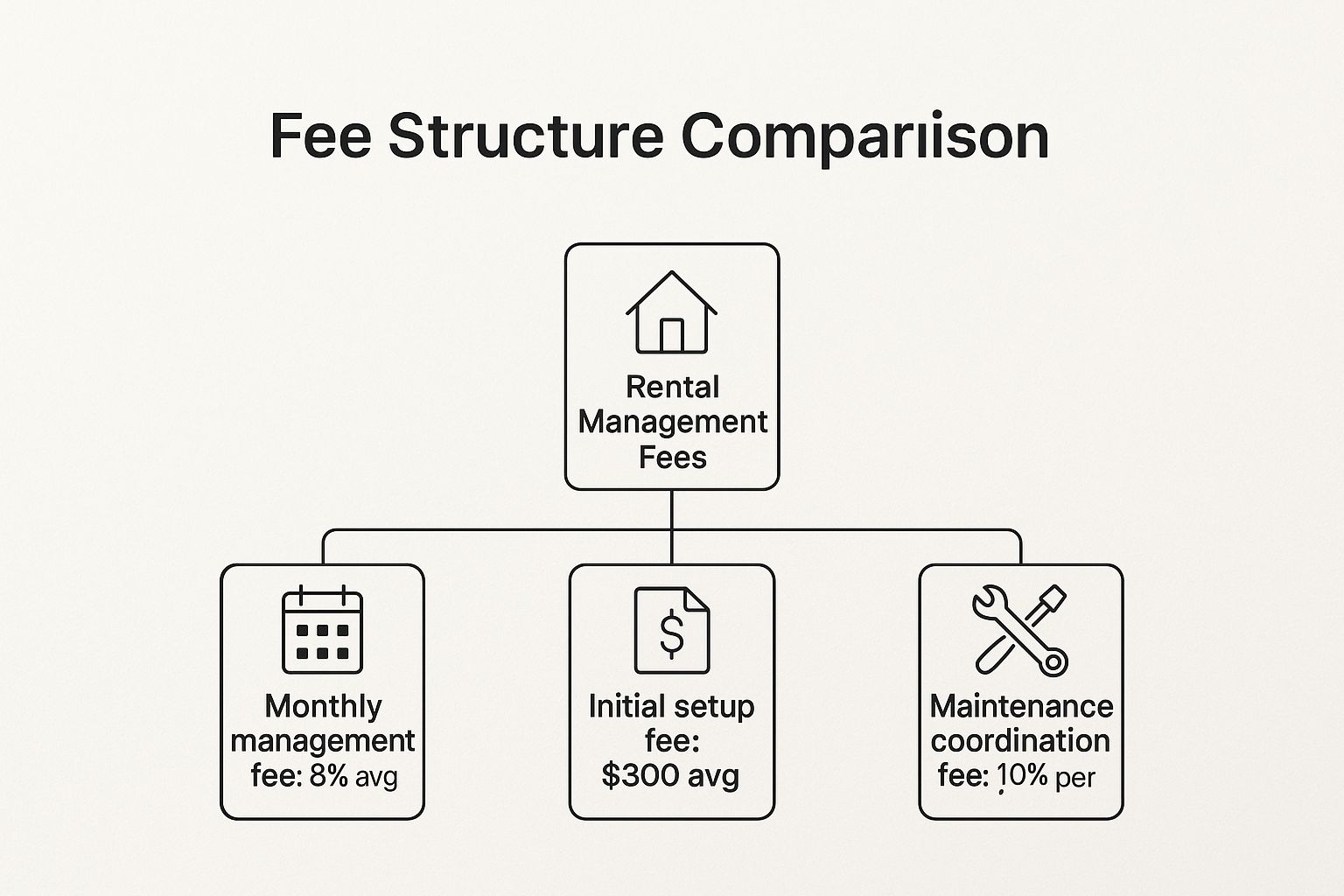
The infographic below shows a common breakdown of property management fees.
Today’s best property management runs on technology. Secure online portals for owners and tenants create transparency. Owners can see financial statements anytime, and tenants can easily pay rent or submit repair tickets.
Navigating California and Salinas Rental Laws

California's rental laws are a tangled web of regulations. For an independent landlord, one unintentional mistake can lead to thousands of dollars in fines and legal battles. This is a major reason why smart owners turn to the best rental property management services in Salinas, CA.
A professional property manager serves as your compliance expert. They live and breathe the ever-changing state and local ordinances. This legal shield protects you from liability and helps build a fair, respectful relationship with your tenants.
Mastering Key Legal Areas
Staying compliant means having deep expertise in several critical areas. A seasoned property manager takes all of this off your plate.
Here are some important legal duties they handle:
- Fair Housing Compliance: Managers are trained on all state and federal Fair Housing laws, ensuring every step from marketing to screening is conducted without discrimination.
- Ironclad Lease Agreements: A professional drafts customized, legally sound leases that protect your interests while being fair to the tenant.
- Proper Eviction Procedures: If an eviction becomes necessary, a strict legal process must be followed. One misstep can get the entire case thrown out.
- Security Deposit Regulations: California has specific rules for handling security deposits. Managers ensure these funds are handled correctly, including providing itemized deduction statements as required.
Your property manager acts as your legal firewall. They stand between your investment and the complex world of rental law. This allows you to enjoy the rewards with peace of mind.
Partnering with a knowledgeable property manager is a powerful risk management strategy. For a closer look, check out our guide on key landlord-tenant laws in California.
Why Torrente Property Management is the Best Choice in Salinas
Picking a property management company is a big decision. You are handing over the keys to a major asset, which requires a partner you can trust. The right choice brings peace of mind, while the wrong one can cause stress and hurt your profits.
For landlords in Salinas, the perfect partner knows the area inside and out. They have a proven, hands-on approach and will treat your property like their own. This partnership is built on legal know-how, smart strategy, and a true understanding of the local market.
A Local, Hands-On Approach Matters
At Torrente Property Management, our two decades of experience in Salinas are part of everything we do. We don't just work here; we live here. We know the pricing trends from Alisal to Harden Ranch and understand what our diverse community of tenants is looking for.
You need a team that is physically here and invested in our community. A local firm gives your property the personal attention it deserves. Whether you are a local investor or an absentee landlord, you can count on us to handle every detail with care.
"Aurelia and her team are amazing... She is the ONLY person I will use to manage my properties from here on out. I know that my properties are in the best of hands with her." – Five-Star Review
This is the trust we build every day. Our deep community roots and bilingual support allow us to create strong, positive relationships with both owners and tenants. This is the secret to smooth operations and honest communication.
Aligning Service with Your Investment Goals
Your goal is simple: find a management company that will protect your investment and make it grow. Our full-service management model is designed to give you total peace of mind. We handle everything, from our tough tenant screening process to transparent financial reporting through online portals.
Every action we take is aimed at protecting and growing your property's value. To learn more about what to look for, see our guide on how to choose the right property management company.
Frequently Asked Questions (FAQs)
Here are answers to some of the most common questions we hear from property owners in Salinas.
How do you determine the right rent for my property?
We perform a comprehensive market analysis, comparing your property to similar rentals in Salinas. We look at location, size, amenities, and current market conditions. This data-driven approach ensures we set a competitive price that attracts quality tenants quickly.
What happens if a tenant doesn’t pay rent?
Our team follows a strict, fair, and legally compliant process. We handle all communication with the tenant, serve required notices, and manage the eviction process if necessary. Our goal is to resolve the issue efficiently while protecting your cash flow.
How are maintenance and repairs handled?
We have a network of trusted, local vendors who provide quality work at fair prices. For non-emergencies, we get your approval before proceeding. For emergencies, our team is available 24/7 to protect your property and keep tenants safe.
Do I have the final say on who rents my property?
Yes. We handle the entire screening process, including background checks, credit reports, and rental history verification. We then present the most qualified applicants to you for final approval, giving you complete peace of mind.
What makes Torrente different from other companies?
Our difference lies in our deep Salinas community roots and our hands-on, personal approach. With over two decades of local experience and bilingual support, we treat your property like it's our own. You get a level of personalized service that larger firms can't match.
Conclusion
Choosing the right property management company in Salinas is key to a successful investment. You need a partner with deep local expertise, a full range of services, and a commitment to your success. By avoiding common pitfalls and leveraging professional support, you can protect your asset and achieve true peace of mind.
Torrente Property Management offers the local knowledge, personalized service, and community focus you need.
Ready to feel true peace of mind with your Salinas rental property? Call Torrente Property Management today at (831) 582-8916 to learn how our dedicated services can protect your investment and maximize your returns.
Learn more about our property management services


Top Second Home Watch Services in Monterey, CA (2025)
**Meta Description:** Find the best second home watch and upkeep services in Monterey, CA. Compare top local experts to protect your investment and enjoy peace of mind.
Your Monterey second home is a sanctuary, but an empty property faces risks. Over 11% of all property crimes are committed against vacant homes, making professional oversight essential for absentee owners (Source: Bureau of Justice Statistics).
Leaving a home unattended can lead to weather damage, plumbing disasters, or vandalism. For seasonal residents or those with investment properties, the best second home watch and upkeep services in Monterey, CA provide critical protection and peace of mind.
This guide reviews the top local experts who act as your trusted estate caretaker. We will help you find a reliable partner to safeguard your coastal retreat, ensuring it remains in perfect condition year-round.
Why Your Monterey Second Home Needs a Watch Service
Leaving a coastal property vacant comes with unique challenges. Homes in Monterey, Carmel, and Pebble Beach face risks like salt air corrosion, unexpected plumbing issues from fluctuating use, and security vulnerabilities.
A professional home watch service prevents small issues from becoming costly disasters. They provide scheduled inspections, manage local vendors, and give you confidence that your investment is secure, no matter where you are.
1. Torrente Property Management: Trusted Estate Caretaker
Torrente Property Management offers a premier Estate Caretaker program for second homeowners. With over 23 years of local experience, their service provides comprehensive oversight rooted in a deep understanding of the Monterey Peninsula.
This program is perfect for absentee owners who need a reliable partner to protect their investment. Torrente’s team treats every home as if it were their own, blending personalized care with professional expertise.
What Torrente Property Management Provides
Torrente’s strength lies in its proactive, hands-on approach. The team focuses on preventing problems before they start, which is why it’s one of the best second home watch and upkeep services in Monterey, CA.
- Scheduled Property Inspections: They conduct detailed interior and exterior checks to monitor security systems, HVAC, plumbing, and landscaping.
- Maintenance & Vendor Coordination: Leveraging strong local relationships, they manage all maintenance needs with trusted and vetted vendors. Their bilingual (English/Spanish) team ensures clear communication and efficient service.
- Proactive Upkeep: For coastal homes in areas like Pacific Grove, they pay special attention to issues like salt air wear, ensuring your property is protected from the elements.
- Peace of Mind: You receive detailed reports after each visit, so you always know your home is secure and well-maintained.
Our Take: Torrente’s combination of a "treat it like our own" philosophy, local vendor network, and bilingual service creates unmatched value. They don't just watch your home; they actively protect it with integrity and responsiveness.
Pros & Cons
| Strengths | Considerations |
|---|---|
| Over 23 Years of Local Expertise with deep community roots in Monterey. | Geographic Focus is primarily on the Monterey Bay area. |
| Bilingual (English/Spanish) Team for seamless communication with vendors and staff. | Boutique Firm Availability may be more limited during peak seasons compared to larger corporations. |
| Personalized Service from a locally owned and operated company. | |
| Strong Vendor Relationships ensure quality and timely maintenance and repairs. |
For more details on their approach, explore their vacant property inspections and upkeep services in Monterey County.
Website: https://torrenteproperties.com/monterey-second-home-property-management/
2. Always Home Services
Always Home Services has served the Monterey Bay community for over 25 years. They offer a one-stop solution by combining home watch with a full suite of domestic services, from housekeeping to concierge tasks.
This integrated approach is a major benefit for absentee owners. You can rely on a single, trusted team to handle security checks, prepare your home for arrival, and manage upkeep, simplifying property ownership.

Key Differentiators
Always Home Services stands out because of its in-house team for housekeeping, window washing, and other domestic tasks. This ensures consistent quality and makes coordination effortless for homeowners.
Their services are highly customizable. You can schedule visits as often as you need and tailor the inspection checklist to fit your property’s specific requirements, making them a flexible choice.
- Services Include:
- Home Watch: Customizable interior and exterior inspections.
- Concierge Prep: Grocery shopping, floral arrangements, and more before you arrive.
- Vehicle Care: They can start your car to ensure it’s ready when you return.
Pros and Cons
| Pros | Cons |
|---|---|
| Over 25 years of local experience in the Monterey Bay area. | Pricing is not listed online; a custom quote is required. |
| True one-stop shop for home watch, cleaning, and concierge services. | May offer more services than a minimalist owner requires. |
| Highly flexible visit schedules and customizable service packages. |
Website: https://www.alwayshomeservices.com/
3. Carmel Coast Estate, Inc.
Carmel Coast Estate, Inc. provides a structured, transparent home watch service. Their approach is ideal for owners who want clear, upfront pricing and a defined scope of work for their property on the Monterey Peninsula.
Their model is built on tiered service levels with published rates. This allows homeowners to easily select a plan based on property size and desired visit frequency, simplifying annual upkeep budgeting.
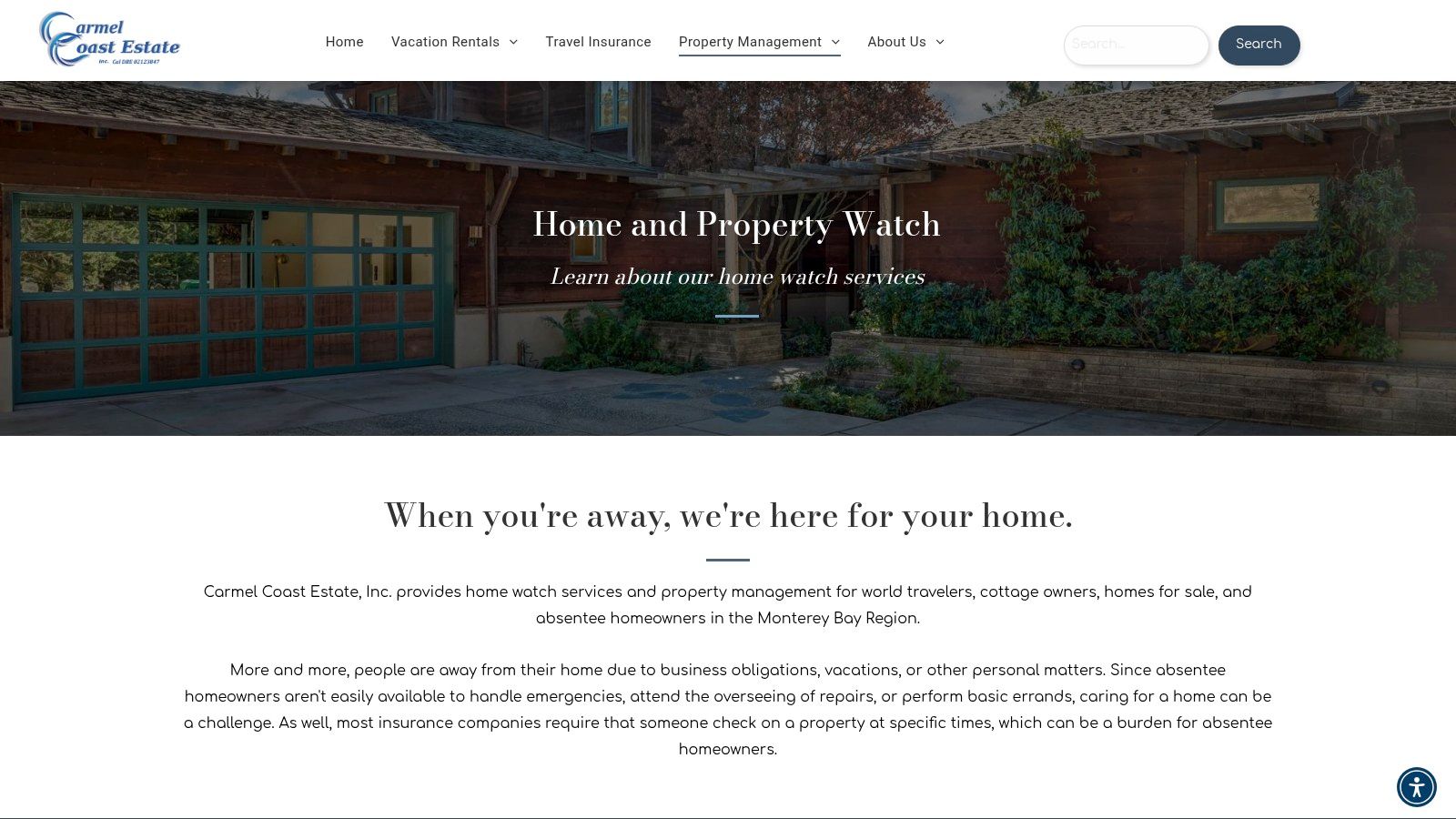
Key Differentiators
Their transparent, tiered pricing structure is a significant advantage. Unlike competitors who require custom quotes, their website clearly outlines costs, empowering homeowners to make informed decisions quickly.
As a full-service Monterey property management company, they have established relationships with local vendors. This network often ensures prompt service and preferred rates for any necessary repairs.
- Services Include:
- Tiered Home Watch: Weekly, bi-weekly, or monthly inspections.
- Emergency Response: Published hourly rates for urgent issues.
- Storm Checks: Post-storm inspections to identify potential damage.
Pros and Cons
| Pros | Cons |
|---|---|
| Clear and transparent tiered pricing published directly on their site. | The defined service tiers may be less flexible than fully custom plans. |
| Broad local coverage across the entire Monterey Peninsula. | Website has minor imperfections, such as sample contact placeholders. |
| Access to a network of preferred vendors for repairs. |
Website: https://www.coastestate.co/home-watch-services
4. Premier Home Watch & Concierge
Premier Home Watch & Concierge offers a boutique service focused on the Carmel area. They are ideal for homeowners seeking a highly personalized relationship with their home watch provider.
Their strength is combining detailed inspections with the flexibility to manage local vendors and coordinate projects. This makes them a great partner for owners who are managing a lifestyle, not just an asset, from afar.

Key Differentiators
The firm excels at vendor and project coordination. They act as the owner’s on-the-ground representative, overseeing everything from handyman repairs to decorating projects. You can learn more about trusted home watch services like Premier Home Watch & Concierge to compare their approach.
Their focused presence in Carmel provides deep, localized expertise. This makes them one of the best second home watch and upkeep services in Monterey, CA for clients in that community.
- Services Include:
- Home Watch: Customizable visits with comprehensive checklists.
- Vendor Management: Coordinates with alarm companies, handymen, and decorators.
- Emergency Response: Acts as a primary contact for security alerts.
Pros and Cons
| Pros | Cons |
|---|---|
| Purpose-built for home watch with extensive on-site checklists. | Pricing is not available online; a direct inquiry is necessary. |
| Excellent at managing local vendors and overseeing projects. | As a smaller team, they may have limited capacity in peak season. |
| Deep, localized expertise specifically within the Carmel community. |
Website: https://www.phwcarmel.com/residential-home-watch
5. Vintage Property Management
Vintage Property Management in Carmel applies the rigor of professional property management to home watch. They create custom plans for absentee homeowners that blend weekly inspections with proactive vendor coordination.
This approach is ideal for owners who view their second home as a significant investment requiring strategic care. Their licensed team acts as the primary contact for all property-related matters.

Key Differentiators
As a licensed property management firm, Vintage Property Management provides a higher level of accountability and expertise. Their DRE license reinforces trust and professionalism.
Their team actively manages solutions by coordinating with trusted local vendors. This ensures the property is maintained to the highest standard, making them a top choice for a hands-off, professionally managed approach.
- Services Include:
- Home Management: Customized packages with weekly inspections.
- Vendor Coordination: Manages all vendor relationships for maintenance and repairs.
- Alarm Response: Acts as the primary contact for alarm systems.
Pros and Cons
| Pros | Cons |
|---|---|
| Deep expertise as a longstanding, licensed local property manager. | Pricing is not available online; a custom consultation is required. |
| Focus on proactive, preventative maintenance and vendor management. | Website is informational and does not offer online sign-up or portals. |
| Clear DRE licensing and contact information build significant trust. |
Website: https://carmelvpm.com/home-management/
6. Olga Rose Home Management Services
Olga Rose Home Management Services provides sophisticated property management for luxury homes across Monterey County. Their focus is on proactive care, especially for estates facing risks like wildfires and severe coastal weather.
Olga Rose doesn't just check on a property; they actively manage it against seasonal threats. This specialized approach offers immense peace of mind to owners of valuable properties in communities like Pebble Beach.
Key Differentiators
Their sharp focus on disaster preparedness and high-level vendor management sets them apart. They specialize in mitigating risks specific to the Monterey Peninsula's unique climate and geography.
Their 24/7 emergency availability provides a crucial lifeline for absentee owners. The direct phone access ensures that when an issue arises, you are speaking with someone who can act immediately.
- Services Include:
- Seasonal Management: Tailored upkeep plans for absentee owners.
- Weather & Wildfire Prep: Secures properties against storms and fire risks.
- Vendor Management: Comprehensive coordination of trusted vendors.
Pros and Cons
| Pros | Cons |
|---|---|
| Specializes in high-end, luxury properties in premier Monterey communities. | Pricing is not disclosed online; requires direct contact for a quote. |
| Proactive focus on wildfire mitigation and severe weather preparedness. | Website information is concise; a phone call is needed for details. |
| Owner-operated feel with 24/7 direct emergency phone access. |
Website: https://www.olgarosehomes.com/
7. Monterey Real Estate Firm – “Castle Keepers” Home Watch
Monterey Real Estate Firm offers a flexible and personalized home watch service called "Castle Keepers." Their program moves beyond standard checklists to offer everything from periodic walkthroughs to live-in house-sitting.
This model is well-suited for owners who require a physical presence at their property. The focus on proactive, hands-on care makes them a strong choice for those with unique security needs. For additional security, apply effective window burglar-proofing tips.
Key Differentiators
The key differentiator for Castle Keepers is its option for live-in house sitters. This rare service provides continuous oversight that is ideal for high-value properties or during long-term travel.
Their connection to a real estate firm offers insights into property value preservation. It also provides access to a vetted network of licensed contractors for maintenance needs.
- Services Include:
- Flexible Presence: Periodic walkthroughs, daily checks, or full-time, live-in house sitting.
- Detailed Inspections: Comprehensive checklists, including special monitoring during bad weather.
- Vendor Coordination: Manages services like cleaning, HVAC, and pool care.
Pros and Cons
| Pros | Cons |
|---|---|
| Offers unique live-in house-sitting options for maximum security. | Pricing is not available online; requires a direct phone or email inquiry. |
| Comprehensive and customizable task list for any length of absence. | The website is basic and lacks detailed content or third-party reviews. |
| Direct local contact information is clearly published and accessible. |
Website: https://www.montereyrealestatefirm.com/home-sitter-watch.html
FAQs About Second Home Watch Services
What does a home watch service typically include?
A standard home watch service includes scheduled inspections of your property’s interior and exterior. They check for signs of damage, ensure security systems are working, and look for any potential issues like leaks or pests.
How often should my second home be inspected?
Most experts recommend weekly or bi-weekly inspections. Frequent checks allow providers to catch potential problems like water leaks or security breaches before they cause significant damage.
Why is local expertise so important for a home watch service?
Local experts understand the specific risks in the Monterey area, such as coastal weather patterns and community regulations. They also have established relationships with reliable local vendors for quick and effective repairs.
Can a home watch service help with maintenance and repairs?
Yes, a key benefit is vendor coordination. Top services manage everything from routine landscaping to emergency plumbing repairs, using their network of trusted local professionals to get the job done right.
How much do home watch services cost in Monterey?
Costs vary based on your home's size, location, and the frequency of inspections. Some companies offer tiered packages, while others provide custom quotes based on your specific needs.
Find the Best Second Home Watch Service in Monterey
Choosing the right partner to watch over your Monterey second home is a critical decision. A reliable service protects your valuable asset from risks like storm damage, plumbing failures, and security breaches, giving you invaluable peace of mind.
Key Takeaways:
- Trust Local Expertise: A provider with deep roots in Monterey understands local challenges and has a network of reliable vendors.
- Prioritize Communication: Look for a service that provides clear, consistent reports and is easy to reach.
- Seek Tailored Service: Your home is unique. The best partner will create a custom plan that meets your property's specific needs.
For added organization, homeowners can create a detailed inventory system for their furnishings and valuables. This is useful for insurance purposes and helps ensure everything is accounted for. Ultimately, you need a partner who treats your home with the same care you would.
Ready to protect your Monterey second home with a trusted, local expert? Torrente Property Management Inc. offers personalized estate caretaker services built on a three-generation legacy of integrity. Let our family watch over yours. Contact Torrente Property Management today at (831) 582-8916 to design a home watch plan that gives you complete peace of mind.

Best Property Management for Retirement Homes in Monterey Bay
Choosing a manager for a retirement property in Monterey Bay is a big decision. It directly affects the well-being and safety of the residents who live there. For property owners, whether you live nearby or are an investor from far away, you need specialized management to protect your asset.
A well-managed property ensures it remains a safe, desirable, and supportive community. With the U.S. Census Bureau projecting that over 20% of the U.S. population will be 65 or older by 2030, the need for excellent senior housing is growing fast.
This guide will help you find the best property management services for retirement homes in Monterey Bay. We'll look at top companies from Carmel to Salinas that have the special skills needed for senior living communities. We will break down what each service offers so you can make a smart choice for your investment.
1. Why Specialized Management Matters for Retirement Homes
Managing properties for older adults is different from standard property management. It requires a focus on creating a safe, quiet, and comfortable environment. Trust and consistent oversight are key.
Proper maintenance and clear communication are not just about convenience—they are about safety. A quick response to a maintenance issue, like a broken handrail or a heating problem, can prevent accidents and ensure residents feel secure in their homes. This level of care helps maintain the property's value and reputation.
Torrente’s Expertise in Managing Senior-Friendly Properties
At Torrente Property Management, we bring over 23 years of hands-on real estate experience in Monterey County. Our deep local knowledge helps us place the right tenants and keep properties compliant with all local rules. We understand the unique needs of managing homes for seniors.

Our "treat it like our own" philosophy means we are committed to the highest standards. We know that for retirement homes, this means more than just collecting rent. It means ensuring the property is a peaceful and well-maintained place to live.
2. Addressing the Unique Needs of Retirement Properties
Retirement properties have specific needs that must be met. Residents expect a clean, quiet, and secure environment where they can feel at ease.
This requires a proactive management style. We conduct routine property inspections to catch small issues before they become big problems. We also focus on upgrades that improve comfort and accessibility for older adults.
How Torrente Property Management Delivers
Our services are designed to meet these unique demands. We prioritize quick and effective responses to tenant needs.
- Prompt Maintenance: We offer a 24/7 emergency maintenance line. This ensures that urgent issues are handled right away, providing safety and peace of mind for residents.
- Quiet and Clean Environments: We carefully screen tenants to create a respectful community and enforce rules that maintain a peaceful atmosphere.
- Accessibility and Comfort: We recommend and oversee property upgrades that improve accessibility, such as installing grab bars or improving lighting.
- Clear Communication: Our team is bilingual (English/Spanish), which helps us communicate clearly with a diverse range of tenants and owners in our community.
Our modern approach includes online portals for tenants and owners, making it easy to pay rent or request maintenance. For owners, we provide detailed financial reports, and our blog offers helpful resources like guides to the best accounting software for landlords.
3. Why Torrente is a Top Choice in Monterey Bay
For owners of retirement-focused residential properties, Torrente Property Management stands out. Our local, owner-operated model means you get personalized service that larger firms can't match.
We are deeply invested in the Monterey Bay community. This local focus helps us connect with reliable vendors and understand the specific market dynamics from Salinas to Pacific Grove.
Peace of Mind for Long-Distance Owners
Many owners of properties in Monterey Bay live elsewhere. We specialize in providing peace of mind for these absentee owners. Our thorough oversight and regular communication ensure your property is in good hands.
We treat your property with the same care and attention as if it were our own. This commitment to integrity and responsiveness has made us a trusted partner for investors and trustees for over two decades.
- Best For: Absentee owners, local investors, and trustees seeking high-touch, reliable management for single-family homes or small residential properties catering to seniors.
- Website: https://torrenteproperties.com
Other Top-Rated Property Management Companies
While Torrente specializes in residential properties, some owners may be looking for management for large-scale licensed senior living facilities. Here are some of the top names in that sector.
Life Care Services (LCS)
Life Care Services (LCS) is one of the largest managers of senior living communities in the country. They bring huge resources and data-driven strategies. This makes them a strong choice for larger retirement communities in Monterey Bay.

LCS is known for managing Continuing Care Retirement Communities (CCRCs). They handle everything from independent living to skilled nursing. This integrated approach is ideal for properties that offer a full range of care. Their large scale, however, may feel less personal for owners of single properties.
Website: https://www.lifecareservices.com/lcs
Integral Senior Living (ISL)
Based in California, Integral Senior Living (ISL) understands the state’s complex rules and markets. They are a dedicated third-party manager, meaning their focus is entirely on serving property owners.
ISL is great at managing new developments or turning around underperforming properties. They offer full support, from marketing to resident care. Their regional focus makes them a smart choice for investors who want local expertise combined with a professional system.
Website: https://islllc.com/management/
Sinceri Senior Living
Sinceri Senior Living is a national operator that is good at handling management changes. If you are buying a property or changing managers, Sinceri can help make the transition smooth for everyone.
They are known for their strong company culture, which helps keep staff happy and motivated. This leads to better care for residents. Their focus on transitions makes them one of the best property management services for retirement homes in Monterey Bay for owners planning a sale or big change.
MBK Senior Living
Headquartered in California, MBK Senior Living specializes in West Coast senior communities. This regional focus means their strategies are tailored to California's specific market and regulations.

MBK is a great partner for investors looking to buy a retirement community or improve an existing one. They are known for their award-winning culture and ability to increase a property's value. During transitions, services like vacant home caretaker services in Monterey Bay can also be vital.
Website: https://mbkseniorliving.com
Onelife Senior Living
Onelife Senior Living is a mid-sized operator with a growing presence in the greater Bay Area. Their size allows for more personal service and direct access to company leaders. This can be a big plus compared to larger national companies.

Onelife is actively looking for new properties to manage. This makes them a motivated partner for owners who want to work with a forward-thinking company. Their regional focus means they understand the local market well.
Front Porch
Front Porch is a leading nonprofit senior living provider in California. They have a direct presence in Monterey Bay with their Canterbury Woods community in Pacific Grove. Their model is built on stability and community focus.
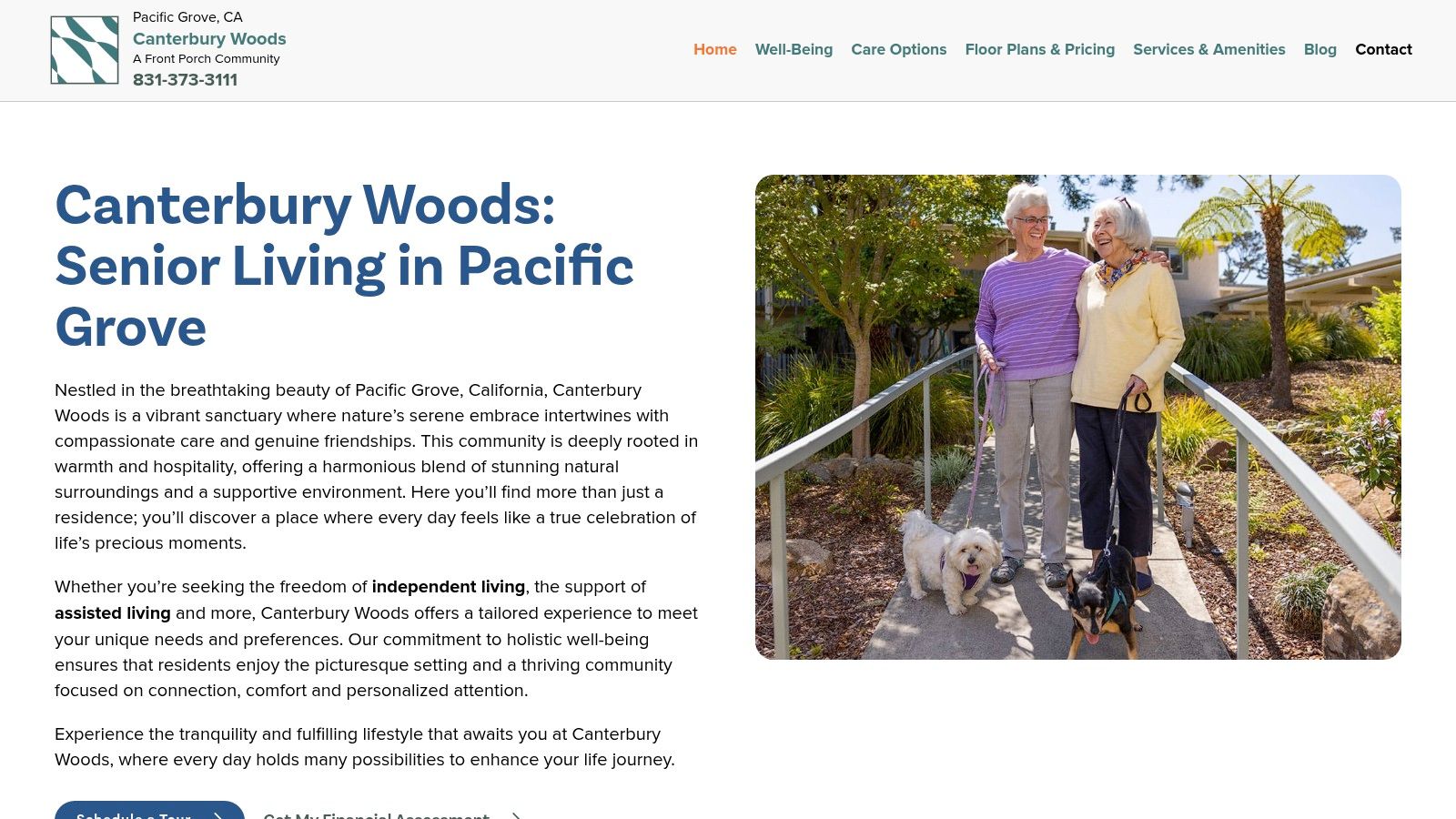
Because they are a nonprofit, their decisions prioritize the well-being of the community. This makes them a great partner for other mission-driven owners. Their deep roots in the Monterey Peninsula mean they understand the local culture very well.
Website: https://frontporch.net/community/canterbury-woods/?utm_source=openai
Frequently Asked Questions (FAQs)
Why is specialized management important for retirement homes?
Specialized management is crucial because it focuses on the unique safety, comfort, and accessibility needs of older residents. It ensures the property is a secure and supportive environment, which protects both the tenants and the owner's investment.
What should I look for in a property manager for a senior-focused property?
Look for a manager with local expertise, a commitment to prompt maintenance, and experience with senior tenants. They should have a proactive approach to property inspections and offer clear communication, like bilingual services, to serve the community effectively.
How does Torrente Property Management handle maintenance emergencies?
We provide 24/7 access to emergency maintenance services. This ensures that urgent issues like heating failures or major leaks are addressed immediately, protecting resident safety and preventing further property damage.
Do I need a local property manager if I don't live in Monterey Bay?
Yes, a local manager is essential for absentee owners. A team with deep roots in Monterey County, like Torrente, can provide hands-on oversight, manage local vendors, and respond quickly to issues, offering you complete peace of mind.
What makes Torrente different from larger national firms?
As a local, owner-operated firm, we offer a personalized, "treat it like our own" service model. Our deep community ties, bilingual communication, and direct involvement from leadership ensure a higher level of care and responsiveness for your property.
Conclusion: Making the Right Choice for Your Property
Choosing the right partner to manage your retirement property in Monterey Bay is a critical decision. It’s about more than just business; it’s about creating a safe and comfortable home for senior residents. Your choice affects their quality of life and the long-term value of your asset.
While large national firms offer broad systems, they often lack the personal touch and local knowledge that is so important. A manager who understands the community dynamics in Carmel or the rental market in Salinas provides a real advantage. The best property management services for retirement homes in Monterey Bay combine professional expertise with a genuine commitment to your investment and your residents.
Ready to partner with a team that treats your investment like their own? Contact Torrente Property Management today at (831) 582-8916 to learn how our local expertise can protect your asset and give you peace of mind.

Property Management for Retirement Homes in Monterey Bay
Managing a retirement property in Monterey Bay is a unique responsibility. It's much more than just collecting rent. You are building a community for seniors, which requires a special understanding of their needs, our local market, and what makes a place feel like home.
To do it right, you need a manager who creates a safe, supportive, and active environment for residents. This protects your investment while enriching the lives of the people who live there. In fact, a recent JLL survey found that 78% of investors plan to increase their senior housing investments, showing how important good management is.
Why Managing Retirement Homes Here Is Different

Managing a retirement home isn't like running a typical apartment complex. From the quiet streets of Carmel to the busy community in Salinas, Monterey Bay attracts seniors with high expectations. As a property owner, you have a duty to create a thriving community, not just a well-kept building.
The challenges are specific and need an expert's touch. A standard property manager focuses on filling empty units and fixing things. But for a retirement home, the priorities are different. Resident well-being, safety, and a sense of belonging must come first.
This is especially true for owners who live out of town and can't be there every day. You need a trusted local expert who can be your eyes and ears on the ground.
The Monterey Bay Advantage
Our local area has a strong demand for well-managed senior housing. Many people are reaching retirement age, and they need safe, stable places to live. A good manager understands this community need.
A specialist in this field must do a few key things well:
- Connect with the Community: A great manager connects residents with local Monterey Bay resources. This could be anything from top doctors in Salinas to social clubs in Pacific Grove.
- Keep Residents Happy: Happy residents stay longer. When seniors feel safe, respected, and socially active, they make your property their long-term home. This creates a stable and profitable investment.
- Be Proactive: You can't wait for problems to happen. Success comes from proactive care that keeps residents safe and comfortable, preventing issues before they start.
The goal is to build a community where residents feel at home and their families have peace of mind. When you do that, you are not just protecting your property—you are improving people's lives. This requires a partner with proven experience in property management for retirement homes in Monterey Bay.
What to Look for in a Senior Property Manager
Choosing the right property manager is the most important decision you will make for your retirement property. It’s not just about filling units or fixing pipes. It’s about finding a partner who understands the deep responsibility of caring for seniors.
The best managers do more than check boxes on a list. They focus on creating a safe, supportive, and happy environment for residents.
Specialized Skills Are a Must
Look for a manager with hands-on experience meeting the unique needs of seniors. Ask if they have a history of managing ADA compliance. Do they have good relationships with healthcare providers in cities like Salinas or Monterey?
Think about it: a medical emergency at night needs a very different response than a simple maintenance call. A good manager will have clear plans for both and can explain them to you easily.
Check Their Approach to Staff and Safety
Ask tough questions about how they hire and train their on-site staff. A good manager will teach their team about empathy, clear communication, and how to spot signs of resident distress. They invest in their team to make sure every staff member builds real relationships with residents.
Also, ask to see their emergency response plan. It should cover everything from earthquakes, which are common here, to individual health emergencies. Their plan should focus on being prepared, not just reacting to problems.
A manager's true value is in their ability to build a real community. A well-run retirement home should feel like a neighborhood, and that feeling comes from thoughtful programs and caring leadership.
Building a Community, Not Just a Building
A great property manager works hard to create an engaging and lively atmosphere. This is more than just planning a few social events. It’s about creating connections, promoting wellness, and making sure every resident feels valued.
As you interview potential managers, ask about their specific plans for:
- Resident Feedback: How do they listen to residents? Do residents have a real say in how the community is run?
- Local Partnerships: Do they have connections with Monterey County senior centers, transportation services, or local wellness groups?
- Family Communication: How do they keep families informed, especially if they live far away?
The chart below shows key areas to focus on when you are choosing a manager.
Key Factors for Choosing a Retirement Home Manager
| Service Area | What to Look For | Why It Matters for Seniors |
|---|---|---|
| Resident Health & Safety | Clear emergency plans, staff trained in first aid, and strong ties with local healthcare providers. | Ensures a fast and correct response to medical issues and creates a secure living space. |
| Community Activities | A full schedule of social, wellness, and educational programs. Ask for examples. | Fights loneliness, promotes an active lifestyle, and helps residents feel like they belong. |
| Staffing & Training | A careful hiring process that focuses on empathy and communication. Ask about ongoing training. | Caring, well-trained staff are key to building trust and positive relationships with residents. |
| Legal Compliance | Deep knowledge of ADA, Fair Housing, and California laws for senior living. | Protects your investment from legal risks and ensures the property is safe and fair for all. |
| Maintenance | Proactive maintenance schedules, not just fixing things when they break. | A well-kept property prevents accidents, makes residents more comfortable, and protects your asset's value. |
| Communication | Clear communication with families and owners through portals, newsletters, and regular updates. | Keeps everyone in the loop, builds confidence, and ensures a team approach to care. |
Using a clear set of criteria like this helps you compare your options fairly.
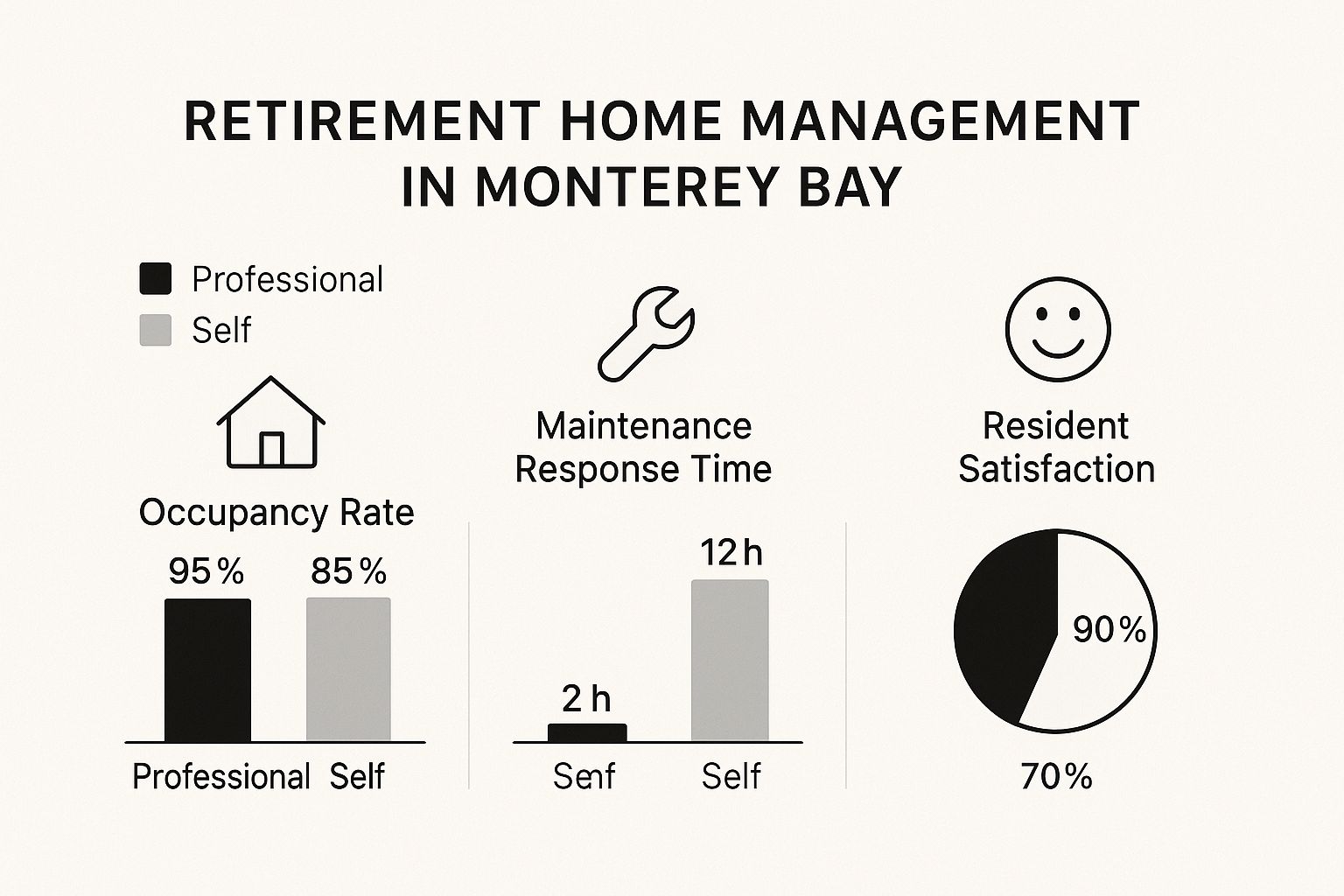
The world of senior living is changing. Modern management uses smart technology for better care and focuses on sustainability to lower costs. Choosing a forward-thinking manager who understands these changes is vital for your long-term success.
Getting the Finances Right for Your Investment

Managing the money for a retirement home in Monterey Bay is a balancing act. You need to protect your property, grow its value, and provide great care to residents. The right property manager can turn a complex property into a successful investment.
Good financial management is more than just collecting rent. It means making smart decisions that improve your income and keep residents happy. Right now, the senior housing market is getting a lot of attention.
Investor confidence is high. A recent survey showed that 78% of investors plan to keep or increase their investment in senior housing. This is because the U.S. population aged 80 and over is expected to grow by 36% in the next ten years. You can read the full investor survey from JLL to learn more.
Setting Smart Rental Rates
Pricing units in a retirement home is tricky. You have to consider the local market in places like Carmel, the amenities you offer, and your operating costs. An experienced manager will study the market often to set rates that are both competitive and profitable.
This helps you avoid leaving money on the table or charging too much. The goal is to find a price that attracts great residents who see the value you provide.
Clear Budgets and Financial Reports
Good financial management is the foundation of a successful investment. This means creating a detailed budget that balances quality services with efficient spending. A professional manager should give you clear, easy-to-understand financial reports so you always know how your investment is doing.
These reports should show all income and expenses, making it simple to track your property's financial health. To learn more about the tools that help with this, check out our guide on the best accounting software for landlords.
Case Study: A Salinas Retirement Community
A 40-unit retirement property in Salinas had high repair costs and changing occupancy. The owner was always reacting to problems, and small issues often turned into expensive emergencies.When Torrente Property Management took over, we set up a proactive maintenance schedule. We checked the property for potential problems with plumbing, roofing, and heating before they could fail.
By doing regular checks, we cut emergency repair costs by 45% in the first year. This saved money allowed the owner to make community upgrades. As a result, residents were happier, and occupancy rose to a steady 98%. This proactive approach not only saved money but also increased the property's value and reputation.
Building a Thriving and Supportive Community
The true value of a retirement home is found in its community spirit. This is where a great manager really shines. They can turn a simple building into a warm, supportive place where people connect.
A property is just a building. A home is where you feel you belong. Fostering connection is one of the best ways to improve resident well-being and fight loneliness.
Expert property management for retirement homes in Monterey Bay is about being a community-builder. It means creating daily chances for residents to make friends, enjoy activities, and feel like part of a family.
Creating Engagement and Wellness
A lively community doesn't happen by accident. It comes from a smart plan that includes a variety of programs for different interests and abilities. The goal is to enrich residents' lives, not just keep them busy.
Top property managers build a fun atmosphere with a few key things:
- Wellness Programs: This can include gentle yoga, nutrition classes, or guest speakers on health topics for seniors.
- Social Events: A good social calendar is the heart of the community. Events like themed dinners, holiday parties, and game nights bring residents together.
- Educational Classes: Partnering with local colleges for art classes or tech workshops can keep residents' minds active and engaged.
These activities are the foundation of a strong community where friendships can grow. We use these same community-focused ideas in our expert property management services in Salinas.
The sound of laughter in the common areas is a true sign of success. When you see residents talking, sharing stories, and helping each other, you know you have built a true home.
The Power of Local Partnerships
A great manager also connects the property to the wider Monterey Bay community. This means working with local groups that can bring new experiences to residents.
For example, a manager could work with a Carmel art gallery for an on-site show. They could also arrange group trips to the Monterey Bay Aquarium. These local connections help residents feel like they are still a part of the larger community.
Caring Communication Is Key
Building a community requires clear, consistent, and caring communication. Keeping residents and their families updated on news, events, and property updates is key to building trust.
This means using different ways to communicate, like newsletters, a resident website, and regular meetings. When everyone feels heard and informed, it creates a strong sense of security.
Frequently Asked Questions (FAQs)
What makes managing retirement homes different from other properties?
Managing retirement homes focuses more on resident well-being, safety, and community building. It requires knowledge of senior-specific needs, ADA compliance, and creating a supportive social environment, which is different from standard rental management.
How do you set rental rates for a senior living facility?
We analyze the local Monterey Bay market, considering the specific amenities and level of care you offer. We balance this with your operational costs to set a rate that is both competitive and profitable, ensuring good value for residents and a strong return for you.
What kind of staff training is important for a retirement home?
Staff should be trained in empathy, patient communication, and emergency response protocols specific to seniors. Ongoing training helps them build trust with residents and handle sensitive situations with care and professionalism.
How can a property manager help with legal compliance?
A good manager stays up-to-date on all federal, state, and local laws, including the Fair Housing Act and California tenant laws. They ensure your property meets all health and safety codes, protecting you from legal risks and fines.
How do you handle communication with residents' families?
We use multiple channels like newsletters, a secure online portal, and regular phone or email updates to keep families informed. Clear and consistent communication builds trust and ensures families have peace of mind.
Ready to partner with an expert in property management for retirement homes in Monterey Bay? Contact Torrente Property Management today at (831) 582-8916. We can protect your investment and help your community thrive. Learn more at https://torrenteproperties.com.

7 Trusted Home Watch Services Monterey Bay
Owning a home in Monterey Bay is a dream. Managing it from a distance, however, can bring constant worry. Who is watching over your valuable asset when you are away?
Deferred maintenance, security risks, and unexpected emergencies can quickly turn your investment into a problem. A vacant home is much more likely to be targeted for vandalism or theft. In fact, insurance claims can be up to 60% higher for unoccupied properties.
This guide simplifies your search for the most trusted home watch services Monterey Bay has to offer. We will help you find the right partner to protect your home and your peace of mind.
1. Torrente Property Management: The Local Expert for Comprehensive Estate Care
Torrente Property Management is a top choice for home watch services in Monterey Bay. Their Vacant-Home & Estate Caretaker Service is more than a simple check-in. It is a complete stewardship program built on a family legacy of local real estate expertise.
This service is designed for absentee owners who need a professional partner to protect their valuable assets.
Torrente blends hands-on care with modern technology. They treat each property as if it were their own. This ensures every detail is managed carefully, from homes in Pebble Beach to properties in Salinas.
Core Service Strengths and Features
What sets Torrente Property Management apart is the depth of their services. They go beyond simple security checks to offer a complete property preservation program.
- Scheduled Property Inspections: They perform custom walkthroughs to check everything from plumbing and electrical systems to landscaping and security.
- Proactive Maintenance Coordination: Their team identifies problems and solves them. They use a trusted network of local vendors to manage all repairs and upkeep, saving you stress.
- Modern Technology Integration: Owners get 24/7 access to a secure online portal. This platform provides real-time updates, detailed inspection reports with photos, and clear communication.
- Bilingual Communication: The fully bilingual team (English and Spanish) removes communication barriers. This helps them work with the best local vendors and serve a diverse range of clients.
Key Insight: With over 25 years of market data and a family-run approach, Torrente has a unique understanding of the Monterey Peninsula. They anticipate seasonal needs and know local regulations.
Why It's a Trusted Choice
For absentee owners, trust is the most important factor. Torrente builds this trust through honesty, quick responses, and proven expertise. Their long history in Monterey County means they have a verifiable record of protecting property value.
You can find more details about their approach in their guide to vacant home caretaker services in Monterey Bay.
Pros & Cons Summary:
| Strengths | Considerations |
|---|---|
| Deep Local Expertise: Three generations of experience and 25+ years of market data ensure superior, tailored property oversight. | Geographic Focus: Services are concentrated on the Monterey Peninsula. |
| Comprehensive Service Suite: Integrates inspections, maintenance, vendor management, and security monitoring into one seamless plan. | Premium Pricing: As a comprehensive, high-touch service, costs may be higher. |
| Advanced Technology: A modern owner portal provides exceptional transparency and real-time updates. | |
| Bilingual Team: English and Spanish services enhance communication and vendor access. |
Torrente Property Management is the ideal partner for homeowners who see their property as a major investment that needs expert care.
Visit Torrente Property Management's Website
2. Premier Home Watch and Concierge
Premier Home Watch and Concierge offers a specialized service for absentee and second-home owners. They focus on the exclusive communities of Carmel, Monterey, and Pebble Beach.
Unlike larger firms, this company focuses entirely on the needs of unoccupied luxury properties. Their service is built on personal communication and close attention to detail.
Their main service is a weekly property check. This ensures everything from plumbing to security systems is working correctly. They also offer helpful concierge services, making them a personal property manager.
Key Features and Service Highlights
This company is one of the most trusted home watch services in Monterey Bay because clients have a direct line to the owner. This ensures quick responses and custom solutions. This hands-on approach is key for managing unexpected issues.
- Vendor Management: They provide supervised access for service providers, such as landscapers, cleaners, and maintenance technicians.
- Alarm Response: The company acts as the main local contact for alarm companies, providing a fast on-site response.
- Arrival & Departure Prep: They prepare your home for your arrival by stocking the fridge, adjusting the thermostat, and making sure everything is perfect.
- Specialized Focus: They understand the specific worries of absentee owners. This includes military families who may be stationed elsewhere.
Pros and Cons
| Pros | Cons |
|---|---|
| Niche Expertise: Deep understanding of second-home owner needs. | No Public Pricing: Requires a custom quote. |
| Direct Owner Contact: Ensures personalized, high-touch service. | Limited Capacity: Boutique size may be full in peak seasons. |
| Excellent Reputation: Verified 5.0/5 Yelp rating from clients. |
For homeowners seeking a dedicated, relationship-based service, Premier Home Watch and Concierge is a reliable choice.
Website: https://www.phwcarmel.com/
3. Always Home Services
With over 25 years of experience, Always Home Services provides many home management solutions. Their dedicated Home Watch Program serves communities from Pebble Beach and Carmel to Monterey and Santa Cruz.
Their long history in the area has made them a reliable operator with deep local knowledge.

The company combines structured property checks with the flexibility of a full-service domestic agency. This means clients can get home watch, cleaning, and staffing services all in one place.
Key Features and Service Highlights
Always Home Services is one of the most trusted home watch services in Monterey Bay due to its integrated model. They can coordinate cleaning crews, prepare a home for arrival, and manage other needs. This is helpful for out-of-town owners who need more than just a security check.
- Structured Inspections: The team follows a detailed checklist covering HVAC systems, signs of leaks, security, and vehicle status.
- Broad Service Area: They offer wide coverage across the entire Monterey Bay region, including Santa Cruz.
- Arrival Preparation: Services include stocking refrigerators and adjusting climate controls to get your home ready for you.
- Integrated Services: They are a single point of contact for multiple home management needs, which simplifies property care.
Pros and Cons
| Pros | Cons |
|---|---|
| Deep Regional Experience: 25+ years operating in the Monterey area. | No Public Pricing: Requires direct contact for a personalized quote. |
| Comprehensive Service Mix: Combines home watch with cleaning/staffing. | Not a Pure-Play Specialist: Home watch is one of several services. |
| Regular Status Updates: Ensures peace of mind for absentee owners. |
For those who value a long-established company and the convenience of a single provider, Always Home Services is a dependable option.
Website: https://www.alwayshomeservices.com/
4. Carmel Coast Estate, Inc. — Home & Property Watch
Carmel Coast Estate, Inc. uses its experience in vacation rental management for its home watch service. This company serves the Monterey and Carmel areas with a dedicated Home & Property Watch service.
Their background in managing high-end properties gives them a unique view on maintaining homes to the highest standards.
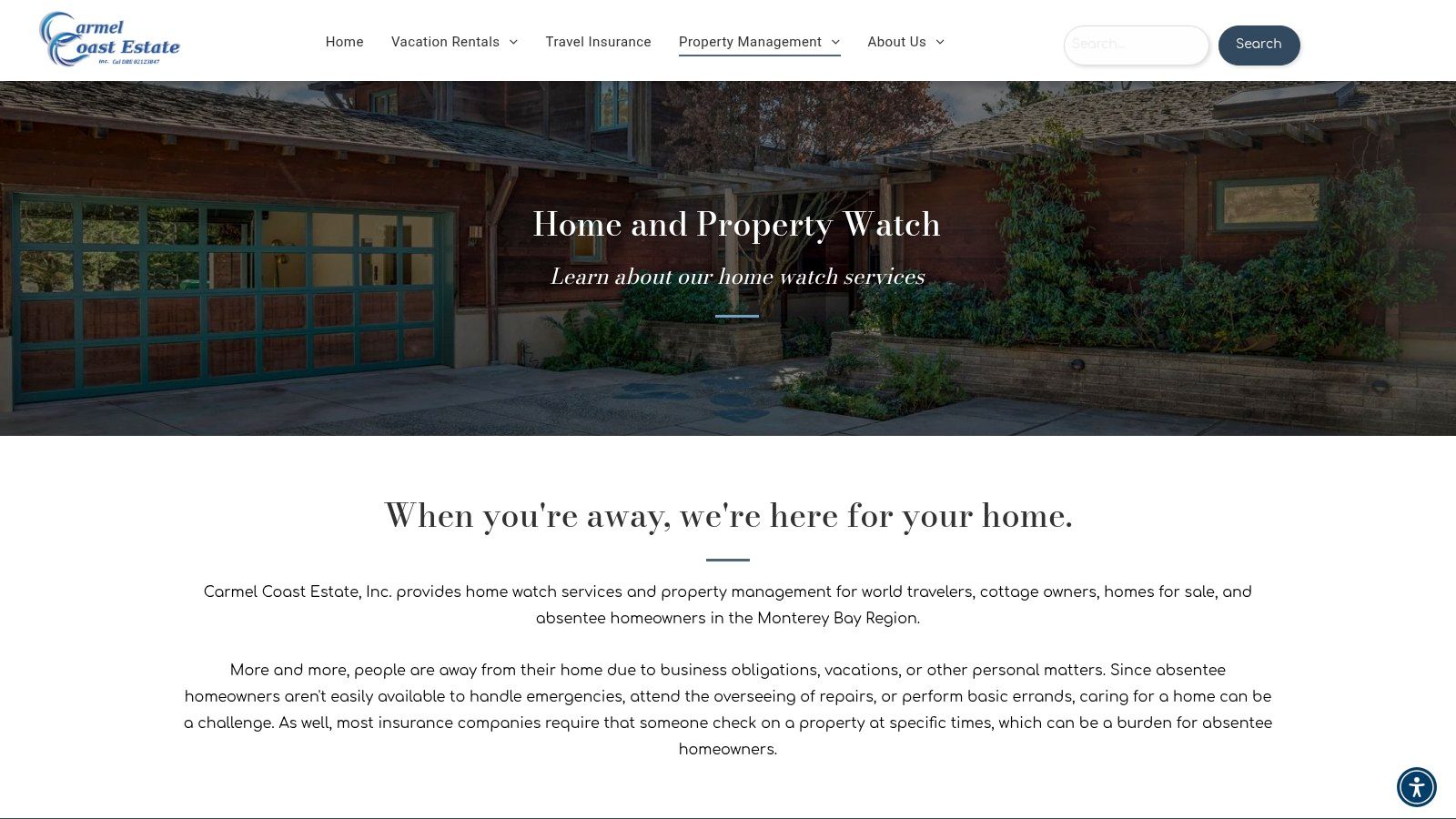
The company has a physical office in Monterey and provides clear pricing for emergencies. This transparency helps homeowners budget for unexpected events.
Key Features and Service Highlights
Carmel Coast Estate, Inc. delivers a strong home watch service. Their experience with vacation rentals means they are good at handling vendor coordination, emergencies, and routine inspections. This ensures properties are actively maintained, not just monitored.
- Transparent Emergency Pricing: They publish emergency service rates, starting at $50 per hour, which removes guesswork.
- Established Local Office: A physical office in Monterey provides a clear point of contact and shows their commitment to the community.
- Vendor Coordination: They manage maintenance and repairs by coordinating with trusted local vendors to ensure quality work.
- On-Call Emergency Availability: The company offers quick on-call services to address urgent problems like alarms, leaks, or storm damage.
Pros and Cons
| Pros | Cons |
|---|---|
| Clear Emergency Pricing: Helps in comparing costs and budgeting. | Primary Focus on Rentals: Service may be geared more toward vacation rental clients. |
| Local Physical Presence: Enhances trust and accessibility. | No Public Routine Pricing: Custom quote needed for standard inspection packages. |
| Extensive Management Experience: High standards for property care. |
For homeowners who want a service backed by a proven property management company, Carmel Coast Estate, Inc. offers a reliable solution.
Website: https://www.coastestate.co/home-watch-services
5. Luxury Home Watch (Monterey Real Estate Firm)
Offered by the Monterey Real Estate Firm, this Luxury Home Watch service combines property monitoring with deep real estate expertise. This service is designed for seasonal and luxury homeowners.
They offer flexible scheduling and many concierge options. This creates a one-stop solution for property care.

Their service includes customizable walk-through inspections, available weekly, bi-monthly, or monthly. They also offer special services like bad-weather watch and immediate alarm response.
Key Features and Service Highlights
This service is one of the most trusted home watch services in Monterey Bay because it's backed by a licensed real estate firm. This provides credibility and accountability. Clients benefit from the firm's large network of trusted local vendors.
- Flexible Visit Schedules: Clients can choose from weekly, bi-monthly, or monthly inspections to fit their budget and needs.
- Comprehensive Concierge Services: Services include grocery stocking, airport transportation, vehicle startups, and running errands.
- Emergency & Weather Response: A special bad-weather watch ensures your home is checked after major storms. They also act as the first responder for alarm calls.
- Vendor Oversight: The team manages and supervises access for gardeners, cleaners, and repair technicians.
Pros and Cons
| Pros | Cons |
|---|---|
| Operated by an Established Brokerage: Adds credibility and trust. | No Public Pricing: Requires a direct inquiry for a custom quote. |
| Wide Range of Concierge Tasks: Highly practical and convenient. | Brokerage-Style Setup: Verify dedicated staff for home watch visits. |
| Customized & Flexible Offerings: Tailored to each property's needs. |
For homeowners seeking a reliable service backed by a well-known name in local real estate, this is a trustworthy solution.
Website: https://www.montereyrealestatefirm.com/home-sitter-watch.html
6. Rover — Local House-Sitting Marketplace
Rover uses a large marketplace to connect homeowners with local house sitters. While not a traditional home watch company, it is a practical solution for those who want someone physically present in their home.
This model is great for homeowners in Monterey, Carmel, and Pebble Beach who also need pet care.

The platform is strong because of its large network and easy-to-use website. Homeowners can look at hundreds of sitter profiles, filtering by price and reviews. This helps you find a sitter whose services match your needs.
Key Features and Service Highlights
Rover is a source for trusted home watch services in Monterey Bay because of its many options and safety features. Every booking includes the Rover Guarantee. This offers protection for certain property damages and veterinary care, providing extra security.
- Extensive Sitter Network: You can access a wide variety of local sitters, making it easy to compare rates and experience.
- Background Checks: Many sitters on the platform have passed a background check, which is shown by a badge on their profile.
- Real-Time Updates: The mobile app allows for direct communication, and sitters often send photos and videos.
- Transparent Pricing: Each sitter sets their own rates, which are clearly displayed. This makes budgeting simple.
Pros and Cons
| Pros | Cons |
|---|---|
| Large Selection & Availability: High number of sitters often means last-minute availability. | Inconsistent Service Scope: Service quality and tasks performed vary by individual sitter. |
| Clear, Upfront Pricing: Compare rates easily across multiple profiles. | Nightly Rate Model: May not be cost-effective for periodic check-ins versus overnight stays. |
| Integrated Insurance: Bookings include the Rover Guarantee for added protection. | Not a Specialized Home Watch Firm: Sitters are not certified home watch professionals. |
For homeowners who want someone in their home and may also need pet care, Rover is a flexible and accessible marketplace.
Website: https://www.rover.com/monterey--ca--house-sitting/
7. National Home Watch Association (NHWA) — Accredited Provider Directory
The National Home Watch Association (NHWA) is not a direct service provider. It is a key resource for finding high-quality care. It acts as an accrediting body for the home watch industry.
The NHWA directory helps you find local companies that have met strict requirements for insurance, bonding, and professional conduct.
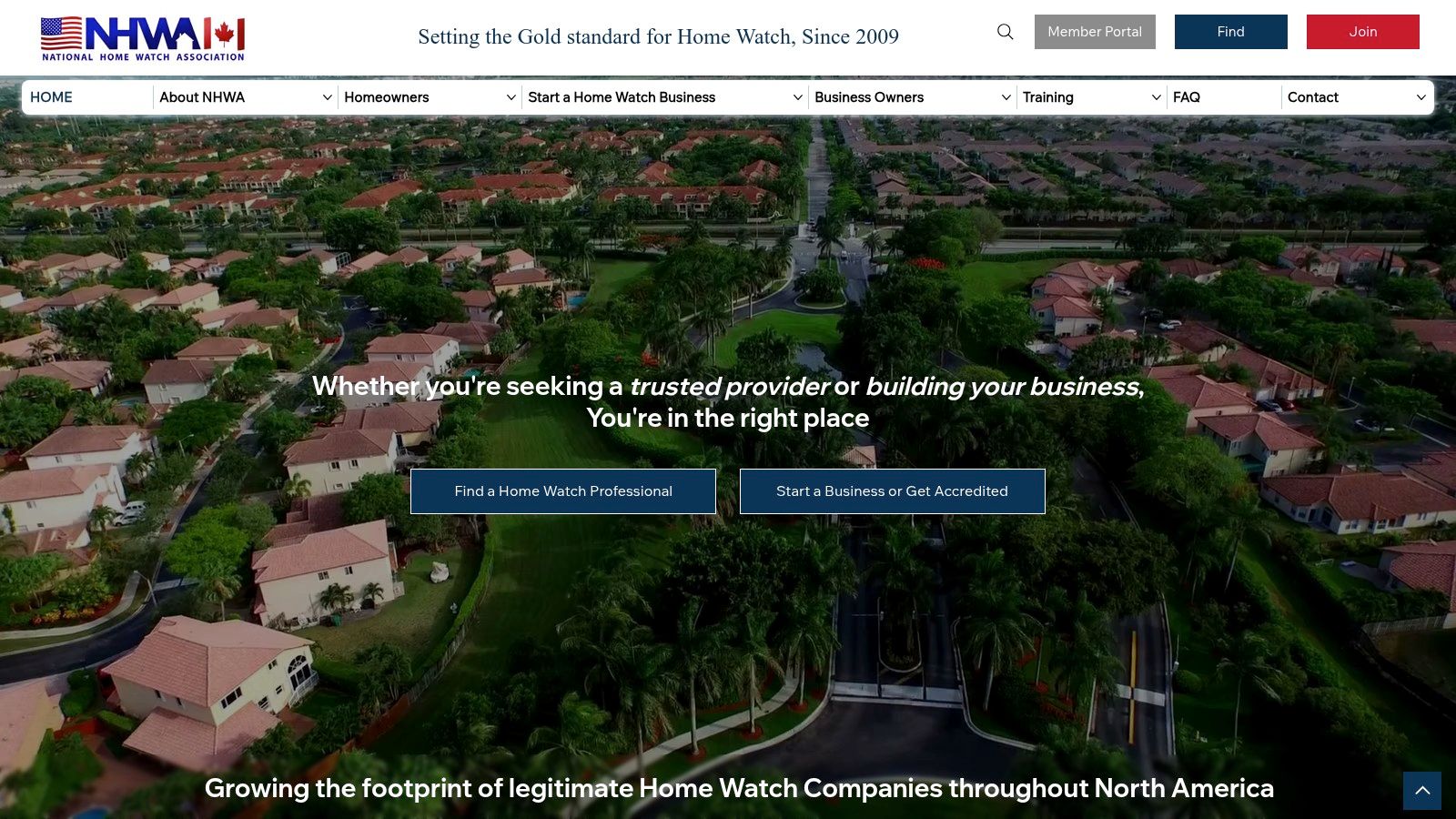
This platform gives peace of mind by checking professionals for you. Using their free directory, you can find a list of accredited members serving areas like Monterey, Carmel, and Pacific Grove.
Key Features and Service Highlights
The NHWA helps homeowners find the most trusted home watch services in Monterey Bay. It educates people on what to look for in a provider. It also offers checklists and articles that explain the difference between a professional service and a casual neighbor helping out.
- Verified Credentials: It only lists businesses that are bonded, insured, and have passed criminal background checks.
- Code of Ethics: All members must follow a strict code of ethics, ensuring a high level of professionalism.
- Educational Resources: The website offers helpful guides and tips for homeowners on securing an unoccupied property.
- Local Provider Search: A simple search tool allows you to find accredited professionals serving the Monterey Bay area.
Pros and Cons
| Pros | Cons |
|---|---|
| Increases Trust: Provides a vetted list of insured professionals. | Not an Exhaustive List: Good local companies may exist outside the NHWA. |
| Free to Use: Homeowners can access the directory at no cost. | Requires Direct Contact: You must reach out to each provider for quotes. |
| Sets Industry Standards: Promotes professionalism and accountability. |
If you value security and credentials, starting your search with the NHWA directory is a smart way to connect with qualified local experts.
Website: https://www.nationalhomewatchassociation.org/
Frequently Asked Questions (FAQs)
What does a home watch service do?
A home watch service performs regular visual inspections of your property while you are away. They look for obvious issues like leaks, pests, or security breaches. The goal is to identify and report small problems before they become big, expensive ones.
How is home watch different from a house sitter?
A home watch service provides scheduled professional visits to inspect your property. A house sitter lives in your home temporarily. Home watch focuses on property maintenance and security, while a sitter's main role is to provide an occupied presence.
How much do home watch services cost in Monterey Bay?
Costs vary based on your home's size and the services you need. Most companies offer a custom quote after an initial consultation. Basic inspections might start around $50-$75 per visit, but prices can change depending on the provider.
Do I need a home watch service if I have a security system?
Yes, they serve different purposes. A security system alerts you to a break-in, but a home watch professional can respond locally. They also look for non-security issues like water leaks, storm damage, or appliance failures that a security system would miss.
Why is hiring a professional, insured service important?
A professional service is bonded and insured, which protects you from liability. If an accident or damage occurs during a visit, their insurance covers it. Hiring an uninsured individual could leave you financially responsible for any issues.
Secure Your Investment with the Right Partner
Choosing from the many trusted home watch services Monterey Bay offers is a big decision for any homeowner. Your property in Carmel, Salinas, or Monterey is a major financial and personal asset. Leaving it empty, even for a short time, creates risks.
We have looked at a range of options in this guide. This includes full estate management from Torrente Property Management to directories like the National Home Watch Association. Each service meets different needs. The key takeaway is that proactive protection is always better and less stressful than reactive repairs.
How to Choose a Home Watch Service
- Define Your Needs: Make a checklist of what you need. Do you require vendor management for landscaping? Is bilingual communication a priority? Knowing your must-haves will help narrow your choices.
- Do Your Research: Always verify a company's credentials. Ask for proof of bonding and insurance. A professional service will provide this information easily. Also, check online reviews and ask for references.
- Get a Detailed Agreement: A formal contract is essential. It should clearly list the services, inspection frequency, and emergency plans. The National Home Watch Association states that a clear agreement is a sign of a professional service.
The Value of Local Expertise
The best trusted home watch services in Monterey Bay have deep local roots. A provider who understands the area's unique weather, seasonal risks, and has a network of reliable local vendors is a huge asset. They don't just watch your home; they actively protect it with smart, local strategies.
Ready to protect your peace of mind with a partner who combines local expertise with professional care? Torrente Property Management offers a dedicated Estate Caretaker program to protect your valuable Monterey Bay property.
Contact Torrente Property Management today at (831) 582-8916 to create a custom home watch plan. You can also learn more at their website: Contact Torrente Property Management Inc.

Top Tax Deductions for Property Investors in Monterey Bay
Owning a rental property is a smart investment. But are you making the most of your returns when tax season arrives? Understanding the key tax deductions for property investors is crucial for your success. Many landlords in Monterey Bay miss important write-offs, leaving money on the table.
These deductions can greatly boost your net income. In fact, real estate investors can often deduct a large part of their operating costs. According to the U.S. Census Bureau, there are over 48 million rental units in the United States, and each one represents an opportunity for savvy financial management.
This guide will show you seven essential deductions. We will provide clear tips for local investors in areas like Salinas and Carmel. Our goal is to help you keep more of your hard-earned money and make your properties work smarter for you.
1. Depreciation Deductions
Depreciation is one of the biggest tax deductions for property investors. It lets you write off the cost of your property over time due to wear and tear. The IRS allows you to deduct a part of this value loss each year. This lowers your taxable income without taking cash out of your pocket.

How It Works
Depreciation covers both the building's structure and the items inside it.
- Building Structure: The main parts of a residential building, like the walls, roof, and foundation, are depreciated over 27.5 years.
- Appliances and Fixtures: Items like carpets, appliances, and blinds have a shorter life. They can be depreciated faster, giving you bigger deductions sooner.
Real-World Example
Imagine you own a rental property in Salinas. You could claim thousands of dollars in depreciation each year on the building alone. If you install a new air conditioner for $5,000, you can deduct that cost over its useful life, adding to your annual savings.
Tips for Maximizing Your Claim
- Get a Depreciation Schedule: Hire a professional to create a detailed report. This is the best way to legally maximize your claims.
- Keep Good Records: Save every receipt for new items, renovations, and improvements.
- Update Your Schedule: After any major upgrade, update your schedule to include the new items.
2. Interest on Investment Loans
The interest you pay on a loan for your rental property is a major tax deduction. Since the loan is for a business purpose, the IRS treats the interest as an operating expense. This can significantly lower your taxable income and boost your return on investment.

What You Can Deduct
You can deduct interest on almost any loan related to your rental property.
- Purchase Loans: The interest on the mortgage used to buy the property is fully deductible.
- Improvement Loans: If you take out a loan for a major renovation, the interest is also deductible.
- Refinanced Loans: Interest on a refinanced loan is deductible up to the amount of the original mortgage.
Real-World Example
Let's say you have a rental property in Monterey with a $500,000 loan at a 6% interest rate. In the first full year, you could deduct around $30,000 in interest payments. This is a huge saving that directly reduces your tax bill.
Tips for Maximizing Your Claim
- Use Separate Bank Accounts: Keep your personal and investment finances separate. This makes bookkeeping much cleaner.
- Document Loan Purposes: Keep clear records of what each loan was used for. This is important in case of an audit.
- Track Funds Carefully: If you use part of an investment loan for personal reasons, the interest on that portion is not deductible. Using good accounting software for landlords can help.
3. Property Management and Professional Fees
Hiring experts to help manage your property is a smart move. The fees you pay them are also valuable tax deductions for property investors. These costs are necessary for running your rental business, making them fully deductible.
What You Can Deduct
Any fee you pay for a service related to your rental property can be claimed.
- Property Management Fees: Costs for a company to handle tenant screening, rent collection, and maintenance.
- Legal Fees: Costs for creating leases, handling evictions, or other legal issues.
- Accounting Fees: The cost of hiring an accountant for your rental property's taxes.
Real-World Example
If your Salinas property generates $30,000 in annual rent and you pay an 8% management fee, you can deduct $2,400. If you pay an accountant $500 for tax help related to your rental, that is also a $500 deduction.
Tips for Maximizing Your Claim
- Keep Every Invoice: Retain all receipts from property managers, lawyers, and accountants.
- Separate Legal Fees: Legal fees for buying a property are a capital expense. Fees for tenant management are immediately deductible.
- Evaluate Management Costs: A professional manager can increase your income and reduce vacancies. Their fee is a worthwhile, deductible investment. Check out these property management tips from Torrente Properties.
4. Repairs and Maintenance
The costs of repairs and maintenance are common tax deductions. These are expenses needed to keep your property in good condition. Unlike major upgrades, you can deduct the full cost of a repair in the year you paid for it.

Repairs vs. Improvements
The IRS sees a "repair" differently than an "improvement."
- Repairs (Deduct Now): These fix wear and tear. Examples include fixing a leaky faucet, patching a wall, or repairing a broken window.
- Improvements (Depreciate): These are major upgrades that add value. A new roof or a full kitchen remodel are improvements. You deduct their cost over several years.
Real-World Example
A plumber fixes a leaky pipe in your Monterey rental for $350. This is a repair, and you can deduct the full $350 this year. However, if you remodel the entire kitchen for $25,000, that is an improvement and must be depreciated.
Tips for Maximizing Your Claim
- Document Everything: Keep detailed invoices that state what work was done.
- Ask for Separate Invoices: If a contractor does both a repair and an improvement, ask for separate bills. This makes it easy to track your deductions.
- Work with Professionals: Using professional services ensures you have clear records. Find out more about professional property maintenance services in Salinas.
5. Insurance Premiums
Protecting your investment is essential. The IRS allows you to deduct the cost of your insurance premiums. This is one of the most straightforward tax deductions for property investors. Every dollar you spend on insurance reduces your taxable income.
What You Can Deduct
Any insurance policy for your rental activity is a business expense.
- Building Insurance: Covers the physical structure of your property.
- Landlord Insurance: A special policy that covers liability and loss of rent.
- Liability Insurance: Protects you if a tenant or visitor is injured on your property.
Real-World Example
For your rental property in Monterey County, you might pay $1,200 annually for building insurance and $800 per year for landlord insurance. You can claim the full $2,000 as a deduction, lowering your tax bill.
Tips for Maximizing Your Claim
- Review Coverage Yearly: Shop around to make sure you have good rates and the right coverage.
- Keep Good Records: Store all policy documents and proof of payment in a safe place.
- Protect Vacant Properties: A standard policy may not cover a vacant property. Learn how vacant home caretaker services in Monterey Bay can help.
6. Travel and Vehicle Expenses
Many investors forget to deduct the cost of traveling to manage their rental. If you drive to your property for inspections, maintenance, or to meet tenants, these costs are deductible. This helps reimburse you for the expense of overseeing your investment.
How It Works
The IRS allows you to deduct the necessary costs of travel for your rental business.
- Standard Mileage Rate: This is the easiest method. Track your business miles and multiply by the IRS standard rate (e.g., 67 cents per mile for 2024).
- Actual Expense Method: Track all your car's costs, like gas, repairs, and insurance. Deduct the percentage of these costs related to your business use.
Real-World Example
You drive from your home in Salinas to your rental in Monterey 20 times a year (500 total miles). Using the standard rate, that would be a $335 deduction. If you live out of state, you can even deduct airfare and lodging for trips to manage the property.
Tips for Maximizing Your Claim
- Keep a Detailed Log: Use a notebook or an app to record the date, purpose, and mileage for every trip.
- Save All Receipts: Keep receipts for fuel, repairs, and other travel costs.
- Choose the Best Method: Calculate your deduction both ways to see which one saves you more money. For out-of-town owners, explore professional rental property management for out-of-town owners.
7. Advertising and Marketing Costs
Finding good tenants is key to steady income. The money you spend on advertising is a valuable tax deduction. Any cost to market your vacant property is a necessary business expense and is fully deductible.
How It Works
You can deduct every dollar spent promoting your rental in the same year you paid for it. These costs are directly related to earning rental income.
Common deductible expenses include online listings, "For Rent" signs, professional photos, and flyers.
Real-World Example
Let's say you are trying to fill a vacancy in Monterey County.
- An online ad on Zillow costs $200.
- Hiring a photographer for listing photos costs $300.
- A "For Rent" sign costs $50.
You can claim a total of $550 in advertising deductions, which directly lowers your taxable income.
Tips for Maximizing Your Claim
- Budget for Vacancies: Set aside funds for advertising when a lease is about to end. This helps reduce downtime.
- Invest in Quality: Professional photos attract better tenants faster. These costs are a fully deductible investment.
- Keep Meticulous Records: Save every receipt for your marketing expenses. Proper records are essential to prove your claims.
Frequently Asked Questions (FAQs)
What is the biggest tax deduction for property investors?
Depreciation is often the largest single deduction. It allows you to write off the cost of the building and its assets over time, providing a significant non-cash deduction each year.
Can I deduct the cost of my own labor for repairs?
No, the IRS does not allow you to deduct the value of your own time or labor. You can only deduct the actual costs of materials and payments to contractors you hire.
Are mortgage principal payments deductible?
No, you cannot deduct the principal portion of your mortgage payment. However, the mortgage interest, property taxes, and mortgage insurance premiums are all deductible expenses.
What happens if my rental expenses are more than my income?
If your expenses exceed your income, you have a rental loss. Depending on your income level, you may be able to deduct these passive losses against other income, subject to IRS limits.
How long do I need to keep my records and receipts?
You should keep records for at least three years from the date you file your tax return. This is the typical period the IRS has to initiate an audit.
Partner with Experts to Maximize Your Returns
Understanding tax deductions for property investors is key to a successful investment. Deductions for depreciation, loan interest, professional fees, and maintenance are powerful tools. They can greatly improve your cash flow and long-term profit.
The key is to keep excellent records all year long. For property owners in the Monterey Bay area, these savings make a real difference. At Torrente Property Management, we serve our community with integrity and a focus on your success.
Don't leave money on the table. Let the local experts at Torrente Property Management Inc. provide the detailed financial reporting you need to claim every available deduction. We manage your property with care, so you can enjoy the rewards.
Contact Torrente Property Management today at (831) 582-8916 to learn how our services can optimize your returns.

Smart Property Management Workflow Automation in Monterey Bay
Meta Description: Discover how property management workflow automation helps Monterey Bay owners save time, reduce errors, and improve tenant satisfaction. Learn key strategies.
Managing rental properties can feel like a nonstop cycle of tasks. From chasing late rent to coordinating repairs, the work never ends. Property management workflow automation uses technology to handle these repetitive jobs for you.
This simple shift frees you up from daily busywork. It lets you focus on what really matters: growing your investment and providing great service to your tenants.
Why Automation is a Game-Changer in Monterey Bay
In a competitive rental market like Monterey or Salinas, efficiency is key. The list of daily tasks is long, from collecting rent to answering late-night tenant calls. Doing everything by hand takes a lot of time and can lead to mistakes.
A forgotten maintenance request or a late rent reminder can hurt tenant relationships and your income. This is where property management workflow automation makes a huge difference. It's not about losing the personal touch. It’s about using smart systems to handle predictable tasks.
For property owners, this approach is a game-changer. It allows you to:
- Reduce Administrative Work: Save hours each day by automating invoices, payment reminders, and lease renewal notices.
- Improve Tenant Communication: Provide quick, consistent responses to maintenance requests and questions, which helps keep tenants happy.
- Prevent Costly Mistakes: Stop errors from manual data entry and forgotten follow-ups, making your operations run smoothly.
- Gain Clear Oversight: Use a central dashboard to track every task, payment, and message from one place.
The Rise of Smart Systems
This move to automation is a global trend. In fact, research shows that 57% of property managers are investing in new technology to streamline their operations (Source: Buildium). This is because smart systems are the key to efficiency.
Many real estate pros already save over two hours a day on administrative tasks alone. To learn more, check out this report on real estate workflow automation tools.
The idea is simple, as this diagram shows.

A trigger, like a tenant's online maintenance request, starts a series of automated actions. This solves the problem without you needing to manage every step.
By automating routine tasks, you free up time and energy. You can focus on smart growth, building good tenant relationships, and protecting your Monterey Bay property.
Whether you're a landlord in Carmel or an investor in Santa Cruz County, automation can change your business. It means fewer late-night calls and more time to focus on your investment. This is the power of property management workflow automation.
Key Areas Where Automation Makes an Impact

Understanding property management workflow automation is the first step. Knowing where to use it for the biggest results is where the real success happens.
The trick is to focus on the tasks that take the most time and are most likely to have errors. This is where technology can truly change your daily operations and your bottom line. Let's look at the specific areas where automation helps Monterey Bay property owners the most.
Find and Screen Tenants Faster
Your tenant screening process protects you from late payments and property damage. The old way of sorting through paper applications is slow and inconsistent.
Automated screening tools change the game completely. They create a fair and efficient system that does the hard work for you. These systems can filter applications based on your rules, like a minimum credit score. This means you only spend time on the best candidates.
Make Rent Collection Effortless
Chasing down late rent is frustrating. It creates awkward talks and disrupts your cash flow. Automated rent collection is the best solution to this old problem.
With the right software, tenants can pay online, making it easy to pay on time. The system can also send automatic reminders before the due date and notices for late payments. You don't have to do a thing.
Local Example: A property owner in Carmel used to spend the first week of every month tracking checks and calling late tenants. It was stressful and delayed his own payments. After setting up an online portal, over 90% of his tenants now pay on time with autopay. The system handles all reminders, giving him peace of mind.
Build an Efficient Maintenance System
A slow maintenance process is a top reason why tenants don't renew their leases. When a tenant in a Salinas apartment has a leaky faucet, they expect a fast response. Automation makes sure nothing gets missed.
Here is what a modern maintenance workflow looks like:
- Easy Submission: The tenant sends a request through an online portal with photos and details.
- Automatic Sorting: The system sorts the request by urgency and type (like plumbing or electrical).
- Vendor Assignment: It automatically notifies your trusted local vendor for that type of job.
- Real-Time Updates: You and the tenant can track the repair status from start to finish.
This process eliminates phone tag and ensures every request is handled well. For more ideas on improving your operations, see our property management tips.
Automate Your Leasing Process
From advertising a vacancy to signing the lease, there are many repetitive steps. Automation can handle most of this work, helping you fill vacancies faster.
With one click, you could post your empty Monterey property on multiple rental sites. An auto-responder can answer common questions and send links to your online application. Once a tenant is approved, the system sends a digital lease for an e-signature. This whole process saves time and looks professional to your new renter.
Manual vs. Automated Tasks
| Task | Manual Process (The Old Way) | Automated Workflow (The New Way) |
|---|---|---|
| Tenant Screening | Reviewing paper applications, calling references, and running individual background checks. | Applicants fill out an online form; the system automatically filters and runs reports. |
| Rent Collection | Waiting for mailed checks, sending manual reminders, and making calls for late payments. | Tenants pay online with autopay options. The system sends automatic reminders. |
| Maintenance Requests | Getting calls at all hours, playing phone tag with vendors, and manually tracking repairs. | Tenants submit requests online; the system assigns a vendor and gives status updates. |
| Leasing | Posting listings on multiple sites, answering emails one-by-one, and signing paper leases. | One click syndicates listings. Auto-responders handle questions, and leases are signed online. |
The difference is clear. Automation saves time and creates more reliable and profitable systems for managing your properties.
Using AI for Proactive Property Maintenance

What if you could fix a problem before your tenant even notices it? That is the power of proactive maintenance, a key part of property management workflow automation. Instead of reacting to a panicked call about a broken AC unit in a Salinas summer, you can see issues coming.
This approach uses smart technology like Artificial Intelligence (AI) to watch your property’s important systems. It's like giving your building a warning system. For property owners, moving from reactive to proactive is a true game-changer.
How Predictive Maintenance Works
The idea is simple. We place small sensors on key equipment like water heaters and HVAC systems. These devices constantly check performance data like temperature and energy use.
This information goes to an AI system that learns the normal operating patterns. The AI can spot tiny changes that signal a future failure. When it finds an issue, you get an alert. This lets you schedule a repair during business hours instead of paying emergency rates.
By catching problems early, you prevent the cost and frustration of a surprise breakdown. It’s the best way to protect your asset.
Real Savings in Monterey County
Imagine a multi-unit building in Monterey. A small, slow leak starts in a water pipe. In the past, no one would know until water stains appeared on the ceiling below. By then, repairs for drywall and paint could cost thousands.
With a proactive system, a moisture sensor detects the change. The AI flags this and sends an alert to the property manager. A plumber fixes the tiny leak the next day for a small cost. A disaster has been avoided. Learn more about how AI is transforming property management.
Benefits Beyond Saving Money
Avoiding expensive repairs is a big win, but proactive maintenance offers more. It creates a better living experience for your tenants.
- Happier Tenants: People prefer to live in a well-kept property. Fewer breakdowns mean happier tenants who are more likely to renew their leases.
- Longer Equipment Life: Regular maintenance helps your big-ticket systems last longer, protecting your investment.
- Better Safety: Proactive monitoring can catch serious hazards like gas leaks or electrical faults before they become dangerous.
- Smarter Budgeting: You can plan and budget for maintenance instead of being surprised by huge repair bills.
Our approach to property maintenance services in Salinas and across Monterey Bay is built on this proactive principle. We use the best tools to protect your investment and give you peace of mind.
How to Choose the Right Automation Software
Picking the right property management workflow automation software can be tough. The goal is to find a tool that solves your specific problems as a Monterey Bay property owner.
The best choice balances powerful features with being easy to use. You need a system that both you and your tenants will actually use. A complicated platform is a wasted investment.
All-in-One vs. Specialized Tools
Your first choice is between an all-in-one platform or separate specialized tools. An all-in-one system handles everything—accounting, maintenance, and leasing—in one place. For most owners, this is the easiest path.
Specialized tools focus on doing one thing very well. This can give you powerful features but means you have to make sure the tools work together. For most independent owners, an all-in-one solution is the best balance.
Must-Have Features
Every good property management platform should have a few key features. These will give you the biggest return on your investment.
Look for a system that includes:
- An Online Tenant Portal: A secure place where tenants can pay rent, submit maintenance requests, and view their lease.
- Good Accounting and Reporting: The software must track income and expenses and create clear owner statements.
- Maintenance Request Tracking: A system that logs every request and lets you and the tenant see the repair status.
- Leasing and Vacancy Tools: The tool should help you post vacancies, accept online applications, and run background checks.
This G2 grid shows some of the top-rated platforms available.
This chart is a good starting point for your research. It ranks leaders based on user reviews and market presence.
How to Evaluate Software
Once you have a shortlist, it's time to dig deeper. Don't just read the marketing material. The best way to judge a tool is to see it in action.
The best software solves your biggest headaches without creating new ones. Focus on how a tool will practically improve your daily work.
Before you choose, get answers to these questions:
- Is it Easy to Use? Sign up for a free trial or demo. Is the layout simple? Could your least tech-savvy tenant figure it out?
- What is the Customer Support Like? When you need help, you need it fast. Find out their support hours and response times.
- How Does Pricing Work? Get the full story on cost. Are there hidden fees? You want clear pricing that can grow with you.
- Is Your Data Secure? The software will hold sensitive data. Ask about their security, data encryption, and backup plans.
- Does It Work with Other Tools? Connecting with your other software is a big plus. Integration with your accounting software is especially important. For more info, read our guide on the best accounting software for landlords.
Taking time to check your options will pay off. Choosing a system that fits your operations in Salinas or Carmel will lead to less stress and more success.
Putting Your Automation Plan into Action
Having the right software is a great start. But the real success of property management workflow automation comes from a well-planned rollout. The goal is to add these new tools without causing headaches for your team or tenants.
A rushed launch can create more problems than it solves. A careful approach ensures everyone understands and sees the benefits.
Start with a Simple Audit
Before you automate anything, get a clear picture of how you work now. Map out your most common tasks. Where are the delays? What repetitive jobs are eating up your day?
This quick audit helps you find the best places for improvement. Look for tasks that are:
- Repetitive: Things you do the same way every day, like chasing rent.
- Time-Consuming: Processes with a lot of manual data entry, like screening applications.
- Prone to Error: Manual jobs where a small mistake can cause big problems.
Once you find these pain points, set clear goals. For example, a goal might be to "cut time on maintenance by 50%."
Plan a Phased Rollout
Trying to launch everything at once is a recipe for chaos. A smarter plan is a phased rollout. Start with one or two high-impact areas, like rent collection or maintenance requests.
This lets you master one new system before moving to the next. It also gives tenants time to adjust. Good communication is key. Explain the benefits to them, like paying rent from their phone or getting faster repair updates.
This image shows a typical automated workflow. It breaks down how a request is handled without you needing to manage every step.
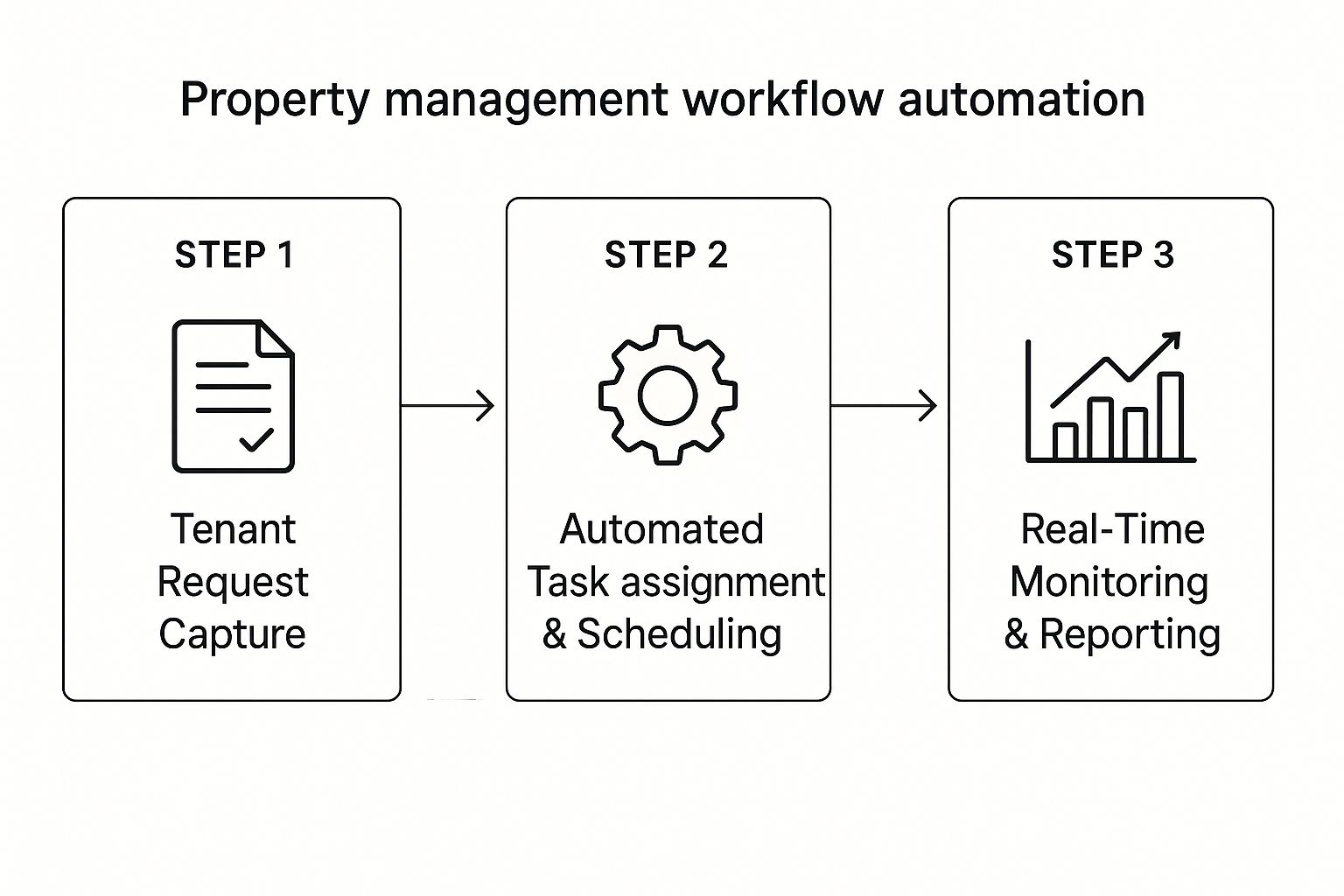
The process moves from tenant input to automated action and clear reporting. It cuts out all the tedious manual steps.
This simple checklist can help you stay on track.
| Your 4-Step Automation Implementation Checklist | ||
|---|---|---|
| Step | Action Item | Key Consideration |
| 1. Audit & Prioritize | Identify your top 3 time-consuming tasks. | Focus on workflows that give the biggest benefit first. |
| 2. Phased Rollout | Select just one workflow to automate for the first launch. | Starting small builds confidence and reduces disruption. |
| 3. Communicate Clearly | Draft emails and notices explaining the new process and its benefits. | Explain how the change makes tenants' lives easier. |
| 4. Gather Feedback | After 30 days, ask tenants and your team what is working. | The best systems evolve. Be ready to make small changes. |
Following these steps helps you add new tools smoothly, setting you up for long-term success.
Get Feedback and Keep Improving
Your automation plan should not be set in stone. The final and most important step is to keep improving it. After you launch a new system, ask for feedback.
Ask tenants if the new portal was easy to use. Ask your maintenance team if the new work order system is helping. This feedback is golden because it tells you what is working and what needs to be changed. This is very important for out-of-town owners who need things to run perfectly. Learn more in our guide on rental property management for out-of-town owners.
Use what you learn to make your workflows better. The best automated systems are the ones that change based on how people really use them.
Frequently Asked Questions About Automation
Is property management automation expensive to set up?
The cost can vary, but most modern software is very affordable. Many platforms use a subscription model based on how many units you manage, making it accessible even for owners with one or two properties. Think of it as an investment that pays for itself through time savings and efficiency.
Will automation replace my property manager?
No, automation is a tool that helps a great property manager work smarter. It handles repetitive administrative tasks, freeing up your manager to focus on what requires a human touch. This includes building strong tenant relationships and making strategic decisions for your investment.
How do I get my tenants to use a new online portal?
Clear and early communication is key. Introduce the new system by highlighting the benefits for them, like the convenience of online rent payments and faster maintenance responses. Providing simple instructions or a short video can make the transition smooth for everyone.
What if I am not very tech-savvy?
You don't need to be an expert. Modern property management software is designed to be user-friendly with clean layouts and simple dashboards. Reputable companies also offer excellent customer support and training to help you succeed. We have helped many owners overcome their tech worries and solve their property management challenges.
How secure is my data and my tenants' information?
Top software providers use advanced security like data encryption to protect sensitive information. When evaluating tools, always ask about their security protocols to ensure they meet industry standards. Using a secure, professional platform is often safer than keeping paper records.
Ready to stop managing tasks and start managing your investment? The team at Torrente Property Management Inc. has the local expertise and modern tools to bring efficiency and peace of mind to your Monterey Bay properties.
Contact Torrente Property Management today at (831) 582-8916 to learn how our automated systems can maximize your returns. https://torrenteproperties.com

Why Choose Torrente for Your Monterey & Salinas Rental
Owning a rental property in Monterey or Salinas is a great investment. But managing it well is key to making money and avoiding stress. For many owners, the daily tasks can be too much to handle.
Finding the right partner is important. You need someone who knows the local market and will care for your property like it's their own. According to the National Association of Residential Property Managers (NARPM), professionally managed properties often have shorter vacancies. This shows that choosing a good management company is a smart move for your investment.
This guide will explain why Torrente Property Management is the best choice for your Monterey & Salinas rental property. We will show how our deep local knowledge and hands-on approach protect your investment. You'll see how our full range of services gets results and makes owning property easier.
1. 25+ Years of Local Market Expertise
Nothing beats local knowledge when picking a property manager. With over 25 years of experience, Torrente Property Management truly understands the Monterey and Salinas rental markets. We know the local trends that help your rental succeed.
Our deep roots mean we create better strategies. We know what drives demand, from tourism in Monterey to the needs of military families and the farm seasons in Salinas. This is a key reason why Torrente Property Management is the best choice for your Monterey & Salinas rental property—we make your investment work for its specific location.

How We Use Local Knowledge
Our market expertise gives you real benefits. We use our local insights, not just general data, to maximize your income and keep your property rented.
- Smart Pricing: We know how to set the right rent prices for different neighborhoods, from Carmel to Salinas, to attract good tenants quickly.
- Targeting the Right Tenants: We market to military staff at the Naval Postgraduate School and agricultural workers in the Salinas Valley, filling vacancies with qualified people.
- Local Connections: Our network of trusted local vendors means repairs are done quickly and affordably, saving you money.
This local-first approach gives our clients an edge. It is especially helpful for owners who live far away. Learn more about our services for property management for out-of-town owners.
2. Comprehensive, Full-Service Solutions
A successful rental needs more than just collecting rent. It requires a full-service approach that covers every detail. Torrente Property Management offers a complete solution to make your life easier.
We handle everything from marketing your property and screening tenants to coordinating maintenance and providing clear financial reports. Our goal is to provide a smooth, stress-free experience. This complete service is another reason why Torrente Property Management is the best choice for your Monterey & Salinas rental property.

Our Full-Service Process
Our all-in-one system protects your investment at every stage. We manage all the details so you don't have to.
- Leasing & Screening: We find and screen high-quality tenants to reduce risks like late payments and property damage.
- Rent Collection: Our online payment system makes it easy for tenants to pay on time, ensuring consistent cash flow for you.
- Financial Reporting: You get access to an online portal with real-time financial statements, so you always know how your investment is doing.
Our process is designed to save you time and worry. You can learn more about our screening methods in our guide to tenant selection and screening tips.
3. Hands-On, Owner-Like Management
We believe in treating every property as if it were our own. This hands-on, proactive approach means we focus on preventing problems before they start. This philosophy protects your property’s long-term value and keeps tenants happy.
We conduct regular inspections and schedule preventive maintenance. Our team is available 24/7 for emergencies. This dedicated care is a core reason why Torrente Property Management is the best choice for your Monterey & Salinas rental property. A well-maintained property keeps its value and attracts great tenants.

Proactive Care in Action
Our commitment to your property is shown through specific actions. We don’t wait for things to break; we work to keep your investment in top shape.
- Coastal Weather Prep: Before the rainy season, we clean roofs and gutters to prevent leaks common in our coastal climate.
- Regular System Checks: We service HVAC systems to keep them running smoothly, ensuring tenants are comfortable and avoiding costly breakdowns.
- 24/7 Emergency Help: Our team is always ready to handle urgent issues like plumbing leaks, which minimizes damage and keeps tenants safe.
This watchful care is crucial, especially for empty properties. Learn more about our vacant home caretaker services in the Monterey Bay area.
4. Bilingual Service for Broader Reach
The Monterey and Salinas communities are diverse. To reach the widest pool of qualified tenants, it’s important to communicate effectively with everyone. Aurelia Torrente and her team are bilingual, serving both English and Spanish-speaking clients.
This ability to connect with more people is a major advantage. It ensures clear communication with tenants and owners, leading to better relationships and fewer misunderstandings. This is one more reason why Torrente Property Management is the best choice for your Monterey & Salinas rental property.

Benefits of Bilingual Service
Our bilingual team offers real-world benefits for your property. It helps us build trust and serve the entire community.
- Wider Tenant Pool: By marketing in both English and Spanish, we attract more applicants, giving you more choices to find the perfect tenant.
- Clear Communication: We can explain lease agreements and handle maintenance requests in the language tenants are most comfortable with.
- Stronger Community Ties: Our ability to serve everyone shows our commitment to the local community, building a positive reputation for your property.
We fill vacancies faster by reaching more people. Read more about our marketing at Strategic Marketing and Fast Tenant Placement. For more insights on financial tracking, explore some of the best accounting software for landlords.
Frequently Asked Questions
What types of properties do you manage?
We manage a variety of residential properties, including single-family homes, condos, and multi-family units in the Monterey and Salinas areas. We focus on long-term rentals and do not manage HOAs or vacation rentals.
How do you determine the rental price for my property?
We use our 25+ years of local market data and conduct a detailed analysis of comparable properties in your specific neighborhood. This ensures we set a competitive rent that attracts quality tenants quickly while maximizing your income.
What is included in your tenant screening process?
Our comprehensive screening includes a credit check, criminal background check, employment and income verification, and rental history verification. This thorough process helps us place reliable and responsible tenants in your property.
How do you handle maintenance and repairs?
Tenants can submit maintenance requests online 24/7. We use a network of trusted, licensed, and insured local vendors to perform high-quality repairs quickly and affordably, and we always get your approval for significant expenses.
Are you bilingual in Spanish and English?
Yes, our team is fully bilingual. This allows us to serve the diverse communities of Monterey and Salinas effectively, ensuring clear communication with all owners and tenants.
Take the Next Step to Stress-Free Ownership
Choosing a property manager is about finding a trustworthy partner. Torrente Property Management offers the local expertise, hands-on care, and full-service solutions you need. We treat your property with integrity and a focus on our community.
Here’s a quick summary of what we offer:
- 25+ Years of Local Expertise: We know the Monterey and Salinas markets inside and out.
- Hands-On, Owner-Like Care: We treat your property with proactive attention and care.
- Bilingual Service: We connect with the entire community, reaching more potential tenants.
- Full-Service Solutions: We handle everything from leasing to maintenance, so you don’t have to.
Let us show you how our proven approach can make owning a rental property profitable and easy.
Ready to get the most from your rental property? Contact Torrente Property Management today at (831) 582-8916 for a free consultation.

What Does a Property Manager Do? A Guide for Owners
Owning a rental property in the Monterey Bay area is a great investment. But have you ever wondered, "What does a property manager actually do?" A property manager acts like the CEO for your property, handling all the daily tasks to keep it profitable and stress-free for you.
They are your professional partner. They take care of everything from finding great tenants to handling repairs and making sure all laws are followed.
What Are the Main Jobs of a Property Manager?
A great property manager does more than just collect rent. They protect your time, your investment, and your peace of mind. For many owners, especially those who live far away or are busy, managing a rental can feel like a second full-time job.
This is why so many people hire a professional. In fact, the U.S. property management market is expected to reach $81.52 billion in 2025, according to a report on key property management statistics from Doorloop.com. This shows how much trust owners put in managers to protect their properties.
What a Property Manager Handles
A property manager oversees three main areas of your investment. This image breaks down their responsibilities.
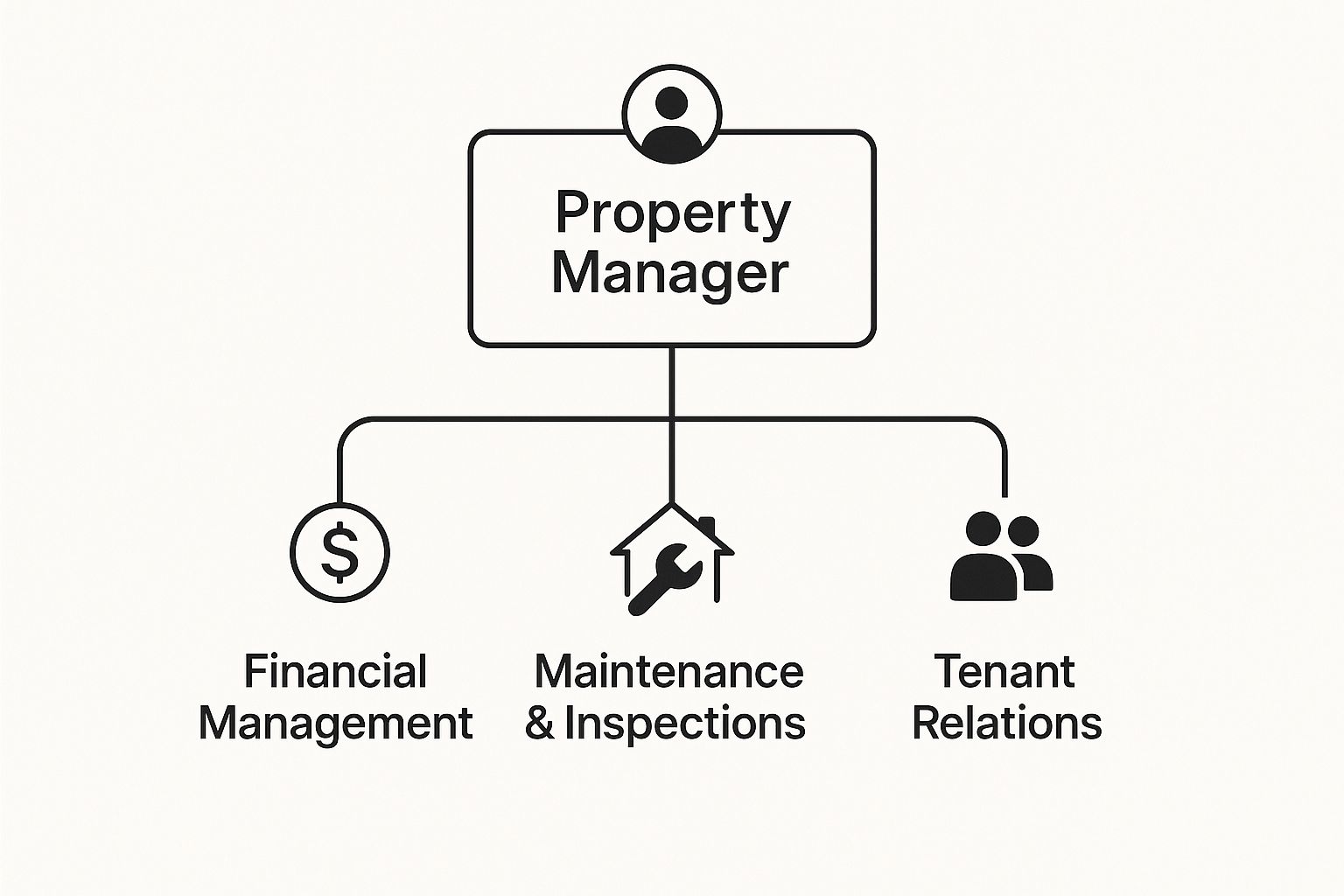
As you can see, their duties fall into three buckets. They make sure the property is making money, keep it in good shape, and manage everything related to the tenant.
At its core, professional property management is about maximizing your income while minimizing your headaches. It’s a partnership that turns a hands-on job into a source of passive income.
This setup lets owners enjoy the benefits of their investment without the stress. You won't have to deal with late-night repair calls, confusing legal paperwork, or the constant work of finding good tenants. Next, we will look at each of these jobs in more detail.
A Quick Look at a Property Manager's Duties
| Responsibility Area | Key Tasks |
|---|---|
| Financial Management | Setting the right rent, collecting payments, managing security deposits, paying bills, and providing financial reports. |
| Tenant Management | Marketing the property, screening tenants, handling leases, communicating with tenants, and managing move-ins and move-outs. |
| Property Maintenance | Doing regular inspections, scheduling repairs, and working with trusted contractors. |
| Legal & Compliance | Following landlord-tenant laws, handling evictions if needed, and staying up-to-date on all rules. |
This table covers the basics. A truly great property manager also brings local expertise and smart advice to each task.
Managing Your Property's Finances
Let’s be honest: you invested in property to make money. A huge part of what a property manager does is handle the finances. This is much more than just collecting rent checks.
A skilled manager helps your property earn as much as possible. They make sure your investment performs at its best.

The process starts with one of the most important decisions: setting the right rent price.
Setting the Right Rent Price
Setting the wrong rent is a costly mistake. If you price it too high, your property will stay empty. If you price it too low, you lose money every month.
A great property manager removes the guesswork. They do a detailed rental market analysis of the local area. For a property in Salinas, we would look at similar homes right in that neighborhood to see what they rent for.
We look at details like:
- Property size and number of bedrooms.
- The condition of the property and any special features, like a new kitchen or a garage.
- Current demand from renters in the area.
This data-driven approach ensures your property is priced to attract good tenants quickly while earning you top dollar.
Easy Rent Collection and Paying Bills
Consistent cash flow is key to a successful rental. A property manager sets up professional systems to make sure rent is paid on time, every time. This means you don't have to have awkward talks about late payments.
Today, most tenants pay through secure online portals. This convenience helps reduce late payments. When a payment is late, the manager handles it professionally, from sending official notices to enforcing late fees according to the lease and California law.
A property manager’s financial role is to create a consistent, predictable system. They act as a buffer between you and the tenant, professionally managing all money matters.
A manager also pays the property's bills for you. This includes property taxes, insurance, and invoices from repair vendors. This keeps everything organized and paid on time.
Clear Financial Reports
You should always know where your money is going. A property manager provides clear and detailed financial reports.
Every month, you will get a statement that breaks down all the income and expenses for your property.
This report usually includes:
- Income: All the rent collected.
- Expenses: A list of every cost, from management fees to repairs, with receipts attached.
- Net Income: Your profit for the month.
These reports give you a clear view of your investment's health. You can learn more about the tools that make this possible in our guide on the best accounting software for landlords.
Finding High-Quality Tenants
An empty property costs you money every day. That's why one of the most important things a property manager does is find a great, long-term tenant.
This is not about finding just anyone. It’s a process that uses expert marketing and a tough screening system to protect your investment.
First, we make sure your property looks its best. We coordinate professional cleaning, touch up paint, and hire a photographer for great photos and videos. We write a description that helps people imagine living there, whether it's a home in Monterey or a property in Carmel.
Marketing Your Property to the Right People
Once the property is ready, we advertise it widely. We list your rental on popular sites like Zillow and Trulia, plus our own website. This helps us get your property rented fast.
We then handle all the calls and emails from interested renters. We schedule and conduct all the showings. This saves you a huge amount of time and effort. You can learn more about these duties in Indeed.com's overview of the property manager role.
Why Tenant Screening is So Important
Finding a tenant is easy. Finding the right tenant is the most important thing we do to protect your investment. A good screening process is your best defense against late rent, property damage, and evictions.
Our screening process follows all Fair Housing laws.
Here’s what our screening covers:
- Credit Report: To check their financial history and see if they pay bills on time.
- Background Check: To look for any red flags that could be a risk.
- Income Verification: We call their employer to confirm they have a stable income.
- Rental History: We talk to their past landlords to ask if they paid on time and took care of the property.
A tough screening process is not about being difficult; it's about being careful. It prevents future problems and protects your income.
This process ensures that the person moving into your home is reliable and responsible. This peace of mind is especially valuable for owners who live far away, as we discuss in our guide for out-of-town property owners. As a bilingual company, we can communicate in English and Spanish, opening up your property to a wider pool of great applicants in the Monterey Bay area.
Protecting Your Property with Maintenance
A big part of what a property manager does is take care of the physical property. Your rental is a valuable asset, and it needs regular care to keep its value. A smart maintenance plan is key.
Good maintenance is about fixing things before they break. This proactive approach keeps tenants happy and saves you money by avoiding expensive emergency repairs.

Why Regular Inspections Matter
One of the most valuable things we do is regular property inspections. These check-ups help us find small issues before they become big problems. Think of it as a health check-up for your property.
During an inspection, we look for small signs of trouble. A small stain on the ceiling could be a slow roof leak. Catching these problems early can save you thousands of dollars in damage.
Our checklist includes:
- Checking HVAC systems before the summer heat in Salinas arrives.
- Inspecting gutters and roofs before the winter storms in Carmel begin.
- Testing appliances to make sure they are working correctly.
- Testing smoke and carbon monoxide detectors for safety.
A leaky faucet that costs $150 to fix today can cause thousands in water damage if ignored. Proactive maintenance is the best way to control repair costs.
Fast and Reliable Repair Coordination
Even with the best care, things will break. When a water heater fails or an oven stops working, a quick response is important. This is where a property manager really helps.
Tenants can submit repair requests 24/7 through an online portal or a dedicated phone line. We then diagnose the problem and send a trusted professional to fix it. According to industry data, over 80% of property managers are involved in coordinating repairs.
Using a Network of Trusted Local Vendors
We have a network of trusted local vendors in Monterey County. We work with the best plumbers, electricians, and other contractors. We know they do good work at a fair price.
Every vendor we use is:
- Licensed and Insured: This protects you from liability.
- Vetted for Quality: We only work with reliable professionals.
- Competitively Priced: We often get better pricing because we provide them with regular business.
This network means repairs are handled quickly and correctly. It also makes getting a property ready for a new tenant much smoother, as we outline in our tenant move-out inspection checklist.
Following Laws and Reducing Your Risk
The rental world is full of complex laws. For a landlord, trying to keep up with the rules can be overwhelming. A property manager acts as your legal shield, protecting you from costly mistakes.
Our job is to make sure your rental operation follows all local, state, and federal laws.
Staying Up-to-Date on Landlord-Tenant Laws
California has some of the strictest landlord-tenant laws in the country. These rules cover everything from handling security deposits to entering a tenant's home. A professional manager knows these rules inside and out.
For example, California law requires security deposits to be returned within 21 days. Missing this deadline can lead to penalties. We make sure all deadlines are met and that any deductions for damages are well-documented to prevent disputes.
A property manager’s knowledge of local and state laws is your best defense. They turn complex legal rules into simple, everyday practices.
We also make sure to follow the Fair Housing Act. This federal law prevents discrimination against tenants. We ensure all our marketing and screening processes are 100% compliant.
The Lease: Your Most Important Document
The lease agreement is the legal foundation of your relationship with a tenant. A generic online lease often has loopholes and may not follow local Monterey County rules. We create strong, legally-sound lease agreements that are designed to protect you.
A good lease clearly defines all rules and responsibilities.
This includes:
- Rent payment due dates and late fee policies.
- Who is responsible for what maintenance tasks.
- Rules on pets, smoking, and guests.
Having a strong lease is a key part of our property management contract with you.
Handling Evictions Legally and Professionally
Sometimes, tenants break their lease. When this happens, a property manager handles the situation professionally and legally.
We start by issuing the proper legal notices. If the problem continues and eviction is the only option, we manage the entire process. The eviction process in California is very technical. One small mistake can force you to start over, costing you months of lost rent.
We work with legal experts to handle all the paperwork and court proceedings. This professional oversight minimizes your financial loss and shields you from the stress of this difficult situation.
FAQs About Property Management
Here are answers to some of the most common questions we hear from property owners in the Monterey Bay area.

What does property management cost?
Most property management companies charge a fee that is a percentage of the monthly rent. This fee is typically between 8% and 12% of the rent we collect. We prefer this model because our goals are the same as yours—we only get paid when you do.
How do you handle repairs?
We are the single point of contact for all maintenance issues. When a tenant reports a problem, we send a trusted professional from our network to fix it. For non-emergency repairs, we get your approval for any cost over a pre-set limit, like $300.
What if a tenant doesn't pay rent?
If rent is late, we start a legally-compliant collections process right away. This includes sending formal notices and enforcing late fees. If the tenant still doesn't pay, we will talk to you about starting the formal eviction process.
How often will you contact me about my property?
You will receive detailed financial statements every month. We will also contact you anytime something important happens, like a major repair or a lease renewal. Of course, we are always just a phone call or email away. You can learn more in our article on what a property management company does.
Can I use my own repair vendors?
Yes. While we have a network of great vendors, we are happy to work with your trusted contractors. We just require that they are properly licensed and insured to protect you from liability.
The Right Partner for Your Investment
A great property manager does much more than just collect rent. They act as your financial steward, your maintenance coordinator, and your legal shield. They turn your real estate investment from a stressful, hands-on job into a source of passive income.
If you want to maximize your returns and minimize your headaches, working with a professional is the smartest move you can make.
Ready to learn how we can help with your Monterey Bay property? Contact Torrente Property Management today at (831) 582-8916 for a free consultation.

How to Calculate Rental Yield for Your Investment Property
Calculating rental yield is the best way to see how much income a property truly makes compared to its cost. It's a simple comparison of your annual rent to the property's total value. The result is a clean percentage that shows you your return on investment.
Understanding Rental Yield in Monterey Bay

Before you can improve your investment returns, you need a clear picture of what you're earning now. For property owners in the Monterey Bay area—from Salinas to Carmel—rental yield is a key number. It cuts through the noise and shows you exactly how hard your asset is working for you.
Think of it as your property's financial scorecard. Knowing your yield helps you:
- Compare properties fairly: See which investment offers the better return.
- Make smart decisions: Know when to adjust rent or cut costs.
- Secure financing: Lenders often look at yield to gauge an investment's risk.
Gross Yield vs. Net Yield
There are two ways to look at rental yield. Each one tells a different part of your financial story.
Gross rental yield gives you a quick, high-level look at your property's earning potential before expenses. It’s a handy tool for making initial comparisons when you're looking for new investment opportunities.
Net rental yield, on the other hand, tells the real story of your property's profit. This calculation includes all operating expenses—the nitty-gritty costs of ownership. It gives you a much more accurate picture of your actual cash flow.
For any serious investor, net yield is the bottom line. It reveals what you truly pocket after paying for everything from Monterey County property taxes to an unexpected maintenance call.
Let’s look at how these two important metrics stack up.
Gross vs. Net Rental Yield at a Glance
This table breaks down the key differences between Gross and Net Rental Yield. It shows what each one calculates and reveals about your investment's financial health.
| Metric | Gross Rental Yield | Net Rental Yield |
|---|---|---|
| Formula | (Annual Rent / Property Value) x 100 | (Annual Rent - Annual Expenses) / Property Value x 100 |
| What It Measures | The total income potential before any costs are deducted. | The actual profit as a percentage of the property's value. |
| Best For | Quick, high-level comparisons between potential properties. | Getting an accurate, real-world picture of an investment's performance. |
| Includes | Only the annual rental income and the property's purchase price. | All operating costs: taxes, insurance, maintenance, vacancies, etc. |
While both are useful, the net yield gives you the financial clarity you need to make smart decisions.
The simplest formula focuses on gross yield. It's calculated as (Annual Rental Income / Property Purchase Price) x 100%. For instance, if you buy a home in Salinas for $600,000 that brings in $42,000 in annual rent, your gross yield is 7%.
Getting a handle on these figures is the first step in mastering professional property management in Monterey and maximizing your returns.
How to Calculate Gross Rental Yield
Let's start with the most straightforward metric: gross rental yield. Think of this as a quick calculation to get an initial read on an investment property. It gives you a high-level snapshot of its earning potential before any costs are factored in.
The calculation itself is simple. You only need two numbers: your total annual rental income and the total cost you paid to get the property.
The Basic Formula
Here's the formula every investor should know:
(Annual Rental Income / Total Property Cost) x 100 = Gross Rental Yield %
This simple equation gives you a clear percentage. This makes it incredibly useful for comparing different properties at a glance.
This chart shows how straightforward the process is. It breaks it down into three easy parts.
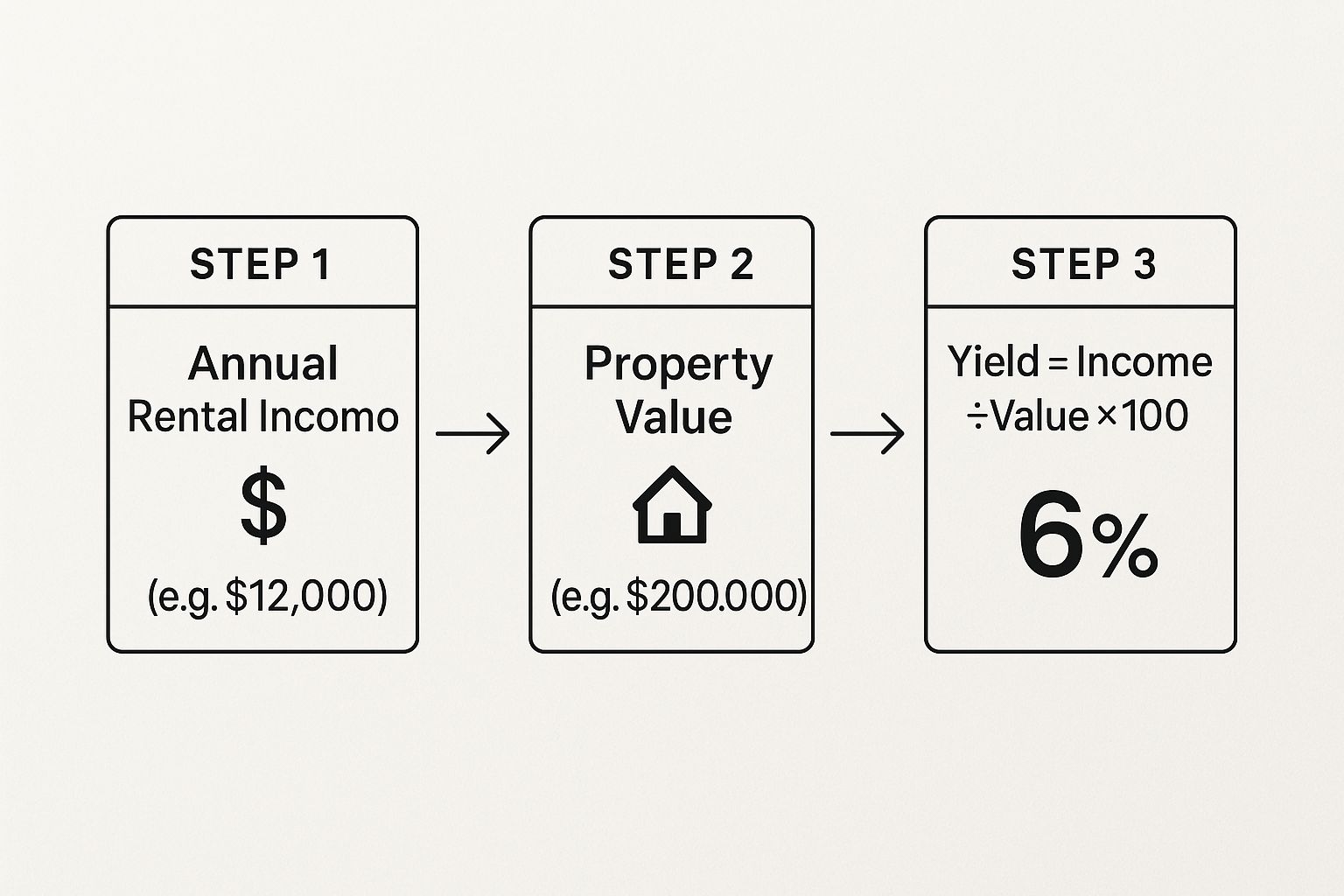
As you can see, you just need your income and total cost. Then, a quick division gives you the yield percentage.
A Salinas Example
Let's walk through a real-world example. Imagine you found a promising single-family home in Salinas to buy as a rental property.
First, you must figure out the Total Property Cost. Many new investors make a mistake here—they only use the purchase price. For an accurate picture, you must include every upfront expense.
- Purchase Price: $650,000
- Closing Costs (legal fees, inspections): $15,000
- Initial Renovations (new paint, flooring): $10,000
- Total Property Cost: $675,000
Next is your Annual Rental Income. If the market rent for the home is $3,500 per month, the math is simple.
- Monthly Rent: $3,500
- Annual Rental Income: $3,500 x 12 = $42,000
Now we have our two key figures. We can plug them right into the formula.
Gross Yield Calculation:
($42,000 / $675,000) x 100 = 6.22%
For this Salinas property, your gross rental yield is 6.22%. This number gives you a solid baseline for the property's performance. It’s an essential first step before digging deeper into the more detailed net yield calculation.
Finding Your True Profit with Net Rental Yield
Gross yield is a good number to start with, but it's not the whole story. If you want to know how an investment property is really performing, you need to look at the net rental yield. This is the number that serious investors in Monterey Bay focus on because it shows what's left after all the bills are paid.
Think of it as the difference between what your property could make and the actual cash that hits your bank account. To get that number, you must be honest about the real costs of owning a rental property.
Identifying Your Operating Expenses
First, you need a full list of all your annual operating costs. These are the expenses required to keep your property safe, occupied, and generating rent. Forgetting even one of these can throw off your entire calculation.
For a typical Monterey County property, your list will include:
- Property Taxes: Your annual bill from the county.
- Landlord Insurance: This protects your property and covers liability.
- Maintenance & Repairs: Budget for leaky faucets, appliance issues, and general upkeep.
- Vacancy Costs: No property stays occupied 100% of the time. Set aside 5-10% of your gross annual rent to cover gaps between tenants.
- Property Management Fees: If you hire a firm, this fee covers tenant screening and maintenance calls.
This list isn’t complete. You might also have costs for landscaping, pest control, or certain utilities depending on your property.
Calculating Your Net Operating Income (NOI)
Once you've added up all your annual expenses, you subtract that total from your gross rental income. The number you're left with is your Net Operating Income (NOI). This is the profit your property generates before you account for financing costs, like your mortgage payment.
Staying organized here is key. Using one of the best accounting software options for landlords can make tracking these expenses much simpler.
Net Yield in Action: The Salinas Example
Let's go back to our Salinas property. We already established a Total Property Cost of $675,000 and a Gross Annual Rental Income of $42,000.
Now, let's list the estimated annual operating expenses:
- Property Taxes (approx. 1.25%): $8,438
- Landlord Insurance: $1,200
- Maintenance & Repairs (5% of rent): $2,100
- Vacancy (5% of rent): $2,100
- Property Management (8% of rent): $3,360
- Total Annual Expenses: $17,198
With these figures, we can find the NOI:
$42,000 (Gross Income) - $17,198 (Total Expenses) = $24,802 (NOI)
Finally, we plug that NOI into the net yield formula:
($24,802 / $675,000) x 100 = 3.67%
The net yield of 3.67% gives a much more realistic view of the property's profitability compared to the 6.22% gross yield. This is the number that truly matters for budgeting and making smart investment decisions.
What Is a Good Rental Yield?
So, you’ve run the numbers and have your net rental yield. But what does that number really tell you? The truth is, there’s no single magic number for a "good" rental yield. The right figure depends on your financial goals and the specific market you're investing in.
Some investors focus on immediate cash flow. Others play the long game, prioritizing a property's value climbing over time. Your ideal yield depends on which strategy you value more.
Balancing Cash Flow with Growth
Here in the Monterey Bay area, there's a balance between cash flow and long-term growth. A property in a high-demand location like Carmel might only produce a net yield of 3-4%. That might sound low, but you're often getting strong, stable appreciation in return.
On the other hand, a rental in Salinas could deliver a higher net yield, potentially 5-6% or more. That means more cash in your pocket each month. However, its long-term appreciation might not be as predictable.
Smart investors know that rental yield is just one piece of the puzzle. A slightly lower yield in a market with a strong economy and consistent demand is often a safer and more profitable long-term bet.
Local Market Influences
You can't evaluate a yield in a vacuum. Local economic trends and tenant demand have a massive impact. A strong local economy, like the one we have in Monterey, creates a stable tenant pool. That stability can make a moderate yield more attractive because it comes with a lower risk of vacancy.
In fact, the National Association of Realtors (NAR) notes that 86% of real estate investors consider rental income a key factor in their property decisions. This shows just how vital yield is to the big picture. You can learn more about how yield impacts growth to get a deeper understanding of this dynamic.
Ultimately, a good rental yield meets your financial needs while balancing risk and reward. It’s about making a strategic choice that builds your wealth in our unique Monterey Bay market.
Common Mistakes to Avoid When Calculating Yield

Learning how to calculate rental yield is a huge step. But a simple mistake can throw off the entire result. An inaccurate number can cause you to overestimate your cash flow or choose a poor investment.
One of the most common errors is forgetting to include all initial purchase costs. It's an easy mistake to just use the sale price in the formula. But your true investment includes closing costs, inspection fees, and any upfront renovations. Overlooking these items will make your yield look artificially high.
Another major slip-up is underestimating your annual operating expenses.
Underestimating Annual Expenses
To get a true net yield, you have to account for every dollar your property costs you to run. A vague guess for maintenance or ignoring the chance of vacancy will skew your results.
Here are some costs that are often underestimated:
- Vacancy: No property stays filled 100% of the time. A smart approach is to set aside 5-10% of your gross annual rent to cover periods between tenants.
- Maintenance: This isn't just for emergencies. You need a budget for routine upkeep like painting and servicing appliances. A good rule of thumb is to budget 1-2% of the property’s value each year for this.
- Capital Expenditures (CapEx): These are big-ticket items that wear out over time, like a new roof or HVAC system. Setting aside a separate fund ensures you’re not caught off guard.
Relying on old rent estimates is another critical mistake. The rental market here in Monterey County can shift quickly.
To avoid this, get accurate rental comps from a local expert who understands each neighborhood. For more guidance, check out our other property management tips.
How to Improve Your Rental Yield
Your rental yield isn't a static number. You can actively shape it. Boosting your property's ROI follows two main paths: you either increase your rental income or you lower your operating costs. Both demand a smart approach.
Often, the most direct way to see a change is to raise your income. This goes beyond a simple rent increase. We're talking about thoughtful upgrades that tenants in the Monterey Bay area truly value.
Smart Strategies for Boosting Income
Think about what amenities are in high demand. It might surprise you what a difference some key features can make.
- Adding an in-unit washer and dryer is almost always a win.
- Upgrading to energy-efficient stainless steel appliances modernizes the kitchen.
- Improving outdoor spaces, like a private patio, can be a huge draw.
Even smaller changes can justify a higher rent. Installing smart thermostats or allowing pets can open your property to a wider tenant base.
Reducing Your Operating Expenses
Now for the other side of the equation: cost control. Every dollar you trim from your annual expenses flows directly to your net operating income. The secret here is to be proactive, not reactive.
A preventative maintenance plan is your best defense against expensive, surprise repairs. Regularly servicing HVAC systems and checking for leaks will save you money in the long run.
It's also smart to periodically review your insurance policies and property tax assessments. For investors managing properties from afar, handling local costs is critical. Our guide on rental property management for out-of-town owners offers deeper insights for that scenario.
Frequently Asked Questions About Rental Yield
Here are answers to the most common questions we get about rental yield in the Monterey Bay area.
What is a good rental yield in Monterey County?
A "good" net rental yield in Monterey County is typically between 4% and 6%. However, this can vary. A location like Carmel might have a lower yield but stronger long-term appreciation, while Salinas often offers better immediate cash flow.
Should I include mortgage payments in my net yield calculation?
No, the standard net yield formula does not include mortgage payments. This calculation measures the property's performance on its own, separate from your financing. Including your mortgage helps you find your cash-on-cash return, which is a different and useful metric.
How do I estimate potential vacancy costs?
A good rule of thumb is to budget 5-10% of your gross annual rent for potential vacancy. This is a safe estimate for most properties. For a more precise figure based on current local demand, a professional property manager can provide the most accurate data.
Can my rental yield change over time?
Yes, your rental yield will change over time. It can go up or down as your rental income and operating costs change. This is why you should recalculate your yield at least once a year to stay informed about your investment's true performance.
How can a property manager help improve my yield?
A professional property manager helps improve your yield in two key ways. First, we use expert market knowledge to set the optimal rent price, ensuring you don't leave money on the table. Second, we manage proactive maintenance and have a network of trusted vendors to control operating costs, which directly boosts your net income.
Take Control of Your Investment’s Performance
Understanding how to calculate rental yield is the first step toward making smarter, more profitable investment decisions. By tracking both your gross and net yield, you get a complete financial picture of your property's health. This allows you to identify opportunities for growth and protect your bottom line.
If you want to maximize your returns and ensure your Monterey Bay property is performing at its best, we’re here to help. Contact Torrente Property Management today at (831) 582-8916 to discuss a personalized strategy for your investment.