
Direct Answer: You usually do not have to install separate meters. Most owners either fold utilities into the rent, bill each unit by a written formula, or submeter. All three are legal if disclosed properly.
An owner in Monterey called me with a setup I hear about a few times a year. A 2 bedroom main house with a 1 bedroom guest house in the back yard, tenants in the front house moving out after 31 years, and one PG&E account and one Cal Am account covering the whole property.
He had been paying both bills himself and billing the main house two thirds and the guest house one third. His two real questions were whether that split could keep working under professional management, and, in his words, whether he would have to get separate systems installed.
So let me answer that first, then walk through what I have seen actually work on two unit lots in Monterey, Seaside, Salinas, and Marina. Separate meters are usually a choice, not a requirement. There are cheaper paths, and there are a few things you have to get in writing before anyone signs a lease.
Do You Have to Install Separate Meters for a Second Unit?
For an existing legal second unit that has always run off one service, you generally are not forced to split the utilities just because you start renting it out. Owners have been billing shared meters for decades on the Peninsula, and the law allows it as long as the arrangement is disclosed and honest.
New construction is where that can change. If you are permitting a brand new detached unit, the utility may want its own connection, and city planning may have something to say about it. Conversions of existing space inside a home are treated differently than new detached buildings.
So before you assume anything, do two calls:
- Ask PG&E what a second electric or gas service at your address would actually involve
- Ask Cal Am the same question about water, since a new water service on the Peninsula has its own process
- Ask your city planning counter whether your unit’s permit history ties you to any utility condition
What drives the cost of splitting service is physical, not theoretical. Distance from the existing service point, panel capacity, whether trenching is needed across a driveway, and whether walls or paving have to be opened all move the number a lot. I would not guess at a price for you. Get two or three bids from licensed contractors and an estimate from the utility, then compare that real number against the simpler options below.
Three Ways Owners Handle One Meter, Two Households
Almost every two unit lot I work with lands on one of three approaches. Each one solves a different problem and creates a different one.
Option one: fold utilities into the rent. You keep paying PG&E and Cal Am and price each unit to cover it. This is by far the easiest to administer, and it removes the monthly argument entirely.
The tradeoff is that you carry the usage risk. A tenant who runs space heaters all winter or waters the lawn every day is spending your money, and you cannot do much mid lease except talk to them.
Option two: bill each unit by a written, disclosed formula. This is what my Monterey caller was doing with his two thirds and one third split, usually based on square footage or number of occupants. It works, but it only works if you are consistent.
That means keeping copies of the actual bills, using the same math every single month, and passing through actual costs only with no markup. When owners get in trouble here, it is almost always because the formula drifted or the records were not kept.
Option three: submeter or install fully separate service. Everyone pays for what they use, and the disputes mostly go away. You pay for it up front in permits, trenching, and utility coordination, and you take on ongoing obligations as the submeter operator.
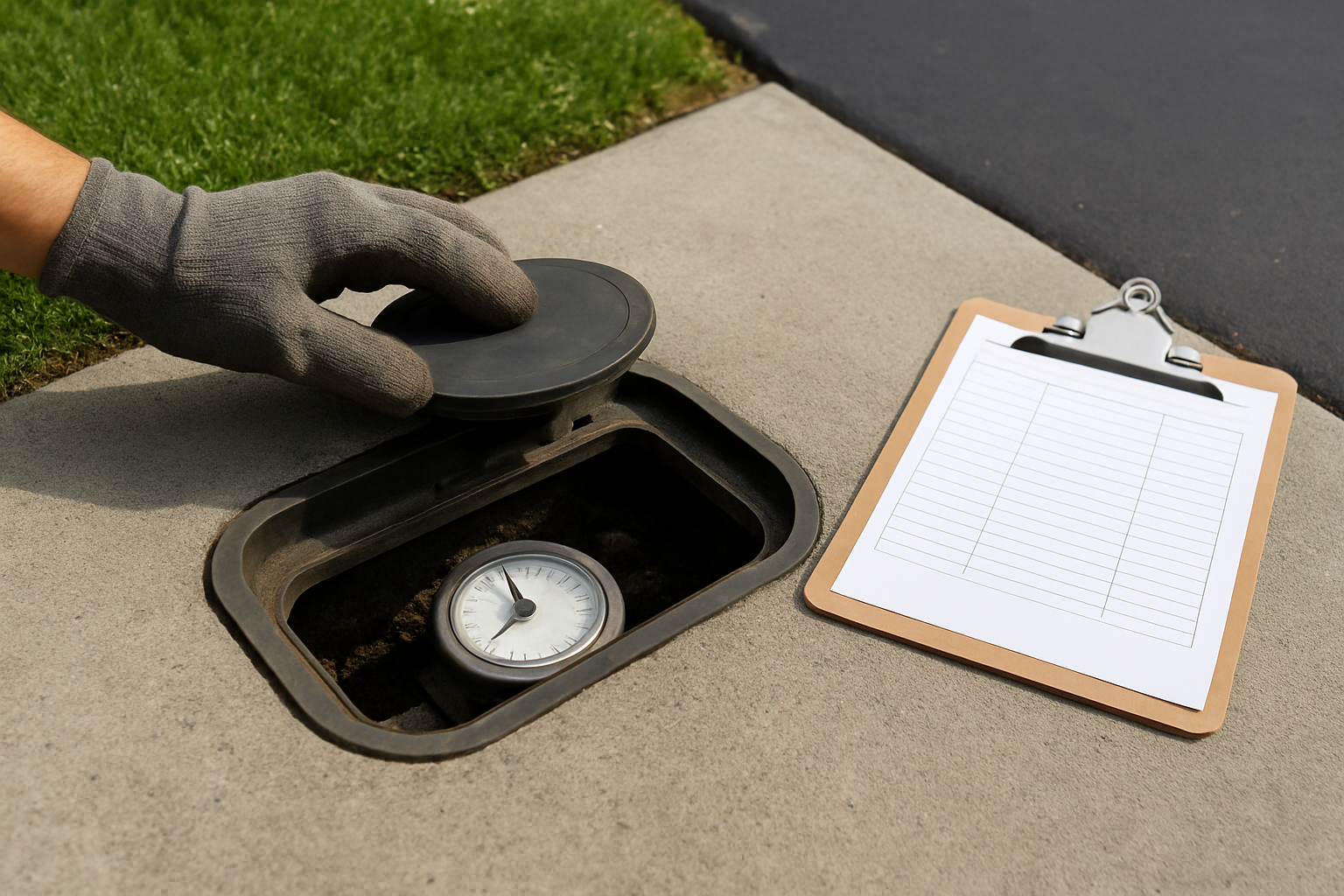
Comparing the Three Shared Meter Approaches
Here is how the three options stack up for a typical main house plus guest house lot in Monterey County.
| Approach | What it takes to run | Where it bites you |
|---|---|---|
| Utilities included in rent | Price both units to absorb the bills. No monthly math, no disclosure formula. | You eat every spike. Heavy usage or a slow leak comes straight out of your return. |
| Written allocation formula | A disclosed split by square footage or occupancy, plus copies of every bill on file. | Requires discipline and record keeping. Sloppy math turns into a tenant dispute fast. |
| Submeters or separate service | Permits, contractor work, utility coordination, and ongoing equipment upkeep. | Real up front cost, and as the submeter provider you take on rate and posting duties. |
On the Peninsula, Water Is the Line Item That Starts Fights
Electricity and gas are usually predictable. Water is not, and that is the part owners underestimate here.
Cal Am’s tiered pricing and the long standing conservation rules around Monterey mean usage above your allotment gets expensive quickly. One tenant who decides to green up a lawn in August can push a shared bill somewhere the formula never anticipated.
Leaks are worse, because nobody sees them. In our maintenance work, owners often find out about a slow leak the same way every time: the bill jumps, and then we go looking. A running toilet flapper or a supply line weeping behind a wall in an older Monterey or Pacific Grove home can quietly cost hundreds of dollars a month before anyone notices.
That is why a shared billing arrangement needs a leak response plan, not just a percentage. At minimum, decide in advance:
- Who reads the bill each month and what size jump triggers a look
- Who both tenants call when they hear water running with nothing on
- How fast a plumber gets dispatched and who authorizes the repair
- Whether the property gets a scheduled exterior and plumbing check a few times a year
We run quarterly photo documented inspections for owners on exactly this reasoning, and on a shared meter property it pays for itself the first time it catches a leak in month one instead of month five. If you want the broader version of that thinking, what actually has to happen to get a rental ready covers the prep side.
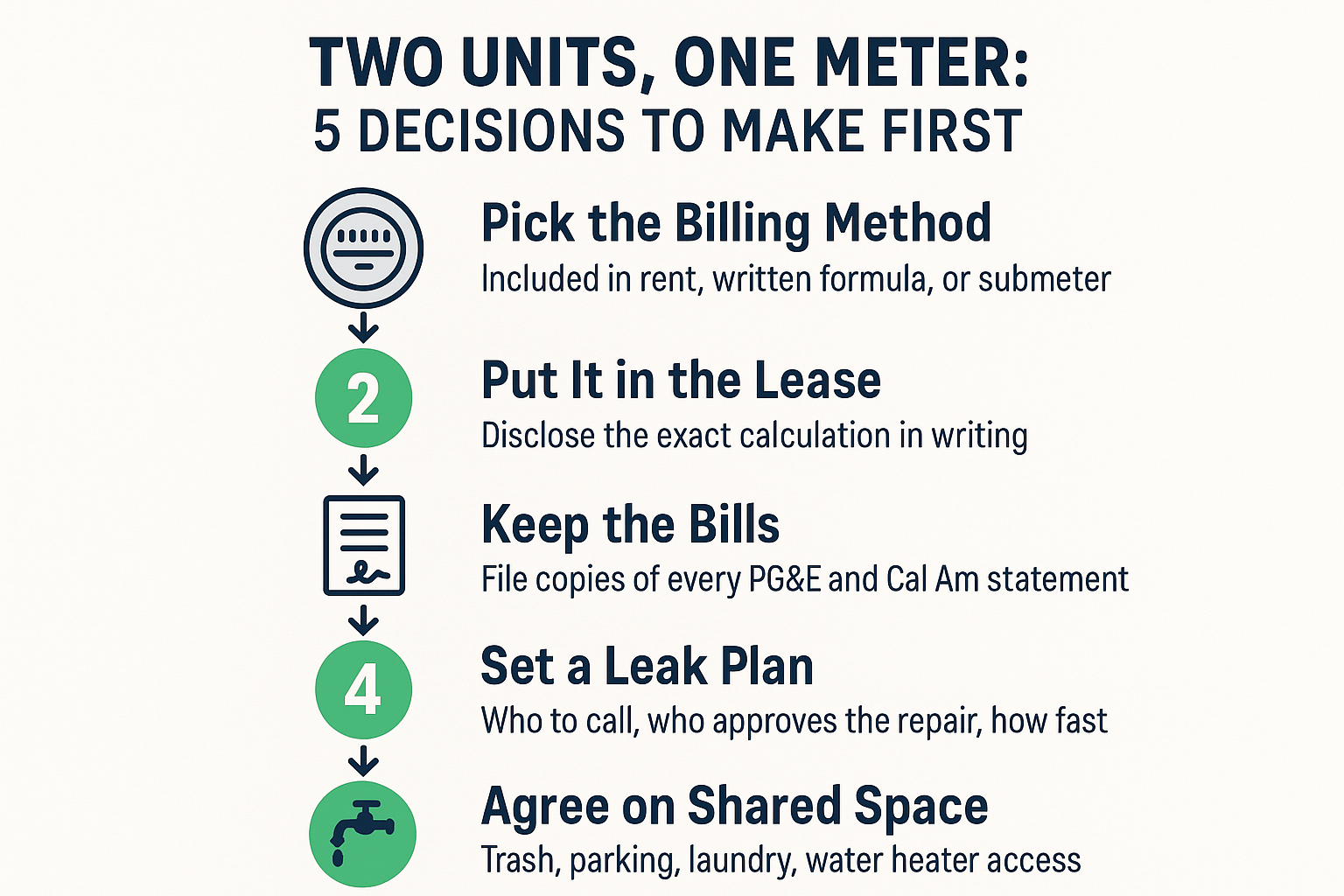
Five Decisions to Settle Before the First Tenant Moves In
On a two unit lot, these are the items I want agreed and written down before anyone gets keys.
The Paperwork Part, Without the Legal Lecture
California does not care much how you split a shared utility. It cares a great deal that the tenant was told, in writing, exactly how the charge is calculated, and that only actual costs get passed through.
If you submeter gas or electricity, you take on specific duties as the provider. PG&E’s page on submetered tenants and landlords lays out what California Public Utilities Code Section 739.5 requires, including limits on what you can charge, posting the rate schedule, and maintaining the submetering equipment yourself.
State rules on ratio utility billing have also been tightening, with further changes reported to take effect during 2026. Confirm the current requirements before you set up a new formula or continue an old one, because a split that was fine in 2019 may need updated disclosure language now.
And here is the exposure most owners miss: unpaid water and sewer charges can attach to the property itself. If a tenant stops paying their share, the lease may give you a claim against them, but the utility still looks at the parcel. The owner carries that risk no matter what the lease says.
The practical takeaway is simple. The billing method belongs in the lease in writing, and copies of the underlying bills belong in a folder you can produce on demand. That same documentation habit is what protects you at move-out when deposit deductions come up.
If the Back Unit Is an ADU or a Junior Unit
Plenty of the owners who reach out to me have a back unit, a carriage suite, or a converted studio rather than a purpose built duplex. The type of unit changes what is allowed.
California no longer requires an owner to live on site to rent out a standard ADU. A junior ADU, the kind carved out of the main house that often shares a bathroom, still carries an owner occupancy condition. That distinction matters if you are planning to move away and rent both units.
These are long term rentals in practice, not short stays. State rules push a 30 day minimum on junior units, and the City of Monterey does not permit residential stays under 30 days at all. Plan around annual leases and price accordingly.
I see both ends of this. One owner south of Salinas runs several houses with carriage suites attached, and a Seaside household lives in the front unit while renting the back one. Different situations, same core questions about meters, access, and who handles the 9pm phone call. If your second unit sits in a small multifamily building instead, what new multifamily owners in Marina need to know is a better fit.
Can a Manager Take the Front House While You Keep the Back Unit?
My Monterey caller asked this outright, and it is a fair question. The honest answer is that partial arrangements get messy on a single lot.
There is one meter, one landscaper, one water heater closet, and one set of trash cans. When two different people are making decisions about the same physical property, the tenants figure it out within a month and start calling whoever answers faster.
If you want to split management anyway, settle these in advance:
- Who authorizes repairs, and up to what dollar amount, when the issue touches both units
- Who holds the utility accounts and who reconciles the split each month
- Vendor access rules for the shared yard, side gate, and utility closet
- Notice for showings so the paying neighbor is not surprised by contractor traffic
- Who the tenants call after hours, in one sentence both households understand
Turnover feels different on a two unit lot too. A vacancy in one unit means showings, painters, and cleaners walking past someone who is already paying rent, which is worth planning for. How long it takes to rent out a Monterey Bay home gives you the realistic timeline for that stretch.
What Hands-On Management Actually Adds Here
On a shared meter property, the value is not glamorous. It is reading the PG&E and Cal Am bills every single month, noticing when a number moves, and getting a plumber out before a small leak becomes a five month problem.
It is also keeping the disclosure language and the receipts organized so the split can be explained at any time, and giving both households one point of contact so a utility question does not turn into a lease dispute.
Owners reach us in whatever way works for them. One owner told me he prefers email because phone calls are hard for him to hear, and we follow the owner’s lead on that. If you would rather see the full picture on what management involves, the difference between listing your house and actually managing it breaks it down.
Frequently Asked Questions About Shared Utility Meters on One Lot
Can I keep billing the main house two thirds and the guest house one third?
Usually yes, as long as the formula is disclosed in writing in each lease, you pass through actual costs only, and you keep copies of the bills. Since state rules on allocated utility billing have been shifting, confirm the current requirements before you carry an old split into a new lease.
What happens if the tenant refuses to pay their utility share?
You have a claim under the lease, but the utility still bills the account holder, and unpaid water and sewer charges can attach to the property itself. That is the main reason some owners on the Peninsula simply build utilities into the rent instead.
Is submetering worth it on a two unit lot in Monterey?
It depends on how far apart the units are and what has to be opened up to run new service. Distance from the existing service point, panel capacity, and trenching across a driveway or patio drive the cost. Get contractor bids and a utility estimate, then compare that against what you would lose to usage risk over five or ten years.
Do I have to live on the property to rent out the back unit?
Not for a standard ADU. California removed the owner occupancy requirement for those. A junior ADU, typically one carved out of the main house that shares a bathroom, still carries an owner occupancy condition, so check which one you actually have.
Can I rent the guest house for a few weeks at a time?
Not in the City of Monterey, which does not permit residential stays under 30 days, and junior units carry a 30 day minimum under state rules. Plan on annual leases.
Thinking Through a Two Unit Property in Monterey County?
If you have a main house and a back unit sharing one meter and you are trying to decide which billing approach fits, Aurelia and our bilingual team work with owners across Monterey, Seaside, Salinas, and Marina on exactly these setups. You are welcome to talk it through at (831) 582-8916, or send the details through the contact form at torrenteproperties.com if email is easier for you.