Direct Answer: SB 1365 takes effect January 1, 2027. After that date, California’s 10% emergency price gouging cap applies to rental housing regardless of the initial lease term, including multi-year leases.
If you own a rental in Monterey County and you have ever written a two-year or three-year lease, the rules you have been working under are about to change. For years, the state’s emergency price gouging limit skipped over rentals with an initial lease term longer than one year. That exemption is going away.
Governor Newsom signed SB 1365 on September 30, 2026. It amends Penal Code Section 396, and it takes effect January 1, 2027.
I work with owners all over the Peninsula and the Salinas Valley, and a lot of them use longer lease terms on purpose to cut down on turnover. Below is what actually changes, why it hits harder here than in most of the state, and the decisions I would make on renewals before January.
What the california price gouging rent cap long term lease SB 1365 change actually does
Penal Code Section 396 is the state’s price gouging law. Once a state of emergency is declared, it generally bars raising the price of certain goods and services, including rental housing, by more than 10% over what was charged just before the declaration.
The gap was the lease term. Rental housing with an initial lease term longer than one year sat outside the rule. Starting January 1, 2027, rental housing is covered regardless of the initial lease term, per the California Apartment Association’s summary of the signing and reporting from the Fresno Chamber of Commerce.
The bill also revises the defenses available when an increase goes above 10%, including increases contractually agreed to before the emergency declaration and certain repair or improvement costs. More on those in a minute.
Here is the part owners underestimate: this is in the Penal Code, not the Civil Code. A violation is a criminal matter, not just a civil dispute with a tenant. The state Attorney General keeps a plain-language rundown of how the law works on the price gouging page at oag.ca.gov.
So the cost of getting this wrong is not a refund. It is legal exposure on top of one.
Why Monterey County owners should pay closer attention than most
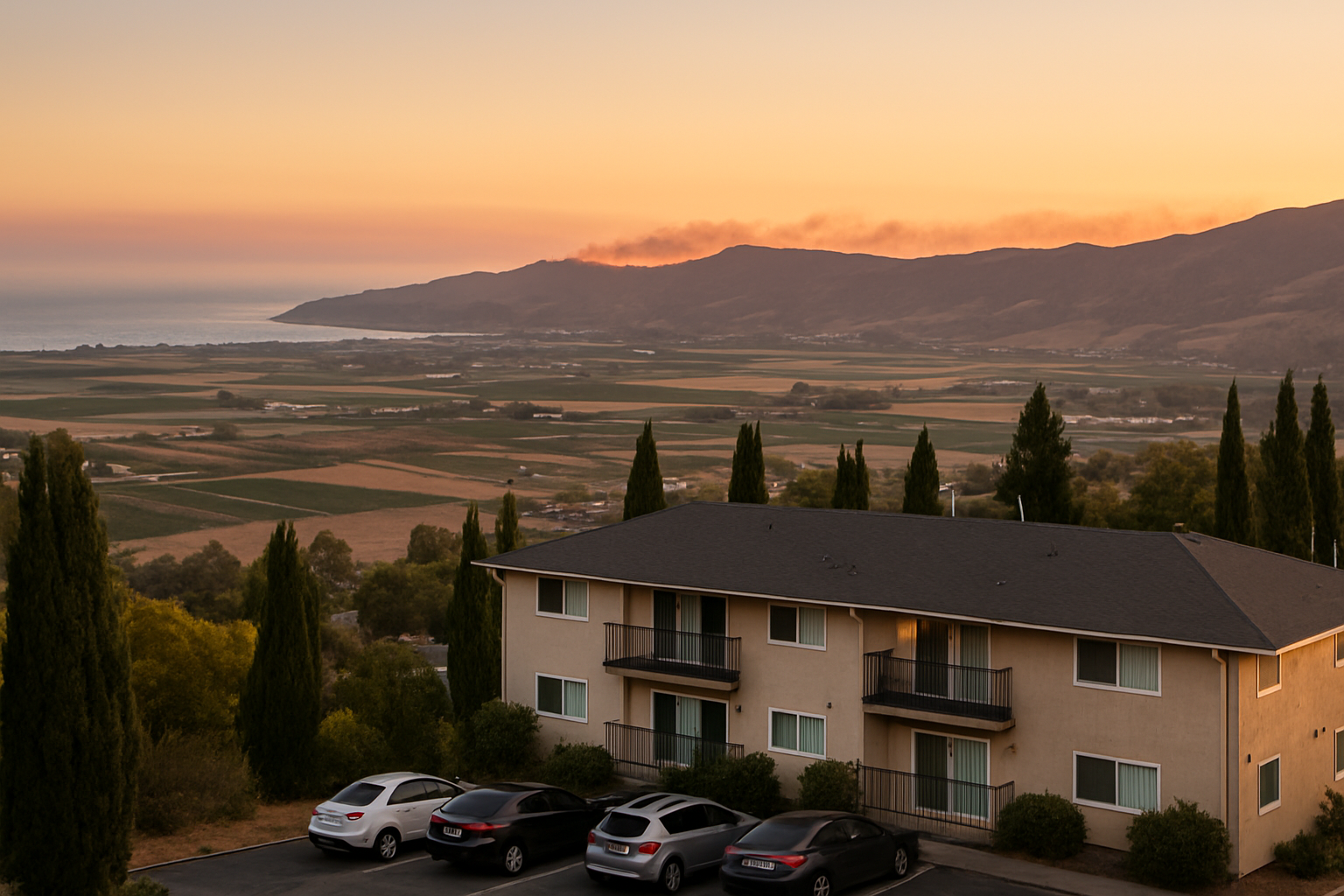
Emergency declarations are not rare events here. Between wildfire seasons and winter storm proclamations, Monterey County spends a meaningful share of most years inside one declaration or another.
Think about the last several winters. Atmospheric river storms, flooding along the Pajaro and Salinas rivers, evacuation orders in Carmel Valley and South County, slide closures on Highway 1. Each of those cycles brought state or county emergency proclamations with them.
That matters because the 10% ceiling is triggered by a declaration, not by a specific fire burning your building. A proclamation that touches Monterey County can put a cap over:
- Renewal pricing on a two-year lease in Pacific Grove that has not been adjusted since 2025
- Re-leasing a turned unit at a Salinas apartment complex
- A long-term lease on an inherited home in Seaside that is finally being brought to market rent
- Multi-year leases on a Marina fourplex where the owner was planning a large catch-up increase
From January 1 forward, the lease term no longer gets you out of it. If you have been reading our guide to raising rent in 2026, treat this as a second ceiling that can drop on top of the ones you already track.
Before and after January 1, 2027
Here is the practical difference for the lease types I see most often in Monterey and Salinas.
| Lease situation | Through December 31, 2026 | Starting January 1, 2027 |
|---|---|---|
| Month-to-month tenancy | Covered by the 10% emergency cap | Covered by the 10% emergency cap |
| Standard 12-month lease | Covered by the 10% emergency cap | Covered by the 10% emergency cap |
| Initial lease term of 18 months | Exempt from the cap | Covered, term no longer matters |
| Initial lease term of 2 or 3 years | Exempt from the cap | Covered, term no longer matters |
| Multifamily units on staggered multi-year leases | Mixed exposure by unit | Uniform coverage across the building |
The defenses, and why documentation decides whether you get one
SB 1365 did not slam the door on every increase above 10%. It revised the defenses. Two of them are worth building your paperwork around right now.
Increases agreed to by contract before the emergency declaration. If a scheduled increase was already written into a signed lease before the proclamation, that is a different conversation than a new increase announced after one. The signature date and the declaration date both matter.
Repair or improvement costs. If you put real money into a unit, that spend can support a larger increase. But the operative word is documentation. Invoices, scopes of work, permits where required, and before-and-after photos.
What I tell owners, whether it is a single condo in Carmel or a 16-unit building off East Alisal in Salinas:
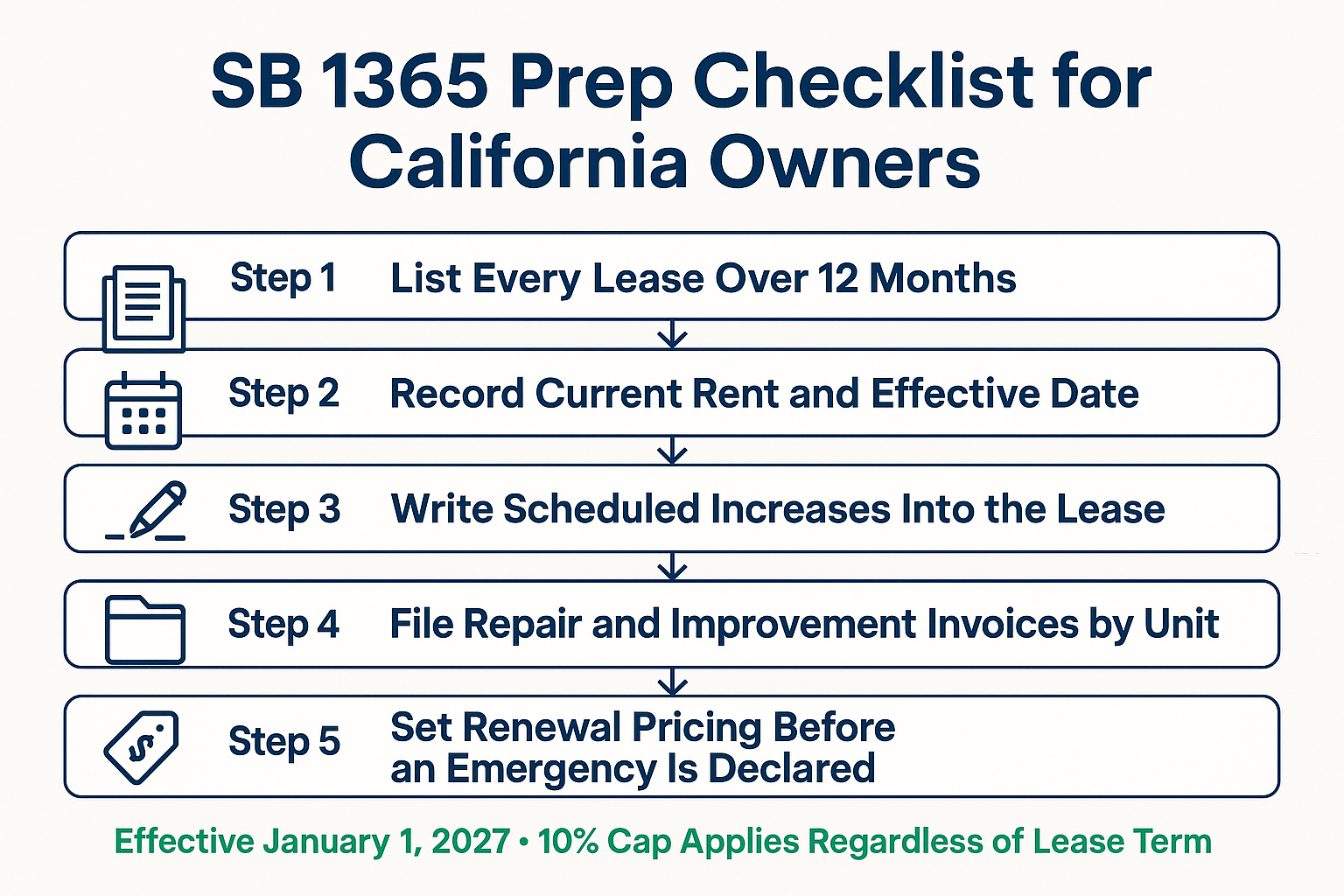
- Keep the rent roll with effective dates current, so you can prove the price charged before any declaration
- Save vendor invoices by unit, not in one lump folder for the whole property
- Put scheduled increases in the lease itself, with the dollar amount and the date spelled out
- Photograph capital work the way you would photograph a move-out inspection
If you own multifamily, this is the same discipline that keeps a slow unit turn in Salinas from quietly eating your year. Good records pay for themselves twice.
What to sort out before January 1
A short sequence I walk owners through when their portfolio includes leases longer than twelve months.
How I would price renewals between now and the new year
The honest answer is that nobody can tell you when the next emergency proclamation lands. Fire season and storm season cover most of the calendar on the Central Coast.
So I treat January 1 as a planning deadline rather than a panic date. A few judgment calls I would make:
Do not save a big catch-up increase for later. If a unit in Monterey or Prunedale is sitting well under market and you were planning to close the gap in one jump next spring, understand that a declaration could cap that jump at 10% while it is in effect.
Decide on lease length for business reasons, not legal ones. Longer terms still reduce turnover costs and vacancy risk. They just no longer buy you an exemption from this cap.
Get renewal terms on paper early. A signed lease with a scheduled increase, dated before any declaration, is a stronger position than a notice sent during one.
This fits with the rest of the year-end work. Our checklist of items Salinas and Monterey landlords should handle before January 1 covers the other deadlines stacking up in the same window, and if you want the disaster-period picture, see what we wrote about evacuation orders and rent obligations.
Owners of smaller apartment buildings should also revisit the basics in our guide for new multifamily owners in Marina.
Frequently Asked Questions About SB 1365 and the 10% Emergency Rent Cap
Does the 10% cap apply all the time, or only during an emergency?
Only during a declared state of emergency and the protected period that follows the declaration. Declarations can also be extended, which is why the window is sometimes longer than owners expect.
I signed a three-year lease in 2025. Does SB 1365 reach back and change it?
The change takes effect January 1, 2027. The point is that from that date forward, having an initial term longer than one year no longer keeps the tenancy outside the price gouging law. Talk through your specific lease with your attorney before acting on a planned increase.
What counts as the baseline the 10% is measured against?
Generally the rent charged immediately before the emergency declaration. That is exactly why I push owners to keep a clean rent roll with effective dates. If you cannot prove what you were charging on the day before a proclamation, you are arguing from memory.
What are the consequences of going over the cap during a declared emergency?
Penal Code Section 396 violations are a criminal matter, a misdemeanor, with possible civil exposure on top of that. This is not the same risk profile as a routine landlord-tenant disagreement, which is why the lease term change matters.
Can I still raise rent above 10% if I renovated the unit?
SB 1365 revises the defenses available for increases above 10%, and certain repair or improvement costs are among them. Whether your spend qualifies depends on the facts and your documentation, so keep invoices organized by unit.
I live out of state. How do I even know when a declaration affects my Monterey County property?
That is the hardest part of managing from a distance. Most out-of-area owners I work with find out late, after the increase notice already went out. Having someone local tracking county and state proclamations is the practical fix.
Thinking through your 2027 renewal pricing?
If you own rentals anywhere from Pacific Grove to King City and your leases run longer than twelve months, this is a good month to look at your rent roll and your renewal calendar together. Our team at Torrente Property Management works with owners across Monterey County on exactly this kind of planning, and we are glad to talk it through. You can reach us at (831) 582-8916 or through the contact form at torrenteproperties.com.