
What Should I Do With My Empty Rental Property in Salinas?
---
title: "What Should I Do With My Empty Rental Property in Salinas?"
meta-description: "Protect your Salinas rental with expert vacant-home care, leasing strategies, and local insights. Learn how to secure, maintain, and maximize your income today."
---
Owning an empty rental in Salinas can leave you exposed to damage and lost income. **In 2025, home delistings jumped 47%** as sellers shifted to renting instead of selling at a loss (source: [National Association of Realtors](https://www.nar.realtor)). Many owners become “accidental landlords” and need a clear plan to protect their investment.
## Clarify the Question
You’re wondering how to protect a Salinas rental home when you can’t be there. Maybe it’s between tenants or newly converted from a listing. You’re not alone—absentee owners face the highest risk of damage due to delayed maintenance and missed issues.
## What the Data Says
- Home delistings rose **47% in 2025** as owners avoided losses (source: [NAR](https://www.nar.realtor)).
- Absentee landlords report **30%** higher repair costs from unnoticed leaks and pests (source: IREM).
These trends show a surge in remotely managed rentals—and the need for structured care.
## Common Misstep
Some owners assume a vacant home “will be fine” or ask a friend to check in casually. That often leads to:
- Slow leaks becoming major water damage
- Pest infestations going unchecked
- Security issues if locks or alarms fail
Insurance may not cover losses if no formal inspections occur.
## What to Do Instead
Set up a structured vacant home care plan with:
- **Weekly or biweekly inspections**
- **Maintenance logs** and **photo documentation**
- **Storm prep** and **plumbing system runs**
These basics are critical in Salinas, where seasonal weather and older homes need routine checks.
## How Torrente Helps
Torrente Property Management offers dedicated **Estate Caretaker & Maintenance** services—ideal for vacant or between-tenant homes. Our Salinas team:
- Performs weekly inspections
- Handles issues quickly
- Sends owners detailed updates
It’s like having a local guardian for your property. Learn more about our [Vacant Home Caretaker services](https://torrenteproperties.com/vacant-home-caretaker-services-monterey-bay/) or schedule a free consultation today.
---
## What Should I Do With My Empty Rental Property in Salinas? Choose The Best Rental Path
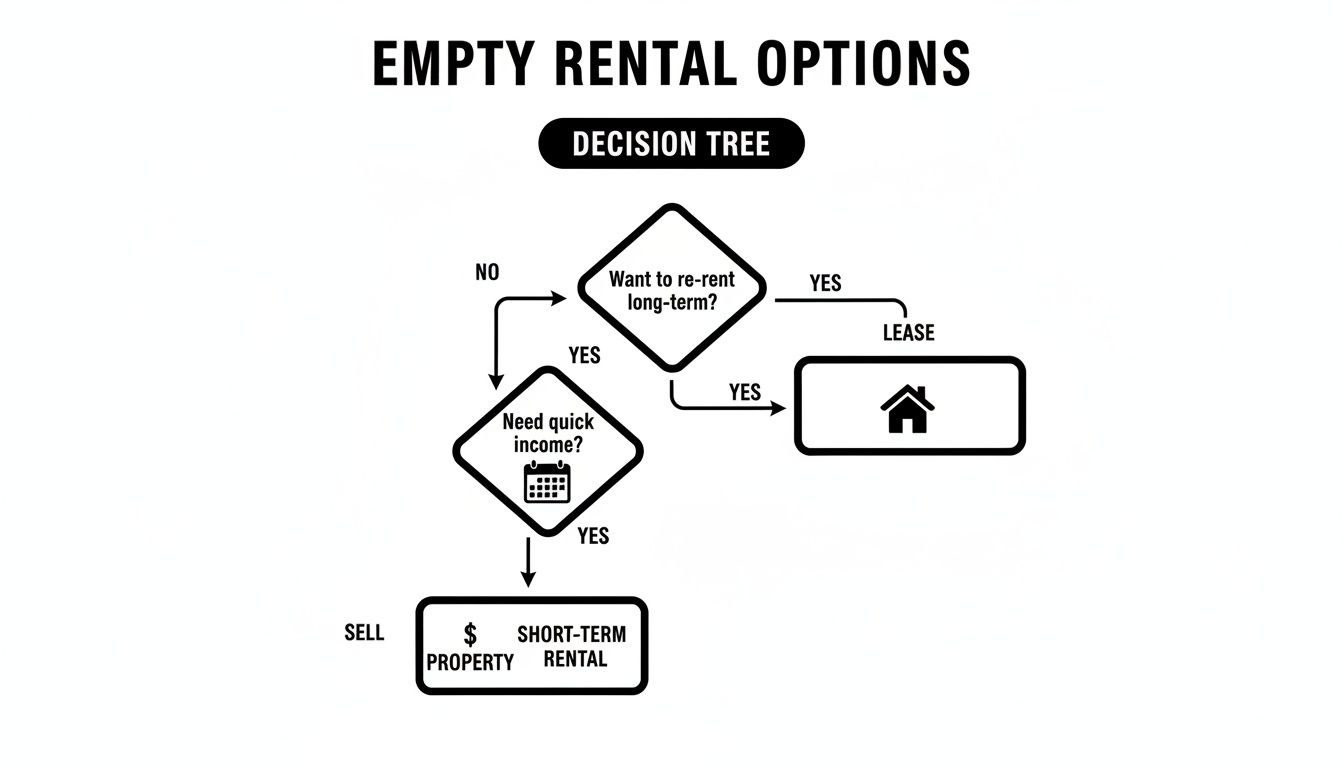
Every strategy offers a unique mix of income, workload, and risk:
- **Long-Term Leasing**: Steady rent checks and lower turnover.
- **Short-Term Stays**: Up to **50%** higher rates, but more cleaning and guest coordination.
- **Sell Now**: Quick equity release minus fees.
- **Caretaker Service**: Professional upkeep for a predictable fee.
> “Choosing the right path starts with clear goals for income and involvement,” says a local Salinas advisor.
### Local Demand And Rates
About **53%** of Salinas households rent, so vacancy risk is lower here (source: [Zumper](https://www.zumper.com/rent-research/salinas-ca)). Median rents hover near **$1,950** per month. Remember, selling trades future rent for a one-time payout.
### Time And Maintenance Comparison
- **Long-Term Leasing**: 2–6 weeks to find a tenant.
- **Short-Term Stays**: 4–8 weeks to set up, then ongoing cleaning.
- **Sell Now**: 30–45 days to close.
- **Caretaker Service**: Starts in 1–2 weeks with routine visits.
These trade-offs show that less effort often means lower income, and vice versa.
### Overview Of Options
| Option | Description | Estimated Net Monthly Income |
|---------------------|------------------------------------------------|-------------------------------|
| Long-Term Leasing | Secure 12-month tenants with stable rent | **$1,950** |
| Short-Term Stays | Furnished rentals for higher nightly rates | **$3,200** |
| Sell Now | One-time equity release minus closing costs | **$0** |
| Caretaker Service | Professional vacant-home checks and upkeep | **– $150** |
Use this table to rule out strategies that don’t meet your goals.
For more on tenant sourcing and local rules, see our guide on [Salinas rental property services](https://torrenteproperties.com/salinas-rental-property-services-what-owners-need-to-know/).
Consider your:
- **Cash-flow Needs**
- **Budget for upgrades**
- **Oversight Level**
- **Liquidity Timeline**
---
## Assess Local Market And Costs
Crunch the numbers before deciding to rent or sell. As of late 2025, median rents are **$1,950–$2,450** per month (source: [Zumper](https://www.zumper.com/rent-research/salinas-ca)). The median home value sits near **$730,000**, which drives your cap rate targets.
### Salinas Median Rents And Occupancy Rates
| Unit Type | Median Rent | Occupancy Share |
|-----------|--------------|-----------------|
| Studio | **$1,950** | **52%** |
| 1 Bedroom | **$2,150** | **54%** |
| 2 Bedroom | **$2,450** | **56%** |
### Calculate Expenses And Net Cash Flow
Budget for:
- **10–15%** for taxes and insurance
- **5–10%** for maintenance
- **7–10%** for management
- **10–15%** for vacancy reserves
> “A **30–50%** expense reserve is a solid rule,” notes a property consultant.
Subtract costs from rent for true net cash flow.
### Benchmark Your Cap Rate
Cap rate = annual net income ÷ market value.
Example: $18,000 ÷ $730,000 = **2.5%**.
### Use Online Tools And County Records
- Monterey County Assessor: Public Access Portal
- Compare with Zillow estimates and local listings
### Adjust For Taxes And Insurance
- Property tax: **0.74%** of assessed value (~$5,402/year)
- Insurance: **$1,200–$1,800** annually
### Factor Renter Occupancy And Turnover
With **53%** renter occupancy, expect 1–2 week gaps on 12-month leases. Track vacancy times via [Rentometer](https://www.rentometer.com).
### Neighborhood Premiums
North Salinas school districts pay **5–10%** more. Review comps in Sherwood and Boronda. For pricing tips, see [How to Price Rental Property](https://torrenteproperties.com/how-to-price-rental-property/).
---
## Compare Renting, Selling, And Conversion Options
Lay out side-by-side scenarios:
| Option | Estimated Monthly Net Income | Time To Market |
|----------------------|------------------------------|----------------|
| Long-Term Lease | **$1,950** | 2–6 Weeks |
| Short-Term Stay | **$3,200** | 4–8 Weeks |
| Sale Now | Equity Release | 30–45 Days |
| Conversion To Duplex | Potential **$4,000+** | 6–12 Months |
According to Zillow, early 2025 showed **183** rentals with slight rent dips, while RentCafe reports **23,106** renter-occupied units. That’s strong demand but stiff competition. See the Salinas rental market report for more.
Consider:
- **Upfront Investment**
- **Administrative Load**
- **Cash-Flow Timeline**
- **Market Timing**
Explore [Types of Real Estate Investment](https://torrenteproperties.com/types-of-real-estate-investment/) for more benchmarks.
---
## Plan Upgrades And Rehab For Better Returns
A few fixes can boost rent and cut vacancy.
Two-bedroom rentals average **$2,982** per month. A modest remodel might add **$400**, paying for itself in under six years.

**Common high-yield updates**:
- Kitchen remodel (~**$20,000**, +$300 rent)
- Bathroom overhaul (~**$12,000**, +$200 rent)
- Exterior paint (~**$8,000**, +$150 rent)
- Landscaping (~**$5,000**, +$75 rent)
### Calculating Renovation Payback
| Renovation Option | Cost | Rent Increase | Payback |
|-------------------|----------:|--------------:|-------------:|
| Kitchen Remodel | **$20,000** | **$300** | 5.6 years |
| Bathroom Update | **$12,000** | **$200** | 5 years |
| Exterior Paint | **$8,000** | **$150** | 4.4 years |
| Landscaping | **$5,000** | **$75** | 5.6 years |
### Rehab Timeline
- Design/materials: 1–2 weeks
- Permits: 2–4 weeks
- Bids/contracts: 1 week
- On-site work: 3–6 weeks
- Final walkthrough: 1 week
Hire local contractors:
- Verify licenses and insurance
- Get three bids
- Check portfolios
- Tie payments to milestones
Use our [smart maintenance checklist](https://torrenteproperties.com/smart-maintenance-for-rental-property-key-tips-checklist/) to stay on track.
---
## Set Up Vacant Home Care Program

Empty homes can hide leaks, pests, or invite break-ins. A routine of **weekly** or **biweekly** inspections helps you catch issues early. Keeping a **maintenance log** with **photo documentation** also meets insurer requirements and tracks your home’s condition.
### Sample Visit Report Template
Inspector Name: __________________
Date: __________________
Address: __________________
Inspection Items
- Check exterior for damage or debris
- Test plumbing for leaks
- Perform **lock and security** checks
- Verify HVAC filter and power
Image Attachments
- [ ] Front view
- [ ] Utility area
Notes: __________________________
Follow-Up Actions: _______________
> **Key Insight:** Timely logs reduce large-scale damage risks.
### Seasonal Maintenance Checklist
- Spring: Clear gutters, test irrigation, service A/C
- Summer: Inspect roof, trim trees, power wash
- Fall: Seal cracks, clean gutters, weatherproof
- Winter: Check heating, drain sprinklers, inspect foundation
### Choosing Local Vendors
Look for vendors with:
- Valid licensing and insurance
- **24-hour** emergency response
- Local code and climate expertise
Torrente’s Estate Caretaker service handles repairs, landscaping, and security checks on a set schedule. Learn more about our [Vacant Home Caretaker services](https://torrenteproperties.com/vacant-home-caretaker-services-monterey-bay/).
### Local Vendor Comparison
| Vendor Type | Service Focus | Response Time |
|--------------|----------------------------------|--------------:|
| Locksmith | Lock and security checks | **24 hrs** |
| Gardener | Yard and debris maintenance | **7 days** |
| Plumber | Leak detection and minor repairs | **48 hrs** |
| Electrician | System checks and safety tests | **72 hrs** |
### Next Steps To Launch Your Program
1. Define inspection frequency with your caretaker.
2. Select vendors based on response and budget.
3. Schedule seasonal tasks in a shared calendar.
4. Review reports monthly and refine protocols.
Contact Torrente’s Salinas team at **(831) 582-8916** or email torrenteproperties@gmail.com to set up your custom plan.
---
## Navigate Local Compliance And Regulations
If you’ve asked, “what should i do with my empty rental property in salinas?” compliance is essential. Ignoring rules leads to fines and delays.
### Business License And Permits
- City of Salinas Business License: **2–4 weeks**, $75+
- Monterey County Short-Term Rental Permit
- Planning or conversion permits (4–8 weeks)
> Fines can reach **$500** per violation.
### Long-Term Rental Compliance
- Register lease with Monterey County
- Install smoke & CO detectors
- Keep a maintenance log
### Transient Occupancy Tax & Permits
Short-term rentals face a **16%** combined tax. Permits take **3–6 weeks**.
| Permit Type | Tax Rate | Approval Time |
|---------------------|---------:|--------------:|
| Transient Occupancy | **16%** | 3–6 weeks |
| Business License | Varies | 2–4 weeks |
| Planning Conversion | N/A | 4–8 weeks |
### HOA & Zoning
- Check HOA rental limits
- Confirm parking and occupancy rules
- Apply for variances if needed
### Inspection & Safety Standards
Salinas code requires:
- Smoke & CO detectors
- Egress windows
- Handrails on stairs
- Electrical, plumbing, structural, and pest inspections
I recommend biannual checks. Torrente tracks and reminds you of all renewals. Call (831) 273-0806 for help.
---
## Frequently Asked Questions
### Fast Income Solutions
Minimize vacancy by pairing a caretaker with proactive tenant outreach. We secure vetted renters in **2–6 weeks** through targeted digital marketing.
### Home Inspection Costs
Expect **$100–$200** per routine visit. Full-service plans bundle inspections, photo reports, and maintenance logs for one flat fee.
### Short-Term Rental Permits
You need a City Business License, County Short-Term Rental Permit, and Transient Occupancy Tax registration. Approval takes **3–6 weeks**.
### Rehab Payback Period
A midrange remodel typically pays back in **4–6 years**. E.g., a $20K kitchen upgrade that adds $300/month recoups cost in ~5.5 years.
### Caretaker Service Versus DIY Checks
DIY visits may miss issues. A professional team offers weekly walkthroughs, photo-documented reports, and coordinated repairs—often saving more in the long run.
### Templates And Resource Library
Access fillable PDFs and worksheets in Torrente’s blog library:
- Compliance Checklist
- Inspection Report Template
- Pro Forma Worksheet
---
Ready to protect your Salinas rental?
Contact **Torrente Property Management Inc.** via [Torrente Property Management’s website](https://torrenteproperties.com) or call **(831) 582-8916** for a free consultation and peace of mind.


Long-Term Tenants Mean Long-Term Profits in Monterey Bay
Here’s a simple truth in property management: keeping a great tenant is always more profitable than finding a new one. While filling a vacancy might seem normal, constant tenant turnover is a silent profit killer. This is especially true for owners managing their Monterey Bay properties from a distance.
In fact, a staggering 93% of property managers see high turnover as a serious business threat. This shows that focusing on tenant loyalty isn't just a nice idea—it's a smart financial strategy for property owners.
The Hidden Costs of Tenant Turnover
Many property owners, especially those with investments in Salinas or Carmel who live elsewhere, only see the obvious cost of a vacancy: a month of lost rent. But that's just the tip of the iceberg. The real damage comes from a series of expenses that add up quickly.
Think of it this way: every turnover forces you to spend money you otherwise wouldn't have. These costs are direct hits to your annual profit.
More Than Just Missing Rent
The financial pain of a vacancy goes far beyond one empty month. Each turnover starts a chain reaction of costs that many DIY landlords underestimate. You can read more about the hidden financial traps of self-management here: think you’re saving money managing your own rental? Think again.
Here’s a realistic look at the expenses you'll face every time a unit becomes empty:
- Marketing and Advertising: Getting the word out costs money. This includes fees for listing on top rental sites and paying for professional photos to make your property stand out.
- Screening New Applicants: Each application requires a background check, credit report, and income verification. These fees are necessary but add up quickly.
- Rent-Ready Repairs and Cleaning: No tenant leaves a unit in perfect condition. You will likely need to deep clean carpets, repaint walls, and fix normal wear-and-tear items to make the property attractive again.
- Lost Income During Vacancy: This is the biggest cost. The entire process—from cleaning and marketing to screening and signing a new lease—can easily take weeks. All this time, your property earns zero income.
To understand the full financial impact, it’s helpful to know how to calculate turnover rate efficiently. When you add it all up, the numbers can be shocking.
The table below breaks down the typical costs a Monterey Bay owner can expect with just one turnover.
Breaking Down Turnover Costs
| Expense Category | Typical Cost Range (Monterey Bay) | Financial Impact |
|---|---|---|
| Lost Rent | $2,500 - $5,000+ | One to two months of lost income while the unit is vacant. |
| Repairs & Cleaning | $500 - $2,500+ | Deep cleaning, painting, carpet cleaning, and minor repairs. |
| Marketing Costs | $100 - $500 | Listing fees, professional photos, and online advertising. |
| Screening Fees | $50 - $150 | Background and credit checks for multiple applicants. |
| Administrative Time | (Varies) | Your valuable time spent showing the unit and managing paperwork. |
| Total Estimated Cost | $3,000 - $10,000+ | A significant drain on your annual returns. |
As you can see, a single turnover can easily cost $3,000 to $10,000 per unit. This reality makes one thing perfectly clear: long-term tenants really do mean long-term profits.
How Retention Boosts Your ROI
Understanding what turnover costs you is one thing. It's much more powerful to see how much you gain by avoiding it.
When you shift your focus from constantly filling vacancies to keeping the great tenants you already have, your entire financial picture improves. Let's look at a ten-year comparison for a rental property in Carmel to see how much retention helps your return on investment (ROI).
High Turnover vs. High Retention: The Math
Imagine your Carmel property earns $3,000 per month in rent. Over a decade, that’s a potential gross income of $360,000. But your net profit depends on how well you control expenses.
- Scenario A (High Turnover): You get a new tenant every two years. Over the decade, you’ll have five turnovers. If each one costs you $4,000 in vacancy and repairs, you'll spend $20,000 on turnover costs alone.
- Scenario B (High Retention): You have one fantastic tenant for eight years. You have only one turnover before finding another long-term tenant. In this case, you only face that $4,000 turnover cost once in ten years.
The difference is a $16,000 savings for the high-retention scenario. That is pure profit that goes straight into your pocket.
The infographic below shows just how quickly the individual costs of a single turnover can add up.
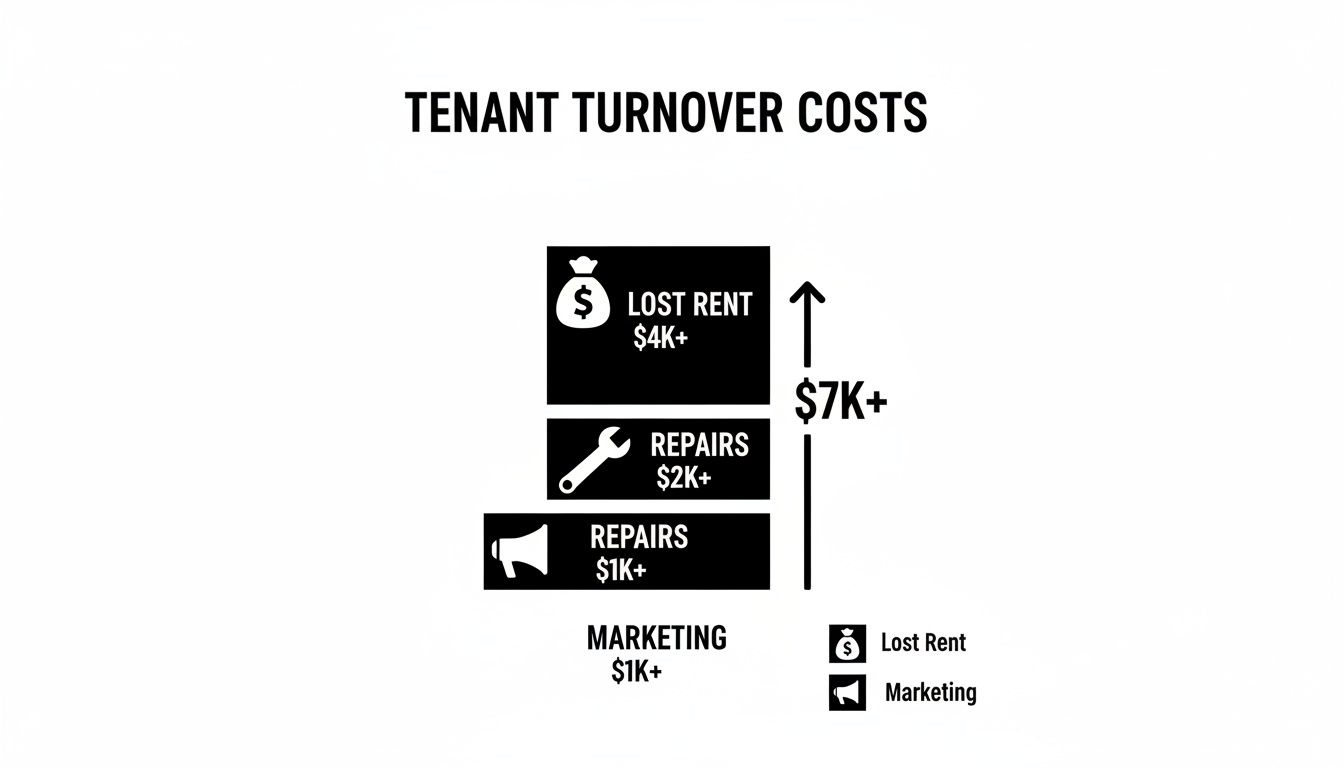
A vacancy isn't just one expense. It's a series of different costs that silently eat away at your returns.
The Numbers Don't Lie
Even if you raise the rent more with each new tenant, the math almost always favors retention. Why? Because the money you spend on vacancies often wipes out any gains from a slightly higher rent. This stability is the key to maximizing your what is net operating income.
Chasing a few extra dollars each year is a short-sighted strategy. The real path to building wealth is through positive relationships that encourage great tenants to stay.
By minimizing turnover, you’re not just saving money—you’re creating a more predictable and profitable investment. This consistent cash flow is the foundation of a successful rental property strategy.
How Happy Tenants Protect Your Investment
A great tenant offers more than just a consistent rent check: they protect your property. Answering why long-term tenants mean long-term profits isn't just about numbers. It's about understanding the protective role a happy resident plays in preserving your property's value.

When tenants feel a sense of ownership and stability, they start treating your property like their own home. That simple shift in mindset has a massive financial impact.
From Renter to Guardian
A satisfied, long-term tenant is more likely to take pride in their living space. That pride translates directly into better daily care, which means less wear and tear on your investment.
They also become your first line of defense. A respected resident will quickly report a minor leak under the sink before it becomes a major flood. This proactive communication is key to smart risk management.
A stable, happy tenant is the best property insurance you can have. They are your eyes and ears on the ground, helping you catch small problems before they become costly disasters.
This care often extends beyond their own four walls. Long-term residents tend to be better neighbors, which creates a more stable community in places like Monterey or Salinas. This not only makes your unit easier to rent in the future but helps preserve its market value.
The Financial Benefits of Great Tenants
This proactive approach creates a positive financial cycle. When tenants help maintain the property, you benefit from:
- Fewer Surprise Repairs: Prompt reporting on small issues means you're dealing with a quick fix, not a large-scale emergency.
- Reduced Wear and Tear: Careful use of appliances and flooring extends their lifespan, pushing expensive replacement costs further down the road.
- Lower Turnover Maintenance: When a long-term tenant eventually moves out, the unit is usually in much better shape, requiring less work to get it rent-ready.
Investing in tenant satisfaction is a direct investment in preserving your property. For more on proactive upkeep, check out our guide on smart maintenance for rental property key tips & checklist.
Strategies to Increase Tenant Retention
Knowing that long-term tenants are valuable is one thing. Actually keeping them happy is another. The good news is that fostering tenant loyalty is built on a simple foundation of respect, responsiveness, and reliability.
Today’s renters expect the same ease from their landlord as they get from Amazon. Adopting proven strategies to reduce churn and cultivate loyalty is no longer optional. These small efforts build the trust that encourages tenants to renew their lease.
Make Renting Easy and Respectful
Often, the most powerful retention strategies are the simplest. They are all about removing friction from the rental experience.
It all starts with clear communication. A tenant who feels heard is a tenant who feels secure.
- Responsive Maintenance: Nothing builds goodwill faster than fixing a problem right away. Quick, professional responses show you care about the tenant’s quality of life.
- Modern Conveniences: Offering online payment portals and digital communication is a baseline expectation today. Making it easy for tenants to pay rent and submit requests is a game-changer.
- Transparent Communication: Keep tenants in the loop about property maintenance. Be clear and fair with lease renewals and rent adjustments. Transparency builds a solid foundation of trust.
Build Community and Connection
In a diverse area like Salinas, creating an inclusive environment is critical. Simple actions can make a big difference in how welcome a tenant feels.
Torrente Property Management’s bilingual (English/Spanish) services remove communication barriers, ensuring every tenant feels heard and respected. This fosters a stronger sense of community and makes residents want to stay.
Being proactive also goes a long way. Reaching out before a lease expires to discuss renewal options shows you value their tenancy. For a deeper look at what today’s renters want, see our article on how smart property management tech boosts retention.
How We Secure Your Investment with a Retention-First Approach
We've talked a lot about the numbers—turnover costs a fortune, while retention drives profits. At Torrente Property Management, we have built our entire management philosophy around these facts to protect your Monterey Bay investment.
We call it our retention-first approach. We actively build strong, positive relationships with your tenants from day one. We know from experience that long-term tenants mean long-term profits.

Our Retention-Focused Services
For out-of-area homeowners, peace of mind comes from knowing your property is in good hands and your income is stable. Our methods are designed to deliver that stability.
- Responsive Communication: When a tenant calls with a maintenance request, we respond quickly. It shows them we value their comfort and are serious about caring for their home.
- Modern Technology: We make renting simple. Our online portals for payments and communication offer the convenience today's tenants expect.
- Bilingual Support: By offering services in both English and Spanish, we create a welcoming environment for the diverse communities in Salinas and Monterey.
- Local Expertise: Our deep understanding of the local market means we set fair, competitive rents that encourage great tenants to sign another lease.
We protect your investment by prioritizing the people who live in it. This approach leads to longer stays, lower costs, and more predictable returns for you.
Choosing the right partner makes these results possible. You can learn more about why Torrente Property Management is the best choice for your Monterey-Salinas rental property and see how our approach benefits owners like you.
FAQs About Tenant Retention
Property owners often have questions about tenant retention. Here are straight answers to what we hear most from investors in the Monterey Bay area.
Is it better to raise rent significantly for a new tenant or modestly for a current one?
A modest, fair increase for a great tenant is almost always the smarter financial move. Keeping that tenant means you completely sidestep thousands of dollars in turnover costs like vacancy and marketing fees. That steady, uninterrupted income almost always puts more money in your pocket over time.
How much does one month of vacancy really cost?
A vacant month costs far more than just one month's rent. You also have to pay for utilities, marketing costs to list the property, and the cleaning and repair expenses needed to get it ready for showings. The true cost can easily be double or triple the monthly rent.
What is the most effective way to encourage a tenant to stay?
The best way to keep a good tenant is through responsive, respectful communication. Nothing makes a tenant feel more valued than when a landlord addresses a maintenance issue right away. When you handle requests promptly and communicate clearly, you build the trust that makes a good tenant want to stay.
Does offering online payments really make a difference in retention?
Absolutely. In today's world, tenants expect simple, modern solutions for everything, including paying rent. Offering an easy-to-use online portal shows you're a professional landlord. It makes their life easier, which boosts their satisfaction and makes them more likely to renew.
How big of a problem is tenant turnover for landlords?
High turnover is one of the biggest and most expensive headaches in the industry. It’s a major threat to profitability. In fact, a staggering 93% of property managers now see high turnover as a significant business threat, showing how critical a solid retention strategy is.
Losing a tenant doesn’t just cost time—it costs you real income. Let Torrente Property Management help you build lasting tenant relationships that keep your property occupied and your ROI strong. Contact Torrente Property Management today at (831) 582-8916 to learn how we prioritize retention.

How to Manage a Salinas Rental Property If You Don't Live Nearby
Are you wondering how to protect a Salinas rental home when you can’t be there? Maybe you live hours away, or your property is vacant between tenants. You’re not alone—many owners are becoming “accidental landlords” and need reliable oversight for their investment.
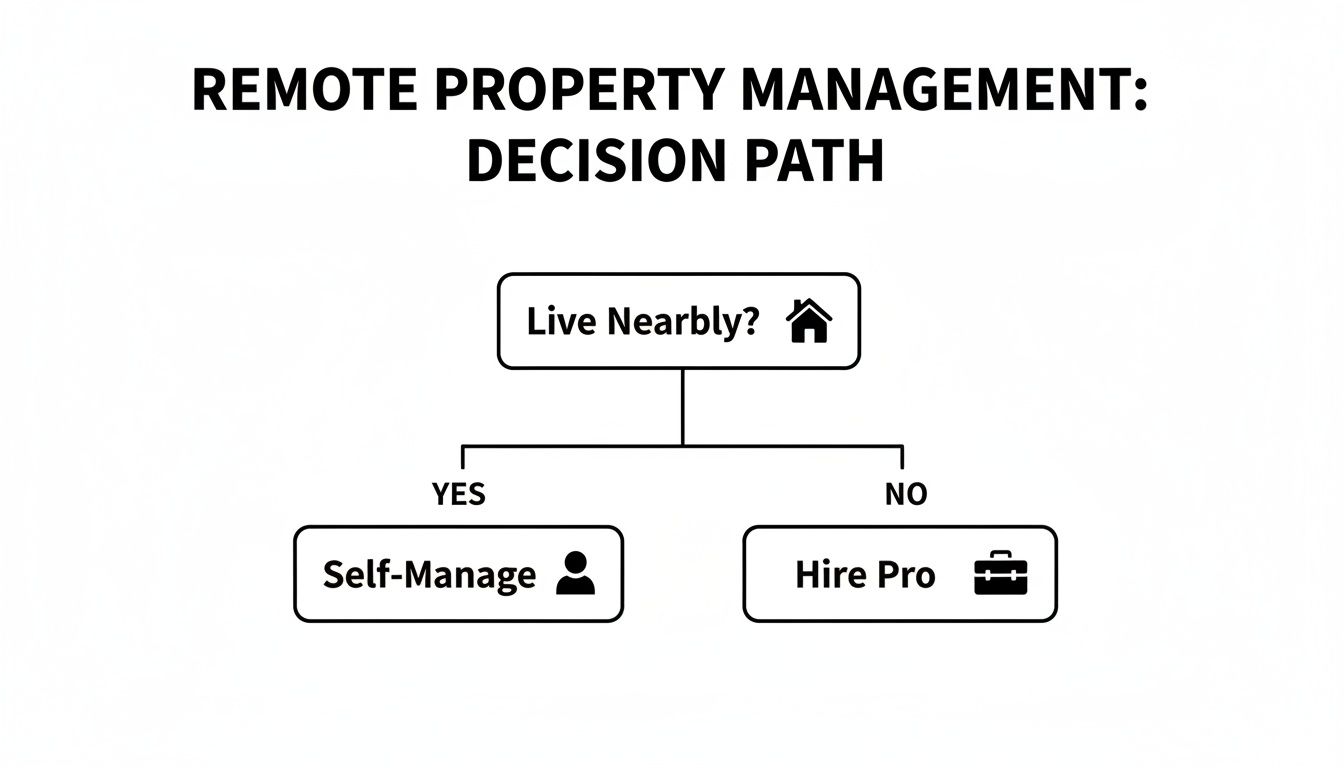
The answer is a strong, local presence. The most effective way to manage a property from a distance is to partner with a professional property manager who knows the Salinas market. They act as your eyes and ears, ensuring your property is cared for, maintenance is handled, and tenants are supported.
Why Remote Management Needs Local Expertise
Managing a Salinas rental from afar means you need a trusted local partner. Recent market shifts have created a surge in remote landlords. In fact, home delistings recently jumped 47% as sellers chose to rent instead of selling at a loss, according to Forbes.
But here’s the catch: absentee owners face the highest risk of property damage. Delayed maintenance or missed issues can turn small problems into expensive disasters. You need a professional on the ground to protect your asset.
The Dangers of Informal Check-Ins
A common misstep is assuming a property “will be fine” on its own. Some owners ask a friend or neighbor to check in, but this casual approach often leads to trouble. Problems like slow leaks, pest infestations, or security issues go unnoticed.
Worse, your insurance may not cover damage if no formal checks were done. An informal look from a neighbor won't meet the requirements of most policies, leaving you with a huge financial risk.
What to Do Instead: A Structured Care Plan
Instead of leaving things to chance, set up a structured vacant home care plan. This includes regular inspections, maintenance logs, and photo documentation. Weekly or biweekly walkthroughs, storm prep, and running plumbing systems are key basics.
These steps are especially critical in Salinas. The area's seasonal weather and older properties increase maintenance needs. You can learn more in our article about the rise of remote landlords and how they're succeeding.
For an absentee owner, a local professional isn’t a luxury—it's a necessity. They transform a high-risk situation into a predictable, passive investment.
Understanding the Costs of Remote Salinas Property Management

If you're managing a Salinas rental from out of town, it's important to understand all the costs involved. It's more than just a single management fee. A clear budget helps you plan and avoid surprises that can hurt your investment.
The Standard Management Fee
The most common cost is the monthly management fee. Across the U.S., property managers typically charge between 8% and 12% of the collected monthly rent. Here on the Central Coast, fees are often in the higher end of that range due to local regulations and business costs.
For example, average rents in Salinas are around $1,800 to $2,000 per month. A 10% management fee on a $1,900 rental would be $190 per month. This covers daily tasks like rent collection, tenant communication, and financial reports. Check out current Salinas rental market trends to see how this applies to your property.
Other Professional Management Costs
Beyond the monthly fee, your agreement may include other costs for specific services. These are not hidden fees but charges for time-consuming tasks outside of routine management.
Common additional costs include:
- Leasing Fee: A one-time fee to find and place a new tenant, usually 50% to 100% of one month's rent.
- Lease Renewal Fee: A small, flat fee for handling the paperwork to extend a current tenant's lease.
- Maintenance Coordination: A small markup (often around 10%) on vendor invoices to cover scheduling and overseeing repairs.
- Eviction Service Fee: A flat fee to manage legal filings if an eviction is necessary, separate from any attorney costs.
The real value of professional management is predictable costs. All fees are clearly defined, which helps you budget accurately and avoid unexpected expenses.
The Hidden Costs of DIY Remote Management
Managing a property yourself from afar might seem cheaper, but it comes with hidden costs that add up quickly. These expenses can often exceed what you would pay a professional.
Think about the true costs of:
- Travel Expenses: Flights, gas, and hotels for unexpected trips to Salinas can cost thousands.
- Lost Time: Every hour spent finding a plumber or screening tenants is an hour away from your job or family.
- Longer Vacancies: Without local market knowledge, your property could sit empty for an extra month. A 30-day vacancy on a $1,900/month rental costs you almost a full year of management fees.
- Costly Mistakes: A poorly screened tenant can cause thousands in damages. A mistake with California's rental laws can lead to big fines.
The choice is between a predictable professional fee and the unpredictable—and often much higher—costs of DIY mistakes.
Building Your Local Support Team in Salinas

When you manage a Salinas rental from far away, your success depends on your local team. A professional team on the ground acts as your eyes and ears, protecting your property and making sure everything runs smoothly.
Who Should Be on Your Salinas Team?
A strong local support system is a network of trusted professionals who can handle anything. Your core team needs two key players to succeed.
1. A Responsive Property Manager
A great property manager is your strategic partner in Salinas. They handle tenant relations, coordinate maintenance, and provide regular updates. Their local expertise is key for navigating the Salinas market and local regulations.
2. A Network of Vetted Contractors
A burst pipe doesn't wait for business hours. You need access to reliable and licensed pros for any situation. A good property manager has a pre-vetted list of vendors, including:
- Plumbers
- Electricians
- HVAC Technicians
- General Handymen
This network ensures quick response times and quality work, protecting both your property and your tenants. You can find out more about what separates top property managers and their vendor networks.
The Importance of a Structured Maintenance Plan
Fixing things only when they break is an expensive way to manage a rental. A proactive maintenance plan is much more effective, especially for the older homes and weather in Salinas.
Your local team should run a system that includes:
- Regular Property Inspections: Documented walkthroughs to catch issues early.
- Seasonal Maintenance: Tasks like gutter cleaning in the fall and HVAC servicing in the spring.
- Photo Documentation: Visual records of the property’s condition over time.
This structured approach is vital for vacant homes. Torrente Property Management’s Estate Caretaker & Maintenance services are designed for this. We perform weekly inspections, handle issues quickly, and send owners detailed updates. It's the best way to have peace of mind.
Finding Tenants and Navigating Local Rules from Afar
Finding a great tenant is the most important thing you can do for your rental. When you manage a Salinas property from another city, this process is critical. You need a system that is both effective and legally compliant.
Your Remote Screening Playbook
Vetting applicants from a distance can be tricky. A professional, standardized screening process is non-negotiable. It removes guesswork and keeps you compliant with fair housing laws.
A solid remote screening process should include:
- A secure online application.
- Rock-solid income verification with pay stubs or bank statements.
- Comprehensive credit and background checks.
- Thorough rental history verification by calling past landlords.
For a deep dive, check out these expert tips on how to screen tenants effectively.
Keeping Up with Local and State Regulations
California has some of the most complex landlord-tenant laws in the country. Cities and counties often add their own rules. A small mistake can lead to big fines or legal battles.
Fair Housing Laws are strict. You must have a standard process where every applicant is judged by the same criteria to avoid discrimination claims. A professional property manager is an expert in these laws. They use attorney-vetted leases and ensure every step is compliant, which is one of the most valuable services they offer. You can review our guide on California landlord-tenant laws.
Using Technology for Seamless Remote Management

Managing a Salinas property from a distance would be a nightmare without the right technology. For an out-of-town owner, digital tools are the bedrock of a successful operation. They provide structure, transparency, and real-time oversight.
Essential Digital Tools for Remote Landlords
The goal is to build a digital system for your rental. Every key action, from rent payments to maintenance requests, should be tracked automatically.
Here are the technologies every remote landlord should use:
- Online Rent Collection: Ensures rent is paid on time without dealing with paper checks.
- Digital Maintenance Requests: Creates an instant, time-stamped record of repair needs.
- Secure Document Storage: A cloud portal keeps leases and reports organized and accessible 24/7.
- Detailed Financial Reporting: Instantly generate owner statements and profit-and-loss reports.
Choosing the right platform is key. For a breakdown, check out our property management software comparison.
Streamlining Communication and Documentation
Good communication is vital for remote management. Technology keeps you, your property manager, and your tenants on the same page. It's also a powerful tool for protecting your asset.
Using specialized rental property inventory software for landlords creates a clear visual record of the property at move-in and move-out. This is critical for handling security deposit disputes fairly.
Technology doesn’t replace a good local manager, but it empowers them. It gives you a clear window into your property's performance, turning remote ownership into a data-driven business.
These systems help you budget for maintenance. Smart owners set aside 1%–3% of the property's value each year for upkeep. On a $700,000 home in Salinas, that’s $7,000–$21,000 annually. Digital tools track these expenses and help you plan. You can learn more about Salinas property values and market conditions to fine-tune your budget.
FAQs: Managing a Salinas Rental From Afar
Here are quick answers to common questions from out-of-town owners.
What is the biggest mistake remote landlords make?
The most costly mistake is trying to handle maintenance from a distance. A small problem like a slow leak can quickly turn into thousands of dollars in water damage and mold. A local manager ensures issues are caught and fixed right away.
How much should I budget for maintenance?
A good rule is to set aside 1-3% of your property's value each year for maintenance. This creates a healthy fund to cover both routine upkeep and unexpected emergencies, so you are never caught off guard.
Can I just use technology to manage my rental myself?
Technology helps with rent collection and communication, but it can’t fix a clogged drain. You still need a reliable professional on the ground for physical inspections, repairs, and showings. Technology supports a good manager; it doesn't replace them.
Is hiring a property manager in Salinas worth the cost?
Yes, for most remote owners. The management fee is often offset by shorter vacancies, better tenants, and avoiding costly legal or maintenance problems. The peace of mind from knowing your asset is protected is priceless.
What if my property is vacant between tenants?
A vacant home is at high risk for vandalism or undetected damage. A service like Torrente's Estate Caretaker & Maintenance program is essential. It provides regular, documented inspections to keep the property secure and ready for the next tenant.
Your Partner for Peace of Mind in Salinas
If you own a rental property in Salinas but live out of town, the team at Torrente Property Management is ready to help. Our dedicated experts are rooted in the Salinas community and will give your investment the hands-on care it deserves. We offer dedicated services like our Estate Caretaker & Maintenance program to protect your property when you can't be there.
It's like having a local guardian for your property. Learn more about the best rental property management services in Salinas, CA or schedule a free consultation today.
Contact us today for a free consultation!

4 Smart Upgrades That Raise Rent in 2026
Are you leaving money on the table with your Monterey Bay rental property? As we look toward 2026, renters expect more than just a place to live. They want convenience, security, and modern features. For property owners, this is a great opportunity.
Many owners undervalue their property. A 2022 survey found that over 30% of landlords were not confident their rent prices were optimized (Source: Zillow Group). In a premium market like Monterey County, outdated features mean losing out on income. This guide covers 4 smart upgrades that raise rent in 2026, helping you boost your property's appeal and justify higher rates. These changes create a better, safer, and more efficient living experience for tenants.
We will cover the costs, benefits, and local tips for each upgrade. With the right improvements, you can make smart, profitable decisions for your rental. Let's turn your property into a high-demand home.
1. Smart Access & Security Systems
The first upgrade to boost your rental income is a smart access and security system. Say goodbye to physical keys and changing locks between tenants. Smart locks let residents use a phone app or keypad to enter.
This technology saves you money and reduces security risks from lost keys. It also gives you a digital record of who enters the property and when. Keyless entry is now a feature that renters expect and are willing to pay more for.
Why Smart Locks Are a Top Upgrade
Renters in markets like Monterey and Salinas look for tech-friendly homes. A 2022 survey by Rent.com showed that 82% of renters want at least one smart home device, and smart locks are at the top of the list. Offering this feature makes your property stand out.
For landlords, the benefits include:
- Better Security: No more worrying about copied keys. You can grant or cancel access from anywhere, making move-outs safer.
- More Efficiency: You can give temporary access to maintenance staff or new tenants without needing to be there in person.
- Higher Property Value: Smart home technology is a desirable feature that boosts your property's long-term market value.
Key Insight: The true value of smart access isn't just the lock; it's the freedom and security it provides. For absentee owners, this technology is a must-have. For more tips on securing your property, read our guide on how seasonal and second-home owners can protect their property while away.
Tips for Installation
- Choose a reliable brand: Look for locks with long battery life (at least 6-12 months) to reduce maintenance.
- Have a backup plan: Make sure the lock has a backup entry method, like a physical key or keypad, in case of a power outage.
- Provide clear instructions: Give new tenants a simple guide on how to use the system.
2. Smart Climate Control
A smart thermostat is another great upgrade that offers a big return on investment. These devices learn tenant habits, save energy, and allow remote control. Brands like Google Nest and Ecobee offer comfort and efficiency that renters want.

This technology helps tenants save money on their utility bills, adding real value to your rental. For landlords, it promotes an energy-efficient property and justifies a higher rent. Deferred maintenance on older systems can be expensive, so this is a proactive way to avoid future issues.
Why Smart Climate Control Is a Top Upgrade
In an eco-conscious area like Monterey County, energy-saving features are very popular. Renters will pay more for a home that is both comfortable and "green." According to the U.S. Environmental Protection Agency, homes with ENERGY STAR certified smart thermostats can save an average of $50 per year on energy bills. This is a great marketing point that shows your property is modern and well-cared-for.
For property managers, the benefits are clear:
- Fewer Tenant Complaints: When tenants can control their own comfort and costs, they are happier.
- Maintenance Alerts: Some systems can track HVAC performance and alert you to problems before they become emergencies.
- Control Costs During Vacancies: You can manage the temperature in empty units remotely to prevent issues like frozen pipes without wasting energy.
Key Insight: Smart thermostats show that you care about modern living, saving energy, and your tenants' well-being. This feature is a direct solution to outdated systems that often result in lower rent.
Tips for Installation
- Check compatibility: Before you buy, make sure the thermostat works with your property’s HVAC system.
- Set default temperatures: Program a reasonable temperature range to prevent high energy use.
- Educate your tenants: Give tenants a simple guide on how to use the app and save energy.
3. Smart Lighting Systems
An integrated smart lighting system is the third upgrade that can deliver a big return. These systems let tenants control brightness, color, and schedules from their phones. It's a feature that makes a home feel modern and luxurious.
This technology turns a standard rental into a premium living space. For landlords, it creates a "wow" factor during tours and shows that the property is modern and energy-efficient. This allows you to charge higher rent and attract better tenants.
Why Smart Lighting Is a Top Upgrade
Renters, especially in tech-savvy areas like Monterey County, want features that improve their lifestyle. The ability to automate lighting for better sleep or to create a certain mood is a benefit people will pay more for.
For landlords, the advantages are clear:
- Better Appeal: Smart lighting makes a strong first impression and shows that your property is modern.
- Energy Savings: LED smart bulbs use much less energy. You can market this as a cost-saving benefit for tenants.
- Higher Perceived Value: The convenience and wellness benefits make the property feel more luxurious, justifying a rent increase.
Key Insight: Smart lighting is about selling a lifestyle. By highlighting benefits like better sleep and productivity, you can attract high-quality tenants. See how modern renters expect more and how smart property management tech boosts retention.
Tips for Installation
- Focus on key areas: Start with the living room and master bedroom to make the biggest impact.
- Use standard bulbs: Choose systems that use standard bulb sizes so they are easy and cheap to replace.
- Show the energy savings: Program energy-saving modes and highlight this feature in your rental listings.
4. Smart Water Leak Detectors
The final upgrade on our list helps you avoid one of the biggest risks for landlords: water damage. Smart water leak detectors use sensors to find leaks early. Many can even automatically shut off the water to prevent major damage.

These systems give you peace of mind. For tenants, they show that the property is well-maintained. For landlords, they greatly reduce the chance of expensive repairs and insurance claims, which is very important in coastal areas like Monterey.
Why Smart Water Management Is a Top Upgrade
Water damage is one of the most common and expensive insurance claims for rental properties. A system that stops this risk is incredibly valuable. This is a key smart upgrade for 2026 because it helps both you and your tenants.
- Protect Your Property: A single leak can cause thousands of dollars in damage. An automatic shutoff system can stop a disaster in seconds.
- Attract Good Tenants: Renters appreciate features that protect the property and their belongings. This justifies a higher rent.
- Lower Insurance Costs: Many insurance companies offer discounts for properties with certified water leak detectors.
Key Insight: The main value of a smart water system is risk reduction. It can pay for itself by preventing just one major water damage event. This is essential for absentee owners and for protecting your property while it's empty. Learn more about vacant property inspections and upkeep in Monterey County.
Tips for Installation
- Install a main line shutoff: For the best protection, choose a system that can shut off water to the entire property.
- Add extra sensors: Place small sensors in high-risk areas like under sinks, behind toilets, and near water heaters.
- Get instant alerts: Connect the system to your phone or property management software to get alerts right away.
Frequently Asked Questions (FAQs)
What is the best smart upgrade for the highest rent increase?
Smart access and security systems, like keyless entry and video doorbells, often provide the highest rent increase. Tenants value security and convenience, and these visible upgrades justify a premium price.
How much should I increase rent after these upgrades?
The rent increase depends on your local market and the upgrades you install. Generally, you can expect a 3-8% increase per feature. A professional property manager can help you find the right price point for the Monterey Bay area.
Are these upgrades difficult to install?
Most of these upgrades are easy to install. Smart thermostats and lighting are often simple DIY projects. Smart locks and water leak detectors may require a professional, but the process is usually quick.
Will tenants know how to use this new technology?
Yes, most tenants are comfortable with smart home technology. It's helpful to provide a simple one-page guide or video tutorial at move-in to make sure they feel confident using the new features.
Do smart upgrades help with tenant retention?
Absolutely. Modern renters are drawn to homes with updated features. Providing smart tech leads to higher tenant satisfaction, which encourages them to stay longer and reduces your vacancy costs.
Ready to Grow Your Rental Income in 2026?
To succeed in the 2026 rental market, you need to offer more than just the basics. Smart upgrades that provide convenience, security, and efficiency are key. These improvements are smart investments that lead to higher rents and attract great long-term tenants in Monterey County.
Today's renters will pay more for a modern and secure living experience. By adding even one of these 4 smart upgrades that raise rent in 2026, you meet that demand. You are not just adding gadgets; you are building a more valuable property that reduces vacancies and generates more income.
Don't let your property get left behind. Underpricing is the #1 profit killer for landlords. With every day a unit sits empty, you lose money. By making smart, tech-forward decisions now, you can keep your property at the top of the market. Even if you are an absentee owner, our tools and reports keep you informed and in control.
Let Torrente show you how our local expertise and smart strategy can turn your property into a high-performing investment. The team at Torrente Property Management Inc. uses local data to advise on the best upgrades and price your rental for maximum return. Contact us at (831) 582-8916 for a personalized rental income consultation today.

Monterey Owners: Is It Time to Exit the Airbnb Market?
For many Monterey property owners, the question is becoming urgent: is it time to exit the Airbnb market? The short answer is yes—for many, it absolutely is.
With tighter regulations and a saturated market, long-term rentals now offer a more stable and predictable path to profit. According to AirDNA, the Monterey market's high seasonality score of 80 out of 100 shows just how unpredictable short-term income can be.
The Shifting Landscape for Monterey Airbnb Hosts

The dream of high nightly rates once made short-term rentals (STRs) feel like a gold rush in Monterey County. But the ground is shifting under many Airbnb hosts. New local rules and tough competition are making it much harder to earn a reliable profit.
For owners in Carmel, Pacific Grove, and nearby coastal areas, this is a real challenge. The promise of easy income is fading. Instead, owners face regulatory headaches and lower returns. Many are now looking for a better way.
New Rules and Fierce Competition
The biggest challenge comes from new regulations. The California Coastal Commission recently voted to limit vacation rentals on the Monterey County coast. They capped unhosted commercial STRs at just 334 properties.
With around 400 of these rentals now operating, this rule could force dozens of owners out of the market. This pressure creates a clear turning point for property owners.
Those who once relied on tourist income now need a more dependable strategy. This is especially true for those managing properties from a distance, a common setup for many Monterey Bay investors.
Switching from a short-term to a long-term rental is not a setback. It is a smart move toward stability. It means trading the constant work of bookings and cleanings for the peace of mind of steady, hands-off income.
Quick Decision Guide for Monterey Property Owners
This table helps Monterey property owners weigh their options between STRs and long-term leases.
| Decision Factor | Short-Term Rental (Airbnb) | Long-Term Rental (Traditional Lease) |
|---|---|---|
| Income Stream | Varies by season, with high potential but no guarantees. | Consistent monthly payments all year long. |
| Regulatory Risk | High and growing, with permit caps and potential bans. | Low, with clear and established landlord-tenant laws. |
| Management Effort | Very high; requires daily guest communication and turnovers. | Low, especially with a property manager handling tasks. |
| Operating Costs | High, including frequent cleanings, utilities, and supplies. | Lower and more predictable; tenants often pay utilities. |
| Ideal For | Owners who can handle empty periods and manage actively. | Owners seeking stable, passive income and asset protection. |
Seeing the comparison makes the choice clearer. For owners who value predictable income and want to protect their investment, long-term leasing is the smartest play in the Monterey market.
Navigating New Rules and Market Saturation
If you own an Airbnb in the Monterey area, you have likely felt the pressure. What once seemed like a great opportunity is now squeezed by two forces: stricter local rules and a flood of new competition.
This is a tough spot to be in. These changes are altering the short-term rental game, turning a once-reliable income stream into a source of stress. Understanding these challenges is the first step to making a smart decision for your property.
The Walls Are Closing In on STRs
The rules for STRs across Monterey County are getting stricter. The California Coastal Commission’s decision to cap unhosted short-term rentals was a major wake-up call. It signaled that the easy days are over, especially in areas like Big Sur and the Carmel Highlands.
These are not small issues; they are real threats to your business. If your property is in the coastal zone, your permit could be at risk. Local governments are cracking down to address housing shortages, and this trend is not slowing down.
For many owners, this means their STR business has an expiration date. We explain these local rules in our guide on new STR regulations in Carmel and Pacific Grove. The risk of being legislated out of business is pushing savvy owners to find a more stable path.
Key Insight: Relying on a business that local government can restrict or outlaw overnight is a high-stakes gamble. For anyone seeking long-term security, this risk is becoming a deal-breaker.
When the Market Gets Too Crowded
On top of legal headaches, the Monterey Airbnb market has a supply-and-demand problem. A huge increase in new listings has created fierce competition for the same travelers. This naturally pushes down nightly rates and occupancy.
The dream of high prices is fading for all but the most unique properties. The market is splitting. A few top-tier rentals are doing great, while everyone else fights for the rest.
The numbers prove it. As of this September, new Airbnb listings in Monterey have shot up by 99% year-over-year. A concerning 40% of these properties are booked for fewer than 90 nights a year. Only 27% hit high occupancy rates, showing the market rewards only the top performers.
This competition means you are always adjusting prices and spending more on marketing. The "gold rush" is over. It has been replaced by a grind that offers less reward for the average host. Successfully handling these shifts requires a clear plan, like the principles in guides on strategic planning for small businesses.
Financial Reality: Short-Term vs. Long-Term Rentals
Are you looking at your Airbnb numbers and wondering if it is still worth it? This is the biggest question Monterey homeowners face. High nightly rates look tempting, but that is only half the story.
The real financial picture appears when you compare the net profit of an STR against the steady income of a long-term rental (LTR).
An Airbnb can be great during peak season or big events like Car Week. But that income is not stable. It changes with seasons, competition, and even bad weather, making it hard to budget.
A long-term lease provides a consistent check every month. This stability removes the guesswork from your cash flow. It turns your property into a reliable asset instead of a demanding second job.
The True Cost of Short-Term Hosting
The higher income from an STR often gets eaten up by operating costs. These are the ongoing costs of running a mini-hotel.
Many owners are surprised by how quickly these expenses add up:
- Constant Cleaning Fees: After every guest, the property needs a professional cleaning. These costs can be hundreds of dollars per turnover and drain your profits.
- High Utility Bills: As the host, you pay for all utilities. Guests on vacation tend to use more water and electricity, leading to surprisingly high bills.
- Endless Restocking: You must keep everything stocked, from toilet paper to coffee. These small purchases become a major expense over a year.
- Platform Commissions: Airbnb and other platforms take a cut of every booking, typically around 3% for the host. This directly hits your revenue.
These "hidden" costs impact your bottom line. To understand your property's performance, you must calculate its net operating income. If you are new to this, it's worth learning what net operating income is and why it matters.
The data below shows the growing pressures in the Monterey Airbnb market.
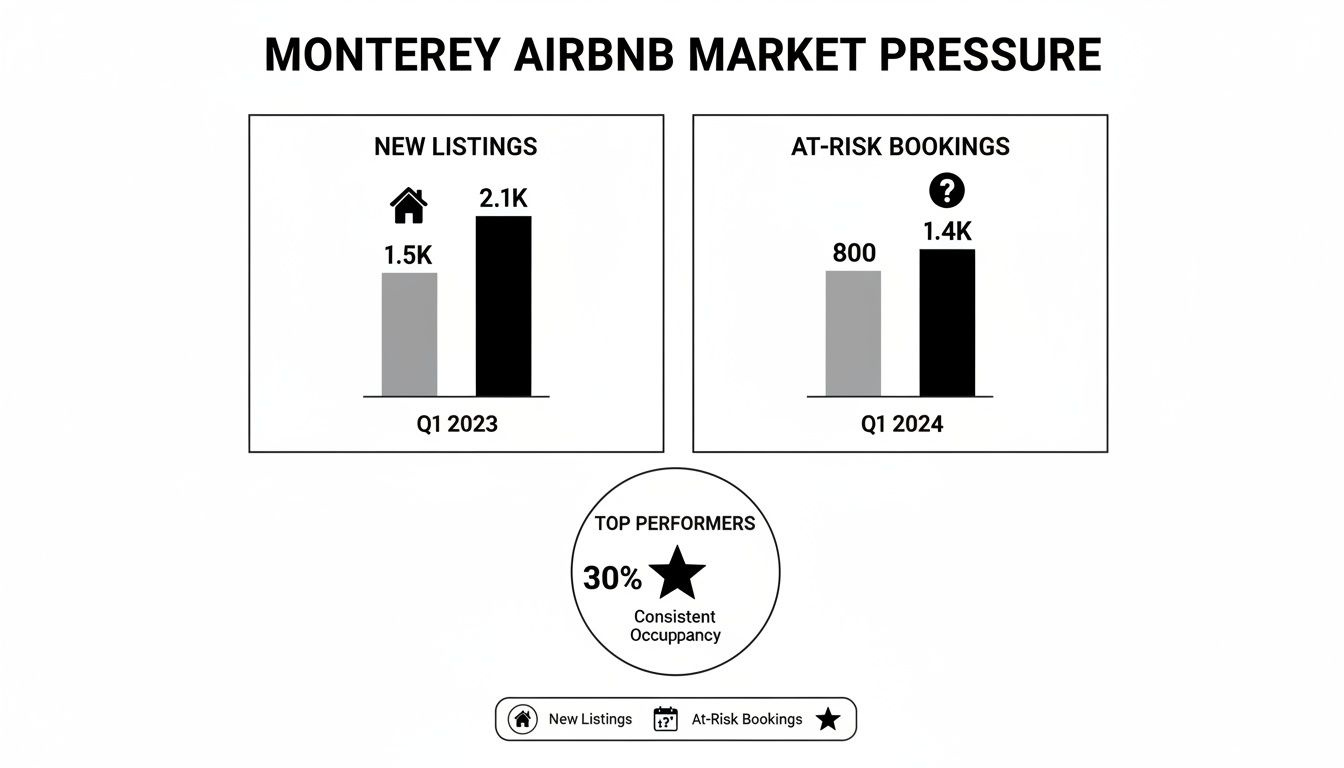
This market saturation means only the most dedicated hosts can succeed. Many others struggle with inconsistent revenue and rising costs.
A Clear Comparison of Profitability
To help you decide, let's look at some real-world numbers. The table below shows a financial model for a typical three-bedroom home in Monterey. It compares its performance as an STR versus an LTR.
Annual Profitability Breakdown: STR vs. LTR in Monterey
| Financial Metric | Short-Term Rental (Airbnb) Example | Long-Term Rental Example |
|---|---|---|
| Gross Annual Revenue | $72,000 (at $300/night, 65% occupancy) | $60,000 (at $5,000/month) |
| Vacancy Loss | Included in occupancy rate | $0 (with a qualified, stable tenant) |
| Management & Platform Fees | -$10,800 (15% combined average) | -$4,800 (8% professional management) |
| Cleaning & Supplies | -$9,600 (avg. $400/turnover, 2x/month) | -$500 (annual deep clean between tenants) |
| Utilities | -$7,200 (owner pays all) | -$0 (tenant pays all) |
| Maintenance & Repairs | -$3,000 (higher wear and tear) | -$1,500 (standard wear and tear) |
| Total Annual Expenses | -$30,600 | -$6,800 |
| Estimated Net Profit | $41,400 | $53,200 |
Key Financial Takeaway: While the Airbnb shows higher gross revenue, its net profit is nearly $12,000 less per year than the long-term rental. The stability and lower operating costs of an LTR often make it the more profitable choice.
The comparison is clear. Once you factor in all costs, the Airbnb model can be less profitable than a stable long-term lease. For Monterey owners seeking reliable returns, the numbers point toward making a change.
The Hidden Costs of Managing an Airbnb
Forget the dream of easy, passive income. The biggest reason Monterey owners are ditching the Airbnb market is sheer burnout. The reality of hosting is like running a small hotel, and you are on call 24/7.
The day-to-day work is nonstop. It starts with endless messages: booking inquiries at 10 PM, sending check-in details, and acting as a concierge. This alone can feel like a part-time job.
The Never-Ending Turnover Cycle
Every checkout starts a race against the clock. You have to schedule cleaners, inspect for damage, and restock everything from coffee to toilet paper. A delay can lead to an unhappy guest and a bad review, which can sink your listing.
This constant churn causes incredible wear and tear. A long-term tenant treats a place like home; a vacationer is just passing through. This means more scuffed walls, stained furniture, and broken items. The real costs of managing your own rental property here are often higher than owners expect.
The Reality of Hosting: Many owners find they have signed up for a high-stress job with no days off. The pressure to deliver a five-star experience never stops.
Market Volatility and Unpredictable Income
Financial stability is another huge issue. The Monterey STR market is seasonal and crowded. This makes for an unpredictable income stream. One slow season or a new hotel opening can cause your revenue to drop without warning.
The data from AirDNA tells the story. The average occupancy rate is just 56%. The average daily rate is $295, which is down 3% over the last year due to competition. The market's high seasonality and regulation risk are red flags for investors.
This volatility makes it hard to budget for your mortgage and other fixed costs. A few bad months can wipe out the profits from your peak season.
Hidden Financial Drains
Less visible costs also eat away at your bottom line. These operational headaches add up over time:
- Higher Insurance Premiums: You will need a more expensive commercial policy to cover an STR.
- Increased Utility Bills: You pay for all utilities, and guests use more than long-term tenants.
- Frequent Furnishing Replacements: Furniture and decor wear out much faster with high turnover.
- Neighbor Complaints: Noise and parking issues are common. Managing these disputes is another stressful part of the job.
When you add up the work, financial uncertainty, and hidden costs, a long-term rental looks much better. You trade the potential for high-but-unreliable income for the peace of mind of a stable, passive investment.
Discovering Stability with Long-Term Leasing

For Monterey owners feeling the pressure, leaving Airbnb is a smart pivot. Long-term leasing offers a path away from the hustle of STRs and toward a stable, hands-off investment. It’s about swapping volatility for predictability.
This change can turn your property from a demanding job into a truly passive asset. You lock in consistent, year-round income from a reliable tenant. That predictable cash flow makes budgeting easy.
The Benefits of a Long-Term Strategy
Switching to a traditional rental model offers powerful advantages that solve the biggest headaches of Airbnb hosting.
You will see key benefits right away:
- Reduced Wear and Tear: Long-term tenants treat a property like home. This means less damage and fewer repair calls.
- Lower Operating Costs: Say goodbye to constant cleanings, restocking supplies, and paying all utilities. Tenants usually pay their own bills, saving you thousands of dollars a year.
- Consistent Monthly Income: A lease means a steady revenue stream for 12 months or more. No more worrying about off-season slumps.
This stability is a game-changer. It is perfect for second-home and absentee owners who need an investment that works for them without constant oversight.
Turning Your Property into a Passive Asset
How do you unlock the full potential of a long-term rental? The answer is professional property management. A skilled local manager handles everything, making the process truly hands-off for you.
Key Takeaway: Professional management is the bridge between a high-effort Airbnb and a high-performing, passive long-term rental. It lets you enjoy the financial rewards without the daily grind.
At Torrente Property Management, we make this transition smooth and profitable for Monterey owners. Our full-service approach protects your asset and maximizes your returns.
Here’s how we do it:
- Expert Rent Pricing: We analyze the local market to set a competitive rent that attracts quality tenants.
- Rigorous Tenant Screening: Our deep screening includes credit checks, background verification, and rental history reviews. Our professional tenant placement services find the right person for your property.
- Full Legal Compliance: We handle all lease agreements and ensure your property follows local and state landlord-tenant laws.
- Ongoing Management: From rent collection to maintenance, we manage daily tasks so you don't have to.
For any Monterey owner wondering if it’s time to leave the Airbnb market, long-term leasing offers a smarter, more secure path. It is a move that prioritizes your financial health and gives you back your time.
How to Make the Switch from STR to LTR
Deciding to leave the Airbnb market is a big step. But for Monterey owners ready for stability, the transition to long-term leasing is straightforward with a plan. This is your roadmap to turn a high-maintenance vacation spot into a profitable, low-stress rental home.
Follow these steps for a smooth and confident switch.
Prepare Your Property for a Resident
First, shift your mindset from "guest" to "resident." Long-term tenants need a functional, comfortable home.
Start by de-personalizing the space. Quirky decor and family photos can make a full-time tenant feel like a visitor. Create a neutral space where they can picture their own life.
Next, handle any maintenance you have been putting off.
- Check major systems: Ensure HVAC, plumbing, and electrical systems are in good working order.
- Fix the small stuff: Repair leaky faucets, sticky doors, and loose handles.
- Think durability: Swap decorative furniture for more practical pieces that can handle daily use.
Understand Leases and Landlord-Tenant Laws
The legal side of long-term rentals is very different from Airbnb's agreements. You must learn California's landlord-tenant laws to protect yourself and run a professional operation.
A solid lease agreement is your most powerful tool. It is a legal contract that outlines all the rules. It should cover rent, due dates, security deposits, and policies on pets or property changes. Using a generic online template is risky, as it may not follow local or California rules.
Crucial Tip: A professionally drafted lease is your best defense against future disputes. It sets clear expectations and can save you from legal headaches.
Set a Competitive Rental Price
Pricing a long-term rental is different from setting a nightly Airbnb rate. You need to find the sweet spot that attracts qualified applicants without losing money.
To find the right price, run a comparative market analysis. This means checking what similar properties in your neighborhood—whether Carmel, Salinas, or Pacific Grove—are renting for. Compare homes with a similar number of bedrooms, bathrooms, square footage, and amenities.
For owners thinking about a complete exit from the rental market, you can find more information on how to sell your house fast in Monterey, California.
Market Your Property and Screen Applicants
Once your property is ready and priced, it is time to find the perfect tenant. Good marketing helps you get a wide pool of qualified renters. Take high-quality photos, write a great description, and post your listing on popular rental sites.
This next step is the most important: thorough tenant screening. A professional screening process must include:
- A comprehensive credit check.
- A national background check.
- Verification of employment and income.
- References from previous landlords (and actually calling them).
Cutting corners here is a costly mistake. Finding a reliable tenant is the most important thing you can do to make your long-term rental a successful investment.
Frequently Asked Questions (FAQs)
Making the move from Airbnb to long-term leasing is a big decision. Here are answers to common questions we hear from Monterey property owners.
Will I make less money with a long-term rental?
This surprises many people. While your gross income may look lower, your actual profit is often higher and more reliable. You will eliminate thousands in expenses from cleanings, supplies, utilities, and platform fees. A stable lease means no more income gaps from seasonal lulls.
How do I find a reliable long-term tenant in Monterey?
Finding a great tenant is about having a professional process. It starts with good marketing and requires rigorous screening. This includes credit checks, background verification, and calling previous landlords. A property manager handles every step to place a trustworthy tenant who will care for your home.
What if I still want to use my property occasionally?
The flexibility of an STR comes at the price of instability and a lot of work. A long-term lease offers steady, year-round income. If you still want to use the property yourself, you can schedule it between lease terms, which usually last one year.
Can I switch my property back to an Airbnb later?
This is a big risk. New rules across Monterey County are limiting the number of STR permits. If you give up your permit now, you might not be able to get another one in the future as the rules get tighter.
How does a property manager help with this transition?
A good local property manager makes the switch seamless. We handle everything from getting your property ready and setting the right rent price to managing tenant placement. Torrente Property Management turns a time-consuming Airbnb into a truly passive long-term investment.
If you're feeling the pressure of changing STR rules, it’s time to consider a smarter, more stable strategy.
Contact Torrente Property Management today at (831) 582-8916 to learn how we can turn your property into a high-performing, stress-free long-term rental. You can also learn more about our property management services on our website.

Turn Your Former Home Into a Successful Rental: A Guide
If you're wondering how to turn your former home into a successful rental, the first step isn't about paint colors or listing photos. It's a mindset shift.
You have to go from thinking like a homeowner to thinking like a business investor. This means you must detach emotionally and focus on profitability. Your decisions should be based on market data and legal rules, not personal memories. From now on, your property is a financial asset.
The Rise of the Accidental Landlord in Monterey Bay
Feeling a bit overwhelmed in this new role? You are not alone. Many homeowners in Monterey County never planned to be landlords. But with high mortgage rates making it tough to sell, renting out a former home is a smart financial move.
This situation has created a new type of owner: the "accidental landlord." These are people managing a rental property because of life changes. We see this often with clients who are:
- Relocating for a job or military assignment.
- Inheriting a family home in Salinas or Carmel.
- Moving but want to keep their great low-interest mortgage.
This is a major trend. In 2023, a report found that 1 in 10 homeowners became accidental landlords by renting out their property instead of selling. In our local market, the numbers are compelling. With rents for a 3-bedroom home in Monterey County often over $5,000 per month, the financial upside is huge. But so are the risks if you don't manage it right.
The journey starts with changing how you see the property.

This transition is about seeing your property as a business that generates income, not a collection of memories. This is especially true if you are managing from a distance. If that's you, you should understand the rise of remote landlords and how Monterey Bay property owners are managing from afar.
The most critical step is the mental one. You must stop thinking like a homeowner and start acting like a business owner providing a quality product to a customer.
This new view will guide every decision you make, from repairs to tenant screening. It helps to have a clear checklist for these first, important tasks.
Initial Landlord Checklist: From Homeowner to Investor
This table outlines the key mindset shifts and first steps you need to take. Think of it as your day-one game plan for your new rental business.
| Area of Focus | Key Action | Why It Matters |
|---|---|---|
| Emotional Detachment | View the property as an asset, not a personal home. | Prevents over-investing in personal tastes and helps you make objective business decisions. |
| Profitability | Calculate potential income, expenses, and cash flow. | Ensures your rental is a good investment that makes money, not a financial drain. |
| Legal & Insurance | Consult an attorney and insurance agent to update policies. | Protects you from liability, ensures you follow local laws, and prevents costly legal mistakes. |
| Property Condition | Inspect the property for safety, durability, and appeal. | A safe, well-kept property attracts good tenants and reduces future maintenance costs. |
Adopting this business-first approach is the most important thing you can do. It turns your former home into a profitable, low-stress investment. Once this foundation is in place, you are ready for the next steps.
Getting Your Property Ready for Tenants
Once you decide to rent out your home, it becomes a product. Your goal is no longer about your personal style. It's about preparing a property that is safe, durable, and appealing to many qualified tenants.
Think of this process as an investment in your new business. It's more than just a quick cleanup. It involves making smart updates that justify your rent price and reduce future maintenance calls.
Prioritize Safety and Functionality First
Before you think about paint colors, your top priority must be safety. An unsafe property is a huge liability. Start with an inspection of the core systems.
This means calling pros to check the HVAC, plumbing, and electrical systems. Fix any leaks or faulty wiring right away. Do not cut corners here.
Next, focus on legally required safety features. These are non-negotiable.
- Smoke and Carbon Monoxide Detectors: Make sure all detectors are working and meet California law. Most must be replaced every 10 years.
- Locks and Security: Every outside door needs a secure, working lock. We recommend rekeying all locks for the new tenant.
- Window Coverings: Check that all blinds use cordless mechanisms. This is a critical child safety rule.
Handling these items first ensures you meet your legal duties as a landlord.
Focus on Durability and Neutral Appeal
With safety checks done, make the property durable and broadly appealing. The unique decor you loved might not attract many applicants. The goal is a clean, neutral canvas.
Always think about long life and low maintenance. For example, replacing worn carpet with Luxury Vinyl Plank (LVP) flooring costs more now but lasts much longer. A fresh coat of paint is a great, low-cost upgrade.
A neutral color palette is your best friend. Light grays, beiges, or off-whites make spaces feel larger and cleaner. They appeal to almost everyone.
Apply that same logic to fixtures. A modern, durable faucet or vanity can greatly improve the property's appeal without a high cost. For more ideas, our guide on smart maintenance for rental properties offers a detailed list.
Conduct a Final Deep Clean and Curb Appeal Check
The very last step is a professional-grade deep clean. This is not a standard tidying up. Every surface, from baseboards to the inside of appliances, must be spotless.
Don't forget the outside. Curb appeal is the first impression your property makes.
- Mow the lawn and trim bushes.
- Pressure wash walkways and the driveway.
- Add fresh mulch to garden beds.
- Paint the front door a welcoming color.
By handling safety, durability, and presentation, you turn your home into a premium rental. This helps you get a higher rent and attracts responsible tenants.
Navigating California Laws and Landlord Finances
When you turn your home into a rental, you become a business owner. This role comes with new legal rules and financial duties. For new landlords in California, this can feel tricky. But getting the basics right from the start protects your investment.
Operating legally is a requirement that leads to a smooth, profitable rental. State and local laws govern almost every part of the landlord-tenant relationship. Getting this wrong can lead to serious penalties.
Understanding Key California Landlord Laws
California has some of the most detailed landlord-tenant laws in the country. A few key areas every new landlord needs to know are listed below. These rules protect both you and your tenants.
A cornerstone is Fair Housing law. You cannot discriminate against tenants based on race, color, religion, sex, disability, or other protected classes. Your marketing and screening must be fair for every applicant.
California also has its own specific rules you must follow:
- Security Deposits: You can typically charge a maximum of two months' rent for an unfurnished unit. You must return the deposit, with a list of any deductions, within 21 days after the tenant moves out.
- Habitability Requirements: You are legally required to provide a safe and livable home. This includes working plumbing, heating, and electrical systems.
- Right of Entry: You cannot just show up. You must provide reasonable notice—usually 24 hours in writing—before entering a tenant's home, unless it's an emergency.
Following these rules can be hard, especially when cities like Monterey add more laws. For a deeper look, it’s a good idea to review a guide to landlord-tenant laws in California.
Setting Up Your Finances for Success
Once you have a tenant, your rental is a business. The first step is to separate its finances from your personal accounts. This makes tracking income and expenses much easier and is essential for tax time.
Open a dedicated business checking account. All rent payments go in, and all property expenses come out. This creates a clean financial record.
Speaking of taxes, renting your home unlocks major tax deductions. These can lower your taxable income, but you need great records. To understand this better, a landlord's guide to taxes on rental income is a great resource.
Common deductible expenses include:
- Mortgage interest
- Property taxes
- Repairs and maintenance
- Insurance premiums
- Property management fees
Protecting Your Investment with the Right Insurance
Your old homeowner's insurance policy is not enough. When you have a tenant, you need a landlord insurance policy. This policy provides liability coverage and protects the home from damage.
A common mistake new landlords make is thinking their old policy is enough. Landlord insurance is designed for tenant-occupied properties and protects you from losses your homeowner's policy will not cover.
You should also require your tenants to have renter's insurance. This protects their personal belongings and gives them liability coverage. It's a low-cost way to add another layer of financial protection for everyone.
Pricing and Marketing Your Rental Effectively
Once your property is ready, the next steps are setting the right price and creating a great ad. If you get this wrong, your property could sit vacant for weeks.
Pricing and marketing work together to get your property leased quickly. This minimizes downtime and maximizes your income. Setting a competitive price is not a guessing game; it’s about smart, data-driven analysis of the local Monterey County market.

Researching Your Local Market to Set the Right Rent
The most important factor in pricing is what similar, nearby properties are renting for. The best way to do this is to perform a comparative market analysis. This means looking at active listings that match your home in size, location, and features.
Details matter. A three-bedroom home in Pacific Grove will rent for a different price than a similar home in Prunedale. Your goal is to find the sweet spot: a price that is attractive but also reflects your property's true value.
It also helps to watch the bigger trends. Even though the national rental market saw over 600,000 new units become available in 2024, the vacancy rate stayed steady at 8.0%. This tells us that demand is still strong.
Creating a Standout Rental Listing
Once you set a price, it's time to sell it. A great rental listing tells a story and helps potential tenants imagine living there. Your two most powerful tools are great photos and a compelling description.
A well-crafted listing is your 24/7 salesperson. It should answer questions, highlight the best features, and create an emotional connection.
Start with professional-quality photos. A real estate photographer is a small investment that pays for itself quickly. Capture every room and showcase unique features like a remodeled kitchen or big backyard.
Next, write a description that brings the photos to life. Go beyond just "3 bed, 2 bath."
- Paint a picture: Describe the morning sun in the kitchen or the quiet street.
- Highlight key features: Mention new appliances, in-unit laundry, or a dedicated parking spot.
- Talk up the neighborhood: Mention nearby schools in Salinas or restaurants in Monterey.
- Be clear: State the rent, security deposit, and pet policy upfront.
Reaching a Wider Audience with Bilingual Marketing
In a diverse community like Monterey County, where over 35% of households speak Spanish at home, advertising only in English means you miss out on great tenants.
Creating a Spanish-language version of your listing is a simple but powerful step. It shows you are an inclusive landlord and builds trust from the start. Here at Torrente Property Management, our bilingual team makes sure language is never a barrier.
Screening Applicants and Crafting a Solid Lease
Choosing the right tenant is the most critical decision you'll make. It’s the difference between a smooth investment and constant headaches. A great tenant pays on time and respects your property.
A thorough, legal screening process is your best tool for protecting your asset. Once you find a great applicant, a rock-solid lease agreement sets the rules for the entire tenancy.
Setting Your Tenant Qualification Criteria
Before you post a "For Rent" sign, decide on your minimum standards. Writing these down before you review applications helps you follow Fair Housing laws. It ensures your decisions are objective.
Your criteria should be fair and reasonable.
- Income Requirements: A gross monthly income of 2.5 to 3 times the monthly rent is the industry standard.
- Credit History: A minimum credit score, like 650 or higher, shows a history of paying bills on time.
- Rental History: You want a clean record with no evictions and positive references from past landlords.
- Background Check: A criminal background check is standard, but follow all laws on how you use this information.
The Screening Process Step by Step
With your criteria set, it's time to use them. The key here is consistency. Every applicant goes through the exact same process, every time. This protects you from claims of discrimination.
An effective screening process has several steps.
- The Application: Use a standard rental application to gather essential info.
- Verify, Don't Trust: Ask for recent pay stubs and call their employer to confirm.
- Credit and Background Check: Use a reputable service to run a comprehensive report.
- Talk to Past Landlords: This is a step people often skip. Ask their last two landlords: Did they pay on time? How did they leave the property? Would you rent to them again?
This systematic approach is the foundation of our professional tenant placement services. It’s how we find responsible, long-term residents.
Crafting a California-Compliant Lease Agreement
Once you approve an applicant, lock everything down with a strong lease. This is a legally binding contract. Avoid generic online templates, as they often miss key state-specific rules that protect you.
Your lease needs to spell out every detail clearly.
A strong lease is proactive. It anticipates potential issues and provides a clear, legal solution before a problem starts.
Make sure your lease includes these key items:
- Rent Details: The exact amount, due date, payment methods, and any late fees.
- Security Deposit: The amount and conditions for deductions, following California’s 21-day return law.
- Occupancy: List every approved tenant by name and state your guest policy.
- Maintenance: Define who handles what, such as landscaping or major repairs.
- House Rules: Lay out clear policies on pets, smoking, and other rules.
The demand for single-family rentals has grown, with 31% of all renters now living in these homes. This trend makes professional leasing practices more important than ever. Discover more insights about these rental market trends.
Choosing Your Path: DIY vs. Professional Management
Your property is now legal, updated, and ready. Now you face a big decision: do you manage it yourself, or hire a professional?
This choice will shape your entire experience as a landlord. If you are an "accidental landlord," this decision is even more critical.
At first, the DIY route seems appealing to save money on fees. But you need to be honest about what it takes. Being a landlord is a part-time job that doesn't care about your evenings or weekends.
It means getting a call at 10 PM about a burst pipe. It means chasing down late rent. And it means handling the stress of tenant problems.
The Reality of Self-Management
Managing a rental on your own is a big commitment of time and energy. You are the CEO, customer service rep, and handyman all in one.
You will be responsible for every detail:
- Marketing and Showings: Writing ads, handling calls, and scheduling tours.
- Tenant Screening: Running background checks, verifying income, and calling past landlords.
- Lease Enforcement: Making sure tenants follow the rules and knowing what to do when they don't.
- Maintenance: Having trusted plumbers and electricians on call who will answer on a holiday.
- Legal Compliance: Keeping up with changing landlord-tenant laws in California and Monterey County.
Now, imagine doing all of that from another state. Fixing an urgent leak in Salinas when you are hundreds of miles away is a nightmare.
The True Value of a Professional Partner
Hiring a professional property manager is about more than just offloading tasks. It’s about turning a demanding job into passive income. Instead of handling every crisis, you have a local team on your side.
For many, it's the difference between constant stress and real peace of mind.
For an accidental landlord, professional management isn't a luxury—it's a strategic partnership. It ensures your investment is protected, your tenants are cared for, and your income is steady, all without demanding your constant attention.
A full-service manager handles everything, from the first ad to the final inspection. They have proven systems, relationships with local vendors, and the legal knowledge to run your property correctly.
This frees you up to live your life, knowing your investment is in good hands. For most of our out-of-town owners, this service makes their rental a truly successful and profitable investment.
Frequently Asked Questions for New Landlords
Stepping into the landlord role for the first time brings up a lot of questions. We’ve answered some of the most common concerns we hear from new property owners in Monterey Bay.
How Much Can I Realistically Charge for Rent?
The answer depends on the specific location. Rent in Salinas is different from rent in Carmel, even for similar homes. You must look at comparable listings in your neighborhood and consider your property's size, condition, and features. A detailed rental analysis from a professional property manager is the best way to get an accurate price.
What Is the Biggest Mistake New Landlords Make?
The most common and costly mistake is inadequate tenant screening. It's tempting to rush to get someone in the property, but failing to properly check applicants leads to disaster. This one mistake often causes late rent, property damage, and eviction nightmares.
Can I Manage My Rental if I Live Out of State?
You can, but it’s very challenging. Imagine getting a call about a burst pipe when you're thousands of miles away. Coordinating repairs and handling tenant issues from a distance is stressful and often doesn't work well. For out-of-area owners, hiring a local property management company is essential.
How Do I Handle Tenant Maintenance Requests?
You need a clear system. Don't rely on random texts. Set up a written process for maintenance requests, like a dedicated email or an online portal. Respond quickly to every request, and have a list of reliable, insured contractors ready to call.
What Happens if a Tenant Does Not Pay Rent?
You can't just change the locks. You must follow a strict legal process that starts with a formal 'Pay Rent or Quit' notice. California has specific laws for this, and one mistake can get your case thrown out. Following the process correctly is critical to avoid legal trouble.
Navigating these questions is much easier with an expert partner. If you’re ready to turn your property into a source of passive income without the stress, give Torrente Property Management a call today at (831) 582-8916 for a free consultation.

Guide to Real Estate Management in Monterey Bay
Real estate management is more than just collecting rent. It's about having a trusted partner who protects your investment and ensures it performs at its best. It means handing over the daily tasks—from marketing to maintenance—so you don't have to.
According to a 2022 survey, nearly half (48%) of small residential landlords manage their own properties. (Source: National Rental Home Council). For property owners in Monterey Bay, this can quickly become a stressful, full-time job.
What Real Estate Management Really Is
For most owners in Monterey Bay, a rental home is a major asset. But managing it yourself involves late-night repair calls, confusing legal rules, and the constant stress of finding good tenants. This is where professional real estate management helps.
A property manager acts as the CEO for your investment. Their main job is to keep your property profitable and in great shape. This changes your role from a hands-on landlord to a smart investor focused on the big picture.
A Smarter Way to Manage Property
Modern property management uses technology to make things easier for everyone. The industry is growing fast, thanks to these new tools.
For example, 80% of tenants now prefer to pay rent online, and 72% want to use digital channels for maintenance requests. (Source: Zillow Group). For property owners in Salinas or Carmel, using a management company with this tech gives you a big advantage. It is an investment in efficiency, tenant happiness, and your own peace of mind.
Key Benefits of Professional Management
A great management partner does much more than fill empty units. They bring a professional approach to protecting and growing your asset.
Here’s what that looks like:
- Better Finances: We set the right rent price, collect it on time, and give you clear financial reports to boost your return.
- Property Protection: We use proactive maintenance and regular checks to find small issues before they become expensive problems.
- Reduced Risk: We know the local landlord-tenant laws. We make sure you follow all the rules and avoid legal trouble.
When you trust a local team with these tasks, you get your time back. You can focus on what matters most, knowing your investment is in good hands.
Core Services of Real Estate Management
So, what does a property manager actually do? Effective real estate management is a complete service built on four key pillars. These pillars work together to protect your investment, increase your income, and give you back your time.
Think of these as the four legs of a table holding up your property. If one is weak, the whole thing wobbles. A professional manager makes sure each one is strong.
A manager is the vital link between your financial goals and the daily actions needed to protect and grow your property.
Tenant Management and Relations
Finding the right tenant is the most important part of a successful rental experience. The process starts with great marketing and ends with a positive, professional relationship.
First, we market your property to attract many qualified people. Then, our tough screening process begins.
Our tenant screening includes:
- Full Credit and Background Checks: We look for any red flags that could cause problems later.
- Income and Job Verification: We confirm applicants have a steady income to pay the rent.
- Previous Landlord References: We talk to past landlords to learn about an applicant's reliability.
Once we find a great tenant, we handle the lease and move-in. We stay their main contact, creating a respectful environment that encourages good tenants to stay longer.
Financial Oversight and Reporting
Your rental property is a business, and every business needs clean financial records. We manage the entire financial cycle for you. We make sure every dollar is accounted for so your cash flow is strong.
It starts with collecting rent on time. We offer online payment portals, which is a feature that modern renters expect more of these days. If payments are late, we have proven systems to enforce the lease.
We also handle all property-related bills. From utilities to repair invoices, we track every expense. Each month, you get a clear financial statement showing all income and costs. This transparency helps you see exactly how your investment is doing.
Proactive Maintenance and Asset Protection
A property's condition directly affects its value and its appeal to good tenants. Our approach to real estate management is about being proactive, not just reactive. We fix small issues before they become big, expensive disasters.
We conduct regular property inspections to check the home's condition. These checks are a key tool for protecting your asset from damage or neglect.
When something breaks, we coordinate with our network of trusted local vendors in the Monterey Bay area. We manage the entire repair process, from scheduling the work to making sure it’s done right. We also provide a 24/7 emergency response service, so if a pipe bursts at night, your tenant calls us, not you.
Legal Compliance and Risk Management
Landlord-tenant law is complex and always changing. A simple mistake with a lease or security deposit can lead to serious legal and money troubles. A key part of our job is to keep your property compliant with all local, state, and federal rules.
This includes navigating:
- Fair Housing Laws: Making sure all marketing and screening are fair and legal.
- Lease Agreements: Using strong lease documents that protect your interests.
- Eviction Procedures: Following the strict legal process if an eviction is necessary.
By handling these legal details, we protect you from risk. This expertise is a foundation of professional real estate management, letting you enjoy the benefits of ownership without the legal stress.
How Management Helps Every Property Owner
Professional real estate management is a partnership designed to solve your specific challenges. Here in Monterey Bay, every owner has different goals and needs. The right management strategy provides real value, no matter your situation.
Let's look at a few common owner types we see in our community.

For the Accidental Landlord in Salinas
Maria is a teacher in Salinas who inherited a home. She never planned to be a landlord. The idea of advertising, screening tenants, and handling repairs is overwhelming for her.
For Maria, professional real estate management provides peace of mind. We handle every detail, turning a source of stress into a steady, passive income. Her inheritance becomes the blessing it was meant to be.
For the Busy Professional in Carmel
David is a doctor in Carmel with a demanding job and family. He owns a condo as an investment but has no time to manage it. For him, the key benefit is time-saving convenience.
- No More Interruptions: We handle all tenant calls so his workday isn't interrupted.
- Streamlined Operations: We manage everything efficiently, giving him back his free time.
- Proactive Care: He doesn't have to worry about maintenance, as we handle it for him.
By partnering with us, David can focus on his family and career. He knows his investment is managed professionally.
For the Seasoned Investor with Multiple Properties
Robert is an investor with properties from Monterey to King City. He knows managing a growing portfolio is a big challenge. For an investor, the main benefit is strategic partnership and scalability.
We provide the systems needed to manage multiple properties well. This allows an investor to focus on finding their next property. They know their current assets are performing at their best.
Our article on the benefits of property management gives a deeper look at how our services help. No matter your story, the right management partner makes your life easier and your investment more successful.
Understanding the Monterey Bay Rental Market
Effective real estate management requires deep local knowledge. The Monterey Bay rental market is unique. To succeed here, you need to understand the differences in rental demand between Salinas and Pacific Grove.

Our local market has a steady stream of high-quality tenants. This comes from several key local institutions.
Key Drivers of Local Tenant Demand
The Monterey Bay area is a hub for education, the military, and agriculture. These sectors create a strong rental market.
- Naval Postgraduate School (NPS) & Defense Language Institute (DLI): Military families rotate through the area, providing a stream of responsible tenants.
- CSU Monterey Bay (CSUMB): The university brings thousands of students and staff who need housing. This drives demand in nearby cities like Marina and Seaside.
- Agriculture and Tourism: The large agricultural industry in Salinas and tourism in Carmel keep the local economy strong, attracting a diverse workforce.
This consistent demand creates a competitive market. It is similar to other desirable areas where low vacancy rates keep rental income stable.
Navigating Local Rules and Challenges
While demand is high, owning property here comes with specific rules. Each city has its own ordinances on everything from rent to maintenance. Trying to keep up with these rules can be hard, especially for owners who live out of state. Read our guide on how remote landlords are managing from afar for more on this.
An expert in local real estate management guides you through these complex laws. This protects you from fines and legal issues. Modern marketing is also key. Smart owners use tools like virtual staging for rental properties to make their homes stand out online.
Choosing the Right Management Partner
Picking a real estate management company is a big decision. The right partner can lead to years of passive income and peace of mind. The wrong one can cause headaches and financial strain.
Look beyond the monthly fee. Dig into the company’s character, processes, and local expertise. Think of it like hiring a financial advisor—you want someone trustworthy and knowledgeable.
Your Checklist for Choosing a Manager
Before signing a contract, do your homework. A few checks can tell you a lot about a company's professionalism.
Start with the basics: licensing and insurance. In California, a property management company must be licensed by the Department of Real Estate (DRE). Also, ask for proof of General Liability and Errors & Omissions (E&O) insurance. This protects you if an accident happens.
Understanding Fee Structures
Management fees can seem confusing, but they usually follow a few common models. Most firms in Monterey Bay charge a percentage-based fee, typically 8-12% of the monthly rent collected.
Other common charges may include:
- Leasing Fee: A one-time charge for finding and placing a new tenant.
- Maintenance Markup: A small surcharge on vendor invoices for coordinating repairs.
- Lease Renewal Fee: A small fee for handling the paperwork when a tenant renews their lease.
Transparency is the most important factor. A trustworthy partner will give you a clear list of all potential charges upfront. If a company is vague about fees, walk away.
Key Questions to Ask Any Potential Partner
Once you've covered the basics, ask questions to understand how they operate. For a full list, see our guide on how to choose a property management company.
At a minimum, ask these critical questions:
- How do you handle after-hours maintenance emergencies? Look for a 24/7 system. A burst pipe can't wait until Monday morning.
- What is your process for late rent payments? The process should be firm, fair, and legal. It should start with professional communication.
- How often will I get financial reports? You should expect detailed, easy-to-read financial statements every month.
At Torrente Property Management, we believe in being completely transparent. Our bilingual team is a big advantage in our diverse community. By setting clear expectations, we build partnerships that last.
FAQs About Real Estate Management
Hiring a professional to manage your property is a big step. It’s normal to have questions about how it works and what it costs. Here are answers to some of the most common questions we hear.
What does a real estate management company do?
We act as your professional partner, handling the daily work of managing your rental. This includes marketing your property, screening applicants, collecting rent, and coordinating maintenance. We also ensure your property follows all local and state laws.
How much does property management cost in Monterey Bay?
Fees in the Monterey Bay area are usually between 8% and 12% of the monthly rent collected. Some companies also charge a one-time fee for placing a new tenant. At Torrente Property Management, our fees are simple and transparent, with no surprise costs.
How do you screen potential tenants?
Our screening process is very thorough to protect your asset. It includes full background and credit checks. We also verify income and employment and speak with previous landlords for references.
What happens if a tenant pays rent late?
We follow a professional and legal process for late rent. Our process begins with clear communication and official notices. If the issue continues, we are prepared to manage the entire eviction process for you.
How involved can I be with my property?
You can be as involved as you want. Some clients prefer a hands-off approach, while others like to stay informed. We provide detailed monthly statements and consult you on major decisions, and our online owner portal gives you 24/7 access to your property's information.
Ready to make your property a truly passive investment? The experienced, bilingual team at Torrente Property Management is here to help. Contact us today at (831) 582-8916 to learn more. https://torrenteproperties.com

5 Reasons to Hire a Property Manager in 2026
meta_description: Is your Monterey Bay rental property causing you stress? Learn the 5 key reasons to hire a property manager in 2026 to maximize your ROI and reclaim your time.
Owning a rental property in Monterey, Salinas, or Carmel should be a path to financial freedom. But many landlords find themselves overwhelmed by tenant calls, maintenance, and complex legal rules.
With California's rental laws always changing, the DIY approach is riskier than ever. According to the National Association of Realtors, nearly 40% of rental properties are managed by the owner. This often leads to burnout and costly mistakes. This article breaks down the 5 key reasons to hire a property manager in 2026.
1. Legal Headaches Are Getting Worse
For California property owners, the legal landscape is more complicated than ever. Keeping up with new state and local laws can feel like a full-time job. A single misstep, even an honest one, can lead to tenant disputes and hefty fines.
A seasoned property manager is your first line of defense. They are experts in landlord-tenant law, from statewide acts to local rules in Salinas or Carmel. This ensures your rental process is handled correctly, protecting you from risk.

Why Local Legal Expertise Matters
The cost of a mistake can be huge. An out-of-town owner might not know a specific Salinas rule, leading to a preventable legal battle. Torrente Property Management helps you navigate local and state regulations, reducing your liability.
A manager helps by:
- Drafting Compliant Leases: Using up-to-date agreements that follow all current laws.
- Following Fair Housing Rules: Screening tenants properly to avoid discrimination claims.
- Handling Proper Procedures: Managing sensitive issues like evictions with the correct legal steps.
At Torrente, our local experience is your shield. By entrusting your property to a legally savvy manager, you turn a major source of stress into a protected asset. Learn more about landlord-tenant laws in California.
2. DIY Management Costs More Than You Think
The cost of managing a property yourself isn't just about money. It's about your time, stress, and the hidden expenses of mistakes. From late-night emergency calls to chasing down rent, self-management eats into your returns and your personal life.
A professional property manager handles everything efficiently. Their systems for rent collection, maintenance, and tenant communication often mean a lower net cost for you. They prevent small issues from becoming expensive problems.
Reducing Your Hidden Costs
A vacant property is a direct financial drain. While you spend weeks trying to find a tenant, a manager uses proven marketing strategies to fill vacancies quickly. Their network of trusted, affordable vendors also saves you money on repairs.
Here's how a manager saves you money:
- Minimized Vacancies: Faster turnover means more consistent rental income.
- Cost-Effective Maintenance: Access to vetted professionals at negotiated rates.
- On-Time Rent Collection: Consistent enforcement of lease terms improves cash flow.
Our full-service model is designed to handle every detail. This frees you from the daily hassles while protecting your bottom line. Check out our expert tenant placement services to see how we fill vacancies fast.
3. Tenants Expect More—And Faster
In 2026, renters expect a modern, convenient experience. They want online portals for paying rent, fast responses to maintenance requests, and professional communication. If you can't provide this, they will find a landlord who can.
A professional property manager delivers the tech-enabled service that keeps good tenants happy. This leads to higher satisfaction, longer lease terms, and fewer costly turnovers. Happy tenants are more likely to care for your property and renew their lease.

The Value of Professional Tenant Relations
A manager acts as a professional buffer between you and your tenant. They handle complaints and repair requests with a calm, systematic approach. This prevents emotional decisions and maintains a positive relationship.
Key benefits of professional tenant management include:
- 24/7 Responsiveness: Tenants feel heard and supported, even during emergencies.
- Clear Communication: A single point of contact for all questions and concerns.
- Convenient Technology: Online portals make payments and requests simple and easy.
At Torrente Property Management, we build positive relationships that encourage long-term stays. Our bilingual team ensures clear communication with all tenants, creating a respectful and professional environment for everyone.
4. Maximizing ROI Takes Strategy, Not Guesswork
Getting the most out of your investment requires more than just collecting a check. Every decision—from setting the right rent price to managing tenant turnover—affects your profit. Guessing can cost you thousands.
Property managers use data-driven strategies to protect your asset and grow its value. They analyze the local Monterey Bay market to price your rental correctly. This ensures you get the highest possible rent without long vacancies.

How a Manager Boosts Your Financial Performance
A professional knows how to balance income and expenses to boost your bottom line. They implement proactive maintenance to prevent costly emergency repairs. They also provide clear financial reports so you always know how your investment is performing.
A manager enhances your ROI by:
- Optimizing Rent: Setting competitive rental rates based on real-time market data.
- Controlling Expenses: Using a network of reliable vendors to keep maintenance costs down.
- Providing Detailed Reports: Giving you transparent monthly statements on your property's financials.
We treat your property like the valuable financial asset it is. Our goal is to increase your income, reduce your costs, and build long-term value. For an overview of our duties, see our guide on what a property manager does.
5. Your Time Is Worth More
Your time is your most valuable asset. Do you want to spend it dealing with clogged toilets and tenant complaints, or with your family, career, and other investments? This is one of the biggest reasons to hire a property manager in 2026.
Hiring a manager frees you from the day-to-day work of being a landlord. Whether you live out of town or just want peace of mind, a professional handles the hassles for you. You stay informed with detailed reports and transparent communication, without being involved in every minor issue.
Gaining True Peace of Mind
Imagine your rental property running smoothly without your constant attention. Rent is collected on time, maintenance is handled promptly, and your tenants are happy. This is the peace of mind that professional management provides.
With a manager, you can:
- Focus on what matters most to you and your family.
- Live anywhere without worrying about being close to your property.
- Grow your portfolio without adding more work to your plate.
Torrente gives you back your time while ensuring your investment is protected. We keep you in the loop without bogging you down in the details. A landlords' property inspection checklist is one of the many tools we use to keep things running smoothly.
Frequently Asked Questions
1. What does a property manager do?
A property manager handles the daily operations of a rental property. This includes marketing vacancies, screening tenants, collecting rent, managing maintenance, and ensuring legal compliance.
2. Is hiring a property manager worth the cost?
For most owners, yes. A good manager can increase your property's income and reduce expenses, often covering their own fee. They also save you valuable time and prevent costly legal mistakes.
3. How do you find a trustworthy property manager in Monterey County?
Look for a company with deep local experience, positive online reviews, and professional credentials. Ask about their communication, financial reporting, and how they handle tenant issues.
4. Can a property manager help with difficult tenants?
Absolutely. Managers are trained to handle tenant disputes and enforce the lease professionally. They can manage the entire eviction process if necessary, ensuring it is done legally.
5. What is the average property management fee?
Fees vary, but they typically range from 8% to 12% of the monthly rent collected. Some companies may also charge separate fees for placing a new tenant or overseeing major repairs.
Make 2026 the Year You Go Hands-Off—with Confidence
As we look ahead, managing a rental in Monterey Bay is more complex than ever. The five reasons to hire a property manager in 2026 are about making a strategic choice to protect your investment, boost your income, and reclaim your time. From navigating California's tricky laws to keeping tenants happy, a professional manager is an invaluable partner.
The DIY approach often has hidden costs, from lost rent to legal fines. By entrusting your investment to a professional, you are not adding an expense—you are investing in efficiency and peace of mind. Let 2026 be the year you move from being an overwhelmed landlord to a confident investor.
Ready to unlock your property's full potential without the daily stress? Contact Torrente Property Management to see how our expert care can boost your income and protect your investment. Visit us at Torrente Property Management Inc. or call us today at (831) 582-8916.

3 Mistakes Accidental Landlords Should Avoid in 2026
In today’s unique real estate market, more Monterey County homeowners are becoming “accidental landlords.” With high mortgage rates making it difficult to sell and local rents for a 3-bedroom home averaging over $5,000, renting out a property seems like a smart financial move. However, this transition comes with significant challenges that can turn a valuable asset into a liability.
This guide helps you navigate this new reality by highlighting the top 3 mistakes accidental landlords should avoid in 2026. According to a 2025 survey, 93% of property managers see tenant turnover as a key threat to profitability. For new landlords, navigating California's complex laws and managing a property can quickly become overwhelming.
We will break down each critical misstep, from poor tenant screening to legal pitfalls, and provide actionable solutions. By understanding these common mistakes, you can protect your investment, ensure compliance, and build a successful landlord experience from the start.
1. Skipping Thorough Tenant Screening
One of the biggest mistakes an accidental landlord can make is rushing the tenant screening process. The desire to fill a vacancy quickly, especially with Monterey Bay's high holding costs, can lead to poor decisions. Cutting corners on background checks, credit reports, and rental history reviews is a major gamble.
This shortcut is one of the costliest mistakes accidental landlords should avoid in 2026. It can lead directly to unpaid rent, property damage, and difficult eviction proceedings. A single bad tenant can wipe out years of profit and create immense stress.

Why Proper Screening Matters
The Monterey Bay rental market is competitive, but economic uncertainty means tenant financial stability is not guaranteed. Accepting an applicant based on a "good feeling" is a recipe for disaster.
For example, a Salinas landlord might accept a tenant without verifying their income. Two months later, the rent stops. It turns out the tenant was between jobs, and the landlord now faces a lengthy eviction process, losing thousands in rent and legal fees.
Key Insight: A vacant property costs you money, but a problem tenant costs you far more in lost rent, legal fees, and repairs.
How to Screen Tenants Correctly
To protect your investment, you must establish a consistent and legally compliant screening process for every applicant. This system removes emotion from the decision and helps you find a reliable tenant.
Follow these practical steps:
- Set Written Criteria: Before listing your property, define your minimum qualifications. This includes credit score, income-to-rent ratio (e.g., income must be 3x the monthly rent), and rental history.
- Verify Income: Always request recent pay stubs or an offer letter. Call the employer to confirm the applicant's employment and stated income.
- Run Background Checks: Use a professional service to run a full background check, including criminal history, eviction history, and a credit report.
- Contact Past Landlords: Ask for the addresses of their last two residences and contact those landlords. Ask specific questions like, "Did they pay rent on time?" and "Would you rent to them again?"
Navigating fair housing laws during screening can be tough. Professional tenant placement services streamline this process and ensure your methods are compliant with California's strict regulations. For more information, explore Torrente's expert tenant placement services.
2. Using a Weak or Non-Compliant Lease
Another major pitfall for accidental landlords is using a generic or outdated lease agreement. Grabbing a free template online might seem efficient, but it can undermine your rights as a property owner. A poorly written lease opens the door to disputes over everything from late fees to property alterations.
This is one of the most dangerous mistakes accidental landlords should avoid in 2026. A non-compliant lease can be deemed unenforceable in a California court. This leaves you with little legal standing if a tenant disputes rent or damages the property.

Your Lease is Your First Line of Defense
California’s landlord-tenant laws are complex and change often. What was legal a few years ago may not be compliant today. Using a generic national template almost guarantees you will miss critical state-specific clauses.
Imagine a new landlord in Monterey uses a simple online lease. The tenant brings in a pet that causes thousands in damage. Because the lease lacked a specific, compliant pet policy, a judge rules in the tenant’s favor. The landlord must return the full deposit and cover the damages out of pocket.
Key Insight: Your lease is the single most important legal document protecting your property, your income, and your rights.
How to Create a Strong Lease
Your lease must be clear, comprehensive, and fully compliant with all current California regulations. A professional agreement sets clear expectations and provides a legal framework for resolving issues.
Follow this checklist:
- Use a California-Specific Lease: Start with a lease created for California. Resources like the California Association of Realtors (CAR) offer up-to-date templates.
- Include Required Disclosures: California law requires disclosures on lead-based paint, Megan's Law, and other potential hazards. Forgetting one can lead to major penalties.
- Define Financial Terms: Specify the rent amount, due date, payment methods, and any late fees in accordance with state limits.
- Outline Clear Rules: Be explicit about policies on pets, smoking, guests, and property alterations. Ambiguity is a common source of conflict.
Drafting a lease that covers every legal detail is difficult. To learn more about local regulations, explore our guide to California's landlord-tenant laws. Using a professional ensures your lease is compliant and gives you peace of mind.
3. Ignoring Maintenance and Repairs
For many accidental landlords, delaying maintenance seems like an easy way to save money. However, skipping routine inspections and ignoring small repair requests is a ticking time bomb. It leads to worse property conditions and expensive emergency repairs down the road.
This is one of the most financially devastating mistakes accidental landlords should avoid in 2026. Ignoring a small leak not only violates your legal duties but can result in lawsuits, voided insurance claims, and significant damage to your asset.

Why Proactive Maintenance is a Necessity
With tenants having more legal awareness, failing to maintain a safe property is a massive liability. A landlord in Marina who ignores a roof leak might end up paying $30,000 for mold remediation, all while the tenant legally withholds rent. This single oversight erases years of profit.
Key Insight: Proactive maintenance is not an expense; it is an investment in protecting your property's value and ensuring tenant safety.
How to Create a Maintenance Plan
A systematic approach to maintenance is crucial for protecting your rental property. This system helps you address issues before they escalate and keeps good tenants happy.
Follow this practical checklist:
- Schedule Preventive Maintenance: Don't wait for things to break. Schedule regular tasks like cleaning gutters, servicing the HVAC system, checking for leaks, and testing smoke detectors.
- Keep a Repair Fund: Budget at least 1% of your property's value annually for maintenance. This ensures you have funds ready for unexpected issues.
- Conduct Regular Inspections: Perform documented inspections at move-in, move-out, and at least once a year during the tenancy (with proper notice). For a comprehensive guide, use a rental property inspection checklist for landlords.
- Build a Vendor Network: Establish relationships with reliable, insured local contractors in the Monterey Bay area before you need them.
- Respond to Requests Quickly: Acknowledge all maintenance requests from tenants within 24 hours. Quick communication shows you are a responsive landlord.
Managing ongoing maintenance can be a full-time job. Professional property managers handle this entire process, using their networks to provide cost-effective and timely care.
Frequently Asked Questions (FAQs)
How much should I charge for rent in Monterey County?
Research comparable properties in your specific area (e.g., Monterey, Salinas) to set a competitive rent. Factors include location, size, and amenities. A property manager can provide a professional rental analysis.
What insurance do I need as a landlord?
You need a specific landlord insurance policy, not a standard homeowner's policy. This covers property damage, liability for tenant injuries, and loss of rental income.
How can I make sure my lease is legal in California?
Use a lease template from the California Association of Realtors (CAR) or have an attorney review your document. Torrente Property Management also provides attorney-drafted, compliant leases for our clients.
What are the biggest hidden costs of being a landlord?
Vacancy and tenant turnover are the biggest hidden costs. Other expenses include emergency repairs, legal fees for evictions, and property management fees.
Do I need a property manager if I only have one property?
Even one property requires significant time and legal knowledge. A property manager handles tenant screening, rent collection, maintenance, and legal compliance, which is especially valuable for first-time landlords.
From Accidental to Successful Landlord
Becoming a landlord by circumstance doesn't mean you have to learn through costly mistakes. The transition from homeowner to landlord in 2026 is full of opportunities, but it also carries risks. Success comes down to preparation and understanding the demands of the Monterey Bay rental market.
Let's recap the essential takeaways. Avoiding the top 3 mistakes accidental landlords should avoid in 2026 comes down to three core pillars:
- Rigorous Vetting: Your tenant screening process is your first line of defense. A thorough, compliant background check protects your asset from day one.
- Ironclad Agreements: Your lease is a legally binding contract. Using a generic template can leave you exposed to costly disputes.
- Proactive Maintenance: A consistent maintenance schedule preserves your property's value and fosters positive tenant relationships, reducing turnover.
Mastering these areas transforms you from a stressed owner into a confident investor. It’s the difference between worrying about your property and enjoying the peace of mind that comes with a well-run, profitable rental. You don’t have to become a full-time property management expert overnight.
If you’ve recently become a landlord in the Monterey Bay area—or you’re planning to rent out your home—Torrente Property Management can help you protect your investment and maximize income. Contact us today to learn more about our local expertise and full-service management.
Ready to turn your accidental landlord role into a professional, stress-free success? Let the local experts at Torrente Property Management Inc. handle the complexities for you. Call us today at (831) 582-8916 to secure your peace of mind.

Full Service Property Management: A Guide
Do you own a rental property in the Monterey Bay area? If so, you know it's a valuable asset. But managing it can feel like a full-time job. In fact, a recent report shows the U.S. property management industry generated $136.2 billion in revenue last year, a sign that many owners are seeking professional help (Source: IBISWorld).
This is where full service property management comes in. It’s an all-in-one solution where a professional company handles every task your rental requires. Think of it as hiring a CEO for your real estate investment, allowing you to enjoy the income without the daily stress.
What Full Service Property Management Truly Means
For property owners here in Monterey Bay, a rental home is more than just a building. It's a key part of your financial future. But keeping it profitable and well-maintained demands constant work and a deep understanding of California's complex rental laws.
A full service property management company acts as your partner. We handle the entire lifecycle of your rental, from marketing the property to move-out inspections. This professional oversight protects your investment and ensures a steady income.
The core promise of full service management is simple: to preserve and enhance the value of your asset while delivering consistent, passive income and complete peace of mind.
This model is a perfect fit for owners who value their time. It shields your investment from common issues like tenant disputes, long vacancies, or accidental legal mistakes. Exploring various property management use cases can show just how beneficial this approach is.
A Strategic Partnership for Your Investment
Viewing this service as a partnership is key. More and more investors agree. The global property management market is expected to grow from $21.17 billion to $23.21 billion in just one year, showing a clear trend toward professional management.
This complete support system is built on a few critical functions:
- Marketing and Leasing: Creating attractive listings and showing the property to find the best applicants.
- Tenant Screening: Running background, credit, and rental history checks to find reliable tenants.
- Rent Collection and Financials: Ensuring rent is paid on time and providing you with clear monthly statements.
- Maintenance and Repairs: Coordinating all upkeep with trusted local vendors to protect your property's value.
Ultimately, a full service manager takes on the burdens of property ownership for you. You can learn more about specific duties in our guide on what a property manager does. This lets you focus on your career or family, knowing your Monterey or Salinas property is in capable hands.
The Four Pillars of Full Service Management
A successful rental property needs a strong foundation. A complete full service property management package rests on four key pillars. They work together to protect your asset, maximize your income, and give you peace of mind.
These pillars show why professional management is more than just collecting a check. Each one addresses a critical part of the rental cycle. Let's explore how they create a stable, profitable investment.
As you can see, the process starts with great marketing to attract applicants. It then moves into careful tenant placement and financial oversight, all supported by ongoing property care to produce reliable income.
Pillar 1: Marketing and Leasing
You can’t find a great tenant without a great marketing strategy. This first pillar is all about showcasing your property to attract a wide pool of qualified applicants. This is how we minimize costly vacancy periods.
An empty property costs you money every day in utilities, insurance, and taxes. Our approach is proactive. We don't just put up a sign and wait.
Our leasing process includes:
- Strategic Pricing Analysis: We analyze the Monterey, Salinas, and Carmel markets to set a competitive rent price. This helps attract tenants quickly without leaving money on the table.
- Professional Photography and Listings: High-quality photos and compelling descriptions make your property stand out online. We post these listings on all the top rental websites.
- Responsive Showings: We handle all calls and messages, scheduling and conducting professional showings that highlight your property’s best features.
This active effort gets your property filled faster with a better tenant.
Pillar 2: Rigorous Tenant Screening
Placing the right tenant is the most important step in protecting your investment. A bad tenant can cause thousands in damages and months of lost rent. Our thorough screening process is designed to prevent these problems before they start.
We do more than just a quick credit check. We conduct a detailed investigation into an applicant's background. This ensures they are reliable and can meet their lease obligations.
A thorough screening process is your first line of defense against future headaches. It verifies not just financial stability, but also a history of responsible tenancy.
Our multi-point screening covers all the bases:
- Comprehensive Credit Reports: To assess financial responsibility.
- Nationwide Criminal Background Checks: To help ensure the safety of the property and neighborhood.
- Eviction History Searches: To identify applicants with a history of lease violations.
- Income and Employment Verification: To confirm the applicant has stable income to afford the rent.
This rigorous process is the foundation of a stable rental income. If you just need help finding a great tenant, you can learn more about our dedicated tenant placement services.
Pillar 3: Rent Collection and Financial Reporting
Consistent cash flow is the main goal of owning a rental property. This pillar focuses on making the financial side simple and reliable. We ensure rent is collected on time and provide you with clear financial reports.
We handle the awkward task of chasing down late payments. Our system is professional but firm. We enforce the lease agreement every time.
We use modern tools that make paying rent easy for tenants. This also makes financial reporting straightforward for you. You’ll always know how your investment is performing with clear monthly statements.
Pillar 4: Responsive Maintenance and Repairs
Your property is a physical asset that needs ongoing care to hold its value. The fourth pillar is a responsive and cost-effective maintenance system. It protects your investment and keeps your tenants happy.
Putting off small repairs often leads to bigger, more expensive problems. It's also a top reason good tenants choose not to renew their lease.
We treat your property like our own. This means handling everything from a leaky faucet to emergency repairs. We have a trusted network of licensed and insured vendors right here in the Monterey Bay area who do quality work at fair prices.
Beyond the Basics: Advanced Asset Protection

While the four pillars are the foundation of full-service property management, the best managers go further. They actively shield your asset from risk. This means protecting it from legal threats, securing it during vacancies, and giving you a clear view of your investment.
This proactive approach is where true peace of mind is found. For owners living outside the Monterey Bay area, these services are essential. They are critical safeguards for your investment.
Navigating Legal Compliance and Evictions
California has some of the most complex landlord-tenant laws in the country. One simple mistake can lead to major financial penalties. A full-service manager is your compliance expert, ensuring every action follows state and local regulations.
This expertise is most critical during an eviction. Handling an eviction is a precise legal process. It must be executed perfectly to be successful.
Evictions are not just about removing a tenant; they are a legal proceeding that requires meticulous documentation and adherence to the law. One wrong step can jeopardize the entire process and cost you months of lost rent.
We manage this difficult process from start to finish. This includes serving proper notices and working with legal counsel. We handle all court filings and appearances on your behalf.
Vacant Home Caretaking: A Vital Service
An empty home is a vulnerable one. A property in Carmel or Monterey sitting vacant is exposed to risks like break-ins or undiscovered water leaks. Specialized vacant home caretaking is a critical part of asset protection.
This service transforms an empty house into a monitored asset. It creates the appearance of occupancy, deterring problems before they start. You can learn about our approach to vacant property inspections and upkeep in Monterey County.
Technology and Transparent Communication
Technology is a powerful tool for asset protection. Modern full-service property management uses software that gives you a clear view of your investment’s performance at all times.
The global property management software market is projected to more than double from $24.18 billion to $52.21 billion by 2032. This growth shows the industry's shift toward tech to improve communication. You can read the full research on the property management market to see this trend.
This technology offers key benefits:
- Secure Owner Portals: Log in 24/7 to access financial statements and maintenance updates.
- Digital Rent Collection: Tenants pay online, which improves on-time payment rates.
- Electronic Maintenance Requests: Tenants can submit repair requests online, creating a clear communication log.
These tools enhance personal service, not replace it. They are a cornerstone of protecting your asset.
The True Value of Property Management Fees
When considering a property manager, it's natural to focus on the cost. However, it's better to view this fee as an investment. It's an investment that protects your property, boosts your income, and buys back your time.
How Management Fees Work
The fee structure for most residential properties is straightforward. It’s designed to align our goals with yours. We only succeed when you do.
The two main fees are:
- The Management Fee: This is an ongoing cost for day-to-day operations. It's typically a percentage of the monthly rent collected, usually 8% to 12%. If a tenant doesn't pay, we don't get paid.
- The Leasing Fee: This is a one-time fee to find and place a new tenant. It covers marketing, showings, and our screening process. This fee is usually a portion of the first month's rent.
Understanding how this impacts your bottom line is important. You can learn how to calculate cash flow on rental property to see the full picture.
The Return on Your Investment: An Example
Let’s look at a home in Salinas that rents for $3,000 per month.
A DIY landlord might leave the property vacant for six weeks, losing $4,500 in rent. They might then rush to place a tenant who moves out after one year, starting the expensive process all over again.
A professional manager's true value isn't just in the tasks they handle, but in the costly mistakes they help you avoid. Reduced vacancy, better tenant retention, and preventative maintenance create a powerful financial upside.
Now, consider that same house managed by us. Our marketing could cut the vacancy to two weeks, saving you $3,000. Our screening process lands a tenant who stays for three years, saving you turnover costs for two of those years.
If we spot a minor roof leak and fix it for $400, we prevent $5,000 in future water damage. In this scenario, our fee is more than covered by the savings we generated. Learn more by reading our guide on thinking you're saving money by self-managing.
How to Choose a Monterey Bay Property Manager

Choosing a partner to manage your rental property is a big decision. In Monterey Bay, with its unique markets from Salinas to Carmel, it's even more important. You need a firm that acts as a true steward of your asset.
The property management industry is huge and growing. You can discover more insights about the property management industry on ibisworld.com. Your job is to find a firm with local expertise, great communication, and a strong network.
Ask About Local Market Expertise
A manager’s knowledge of your property's specific town is crucial. A manager with deep local roots will set the right rent prices and navigate city-specific rules.
When interviewing a potential manager, ask specific questions:
- What are the current rental market trends in this neighborhood?
- How do you determine the optimal rent price for a property like mine?
- What is your experience with local landlord-tenant laws?
Their answers will show if they have the knowledge needed to succeed.
Evaluate Their Communication and Technology
Clear, consistent communication is the foundation of a good partnership. Modern technology plays a huge role in this. Look for a company that offers an online owner portal.
This portal is your 24/7 window into your investment. It provides access to financial statements, maintenance updates, and inspection reports. It’s a level of transparency that builds trust.
The best property managers use technology to enhance personal service, not replace it. A secure online portal combined with a commitment to responsive, one-on-one communication is the gold standard.
Inquire About Vendor Relationships
A property manager is only as good as their network of vendors. An established local firm has built relationships with trusted plumbers, electricians, and other contractors.
This network provides two key advantages:
- Cost Savings: Long-term relationships often lead to better pricing.
- Priority Service: In an emergency, a manager with a loyal network can get a pro to your property fast.
Don't hesitate to ask how they vet their vendors. For more ideas, check our guide on 10 expert questions to ask a property management company.
Consider Community Connection and Inclusivity
A manager’s connection to the local community is a powerful asset. In a diverse region like Monterey County, a bilingual team is a game-changer. It widens the pool of qualified tenants and ensures clear communication. A firm that is an active part of the community is a trusted local partner.
Frequently Asked Questions (FAQs)
What is the main difference between full service property management and just leasing services?
A leasing service is a one-time transaction to find and place a tenant. After the lease is signed, you are on your own. Full service property management is an ongoing partnership that covers everything from rent collection to maintenance for the entire life of the tenancy.
How do you handle maintenance requests and emergencies?
Tenants can submit routine requests through our online portal. For emergencies like a burst pipe, we have a 24/7 emergency line to ensure an immediate response. Our network of vetted Monterey County vendors is always ready to help.
Can I be involved in the tenant selection process?
Yes, you always have the final say. We handle the marketing, showings, and a comprehensive screening process. We then present the most qualified applicants to you with our recommendation for your final approval.
What happens if a tenant needs to be evicted?
While our screening process helps prevent evictions, we manage the entire legal process if one becomes necessary. We work with legal counsel to handle all notices and court filings. This ensures the situation is resolved as quickly and lawfully as possible.
How will I know what is happening with my property?
We provide a secure online owner portal where you can access financial statements, repair invoices, and other documents 24/7. This technology, combined with our responsive team, ensures you are always in the loop.
Partnering with the right property management firm is key to unlocking your investment's full potential. At Torrente Property Management, we combine local Monterey Bay expertise with modern, transparent practices to protect your asset and deliver true peace of mind.
If you're ready to experience the benefits of a professional, hands-on approach, we're here to help. Contact Torrente Property Management today at (831) 582-8916 or visit us online to schedule a consultation.