
Don't Just Watch: Why Cameras Alone Can't Protect Your Second Home
Relying only on cameras to watch your second home is like having a smoke detector that only flashes a light on your phone. It tells you there's a problem but does nothing to solve it.
Cameras are great for keeping an eye on things. However, they are passive witnesses, not active problem-solvers. They show you a disaster unfolding, but they are powerless to stop it.
Why Your Cameras Give a False Sense of Security
For second-home owners in beautiful Monterey Bay, I hear a common question: “Do I really need an estate caretaker if I already have cameras?” It seems logical, but it overlooks one simple truth: cameras can see, but they can't act.
This disconnect between seeing a problem and solving it is the risk of relying on cameras alone to watch your second home. A recent report shows that water damage and freezing are the second most common cause of home insurance claims (Insurance Information Institute).
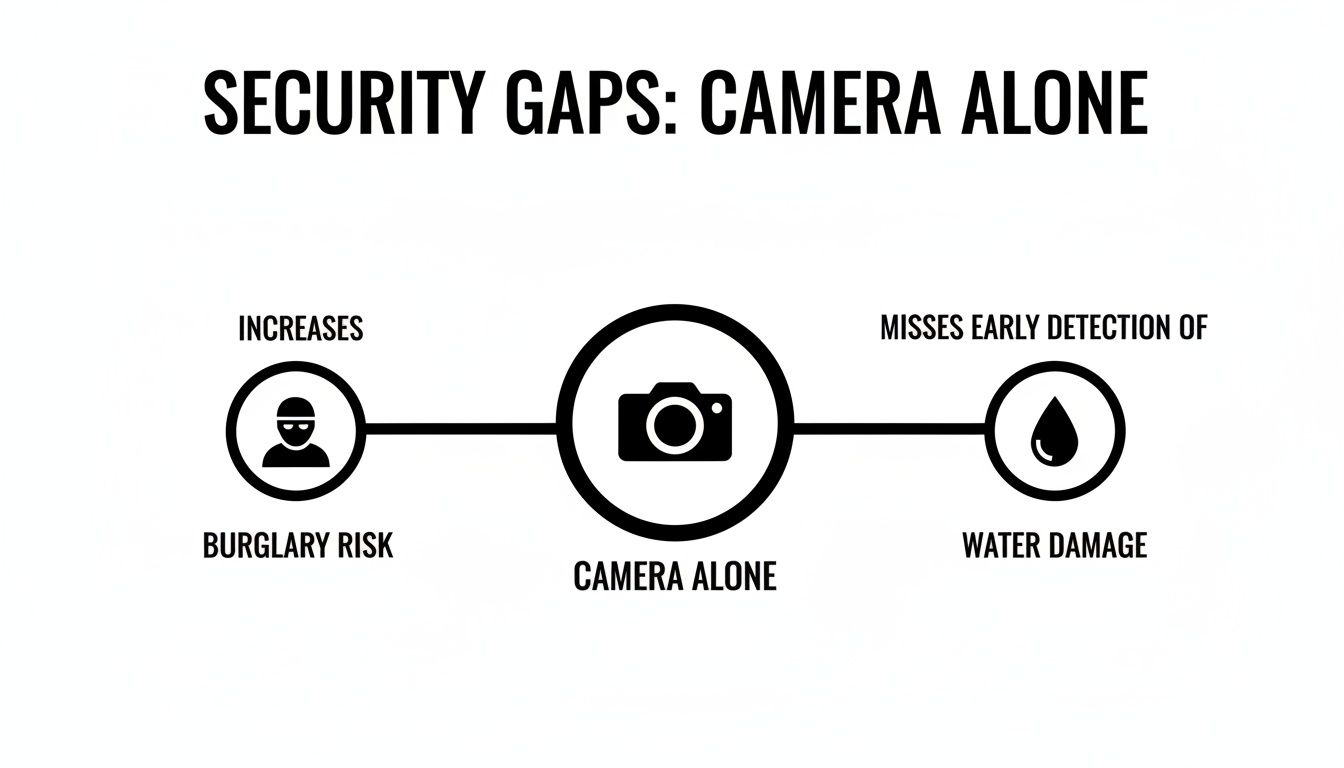
As you can see, a camera is just one piece of the puzzle. It leaves your property exposed to major risks that technology cannot fix from hundreds of miles away.
The Limits of Digital Eyes
Think of your camera system as a silent observer. It's great at recording events but has zero ability to physically step in.
This creates a critical gap between getting an alert on your phone and getting a problem fixed on the ground. Peace of mind comes from knowing someone is there to handle it.
A smart device provides an alert, but a local caretaker provides the solution. Blending technology with in-person human oversight is the only way to truly protect your investment.
From Passive Witness to Active Protector
The most expensive damage to unoccupied homes often comes from issues that never trigger a motion alert.
It’s the slow leak under a sink or the HVAC system that fails during a cold snap. These problems fester quietly, turning minor fixes into major, costly renovations.
This table shows the difference between what your camera can do and what an on-site professional can handle.
Camera Monitoring vs. On-Site Caretaker
| Security Task | Cameras Alone | On-Site Caretaker |
|---|---|---|
| Detect a Break-In | Records video and sends an alert. | Investigates the alert and coordinates with police. |
| Prevent Water Damage | Records a flood as it happens. | Shuts off the water, finds the source, and calls a plumber. |
| Identify Pests | Cannot see subtle signs like nests. | Spots early signs and arranges for pest control. |
| Check HVAC Systems | Cannot confirm if the system is running. | Physically checks the unit and schedules maintenance. |
| Address Storm Damage | May show a fallen branch, not a roof leak. | Walks the property, inspects the roof, and arranges repairs. |
The gap is clear. Technology is a tool, not a total solution.
This is exactly why smart second homeowners rely on local property managers to bridge the gap. Combining your tech with scheduled, in-person inspections creates a powerful defense.
The Silent Dangers Your Security Camera Cannot See
Security cameras are fantastic for catching things you can see, like a person walking up your driveway. But what about the threats that don't make a grand entrance?
These unseen dangers are where the risk of relying on cameras alone to watch your second home becomes a costly reality.
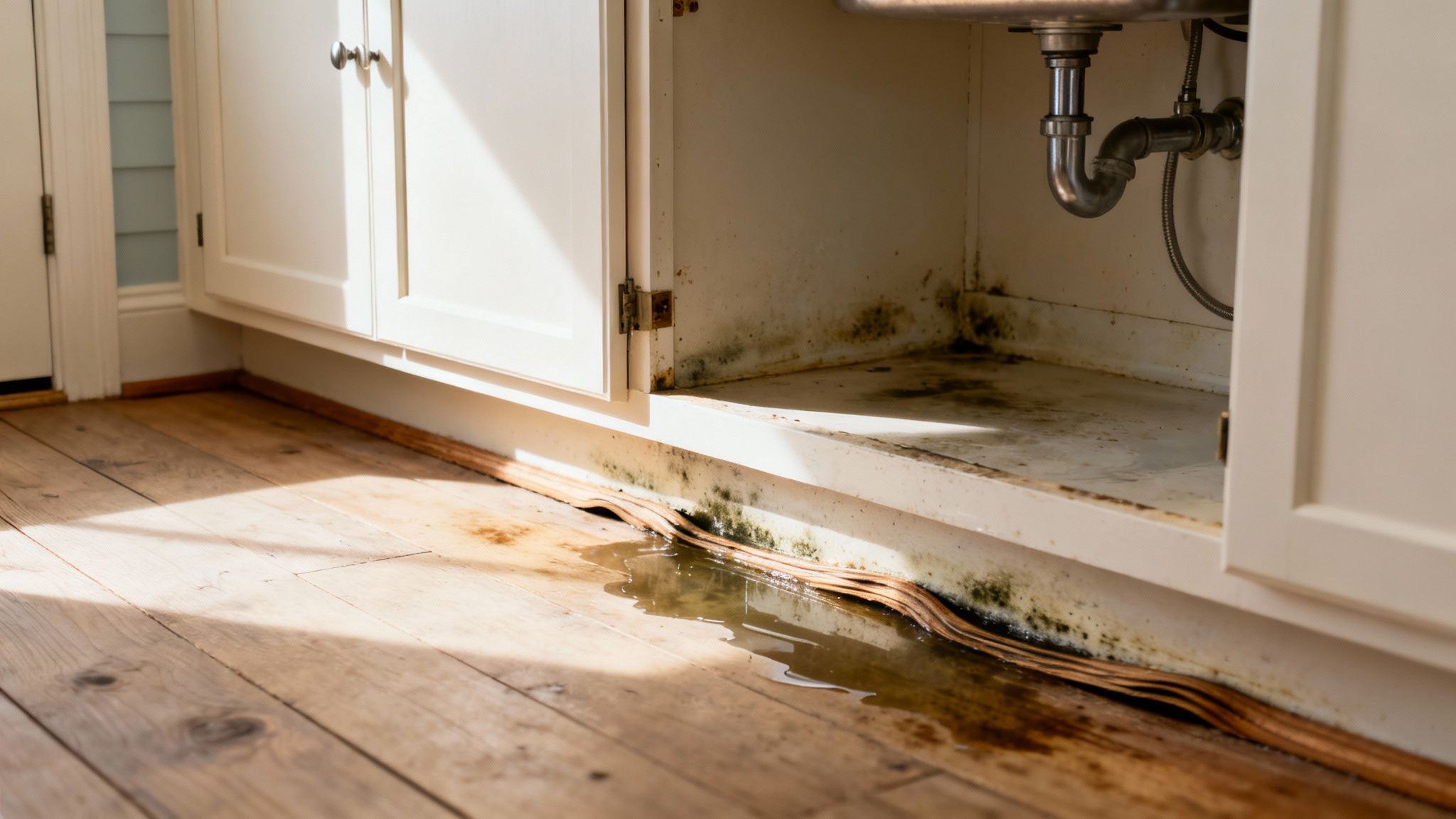
Catastrophic Water Damage from Tiny Leaks
The number one silent threat to any vacant property is water. A camera pointed at your living room won’t see the slow drip from a hidden pipe.
This tiny leak can continue for weeks, completely unnoticed. One online owner said, “no one checked my property for 3 months and a small leak became major damage.”
By the time the damage is visible on camera, it’s too late. These issues silently escalate from a simple fix into a massive renovation project.
HVAC Failures and Frozen Pipes
Imagine a cold snap hitting the Carmel area while you're away. Your smart thermostat might send an alert, but your camera can’t tell you why your home is cold.
If your HVAC system fails, pipes can freeze and burst. A single burst pipe can release hundreds of gallons of water per hour, causing catastrophic flooding.
A physical inspection would catch the temperature drop and allow for an emergency repair, preventing the disaster entirely. For more proactive tips, explore our guide on how seasonal homeowners can protect their property while away.
Subtle Signs of Pest Infestations
Rodents and insects don't announce their arrival. They find small, hidden entry points outside your camera's field of view.
What a camera misses, a person will see. This includes droppings, gnaw marks on wiring, or nesting materials tucked away in corners.
Unseen Roof and Structural Damage
Winter storms can lift shingles or damage flashing. Your camera, aimed at entry points, will never see this.
A small, unnoticed roof leak can lead to wood rot and mold. What could have been a simple repair transforms into a major structural problem.
Why an Alert Is Not the Same As Action
Receiving a notification on your phone is one thing. Getting the problem solved is another. This is where technology falls short.
An alert tells you a disaster is happening. A local professional stops it from getting worse. What this means is tech provides alerts—but not action.
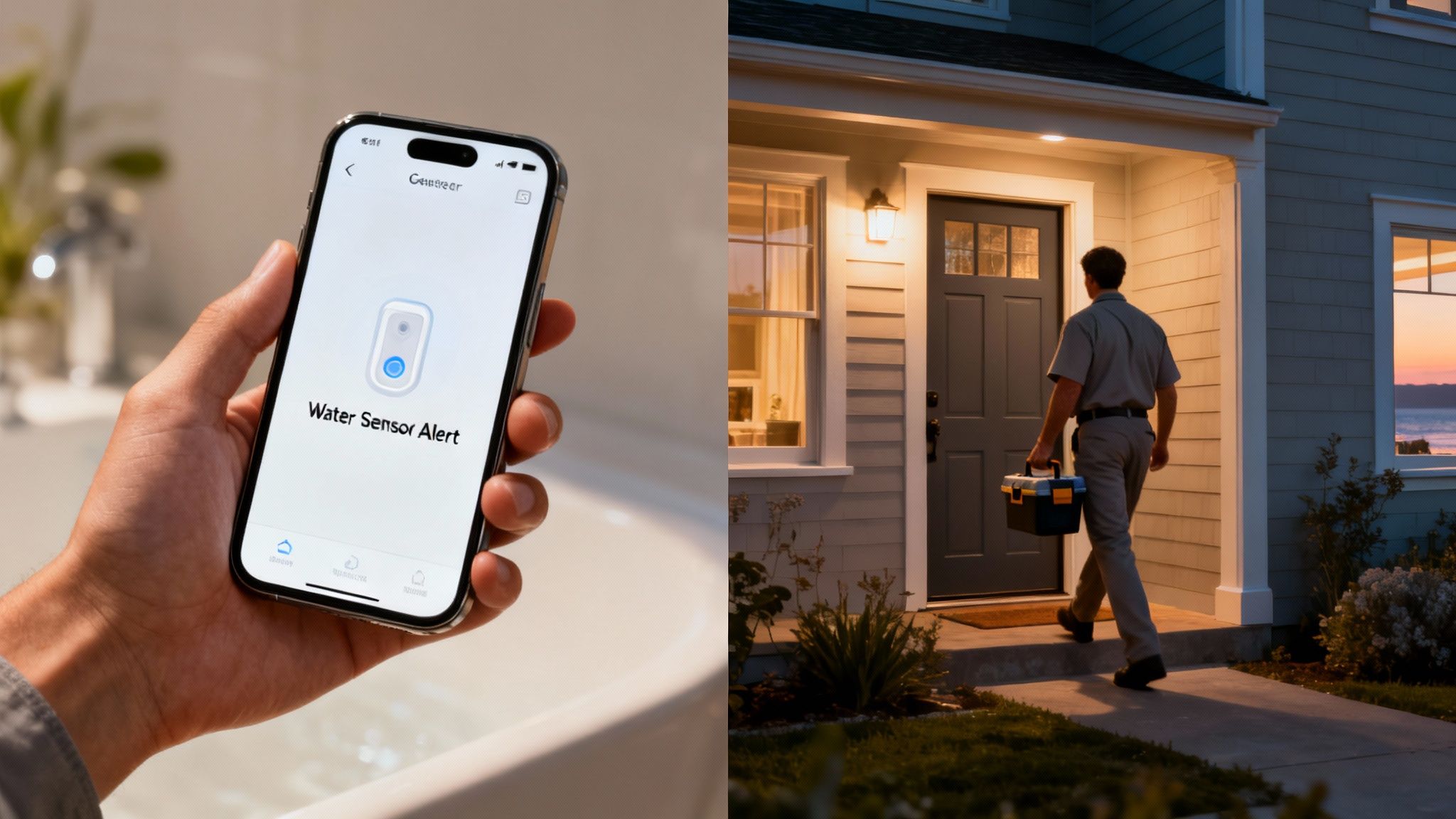
The Helpless Feeling of a Remote Emergency
Imagine you get an alert: a pipe has burst at your Carmel property. You open your camera app and watch in horror as water floods the floor.
Now the panic sets in. You start frantically searching online for an emergency plumber who is available, trustworthy, and willing to go to an unoccupied home.
All the while, you are completely helpless. The alert worked perfectly, but it couldn't solve the actual problem.
From Frantic Scramble to Controlled Response
A professional property manager is your active responder on the ground. Instead of a panicked search for help, the process is simple.
When an alert comes through, you make one call—to your trusted local partner.
A smart device provides an alert, but a local caretaker provides the solution. They turn a stressful, long-distance scramble into a calm, controlled response.
A professional already has a network of vetted, reliable emergency vendors. This quick action can be the difference between a minor cleanup and a catastrophic renovation.
The Critical Difference Between Data and Action
Understanding this difference is key, as many common mistakes in CCTV monitoring security lead to delays.
- Technology Provides Data: A camera shows you a broken window.
- A Caretaker Provides Action: They board up the window and coordinate with police.
- Technology Is Reactive: It alerts you after an event starts.
- A Caretaker Is Proactive: They conduct regular inspections to prevent issues.
The core message is simple: technology is a valuable tool, but it is not a complete solution. Pairing your smart devices with professional oversight creates a comprehensive safety net.
Protecting Your Investment and Your Insurance Policy
Beyond physical risks, leaving a second home unmonitored is a major financial gamble. Many insurance policies contain a "vacancy clause" that can put your entire investment at risk.
Insurance companies see empty properties as a higher risk. They have specific rules for what makes a home "vacant," which can kick in after just 30 to 60 days.
Understanding the Vacancy Clause
A vacancy clause can limit or even void your coverage if your home is unoccupied for too long.
For example, if a small leak causes major damage over three months, your claim could easily be denied. This is not just a maintenance nightmare; it's an insurance nightmare.
The Real-World Consequences
When a vacancy clause is triggered, the results can be severe. Your policy might stop covering damage from vandalism or burst pipes.
In the worst case, the insurance company could void your policy entirely. To appreciate the value of protection, it helps to understand how insurance generally works.
The Solution: Documented Inspections
The best way to satisfy insurance requirements is with scheduled, documented inspections by a professional caretaker.
These regular visits prove that the property is being monitored. A professional provides detailed reports that serve as crucial proof, ensuring your home remains fully insured.
This is a key reason that Monterey property owners are turning to professional caretaking. It’s about making sure your financial safety net is there when you need it.
The Smartest Approach: A Human and Tech Partnership
The best way to protect your second home isn't a choice between technology and a caretaker—it's about combining them. This integrated strategy creates a powerful defense that truly covers all the bases.
Think of your smart home system as the first line of defense. Your cameras and leak detectors are fantastic tools for instant alerts.
The crucial next step is to pair your smart system with scheduled, professional walkthroughs. A caretaker can catch what cameras can’t—and act fast to fix it.
From Digital Alert to Decisive Action
When your system sends a notification, a local caretaker can be on-site to investigate immediately. This blend of tech and touch is the most effective way to manage the risk of relying on cameras alone to watch your second home.
Real-world cases show smart tech can’t detect water leaks under sinks, HVAC failure, roof damage, or rodents. Tech provides alerts—but not action.
The Comprehensive Home Watch Checklist
What should a professional caretaker look for? A thorough inspection is a systematic check of your property’s interior and exterior.
Interior Inspection Checklist
- Security: Check that all windows and doors are securely locked.
- Plumbing: Inspect under sinks and behind toilets for leaks or moisture.
- Appliances: Ensure refrigerators and freezers are running correctly.
- HVAC System: Check thermostat settings and confirm the system is operating.
- Electrical: Look for tripped breakers and test smoke detectors.
- Pest Activity: Search for any signs of insects or rodents.
- Overall Condition: Note any unusual odors or sounds.
Exterior Inspection Checklist
- Security: Walk the perimeter to check fences, gates, and outdoor structures.
- Damage: Inspect the roof, siding, and windows for any damage.
- Landscaping: Make sure the yard is maintained to avoid looking unoccupied.
- Pest Entry Points: Check for any gaps or cracks in the foundation.
- Mail & Flyers: Remove any items to maintain a "lived-in" appearance.
This two-pronged approach ensures that no matter the problem, it will be detected quickly and handled effectively.
Frequently Asked Questions
Do I really need an estate caretaker if I have cameras?
Yes. Cameras can only show you a problem; they can't fix it. A caretaker provides the on-site action needed to handle emergencies like water leaks, HVAC failures, or security breaches, protecting your home from major damage.
What do cameras miss that a person would catch?
Cameras can't detect hidden issues like slow water leaks under a sink, the smell of gas, a failing furnace, or subtle signs of a pest infestation. A person performing a physical walkthrough can spot these problems before they become costly disasters.
How do professional inspections help with my insurance?
Many insurance policies have a "vacancy clause" that can reduce or void your coverage if a home is empty for 30-60 days. Regular, documented inspections by a professional service prove the home is being cared for, which helps keep your policy in full effect.
What happens when a problem is found?
A professional caretaker will immediately contact you with a report and photos. With your approval, they will use their network of trusted local vendors to manage the repair from start to finish, saving you the stress of finding help from afar.
Can I just ask a neighbor to check on my house?
Relying on a neighbor can strain your relationship and puts them in a difficult position during an emergency. A professional caretaker is insured, bonded, and has a network of emergency contacts, offering a reliable and comprehensive solution without burdening a friend.
If you’re managing a second home in Monterey or Carmel from afar, don’t rely on tech alone. Torrente offers trusted local estate care services that work with your devices to truly protect your investment. Contact Torrente Property Management today at (831) 582-8916 to let's talk.

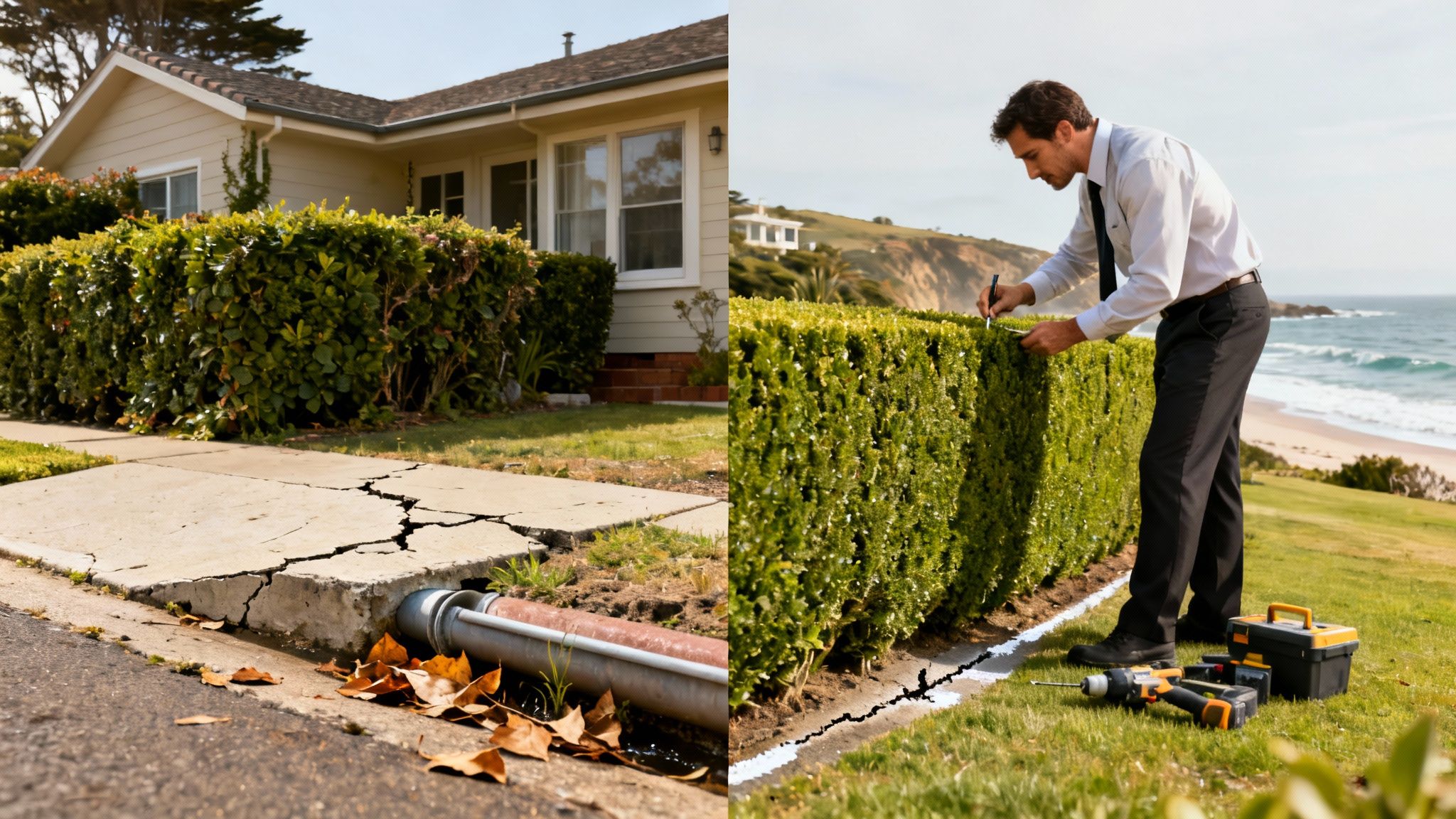
5 Common Estate Care Mistakes Central Coast Homeowners Make in 2026
Owning a home on California's Central Coast is a major investment. But when a property sits vacant, even for a short time, it faces risks many owners overlook. In fact, vacant homes face a much higher risk of vandalism and theft, according to the Insurance Information Institute. Protecting your investment means more than just locking the doors.
This guide will show you the 5 estate care mistakes Central Coast homeowners make in 2026. We will cover why assuming "no news is good news" is so dangerous and how to keep your home safe. These tips will help you protect your property's value and avoid stress.
1. Assuming “No News Is Good News”
One of the biggest mistakes is thinking silence means your property is fine. Damage often starts small and goes unnoticed for months. A tiny leak can turn into a huge repair bill if not caught early.
Many homeowners believe that if they don't hear about a problem, one doesn't exist. But regular, documented check-ins are key. They help prevent small issues from becoming five-figure repairs. This is especially true for second homes in places like Carmel or for military families deployed from Monterey.
Why This Is a Costly Mistake
When a vacant home is not checked, small problems grow. A slow drip under a sink can cause mold and rot that costs thousands to fix. Pests can move in and cause damage to wiring and insulation.
An empty property is also a target for break-ins and vandalism. Without someone checking on it, your home can look abandoned. This invites trouble that regular visits can help prevent. You can find more practical security tips to prevent home break-ins to protect your asset.
2. Relying Only on Cameras or Neighbors
Security cameras are helpful, but they have limits. They can't smell a gas leak or spot a new water stain on a ceiling. They also can't check for roof damage after a big storm in Salinas.
Neighbors can be a great help, but they aren't property experts. They mean well, but they won't check your plumbing, HVAC systems, or crawl spaces. Physical inspections by a professional are essential to catch problems that technology and neighbors will miss.
Why On-Site Checks Matter
A professional caretaker does more than just look around. They run faucets to check for leaks, test smoke detectors, and look for signs of pests. These simple actions can save you thousands in future repairs.
A physical check also creates a visible presence at the property. This can deter potential criminals. Professional security patrol services in California add another layer of protection that cameras alone cannot provide. For total peace of mind, a hands-on approach is best.
3. Ignoring Coastal Wear and Tear
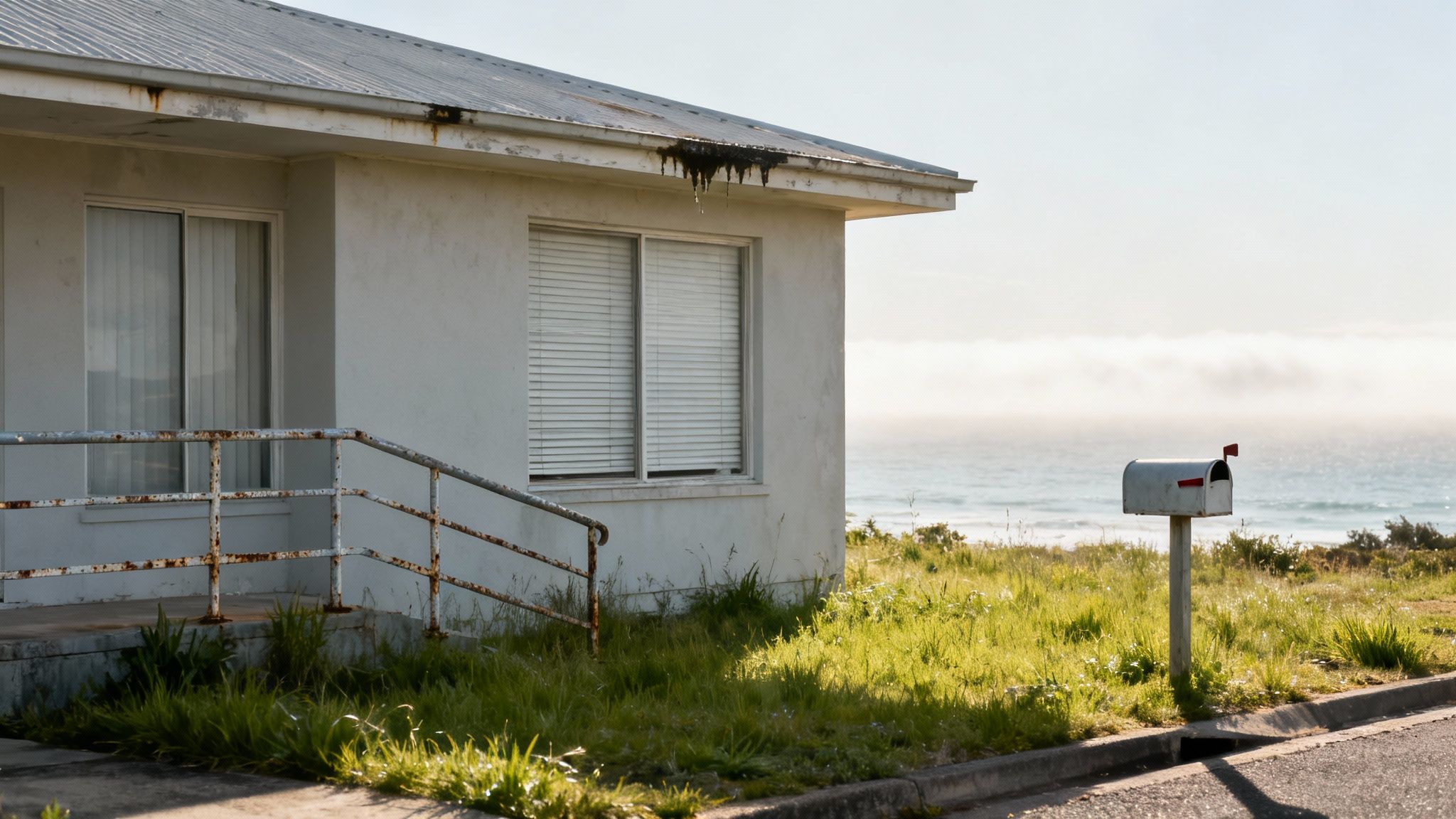
Living on the Central Coast is beautiful, but the weather can be tough on houses. The fog, salt air, and moisture in areas like the Monterey Peninsula cause damage over time. This coastal wear and tear happens faster than many homeowners realize.
Salt in the air causes metal to rust and corrode. Moisture can lead to mildew and wood rot. Vacant homes deteriorate even faster without regular care designed for our local climate. Simple tasks like rinsing off salty buildup can make a huge difference.

Local Climate Demands Local Care
A home in Carmel faces different challenges than a home in Salinas. The coastal fog means you need to check for mildew and moisture damage more often. Window seals, exterior paint, and metal fixtures all need special attention.
Ignoring these local factors is a mistake that can devalue your property. A good estate care plan includes tasks specific to the Monterey Bay environment. Find out more about our specialized vacant property inspections and upkeep in Monterey County.
4. Forgetting That Insurance Doesn’t Love Neglected Homes
Your homeowner's insurance policy is there to protect you, but it has rules. Many insurance companies require proof of routine inspections for vacant properties. If you can't show that your home has been cared for, your claim could be delayed or even denied.
This is a critical mistake that can cost you everything. Professional estate care creates a paper trail of photos and inspection logs. This documentation proves you've been responsible and protects you if you need to file a claim.

Protect Your Coverage
Without proper records, you are at the mercy of the insurance adjuster. A simple log from a caretaker service can be the difference between a paid claim and a huge out-of-pocket expense.
Before leaving your home vacant, call your insurance agent. Ask about any special requirements for unoccupied homes. Understanding your policy is a key part of responsible property ownership. We offer estate caretaker and maintenance services on the Monterey Peninsula to help you meet these requirements.
5. Choosing Reactive Help Instead of Preventive Care
Waiting for something to break before you call for help is the most expensive way to manage a property. A reactive approach almost always costs more than preventing the problem in the first place. This is one of the most common estate care mistakes Central Coast homeowners make.
Preventive care focuses on scheduled inspections and early issue detection. This approach saves homeowners money and stress over time. It's about fixing a small leak before it becomes a flooded kitchen. Torrente's estate caretaker services are built on this proactive model.
The Value of a Proactive Plan
A proactive maintenance plan saves money in several ways:
- Fewer Emergencies: Regular check-ups catch problems before they become costly crises.
- Lower Repair Costs: Small fixes are much cheaper than major restorations.
- Longer System Life: Well-maintained systems like HVAC and plumbing last longer.
- Maintained Value: A well-cared-for home holds its value better in the market.
Investing in preventive care is one of the smartest financial decisions a homeowner can make. Learn more about smart maintenance for your rental property, including key tips and a helpful checklist.
Frequently Asked Questions (FAQs)
Why is professional estate care important for a vacant home?
Professional care is crucial because it prevents small issues from becoming expensive disasters. Regular inspections catch things like leaks, pests, and security risks early, saving you money and protecting your home's value.
How often should my vacant Central Coast property be inspected?
We recommend bi-weekly or monthly inspections. This frequency is often enough to catch problems before they escalate and can help satisfy insurance requirements for vacant homes.
Can't my neighbor just watch my house for me?
While neighbors can be helpful, they aren't trained to spot potential issues with plumbing, electrical, or structural systems. A professional provides detailed, documented inspections that a neighbor simply cannot.
What are the biggest risks for vacant homes in coastal areas?
In coastal areas like Monterey and Carmel, the biggest risks are moisture-related. This includes mold, mildew, wood rot, and corrosion from salt air. Vandalism is also a significant risk for any unoccupied property.
How does estate care help with my homeowner's insurance?
Many insurance policies have clauses that can void coverage if a home is left vacant and unmonitored. Professional estate care provides the documentation needed to prove you are actively maintaining the property, which protects your coverage.
Protect Your Investment the Right Way
Avoiding these five common mistakes is key to protecting your Central Coast home. Proactive care is always cheaper and less stressful than reacting to a disaster. A well-maintained property holds its value and gives you peace of mind.
Remember these key takeaways:
- Regular inspections are your best defense against damage.
- Cameras and neighbors aren't enough; you need physical checks.
- Coastal weather requires a special maintenance plan.
- Documentation is critical for your insurance coverage.
- Preventive care saves money and protects your investment.
If you're a homeowner in Monterey, Salinas, or elsewhere on the Central Coast with a vacant or seasonal property, we’d love to help you protect it year-round. Let’s start with a free estate care consultation to make sure your home is truly looked after.
Contact Torrente Property Management Inc. today at (831) 582-8916 to secure your peace of mind.

The Legal Shifts Reshaping Rental Management in California
The world of California property management is changing fast. A rental property used to be a simple investment, but now it demands serious legal awareness. For landlords, this isn't just a small update—it's a whole new playbook.
Understanding the New Landlord Playbook
The legal shifts across California are making casual landlording a thing of the past. As tenant rights expand, the state is adding new rules that require proactive compliance, detailed records, and clear communication.
For property owners in Monterey, Salinas, or Pacific Grove, understanding these changes is the only way to avoid expensive legal trouble.
This isn't just a local trend. A recent analysis shows states like California are focusing more on billing fairness and resident protections. Just collecting rent is no longer enough; landlords must now act with a higher degree of professional oversight.
The Shift from 'Nice to Have' to 'Must Do'
Until recently, many landlord tasks were just good business practices. The 2025 updates changed that. Two new rules show how much the ground has shifted:
- Mandatory Credit Reporting Offers: Landlords must now offer tenants the option to have their on-time rent payments reported to a major credit bureau. This helps renters build credit with their largest monthly expense.
- Required Photo Documentation: Taking move-in and move-out photos used to be a smart way to handle security deposit disputes. Now, it's a mandatory step to create an official visual record.
These laws turn optional best practices into required duties for every landlord in California.
This isn’t just about more paperwork. It’s about raising the professional standard for the entire industry. The state now views landlords as regulated service providers with strict rules.
The Widening Compliance Gap
With every new law, the gap between professional property managers and DIY landlords gets wider and more dangerous. Many self-managing owners use outdated lease templates from the internet or simply don't know their new obligations. That kind of mistake is a lawsuit waiting to happen.
For a refresher on the basics, you can review our guide on key landlord-tenant laws in California.
Failing to follow even one of these new rules can cause serious problems, including:
- Hefty Fines: State and local agencies are increasing enforcement and issuing penalties.
- Costly Tenant Lawsuits: Tenants are more informed about their rights than ever before.
- Voided Lease Clauses: An improper lease can make it impossible to enforce critical terms.
Staying ahead of the legal curve is about protecting your entire asset from legal battles. For property owners here in Monterey County, deep local expertise is your best defense.
Key Legal Shifts for Landlords At a Glance
| New Legal Requirement | What This Means for You | The Risk of Getting It Wrong |
|---|---|---|
| Mandatory Credit Reporting Offer | You must give all tenants the option to have their rent payments reported to a credit bureau. | Failure to offer this can lead to fines and tenant disputes over fair housing practices. |
| Required Photo Documentation | Taking detailed photos at move-in and move-out is no longer optional; it's legally required. | Without a visual record, you could easily lose a security deposit dispute and face penalties. |
| Strict Just-Cause Eviction Rules | You must have a legally valid, documented reason to end a tenancy for anyone who has lived in a unit for 12 months. | An improper eviction can lead to a wrongful eviction lawsuit, costing you thousands in damages. |
| Statewide Rent Increase Caps | Annual rent increases are capped at 5% plus local CPI, or 10% total, whichever is lower. | Exceeding the cap can void the increase and expose you to legal action. |
These changes represent a major shift in how rental properties must be managed. Informal agreements are gone, replaced by a legal framework that demands professionalism.
Navigating Rent Control and Fee Transparency Rules
For California property owners, figuring out rent increases and fees has become a real challenge. The old way of setting a price and adding fees no longer works. New laws now define how much you can raise rent and what you can charge for.
The main law is the Tenant Protection Act (AB 1482). This statewide law puts a firm cap on annual rent increases. As a landlord, you can raise rent by no more than 5% plus the local Consumer Price Index (CPI), or a flat 10%, whichever is lower.
How Rent Caps Work in Practice
That "5% plus CPI" rule isn't a fixed number. For example, the CPI in Monterey County could be different from Santa Cruz County. This means properties just a few miles apart could have different maximum rent hikes.
It’s also critical to get the timing and notices right. You can't just raise the rent anytime. Proper written notice is mandatory. For a deep dive into the timelines, our guide on California rent grace periods breaks down everything you need to know.
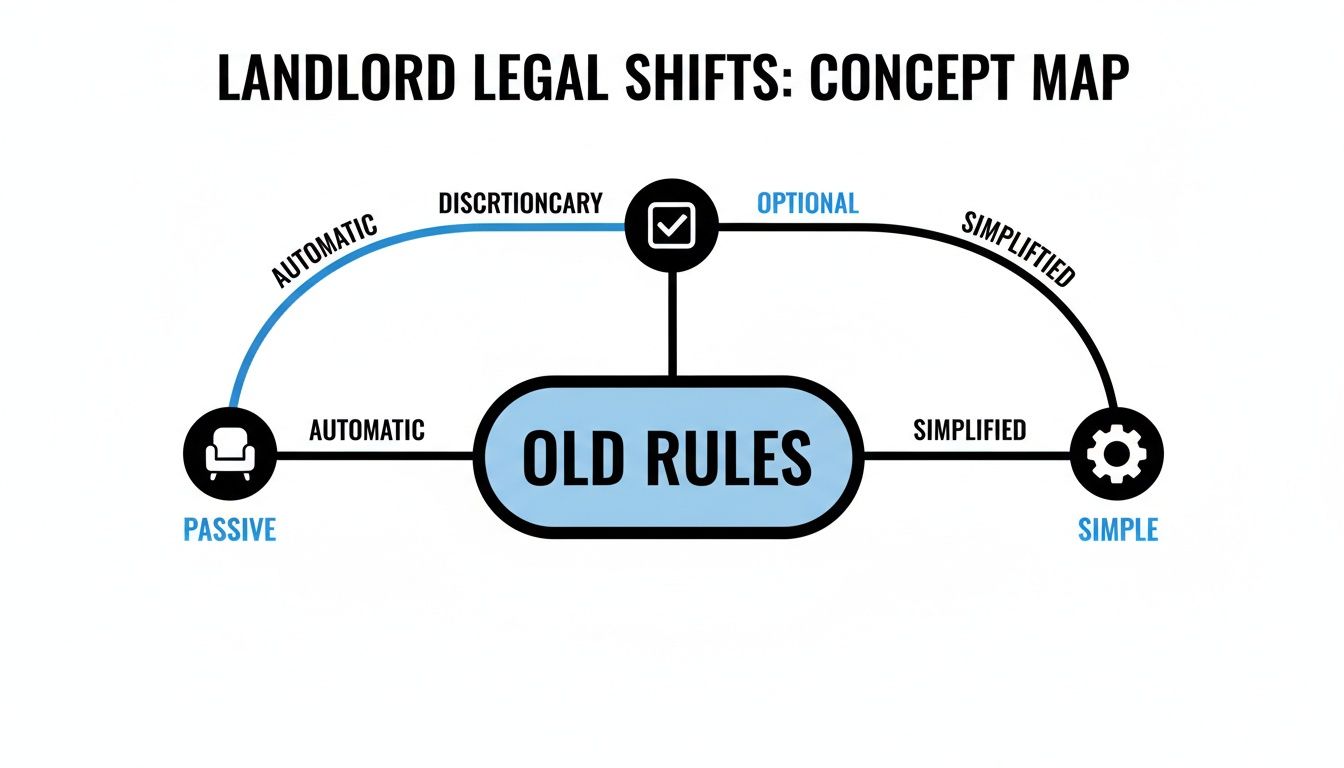
This visual shows the shift from a passive management style to one that demands active legal compliance.
The End of Hidden "Junk Fees"
One of the biggest legal shifts is the new ban on "junk fees." This change is about giving tenants a clear, all-in price for a rental unit from the start.
A new law requires that any advertised rental price must include all mandatory, recurring fees. If you require a monthly pet fee or landscaping charge, you must bundle it into the single rent price you advertise.
The goal here is total transparency from the very first advertisement. It's a shift from 'price plus fees' to just 'price.'
To stay compliant, property owners should review their fee structures now. It’s essential to know the difference between mandatory and optional fees.
- Mandatory Recurring Fees: These must be included in your advertised rent. Think monthly pet fees or required parking charges.
- Optional or One-Time Fees: These don't need to be in the base rent, but you must disclose them clearly. This includes things like late fees or returned check fees.
For landlords in competitive markets like Carmel and Pacific Grove, this transparency helps attract good tenants. Getting this wrong could lead to accusations of false advertising.
The Growing Risks of DIY Landlord Management
For years, managing your own rental in Monterey or Salinas seemed like a smart way to save money. But recent legal changes have turned this simple side hustle into a high-stakes job. The risks for DIY landlords have never been higher.
Many self-managing owners fall into costly traps. The most dangerous is using outdated lease templates from the internet. These generic documents rarely include the specific clauses now required by California law.
A small mistake—like forgetting to offer credit reporting—can quickly become an expensive dispute or lawsuit. As tenant rights expand, so does your personal liability.
The Gap Between Casual and Compliant
The difference between a casual landlord and a professional one is now a huge legal and financial gap. Treating your rental as a side business is no longer safe in California’s strict regulatory climate.
The burden isn’t just legal; it hits your bottom line. Understanding strategies for improving cash flow can impact your ability to meet new obligations. Proper management protects both your compliance and your profit.
The new laws assume a professional level of knowledge. Ignorance of a new rule is no excuse in court. Your rental property is a business, and it must be run like one.
This new reality creates risks for landlords who aren't legal experts. We explore this more in our article on the hidden costs of managing your own rental.
Common Pitfalls for Self-Managing Landlords
Many landlords are unprepared for today's legal requirements. Here are some of the most frequent errors we see:
- Improper Record-Keeping: Failing to document everything, from maintenance requests to move-in/move-out reports. This makes defending against security deposit claims nearly impossible.
- Outdated Lease Agreements: Using a lease that lacks mandatory disclosures on rent control and tenant rights. A single missing clause can make your lease unenforceable.
- Ignoring Local Ordinances: Focusing only on state laws while missing stricter rules in Monterey, Pacific Grove, or Salinas.
Each of these mistakes creates an opening for legal challenges that can wipe out years of rental income.
Mastering New Habitability and Security Deposit Rules
A tenant's right to a safe home has always been a key part of California law. But recent updates have tightened the rules around "habitability" and security deposits. For landlords in the Monterey Bay area, this is a critical update to your operations.
These legal shifts impact what you must provide. An appliance like a stove, once an amenity, is now often seen as a required part of a livable unit. You must keep these core features in good working order.

The Evolving Definition of Habitability
California’s implied warranty of habitability means your rental must be fit to live in. This always covered big things like working plumbing. But the scope is widening to a more modern view of what "livable" means today.
Managing these standards involves budgeting for maintenance. For instance, knowing dryer vent cleaning prices in California helps you plan for this essential safety task.
This means you have a clear duty to:
- Keep gas, heating, plumbing, and electrical systems safe.
- Maintain any major appliances included in the lease.
- Ensure common areas are clean.
- Handle pest problems and make repairs in a timely manner.
Our complete guide to the warranty of habitability in California breaks down what landlords must provide.
New Rules for Security Deposit Handling
Security deposits are now under a much brighter legal spotlight. The process for returning a deposit has strict deadlines and documentation rules.
The most important rule is the 21-day deadline. After a tenant moves out, you have 21 calendar days to return their deposit or provide an itemized statement of deductions. Missing this deadline could force you to return the entire deposit.
Landlords can no longer treat the 21-day deposit return window as a flexible guideline. It is a hard deadline with significant consequences.
The Power of Ironclad Documentation
If you deduct from a security deposit, you need proof. Meticulous documentation is no longer just good practice; it's your only defense. The state requires detailed records to justify any claim of damage beyond normal wear and tear.
Your documentation strategy should include:
- A Detailed Move-In Checklist: Walk through the unit with the tenant and have them sign a checklist noting the condition of everything.
- Dated Photos and Videos: Take photos and videos of the property's condition before the tenant moves in.
- Thorough Move-Out Inspection: When they move out, conduct a final walkthrough to compare and document any new damage.
- Itemized Receipts: If you make deductions for repairs, you must provide the tenant with copies of invoices or receipts.
Without this proof, you'll find it nearly impossible to defend your deductions in a dispute. The burden of proof is on the landlord.
Your Proactive Compliance Strategy in Monterey Bay
Keeping up with California’s rental laws isn't just about avoiding fines—it’s about protecting your real estate investment. A reactive approach is a recipe for disaster. Property owners in Monterey Bay need a proactive strategy that anticipates legal changes.
This means replacing outdated practices with a system built on expertise. As the legal shifts reshaping rental management in California continue, professional oversight is the only way to protect your profitability.
Your Compliance Shield in Action
Think of a professional partner like Torrente Property Management as your compliance shield. Our approach is built on legally-sound processes that protect you from common landlord traps. We stay current on legal updates so you don’t have to.
Our strategy includes:
- Legally-Vetted Lease Agreements: Our leases are drafted and updated by legal experts to include every new state and local disclosure.
- Rigorous Photo Documentation: We have a strict protocol for photo and video documentation at move-in and move-out. This creates a clear visual record.
- Routine Compliance Audits: We regularly review your property’s paperwork to catch potential issues before they become costly disputes.
Staying Ahead of the Legal Curve
Staying current is a full-time job. California's Tenant Protection Act (AB 1482) continues to enforce strict rent increase caps. Looking ahead, the rules limit annual hikes to 5% plus the local Consumer Price Index (CPI), or a 10% total, whichever is lower.
This is the kind of detailed knowledge that separates proactive management from reactive problem-solving. It’s not just about knowing the laws exist; it’s about understanding how they apply to properties in Monterey, Pacific Grove, and Salinas. For a broader look at what's on the horizon, you can explore California's evolving property management laws.
By entrusting your property to a team that puts compliance first, you minimize risk. It lets you focus on your investment's income and growth.
The Local Advantage in Monterey, Salinas, and Carmel
Navigating state law is only half the battle. Many cities in the Monterey Bay area have their own specific ordinances. Our local expertise ensures your compliance strategy is tailored to both state mandates and local rules.
If you’re renting out a property in Monterey, Pacific Grove, or Salinas, Torrente’s team is ready to review your current processes for compliance. Start 2026 ahead of the legal curve with a local expert.
FAQs: California Rental Law Changes
What is the biggest mistake a self-managing landlord can make?
The most costly mistake is using an old or generic lease template from the internet. California law now demands specific disclosures be included in the lease agreement. A missing clause can make your lease unenforceable.
How does the 'just cause' eviction rule work?
Once a tenant has lived in your property for 12 months, you can only end their tenancy for a specific, legally-approved reason. These reasons include "at-fault" causes (like not paying rent) or "no-fault" causes (like you deciding to move in). For "no-fault" evictions, you must provide financial relocation assistance.
Do these new laws apply to my single-family home rental?
Many single-family homes are exempt from statewide rent caps and "just cause" rules, but this is not automatic. The home must not be corporate-owned, and you must provide the tenant with a specific written disclosure of this exemption in the lease. If you forget this notice, the laws apply to your property.
What documentation is essential to stay compliant?
Your best defense is a strong paper trail. Your compliance toolkit must include dated photos/videos from inspections, signed copies of all notices, itemized receipts for any deposit deductions, and a written log of tenant communications. Explore our resources on understanding tenant rights in California for more info.
How can Torrente help if I already have a tenant?
It's never too late to get compliant. We can perform a full audit of your current lease and practices. If we find gaps, we’ll create a plan to fix them, often by drafting a new, compliant lease addendum for your tenant to sign.
Navigating California's complex rental laws doesn't have to be a burden. With a proactive approach and expert guidance from Torrente Property Management, you can protect your investment and focus on its growth. We are ready to review your processes and help you stay ahead of the legal curve.
Contact Torrente Property Management today at (831) 582-8916 to reduce risk and gain peace of mind. https://torrenteproperties.com

How to Check on Your Property When You're Not There
You own a rental in the beautiful Monterey Bay area but live in another city—or even another state. The big question on your mind is, "What’s the best way to check on my property when I’m not there?" You need to know your investment is safe, but how can you trust someone else to handle it for you?
This is a common concern for property owners. In fact, a significant number of rental properties are managed by owners who live miles away. That distance can create a lot of uncertainty. According to the U.S. Census Bureau, individual investors own over 70% of rental properties with 2-4 units, many of whom are not local.
Without the right systems in place, a small issue can quickly become a major headache.
The Risks of Managing from a Distance
When you can't be there in person, you open yourself up to risks that local owners don't face. A slow leak under a sink can turn into a costly flood, and an unlocked window could become an invitation for theft.
Many owners try to manage from afar by relying on tenants to report problems. This common misstep can be expensive. Tenants aren't trained to spot preventative maintenance issues, and waiting for them to flag a problem means you're already in reactive mode.
Without regular inspections, local vendor relationships, and an awareness of local laws, you risk property damage, long vacancies, or legal compliance issues.
Choosing Your Path to Peace of Mind
To protect your property, you have two main paths to consider. Each offers a different level of involvement and effectiveness.
- The DIY Tech Approach: You can set up your own system of smart home devices like security cameras, motion sensors, and smart locks. Technology gives you real-time alerts on your phone.
- Professional Property Management: This involves hiring a local expert to conduct regular, physical inspections. A professional checks for security issues and hidden maintenance problems, and they handle emergencies for you.
The reality is that technology, while powerful, has blind spots. A camera can’t smell a gas leak or see mold growing behind a wall. True peace of mind comes from combining technology with human expertise.
The best strategy is a hybrid one. By pairing smart home devices with the reliable oversight of a professional property manager, you create a complete defense system for your investment.
Comparing Your Remote Oversight Options
Deciding on the best way to check on your property when you’re not there usually boils down to a few common strategies. Let's look at the trade-offs.
Relying on a neighbor or friend is often the first thought. While well-intentioned, this informal approach has serious blind spots. A friendly glance can’t spot a slow leak, and it puts your friend in an awkward position if a real emergency happens.
The Do-It-Yourself Tech Route
Another popular path is using smart home devices. With security cameras, smart locks, and water sensors, you get instant alerts on your phone. This gives you a real-time view of your property, which is great for security.
But technology can only see so much. A camera won't tell you if pests are in the attic or if the coastal fog in Pacific Grove is causing mildew on an exterior wall. These are slow-burn issues that only a physical inspection can catch.
This flowchart lays out the two main paths for remote property oversight, helping you decide between a hands-on, tech-focused approach or a professionally managed one.
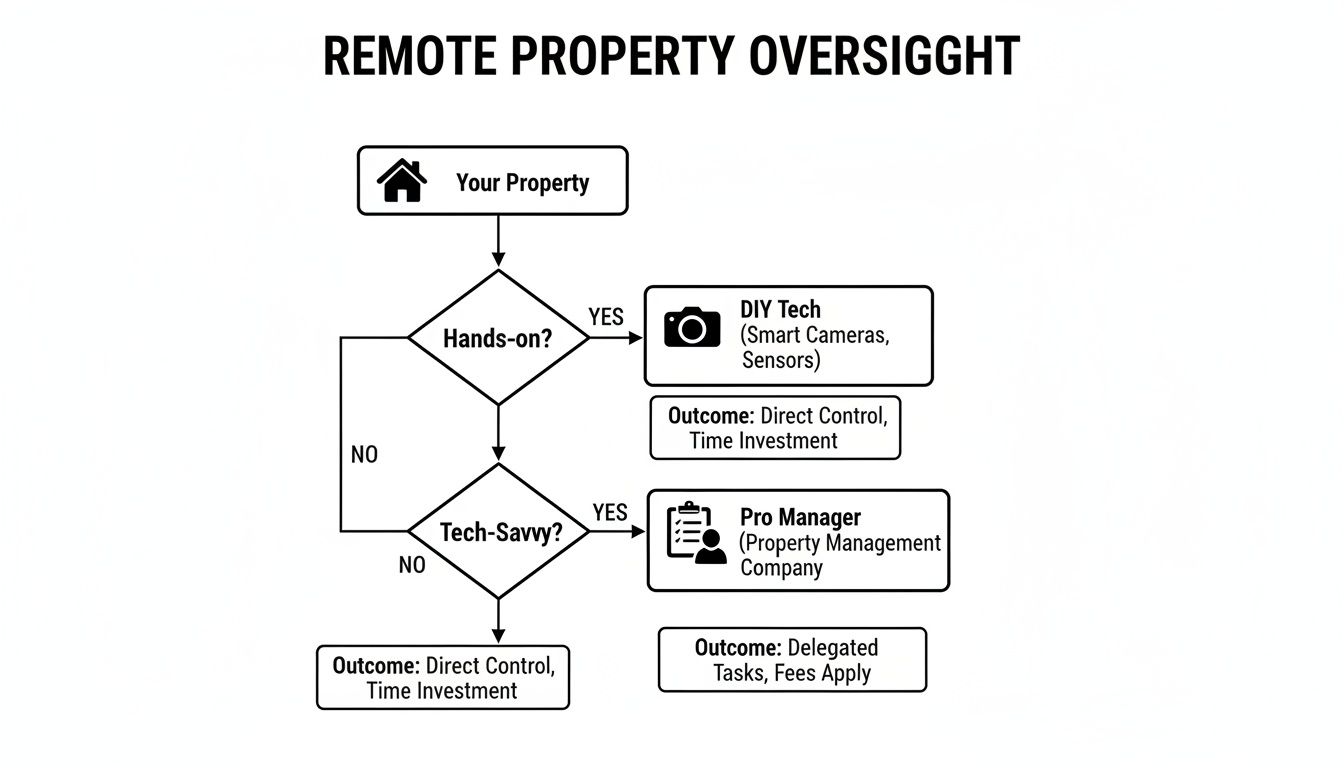
While DIY tech is great for alerts, professional management provides comprehensive care and problem-solving. This is crucial for protecting your asset long-term.
Remote Property Oversight Methods: A Comparison
| Oversight Method | Best For | Pros | Cons |
|---|---|---|---|
| Neighbor/Friend | Short-term absences; very low-risk properties. | Free; builds community relationships. | Unreliable; lacks expertise; creates social obligation. |
| DIY Smart Tech | Tech-savvy owners who want direct control and immediate security alerts. | Instant notifications; 24/7 visual access; one-time setup cost. | Can't detect maintenance issues (leaks, pests, mildew); requires self-monitoring; no on-the-ground response. |
| Professional Caretaker | Owners needing scheduled, detailed physical check-ins. | Proactive maintenance checks; detailed reports; reliable presence. | Limited scope (usually just inspections); may not handle tenant relations or complex repairs. |
| Property Manager | Absentee owners wanting comprehensive, hands-off asset protection. | Full-service (inspections, maintenance, emergencies, tenant relations); local vendor network; 24/7 response. | Highest cost; requires finding a trusted local partner. |
The Professional Management Advantage
The most thorough option is hiring a professional property management company. This approach is about having a local expert proactively protecting your investment.
A professional brings several key advantages:
- Scheduled, Detailed Inspections: Professionals follow a detailed checklist to inspect everything from plumbing and electrical systems to the roof and foundation.
- Preventative Maintenance: They identify and fix small issues before they become disasters, saving you money and stress.
- Local Vendor Network: If a repair is needed, a property manager has trusted vendors in the Salinas, Monterey, and Carmel areas.
- Emergency Response: When an urgent issue arises, they are on the ground and ready to act immediately, 24/7.
For many out-of-area owners, the real value of professional management isn't just rent collection. It’s the peace of mind that comes from knowing someone is treating your property with the same care you would.
The right choice depends on your property’s needs and your comfort level with risk. For more strategies, our ultimate guide on how to manage a rental property remotely provides more detail.
Using Technology for Remote Monitoring
Technology gives you a powerful set of eyes and ears on your property. An effective setup is more than just a single camera at the front door. It’s a connected system of devices that work together to give you a full picture of what’s happening.
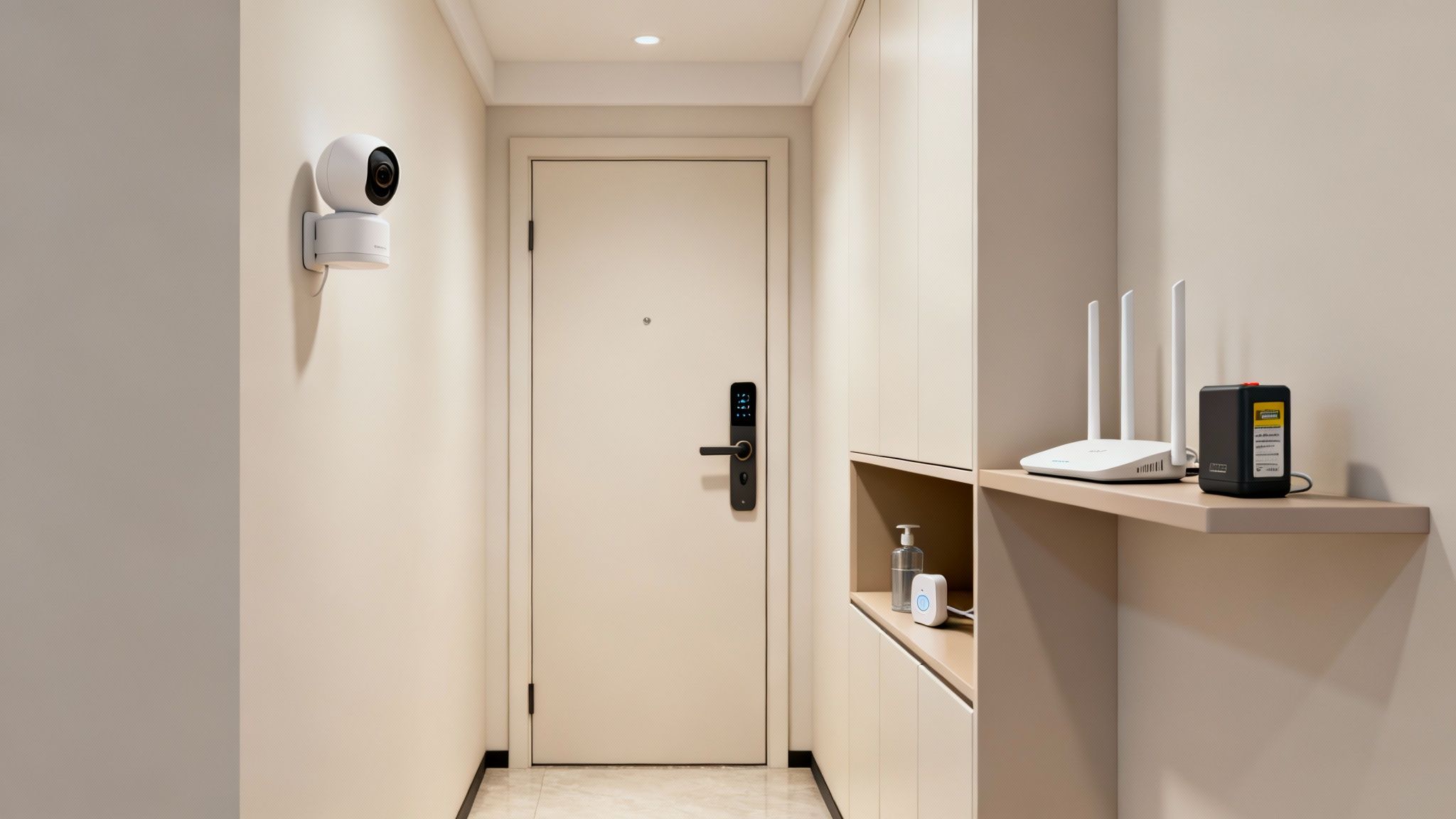
A reliable security system is the foundation of any remote monitoring strategy. Today’s smart cameras offer live feeds, motion alerts, and two-way audio right on your phone.
Key Components of a Smart Monitoring System
A layered approach should cover security, access, and environmental conditions. We recommend these essential tools:
- Smart Security Cameras: Position them at every key entry point. Be aware of tenant privacy laws if the property is occupied.
- Smart Locks: Grant temporary access to a plumber or property manager without a physical key. You also get a notification every time the door is locked or unlocked.
- Environmental Sensors: These are lifesavers. A simple water leak sensor can prevent a disaster. Temperature sensors can alert you if the furnace fails.
Our guide on property management software and tech tools can help you explore solutions. For a deeper dive on cameras, this practical guide to protecting your property with a trail camera with remote viewing offers great insights.
Why a Monitored Alarm System is Important
A professionally monitored alarm system connects everything to emergency services. When a sensor trips, it alerts a professional monitoring center that can dispatch police or fire for you.
This oversight is a huge deterrent. Research shows that most burglars will move on if they see a home has a security system.
Key Takeaway: Technology is a great tool for remote monitoring, but it is a supplement, not a replacement, for human oversight.
The Power of Professional Inspections
Smart technology is a fantastic first line of defense, but it can't see everything. A slow leak in an attic or the early signs of pests are invisible to a digital sensor.
This is where regular, physical property inspections prove their worth. They are the single best way to protect your investment from afar.

A professional inspection is a systematic review of your property designed to catch small issues before they become costly emergencies.
What a Comprehensive Inspection Covers
An expert actively tests systems and looks for hidden warning signs. Here’s what a professional checks:
- Signs of Water Intrusion: Looking for discoloration, soft spots, and leaks.
- HVAC System Functionality: Running the heat and A/C to ensure they work properly.
- Appliance Checks: Testing major appliances to confirm they are in good working order.
- Safety Device Tests: Physically testing smoke and carbon monoxide alarms.
- Pest and Rodent Activity: Searching for evidence of pests before an infestation takes hold.
- Exterior Integrity: Examining the roof, gutters, and siding for damage.
Proactive care is the best form of asset protection. An expert who understands Monterey County’s climate—from coastal fog to summer heat in Salinas—can save you thousands.
For high-tech options, it's worth understanding how modern drone inspection techniques can help with hard-to-reach areas like roofs. A local expert with a network of vetted vendors is your greatest ally.
How We Give Remote Owners Peace of Mind
Figuring out what’s the best way to check on my property when I’m not there is simple with a dedicated local partner. Most of our clients live out of town, so we built our systems specifically for them. We know you need a trusted steward for your investment.
Our approach is guided by one philosophy: treat every property like it’s our own. This means proactive care, clear communication, and total transparency. We give you a direct line of sight into your property's health from anywhere in the world.
Your Digital Window into Monterey Bay
We give every remote owner 24/7 access to a secure online portal. It's your personal dashboard for everything happening at your property.
Log in anytime to see:
- Detailed Financial Statements: Track income and expenses in real-time.
- Inspection Reports with Photos: See exactly what our team sees during property checks, from the landscaping in Salinas to the roof in Carmel.
- Maintenance Requests and Updates: Follow a repair from the initial request to the final invoice.
This access gets rid of the guesswork. You don’t have to hope things are being handled—you can see the proof for yourself.
The Bilingual Advantage
Clear communication is key. In a diverse region like Monterey County, our bilingual (English/Spanish) team is a huge advantage. We can communicate clearly with tenants and coordinate with maintenance professionals, ensuring nothing gets lost in translation.
Our goal is to give you total control without the daily stress. Learn more about why Torrente is the best choice for your Monterey-Salinas rental property.
Frequently Asked Questions (FAQs)
What is the best way to check on my property when I’m not there?
The best approach is a combination of smart technology and professional oversight. Smart devices provide instant alerts, while a property manager offers regular inspections and handles on-the-ground issues.
How often should my vacant property be inspected?
We recommend weekly or bi-weekly inspections for vacant homes. This frequency is critical for catching small issues like leaks or pests before they become major problems, especially with our coastal climate.
Are security cameras enough to protect my property?
Cameras are a great deterrent but cannot detect internal issues like a burst pipe or a failing HVAC system. They are a valuable layer of security but should be paired with physical inspections for complete protection.
Can I rely on my tenant to watch the property?
Relying on tenants for property oversight is not recommended. They are not trained to spot maintenance issues, and it can create liability concerns for you as the owner.
How do I stay informed about my property from far away?
A professional property manager should provide a secure online portal. This gives you 24/7 access to inspection reports, photos, financial statements, and maintenance updates so you are always in the know.
The best way to check on your property when you're not there is to hire a team you trust. At Torrente Property Management, we treat your Monterey Bay home like our own. Whether your property is in Carmel, Pacific Grove, or Salinas, our team is on the ground and ready to help.
Contact us today at (831) 582-8916 to learn how we help out-of-town owners stay in control.
Monterey STR Ban: What's Next for Your Rental?
For years, owning a second home in Monterey County felt like having a golden ticket for short-term rental income. But with new county rules, many homeowners feel blindsided, wondering what to do next. That reliable asset has suddenly become a source of anxiety.
Simply put, short-term rentals are on the way out in Monterey County for many residential areas. This shift is forcing homeowners to rethink how they generate income from their properties.
Your Vacation Rental Faces a Major Shift
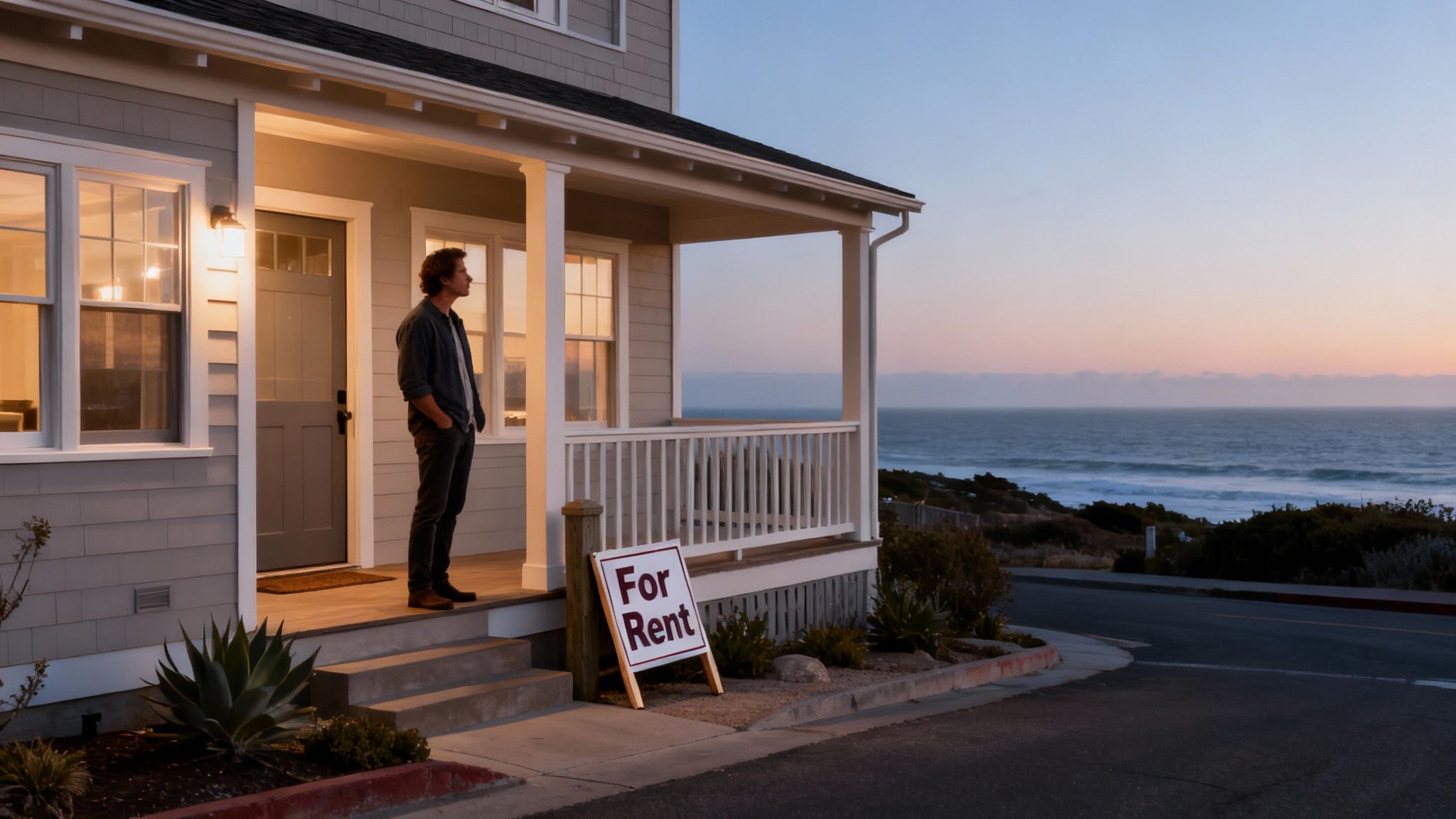
Platforms like Airbnb and Vrbo created a profitable path for property owners. But for many in communities from Pebble Beach to Big Sur, that path is closing. This is not a small rule change—it directly impacts your investment.
It's understandable why so many homeowners feel caught off guard. A dependable income stream seems to be drying up right before their eyes.
Understanding the New Ordinance
So, what is actually changing? Monterey County has decided to ban rentals under 30 days in most unincorporated residential areas. This new rule affects second homes and vacation properties.
This effectively ends the weekend getaways and week-long stays that defined the vacation rental market here for years. You can read more about how new STR regulations may change your rental strategy in our detailed guide.
The Risk of Doing Nothing
This new reality presents a tough choice. Do you risk steep fines by operating illegally, or do you let your valuable property sit empty?
The risk of doing nothing is real. You face uncertain income, possible fines, and a vacant home racking up mortgage, tax, and maintenance bills during prime earning seasons.
The Opportunity in Long-Term Leasing
This challenge also creates a fantastic opportunity for stability. Switching to a long-term leasing model isn’t just a backup plan. It’s a path to stable, protected income with far less stress.
Instead of managing a constant revolving door of guests, you can secure a single, qualified tenant who cares for your property.
You don’t need a stream of strangers to make your home work for you—just one qualified tenant, placed by a professional.
The STR era may be ending in some areas. But your property can still bring in income, retain value, and remain well cared for—with the right partner.
Understanding the New 30-Day Rental Minimum
To understand why short-term rentals are on the way out in Monterey County, we must look at the new ordinance. The rule is simple: for most properties in unincorporated residential zones, renting for fewer than 30 consecutive days is banned.
This change targets the weekend trips and weekly stays that have defined the market. If your property is in one of these areas, you can no longer legally rent it for a quick holiday.
What Is an Unincorporated Area?
An "unincorporated area" is a region not part of an official city. Instead, it is governed directly by the county. Many of Monterey County’s most popular vacation spots fall into this category.
Key communities affected by this ban include:
- Pebble Beach: Famous for its iconic golf courses and beautiful coastline.
- Carmel Highlands: A stunning community known for its dramatic ocean views.
- Parts of Big Sur: The legendary, rugged stretch of California's central coast.
If your property is in one of these residential zones, this new regulation is now your reality. It is a major change that requires a new strategy.
Why the County Made This Change
Monterey County did not make this decision in a vacuum. The main reason for the ban is the severe local housing shortage. A recent report showed that a Monterey County resident earning the median income can afford less than 15% of the homes on the market.
County officials hope to turn vacation rentals back into long-term homes for residents. This isn't just a local issue. Cities across the country are cracking down on short-term rentals to protect their housing stock. As a property owner, it is vital to know the rules. You can learn more about landlord-tenant laws in California to stay informed.
The High Cost of a Vacant Property
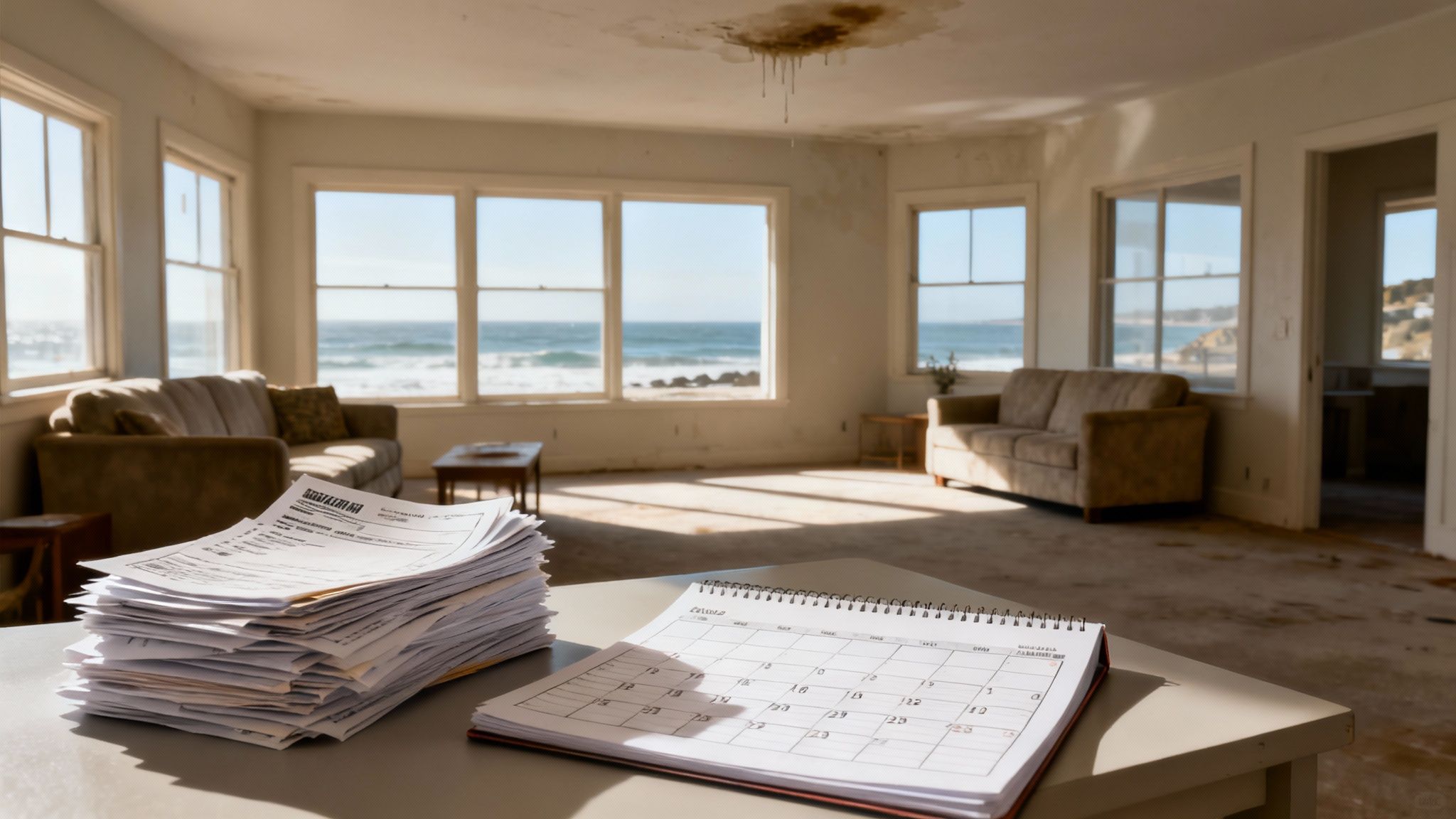
As short-term rentals are on the way out in Monterey County, some owners may wait to see what happens. But letting a valuable property sit empty is often the most expensive mistake you can make.
An empty home becomes a liability. It drains your finances and reduces your property’s value day by day.
The Financial Drain of an Empty Home
An unoccupied home can quickly turn into a money pit. The bills keep coming, turning your asset into a recurring expense.
Think about these ongoing costs:
- Mortgage Payments: Your largest monthly bill doesn’t go away when guests do.
- Property Taxes: Monterey County requires taxes to be paid, regardless of rental activity.
- Insurance: Insurers often charge more for vacant properties due to higher risks of damage or break-ins.
- Utilities: Basic utilities are needed to prevent issues like burst pipes in cold weather.
Unseen Dangers in Vacant Properties
An empty home is a magnet for problems that can go unnoticed for weeks. The longer a property sits empty, the higher the chance of something going wrong.
These risks include:
- Water Leaks: A small leak can lead to major water damage and mold.
- Pest Infestations: Rodents and insects love quiet, undisturbed spaces.
- Security Risks: Empty homes are targets for vandals, squatters, and burglars.
A vacant property isn't just an asset that's not earning—it's an asset at risk. Active oversight is the only way to protect your investment.
For owners worried about these issues, Torrente’s vacant property inspections and upkeep services offer peace of mind. We ensure your home is secure and maintained, preventing small problems from becoming expensive disasters.
Pivoting to Profit with Long-Term Leasing
Hearing that short-term rentals are on the way out in Monterey County can be discouraging. But this is a chance to pivot to something more stable: long-term leasing. This is a strategic move to secure your income and lower your stress.
Instead of the endless work of bookings and cleanings, you get one qualified tenant who makes your property their home. This model provides consistent monthly income without seasonal slumps.
The Power of Predictable Income
The biggest benefit of long-term leasing is financial stability. You get a predictable revenue stream that makes budgeting easy.
Consider these advantages:
- Reduced Workload: No more adjusting rates, answering tourist questions, or coordinating check-ins.
- Less Wear and Tear: A long-term tenant is often easier on a property than a stream of vacationers.
- Stable Occupancy: Once you find a great tenant, you can expect a year or more of steady rental income.
One Big Sur client, for example, saw 95% occupancy within two months of switching from a struggling STR to long-term leasing with our help. This highlights the stability that professional management can bring.
Finding the Right Tenant Is Key
The success of a long-term rental depends on finding a quality tenant. This is where professional help is essential.
Rigorous screening—including credit checks, rental history, and background checks—ensures you find a responsible tenant. Our expert tenant placement services handle every step for you. Owners often have questions about legal details, like whether a lease needs to be notarized. An expert partner ensures everything is done correctly.
Making a Seamless Transition with Torrente
The move away from vacation rentals doesn't have to be stressful. It’s a chance to adopt a more stable investment model. Torrente Property Management is a respected, Monterey-based firm ready to help.
We specialize in converting former STRs into thriving long-term rentals. With three generations of local experience, we can guide you through this change profitably. We understand that short-term rentals are on the way out in Monterey County, so we have tailored our services to help you make this switch with confidence.
Your Path to Stable Long-Term Income
Switching from an STR to a long-term rental is about finding the right tenant. We treat your property like our own, finding qualified tenants who will care for your home.
This decision tree breaks down the two paths owners now face.
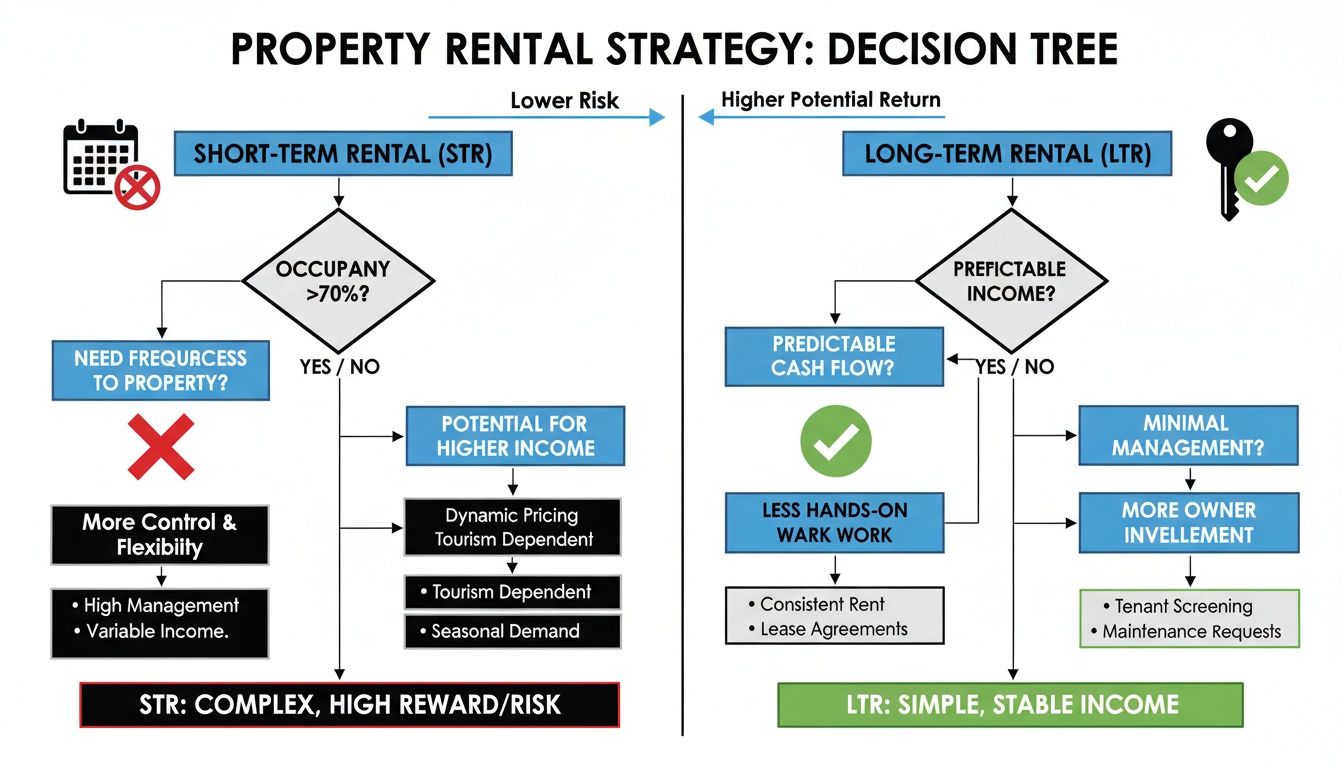
The STR path is now full of risk. The long-term rental route offers a clear line to consistent income and peace of mind. Using the best software for property managers helps streamline the process, something we handle for all our clients.
An Alternative for Seasonal Owners
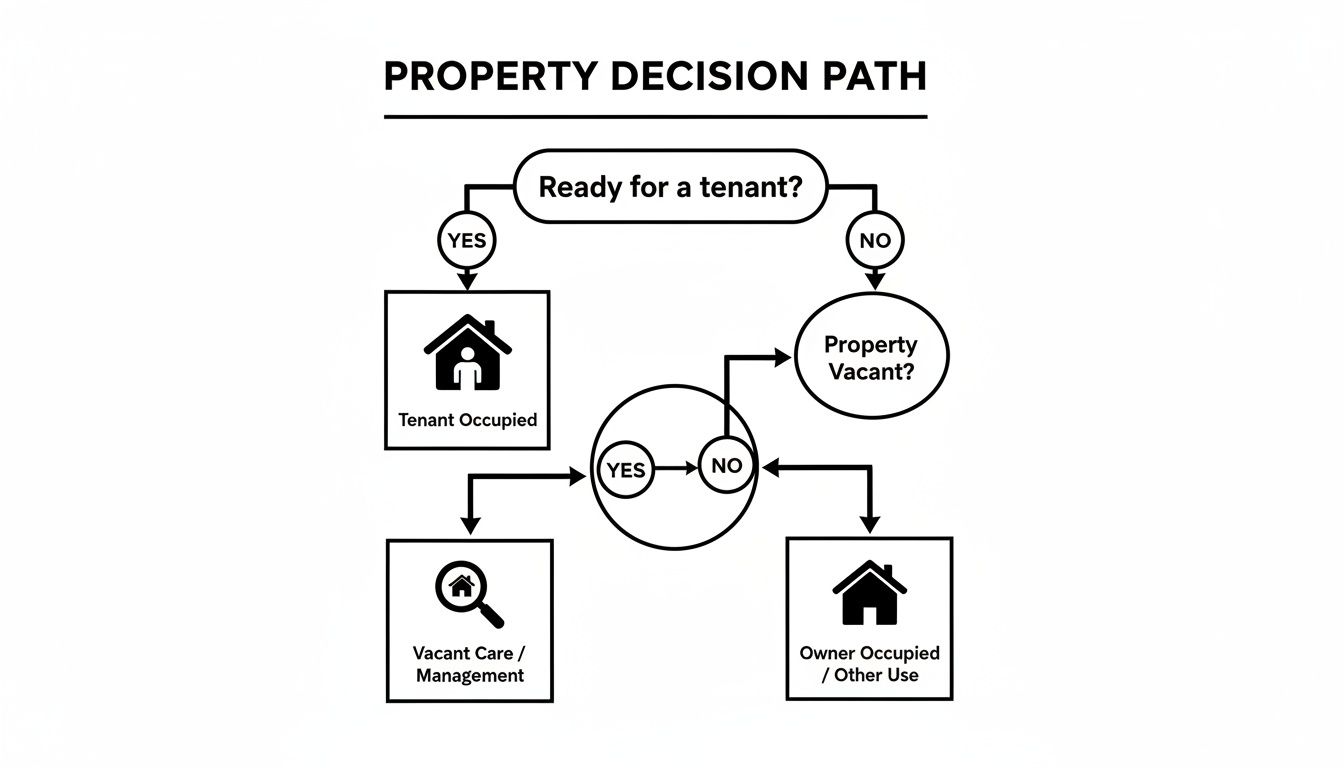
Not ready for a full-time tenant? Our Vacant Home & Estate Caretaker service is ideal for seasonal owners. It provides active oversight when you're away.
We offer regular property inspections, security monitoring, and maintenance coordination. This ensures your home is safe and cared for, even when it’s empty. Learn more by reading our guide on how to choose a property management company.
What's Your Next Move Before the Ban?

The era of unregulated short-term rentals is ending in parts of Monterey County. But this doesn't mean your property's potential is over. Waiting is a financial risk.
Making a strategic shift to long-term leasing is the clearest path to a stable future. With the right local partner, your property can keep generating income, appreciate in value, and stay well-cared-for.
The STR era may be ending in some areas, but your property can still bring in income, retain its value, and remain well cared for—with the right partner.
Whether you're ready to switch to a long-term rental or prefer our Vacant Home & Estate Caretaker services, we have a solution. The time to decide is now, because short-term rentals are on the way out in Monterey County.
Don’t let your property's future be decided for you. Let Torrente help you make a smooth, profitable transition—before the ban takes effect. Contact Torrente Property Management today at (831) 582-8_9_16.
FAQs About the Monterey County STR Ban
Navigating new regulations can be confusing. Here are answers to common questions from property owners.
1. When does the new STR ban officially start?
The new ordinance, which sets a 30-day minimum rental period in unincorporated residential areas, is set to take full effect in early 2026. This gives property owners a window to plan their transition to a compliant strategy like long-term leasing.
2. Is a long-term rental as profitable as an STR?
While STRs can have high nightly rates, they also come with vacancies and high management effort. Long-term rentals offer consistent, year-round income you can count on, often resulting in a more stable and predictable net annual income with far less hassle.
3. What if I don't want a full-time tenant in my second home?
Our Vacant Home & Estate Caretaker service is the perfect solution. We provide regular inspections, security monitoring, and maintenance coordination to protect your property while it’s unoccupied. This keeps your home in pristine condition, ready for your visits.
4. What should I do with my furnished vacation rental?
You can rent your property fully furnished to attract premium tenants, such as corporate relocations, who will pay more for a move-in-ready home. Alternatively, you can remove the furniture to appeal to a wider range of long-term renters.
5. What are the risks of ignoring the new rules?
Ignoring the ban is a risky strategy. Monterey County is increasing enforcement, and owners of illegal STRs face substantial fines. Complying with the new rules protects your investment and provides peace of mind.

Monterey County’s STR Crackdown: What You Can Do
If you own property in unincorporated Monterey County, new rules are changing how you can make money from your investment. The county plans to ban short-term rentals (STRs) under 30 days by 2026. This directly affects homeowners in areas like Pebble Beach, Big Sur, and the Carmel Highlands.
This news can feel stressful, but there is a clear solution. Switching to a long-term rental strategy is the best way to protect your income. This move ensures you follow the new laws and keep earning steady, reliable rent payments.
Understanding the Monterey County STR Ban

The rental rules have changed for many property owners in beautiful areas like Pebble Beach and Big Sur. Monterey County is moving to ban rentals of less than 30 days in all unincorporated residential zones. This ban will fully start in 2026 and targets rentals on sites like Airbnb and VRBO.
It is important to know that this ban does not affect cities like Monterey or Carmel-by-the-Sea. Homeowners in those cities follow a different set of local rules. For more on those city-specific rules, check out our guide on the new STR regulations in Carmel and Pacific Grove.
Who Is Affected and Why?
The new rules target homeowners in unincorporated areas who rent their properties to tourists. The county made this decision for a few key reasons:
- Housing Shortages: There aren't enough affordable homes for local residents. The county wants to move STR properties back to the long-term rental market to help solve this problem. Over 50% of renters in Monterey County spend more than 30% of their income on housing, highlighting the need for more affordable options (Source: National Low Income Housing Coalition).
- Legal Pressure: Lawsuits against the county’s old STR rules forced officials to take stronger action.
- Community Pushback: Many residents complained about the noise, traffic, and parties from short-term rental guests.
This change creates uncertainty for homeowners who rely on STR income. However, it also opens the door to a more stable investment model. Long-term leasing is a compliant and stress-free way to protect your property and income.
Short-Term vs. Long-Term Rentals Under New County Rules
| Feature | Short-Term Rentals (Now Banned) | Long-Term Rentals (Your Best Option) |
|---|---|---|
| Income | Unpredictable and seasonal. | Stable, predictable monthly income. |
| Management | Constant work with guests, cleaning, and turnover. | Much less work after a tenant moves in. |
| Legal Status | Now illegal in unincorporated areas, with risk of fines. | Fully legal and compliant with new county rules. |
| Wear and Tear | High due to frequent guest turnover. | Lower, as tenants treat the property like their own home. |
| Community Impact | Often caused problems like noise and parking issues. | Tenants become part of the community and help create stability. |
This comparison shows why long-term leasing is now the smarter choice. It offers a secure and hassle-free alternative to the old STR model.
Why Long-Term Rentals are a Smart Move

The county’s new rules may seem like a setback, but they offer a chance to build a more stable investment. Switching from vacation rentals to long-term leases is a great way to protect your income and property value.
A long-term tenant provides predictable monthly income, so you no longer have to worry about the ups and downs of tourism. It also makes your property fully compliant with the new laws, removing the risk of fines.
The Benefits of a Long-Term Tenant
Switching to a long-term rental model makes owning your property simpler and less stressful.
Long-term rentals stabilize your investment with much less effort. You can say goodbye to constant guest messages and cleaning schedules. The best part is trading the worry of weekend guests for the security of a reliable tenant. This reduces your headaches and ensures your property is treated like a home, not a hotel.
Long-term tenants also provide better legal protection under established California landlord-tenant laws. This is much safer than fighting a losing battle against STR bans.
Less Wear and Tear on Your Property
One of the best benefits of a long-term lease is less damage to your home. Frequent STR guests can cause a lot of wear and tear, leading to costly repairs.
Long-term tenants have a reason to keep their living space in good shape. Because it's their home, they treat it with more care. This means fewer repair calls for you and a well-maintained property for years to come.
Consistent and Reliable Income
While high nightly STR rates look good, they don't tell the whole story. You have to factor in empty nights during the off-season, booking fees, and supply costs. A long-term lease provides a clearer and more stable financial picture.
With a long-term strategy, you get:
- Predictable Monthly Income: Rent arrives on time each month, making budgeting easy.
- Fewer Vacancies: A year-long lease means almost 100% occupancy, ending costly gaps between guests.
- Lower Costs: No more daily cleaning bills, high utility costs, or marketing fees.
This model creates a strong foundation for your investment. For owners affected by Monterey County’s short-term rental crackdown, this financial stability is the most powerful reason to make a change.
Transitioning from an STR to a long-term rental can feel overwhelming. Professional help makes all the difference. Expert tenant placement services can manage every detail, from marketing your home to drafting a strong lease, to find you a great tenant.
How We Protect Your Investment

Navigating these new rules alone can be tough. Marketing your property, screening tenants, and learning landlord-tenant laws takes time and effort. This is where a trusted local expert can help.
At Torrente Property Management, we have over 25 years of experience turning complex challenges into simple solutions. We are a trusted local partner with deep knowledge of Monterey County laws. We protect your investment by handling every detail of the transition, so you can enjoy stable rental income without the stress.
Our Detailed Tenant Screening Process
Finding the right tenant is the most important step in protecting your property. Our screening process is very thorough and designed to find responsible people who will treat your home with respect.
Our process includes:
- Credit and Background Checks: We review credit reports and run background checks to ensure reliability.
- Rental History Verification: We call previous landlords to confirm on-time payments and good tenancy.
- Income and Employment Confirmation: We verify that applicants have a stable income to afford the rent.
This careful process helps us find the best candidates for your property. It is the foundation of a successful long-term rental strategy.
Bilingual Services to Reach More People
In a diverse community like Monterey County, clear communication is vital. Our team is bilingual (English/Spanish), which gives your property a big advantage.
By speaking with a wider pool of potential tenants, we attract more high-quality applicants. This allows us to be very selective and find the perfect match for your home. We handle all leasing and maintenance communications in both languages, which builds trust from the start.
Full-Service Property Management
After we find a great tenant, our work continues. We draft strong lease agreements that follow all California and local laws to protect you.
From there, we manage everything:
- Rent Collection: We handle all payments and provide you with clear financial statements.
- Maintenance Coordination: We use our network of trusted local vendors to handle repairs quickly.
- Regular Inspections: We conduct routine inspections to make sure your home is well-maintained.
The county’s decision to ban STRs was a firm one, as detailed in this report on the county’s STR ban. This makes professional management more important than ever.
For owners who don't live in the area, our services are even more valuable. We also offer options for absentee owners. Our professional caretaker services can secure and maintain your home while it's empty.
Specialized Care for High-Value Homes
Your property is a major investment, especially if it’s a high-value home in a community like Pebble Beach. It needs a management strategy that reflects its worth. In response to Monterey County’s short-term rental crackdown, a one-size-fits-all approach is not enough.
We understand that not every owner can immediately switch to a full-time rental. You may use your home seasonally or need time to make decisions. For these situations, we offer services tailored for high-value homes.
Estate Caretaker Services for Absentee Owners
For owners who need flexibility, our Estate Caretaker Service is a perfect solution. This service is designed to protect your property when it is unoccupied, giving you complete peace of mind.
Our caretaker program includes:
- Scheduled Property Inspections: We conduct regular walkthroughs to check for issues like leaks or security problems.
- Security Monitoring: We ensure your alarm systems are working and act as the local contact for any alerts.
- Upkeep Coordination: We manage landscaping and repairs to keep your property in top condition.
This hands-on approach keeps your home secure and well-maintained. You can learn more about our estate caretaker and maintenance services on the Monterey Peninsula.
Frequently Asked Questions (FAQs)
Does this ban affect my property in the city of Monterey or Carmel?
No. This ban only applies to unincorporated residential areas of Monterey County, like Pebble Beach and Big Sur. Incorporated cities such as Monterey and Carmel-by-the-Sea have their own separate rules for short-term rentals.
What if I only rent my home for a few weeks a year?
The ban applies to all rentals under 30 days, no matter how often you rent the property. Even occasional rentals during events are no longer allowed in unincorporated residential zones under the new rules.
What happens if I ignore the ban and keep using Airbnb?
Ignoring the ban is risky. You could face large fines, legal orders to stop renting, and other penalties from the county. With more enforcement, the chances of getting caught are high.
I'm not ready for a full-time tenant. What can I do?
We understand. Our Estate Caretaker Service is the perfect option if you're not ready for a long-term tenant. We will inspect, secure, and maintain your property while it's vacant, giving you time to decide your next steps.
How can Torrente help me transition my property?
We handle every detail to make the switch from STR to a long-term rental smooth and profitable. We market your property, screen for high-quality tenants, draft a compliant lease, and manage all day-to-day operations for you.
If you’re affected by STR changes, now is the time to protect your income with a smart, long-term rental strategy. Torrente can help. With over 25 years of local experience, Torrente Property Management is here to guide you.
Contact Torrente Property Management today at (831) 582-8916 for a personalized consultation. Let us help you secure your investment's future.

What Does a Property Manager Actually Do for the Money?
As a property owner, you’ve likely looked at your monthly statement and asked a fair question: what does a rental property manager actually do for the money? It's a key question for any Monterey Bay investor.
That 8-10% management fee can feel like a big chunk of your rental income. Is it a smart investment to protect your property, or just a drag on your profits?
Let’s be direct. You're asking if it’s worth paying someone hundreds of dollars each month, especially when money is tight. It’s a valid concern, particularly if you’ve had a bad experience before. Let's break down what the data says and what you truly get in return.
Is Hiring a Property Manager Worth the Investment?
For many landlords in Monterey and Salinas, the idea of paying a manager seems unnecessary. The "do-it-yourself" approach feels like the best way to save money.
Plenty of owners try to juggle everything. They use software to collect rent, hire handymen directly, and take tenant calls at all hours. While this seems cheaper at first, it often leads to burnout, missed legal details, and costly mistakes.
The truth is, self-management carries risks that can cost far more than a management fee. Without a deep understanding of California's complex landlord-tenant laws, one simple error can lead to expensive legal trouble.
Before you hire anyone, it's essential to arm yourself with the right questions to ask a property management company to make sure you're making an informed decision.
From Cost to Return on Investment (ROI)
Instead of seeing the management fee as a cost, look at it as an investment. It’s an investment in your property’s performance, its long-term health, and your own peace of mind.
A professional manager’s value isn’t just in the tasks they complete. It’s in the problems they prevent, the legal risks they absorb, and the opportunities they create to boost your bottom line.
This is where the numbers get interesting. While investors often say cost is why they don’t hire a pro, the data shows that expert management pays for itself.
According to TenantCloud, professional managers reduce the average vacancy period from 4.6 weeks to just 4.0 weeks. That small change saves owners nearly a month of lost rent each year—often more than the entire management fee.
A great property manager does more than just fill vacancies faster. They use real-time market data for Salinas, Monterey, or Pacific Grove to optimize your rent. They also conduct routine maintenance to protect your home's long-term value.
To help you compare the two approaches, we've put together a table that outlines the differences.
DIY Management vs Professional Management: A Quick Look
This table contrasts the common tasks and hidden costs of managing a property yourself versus hiring a professional manager like Torrente.
| Task | DIY Landlord Approach | Professional Manager Approach |
|---|---|---|
| Leasing | Post on a few sites, hope for the best, and handle all showings yourself. | Professional marketing across dozens of platforms, licensed agents conducting showings. |
| Tenant Screening | Run a basic credit check, maybe call a reference. | Comprehensive background, credit, eviction, and employment history checks. |
| Maintenance | Find a handyman on Craigslist or Yelp for every issue that pops up. | Access to a vetted, insured network of local vendors for quick, reliable repairs. |
| Rent Collection | Chase down late payments via text and email. | Automated online rent collection with firm, professional enforcement of late fees. |
| Legal Compliance | Try to keep up with changing California laws on your own. | Proactive compliance with all local, state, and federal housing regulations. |
| Financials | Track income and expenses on a spreadsheet (if you have time). | Detailed monthly statements, annual reports, and 1099s ready for tax season. |
As you can see, the professional approach is a system designed to protect your asset and maximize its return. The DIY route often becomes a reactive, time-consuming second job.
If you're still weighing the options, our guide on thinking you're saving money managing your own rental provides a much deeper financial comparison. Ultimately, hiring a manager is a strategic trade: you invest a small portion of your rent to protect your time, reduce stress, and maximize your overall return.
The Five Pillars of Professional Property Management
To understand what a rental property manager does for the money, you have to look beyond just collecting rent. A professional's work is built on five core areas that protect your asset and maximize your income.
These five functions are all connected. If one is missing, it can expose your property to risk and financial loss.
Every landlord eventually faces the fundamental choice shown here: take on every task yourself (the DIY route) or partner with a professional who handles all the operational headaches.
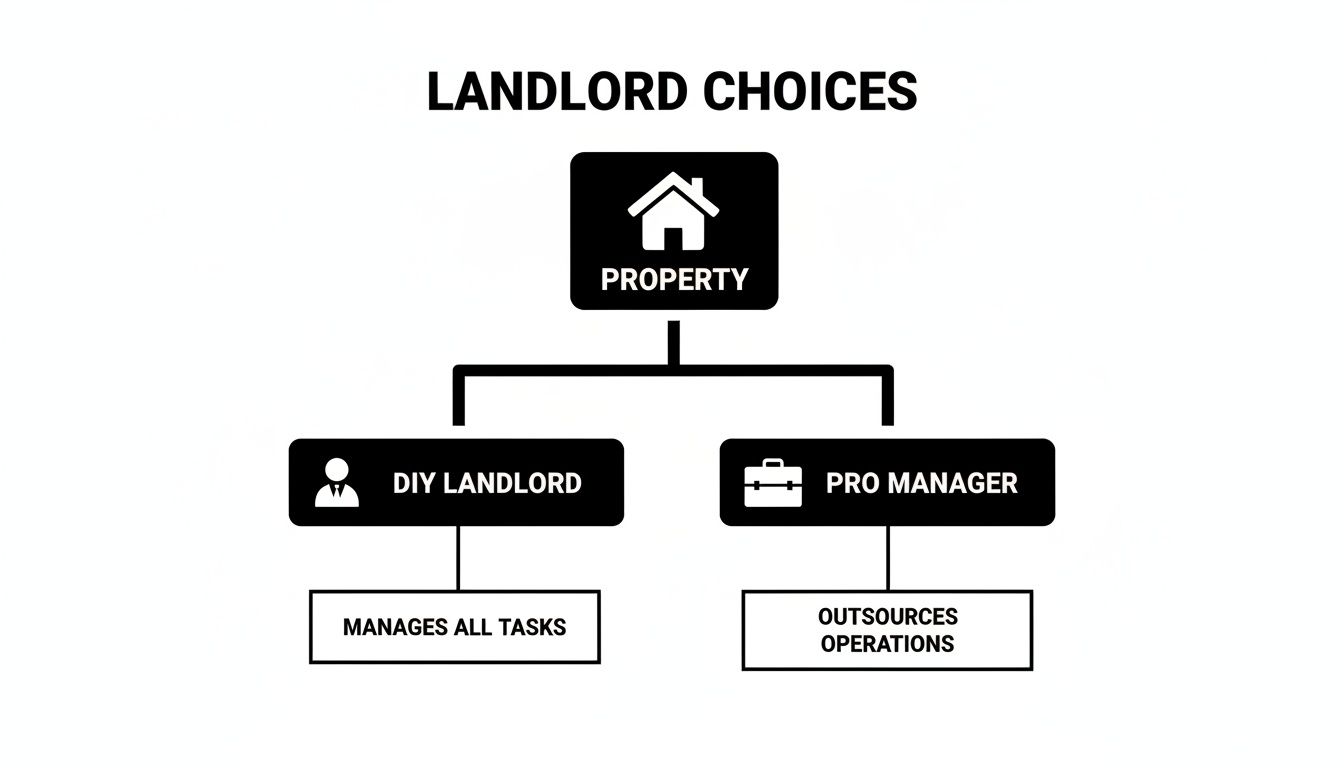
Ultimately, both paths lead to a rented property. However, the journey involves very different amounts of your personal time, expertise, and stress.
1. Leasing and Tenant Placement
The first pillar is finding and placing the right tenant. This is more than just putting a "For Rent" sign in the yard. It's a strategic process that impacts your property's long-term stability.
A professional manager handles every step:
- Market Analysis and Pricing: We analyze local data from neighborhoods in Monterey, Salinas, and Carmel to set a competitive rental price.
- Professional Marketing: Your property is advertised on dozens of high-traffic rental sites with professional photos to reach the widest audience.
- Showings and Inquiries: We field all calls and emails from prospects and conduct professional, secure showings, saving you countless hours.
- Rigorous Tenant Screening: This is one of our most valuable services. We run comprehensive background checks to find reliable and responsible tenants.
For many owners, this initial phase is the most daunting. If you prefer to handle day-to-day tasks but want a top-quality tenant, you can explore specialized tenant placement services that focus solely on this pillar.
2. Financial Management
The second pillar is the careful management of your property’s finances. This goes beyond just cashing a rent check. It's about providing clear and accurate financial oversight.
Key financial duties include:
- Rent Collection: We use efficient systems for collecting rent, including online payments, and handle the task of enforcing late fees.
- Expense Management: Property-related bills like utilities or landscaping can be paid on your behalf from the rental income.
- Detailed Reporting: You receive monthly and year-end financial statements that break down all income and expenses, making tax time much easier.
This pillar ensures you always have a clear picture of your investment's financial health, without getting buried in paperwork.
3. Maintenance and Repairs
Protecting your property's physical condition is the third pillar. Proactive maintenance keeps tenants happy and preserves the long-term value of your investment.
A manager acts as the first point of contact for all maintenance issues, preventing you from receiving calls about a broken dishwasher at 10 p.m. on a Saturday.
They coordinate everything from routine upkeep to emergency repairs. This means using a network of vetted, insured, and reliable local vendors who do quality work at fair prices. For out-of-area owners, this access is priceless.
4. Legal Compliance and Risk Management
The fourth—and most critical—pillar is navigating complex landlord-tenant laws. This is where a professional manager truly earns their fee by shielding you from costly legal mistakes.
Rental housing is governed by a dense web of federal, state, and local regulations. A manager ensures your property stays compliant with:
- Fair Housing laws
- Proper lease agreements and required disclosures
- Security deposit handling and returns
- Strict eviction procedures
Just one misstep in any of these areas can lead to significant fines. A manager’s expertise acts as a crucial shield, minimizing your liability.
5. Tenant Relations and Retention
Finally, the fifth pillar is managing your tenants. Happy tenants are more likely to pay rent on time, take better care of the property, and renew their lease.
A property manager serves as the professional buffer between you and your tenants. They handle all communication, resolve disputes, and respond to requests quickly. This professional relationship is key to high tenant retention, which directly minimizes costly turnover and vacancies.
How Expert Management Maximizes Your Financial Return
When you think about paying a property manager, it’s easy to focus on the fee. But a great property manager doesn't cost you money; they make you money.
Think of a professional manager as the strategic operator of your investment. Every decision, from pricing your unit to scheduling maintenance, is designed to improve your bottom line.
Boosting Your Rental Revenue
A manager adds value by making sure you’re earning every dollar you should be. This starts with setting the right rent—a task that requires local expertise. The rental market in Salinas is different from Carmel, and a one-size-fits-all approach leaves money on the table.
We use years of local data to set the highest possible rent your property can command. This ensures you’re not underpriced and losing income, or overpriced and stuck with a long vacancy.
Cutting Your Operational Costs
Making money is only half the battle; you also have to save it. A huge part of what a rental property manager does is control the day-to-day expenses of owning a rental property.
We schedule routine inspections to catch small leaks before they become disasters. We also have a trusted network of vetted, local Monterey County vendors. This gives you access to high-quality work at fair prices.
Effective management directly impacts your property's profitability by keeping tenants satisfied and your asset in top condition. This approach significantly influences your Net Operating Income (NOI), the ultimate measure of a rental's financial success.
Rigorous tenant screening reduces the odds of a costly eviction. Professional lease enforcement ensures fees are collected. And organized financial reports make mastering your property rental tax return much easier.
Preserving Your Asset's Long-Term Value
This might be the most overlooked benefit. Your property isn't just a source of monthly income; it's a major financial asset that should be appreciating.
A professional manager acts as a long-term steward for your investment. This means we implement a plan focused on preservation:
- Regular Inspections: We catch deferred maintenance that could become a massive expense later.
- Capital Improvement Planning: We advise on smart upgrades that boost rent and attract better tenants.
- Tenant Accountability: We enforce the lease to ensure tenants take proper care of your property.
This focus ensures that when it's time to sell, your property fetches its maximum value. To see how these parts affect your bottom line, you can learn more about calculating Net Operating Income in our detailed guide.
Navigating Legal Complexities to Reduce Your Risk
One of the most valuable services a property manager provides is often invisible—until something goes wrong. Managing a rental in California means dealing with a dense web of laws.

This is a huge part of what a rental property manager does for the money. We act as your shield, protecting you from the financial and emotional stress of legal disputes.
Staying Ahead of Changing Laws
California’s rental laws are notoriously complex. From state regulations to local Monterey County ordinances, the rules cover everything. A professional manager is required to stay current on all of them.
This expertise is becoming more critical every year. In fact, recent industry data shows a major shift in why owners are turning to professional help.
The number of rental owners hiring property managers for regulatory compliance jumped from just 21% to 33% between 2021 and 2025. This reflects the growing legal complexity of ownership, with 47% of managers reporting they now deal with strict local licensing requirements. You can discover more industry insights on the Buildium blog.
A professional manager ensures every action taken on your behalf is fully compliant, which significantly reduces your risk.
The High Cost of a Single Mistake
Even well-intentioned landlords can easily violate complex regulations. A simple error in lease wording or an eviction misstep can lead to serious consequences.
Here are a few common and costly mistakes:
- Fair Housing Violations: Using the wrong language in a rental ad can be seen as discriminatory, leading to large fines.
- Improper Security Deposit Handling: Failing to return a deposit correctly can result in the tenant suing for up to three times the deposit amount.
- Illegal Eviction Procedures: Changing the locks on a tenant is illegal and can result in severe penalties.
These are legal landmines. A professional property manager knows how to navigate this difficult terrain, ensuring every step is legally sound. To better understand the scope, you can learn more about landlord-tenant laws in California in our detailed guide.
From Lease to Eviction: A Shield of Protection
A property manager’s legal expertise protects you at every stage. It starts with an ironclad lease agreement drafted to comply with all state and local laws.
Should a tenant violate the lease, the manager handles the process correctly. They issue the proper legal notices and, if necessary, work with attorneys to execute a lawful eviction. This professional handling of difficult situations is invaluable.
Combining Local Expertise with Modern Technology
What separates a DIY landlord from a top-tier property manager? It’s the blend of modern technology and irreplaceable local knowledge.
While software can help you collect rent, it can't tell you the market differences between Pacific Grove and Salinas. Real value is created when smart tools are guided by people with deep local experience.

This mix of high-tech and high-touch service is a core part of what a rental property manager actually does for the money. It's about building an efficient, transparent, and profitable experience.
The Power of Smart Technology
Modern property management runs on efficient systems that save you time and provide complete transparency. These tools directly impact your bottom line and peace of mind.
These tools handle the repetitive tasks that used to eat up an owner's time. This makes management more responsive and effective. The goal is to automate the routine so we can focus on protecting your asset.
Here are the key technologies we use:
- Online Owner Portals: Access financial statements, maintenance updates, and documents 24/7 from anywhere in the world.
- Digital Maintenance Requests: Tenants can submit repair requests online with photos, ensuring issues get addressed quickly.
- Electronic Rent Payments: Secure, automated rent collection makes your cash flow more consistent.
- Automated Communication: From rent reminders to lease renewals, automated systems ensure timely communication.
Technology isn't just about convenience; it drives efficiency and tenant satisfaction.
By 2026, 44% of property managers will use artificial intelligence, a 29% year-over-year acceleration. This tech helps improve the resident experience, which is critical when 40% of uncertain renters say they would renew if their manager invested more in maintenance. You can read the full Appfolio benchmark report for more data.
These systems are essential because modern renters expect more tech-driven convenience, which is key to keeping the best tenants.
Why Local Expertise Still Reigns Supreme
While technology is the engine, local expertise is the driver. No software can replace 20+ years of experience on the Monterey Peninsula. This deep community knowledge turns data into wisdom.
This on-the-ground knowledge is invaluable in several key areas:
- Nuanced Market Pricing: We know a two-bedroom in Monterey needs a different marketing strategy than a similar home in Salinas. This insight ensures your rent is optimized.
- Vetted Vendor Networks: When a pipe bursts, you need a reliable plumber now. We have a network of trusted, local contractors ready to go.
- Community Relationships: Our deep roots in the community help us resolve issues quickly and effectively.
- Bilingual Advantage: In a region where many speak Spanish, our bilingual team can communicate clearly with more tenants and vendors.
The best results come from blending these two worlds. Smart technology provides efficiency, while our deep local roots provide the wisdom to navigate the Monterey Bay rental market.
The True Value: Your Time and Peace of Mind
So, what does a rental property manager actually do for the money? It's about more than just tasks. You are investing in your own time and peace of mind.
Torrente Property Management doesn’t just collect rent. We handle leasing, screening, maintenance, legal compliance, and financial reporting. Our services are tailored, not cookie-cutter.
By optimizing rent and keeping vacancies short, professional management often pays for itself. You get the financial benefits of owning an investment property without the headaches of being a 24/7 landlord.
If your rental is in Salinas, Monterey, or Pacific Grove, our 20+ years of local experience will get it rented fast and managed right.
Ready to get your time back? Contact Torrente Property Management today at (831) 582-8916 for a no-pressure quote and see what our team can save you—both financially and emotionally.
Frequently Asked Questions (FAQs)
Here are straightforward answers to some of the most common questions we hear from property owners around Monterey Bay.
What is a typical property management fee in Monterey County?
In the Monterey Bay area, full-service management fees typically range from 8% to 10% of the monthly rent collected. This model aligns our goals with yours—we only get paid when you do. Some companies also charge a separate leasing fee, so it's important to understand the full cost structure.
Can I hire you just to find a tenant for my property?
Yes, absolutely. Our tenant placement service is a popular option for owners who are comfortable with day-to-day management but want professional help with marketing, showings, and screening. We handle the critical first steps to place a high-quality, reliable tenant in your property.
How will I know what’s happening with my rental?
Transparency is key. We provide a secure online owner portal that gives you 24/7 access to everything you need, including financial statements, maintenance updates, and important documents. At Torrente, we pride ourselves on proactive communication so you always feel confident and informed.
What happens if a tenant doesn’t pay rent?
This is a major reason owners hire us. If a tenant stops paying, our team follows a strict and legally compliant process to collect rent and enforce the lease terms. If necessary, we manage the entire eviction process from start to finish, protecting you from stress and legal missteps.
Do I lose control by hiring a property manager?
Not at all. Think of a property manager as your professional partner who handles the daily operations, not as someone who takes away your authority. Our management agreement clearly defines which decisions, like major repairs or accepting a new tenant, always require your final approval.

What Do Property Managers Do For Their Fee?
"What do property managers actually do for their monthly fee?" It’s a fair question. The simplest answer? They act as the CEO of your real estate investment.
That fee covers all the day-to-day operations that protect your asset, ensure steady income, and free up your time. It pays for an expert to handle everything from marketing your property to fielding late-night repair calls. In fact, a 2022 survey found that 27% of landlords say their biggest challenge is managing property maintenance and repairs (Source: BiggerPockets). A property manager takes that entire burden off your shoulders.
Breaking Down The Value Behind The Fee

It’s easy for Monterey Bay property owners to see a management fee as just another expense. But it’s more accurate to view it as an investment in professional oversight and your own peace of mind.
Without an expert handling the details, landlords often scramble to deal with stressful and costly situations on their own. This is where a dedicated professional makes all the difference, providing full-time attention to protect your valuable asset.
What Your Monthly Management Fee Typically Covers
A great way to understand the value is by breaking down the services into key categories. This table shows the essential services almost always included in a standard monthly management fee.
| Service Category | Core Functions |
|---|---|
| Operational Management | Marketing vacancies, screening tenants, handling all tenant communication, and enforcing lease terms. |
| Financial Oversight | Ensuring timely rent collection, managing security deposits, and providing detailed monthly financial statements. |
| Maintenance Coordination | Managing a network of vetted vendors for everything from routine upkeep to urgent, middle-of-the-night repairs. |
| Legal & Risk Management | Navigating complex landlord-tenant laws, ensuring compliance, and managing evictions if necessary. |
Each of these areas is packed with tasks that can quickly turn into a financial or legal nightmare for a self-managing owner.
- Operational Management: This is the frontline work. It includes marketing empty units, running thorough background checks on applicants, and handling all tenant communication.
- Financial Oversight: They ensure rent is collected on time, every time. You get clear monthly statements showing your income and expenses, which makes tax time much easier.
- Maintenance Coordination: From a leaky faucet to a major plumbing issue, they manage a network of reliable, vetted vendors. A huge part of this is handling crises. Having a team with proven insights into emergency water damage prevention and restoration for property managers can be the difference between a minor repair and a major loss.
- Legal Compliance: California’s landlord-tenant laws are notoriously complex. A professional manager stays on top of it all, protecting you from hefty fines and legal liability.
Thinking you’re saving money by going it alone can be a costly mistake. Exploring the real hidden costs of self-management often reveals how a professional fee pays for itself through efficiency and risk avoidance.
The Three Pillars of Property Management
So, what are you paying for with that monthly property management fee? It helps to break a manager's role into three core areas: Operational, Financial, and Legal Management.
These are the three pillars holding up your investment. Each one requires different skills, but they all work together to protect your asset and ensure it performs at its best. A good manager does a lot more than just collect rent.
Pillar 1: Operational Management
This is the hands-on, day-to-day work. It’s what most people picture when they think of a property manager—the person showing the unit and handling repairs.
Great operational management is proactive, not just reactive. It’s about spotting potential issues before they become expensive problems and having solid systems to deal with them efficiently.
Key operational duties include:
- Marketing and Leasing: Every day a property sits vacant, you lose money. A manager's first job is to get it rented fast with high-quality photos and compelling listings. In a competitive market like Monterey Bay, that means knowing how to make a rental in Salinas stand out.
- Property Showings and Tenant Screening: Your manager handles all inquiries and conducts professional showings. More importantly, they perform a rigorous tenant screening process with credit checks, background checks, and employment verification. This is one of the most critical steps in protecting your investment.
- Maintenance and Repairs: This is where a manager’s value really shines. They handle every maintenance call from tenants and have a network of vetted, reliable, and often more affordable vendors.
- Emergency Response: When a pipe bursts at 2 AM, your property manager gets the call, not you. This 24/7 availability is a huge part of what you’re paying for. A professional firm has an emergency hotline to address urgent issues around the clock.
- Routine Inspections: A great manager conducts regular inspections to catch small issues—a leaky faucet or a crack in the drywall—before they turn into major repairs. This preserves the long-term value of your property.
Pillar 2: Financial Management
The second pillar is all about the money. This is the administrative backbone of property management, making sure your investment is performing financially and all accounting is handled with precision.
This part requires careful record-keeping and a real understanding of real estate finance. It’s about giving you a clear, accurate picture of your investment’s health month after month.
Core financial responsibilities are:
- Rent Collection: A professional manager has strict systems for collecting rent on time, including online payment portals. They also handle the difficult task of chasing down late payments and enforcing late fees.
- Expense Management: Your manager pays the bills associated with the property, from property taxes to invoices from plumbers and landscapers. This ensures your obligations are met on time.
- Financial Reporting: Every month, you receive a detailed financial statement. This report breaks down all income and expenses, giving you a transparent view of how your property is performing.
Pillar 3: Legal and Risk Management
This final pillar is arguably the most important and the one most often overlooked. Your manager’s job is to be your shield, protecting you from the legal and financial risks of being a landlord.
California has some of the most complex landlord-tenant laws in the country. Trying to navigate them without expert knowledge is a huge liability.
This legal oversight is a massive part of what your monthly fee covers. Knowing what to ask a potential manager about their legal knowledge is critical. You can get a head start by reviewing some 10 expert questions to ask a property management company.
Legal and risk management services include:
Lease Drafting and Enforcement: A manager uses legally sound lease agreements drafted to protect your interests while complying with all state and local laws, including specific ordinances here in Monterey County. They are also responsible for consistently and fairly enforcing every term in that lease.
Regulatory Compliance: Landlord-tenant law is always changing. A professional manager stays on top of all fair housing laws and state regulations to ensure your property remains compliant. This is what keeps you out of legal hot water.
Handling Evictions: If a tenant needs to be removed, the eviction process is a legal minefield. A property manager understands the precise legal steps required to conduct an eviction lawfully, from serving the correct notices to representing you in court.
How Property Management Fees Are Structured
Understanding property management fees doesn't have to be complicated. Once you know the common ways companies charge for their services, you can compare proposals with confidence. Let's pull back the curtain on the pricing models you'll most likely see here in the Monterey Bay area.
Think of a property manager's job as balancing three core pillars: day-to-day operations, careful financial management, and critical legal compliance. Your monthly fee keeps all three pillars strong.
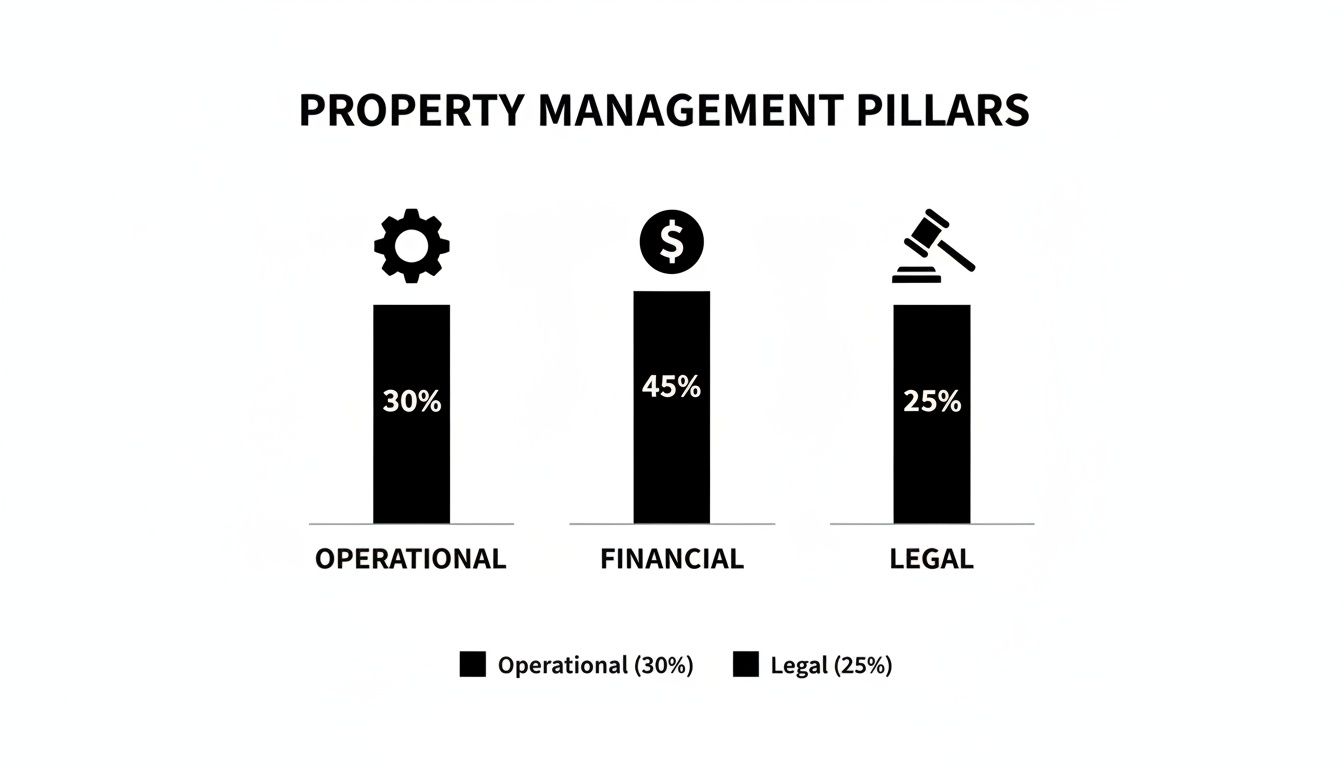
As you can see, the role is a mix of hands-on work, detailed financial oversight, and making sure everything stays legally sound.
The Percentage-Based Fee Model
The most common structure is the percentage-based fee. The management company takes a set percentage of the monthly rent collected from your tenant.
This model aligns our goals with yours—if you don't get paid, we don't either. For example, if your Pacific Grove home brings in $3,000 a month and the management fee is 8%, your monthly cost would be $240. It’s clean, easy to calculate, and tied to your property's performance.
Industry Standard: Monthly management fees usually fall between 8% and 12% of the collected rent. For single-family homes, 10% is a common benchmark. You can get another perspective on service fees by demystifying commission rates and included services in a different industry.
The Flat-Fee Model
Another option is the flat-fee model. Instead of a percentage, the manager charges a fixed dollar amount every month, no matter the rent.
This model gives you predictable costs, which is great for budgeting. It’s often a better deal for owners with higher-end rentals, since the fee doesn't climb as the rent increases.
What Is Usually Not Included
It’s important to know that the monthly management fee covers ongoing, day-to-day work. Certain big, one-time events are typically charged separately for transparency.
Here are the common services that often carry a separate, one-time fee:
- Leasing Fee: Also called a "tenant placement fee," this is a one-time charge for finding and screening a new tenant.
- Lease Renewal Fee: Some companies charge a smaller fee to handle the paperwork and negotiations for renewing a lease with a great tenant.
- Major Project Supervision: If your property needs a big upgrade, your manager might charge a fee to oversee the project and coordinate contractors.
- Eviction Services: While your manager handles the process, the direct costs of an eviction (like court fees) are typically passed on to the owner.
For a more detailed breakdown of costs in our local market, check out our guide on what to expect from affordable property management in Salinas.
Calculating the Real Return on Your Management Fee
It’s easy to look at a property management fee as just another expense. But savvy owners see it as a strategic investment in their property's long-term health and their own peace of mind.
A great property manager delivers value through both measurable financial gains and invaluable quality-of-life improvements. When you add it all up, that monthly fee often pays for itself.
The Tangible ROI You Can Measure
Tangible returns are the hard dollars and cents a professional manager puts back in your pocket. These are the concrete financial benefits that directly impact your bottom line.
Here are the most common ways a manager delivers a financial return:
- Shorter Vacancy Periods: An expert manager uses professional marketing and a streamlined process to fill vacancies fast. Cutting a vacancy from four weeks to one can save you hundreds, if not thousands, of dollars.
- Lower Maintenance and Repair Costs: Property managers have a roster of vetted, reliable vendors in the Monterey Bay area. This means you often get higher-quality work at a better price.
- Avoiding Costly Legal Mistakes: A single legal misstep—like a mishandled eviction—can trigger fines and legal fees that would dwarf years of management fees. An expert in California’s complex landlord-tenant laws is your best defense.
The Intangible ROI You Can Feel
Just as important is the return that doesn’t show up on a financial statement but dramatically improves your life as an owner. This is the peace of mind that comes from knowing a professional is handling the day-to-day grind.
Think of it this way: a property manager buys back your time and energy. You are trading a predictable monthly fee for an unpredictable amount of stress, late-night calls, and weekend emergencies.
This is the value of reclaimed freedom. It’s the vacation you can actually take without worrying about a plumbing emergency back home. For a deeper dive into financial metrics, our guide on what Net Operating Income is can provide valuable insights.
The Advantage of Local Monterey Bay Expertise
Anyone can manage a property. But managing one well in the Monterey Bay is a completely different ballgame. This is where deep, local knowledge becomes your single greatest asset.
A truly local manager understands the subtle but critical differences that define our area. They know the right rent for a condo in Pacific Grove versus a single-family home in Prunedale because they live and breathe this market every day.

Navigating Local Ordinances and Regulations
More importantly, a Monterey Bay expert is your shield. They’re familiar with the specific local ordinances, zoning rules, and DRE compliance that can easily trip up an out-of-area manager.
This insider knowledge protects your investment from costly fines and legal headaches you never saw coming.
Bilingual Communication for a Diverse Community
Our local expertise also comes down to clear communication. With over 35% of Monterey County households speaking Spanish at home, our bilingual (English/Spanish) service isn’t just a perk—it’s essential for good business (Source: U.S. Census Bureau).
Being able to communicate clearly with everyone means:
- Faster Tenant Placement: We can effectively market to and screen a larger, more diverse pool of great applicants.
- Better Maintenance Coordination: Clear instructions with local tradespeople prevent misunderstandings and ensure repairs are done correctly the first time.
- Stronger Tenant Relationships: When tenants feel heard and understood, they’re more likely to stay longer, which cuts down on expensive turnover.
This hands-on, community-focused approach is what truly sets a local expert apart. We look after your property with the same care we’d give our own. To learn more, read our guide on why smart second homeowners rely on local property managers for peace of mind.
Conclusion: What Does a Property Manager Do For Their Fee?
When it comes down to it, what are you really getting for your monthly management fee? You're hiring a professional partner whose entire job is to maximize your income and minimize your stress.
A great property manager steps in as the operational, financial, and legal expert for your investment. They handle everything from the day-to-day grind to navigating the complexities of California landlord-tenant law. The right manager doesn't just collect rent—they deliver peace of mind and measurable returns.
Ready to experience the relief that comes with having a dedicated professional managing your Monterey Bay property? Contact Torrente Property Management today at (831) 582-8916 for a personalized consultation.
FAQs About Property Management Fees
How much do property managers typically charge?
Most property management companies in the Monterey Bay area charge a monthly fee between 8% to 12% of the collected rent. For a property renting at $3,000 per month, an 8% fee would be $240. Some companies may offer a flat-fee model instead.
Is the management fee charged if the property is vacant?
Reputable firms, including Torrente Property Management, do not charge a monthly management fee when your property is vacant. Our philosophy is that we only get paid when you get paid. Always confirm this policy before signing an agreement.
What services are usually excluded from the monthly fee?
The monthly fee covers ongoing supervision. One-time events like finding a new tenant (leasing fee), overseeing a major renovation, or handling the direct costs of an eviction (court fees) are typically billed separately.
Why shouldn't I just hire the cheapest property manager?
Choosing a manager based on the lowest price can backfire. A rock-bottom fee often signals a lower level of service, which can lead to poor tenant screening, higher turnover, and costly legal mistakes. A quality manager saves you money in the long run through efficiency and risk protection.
Does the monthly fee cover maintenance and repair costs?
No, the monthly fee does not include the actual cost of parts and labor for repairs. The fee pays for the service of coordinating the maintenance, which includes fielding tenant calls, dispatching vendors, and managing invoices. The repair bill itself is a separate owner expense.
At Torrente Property Management, our commitment is to maximize your returns while delivering complete peace of mind. To learn more about how our expert, local management can benefit your Monterey Bay property, visit us at https://torrenteproperties.com.

Do I Need Someone to Check on My Vacation Home?
If you own a second home in beautiful Monterey or Salinas, you've likely asked: do I need someone to check on my vacation home while I’m away? The short answer is yes. Leaving a property empty is a big gamble with one of your most important investments.
You're right to be concerned about what could go wrong when you're not around. Vacant homes are vulnerable to everything from storm damage and leaks to break-ins. In fact, one report shared that for many absentee owners, “a small leak became major damage” because no one checked the property for months, a common and costly problem.
Why Asking This Question Is Key to Protecting Your Investment

As an absentee owner with a property in a community like Carmel or Salinas, your concerns are completely valid. From winter storm damage along the coast to a slow, silent leak festering under a sink, vacant homes are incredibly vulnerable without regular eyes on them.
Many owners assume a security system or asking a neighbor to "keep an eye on things" is enough. But passive care doesn't catch maintenance issues early. It also doesn’t fulfill insurance requirements that may demand documented property checks.
Beyond the physical risks, a hands-off approach might not even satisfy your insurance policy. Many insurers require documented, routine property checks to keep your coverage valid.
The Real Risks of an Unchecked Home
The threats to an unattended property go far beyond the obvious. Empty homes are more vulnerable to both property damage and crime.
It’s not just about break-ins. The insurance industry reports that water damage and freezing pipes now account for up to 24% of all home insurance claims by value. These aren't just numbers; they represent real financial disasters for homeowners.
This data highlights a critical truth: proactive care isn't a luxury. It's a necessity for protecting your asset. Understanding the broader field of safeguarding unoccupied properties, often called property preservation services, drives home why regular checks are indispensable.
Unchecked Homes vs Professionally Watched Homes At a Glance
For owners in the Monterey Bay area, the difference between leaving a home to chance and ensuring it's professionally monitored is stark. It’s why so many smart second homeowners rely on local property managers—it buys them expertise and peace of mind.
To make it crystal clear, here’s a quick comparison.
| Area of Concern | Risk for an Unchecked Home | Benefit of a Professional Home Watch |
|---|---|---|
| Water Damage | A tiny leak can cause thousands in mold and structural damage. | Early detection of leaks, drips, or humidity issues prevents disaster. |
| Pest Infestation | Rodents or insects can move in and cause significant damage. | Regular interior and exterior checks spot signs of pests before they multiply. |
| Security | The property appears vacant and becomes an easy target. | A "lived-in" appearance deters criminals; professionals spot security risks. |
| System Failures | HVAC, plumbing, or electrical systems can fail, leading to bigger issues. | Systems are run and tested regularly to ensure they're in working order. |
| Storm Damage | A cracked window or loose shingle can lead to water intrusion. | Immediate post-storm inspections identify and address damage quickly. |
| Insurance Claims | A claim could be denied due to neglect or lack of required inspections. | Documented checks provide proof of due diligence for your insurer. |
The risks are manageable, but only if they are being actively managed. A professional estate caretaker service offers weekly walkthroughs, routine maintenance, and detailed reports. This proactive care minimizes repair costs and protects long-term value.
The Hidden Dangers Lurking in an Empty Home
When you lock the door to your Monterey Bay vacation home, it’s easy to imagine it sitting perfectly still. The reality is often quite different. An empty home is a place where small, unseen problems can quickly become costly disasters.
Beyond the obvious worry of a break-in, the most significant threats are the silent ones. These issues don’t trigger an alarm, but they can cause far more expensive damage.
The Silent Threat of Water Damage
Water is the biggest non-human threat to an unoccupied property. A slow drip from a washing machine hose or a small leak under a sink can go unnoticed for weeks. This moisture soaks into drywall, warps subflooring, and creates the perfect home for destructive mold.
What starts as a tiny plumbing issue can easily become a five-figure repair project. By the time the damage is visible, the home's structure may already be at risk.
A common scenario we see involves a toilet's supply line failing. Over just a few weeks, it can release hundreds of gallons of water, causing catastrophic damage to floors, ceilings, and personal belongings.
Uninvited Guests: Pest Infestations
An undisturbed home is an open invitation for pests. Rodents, insects, and other wildlife are always looking for shelter. Once inside, they can chew through wiring, shred insulation, and leave behind unsanitary conditions.
These infestations are more than just a nuisance. Damaged electrical wires can create a fire hazard, while rodent droppings present health concerns. For homeowners trying to handle this common problem, resources like A Homeowner's Guide on How to Get Rid of Mice offer valuable insights.
HVAC and Electrical Failures
Your home’s core systems need to run consistently to stay healthy. An HVAC system that sits idle for months can develop issues. A sudden failure during a cold snap could lead to frozen and burst pipes.
These system failures create a domino effect of potential problems:
- HVAC Failure: This can lead to extreme indoor temperatures, causing materials like wood floors to warp or crack.
- Electrical Issues: A tripped circuit could disable critical appliances or security systems.
- Appliance Malfunctions: Refrigerators can leak, dishwashers can fail, and water heaters can burst. Regular checks make sure these systems are functioning properly.
Each of these hidden dangers underscores one crucial point: passive security is not enough. A camera can't detect a musty smell or a water stain. The only effective defense is a proactive, physical inspection by someone who knows what to look for. Torrente’s approach to vacant property inspections and upkeep is designed to find and address these silent threats.
Your Home Watch Options: A Realistic Comparison
When you realize your vacation home needs someone to keep an eye on it, you have three common paths. You could ask a neighbor, trust smart home gadgets, or hire a professional home watch service. They offer very different levels of protection.
To make the right call for your Monterey Bay property, you have to look at what each solution can—and cannot—do.
The Neighbor or Friend Approach
Asking a neighbor to check in on your place is often the first thought. A kind neighbor can grab your mail and notice obvious issues like a broken door.
But this well-intentioned favor has serious blind spots. Your neighbor isn't a property expert. They are not trained to spot a slow leak or cycle your HVAC system. It also puts a heavy burden on them and lacks real accountability.
Relying on Smart Home Technology
Smart home systems have become a popular choice for absentee owners. Video doorbells, smart locks, and water sensors offer a sense of security from afar. These gadgets are great for detecting specific, immediate events.
The problem is that technology can't see, smell, or sense everything. A motion detector won't tell you if mice are in your pantry. Technology is reactive. It sounds the alarm on a disaster that's already happening, but it can’t perform proactive tasks to stop them.
Key Takeaway: Smart technology is a fantastic supplement to a home watch strategy, but it is not a substitute for a physical walkthrough.
This flowchart highlights critical issues that only a hands-on, physical inspection can reliably catch.
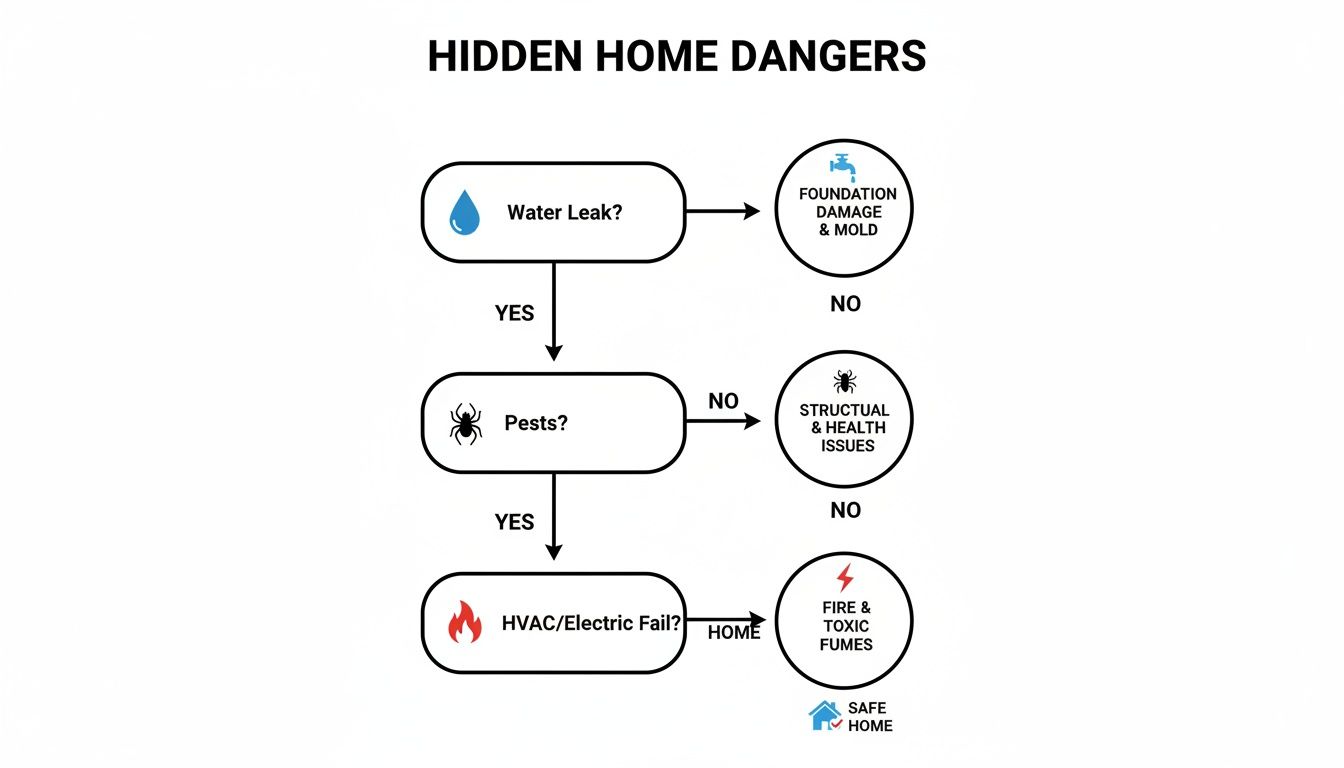
As you can see, silent threats like hidden leaks and pests are the root cause of the most expensive damages. They are almost always missed by tech-only solutions.
Hiring a Professional Home Watch Service
This is the only option that delivers truly comprehensive oversight. A professional service, like the one offered in Torrente’s Vacant Home Care Program, acts as your dedicated representative. It’s the only real substitute for being there yourself.
Professionals bring expertise, accountability, and a structured process to every visit. They follow a detailed checklist and provide you with documented reports. This documentation is critical, as many insurance carriers require proof of regular inspections.
For a closer look at what a top-tier program involves, you can explore the details of the best second home watch and upkeep services in Monterey. It's a proactive approach designed to catch the small stuff before it becomes an emergency.
What a Professional Home Watch Service Actually Does
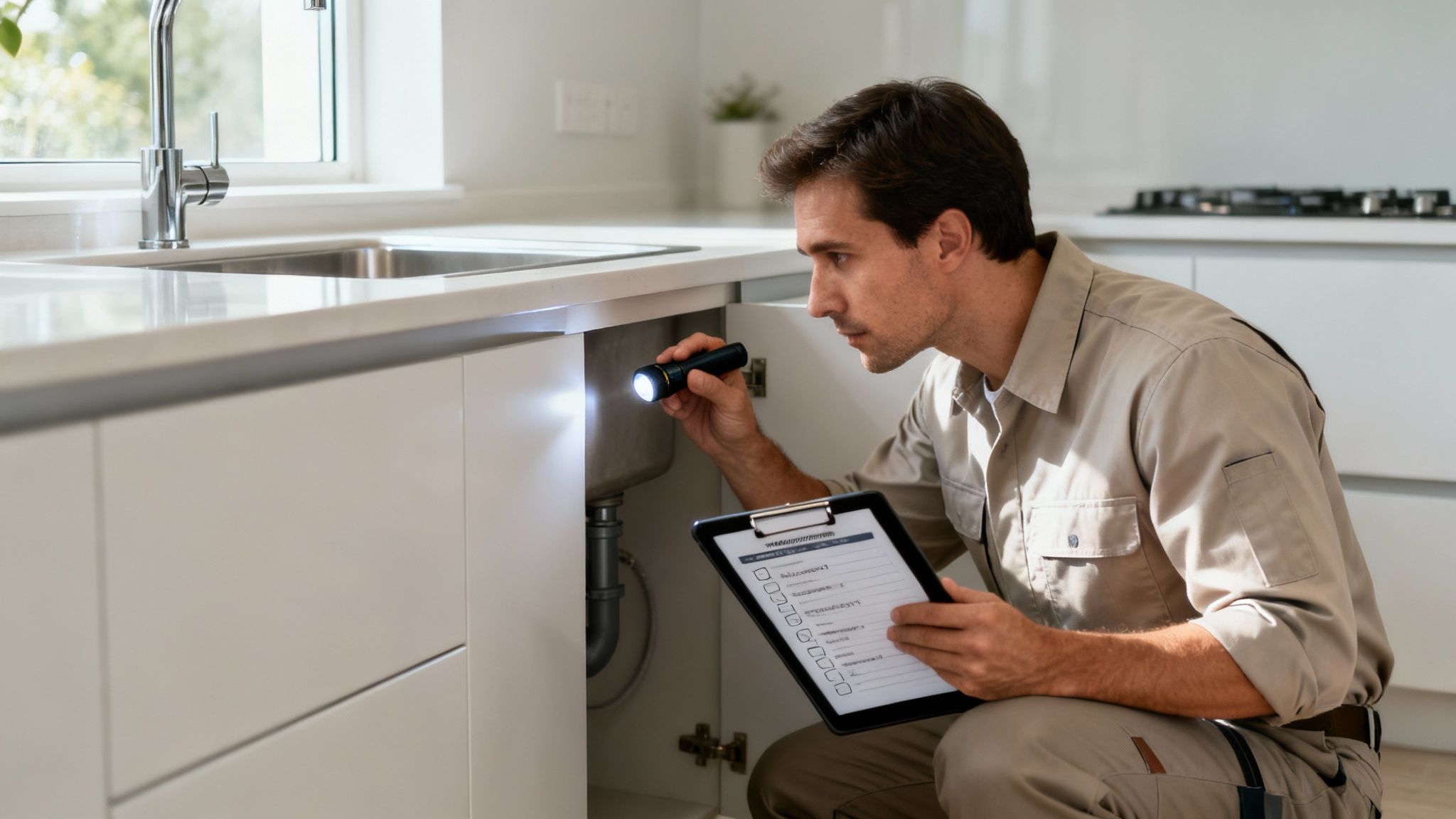
A professional home watch service is a structured, detailed process. It’s much more than a quick look around. A professional visit is a systematic inspection designed to catch small issues before they become disasters.
Think of it as a wellness checkup for your house. Every visit follows a detailed checklist covering your property from the outside in.
The Exterior Inspection: Your First Line of Defense
Our first move is always a thorough walk-around of the property’s exterior. This is where early problems often show up, especially after a Monterey Bay storm.
Key exterior checks include:
- Signs of Forced Entry: We check every window, door, and gate to ensure they're secure.
- Storm Damage Assessment: We look for missing roof shingles, cracked siding, or fallen debris.
- Pest Activity: Our team checks for evidence of pests trying to find their way in.
- Landscape Issues: We’ll note overgrown vegetation or irrigation leaks.
This initial sweep confirms that your home's perimeter is secure.
The Interior Walkthrough: Protecting Your Home from Itself
Once inside, the inspection gets more detailed. We focus on silent threats like slow leaks and system failures.
Properties with consistent inspections maintain their value, while poorly overseen homes fall behind. This shows how vulnerable unmonitored properties are in coastal zones like Monterey. To discover more about the vacation rental market, you can find additional statistics here.
A comprehensive interior checklist isn't just about looking; it's about doing. We take specific, preventive actions:
- Running the Plumbing: We flush every toilet and run water in every sink and shower. This keeps p-traps full, preventing sewer gas and pests from entering.
- System Verification: We make sure the thermostat is set correctly and check that no circuit breakers have tripped.
- Appliance and Leak Checks: We inspect under sinks, around toilets, and near appliances for any hint of moisture.
- Visual Inspection: We conduct a slow, room-by-room walkthrough to spot anything out of place.
After every visit, you get a detailed digital report with photos. This shows that your investment is secure. Torrente’s Vacant Home Caretaker Services in Monterey Bay are built on transparency and trust.
The Financial Case for Professional Oversight
Hiring a professional to check on your vacation home isn’t just an expense—it’s an investment. Proactive oversight is a fundamental part of responsible ownership that safeguards your equity and insurability.
Many absentee owners try to save money by managing things from afar, but this often turns into a costly mistake. The small fee for a professional home watch service is insignificant compared to the expense of an undetected issue.
Understanding Your Insurance Policy and the Vacancy Clause
One of the most critical reasons to hire a professional is often buried in your homeowner's insurance policy. Most policies contain a "vacancy clause." This clause can allow your insurer to deny a claim if your property has been vacant for a period, typically 30 to 60 days, without documented checks.
Imagine a pipe bursts in your empty Carmel home. If you can't prove the property was monitored, your insurer could legally refuse to cover the damage, leaving you with the entire bill.
This is where professional oversight becomes invaluable. Detailed reports from a service like Torrente's Vacant Home Care Program serve as proof of due diligence. These documents satisfy your vacancy clause, ensuring your coverage remains intact.
The Cost of Neglect vs. The Value of Prevention
Thinking you're saving money by not having someone check on your home is a common miscalculation. It’s similar to what we see in the rental industry, where proactive maintenance leads to significant savings. To learn more, check out the real costs of managing your own rental.
A professional service protects your investment in several key ways:
- Prevents Catastrophic Damage: Early detection of water, pest, or system issues stops small problems from becoming financial disasters.
- Maintains Property Value: A well-maintained home holds its value and appeal.
- Ensures Insurability: Documented checks keep your insurance policy valid.
- Reduces Emergency Costs: Proactive care is always cheaper than emergency repairs.
The modest cost of a home watch service is a smart financial trade-off. It protects you from unpredictable and potentially huge repair bills.
Protecting Your Monterey Bay Home With Torrente

Your Monterey Bay vacation home is an investment and a special getaway. Leaving it empty shouldn't feel like a gamble. Professional oversight is the only real solution for protecting your property and finding genuine peace of mind.
A simple camera or a favor from a neighbor just can’t match the trained eye of a professional who knows what to look for.
Your Local Partner in Property Protection
At Torrente Property Management, we created our Vacant Home Care Program for this exact reason. We designed it for absentee owners in communities like Monterey, Salinas, and Carmel who need a trustworthy local partner.
We understand the unique challenges of coastal properties. Our team doesn't just "check in"—we actively care for your home as if it were our own. This is a partnership built on integrity and responsiveness.
How Torrente Helps
Torrente offers a dedicated Vacant Home Care Program designed specifically for absentee owners. Services include preventative maintenance, emergency readiness, and clear documentation. This gives you peace of mind knowing your property is truly watched over.
With our team watching over your property, you can stop wondering if everything is okay back at the coast. If your Monterey Bay or Salinas-area home is sitting empty, we can help keep it safe and sound year-round.
Your home in the Monterey Bay area is an invaluable asset. Let us help you keep it that way. To learn more about our tailored caretaker plans, contact Torrente Property Management at (831) 582-8916 for a personal consultation.
FAQs About Vacant Home Care
Deciding to hire a professional to look after your property often brings up a few questions. Here are clear answers to what we hear most from homeowners.
How often should my vacation home be checked?
We recommend weekly or bi-weekly checks. This frequency is enough to catch slow-developing problems like a small leak or pest issue before they become disasters. This schedule also typically satisfies the requirements of most homeowner's insurance policies.
What does a professional home watch service cost?
The cost depends on your home's size, location, and the services you need. Think of this as a small investment to prevent unpredictable and costly emergency repairs. We can provide a personalized quote based on your property's needs.
My security system sends alerts. Why do I need more?
A security system is great for catching major events like a break-in, but its job ends there. It can’t see a water stain spreading on a ceiling or notice signs of a pest infestation. Our physical inspections catch the critical details that technology misses.
What happens if you find a problem at my property?
If we find an issue, our first step is to contact you immediately with a detailed report and photos. We then coordinate with our network of trusted local vendors to manage repairs on your behalf. We will keep you updated every step of the way.
Do you offer services in Salinas and Carmel?
Yes. Our Vacant Home Care Program serves absentee owners across the entire Monterey Bay region. We provide dedicated, local expertise for properties in Monterey, Salinas, Carmel, Pacific Grove, and surrounding communities.

Why More Homes Are Becoming Rentals in 2026
Many homeowners are choosing to rent instead of sell in today's tricky market. This decision helps protect their home's value while bringing in steady income.
In fact, recent market data shows 47% more homes were pulled off the sales market in 2025 as owners chose to rent them out instead of accepting lower offers. This has created a wave of "accidental landlords," especially here in the Monterey Bay area.
The Big Shift: Why Selling is Out and Renting is In

If you recently thought about selling your home in Monterey or Salinas, you likely noticed a change. The frantic bidding wars are over. Now, buyers are taking their time.
This slowdown has left many homeowners wondering what to do. Faced with selling for a lower price or waiting, more people are choosing a third option: becoming a landlord.
Welcome the "Accidental Landlord"
This trend has created the "accidental landlord." This is a homeowner who never planned to rent out their property but now sees it as the smartest financial move.
Instead of selling low, they turn their home into an asset that earns money. This lets them wait for the sales market to improve. Meanwhile, their mortgage gets paid and their home's value can continue to grow.
How New Landlords Can Succeed
Becoming a landlord brings new financial tasks. It’s more than just collecting rent. You have to understand income, expenses, and legal duties.
Knowing the rules for taxation of rental properties is very important. Managing your money well will turn your property into a successful investment instead of a headache.
The table below shows the key reasons homeowners are making this shift.
Why Homeowners Are Renting Instead of Selling in 2026
| Driving Factor | Impact on Homeowners |
|---|---|
| High Interest Rates | Discourages buying a new home, making it better to keep a low-rate mortgage. |
| Cooling Sales Market | Fewer high offers motivate owners to wait for better market conditions. |
| Strong Rental Demand | High demand in places like Monterey Bay ensures steady income to cover costs. |
| Protecting Home Value | Renting allows the home's value to grow, protecting the owner's investment. |
| Tax Benefits | Deductions for mortgage interest, taxes, and repairs can make renting a good choice. |
This move from selling to renting is changing our local Monterey Bay market. It shows homeowners are making smart choices to protect their property's long-term value.
Economic Trends Pushing the Rental Market

To understand why so many Monterey Bay homeowners are becoming landlords, we need to look at the big picture. The housing market has changed.
Two major forces are at play: high interest rates and the rise of remote work. These have changed how people think about their homes. For property owners, the smart move is now steady rental income, not a quick sale.
The New Math of Owning a Home
Higher interest rates make it expensive for people to buy a home. This slows down the sales market. Many current homeowners have very low mortgage rates they got years ago.
Why would someone with a 3% mortgage sell, only to buy a new home at a 6% or 7% rate? It doesn't make sense for most. This "lock-in" effect is a big reason why more homes are becoming rentals in 2026. Owners have found a winning plan:
- Keep Your Low Rate: Continue paying your low-interest mortgage.
- Earn Income: Rent your home to a good tenant for more than your monthly payment.
- Build Equity: Your tenant helps pay down your loan while your home's value grows.
This simple plan turns a home into a source of passive income. Before you start, it’s important to understand the numbers. See our guide on how to calculate rental yield to find out what your property could earn.
How Hybrid Work Changed Housing
The second big change is remote and hybrid work. People are no longer tied to a short commute. This freedom has changed what they want in a home.
Many now need a home office or more space. This has increased demand for single-family homes in beautiful places like the Monterey Peninsula. These homes are now perfect rentals.
The shift to hybrid work created a new group of long-term renters. They are willing to pay for the space and comfort a single-family home offers.
This strong demand keeps the rental market stable. Even when you hear about apartment rents changing, the demand for rental homes stays strong.
How Monterey Bay Fits National Rental Trends
National trends are important, but what matters most is what’s happening here. The Monterey Bay area has its own unique features that explain why more homes are becoming rentals in 2026.
Our region, from Monterey to Salinas, has strong, built-in demand for rental properties. We have a steady flow of new residents who need to rent.
The Military's Role in Local Rentals
One of the biggest drivers of rental demand here is our military community. With the Naval Postgraduate School and the Defense Language Institute, we have a constant stream of service members and their families.
These families usually stay for two or three years, making renting the best choice. They need quality homes and are a reliable source of tenants. This keeps our local rental market strong.
Second Homes and Limited Supply
The Monterey Peninsula, especially Carmel, is known for its second homes. In today's market, many owners are turning these homes into long-term rentals to earn income.
At the same time, new home construction is rare here. Strict building rules and our landscape limit new development. This means demand for homes is always higher than the supply.
For property owners, this mix of high demand and low supply is a big advantage. It keeps your property filled and makes it a valuable asset.
Local Rent Growth Forecast for 2026
After a slow period, experts predict rent prices will rise again. For 2026, West Coast markets like ours are expected to see rent growth in the 2%–3% range, according to 2026 rental market trends.
This means turning your Monterey or Salinas home into a rental is not just a safe move—it's a smart one for the future. In a competitive market, it is important to know how to keep good tenants to make the most of this growth.
The Challenges for Accidental Landlords

Becoming a landlord by chance comes with a steep learning curve. The skills for owning a home are different from those needed to run a successful rental business. This is where the "management gap" appears.
This gap is where new, accidental landlords often make mistakes. These mistakes can cost time, money, and peace of mind.
The Risks of a DIY Approach
As more rental homes become available, tenants have more choices. Their expectations for quality and service are rising. Managing a rental yourself might seem like a way to save money, but it can lead to serious risks.
Owners who try to manage rentals like DIY projects risk longer vacancies, tenant disputes, and legal fines. This happens when they don't know local rental laws or how to market their property.
Common Problems for New Landlords
Being a landlord is more than collecting rent. New landlords must quickly become experts in many areas.
- Poor Tenant Screening: Rushing to find a tenant without a full background check can lead to late payments, property damage, or a difficult eviction.
- Breaking Local Laws: California's rental laws are complex. One mistake with a security deposit or notice can lead to a costly legal issue.
- Handling Maintenance: When a pipe bursts at 2 AM, the DIY landlord gets the call. This means finding a repair person quickly and often paying high emergency rates.
Closing the management gap means replacing stress with proven systems. It’s about having a plan for everything, from marketing to maintenance.
Learning these lessons on your own is a slow and expensive process. Read more about mistakes new landlords often make in our guide.
Why Professional Help Is Key Now
With more rentals on the market, competition is tough. Tenants will choose well-managed homes that offer professional service. The table below shows the difference between a DIY approach and professional management.
DIY vs. Professional Management
| Area | DIY Risk | Professional Solution |
|---|---|---|
| Tenant Screening | Bad tenants, property damage, evictions. | A full screening process finds reliable tenants. |
| Legal Compliance | Fines and lawsuits from breaking complex laws. | Deep knowledge of all rules protects you. |
| Maintenance | 2 AM calls and overpaying for repairs. | A 24/7 system with trusted vendors handles all issues. |
| Rent Collection | Chasing late payments and uneven cash flow. | Automated collection ensures timely payments. |
| Vacancy Time | Lost income from a property sitting empty. | Smart marketing and pricing get your home rented faster. |
A professional property manager closes that gap from day one. They bring the expertise and systems needed to make your property profitable and stress-free.
Turn Uncertainty into Passive Income
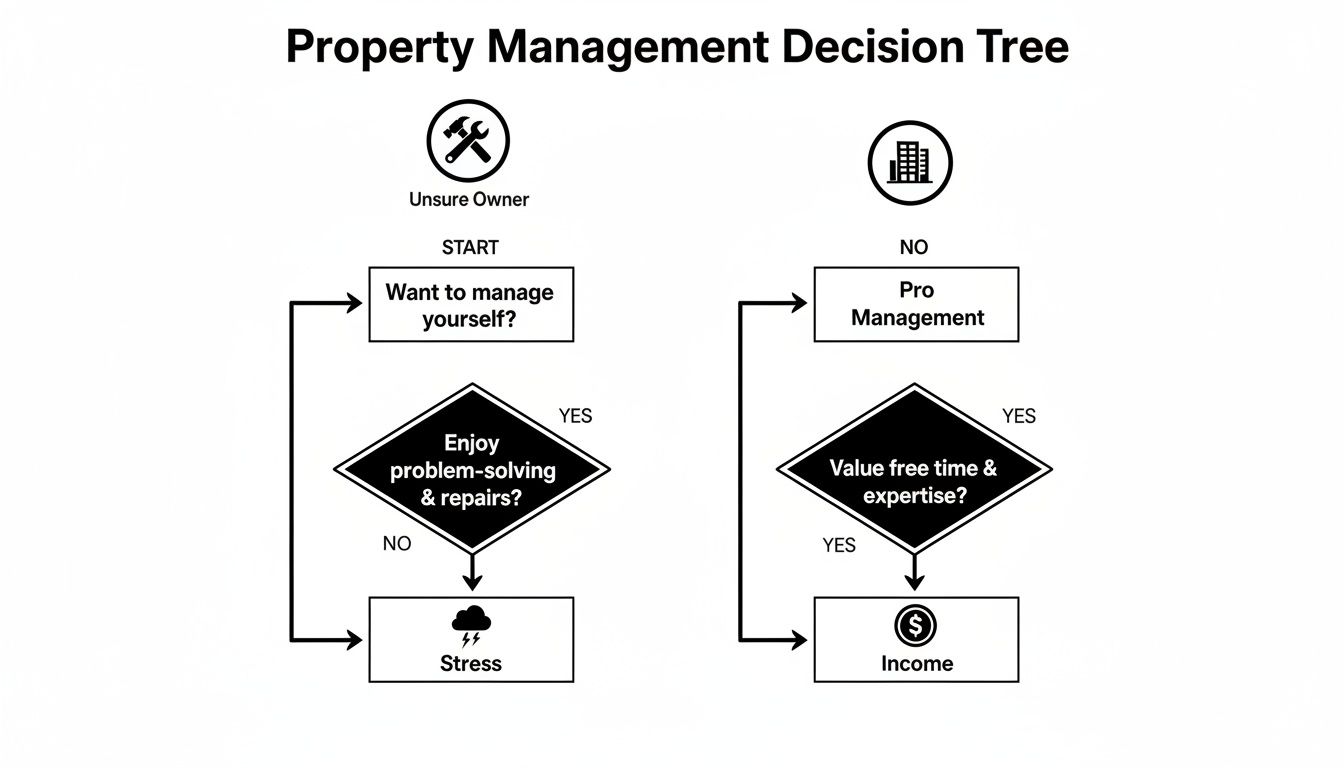
The idea of becoming a landlord can feel overwhelming. You suddenly face marketing, tenant laws, and late-night repair calls. Professional property management turns this stress into peace of mind.
Our house rental management service helps owners new to renting adapt quickly. We close the "management gap" by swapping stress with proven, professional systems.
From Accidental Landlord to Smart Investor
Working with a property manager removes the biggest challenges for new landlords. You can stop worrying about legal rules or finding a good plumber.
This full-service support turns uncertainty into passive income. Instead of stressing about tenant calls or rent laws, owners get reliable monthly income with fewer surprises.
- Expert Tenant Screening: Our process finds reliable tenants who will care for your home.
- Local Pricing Strategy: We use Monterey Bay data to set a competitive rent, which means less time vacant and more income for you. Knowing how to price a rental property is key.
- 24/7 Maintenance: Our system handles all tenant repair requests with our network of trusted local vendors.
- Legal Compliance: We ensure your lease and property follow all California and local laws, protecting you from fines.
The Value of Local Expertise
In a market like ours, local knowledge is a huge advantage. Understanding the differences between Salinas and Monterey is key to success. A local manager brings that insider view.
Our team is also bilingual (English/Spanish), which helps us reach more qualified tenants in our diverse community.
Partnering with a professional manager is an investment in your peace of mind. It lets you enjoy the financial rewards of your property without the daily headaches.
This is the smartest way to make your property work for you. Learn more about how full-service property management in Salinas maximizes ROI for homeowners.
Frequently Asked Questions
Thinking about renting your home brings up a lot of questions. Here are clear answers to what new landlords in Monterey Bay ask us most.
How do I set the right rent for my Monterey County home?
Finding the right rental price means looking at similar local homes, current demand, and your property’s best features. A professional manager uses real-time data to set a price that attracts great tenants quickly and maximizes your income.
What happens if a tenant doesn't pay rent?
There is a strict legal process for handling unpaid rent, starting with official notices. A good property manager handles this entire process for you, making sure every step follows California and local laws to protect you.
Is hiring a property manager worth it for just one home?
Yes. For a single-property owner, professional management is even more important. One bad tenant or legal mistake can cost you a lot. A manager protects your valuable asset and gives you peace of mind.
What are the first steps to get my home ready to rent?
Start with a deep cleaning, a safety inspection, and fixing any needed repairs. Torrente Property Management offers a free "rental readiness review." We'll walk through your property and give you a checklist to attract the best tenants.
How do I know my property is cared for if I live out of state?
Trust and clear communication are key. We provide regular inspections and an online owner portal where you can see financial statements and reports anytime. Our local team treats your property like their own, so you can feel confident your investment is protected.
If you recently pulled your Monterey or Salinas home off the market, Torrente can help you rent it profitably and safely. Our full-service support turns uncertainty into passive income.
Contact Torrente Property Management today at (831) 582-8916 for a free rental readiness review for your local property. Or, visit us online at https://torrenteproperties.com.