
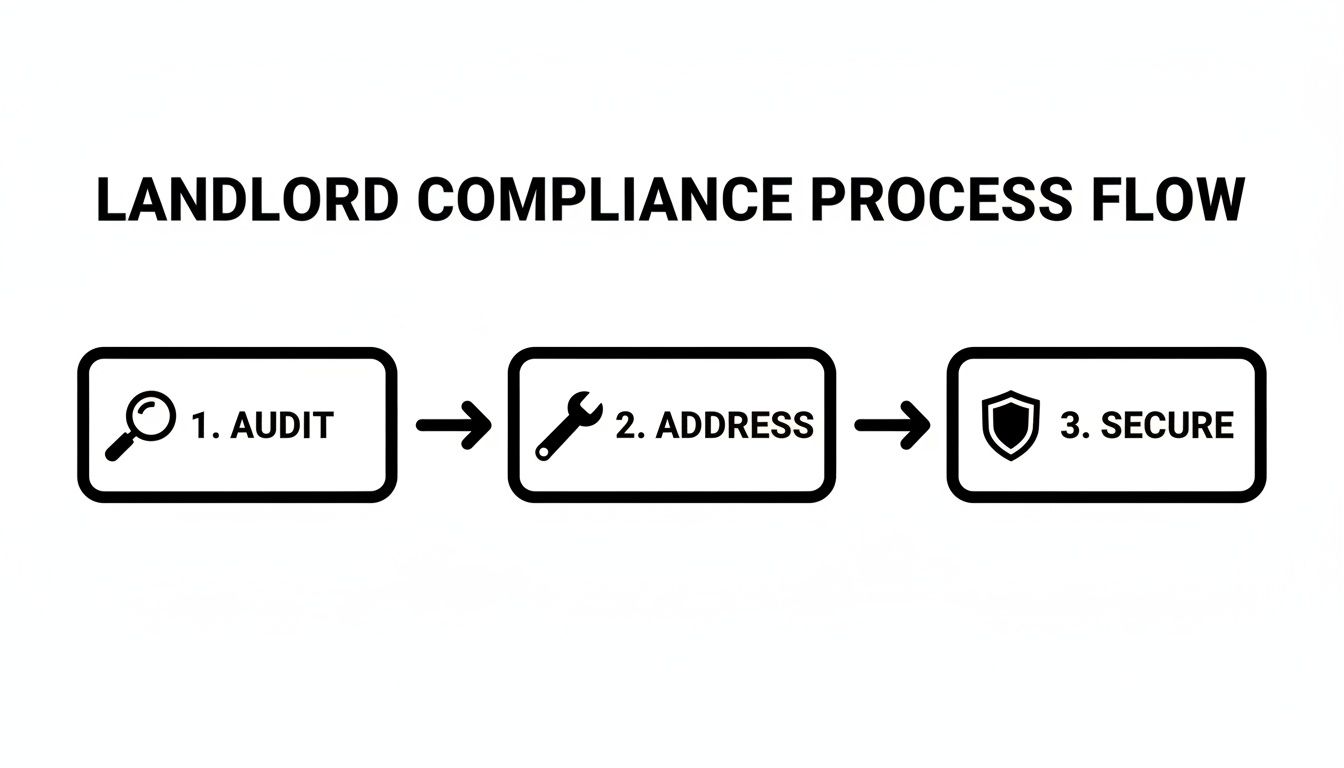
Staying Compliant with California Landlord Rules
It’s easy to feel buried under landlord rules. The key isn't just knowing the laws; it's having a solid system to track changes, keep your lease current, and document everything. A good process is your best defense before a problem ever starts. According to the National Multifamily Housing Council, 80% of landlords own ten or fewer properties, making compliance a personal and critical task.
Why Landlord Compliance Feels So Hard Right Now
If you're asking, “how do I stay compliant with all these landlord rules?” you're not alone. The legal ground is shifting fast for California property owners. What worked a few years ago might not protect your investment today, and relying on old advice is a huge financial risk.
For anyone with property in Monterey, Salinas, or Carmel, mastering these rules is essential. But with a constant stream of new laws, it can feel like a full-time job.

The Fast Pace of New Regulations
California’s rental laws have become much more complex. The state introduced 11 new rules in 2025 alone, adding more responsibility for landlords. These aren't minor tweaks; they change how you must run your rental.
For example, landlords now have to:
- Take before-and-after tenancy photos to properly document a property's condition for security deposits.
- Respond to nonpayment within 10 days, a change from the old five-day window that affects your timeline.
- Offer to report on-time rent payments to credit bureaus, which adds a new administrative step.
This constant change is why many owners feel swamped. In fact, 60% of property managers say compliance work has noticeably increased. For landlords in Monterey County, this gets even trickier with local city rules that also need attention.
Outdated Leases Create Hidden Risks
A common misstep is using an outdated lease. Owners often Google each law or rely on advice in online forums. But these sources can conflict or miss local rules.
An old lease can easily contain illegal clauses or miss required notices. This is where tenant complaints and lawsuits often start. You don’t need to be a lawyer, but you do need someone who tracks this stuff for you. You can learn more about essential landlord-tenant laws in California.
The best approach is to use a plain-English checklist or talk with a local expert. Key steps include updating your lease, documenting every inspection with photos, and understanding notice timelines.
Building a Strong Foundation with a Compliant Lease
Your lease is more than just a contract. It's the most important legal tool you have to protect your investment. When a dispute comes up, this document is your first line of defense.
A big risk is grabbing a generic template online. These often miss key, state-required clauses that are non-negotiable in California. Your lease must be a living document that you update to reflect the latest legal changes.

The Real Cost of an Outdated Lease
Let me share a quick story. A landlord in Carmel used the same lease for years. When a tenant moved out, he deducted money from the security deposit for what he felt was damage. Simple, right?
Wrong. The lease was missing a new California clause requiring landlords to offer tenants the option to have their rent payments reported to credit bureaus. The tenant challenged the deductions in court, arguing the lease was non-compliant. The judge agreed, and the landlord had to refund the entire deposit plus damages.
Must-Have Clauses for Your California Lease
To avoid a nightmare like that, your lease agreement needs to be airtight and specific to California. At a minimum, your lease must address these key areas:
- Security Deposit Handling: State the deposit amount, where it will be held, and the exact conditions for deductions. You must include the 21-day deadline for returning the deposit or an itemized list of deductions.
- Rent Payment Reporting: As of 2025, you must include a clause that offers tenants the option to have their on-time rent payments reported to a major credit bureau.
- Late Fees and Grace Periods: Spell out the late fee amount and when it applies. California law limits what you can charge, so make sure your terms are legal.
- Right of Entry: Detail the notice period required before entering the property. California requires "reasonable" written notice, usually defined as 24 hours.
Local and Federal Disclosures
Compliance doesn't stop with standard clauses. Your lease must also include specific federal, state, and local disclosures.
Don't forget these critical items:
- Lead-Based Paint Disclosure: If your property was built before 1978, federal law requires you to give tenants an EPA-approved pamphlet.
- Mold Disclosure: You must provide a written disclosure about the health risks of mold and how to prevent it, as required by California law.
- Pest Control Notice: If you use a regular pest control service, you must give tenants a copy of the notice from the company.
Reviewing and updating your lease annually is a key step to answering, "how do I stay compliant with all these landlord rules?" For more on legal agreements, check out this guide on a commercial lease agreement template, which has useful principles for residential leases too.
Mastering Documentation from Start to Finish
In any tenant dispute, the landlord with the best records almost always wins. If your lease is your foundation, then your daily documentation is the framework holding it all together.
This process starts when you approve a tenant and doesn’t end until their security deposit is returned. Keeping great records isn't about being negative; it's about being prepared.

The Power of Detailed Inspections
The move-in inspection is your most important documentation milestone. It sets a clear baseline for the property's condition. In fact, California law now requires landlords to take before-and-after tenancy photos, making this step more critical than ever.
A simple checklist isn't enough. Your move-in report should be detailed, with both you and the tenant signing off on it.
Here’s a real-world example: A Salinas property owner rented to a family who later claimed scratches on the wood floors were already there. Luckily, the owner had time-stamped photos from the move-in inspection showing the floors in perfect condition. That proof saved him from paying for the repairs himself.
What to Document During an Inspection
A good inspection covers everything. Use a detailed checklist and take more photos than you think you need.
Your inspection process should always include:
- Flooring: Photograph every room, noting any stains on carpets or scuffs on floors.
- Walls and Ceilings: Document any nail holes, scuffs, or discoloration.
- Appliances: Test every appliance and confirm it’s working. Photograph the inside and outside.
- Fixtures: Check all lights, faucets, and toilets.
- Windows and Doors: Ensure they all open, close, and lock properly.
This process protects you and sets clear expectations for the tenant. Our tenant move-out inspection checklist is a great template to use.
Serving Notices and Keeping Communication Logs
Another common mistake is improperly serving notices. Whether it’s a 24-hour notice to enter or a notice to pay rent, California has strict rules. A text message or email often isn’t legally enough.
Always document how and when a notice was served. Keep a log of all important communications with your tenant. Exploring real estate document management use cases can offer good ideas for managing your paperwork.
Understanding Tenant Protections and Fair Housing Laws
Tenant protections and Fair Housing laws are a high-stakes part of property management. These are strict legal standards that cover everything from advertising your property to handling rent increases.
At their core, these laws are about providing safe housing and treating everyone equally. The details can get tricky fast.
Avoiding Unintentional Discrimination
The federal Fair Housing Act and California's Fair Employment and Housing Act (FEHA) prevent discrimination based on protected classes. These include race, religion, sex, family status, and disability. California adds protections for sexual orientation, gender identity, and source of income.
Unintentional discrimination is a common pitfall. An ad that says “perfect for a professional couple” could be seen as discriminating against families.
To stay compliant, your process must be:
- Consistent: Use the same screening criteria for every applicant.
- Objective: Base decisions on factors like income, credit, and rental history.
- Documented: Keep records of why each applicant was approved or denied.
California's Tenant Protection Act
Landlords in California must know the Tenant Protection Act of 2019 (AB 1482). This statewide law changed rent increase and eviction rules.
The two main parts of this act are:
- Rent Caps: You can't raise rent more than 5% plus local inflation, or a total of 10%, whichever is lower, in a 12-month period.
- Just-Cause Eviction: After a tenant has lived in a unit for 12 months, you can only end their tenancy for a specific, legal reason.
Some properties are exempt, but you must provide written notice of that exemption in the lease. If you don't, the rules might apply to you anyway. Find more details in our guide on tenant rights in California.
The Importance of Bilingual Communication
In a diverse area like Monterey Bay, where many households speak Spanish, clear communication is key. Providing documents in both English and Spanish is good service and can prevent misunderstandings that lead to legal issues.
With rules changing nationwide and 61% of renters preferring stable annual leases, a compliant lease is more critical than ever. Learn more about these evolving property trends.
Ultimately, landlords must ensure the property is safe. The best way to protect your tenants and your investment is by understanding premises liability and your duty to maintain a safe environment.
When You Need More Than a DIY Approach
At some point, trying to figure out legal jargon on your own just doesn't work anymore. There is often a clear tipping point when managing compliance yourself becomes a major source of stress and risk.
If you’re feeling overwhelmed, that’s the first red flag. When you spend more time worrying about legal mistakes than growing your property's value, you need help.
The Dangers of Unreliable Advice
A common trap for landlords is relying on general advice from online forums. These sources often miss specific ordinances that apply in Monterey, Salinas, or Carmel. A rule that works in another state could get you in trouble here.
Worse, your lease might have illegal clauses without you knowing it. This is when professional help becomes essential. You don't need to be a legal expert, but you need someone on your side who tracks these changes for you.
Signs You Need an Expert
How do you know when you've hit your limit? Certain situations make professional management a smart investment.
Look for these warning signs:
- You're Facing a Tenant Dispute: A formal complaint is a clear sign your current system isn't working.
- You Manage from Out-of-State: Being a remote landlord makes it hard to keep up with local rules.
- You Own Multiple Properties: The more units you manage, the more complex compliance gets.
- You Lack the Time: If you can't dedicate time to tracking new laws, you're already falling behind.
Thinking you're saving money by managing your own rental can be a costly mistake. The risks of non-compliance often outweigh the cost of professional management.
This is the problem Torrente Property Management solves. We offer fully compliant leases, handle legal documentation, and keep up with Monterey County and state regulations—so you don’t have to. We even provide photo reports and compliance audits as part of our plans. If you’re renting out a home in Monterey, Salinas, or Carmel, Torrente knows the specific local ordinances and handles the paperwork for you.
Frequently Asked Questions (FAQs)
Here are quick answers to common questions we hear from property owners in the Monterey Bay area.
What's the biggest security deposit mistake landlords make?
The most common error is failing to return the security deposit correctly. Landlords must provide an itemized list of deductions within the strict 21-day timeframe after a tenant moves out. Missing that deadline can force you to return the entire deposit, even if there were real damages.
Do I have to accept a service animal in my "no pets" property?
Yes, absolutely. Under Fair Housing laws, assistance animals are not legally considered pets, so a "no pets" policy doesn't apply. You must provide a reasonable accommodation and cannot charge a pet deposit for them.
How much notice do I need for a rent increase?
For a rent increase of 10% or less, you must give a 30-day written notice. For an increase of more than 10%, the required notice is 90 days in writing. Always check for additional local rules in cities like Salinas.
Can I screen tenants based on their source of income?
No, you cannot. California law prohibits "source of income" discrimination. You must consider all forms of lawful income, including Section 8 housing vouchers or other government subsidies, when you review an application.
What happens if my lease has an illegal clause?
An illegal clause in your lease is unenforceable and can weaken your position in a dispute. It’s a key reason why using a professionally reviewed, compliant lease agreement is so important to protect your property.
Take the Next Step
Keeping up with landlord rules can feel like a full-time job, but you don't have to do it alone. A solid, compliant process protects your investment and gives you peace of mind. Torrente Property Management is here to handle the details for you.
Call today to schedule a compliance review—before a tenant calls with a complaint. Contact Torrente Property Management today at (831) 582-8916.


What Do Tenants Expect From a Rental Property Manager Today?
Are you seeing bad reviews or hearing tenant complaints? You might be wondering if your property manager is too slow. More importantly, you need to know if that's hurting your rental income by driving good tenants away.
In today’s rental market, fast communication isn’t a luxury—it’s a core expectation. In fact, delayed maintenance is one of the top reasons renters choose not to renew their lease. For property owners in Monterey Bay, understanding what tenants want is key to keeping your rental profitable.
Understanding the New Tenant-Manager Dynamic
The relationship between tenants and property managers has changed. A lease is no longer just a transaction for a place to live. Today's renters see their rental as a service they pay for, and they expect professional treatment.
This shift means property owners must ask: are my management practices keeping up? Old methods, like taking days to answer an email or only accepting paper checks, make tenants feel ignored. In a competitive market, that feeling is often enough for them to leave when their lease is up.
The image below shows this shift from a simple transaction to a service-focused relationship.
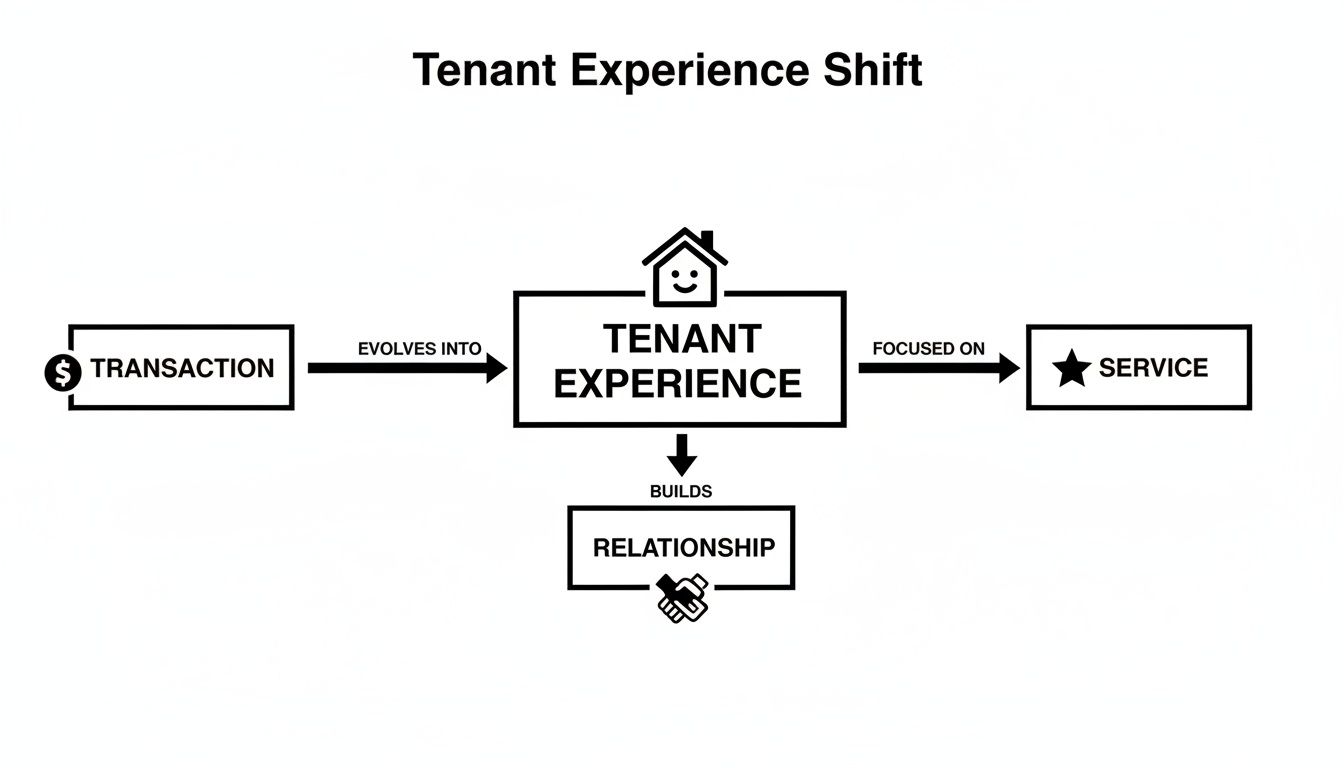
Modern property management is about delivering a quality living experience that builds loyalty and keeps your property occupied.
Why Tenant Satisfaction Impacts Your Income
Knowing what tenants expect from a rental property manager today is about more than just avoiding bad reviews. It's a strategy for maximizing your rental income. Happy tenants stay longer, which means fewer vacancies and lower turnover costs for you.
Owners often focus on rent collection or leasing. But they sometimes forget about the day-to-day experience of their tenants. Poor responses to maintenance requests make tenants feel neglected, and in a competitive market, they have other options. Losing a good tenant costs far more than a late repair ever will.
The key takeaway is simple: A positive tenant experience is your most powerful tool for retention. When tenants feel respected and cared for, they are more likely to treat the property well and stay long-term.
How Tenant Expectations Have Shifted
| Expectation Area | Traditional View | Modern Expectation |
|---|---|---|
| Communication | During business hours only. | 24/7 access to information, quick responses. |
| Rent Payments | Paper check or money order. | Online payments via a secure portal. |
| Maintenance | A phone call, then a long wait. | Digital requests with real-time status tracking. |
| Relationship | Transactional; rent for housing. | Service-based; a valued customer experience. |
| Technology | An afterthought, if used at all. | A standard requirement for convenience. |
This isn't just a trend; it's the new standard for professional property management.
Modern Tools for Modern Renters
Meeting these expectations requires the right systems. Technology like online portals for rent payments and maintenance requests are no longer "nice-to-haves." They are the standard for any professionally managed property. As you can learn in our article about how smart property management tech boosts retention, these tools also create huge efficiencies for owners.
For property owners in Salinas, Monterey, or Carmel, this means your property manager must offer modern, streamlined service. This approach keeps your property competitive and your investment stable.
Why Rapid Maintenance Is Non-Negotiable
When a tenant's sink leaks or their heater breaks, the clock starts ticking. A slow response to a maintenance call is one of the biggest reasons good tenants decide not to renew their lease.
A delayed repair tells your tenant that their comfort isn't a priority. When a tenant reports an issue, they are testing your reliability. A quick reply and a clear plan build trust. Silence or vague promises make them feel ignored.

For property owners, a professional maintenance system is your best defense against property damage. A small drip can turn into a warped cabinet and mold if left unchecked. A proactive manager keeps tenants happy and protects the long-term value of your investment.
The Anatomy of an Excellent Maintenance Process
So, what does a great maintenance process look like? It’s not just about speed; it's about clear communication from start to finish.
A professional workflow includes a few key steps:
- Immediate Acknowledgment: The tenant should get a confirmation within hours of submitting a request. This simple step lets them know their message was received.
- Clear Timelines: The manager should provide an expected timeline. When will a vendor be in touch? This keeps tenants informed.
- Progress Updates: If a part needs to be ordered, the tenant needs to know. Proactive updates prevent frustration.
- Confirmation of Completion: A final check-in ensures the issue is resolved and the tenant is satisfied.
This systematic approach turns maintenance from a point of stress into a chance to prove your professionalism. You can find more tips in our key tips and a smart maintenance checklist for your rental property.
A prompt maintenance response does more than just fix a broken appliance; it reinforces the tenant's decision to rent from you. Each positive interaction builds loyalty, making them far more likely to renew.
The Local Advantage in Monterey County
In a place like Monterey County, a trusted, local network of vendors is everything. A property manager with deep roots in Salinas, Monterey, or Seaside can get a reliable plumber or electrician to a property much faster.
This local expertise is a massive advantage. At Torrente Property Management, our local maintenance team is responsive and trusted by both tenants and owners. This network provides peace of mind, knowing your property is cared for efficiently.
Opening Your Property's Digital Doors
We manage our lives from our phones. Tenants now expect that same convenience from their rental experience. The "digital doors" to your property need to be open 24/7.
If you still rely on paper checks and phone calls during business hours, you’re falling behind. To a tenant, these methods feel slow and frustrating. According to AppFolio, 85% of property managers agree that technology is critical for running their business effectively.

Firms that use online portals often see better tenant retention because they meet modern expectations for convenience and transparency.
The Power of the Tenant Portal
The most important digital tool is the online tenant portal. It's a central hub where tenants can manage everything related to their rental on their own schedule. This is a key answer to what do tenants expect from a rental property manager today.
A good tenant portal should include:
- Online Rent Payments: This is non-negotiable. Tenants want to set up automatic payments or use a credit card. This eliminates late payments from mail delays.
- Digital Maintenance Requests: Tenants can submit a request online, attach photos, and track its status. This creates a clear record and ensures nothing gets lost.
- Access to Documents: Leases and other important documents can be stored securely online, giving tenants instant access.
For property owners, these systems are a game-changer. You can log into an owner portal and see a clean record of every payment and repair request. This is why it's so important to offer secure digital payment solutions tailored for housing rentals.
By offering these digital tools, you aren’t just making life easier for tenants. You’re building a more professional and efficient operation that protects your investment.
Bridging Communication Gaps in Monterey Bay
In a diverse community like Monterey Bay, clear communication is vital. Technology helps ensure every tenant feels heard and understood.
At Torrente Property Management, our systems are set up for bilingual (English/Spanish) communication. Automated rent reminders and maintenance updates can be sent in both languages. This simple step removes barriers, reduces misunderstandings, and opens your property to a wider pool of great tenants. You can learn more about these options in our guide on the different ways to pay rent electronically.
Services and Amenities That Justify Higher Rents
Today's renters want a complete living experience. For property owners, this means seeing amenities as smart investments that boost your rental income.
The modern rental is a package deal. It’s the physical space plus the services that make life easier. When you get that package right, tenants are willing to pay a premium for it.
Investing in the Modern Tenant Experience
Recent data shows that renters are looking for more than just the basics. They are actively seeking better services and an upgraded living situation.
Many tenants say they would happily pay more rent for access to better amenities. This is a clear signal that thoughtful upgrades are revenue generators, not just costs.
In a crowded rental market, amenities are a key differentiator. Offering the right features can make your property the first choice for renters, leading to lower vacancy rates and a healthier bottom line.
High-Impact Amenities for Monterey Bay Rentals
Which upgrades give you the best return? The answer depends on your property, but some features have universal appeal.
Here are a few in-demand features that get a great response:
- Pet-Friendly Policies: For many renters, a pet is a non-negotiable family member. Allowing pets (with clear rules) instantly widens your pool of qualified applicants.
- Secure Package Delivery: With online shopping so popular, a safe spot for packages is a huge priority. This can be a simple locked drop-off area or a smart locker system.
- Flexible Lease Terms: While a 12-month lease is standard, offering flexibility can be a major draw for tenants whose futures are less certain.
- Well-Maintained Common Areas: Clean lobbies, laundry rooms, or shared patios send a powerful message. It shows you care about the property.
Here in Monterey County, you also have to think about the local lifestyle. Adding secure bike storage can be a game-changer for renters in Monterey or Carmel. These thoughtful touches show you understand the community and what tenants value. If you need help pricing your rental after making upgrades, check out our guide on how to price your rental property.
How Transparency and Professionalism Build Trust
Beyond fast maintenance and tech, the foundation of a good tenant relationship is trust. Today’s tenants expect professionalism and transparency at every step.
This trust-building starts with the lease agreement. Tenants want clear, easy-to-understand terms with no hidden fees. A transparent lease sets a positive tone for the entire tenancy.

From there, it’s all about consistent, professional communication. This means respectful interactions and proactive updates. When tenants feel they’re being treated fairly, they are much more likely to stay.
Upholding Legal and Ethical Standards
Professionalism isn't just about being polite. It’s about knowing landlord-tenant law. A skilled property manager understands fair housing regulations and enforces all policies consistently. This is a non-negotiable part of what tenants expect from a rental property manager today.
This commitment to fairness protects your investment from serious legal and financial risks. A professional manager ensures a safe, fair environment for everyone, which is the bedrock of a stable rental property.
A property manager who prioritizes professionalism and transparency isn't just managing a building; they are cultivating a community. This approach minimizes conflicts and encourages lease renewals.
The Impact of a Professional Relationship
Think of your property manager as the public face of your investment. A manager who is professional and reliable builds positive relationships that benefit you directly.
Here’s how it pays off:
- Higher Retention Rates: Tenants who trust their manager are less likely to move, which cuts your turnover costs.
- Fewer Conflicts: Clear communication prevents minor issues from becoming major disputes.
- Better Property Care: Respected tenants tend to take more pride in their home and report issues promptly.
- Peace of Mind for Owners: Knowing your property is managed ethically allows you to focus on other priorities.
Building this trust requires a specific skill set. Knowing the 10 expert questions to ask a property management company can help you gauge their commitment to professionalism.
It’s All About the Modern Tenant Experience
At the end of the day, understanding what tenants expect from a rental property manager today comes down to one thing: a modern, professional experience. It's about combining rapid maintenance, digital convenience, and transparent communication into one reliable service.
A proactive management approach sees these expectations as opportunities. Modern systems like online tenant portals and 24/7 emergency lines are now essential tools. They provide the backbone for consistent, high-quality service. To achieve this, some are now using AI solutions tailored for property management companies to improve operations.
The True Return on a Great Tenant Experience
Focusing on the tenant experience is a direct investment in your property's financial health. Every positive interaction, from a fixed faucet to an easy online rent payment, reinforces a tenant’s decision to stay.
A superior tenant experience is the most effective strategy for reducing turnover. Happy tenants renew their leases, which means stable rental income, fewer vacancy costs, and greater peace of mind for you.
The cost of losing a great tenant almost always exceeds the cost of the systems needed to keep them. A well-managed property with satisfied tenants provides a predictable and steady cash flow.
Is Your Management Meeting Modern Standards?
In communities like Salinas, Monterey, and Seaside, tenants have choices. If your current property manager isn’t providing the speed and technology the market demands, your investment is at risk. Slow responses and outdated processes drive good tenants away.
At Torrente Property Management, we have built our service around these modern expectations. Our use of tenant portals, a 24/7 emergency line, and transparent maintenance tracking keeps tenants happy. This keeps quality tenants in place and maximizes your returns.
If you suspect your property isn’t delivering the experience tenants expect, it’s time for a change. Let us show you how professional, responsive management pays off.
Contact Torrente Property Management today at (831) 582-8916 for a tenant experience review.
Frequently Asked Questions About Tenant Expectations
Here are answers to common questions property owners have about what modern renters expect from a property manager.
How quickly should a property manager respond to maintenance?
For non-emergencies, tenants expect an acknowledgment within 24 hours. A great manager also provides a clear timeline for the repair. This communication makes tenants feel heard and respected, which is crucial for their satisfaction.
Is an online tenant portal really necessary?
Yes, absolutely. A tenant portal is a standard expectation, not a luxury. It offers 24/7 convenience for paying rent and submitting service requests, which improves the tenant experience and boosts renewal rates.
How can an older property compete with new buildings?
You can compete by offering exceptional service and smart upgrades. A clean, well-maintained property with fast maintenance and thoughtful amenities can outweigh the appeal of new construction. Features like secure package solutions or pet-friendly policies often matter more to tenants.
How can I know if my tenants are happy?
High tenant turnover and negative online reviews are clear warning signs. A proactive property manager should give you regular feedback on tenant satisfaction. If you aren't getting this information, you should ask your manager why they aren't tracking this critical metric.
What is the biggest mistake owners make with tenant management?
The most common mistake is underestimating the cost of tenant turnover. Losing a good tenant due to slow maintenance or poor communication is always more expensive than investing in a system that prioritizes their experience. Vacancy and marketing costs add up quickly, hitting your bottom line.
Ready to deliver the modern experience your tenants expect and protect your investment? Torrente Property Management combines cutting-edge technology with deep local expertise to keep your Monterey Bay property profitable and your tenants happy.
Contact us today at (831) 582-8916 or learn how our professional management services can make all the difference.

6 Trends That Make or Break Salinas Rentals This Year
In the Salinas rental market, staying current isn't just a good idea—it's essential for success. For property owners, understanding what modern tenants want can mean the difference between a profitable investment and a vacant property.
Keeping up with these changes is critical. According to Zillow, listings with professional photos can rent up to 30% faster. This simple fact shows how much small details matter in today's competitive market.
This guide will cover the 6 trends that make or break rentals in Salinas this year. We'll look at the key factors, from online tools to property management, that are now must-haves for local landlords. Let's explore the trends that will define your success.
1. Use Pro Photos or Risk Sitting Empty
First impressions are everything in the rental market. Listings with professional photos and clear descriptions rent much faster. They highlight your property's best features, like air conditioning or a new washer and dryer.
If your listing photos are blurry or dark, you are missing out on serious tenants. A competitive market demands a professional look to attract the best applicants.
Why This Trend Matters for Your Rental
Great photos do more than just show a room; they tell a story and set expectations for quality.
- Attracts Quality Tenants: Professional images signal that you are a serious, professional landlord. This attracts tenants who are willing to pay for a well-maintained home.
- Stands Out Online: Renters scroll through dozens of listings. High-quality photos make them stop and look closer at your property.
- Justifies Your Rent: Clear, bright photos help justify a higher rental price by showcasing the value of your property. For more help, see our guide on how to price your rental property.
How to Get It Right
You don't need to be a professional photographer, but you do need to think like one.
Key Insight: Focus on what tenants care about most: kitchens, bathrooms, and natural light. Declutter every room before taking photos to make spaces look larger and more inviting.
Ensure your property is clean and well-lit. Open all blinds and turn on all lights. Taking photos during the day provides the best natural light. If you're not confident in your skills, hiring a professional photographer is a small investment with a big return.
2. Optimize for Mobile or Miss the Majority
Most renters today start their search on a smartphone. In fact, about 70% of renters in Monterey and Salinas begin looking for a home on their phones.
If your property listing isn't easy to view on a mobile device, potential tenants will simply swipe past it. This means your listing needs to load quickly and be easy to read on a small screen.

Why This Trend Matters for Your Rental
A mobile-friendly listing is no longer a bonus—it's a basic requirement.
- Wider Reach: A mobile-optimized listing reaches the largest possible audience of renters where they are searching.
- Better User Experience: Renters get frustrated with slow-loading sites or text that's hard to read. A smooth experience keeps them engaged with your property.
- Faster Leasing: When tenants can easily view photos, read details, and contact you from their phone, the entire leasing process moves faster.
How to Get It Right
Making your listing mobile-friendly is straightforward.
Key Insight: Use short paragraphs and bullet points in your property description. This makes it much easier for tenants to scan for key information on their phones.
When you post your listing, check it on your own phone to see how it looks. Make sure photos are clear and the text is readable without zooming. Using a professional property management company like Torrente ensures your listings are always optimized for every device.
3. Offer Online Tools or Lose Tenant Trust
Modern tenants expect modern convenience. They want to pay rent, submit repair requests, and sign leases online. A recent survey found that 83% of tenants say online tools are a must-have.
If you still rely on paper checks and phone calls, you risk losing good tenants to landlords who offer a smoother, digital-friendly system. This is one of the key trends that make or break rentals in Salinas this year.
Why This Trend Matters for Your Rental
Digital tools are about more than just convenience; they build trust and efficiency.
- Attracts Modern Renters: Younger tenants, in particular, will often filter out properties that don't offer online rent payments.
- Improves Efficiency: Online systems automate rent reminders and track maintenance requests. This saves you time and reduces errors.
- Boosts Retention: Tenants are happier when they can easily manage their rental tasks. Happy tenants are more likely to renew their leases, as we discuss in our post on how smart property management tech boosts retention.
How to Get It Right
You don't need to be a tech expert to offer these tools.
Key Insight: Start with the basics. The most important features for tenants are online rent payments and a simple way to submit maintenance requests.
Many property management software platforms offer these services. For an idea of what's available, you can check reviews of the 12 best property management apps for 2025. At Torrente, we use a professional online portal that gives both owners and tenants easy access to everything they need.
4. Make Sure Your Property Is Easy to Find Online
Having a great property with professional photos doesn't help if no one sees your listing. Your rental needs to be visible on top rental websites and search engines like Google.
Properties managed by professionals like Torrente Property Management benefit from strong online visibility. We make sure your listing gets seen by the right people, which drives more views and better leads.
Why This Trend Matters for Your Rental
Online visibility is directly tied to how quickly you can fill a vacancy.
- Reaches More Applicants: A strong online presence puts your property in front of thousands of potential renters actively searching in Salinas.
- Builds Reputation: When your property appears on reputable sites, it builds trust and credibility with prospective tenants.
- Saves You Time: More visibility means a larger pool of applicants, allowing you to find a qualified tenant faster.
How to Get It Right
Getting your property seen online requires a smart strategy.
Key Insight: Your listing title is extremely important. Include key details like the number of bedrooms, location, and a standout feature (e.g., "Spacious 3-Bed Salinas Home with Fenced Yard").
We list your property on all major rental sites, such as Zillow, Apartments.com, and more. This ensures maximum exposure. We also use targeted keywords to help your property show up in local search results when tenants look for rentals in Salinas. Staying on top of California landlord-tenant laws is also crucial for a smooth rental process.
5. Full-Service Management Means Less Vacancy and More Peace of Mind
Managing a rental property involves more than just collecting rent. It includes tenant screening, handling maintenance calls, and making sure you follow all landlord-tenant laws.
For many homeowners, this can be overwhelming. Full-service property management means we handle everything for you. This results in fewer late-night phone calls, faster rentals, and less stress.

Why This Trend Matters for Your Rental
Professional management protects your investment and your time.
- Thorough Tenant Screening: We run background and credit checks to find reliable tenants who will pay on time and take care of your property.
- Maintenance Handling: We have a network of trusted vendors to handle repairs quickly and affordably.
- Peace of Mind: This is especially valuable if you are managing a property from out of town. You can trust that your investment is in good hands. A key part of this is keeping good tenants happy, which we cover in the best tenant retention strategies for rental property owners.
How to Get It Right
Choosing the right property manager is a crucial decision.
Key Insight: Look for a local company with a strong reputation in the Salinas community. Local expertise is essential for understanding market rates and connecting with reliable vendors.
At Torrente, we provide transparent communication and detailed financial reporting. We treat your property as if it were our own. Our goal is to make owning a rental property a hassle-free and profitable experience for you.
6. Bilingual Service is a Must in Salinas
Salinas is a diverse community, with a large number of Spanish-speaking residents. To reach the widest possible audience of qualified renters, offering bilingual services is essential.
This goes beyond just translating your listing. It means being able to communicate clearly with tenants about lease terms, maintenance, and other important matters. This is a powerful advantage that builds trust.
Why This Trend Matters for Your Rental
Bilingual communication is a key part of providing excellent service in the Salinas Valley.
- Wider Applicant Pool: Marketing your property in both English and Spanish opens it up to more potential tenants.
- Clear Communication: It reduces misunderstandings about rent, repairs, and lease rules. Clear communication leads to better tenant relationships.
- Community Trust: It shows respect for the local community and helps build a positive reputation as a landlord. For more on this, see these strategies for outsourced bilingual customer support.
How to Get It Right
Genuine bilingual service requires a dedicated approach.
Key Insight: Ensure that important documents, like the lease agreement, are available in both English and Spanish. This helps protect both you and your tenant.
Torrente Property Management is proud to offer fully bilingual services. Our team can communicate with tenants and owners in their preferred language. This is just one of the many advantages of working with Torrente Property Management. We believe it's a vital part of serving the Salinas community effectively.
Frequently Asked Questions (FAQs)
What is the most important trend for Salinas landlords this year?
Offering online tools for rent payment and maintenance requests is crucial. Today's tenants expect digital convenience, and providing it makes your property much more competitive.
How can I make my rental listing stand out?
Use professional, high-quality photos and write a clear, concise description. Make sure your listing is mobile-friendly, as most renters search on their phones.
Why is full-service property management a good idea?
It saves you time and reduces stress by handling tenant screening, maintenance, and legal compliance. This leads to lower vacancy rates and more peace of mind, especially for out-of-town owners.
Do I really need to offer bilingual services?
Yes, in a diverse community like Salinas, bilingual communication is key. It helps you reach more qualified tenants and builds trust through clear communication.
How can I find a reliable tenant faster?
Make sure your property is easy to find online by listing it on multiple top rental sites. A professional property manager can maximize your listing's visibility to attract a large pool of applicants quickly.
Partner with a Pro to Succeed in Salinas
Staying on top of these trends can feel like a full-time job. From taking professional photos and optimizing for mobile to offering online tools and bilingual service, the demands on landlords have grown.
Trying to do it all yourself can be overwhelming. A single misstep, like a poor listing or a slow response to a repair, can lead to long vacancies and lost income.
Key Takeaways for Salinas Property Owners
Let’s quickly recap the 6 trends that make or break rentals in Salinas this year:
- Pro Photos: Great visuals attract great tenants and help your property rent faster.
- Mobile-Friendly: Ensure your listing looks good on a phone, where most renters are searching.
- Online Tools: Offer digital rent payments and maintenance requests for tenant convenience.
- Online Visibility: Make sure your property is listed everywhere potential tenants are looking.
- Full-Service Management: Let a professional handle the daily tasks to save you time and stress.
- Bilingual Service: Communicate effectively with the entire Salinas community to build trust.
If you're a homeowner in Monterey, Salinas, or nearby looking to rent out your property in 2026, we’d love to help you get it rent-ready, listed smartly, and managed professionally. Let’s start with a free consultation.
Ready to make your rental property a success? Let Torrente Property Management Inc. handle the details for you. Contact us online or call us today at (831) 582-8916 for a free consultation.

Switching From Short-Term to Long-Term Renting: What to Know
Thinking about switching your rental from short-term to long-term? You are not alone. With Monterey County tightening rules on Airbnbs, many owners are asking if a long-term lease is a better choice.
This guide will show you what to know before switching from short-term to long-term renting. It is a big change, but it can lead to more stable income with fewer headaches. The key is to treat it like a real business from the start.
From Airbnb Host to Full-Time Landlord

If you have an Airbnb in places like Carmel or Pacific Grove, you know the rules are changing. New regulations are making many owners consider long-term rentals for more stability. This pivot is also happening as more “accidental landlords” enter the market to avoid selling their homes.
These new long-term rentals need the right preparation to succeed. A recent study shows that 49% of landlords manage their properties themselves, but many are not prepared for the legal and financial duties involved (Source: Zillow Group). This is why a professional approach is so important.
Key Differences Between Short-Term and Long-Term Rentals
The two rental types are very different. Short-term renting is like running a hotel. Long-term renting is like managing a housing business.
Here is a simple breakdown:
| Aspect | Short-Term Rental (STR) | Long-Term Rental (LTR) |
|---|---|---|
| Income | High nightly rates but can be unpredictable and seasonal. | Steady, predictable monthly rent for more stable cash flow. |
| Management | A hands-on job with constant guest messaging and cleaning. | A more hands-off role focused on tenant relations and maintenance. |
| Rules | Complex local rules that can change quickly. | Governed by stable California landlord-tenant laws. |
| Tenant Vetting | Based on simple platform reviews. | Requires a full legal screening with credit and background checks. |
| Wear & Tear | High turnover can cause more wear on furniture. | Lower turnover means less wear on the property over time. |
Understanding these differences helps you prepare for the switch.
Common Missteps When Making the Switch
Many owners make mistakes when they switch from short-term to long-term renting. They often keep an "Airbnb mindset." This can cause problems.
For example, some owners use stylish but weak furniture that breaks easily. Others use informal tenant screening instead of a full background check. These oversights lead to tenant issues, vacancies, and legal trouble. You can learn more about common mistakes new landlords often make.
Another mistake is not updating your insurance or utilities. You need a landlord policy, not an STR policy. These details are crucial for staying compliant and protecting your investment.
Adopting a Professional Landlord Mindset
To succeed, you must treat your property like a business. This means taking a few key steps from the beginning.
First, get a professional market valuation to find the right rent price. Next, take high-quality photos that show the property as a home, not a vacation spot. Most importantly, use a full tenant screening process and a legally sound lease.
At Torrente Property Management, we help STR owners make this transition smoothly. We know the Monterey County market, from Salinas to Marina. We can handle everything from pricing to tenant placement to help you succeed.
Navigating the New Regulatory Landscape

One of the biggest reasons owners are switching is the changing laws. Cities across the Monterey Peninsula are making short-term rental rules stricter. This creates uncertainty for property owners.
This trend is not just local; it is happening worldwide. The constant worry about new rules and fines makes the stability of long-term renting very attractive.
The Shifting Sands of STR Ordinances
From Carmel to Pacific Grove, local governments are tightening STR regulations. They are adding new permit rules and limiting the number of rentals allowed. This makes it hard for STR owners to plan for the future.
This legal risk is a major reason to consider a switch. A new city rule could suddenly make your property non-compliant. To learn more about local changes, read our guide on new STR regulations in Carmel and Pacific Grove.
This is part of a global trend. Cities everywhere are putting limits on STRs to protect local housing. For example, some cities in France limit STRs to 90 days a year (Source: global STR trends and their impact). Long-term rentals do not face this kind of risk.
The Stability of Landlord-Tenant Law
When you switch, you are no longer in the tourism business. You are in the housing business. This is a key difference.
Long-term rentals are governed by established California landlord-tenant laws. These rules are much more predictable and stable. They provide a clear framework for you and your tenant.
Here’s what that means:
- Legally Binding Leases: A strong lease agreement outlines all rules and responsibilities. It is your main tool for managing the property.
- Tenant Rights: California law clearly defines tenant rights. Understanding these rules helps you maintain a good and legal relationship.
- Clear Processes: There are formal legal processes for everything, including evictions. This protects your rights as an owner.
Switching to a long-term model protects your investment from unpredictable STR rules. It lets you focus on earning steady income without worrying about the next city council meeting.
Rethinking Your Property and Your Finances
Making the switch requires a new way of thinking about your property and your budget. You need to prepare the space for a full-time resident. You also need to understand the financial changes.
This means turning a vacation spot into a durable, functional home. It also means looking beyond high nightly rates to see the real profit numbers.
Preparing Your Property for a Long-Term Resident
A home for a full-time tenant is different from a weekend rental. Tenants need durability and function, not just trendy decor.
Start by replacing stylish but fragile furniture with sturdy items. Here are key areas to focus on:
- Furniture: Choose practical, durable furniture that can handle daily use.
- Appliances: Ensure all major systems like HVAC and plumbing are in excellent working order. Long-term tenants expect quick, professional repairs.
- Storage: Full-time residents need closets and storage space. Make sure your property has enough.
You also need to update your insurance and utilities. Switch from an STR commercial policy to a standard landlord insurance policy. You will also likely transfer utility bills to the tenant’s name.
Analyzing the True Financial Picture
High nightly STR rates do not always mean higher profits. The hidden costs of running an STR can be very high. Management fees for STRs are often 20% to 30%. Long-term management fees are much lower.
Other STR costs add up fast:
- Constant Cleaning: Cleaning after every guest is expensive.
- Restocking Supplies: Toilet paper, coffee, and other supplies are an ongoing cost.
- Higher Utility Bills: The owner usually pays for all utilities.
- Increased Wear and Tear: High turnover leads to more frequent repairs.
With a long-term rental, these costs are much lower or gone completely. The tenant pays for their own utilities and supplies. This leads to more predictable cash flow. For help with calculations, see our guide on what is net operating income.
This financial shift often means your annual profit from a property in Marina or Seaside is higher as a long-term rental—with much less work.
Mastering Tenant Screening and Management

A common mistake is using casual Airbnb vetting for long-term tenants. This is a recipe for disaster. A professional screening process is the most important factor in your success as a landlord.
This process is your best defense against late rent, property damage, and evictions.
The Critical Difference in Vetting
A long-term tenant is entering into a legal contract to live in your property. This requires a much deeper check than for a weekend guest.
A professional screening process includes:
- Credit Report: Shows their bill payment history and financial health.
- Background Check: Looks for any relevant criminal history.
- Eviction History: A past eviction is a major red flag.
- Income Verification: Confirms they have a stable income to afford the rent.
You cannot get this level of detail from an Airbnb review. Taking a shortcut here is a gamble you cannot afford.
Shifting from Host to Landlord
Your management style must also change. The relationship with a long-term tenant is a formal, professional one based on a legal lease.
This means you need clear processes for collecting rent and handling maintenance. You can no longer rely on a platform to process payments. A property management answering service can also help manage calls and emergencies.
This is where professional help makes a big difference. Our expert tenant placement services find reliable tenants for your Monterey Bay property. We handle everything from screening to lease signing, giving you security and peace of mind.
Building a Long-Term Maintenance Strategy
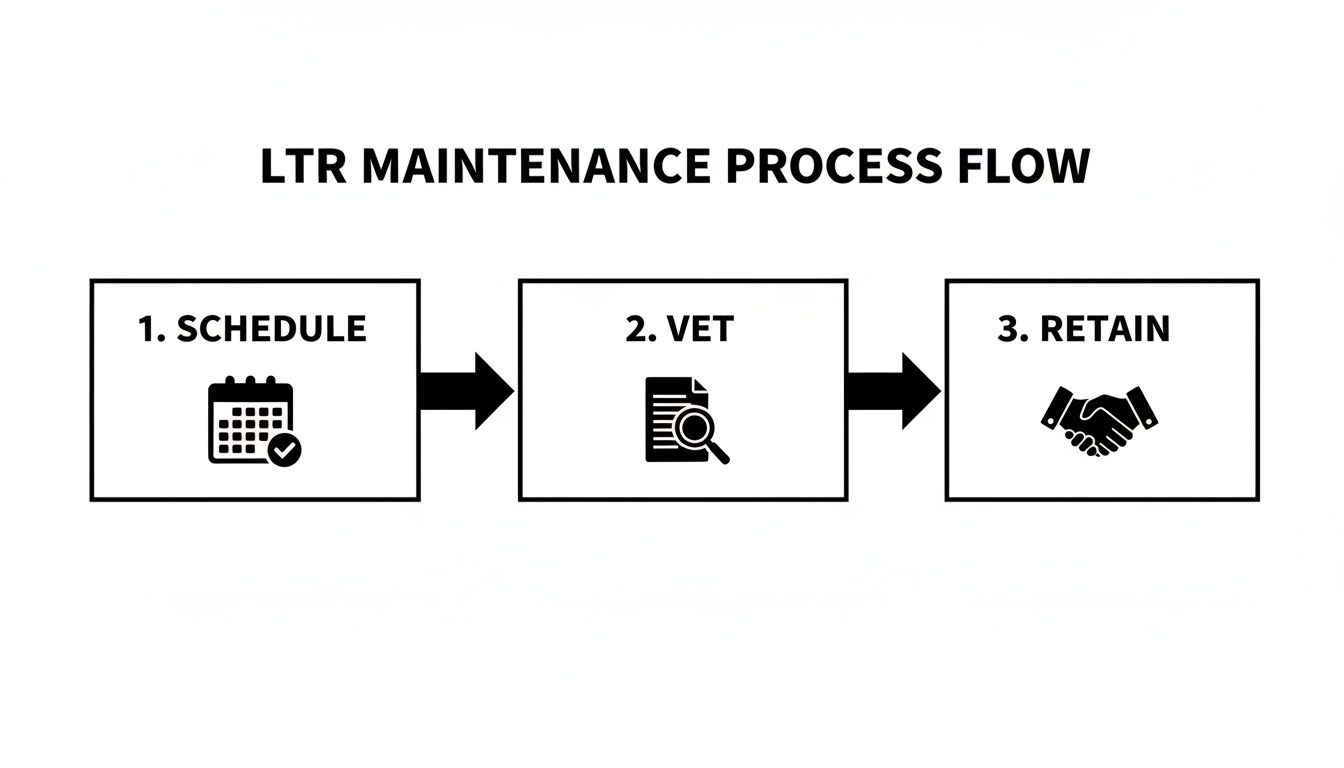
Maintenance is handled very differently in long-term rentals. A weekend guest might not report a small drip. A long-term tenant expects their home to be in good working order.
You need to shift from quick fixes to proactive, planned care. A DIY approach is not enough. You need a reliable plan to protect your property and keep good tenants.
From Quick Fixes to Proactive Care
With a long-term rental, your focus should be on the long-term health of your property. Small problems can turn into expensive emergencies if ignored. A proactive maintenance schedule can prevent this.
Your plan should include:
- Regular HVAC Servicing: Inspect heating and cooling systems twice a year.
- Appliance Checks: Make sure all appliances are working correctly.
- Gutter Cleaning: Clean gutters to prevent water damage.
- System Inspections: Schedule professional checks for plumbing and electrical systems.
This approach saves you money and shows your tenant you are a responsible landlord. Our guide on smart maintenance for rental properties offers more tips.
The Importance of a Vetted Vendor Network
When an emergency happens, you need to act fast. Having a network of reliable, local vendors is essential. This is especially true for owners who live out of the area.
A professional property manager already has a list of trusted contractors. This ensures quality work at a fair price.
At Torrente Property Management, we have built strong relationships with the best vendors in Monterey County. We handle all maintenance coordination, from routine calls to 24/7 emergencies. This protects your property and gives you peace of mind.
Frequently Asked Questions
Switching rental types is a big decision. Here are answers to common questions we hear from property owners like you.
Will I Make Less Money with a Long-Term Rental?
Not necessarily. While gross rent might be lower, your net profit is often higher and more stable. You save money on cleaning, supplies, utilities, and high management fees. This leads to more predictable income without the seasonal ups and downs.
Is It Difficult to Find a Good Long-Term Tenant?
Finding a quality tenant requires a professional process. A thorough screening with credit, background, and income checks is key. This process is the best way to reduce your risk. A good property manager handles this for you.
What if I Want to Use My Property Occasionally?
This is a major difference. Once you sign a long-term lease (usually 12 months), the property is the tenant's legal home. You cannot use it for personal stays during the lease. If you need regular access, a long-term rental may not be the right fit.
What Is the Biggest Legal Mistake to Avoid When Switching?
The biggest mistake is using a generic lease from the internet. You must use a lease that is fully compliant with California and local laws. An improper lease can expose you to huge legal and financial risks. Always use a current, state-specific lease reviewed by an expert.
Do I Need to Change My Property Insurance?
Yes, absolutely. An STR policy is a commercial policy. You must switch to a landlord insurance policy. This policy provides the correct coverage for property damage and liability for a long-term tenancy.
Making the switch from short-term host to long-term landlord can feel like a lot. But you don’t have to do it alone. Torrente Property Management knows the Monterey County regulations and rental demand patterns.
Contact Torrente Property Management today at (831) 582-8916 for a free evaluation of your property’s long-term rental potential.

Top 5 Prep Tips for First-Time Landlords in 2026
Stepping into the role of a landlord in Monterey Bay for the first time in 2026 can be incredibly rewarding. But it requires careful preparation.
Whether you inherited a property, are a military family on deployment, or an investor living out-of-town, the path to reliable cash flow has challenges. Overlooking key steps can lead to costly vacancies, legal risks, and long-term headaches.
In fact, properties that are poorly prepared can sit vacant for weeks longer than well-maintained ones, costing thousands in lost rent. This guide provides the top 5 prep tips for first-time landlords in 2026, offering clear strategies to protect your investment and attract high-quality tenants.
Our goal is to give you a clear roadmap for your rental journey. Let's explore the essential steps to rent your home right, from legal compliance and tenant screening to property readiness.
1. Create a Bulletproof Tenant Screening Process
For first-time landlords, poor tenant screening is one of the costliest mistakes. A strong, documented screening process is your best defense against late payments, property damage, and evictions.
A bad tenant can cost you dearly. Industry data from TransUnion shows that eviction-related expenses can average $3,500 per incident. A solid vetting system protects your cash flow and property value.
Why a Standardized Process Matters
A consistent screening process is not just about finding a good tenant; it is about legal protection. By setting clear, written criteria and applying them to every applicant, you comply with the Fair Housing Act.
This protects you from discrimination claims and shows a professional approach. Torrente’s rigorous vetting process—including credit, background, and rental history—protects owners from non-payment and property damage.
Actionable Steps for a Strong Screening System
- Set Clear Criteria: Before listing your property, define your minimum requirements. This includes a minimum credit score, a specific income-to-rent ratio (typically 3x the rent), and a clean eviction history.
- Verify Everything: Always verify income and rental history directly. Ask for recent pay stubs and call previous landlords to ask about payment history and property condition.
- Get Written Consent: You must get signed permission from every applicant before running credit or background checks. This is a non-negotiable legal requirement.
Partnering with an expert like Torrente Property Management streamlines this process. Our team uses professional tools and deep experience to find reliable tenants for our clients across Monterey Bay.
2. Make Your Property Rent-Ready
First impressions count. Homes that show poorly sit vacant longer. A rent-ready home is not just clean; it is safe, compliant, and priced to attract great tenants quickly.
This preparation is one of the most vital prep tips for first-time landlords in 2026. It sets the stage for a successful, low-stress tenancy.
A well-maintained property in the Monterey Bay area can command higher rental rates and lease faster. Neglecting this step can lead to liability claims and a poor reputation.

Why Proper Prep is an Investment
Strategic property preparation is not an expense; it is an investment. It boosts rental income, reduces vacancy, and lowers long-term financial risks.
Torrente helps owners with property prep, from minor repairs to curb appeal enhancements. This is key to faster leasing and better returns.
Actionable Steps for a Rent-Ready Home
- Prioritize Safety: Before anything else, address safety. Fix any electrical hazards, ensure plumbing is working, test smoke detectors, and address any structural issues.
- Boost Curb Appeal: Simple fixes like fresh paint, clean landscaping, and a welcoming entryway make a huge difference.
- Price with Precision: Do not guess your rental rate. Use a Comparative Market Analysis (CMA) to analyze similar local properties. Overpricing leads to long vacancies.
For first-time or out-of-town landlords, coordinating this process can be overwhelming. Torrente Property Management offers a hands-on approach to get your property ready for the market.
3. Understand Local Compliance to Avoid Risk
Treating your rental property like a business from day one is essential. This means setting up strong financial systems and following all laws.
Even a simple rental listing must align with Monterey County regulations. Failing to meet housing codes or lease terms can derail your rental.
Neglecting local compliance creates serious risk. A landlord who mixes personal and rental funds can face IRS penalties and lose personal liability protection in a lawsuit.
Why Following the Rules Matters
California’s landlord-tenant laws are complex. By creating standard, documented processes for every legal requirement, you show professionalism and reduce risk.
For example, California law requires landlords to return an itemized list of security deposit deductions within 21 days. Failing to do this can result in costly penalties. Torrente ensures homes meet every requirement from day one.
Actionable Steps for Legal & Financial Health
- Establish Separate Bank Accounts: Open a dedicated business checking account for all rental income and expenses. Also, open a separate trust account for security deposits.
- Use a California-Compliant Lease: Do not use generic online templates. Your lease must include state-mandated disclosures. Consider using real estate e-signature solutions for efficiency.
- Document Every Expense: Keep detailed records of all repairs, maintenance, and other property-related expenses. This will help you at tax time.
For owners in Monterey Bay, especially those who are out-of-area, managing these details is a challenge. Torrente Property Management handles all accounting and ensures every lease is fully compliant.
4. Plan for Maintenance and Emergencies
For new landlords, a costly after-hours emergency is a major financial risk. A burst pipe or a failed heater can quickly turn into a multi-thousand-dollar disaster.
A proactive maintenance plan is your best defense. It extends the life of your property’s systems and keeps tenants safe and happy.
Why a Proactive Plan is Key
A documented maintenance and emergency plan provides structure and legal protection. It is especially critical for absentee or military owners who cannot be there in person.
Proactive maintenance shifts your role from a reactive problem-solver to a strategic asset manager. It saves you thousands while protecting your property's long-term value.
Actionable Steps for a Maintenance System
- Create a Seasonal Calendar: Schedule tasks based on the season. In spring, service the HVAC and clean gutters. In fall, inspect the roof and heating system.
- Build a Vetted Vendor List: Develop relationships with trusted local contractors for plumbing, electrical, and appliance repairs. This prevents overpaying for emergency services.
- Educate Your Tenants: Provide tenants with a move-in packet that explains their role in basic upkeep, such as changing air filters or reporting leaks promptly.
Partnering with a property manager is the most effective solution. Torrente Property Management provides a 24/7 emergency hotline and uses our network of contractors to protect your investment.
5. Get the Market Timing Right
In real estate, timing is everything. Certain seasons—like spring and early summer—yield higher tenant demand in the Monterey Bay area.
Missing the right market timing can cost you rent. Listing a property during a slow season can lead to longer vacancies and lower offers.

Why Local Market Knowledge Matters
The Monterey Bay rental market has its own unique cycles. For example, military families often move during the summer, creating a surge in demand near local bases.
A landlord who listed a home in Salinas in late fall might wait weeks for a qualified tenant. The same home listed in May could be rented in days at a higher price.
Torrente Property Management guides clients on the best listing times. We help you avoid slow leasing cycles and take advantage of peak interest.
Actionable Steps for Perfect Timing
- Analyze Seasonal Trends: Research your specific area. Is it a summer destination like Carmel or a year-round community like Monterey?
- Prepare in Advance: Start your property prep work 1-2 months before your target listing date. This ensures you are ready when demand is highest.
- Be Flexible on Lease Terms: If you must list in an off-season, consider offering a shorter 6-month lease. This allows you to renew the lease during a stronger season.
Understanding these local dynamics is key to maximizing your rental income.
Frequently Asked Questions (FAQs)
How much should I save for maintenance and repairs?
A good rule is to set aside 1-2% of the property's value annually for maintenance. For a $700,000 home in Monterey, that would be $7,000 to $14,000 per year.
What insurance do I need as a landlord?
You need a specific landlord insurance policy. This covers property damage, liability protection, and loss of rental income. It is different from a standard homeowner's policy.
How do I determine the right rent price?
Conduct a comparative market analysis (CMA). Look at what similar properties in your neighborhood (e.g., Salinas, Carmel) are renting for. This helps you set a competitive price that minimizes vacancy.
Do I need a property manager?
While not required, a property manager is highly recommended, especially for first-time or out-of-town landlords. They handle tenant screening, rent collection, maintenance, and legal compliance, saving you time and stress.
What are the biggest legal mistakes new landlords make?
The most common mistakes include mishandling security deposits, violating Fair Housing laws during screening, and failing to follow proper eviction procedures. These errors can lead to costly lawsuits.
Your Partner for a Confident Start in 2026
Becoming a landlord is a big step. The right partner can make all the difference. Preparing a home for rent is more than cleaning—it is a strategic process.
Torrente’s hands-on approach gives out-of-town and first-time landlords confidence. We provide a faster path to cash flow by handling every detail.
Key Takeaways
- Screen Tenants Thoroughly: A rigorous process is your best protection against future problems.
- Prepare Your Property Well: First impressions matter and can lead to higher rent and shorter vacancies.
- Follow All Laws: Understand and comply with local and state regulations to avoid fines.
- Plan for Maintenance: A proactive approach saves money and keeps tenants happy.
- Time the Market: Listing your property at the right time can significantly impact your income.
Whether you have just moved or inherited a property, Torrente Property Management can help you rent it right. We offer personalized service with integrity and a focus on our community.
Ready to turn your Monterey Bay property into a successful rental in 2026? Contact Torrente Property Management today at (831) 582-8916 for a personalized rental readiness plan. Contact us today for a personalized rental readiness plan!

Renting or Selling Your Home? Read This First
Deciding to rent out your home instead of selling it is a huge decision. It impacts your finances and your lifestyle. If you're wondering, "should I rent my house instead of selling it?" there's no easy answer.
Renting can build long-term wealth. Selling offers immediate cash. The right choice depends on your goals, your money situation, and how much time you want to spend as a landlord.
The Rise of the Accidental Landlord in Monterey Bay
In Monterey Bay, many homeowners are becoming landlords by circumstance, not by choice. High mortgage rates and a strong local rental market make renting seem like a good option when a house doesn't sell quickly.
This trend is happening everywhere. In 2023, about 1 in 10 move-up homebuyers nationwide kept their old home as a rental instead of selling it (cocotherealtor.com). This makes the rent-or-sell question more common and complex.
But being a landlord is more than just collecting rent. It's a new job with legal duties and risks. Before you decide, you need to understand what each path really means.
Renting vs. Selling: A Quick Look
This table shows the main differences between renting and selling your home in today's market.
| Factor | Renting Your Property | Selling Your Property |
|---|---|---|
| Financial Outcome | Creates steady monthly income and builds long-term wealth. | Provides a large, one-time cash payment. |
| Time Commitment | Needs ongoing management of tenants and property care. | Your commitment ends after the sale is final. |
| Risk Level | Involves risks like empty periods, tenant damage, and legal issues. | The main risk is the housing market changing before you sell. |
| Market Dependency | Success depends on local rental demand and home value growth. | Relies on the current real-estate sales market. |
| Tax Implications | Offers tax deductions but needs careful planning. | You might have to pay capital gains tax on the profit. |
This overview is a good start, but the real answers are in the numbers. Let's look at a detailed financial analysis to see which option fits your goals.
Comparing The Financial Outcomes Of Renting vs Selling
Should you rent out your Monterey County home or sell it? This choice comes down to one thing: do you want cash now or wealth over time? It's a single payment versus a long-term asset.
Let's break down the numbers for each option in our local market.
How to Figure Out Your Rental Income
Renting seems simple: collect rent, pay the mortgage, keep the rest. But to know if it's truly profitable, you need to find the net operating income (NOI). This is your total income minus all your operating costs.
To get a clear picture, you must account for real-world expenses. These costs reduce your gross rental income.
Common Rental Expenses Include:
- Mortgage: This is usually your biggest expense.
- Property Taxes: A major cost for any California homeowner.
- Landlord Insurance: This policy costs more than a standard one but is necessary.
- Maintenance & Repairs: Plan to budget 1-2% of the property's value each year for upkeep.
- Property Management Fees: Local fees are usually 8-12% of the monthly rent. This service saves you time and reduces legal risks.
Subtract these costs from your potential rent to find your estimated cash flow. Here in Monterey County, the potential is strong.
With the average rent for a 3-bedroom home in Monterey County at $5,145 per month (attomdata.com), a single property can generate significant income—if managed correctly.
This infographic shows the main trade-offs between renting and selling.
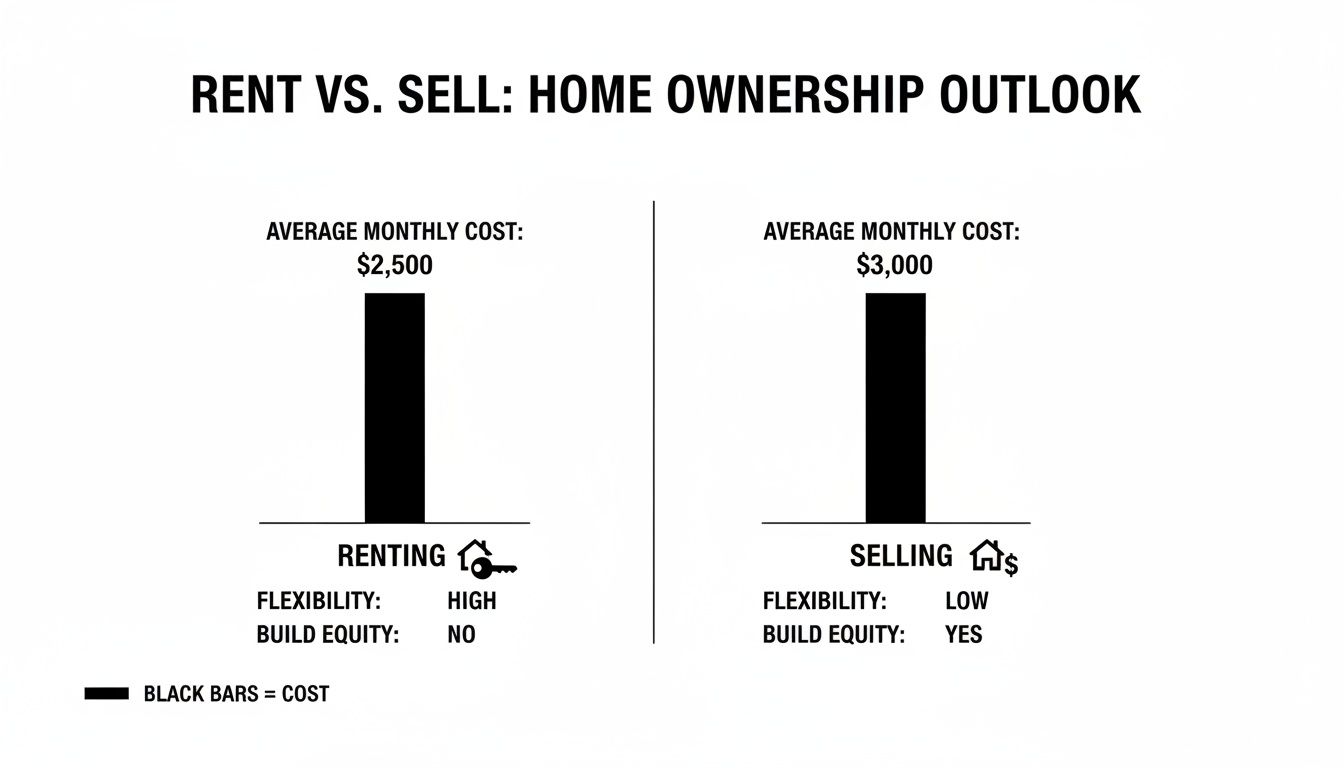
Selling gives you cash right away. Renting creates steady income and long-term growth.
A Sample Financial Scenario in Monterey Bay
Let's look at a sample scenario for a home in our area. This table shows the financial reality of each choice.
| Financial Metric | Renting Scenario (Annual) | Selling Scenario (One-Time) |
|---|---|---|
| Gross Income / Sale Price | $61,740 (based on $5,145/mo rent) | $950,000 (sample price) |
| Vacancy Loss (5%) | ($3,087) | N/A |
| Property Taxes | ($10,000) | N/A |
| Insurance | ($2,000) | N/A |
| Maintenance (1%) | ($9,500) | N/A |
| Management Fees (8%) | ($4,939) | N/A |
| Mortgage Payments | ($36,000) | N/A |
| Agent Commissions (5.5%) | N/A | ($52,250) |
| Closing Costs (2%) | N/A | ($19,000) |
| Remaining Mortgage | N/A | ($400,000) |
| NET INCOME / PROCEEDS | ($3,786) Cash Flow + Equity Paydown | $478,750 Cash Proceeds |
This comparison makes the choice clear. Selling provides a large amount of cash immediately. The renting option, while showing negative cash flow here, builds wealth as the mortgage is paid down and the property value grows.
The Long-Term Financial Power of Renting
Renting your property unlocks powerful wealth-building tools that selling cannot match. These benefits grow over time, turning your former home into a valuable asset.
Key Long-Term Advantages:
- Property Appreciation: Real estate in areas like Monterey, Salinas, and Carmel tends to increase in value over time. Your asset grows while your tenant helps pay for it.
- Building Equity: Every mortgage payment increases your ownership stake. It’s like a forced savings account that builds your net worth.
- Tax Benefits: You can deduct many operating expenses. You can also claim depreciation, a deduction for wear and tear that can lower your taxable income.
Selling gives you a lump sum today. Renting lets your asset keep working for you. Learn more in our guide on what net operating income is.
How to Calculate Your Profit from a Sale
Selling provides a large sum of cash. But the sale price isn't what you'll get in your bank account. You need to calculate your net proceeds to see your actual profit.
Start with the final sale price, then subtract the costs of the sale.
Typical Selling Costs:
- Real Estate Agent Commissions: Usually the biggest cost, around 5-6% of the sale price.
- Closing Costs: These include escrow fees, title insurance, and other charges, adding up to another 2-4% of the sale price.
- Home Prep & Staging: Costs for repairs, paint, or staging to get your home ready for sale.
- Capital Gains Tax: You may owe tax on the profit if the property was not your main home for at least two of the last five years.
Subtracting these costs from the sale price gives you the final amount you’ll receive.
Understanding the Responsibilities of a Landlord
Changing from a homeowner to a landlord is a major shift. Before you decide to rent your home, it's important to understand the legal duties and daily work involved.

Many new landlords lack experience in tenant screening, legal rules, and property maintenance. Simple mistakes in these areas can lead to big legal or financial problems. This can turn a good investment into a source of stress.
Finding the Right Tenant
Your success as a landlord depends on finding a great tenant. This is a careful process to protect your property and ensure you get paid. A good screening process is your best defense against future issues.
A good screening process includes:
- Credit Checks: A credit history shows how financially responsible a person is.
- Background Checks: This confirms their identity and checks for any criminal history.
- Rental History: Calling previous landlords helps you learn if they paid rent on time and took care of the property.
- Income Verification: Make sure the applicant earns enough (usually 3x the monthly rent) to pay reliably.
Taking shortcuts here is a common and costly mistake. One bad tenant can cause months of lost rent, expensive legal fees, and property damage.
Following the Law
California has some of the strictest landlord-tenant laws in the country. As a landlord, you must follow all federal, state, and local rules. This includes fair housing laws that prevent discrimination.
A strong lease agreement is key. It's a legal document that lists the rights and duties of both you and the tenant. It protects you from future arguments.
The law covers everything from handling security deposits to the eviction process. One mistake, like a wrong clause in your lease, can lead to a lawsuit and large fines. Learn more about landlord responsibilities in California.
Handling Daily Property Maintenance
Being a landlord means you are responsible for keeping the property safe and in good condition. This is a 24/7 job.
Your maintenance duties include:
- Routine Upkeep: This covers landscaping, HVAC service, and making sure appliances work.
- Scheduled Repairs: You need to fix non-urgent issues like a leaky faucet in a timely manner.
- Emergency Calls: You must be ready for late-night calls about a burst pipe or a broken heater.
These tasks require a network of trusted professionals like plumbers and electricians. If you live far from your rental, this can be very hard to manage. Failing to maintain the property can lead to legal trouble.
Is Your Monterey Property Truly Rent-Ready?
Before you decide to rent, you need to look at your property honestly. Is it truly "rent-ready?" A home that is ready for tenants attracts better people, gets higher rent, and prevents future problems.
This means checking the home's condition and its appeal in the local Monterey market.
Check Your Home's Physical Condition
First, walk through your property from top to bottom. A clean, safe, and well-kept home is always in demand. Look for any needed repairs that could become bigger issues later.
Your goal is to make the home attractive and safe. All systems must work properly before a tenant moves in.
Key areas to check:
- Essential Repairs: Fix small problems like a leaky faucet or sticky door now to avoid bigger costs later.
- Safety Rules: Make sure smoke and carbon monoxide detectors are working and meet California code. Check that all locks are secure.
- Cosmetic Updates: A fresh coat of paint and clean carpets can make a big difference.
- Curb Appeal: The first impression matters. Knowing the best way to clean your house exterior can help your property rent faster.
A detailed rental property inspection checklist for landlords can help you cover all the bases.
Analyze Local Market Demand
Next, see how your property compares to others in the local rental market. A great house in the wrong location or with the wrong price won't perform well. Think about what renters in Monterey, Salinas, or Carmel want.
Is your home near good schools or major employers? These features are a big draw and can allow for higher rent.
A property’s location is very important. Rental demand in North Salinas can be very different from Carmel, affecting price and how long it takes to find a tenant.
Research what similar homes ("comps") in your area are renting for. This helps you set a competitive price that attracts good applicants.
Make Sure You Are Financially Ready
Finally, do the math. A property is financially ready only if the rent covers all your expenses with a cushion for surprises.
Add up your total monthly costs: mortgage, insurance, and property taxes. Then, set aside a fund for unexpected repairs, like a broken water heater. A good rule is to save 5-10% of the monthly rent for this purpose.
Compare this total cost to the market rent you found. If the rent covers everything with a good margin, your property is ready to be a strong rental investment.
When to Partner with a Property Manager
Deciding to rent your property is a big step. The next question is: should you manage it yourself? For many new or out-of-town landlords, this is when an investment can turn into a stressful second job.
Partnering with a professional property manager is a smart move. It protects your property, increases your return, and gives you back your free time.
Torrente Property Management specializes in helping first-time and out-of-area landlords. From writing legal leases to handling daily tasks, we protect your property and your peace of mind.
Who Should Hire a Property Manager?
There are a few common situations where hiring a property manager makes perfect sense. If any of these points describe you, professional help is likely the right choice.
Consider hiring a manager if you:
- Live far away: Managing a property in Salinas while you live in another state is very difficult. A local manager is your presence on the ground.
- Don't have enough time: A demanding job or family life can make property management overwhelming.
- Don't want to handle daily problems: Many owners want the financial benefit of a rental without the stress of dealing with tenants and repairs.
- Are worried about legal rules: California's landlord laws are complex. A professional manager stays up-to-date on all legal needs, protecting you from mistakes.

A professional presence helps attract good tenants and builds trust.
The Value of Local Monterey Expertise
When renting a home here, local knowledge is key. A management company with deep roots in Monterey Bay, like Torrente Property Management, offers more than just admin support. We understand the local markets in Monterey, Carmel, and Salinas.
This local expertise provides real benefits. We know the right rent to set to find tenants quickly. We have a network of reliable and fair-priced repair professionals. Our bilingual (English/Spanish) services also help us connect with more great applicants.
Learn more about the benefits of professional property management in our guide.
According to leadsimple.com, over 85% of property investors say working with a manager reduces their workload and legal risk. For new landlords, this partnership can be the difference between stress and success.
Knowing the right actionable questions to ask a property management company will help you find the best partner. At Torrente, we provide the integrity and responsive service you deserve.
Making the Right Choice for Your Situation
After looking at the numbers and thinking about being a landlord, the decision to rent or sell is personal. There is no "right" answer for everyone. The best choice depends on your goals, finances, and comfort with risk.
Selling offers a clean break and a large amount of cash. Renting is a long-term plan to build wealth, but it requires your time and effort.
When Renting Makes the Most Sense
Renting is often the best choice if you have a long-term view. If you don't need cash right now and see the potential for your property to grow in value, becoming a landlord may be for you.
You should consider renting if:
- You plan to own the property for a long time. If you can hold it for five years or more, you give it time to appreciate while tenants help pay the mortgage.
- The numbers show positive cash flow. After all expenses, the rent should more than cover your costs.
- You are ready for landlord duties. You must be prepared for the responsibilities, whether you manage it yourself or hire a professional.
When Selling Is the Better Option
In some cases, selling is the smarter and less stressful choice. Not every home makes a good rental, and not every owner is meant to be a landlord. Selling gives you a clean break.
Selling is likely better if:
- You need cash now. If you need the money for a down payment or other major expense, a sale is the fastest way to get it.
- The home needs major repairs. If the property needs a new roof or other big fixes you can't afford, selling "as-is" may be best.
- You want to avoid landlord risks. If the idea of late-night repair calls and tenant issues sounds like a nightmare, selling provides instant peace of mind.
If you’ve decided to rent your former home, don’t go it alone. Torrente Property Management offers local expertise and full-service support for accidental landlords in Monterey, Salinas, and nearby communities.
Contact Torrente Property Management today at (831) 582-8916 for a free rental analysis.
FAQs About Renting vs. Selling Your Home
Here are answers to some common questions we hear from homeowners in Monterey Bay who are deciding whether to rent or sell.
How do I set the right rental price for my home?
To set the right rent, you need to research similar rental properties in your specific Monterey County neighborhood. You should also consider your home's unique features, size, and condition. A professional property manager can do a detailed rental analysis to find the best price that maximizes your income.
What are the main tax benefits of renting out my property?
The biggest tax benefits for landlords come from deductions. You can deduct most operating costs, like mortgage interest, property taxes, insurance, and repairs. You can also claim depreciation, which is a deduction for the property's wear and tear that can lower your taxable income.
Can I manage my property myself if I live far away?
You can, but it is very difficult and risky. Handling emergencies, doing inspections, and showing the property to new tenants is a major challenge from a distance. Most out-of-area landlords find that professional management is necessary to protect their investment.
How long does it usually take to find a good tenant?
In a popular market like Monterey Bay, a well-priced and well-maintained property can often be rented within 30 days. The time of year, asking price, and home's condition can affect this timeline. Professional marketing and a thorough application process help reduce how long the home is empty.
What happens if a tenant damages my property or doesn't pay rent?
You must follow a strict legal process defined by California law. This involves giving proper notices and possibly going to court to handle an eviction or get money for damages. A professional property manager knows how to handle these legal steps correctly to protect your rights. See our guide on common mistakes new landlords often make.

What $5,000 Rents Mean for Monterey Property Owners
Hitting the $5,000 rent milestone in Monterey Bay isn't just a number. It is a powerful signal of our region's strong rental market. For local property owners, this figure means serious cash flow and a clear path toward building long-term wealth.
As of 2024, the average rent for a 3-bedroom home in Monterey County is approximately $5,145 per month (attomdata.com). This places the region among the highest rental markets in the nation. This trend turns an underused second home into a high-performing asset.
The Reality of a $5,000 Rental in Monterey Bay

When rental rates climb to $5,000 per month, it shows a stable investment environment. This is not a temporary spike. It is the result of unique market conditions in our beautiful coastal communities, from Carmel to Salinas.
This trend is about supply and demand. Monterey County attracts high-income professionals, military families, and retirees looking for quality housing. This creates a deep pool of qualified tenants ready to pay premium rents.
What Drives This Premium Market?
A few key factors keep our local rental market robust. Military institutions, a strong agricultural sector, and world-class hospitality bring a constant flow of new residents.
At the same time, geographic boundaries and community planning limit new housing construction. This scarcity drives up the value of existing properties. As a local property owner, you are in the perfect position to benefit.
For owners, a $5,000 monthly rent is more than just income. It’s confirmation that their property is a valuable, appreciating asset capable of generating substantial returns in one of California's most desirable locations.
Understanding the Financial Impact
The numbers speak for themselves. Recent data from attomdata.com shows rental rates in Monterey County are increasing faster than home prices. This signals a strong income opportunity for landlords.
Here’s a quick summary of what this means for your bottom line.
What a $5,000 Rent Means For Your Property
| Area of Impact | What It Means for Local Owners |
|---|---|
| Cash Flow | Your rental income comfortably covers the mortgage, taxes, insurance, and maintenance, leaving a healthy profit each month. |
| Property Value | High rents directly increase your property’s market value, as investors often base their offers on income potential. |
| Tenant Quality | Premium properties attract premium tenants—often professionals or families who are more likely to care for the home and stay longer. |
| Investment Grade | Your property is no longer just a house; it’s a proven, high-performing asset in a top-tier California market. |
This level of rental income has a profound effect on your financial outlook. The table above makes it clear just how impactful it can be.
Here's a closer look at those benefits:
- Strong Positive Cash Flow: Rents at this level almost always cover your mortgage, property taxes, insurance, and maintenance costs, with a healthy profit left over.
- Increased Property Valuation: High rental income directly boosts the market value of your property. Savvy investors often calculate purchase prices based on a property's power to generate income.
- Attraction of Quality Tenants: Premium properties attract premium tenants. We're talking about established professionals or families who are more likely to treat the home as their own and stay for longer periods.
For anyone who owns a second home or is wondering what to do with a former residence, the message is clear. Now is the perfect time to explore its true rental potential.
What’s Pushing Local Rents So High?
Have you ever wondered how properties in Carmel, Monterey, and Pacific Grove command such high rents? The answer is a powerful local economy that creates steady demand where housing supply is tight.
Understanding these forces is key. It shows that the $5,000 monthly rent figure isn’t a market blip. It is built on a solid foundation, creating a powerful opportunity for property owners.
A Powerful Mix of Economic Drivers
The Monterey County economy is remarkably stable. It is fueled by three core sectors that constantly attract high-income professionals who need quality places to live.
These pillars of our local economy are:
- Stable Military Institutions: The Naval Postgraduate School and the Defense Language Institute bring a constant flow of well-compensated military personnel and their families.
- A Thriving Agricultural Sector: The Salinas Valley is a global hub for agriculture. This attracts executives, researchers, and ag-tech professionals who drive a strong rental market.
- Robust Hospitality and Tourism: Our world-famous coastline and attractions power a high-end hospitality industry. This means a steady influx of managers and professionals needing premium long-term housing.
This blend of military, agriculture, and tourism creates a resilient economic base. It ensures a continuous pipeline of qualified tenants. That keeps vacancy rates low and rental income high.
The Unmistakable Impact of Supply and Demand
Strong demand is only half of the story. The other half is our region's limited housing supply. This scarcity is a huge reason what $5,000 rents mean for local property owners is long-term financial stability.
With the Pacific Ocean on one side and vast agricultural lands on the other, there are natural barriers to sprawl. This geographic reality means new housing development is inherently limited, making existing properties more valuable over time.
This scarcity is a direct benefit to you as a property owner. With fewer new units hitting the market, competition for available homes stays high. This dynamic supports premium rental pricing and helps protect your property’s value.
With rents exceeding $60,000 annually for some single-family homes, long-term leasing in Monterey Bay offers better returns than many short-term rentals. This is especially true as local regulations tighten. Learn how new short-term rental regulations may impact your decisions in our detailed guide. This shift increases the demand for high-quality, long-term rentals.
Calculating The Real Return On Your Investment
A $5,000 monthly rent check is a great feeling. To understand what that number means, you have to look past the gross income and figure out what your investment is actually earning.
Turning a $60,000 annual gross rent into profit requires a hard look at your expenses. A simple profit and loss breakdown reveals the financial engine. Let's walk through what this looks like for a home in Monterey.
From Gross Rent To Net Operating Income
The journey from gross rent to real return starts with subtracting your operating costs. These are the predictable expenses that separate savvy investors from hobbyist landlords.
The key metric here is your Net Operating Income (NOI). Think of it as the pure profit your property generates before your mortgage or income taxes. A healthy NOI is the bedrock of a solid rental investment. Our guide on what is net operating income is a great place to start.
A Hypothetical Monterey Rental Breakdown
Let's put some real numbers to this. Imagine a single-family home in Monterey bringing in $5,000 per month. Here’s a quick sketch of how the annual finances might play out:
- Gross Annual Rent: At $5,000 x 12 months, your total income is $60,000.
- Property Taxes: A fair estimate for a home at this value in Monterey County is around $8,000 per year.
- Insurance: A solid landlord policy is non-negotiable. Let’s budget $1,500 for the year.
- Maintenance & Repairs: A good rule of thumb is to set aside 5% of gross rent, which comes out to $3,000.
- Property Management: A typical fee is 8-10% of collected rent. At 8%, that’s $4,800 a year.
After subtracting these costs, your Net Operating Income (NOI) is $42,700. This is the real cash your property is putting in your pocket. It is always a good idea to learn how to calculate return on investment accurately.
Sample Annual Return On A $5,000 Per Month Rental
| Financial Item | Example Annual Amount | Description |
|---|---|---|
| Gross Annual Rent | $60,000 | Total income from rent collected over 12 months. |
| Less: Property Taxes | $8,000 | Estimated annual taxes for a high-value Monterey County property. |
| Less: Landlord Insurance | $1,500 | Essential coverage for liability and property damage. |
| Less: Maintenance Fund | $3,000 | Budget for repairs and routine upkeep (5% of gross rent). |
| Less: Property Management | $4,800 | Professional management fee (8% of collected rent). |
| Net Operating Income (NOI) | $42,700 | The property's profit before mortgage and income tax. |
This breakdown shows the clear path from gross rent to a substantial net income. It highlights the strong financial performance possible in our local market.
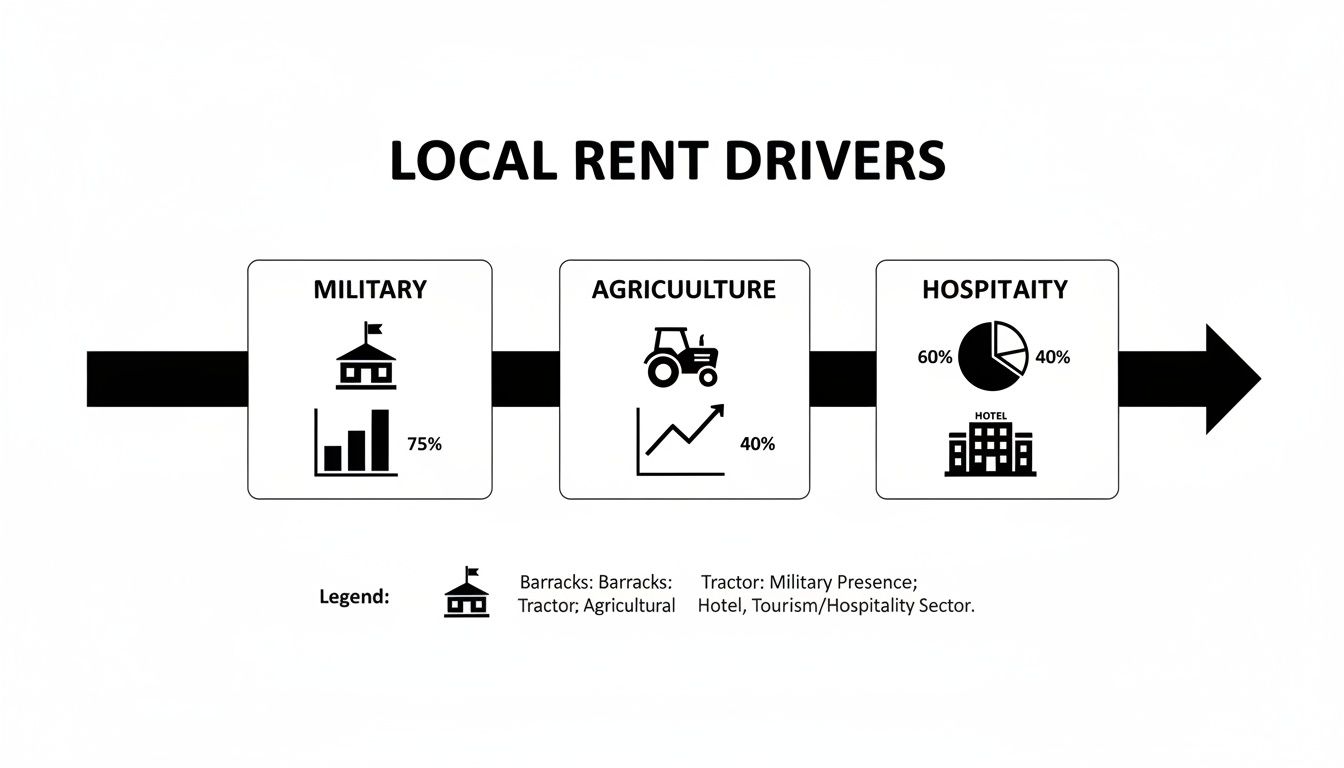
The steady demand from our region's core economic pillars creates a constant need for quality rental housing.
The Bigger Picture Your NOI Reveals
A strong NOI does more than just boost your bank account. It creates a powerful ripple effect that builds long-term wealth.
A high Net Operating Income not only provides robust monthly cash flow but also significantly increases your property's overall valuation. Lenders and potential buyers see this proven income stream as a sign of a low-risk, high-performance asset.
This financial strength makes it easier to secure financing for your next investment. When you show a bank a property with a proven track record of profitability, you become a low-risk borrower. This can unlock opportunities to expand your real estate portfolio.
Attracting And Keeping The Right Tenants
A premium rent attracts a premium tenant. When your property commands $5,000 or more per month, your focus shifts to finding the right people who will call it home.
Marketing to and retaining this caliber of tenant is key to minimizing vacancy and creating a stable income stream.
The first step is understanding who these tenants are. They are often established professionals, families relocating for work, or military officers. They value a well-maintained home and are often willing to sign longer leases.
What Premium Tenants Look For
Tenants in the $5,000 market have high expectations. A nice house is the baseline, not the selling point. You have to offer the features they are actively seeking.
Here are features that attract this audience in the Monterey Bay area:
- Modern and Updated Spaces: A renovated kitchen with high-end appliances and updated bathrooms are often non-negotiable.
- Pet-Friendly Policies: A clear, reasonable pet policy can dramatically widen your pool of qualified applicants.
- Proximity to Key Locations: Access to top-rated schools in Carmel or Monterey and an easy commute are huge draws.
- Outdoor Living Areas: A well-kept yard or a private patio provides valuable extra living space.
Meeting these expectations helps you attract the right people and justifies your premium rent. Understanding effective rental property marketing strategies is paramount.
A Rigorous Screening Process Protects Your Investment
A thorough screening process is your most important tool for protecting your asset. It goes far beyond a basic credit check. It validates an applicant's ability to pay and gives you a clear picture of their rental history.
The goal of screening isn't just to fill a vacancy; it's to find a long-term partner who will respect your property, pay on time, and communicate effectively. A few extra steps upfront can save you from significant headaches down the road.
Your screening checklist should always include these four pillars:
- Credit and Background Check: This verifies financial responsibility and reveals any red flags.
- Income Verification: Ensure the applicant's income is at least three times the monthly rent.
- Rental History Review: Call their previous landlords to confirm their history of timely payments.
- Personal Interview: A simple conversation can provide valuable insights.
This process is fundamental to what $5,000 rents mean for local property owners. It is how you secure a reliable income source from a responsible tenant.
The Value of Tenant Retention
Attracting a great tenant is only half the battle. Keeping them is where you truly maximize your return on investment. Tenant turnover is expensive. It involves marketing costs, vacancy periods, and preparation costs.
By fostering a positive landlord-tenant relationship and being responsive, you encourage tenants to stay longer. This stability is the cornerstone of a successful investment. For more tips, explore our guide on the best tenant retention strategies for rental property owners.
Managing Your High-Value Property For Peak Performance

Managing a rental that commands $5,000 a month is about fine-tuning a high-performing asset. Small details can make a huge difference to your bottom line.
This is where professional property management becomes a strategic advantage. It's the key to maximizing returns and turning a stressful job into passive income. Torrente Property Management helps absentee and second-home owners capture this market opportunity by handling everything from leasing to maintenance.
The Pillars Of Professional Management
Effective management for a premium rental is built on a few core strategies. It is about being proactive, not just reactive.
Key strategies include:
- Data-Driven Rent Setting: We use real-time market data to set a rental price that attracts top-tier tenants quickly.
- Proactive Maintenance: Proactive inspections and preventative care are crucial to get ahead of emergencies and avoid costly repairs.
- Navigating Complex Laws: California’s landlord-tenant laws are complex. Professional management guarantees full compliance, shielding you from legal risks.
These are the details Torrente Property Management handles for owners every day. Our job is to manage the complexities so you can enjoy the benefits.
Maximizing Returns And Minimizing Stress
Hiring a professional manager is a turning point for many investors. It allows them to focus on long-term strategy. The numbers back this up.
Professional management is key to maximizing returns: 71% of property investors who use management services report increased profitability (leadsimple.com). In a high-value market like Monterey, optimizing every detail matters.
This boost in profitability comes from shorter vacancy periods, lower repair costs, and consistent rent collection. You can explore more insights on how professional services impact investor success at LeadSimple.
This level of care is especially important for second homes. Many of our clients are absentee owners who count on our team for everything. Our estate caretaker and maintenance services on the Monterey Peninsula are designed to provide complete peace of mind.
Your Action Plan to Unlock Your Property's Full Potential
Capitalizing on the strong Monterey Bay rental market is within your reach. Success starts with a clear roadmap that turns your property into a high-performing investment.
The journey begins with understanding your property's true market value. A professional rental analysis is the first step. This data-driven assessment gives you a realistic rental price based on current local data.
This is the foundation of what $5,000 rents mean for local property owners. It means pricing your property based on solid data, not guesswork.
Taking The Next Steps
With a clear rental target, the next phase is preparation. Smart, cost-effective updates can boost your income potential.
- Focus on High-Impact Areas: Prioritize the kitchen and bathrooms. Small changes like new fixtures or fresh paint can make a big difference.
- Enhance Curb Appeal: First impressions are everything. A tidy lawn and a welcoming entryway signal that your property is well-cared-for.
- Ensure Functionality: Inspect all major systems like HVAC, plumbing, and electrical. Tackling small issues now is cheaper than emergency repairs later.
Think of these preparations as an investment, not an expense. Every dollar you spend on smart improvements directly contributes to attracting a higher caliber of tenant and justifying a premium rent.
If you own property in Monterey County or are considering holding onto a former residence, now is the time to explore its rental income potential. Torrente Property Management can guide you through the process from start to finish. Our team of local experts is here to help you build a personalized plan.
Contact Torrente Property Management today at (831) 582-8916 to start the conversation.
FAQs for High-Value Rental Owners
What kind of tenant rents a $5,000 property?
At this price point, you attract established professionals, corporate relocations, or financially secure families. They typically have excellent credit, stable income, and a strong rental history, making them reliable long-term residents.
Is professional property management worth it for one home?
Yes, especially for a valuable asset. Professional management protects your income by handling marketing, rigorous screening, and navigating complex California landlord-tenant laws, which can save you from costly mistakes.
How long does it take to find a tenant for a premium rental?
While it varies, high demand in Monterey County means well-maintained and fairly priced homes rent quickly. A proactive marketing strategy can often secure a highly qualified tenant within a few weeks, minimizing vacancy.
What if I don’t live in the Monterey area?
Managing a rental from a distance is very challenging, which makes professional management essential. We act as your local expert, handling everything from showings and inspections to emergency maintenance calls for absentee owners.
How do I figure out the right rent to charge?
Setting the right rent requires a deep analysis of current comparable listings and neighborhood trends. A professional rental analysis provides a data-backed recommendation to attract top-tier tenants without leaving money on the table.

Are Salinas Property Managers Worth the Fee? A Guide for Homeowners
Is it worth paying someone 8–10% of your rent to manage your rental home? If your property is in Salinas and you’re not nearby, it’s a fair question: are you getting real value for that fee? For many owners, that fee is a smart investment in their time and peace of mind.
Most landlords don’t realize how much time and risk comes with overseeing a rental. According to industry data, 39% of property managers spend 20+ hours per month just on maintenance issues (Source: Buildium). With Salinas’s active rental market and strict California regulations, having a professional in place cuts both your risk and your workload.
What is the Real Value of a Property Manager?
Seeing a management fee on a statement can feel like just another expense. But self-managing a rental property in Salinas comes with its own hidden costs in both time and money. The real question isn't about the fee itself, but whether it prevents bigger, more expensive problems later.

The hours required for proper oversight often surprise first-time landlords. Between tenant calls, marketing, and legal paperwork, it quickly becomes a part-time job.
The Hidden Costs of Self-Management
Many landlords underestimate the hidden costs of managing a property themselves. A poorly screened tenant can lead to late payments and stressful evictions. A non-compliant lease can result in an expensive legal battle. These mistakes often cost far more than a year of management fees.
A common misstep is hiring a "discount" property manager who only handles surface-level tasks. This can leave you just as exposed to major risks like legal non-compliance and high tenant turnover. Learning why landlords trust Salinas property managers can provide valuable perspective.
Self-Management vs. Professional Management: A Quick Overview
Here is a quick look at what you take on yourself versus what you pay a professional to handle. This comparison shows the full scope of work and risk.
| Factor | Self-Managing Your Rental | Hiring a Salinas Property Manager |
|---|---|---|
| Time Commitment | Significant (You are on-call 24/7 for emergencies) | Minimal (The manager handles all daily operations) |
| Legal Risk | High (You must stay current on all local and state laws) | Low (The manager ensures full legal compliance) |
| Vacancy Costs | Potentially high (Longer vacancies from limited marketing) | Minimized (Professional marketing fills vacancies faster) |
| Maintenance | Stressful (Finding and coordinating reliable vendors) | Streamlined (Access to a network of vetted vendors) |
When you see it this way, the management fee looks less like a cost and more like an investment in efficiency and your own time.
Breaking Down the Salinas Property Management Fee
The standard 8% to 10% management fee can seem like a big hurdle. But what does that percentage actually buy you? It's an investment in a full-service system designed to protect your property, save you time, and reduce your legal risk.

When you hire a full-service manager, you are bringing on a partner to handle every operational detail of your rental home. You aren't just paying someone to collect a check.
Core Services Covered by the Fee
That monthly fee covers a wide range of essential tasks. A professional property manager's duties are comprehensive and go far beyond fixing leaky faucets.
Here’s what you get:
- Strategic Marketing: Creating great listings to attract qualified applicants. The goal is to find the right tenant, not just any tenant.
- Rigorous Tenant Screening: Running background checks, pulling credit reports, and verifying income to place reliable, long-term tenants.
- Consistent Rent Collection: Ensuring timely payments and professionally managing any late payments.
- Maintenance Coordination: Taking all emergency calls, dispatching vetted vendors, and overseeing repairs to protect your property’s value.
- Legal Compliance: Navigating complex California and Salinas landlord-tenant laws to help you avoid costly fines or legal issues.
Modern management firms also use technology to improve efficiency. In fact, 67% of property management companies use specialized software for tasks like rent collection and maintenance tracking (Source: AppFolio). These tools give you a clear, real-time view of your investment's performance.
From Cost to Investment
The key is to see the fee as an investment, not an expense. Each service is a preventative measure against a much larger potential cost.
Professional tenant screening minimizes the risk of a costly eviction. Proactive maintenance prevents small issues from becoming expensive emergencies. To learn more, check out our guide on what to expect from affordable property management in Salinas.
The True Financial Risks of Self-Management
It's easy to focus on the 8-10% management fee and think you're saving money. But this view misses the hidden financial drains that come with going it alone. The real costs of self-management often show up unexpectedly and can do far more damage to your bottom line.
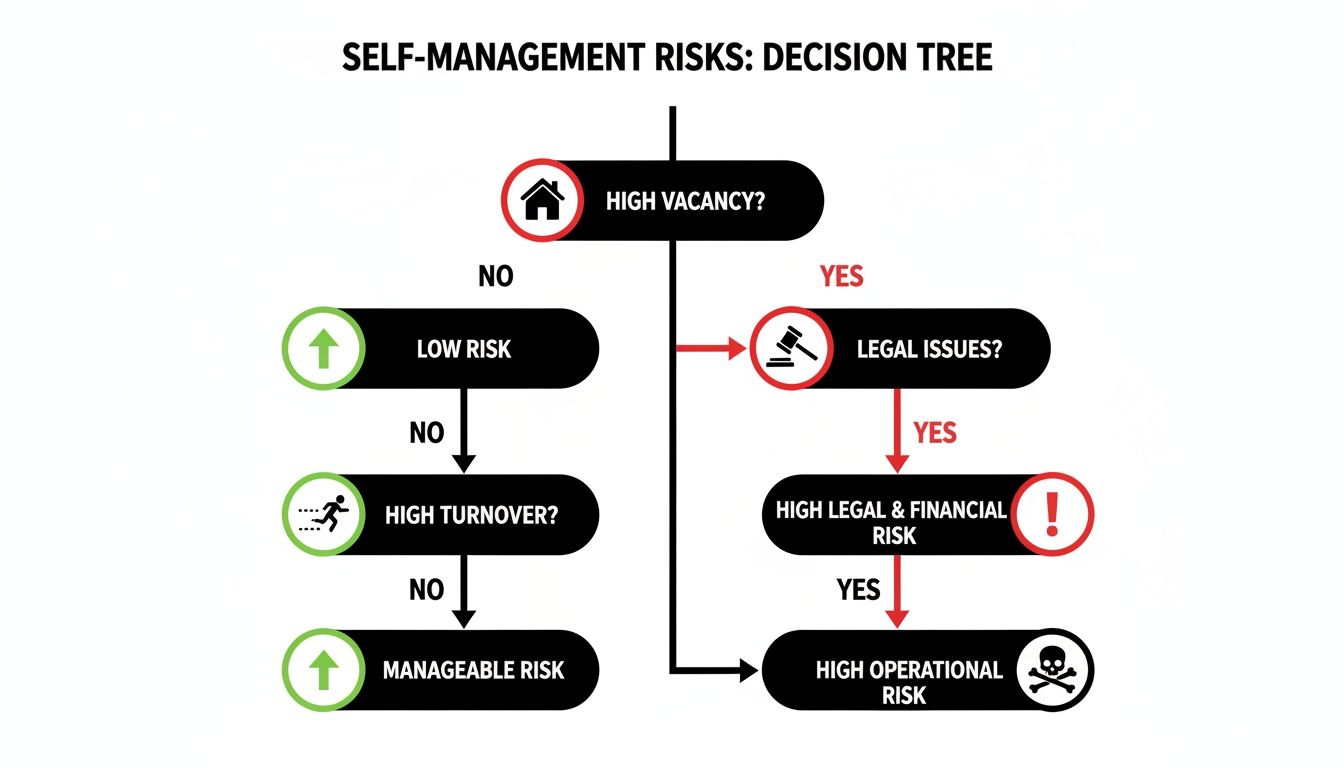
One of the most common pitfalls is a long vacancy. In a market like Salinas, just one extra month without a tenant can easily cost more than an entire year of management fees. Any perceived savings are wiped out instantly.
The High Cost of Small Mistakes
Beyond vacancies, the penalties for breaking California's strict landlord-tenant laws can be severe. A single mistake on a lease or mishandling a security deposit can lead to thousands of dollars in legal fees.
Tenant turnover is another huge financial drain. Poor screening leads to unreliable renters who cause damage or break their lease. The costs add up quickly:
- Lost Rent: The property sits empty while you search for a new tenant.
- Marketing Costs: You have to pay for new listings and ads again.
- Repair & Cleaning: Getting the unit ready for the next person can be expensive.
- Your Time: The hours you spend showing the property are hours you can’t get back.
The most expensive problems in property management rarely come from fees. They come from long vacancies, costly legal errors, and high tenant turnover—all common issues in self-management. You can learn more about how managing your own rental may not be saving you money.
Calculating Your Personal ROI
Figuring out if a Salinas property manager is worth the fee is about calculating your personal return on investment (ROI). This means putting a dollar value on your time, stress, and the major financial risks you avoid by hiring a pro.
For an out-of-state investor, a busy local professional, or a military family, the value proposition is clear. Your unique situation is the most important factor.
Valuing Your Time and Peace of Mind
First, assign a value to your own time. How many hours a month would you spend marketing the property, showing it, screening applicants, and handling maintenance? If you value your time at even a modest hourly rate, the hours you spend on landlord duties can quickly add up to more than the management fee. This is especially true since 39% of property managers spend over 20 hours per month on maintenance alone.
Finding Your Break-Even Point
To find your break-even point, compare the management fee against the potential savings. A good manager can cut your vacancy time, find higher-quality tenants who stay longer, and get better rates on maintenance. To get a clearer picture, this table helps quantify the real costs you might face on your own. For more on this, you might check out this ultimate guide to virtual receptionists for property management companies.
Cost-Benefit Analysis for Your Salinas Rental
| Expense or Saving Category | Typical Self-Management Cost | Potential Savings with Professional Management |
|---|---|---|
| Vacancy Loss | $2,500 - $5,000+ (1-2 months' rent) | $1,250 - $2,500+ (Reduced vacancy by 2-4 weeks) |
| Maintenance Overpayment | $300 - $600/year (Standard retail rates) | $150 - $300/year (Access to vendor discounts) |
| Legal/Eviction Costs | $3,000 - $7,000 (If an eviction occurs) | $3,000 - $7,000 (Avoided through proper screening) |
| Value of Your Time | $500 - $1,000+/month (Based on 10-20 hrs/mo) | $500 - $1,000+/month (Time completely reclaimed) |
As you can see, avoiding just one major issue—like an eviction—can pay for years of management fees. The ROI is about protecting your asset and improving its performance. Understanding what net operating income is helps measure how professional management impacts your bottom line.
Choosing a Manager Who Delivers Real Oversight
Not all property management is the same. There's a big difference between a basic rent collector and a full-service partner who actively protects your asset. The cheapest option often ends up being the most expensive.

You should look for a manager who delivers real oversight, not just rent collection. That includes tenant screening, property inspections, maintenance follow-through, and legal compliance. In Salinas, a full-service manager can protect both your asset and your sanity. You need a rigorous approach, much like using a comprehensive due diligence checklist for a major business decision.
What Real Asset Protection Looks Like
Genuine asset protection is about a proactive and detailed approach to your rental property.
Here’s what to look for:
- Proactive Property Inspections: Regular, documented inspections to catch small issues early.
- Detailed Maintenance Records: Transparent documentation of all repairs and upkeep.
- Legal Compliance: A deep understanding of Salinas and California rental law is essential.
- Transparent Financials: Clear monthly statements showing your investment’s performance.
Torrente Property Management doesn’t just "manage"—we document repairs, proactively maintain your property, and offer flexible service tiers. With our estate caretaker options and bilingual service, we’re well-suited for Salinas owners who live elsewhere or are managing former homes. This proactive mindset turns a management fee into an investment in your property’s future. To find a manager who fits this description, explore our guide on the 5 criteria for the best property managers in Salinas.
Making the Right Decision for Your Rental
Ultimately, deciding if a Salinas property manager is worth the fee comes down to a simple calculation of value. You have to weigh the cost against the time, expertise, and peace of mind you will gain. The choice is a lifestyle decision. Do you want to be a hands-on landlord, or do you see your property as an investment that should generate income with minimal stress?
If you are weighing whether to self-manage or partner with a trusted Salinas property manager, Torrente offers no-pressure consultations. We can break down what you’ll gain in time, compliance, and peace of mind. This conversation can help you move forward with confidence.
To get a clear, personalized assessment for your rental home, contact Torrente Property Management today at (831) 582-8916.
Frequently Asked Questions About Salinas Property Management
Here are some of the most common questions we hear from Salinas landlords, with straight-to-the-point answers.
What is the average property management fee in Salinas?
In Salinas and Monterey County, you can expect to pay between 8% and 10% of the collected monthly rent. You should not pay a fee for a vacant unit. Always ask about other charges, like tenant placement fees, to get a full picture of the costs.
Can I save money by managing my rental myself?
While you skip the management fee, other hidden costs can appear. A self-managed property might stay vacant longer, or you could make a costly legal mistake. A great property manager often saves you more money through efficiency and risk management than their fee costs.
What should a full-service property manager handle?
A full-service manager should handle everything. This includes marketing your property, screening tenants, collecting rent, and coordinating all maintenance. They also conduct inspections and ensure your property stays compliant with all rental laws.
How does a property manager screen potential tenants?
A professional screening process is multi-layered. It includes running credit reports, checking criminal backgrounds, verifying employment and income, and calling past landlords. This process helps find reliable, long-term tenants.
Do I lose control over my property if I hire a manager?
Not at all. You always have the final say on big decisions, like pet policies or lease terms. Think of a property manager as your operational partner who handles the day-to-day work for you.

5 Mistakes Accidental Landlords Must Avoid in 2026
Becoming a landlord by chance, whether you inherited a home or had to move, is more common than you think. Owning a rental in Monterey Bay is a great financial opportunity. But, managing it without a clear plan can be costly.
Nearly 37% of California households are renters (U.S. Census Bureau), so the potential for income is high. However, new landlords often underestimate the legal rules and financial planning needed to succeed. This guide will show you how to turn an unexpected property into a secure investment.
We will cover the 5 mistakes accidental landlords must avoid in 2026. Learning to sidestep these common errors will help you protect your asset and find peace of mind.
1. Skipping Local Rent Research
One of the biggest mistakes new landlords make is guessing the rental price. Setting rent too low means you lose money every month. Setting it too high can lead to long, costly vacancies.
Pricing your property correctly is crucial for maximizing your return on investment. This requires treating your rental like a business, not a hobby.
Why It Costs You Thousands in Monterey County
In a competitive market like Monterey County, a small pricing error has a big impact. With 3-bedroom rents averaging over $5,100/month in some areas in 2024, pricing correctly for 2026 will be essential.
Many accidental landlords underprice their properties because they don't know the local market. Underpricing by just 10% on a Salinas rental could cost you thousands of dollars per year. That lost income could have covered property taxes or a major repair.
Key Insight: Your rent should be based on local market data, not just your mortgage payment. A professional analysis ensures you get the most out of your investment.
2. Trying DIY Management Without Legal Know-How
Another common pitfall is managing the property yourself without understanding California's complex rental laws. These laws are constantly changing, and what was legal last year might not be in 2026.
Attempting to handle contracts, evictions, and tenant rights on your own can lead to expensive fines and lawsuits. Protecting your investment means staying compliant.

The High Cost of a Legal Misstep
California's rental laws continue to evolve, with stricter eviction rules and rent caps. For example, mishandling a security deposit can cost you up to three times the deposit amount in penalties.
An accidental landlord in Monterey might use a generic online lease that isn't compliant with state law. This one mistake could make it impossible to enforce rules or handle a dispute in court. Professional guidance on real estate contracts is vital.
Key Insight: Legal compliance isn't optional. Partnering with experts who know local and state laws protects you from costly errors and gives you peace of mind.
3. Underestimating Tenant Turnover Costs
Even in high-rent areas like Carmel, tenant turnover can quickly erase your profits. Every month your property sits empty is a month of lost income.
Finding a new tenant also involves costs for advertising, cleaning, and repairs. Keeping good tenants for the long term is one of the best ways to ensure consistent cash flow.

How to Keep Great Tenants
Happy tenants are more likely to renew their lease and take better care of your property. Proactive communication and responsive maintenance are key to retention.
For example, quickly addressing water damage effectively shows you care about the tenant's well-being and the property's condition. Long-term tenants provide stable income and reduce the stress of finding new renters.
Key Insight: Tenant retention is a top priority. A responsive and professional approach to management helps secure reliable, long-term tenants.
4. Neglecting Modern Digital Tools
In 2026, renters expect convenience. They want to pay rent online, submit maintenance requests through an app, and communicate easily.
Failing to offer these digital tools can make your property less appealing. A recent study found that 97% of renters say ease of interaction affects their decision to renew a lease. Landlords who stick to old methods risk falling behind.
Why Technology Matters
Modern tools streamline the rental process for everyone. Online portals for rent payments and maintenance requests create a clear record of communication.
These systems also make your life easier as a landlord. You can track payments, manage repairs, and access important documents from anywhere. This efficiency boosts tenant satisfaction and your own peace of mind.
Key Insight: Technology is no longer a luxury—it's an expectation. Integrating digital tools improves communication and helps you attract and keep modern renters.
5. Not Treating Your Rental Like a Business
The final mistake is failing to adopt a professional mindset. Becoming a landlord by accident doesn't mean you should manage your property like an amateur.
Successful landlords treat their rental as a business. They have a clear strategy for marketing, tenant relations, and financial management.
Start with a Winning Strategy
A business plan for your rental should include a budget for maintenance, a system for screening tenants, and a plan for legal compliance. This organized approach prevents surprises and protects your investment.
Many accidental landlords succeed when they partner with professionals who can provide expert guidance. This helps turn an unexpected property into a reliable source of income.
Key Insight: A strategic plan is your roadmap to success. Treat your rental property as a serious investment to ensure its long-term profitability.
FAQs About Accidental Landlording
What is the first thing an accidental landlord should do?
The first step is to get educated on local and state landlord-tenant laws. You should also perform a market analysis to set a competitive rent price for your property.
How much should I save for maintenance and repairs?
A good rule of thumb is to set aside 1-2% of the property's value annually for maintenance. For an $800,000 home in Monterey, this would be $8,000 to $16,000 per year.
Do I need a separate bank account for my rental property?
Yes, it is highly recommended. Keeping a separate account for income, expenses, and security deposits makes accounting much easier and is a legal requirement in some cases.
Can I manage a rental property myself from out of state?
While possible, it is very difficult. Hiring a local property management company ensures that tenant needs, maintenance issues, and property inspections are handled promptly and professionally.
How do I find reliable tenants?
Implement a thorough screening process. This should include a credit check, background check, verification of employment and income, and references from previous landlords.
Get Started with a Professional Rental Plan
Becoming a landlord doesn't have to be overwhelming. Avoiding these 5 mistakes accidental landlords must avoid in 2026 will put you on the path to success. By adopting a professional approach, you can turn your property into a valuable, stress-free asset.
Your property is a significant investment. Managing it correctly from the start protects its value and ensures a steady return.
If you are a new or out-of-town property owner in Monterey or Salinas, we are here to help. Contact Torrente Property Management to create a rental plan tailored to your home and your peace of mind.
Partner with Torrente Property Management Inc. for expert guidance. Call us today at (831) 582-8916 to get started.

12 Tech Tools That Make Managing Rentals Easier Today
Managing a rental property in Monterey Bay, from Carmel to Salinas, means juggling many tasks. You have maintenance requests, rent collection, and tenant talks to handle. With more rental options available, using technology is no longer a choice—it's a must for success. In fact, by 2025, over one-third of property management companies will use AI tools, a big jump from just 21% the year before (appfolio.com). This shows a clear move toward smarter, faster ways of working.
This guide will show you the best tech tools that make managing rentals easier today. We will help you automate tasks, make tenants happier, and get the most from your investment. You can also explore the advantages of home automation to see how smart tech can boost your property's value.
Each tool below has a simple review of its features, who it's best for, and its cost. We also include pictures and links to help you find the right fit for your rental properties.
1. AppFolio Property Manager
AppFolio Property Manager is a large-scale platform for growing rental portfolios. It brings everything—accounting, leasing, and maintenance—into one place. This makes it one of the top tech tools that make managing rentals easier today for owners with many properties.

Its main benefit is AI-powered automation, which handles tasks like lease renewals. You can also add other tools through its marketplace. For a closer look at how it compares to others, see this property management software comparison.
Key Features and Considerations
- Best For: Investors with 50 or more units.
- Pros: It can grow with your portfolio and uses AI to automate many tasks.
- Cons: You must talk to a salesperson to get a price. It can be too complex for landlords with only one or two properties.
- Website: https://www.appfolio.com
2. Buildium
Buildium is a popular tool for small and mid-sized portfolios. It has clear pricing plans and covers all the basics like accounting and leasing. This makes it one of the most reliable tech tools that make managing rentals easier today for growing landlords.

The platform offers a 14-day free trial so you can test it first. Buildium also has extra services you can add, like remote showings. Its strong accounting features are a major plus for landlords who want clear financial reports. You can learn more in this guide to the best accounting software for landlords.
Key Features and Considerations
- Best For: Landlords managing from a dozen to a few hundred properties.
- Pros: The pricing is clear and easy to budget for. It's great for owners who are growing their business.
- Cons: Some advanced features are only in the most expensive plan. Some plans charge a fee to get you started.
- Website: https://www.buildium.com/pricing/
3. TenantCloud
TenantCloud is an affordable platform for landlords who manage their own properties. It helps with rent collection and maintenance without being too complicated or expensive. This makes it one of the best tech tools that make managing rentals easier today for new investors.
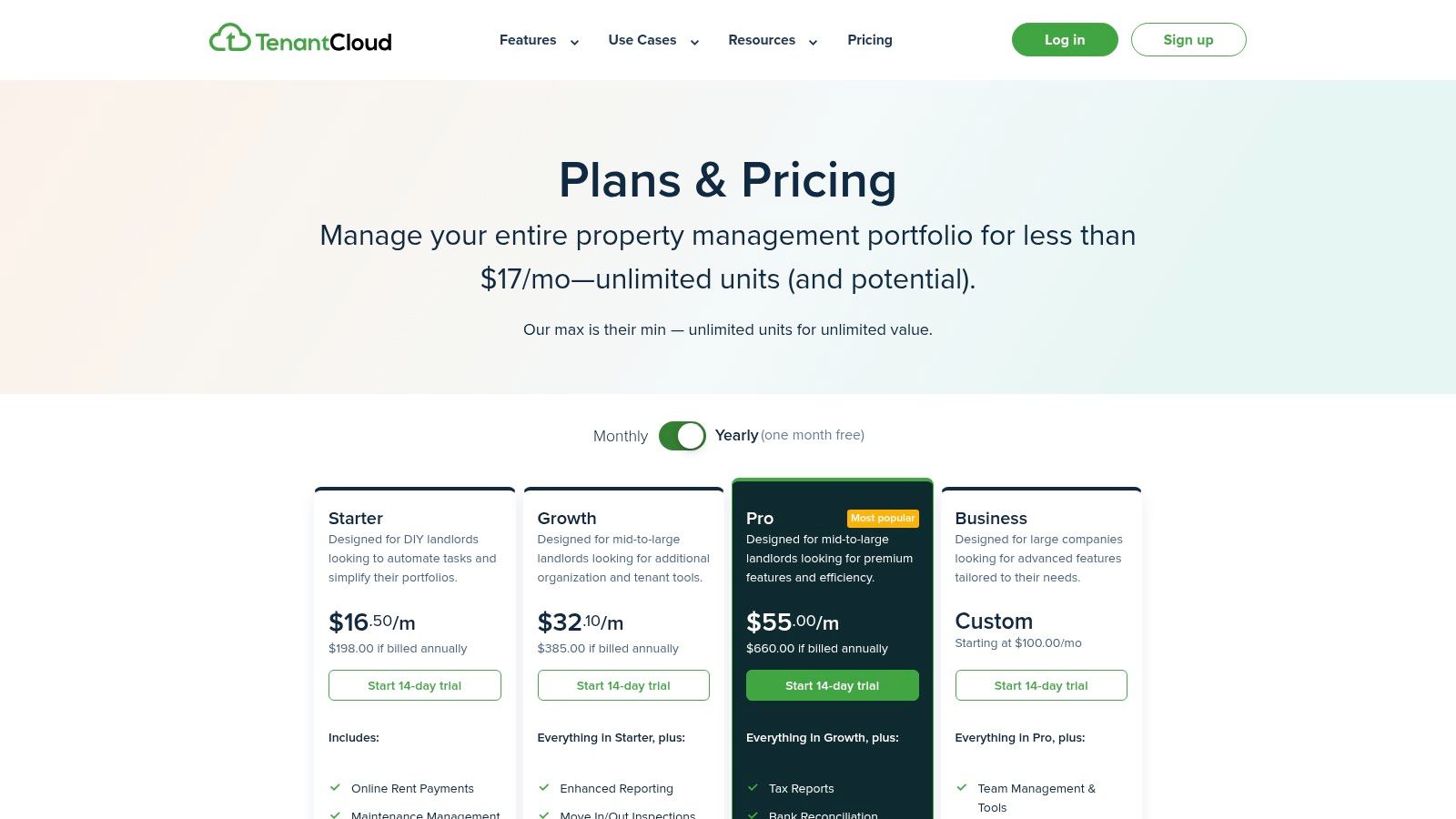
Its biggest plus is how simple it is. From one dashboard, you can list units and handle repair requests. Offering these digital tools is important because modern renters now expect these digital amenities as a standard service.
Key Features and Considerations
- Best For: DIY landlords with 1 to 15 units.
- Pros: It has very low-cost plans and is easy to use for daily tasks.
- Cons: Better accounting features are only in the higher-priced plans. It may not be the best for fast-growing portfolios.
- Website: https://www.tenantcloud.com/pricing
4. TurboTenant
TurboTenant is designed for DIY landlords and offers many free tools. It helps you market your property and collect rent online. For independent owners, this is one of the best tech tools that make managing rentals easier today without a high startup cost.
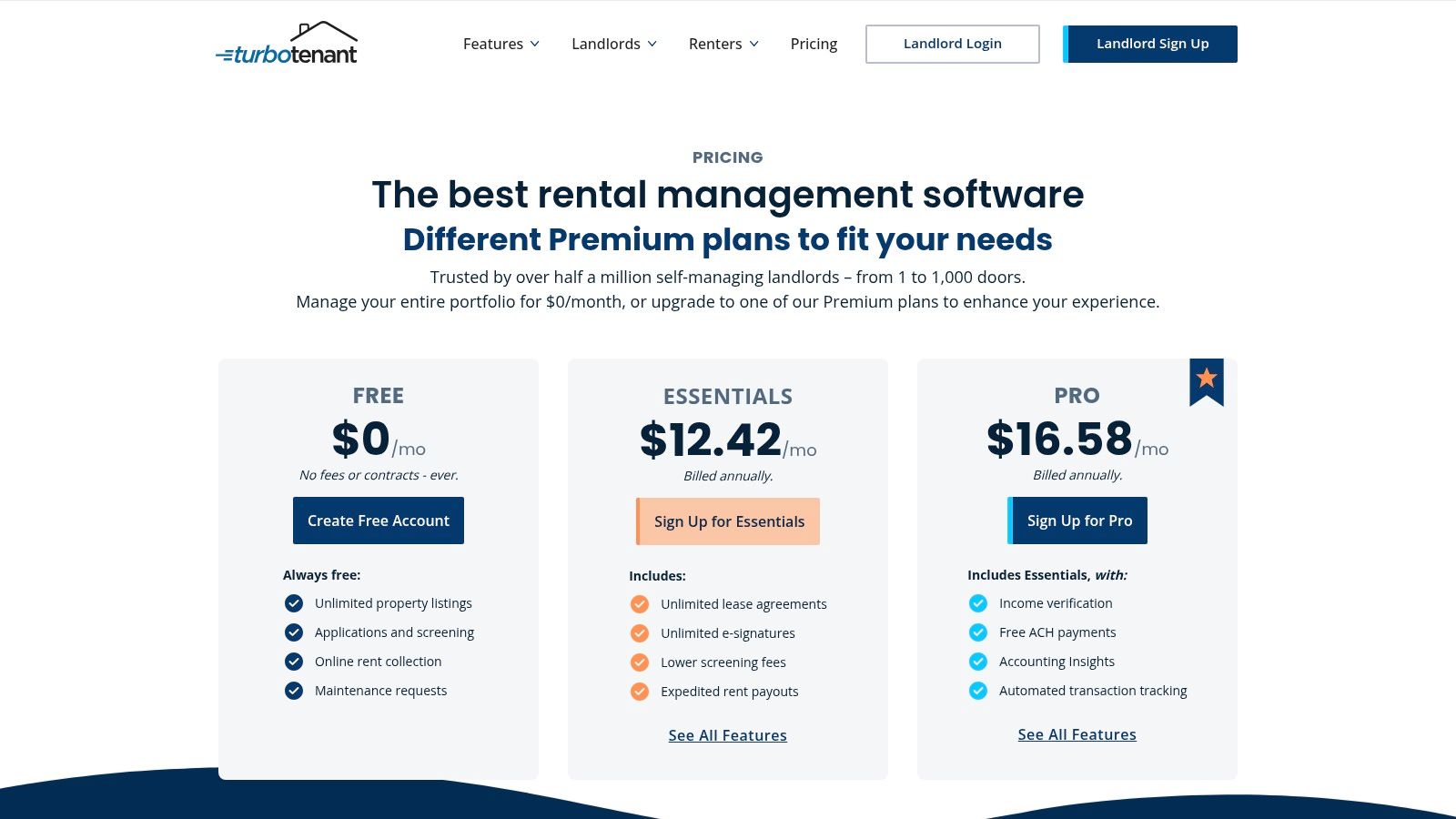
The best part is that you can start for free. You can list properties and screen tenants without paying upfront. The platform makes money from optional add-ons. While its tools are great, our professional tenant placement services can offer local expertise to find the best renters.
Key Features and Considerations
- Best For: DIY landlords with 1 to 10 units.
- Pros: Its free plan covers all the basics, like listings and rent collection. You only pay for extras you need.
- Cons: State-specific leases and e-signatures cost extra. Tenants pay for screening, which might turn some away.
- Website: https://www.turbotenant.com/pricing/
5. Avail (by Realtor.com)
Avail is made for landlords with smaller portfolios. It offers tools for the entire rental process, from marketing to collecting rent. It's one of the top tech tools that make managing rentals easier today for new investors who need something simple and affordable.
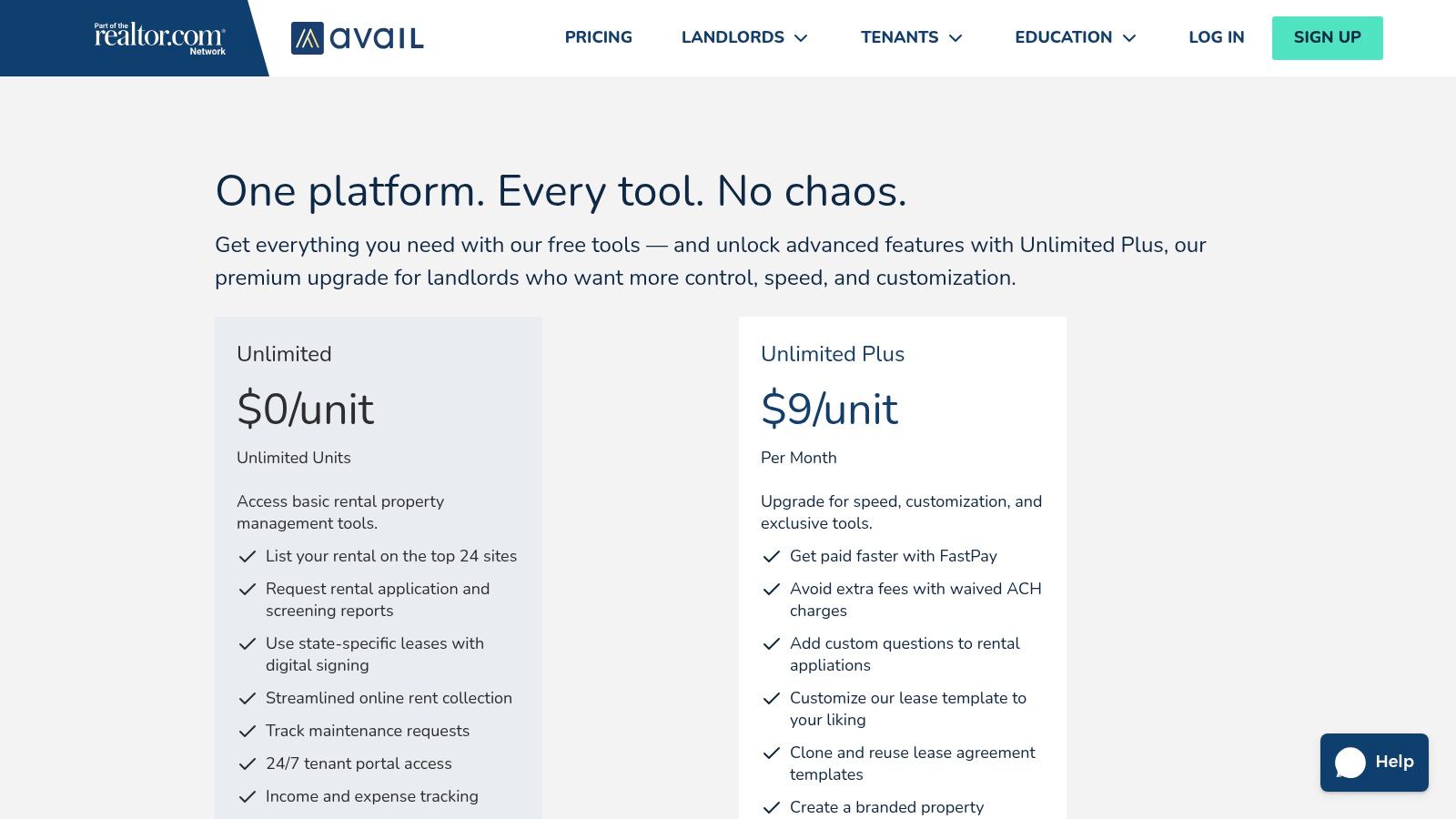
Its free "Unlimited" plan is a big advantage, covering key tasks for any number of units. Avail also provides state-specific lease templates to help you stay compliant. The paid plan offers faster rent payments, which can make tenants happier.
Key Features and Considerations
- Best For: Independent landlords with 1 to 10 units who want a low-cost, easy-to-use tool.
- Pros: A great free plan, plus state-specific leases for legal safety.
- Cons: Tenants must pay a fee to pay rent with the free plan. Some custom features require the paid version.
- Website: https://www.avail.co/pricing
6. RentRedi
RentRedi is a low-cost, mobile-friendly tool for hands-on landlords. A big plus is that every plan includes unlimited properties and tenants. This makes it one of the most affordable tech tools that make managing rentals easier today for those just starting.

The platform is designed for your phone, so you can manage your rentals from anywhere. This is perfect for new investors who need convenience. You can learn more about setting up a good repair process with this smart maintenance checklist for rental properties.
Key Features and Considerations
- Best For: Landlords with 1 to 15 units who want a mobile-first solution.
- Pros: Very affordable, and even the basic plan includes unlimited properties.
- Cons: You need to upgrade for features like e-signatures. Tenant screening fees can be higher than other tools.
- Website: https://rentredi.com/pricing/
7. Zillow Rental Manager
Zillow Rental Manager uses its huge audience to help landlords. It offers a simple way to list properties, screen tenants, and collect rent. Because so many people use Zillow, it's a key tool for connecting with potential renters quickly.
Its main strength is its reach. When you list on Zillow, your ad also appears on Trulia and HotPads. The platform is free for landlords to collect rent through bank transfers. This makes it a great starting point for new investors who need to fill vacancies fast.
Key Features and Considerations
- Best For: Landlords with 1 to 10 units who want to fill vacancies quickly.
- Pros: Reaches a massive audience of renters. It's free to list and collect rent via ACH.
- Cons: Applicants pay for screening fees. Tenants are charged fees for paying with a credit card.
- Website: https://www.zillow.com/rental-manager/
8. Apartments.com Rental Tools
Apartments.com offers a full set of tools powered by its large listing network. It's designed for landlords who want to advertise their property widely. It is one of the most popular tech tools that make managing rentals easier today for owners with a few properties.
The best part is how it combines marketing and management. You can list your rental, accept applications, screen tenants, and collect rent all in one place. This makes the whole process smoother from start to finish.
Key Features and Considerations
- Best For: Landlords who want great marketing exposure and an all-in-one tool.
- Pros: Your listing gets seen by many people. The main tools, like rent collection, are free for landlords.
- Cons: Getting your listing to the top of the search results can be expensive. These "premium" boosts may also expire.
- Website: https://www.apartments.com/grow/rental-tools
9. RentSpree
RentSpree focuses on making tenant screening simple and fast. It offers a secure way to check applicants that works with other listing sites. For landlords who want a reliable screening process, RentSpree is a great choice.

It's free for landlords because applicants pay a small fee for their background check. This makes it a perfect add-on tool if you already have other software but need better screening. The reports are often ready in just a few minutes.
Key Features and Considerations
- Best For: Landlords who need a dedicated screening tool without a monthly fee.
- Pros: It's completely free for landlords. It provides detailed reports on credit, criminal history, and evictions.
- Cons: The cost is passed to tenants, which may not work in all markets.
- Website: https://www.rentspree.com/pricing
10. TransUnion SmartMove
TransUnion SmartMove gives landlords access to trusted background checks. You can get credit reports and criminal records directly from a major credit agency. This is one of the most important tech tools that make managing rentals easier today for making safe leasing decisions.
SmartMove has a special "ResidentScore" that predicts rental risk better than a normal credit score. You can choose to have the applicant pay for their own screening. This pay-as-you-go model makes it easy for any landlord to use.
Key Features and Considerations
- Best For: Independent landlords who need a fast and reliable way to screen tenants.
- Pros: The data is accurate and comes from a trusted source. The payment options are flexible.
- Cons: It only does one thing, so you have to use it with your other tools. The costs can add up if you screen many people.
- Website: https://www.mysmartmove.com/pricing
11. Rently
Rently helps automate the leasing process to fill vacancies faster. It lets potential tenants tour properties on their own using smart lockboxes. This makes it a key tool for property managers who want to offer viewings anytime.
The main benefit is that it makes showings easy and secure. Renters can view a home when it's convenient for them. This helps you get more leads and turn them into tenants faster.
Key Features and Considerations
- Best For: Property managers who want to automate tours and listings.
- Pros: It reduces the number of missed showings. The system combines both hardware and software.
- Cons: The cost for the smart locks and monthly fees can be high.
- Website: https://use.rently.com/single-family-pricing-plans/
12. August Home
August Home makes smart locks that fit over your existing deadbolt. This is a simple way to add modern security to your rental. It's one of the best tech tools that make managing rentals easier today for turnovers and maintenance access.

A huge plus is that you don't have to replace your whole lock. Using the August app, you can give temporary "keys" to repair people and track who comes and goes. For more ideas, this guide to the 12 Best Smart Locks for Apartments in 2025 offers other great options.
Key Features and Considerations
- Best For: Landlords who want a simple smart lock solution for their properties.
- Pros: It's easy to install and doesn't damage the door. You can manage access from your phone.
- Cons: It runs on batteries and needs a Wi-Fi connection for remote use.
- Website: https://www.august.com
Frequently Asked Questions (FAQs)
What are the most important tech tools for landlords?
The most important tools help with online rent collection, maintenance requests, and tenant screening. A good property management software often combines all three. This saves time and keeps you organized.
How can tech improve tenant retention?
Technology makes life easier for tenants. When they can pay rent online and submit repair requests from their phone, they are happier. According to RealPage, 97% of renters are more likely to renew a lease if management is easy to work with.
Is property management software expensive?
It can be, but many options are affordable. Tools like TurboTenant and Avail offer free plans for basic needs. The cost often depends on how many properties you have and which features you need.
Can technology help me stay compliant with local laws?
Yes, some platforms like Avail offer state-specific lease agreements. These templates are reviewed by lawyers and help you follow local rental laws. This can protect you from legal issues down the road.
How do I choose the right tech tools for my rentals?
First, identify your biggest challenges, like collecting rent or marketing. Then, look for tools that solve those specific problems. Start with a free trial to see if the software is a good fit before you buy.
Balancing Tech and Touch in Monterey Bay
Finding the right tech tools can feel like a big job. From all-in-one platforms like AppFolio to specific tools like August Home, the goal is the same. The right tech tools that make managing rentals easier today help you work smarter, keep tenants happy, and earn more money.
As new construction in our area increases competition, smart tools give you an edge. They automate tasks and provide helpful data so you can focus on growing your investment. At Torrente Property Management, we combine these modern tools with our local expertise. This ensures you get both tech convenience and personal, trustworthy service.
Monterey Bay property owners can use technology to simplify their work while keeping that important personal connection. Explore how Torrente’s tech-powered solutions can keep your rentals full and your tenants satisfied.
Ready to see how the right blend of technology and local expertise can help your investment? Contact Torrente Property Management today at (831) 582-8916.