
What Estate Care Services Don't Tell You
Most estate care providers sell a feeling—"peace of mind." But their contracts often have gaps that can cost you a fortune. Vague promises to "look after your home" often hide a lack of specifics. This leaves your property more vulnerable than you realize.
The Hidden Risks of Standard Home Watch Services
For homeowners with properties in beautiful places like Carmel or Pebble Beach, hiring an estate care service seems smart. You pay for "concierge management" and trust that your investment is protected.
Unfortunately, what is promised and what is delivered can be very different.
Promises to “check the home” or “handle issues” sound good, but they are often vague. This lets providers do the bare minimum, leaving you with serious financial risks. Without a clear plan, a small problem can become a disaster.
From a Small Leak to a Major Disaster
Let's be specific. Imagine a tiny drip from a pipe under a sink in your Salinas vacation home. A basic check-in service, where someone walks through for five minutes, will likely miss it. They will send you a quick email: "All is well."
Weeks later, that leak has soaked the subfloor and warped your cabinets. Now you have a serious mold problem.
This isn't just a theory. Homeowner forums are full of stories: “My home watch company didn't check my property for three months. A small leak turned into major damage.” That’s a $5,000+ repair that a good inspection would have prevented.
This shows the difference between a basic "watcher" and a true estate caretaker. It’s not just about watching—it’s about preventing. Real management involves scheduled, detailed inspections with photos delivered to you. It means flushing water systems and preparing your home for winter storms.
Unseen Dangers for Absentee Owners
The numbers don't lie. Unoccupied properties are broken into 3 to 5 times more often than occupied homes. Even worse, simple maintenance issues can lower your property's resale value by as much as 15%. These statistics should concern any second-home owner.
Here’s a look at what providers promise versus what is really happening.
Standard Promises vs. The Unspoken Reality
| What Providers Say | What They Don’t Tell You (The Truth) | Potential Cost to You |
|---|---|---|
| "We provide complete peace of mind." | Their contract has no set visit schedule, checklist, or reporting rules. | Thousands in damages from undiscovered leaks, pests, or vandalism. |
| "Our team will handle any issues." | They don't have trusted vendors. They call the first person on Google and add a fee. | High repair costs and liability for uninsured work. |
| "Your property is secure with us." | They use a simple lockbox with a code that never changes. | Increased risk of break-ins and unauthorized access. |
| "We're fully insured." | Their insurance likely doesn't cover damages from their own mistakes. | You pay for repairs they should have prevented. |
This table is meant to prepare you. Understanding these hidden risks helps you find a service that truly protects your property.
At Torrente Property Management, we close these gaps with a clear, documented approach. Our Estate Caretaker services go beyond simple check-ins. Whether your home is in Carmel or you're an out-of-state owner, our local expertise ensures your property is cared for, not just watched.
You can learn more in our guide to trusted home watch services in Monterey Bay to see how a proactive approach helps.
Four Critical Gaps Most Estate Care Providers Hide
When you hire someone to watch your vacant Monterey Bay home, you invest in trust. But here’s the truth about estate care services most providers don’t tell you: their agreements are often full of holes. These gaps can lead to expensive damage and denied insurance claims.
Most providers use vague promises that sound good but mean little. To protect your property, you need to understand the four most common gaps in standard estate care agreements.
The diagram below shows how "standard care" can mask unseen risks. It is crucial for homeowners to look beyond surface-level promises.
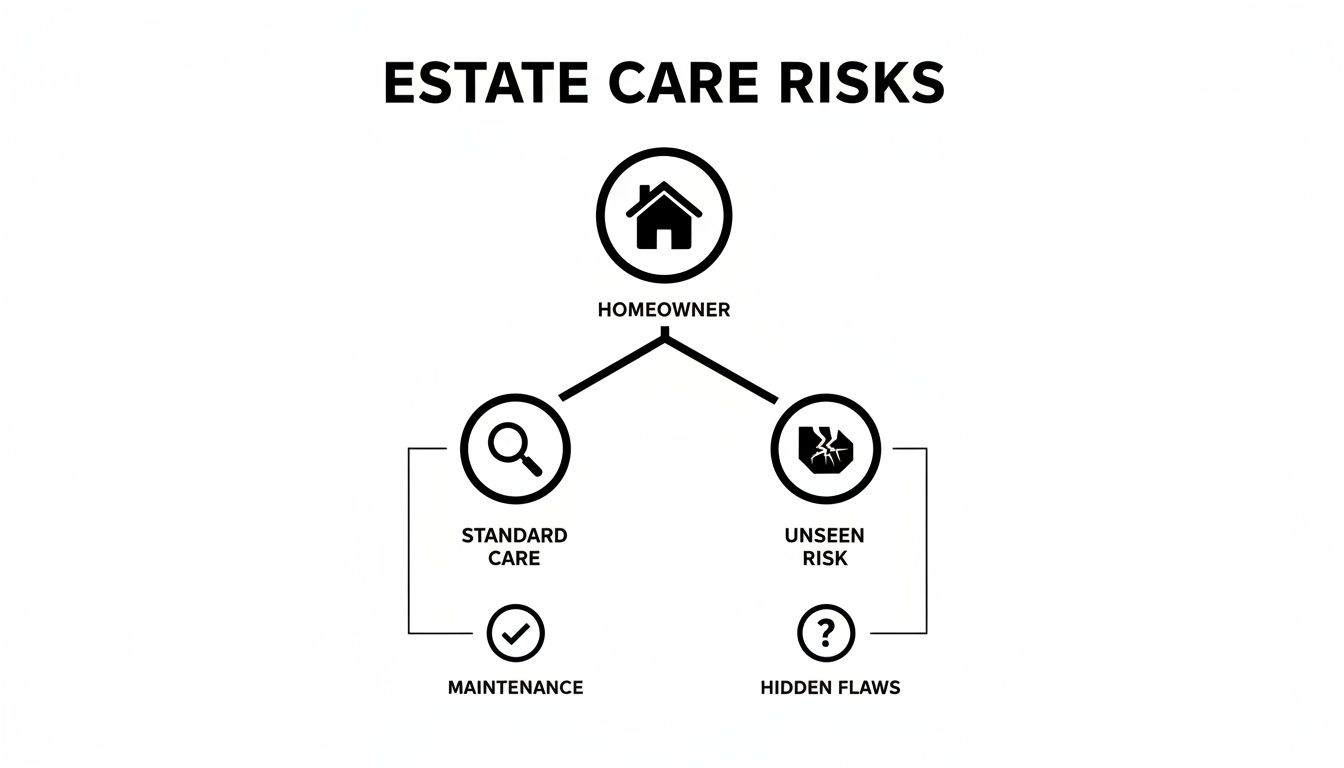
As you can see, what looks like good oversight can let problems grow, hurting your property's value.
1. An Undefined Service Scope
The biggest gap is a poorly defined scope of work. Watch out for vague phrases like "regularly check the property." These are huge red flags.
What does "regularly" mean? Weekly? Monthly? A provider might consider a quick drive-by a "check," while you expect a full walkthrough. This ambiguity is often on purpose; it protects them, not you.
2. Lack of Proactive Maintenance
Most estate care services are reactive. They wait for a pipe to burst before they call you. This model fails to prevent problems.
True estate care is proactive. It involves scheduled, preventive tasks for the Monterey Bay climate, such as:
- Flushing plumbing systems to prevent corrosion.
- Preparing for winter storms by clearing gutters.
- Testing smoke detectors and security alarms.
A reactive service calls you after the damage is done. A proactive one works to make sure that call never happens.
3. Inadequate Documentation and Reporting
How can you have peace of mind without proof? Many providers just send a quick text saying, "Everything looks fine." This is not a real report.
Without photo or video documentation from each visit, you are operating on blind faith. You have no way to verify that inspections are happening.
This lack of documentation is a big problem for insurance claims. Insurers often require proof of regular maintenance on a vacant home. A text message is not enough and could lead to a denied claim.
4. Liability and Insurance Loopholes
Finally, many smaller companies don't have the right insurance. They might have general liability, but does it include "Errors & Omissions" (E&O) coverage? This protects you if the provider's mistake causes damage.
It's a tough business. The average profit margin for property management is a slim 10.4%. This financial pressure means many cut corners on things like insurance.
Asking for a certificate of insurance is a must. If they won't provide one, walk away. Learn more about how professional caretaking turns a vulnerable vacant home into a secure asset.
How Vague Agreements Cost You Thousands in Repairs
A simple one-page agreement might feel easy, but it's a red flag. The biggest secret the truth about estate care services most providers don’t tell you is that their vague contracts protect them, not your property. Ambiguous terms are where expensive problems begin.
When an agreement uses fuzzy language like “general oversight,” it creates a lack of accountability. It gives the provider freedom to do very little, leaving your home unchecked for weeks.
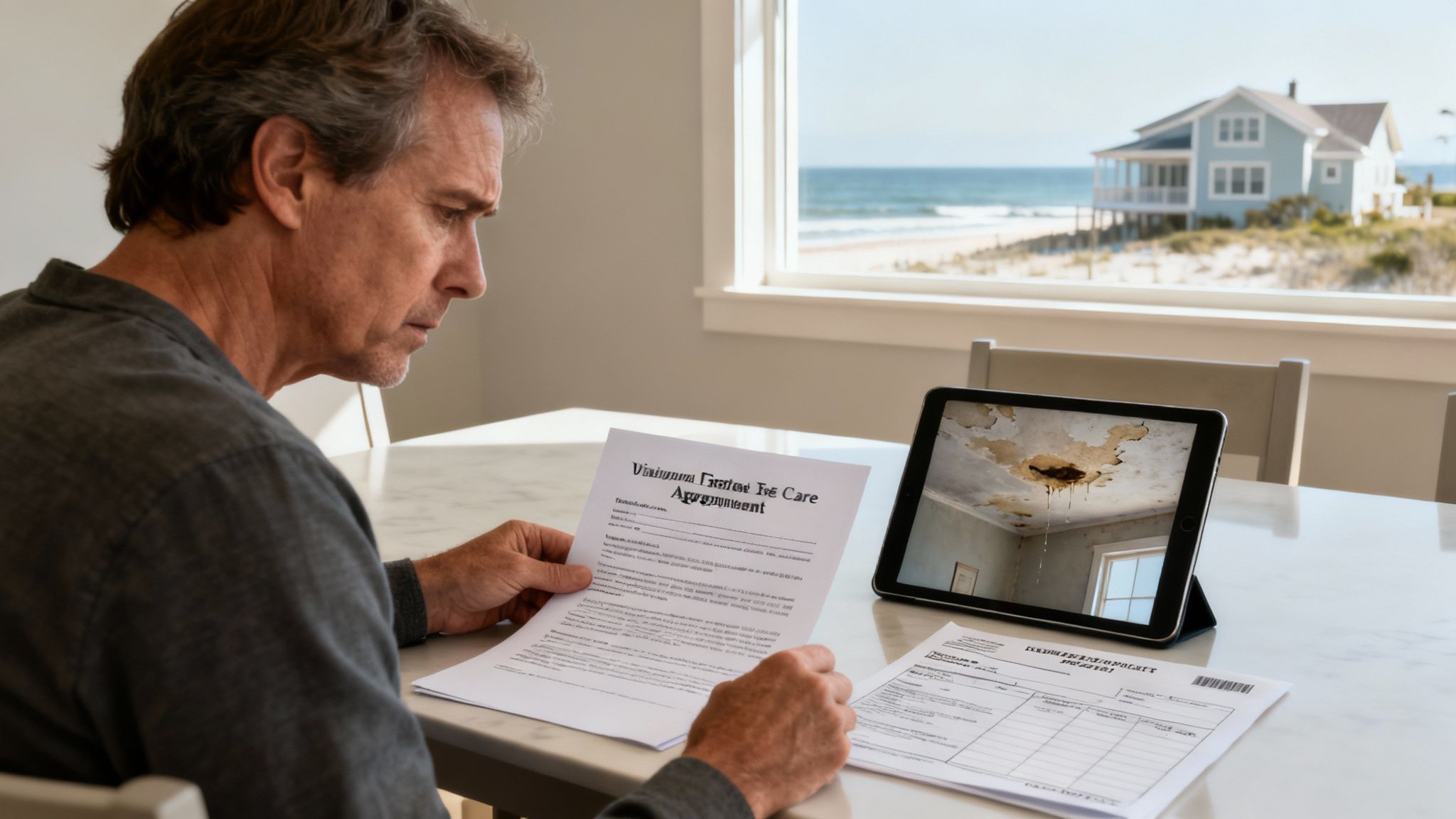
A Cautionary Tale from Carmel
I’ve seen this happen many times. An out-of-state owner had a beautiful home in Carmel. Their care provider promised to “keep an eye on things.” After a rainy winter, the owner found a huge stain on the living room ceiling.
A small roof leak had gone unnoticed for months. The slow drip rotted the drywall and caused a mold problem. The final repair bill was over $5,000. The provider took no responsibility, pointing to their vague agreement.
Red Flags to Watch For in Any Agreement
Vague language is a strategic move that leaves you exposed. Look for these red flags in any document:
- "As-needed" or "Regular" Visits: This is meaningless without a calendar. Insist on a specific frequency in the contract.
- "General Oversight": The contract needs a list of specific tasks, like running faucets and checking for leaks.
- No Mention of Documentation: The agreement must promise photo or video reports. This is your proof of service.
- Lack of Emergency Protocols: A good contract will detail their emergency plan, including who they call for repairs.
Your estate care agreement should be a detailed playbook. If a provider won't put their duties in writing, it’s a clear sign their service is not reliable.
Demand Clarity, Protect Your Investment
You gain power when you demand a clear contract. Before signing, make sure the agreement is solid. Learn more about what a good property management agreement looks like.
A detailed contract is about professionalism. It ensures you and your provider are on the same page. At Torrente Property Management, our agreements are built on transparency to give your property the protection it deserves.
A Proactive Approach to Protecting Your Investment
A different model is needed to protect your property. True asset protection comes from a system designed to prevent problems before they start. And the truth about estate care services most providers don’t tell you is that this level of detail is often missing.
This is where a hands-on approach makes all the difference. Instead of waiting for a disaster, a better estate care model focuses on documented prevention.

From Ambiguity to Accountability
A better approach starts with scheduled, documented walk-throughs. At Torrente Property Management, every visit is a full inspection, not just a quick glance.
We provide our owners with detailed digital reports. These include time-stamped photos and videos, delivered to their inbox. This gives you total transparency and proof that your home is cared for.
| Service Feature | Standard Provider | Torrente Property Management |
|---|---|---|
| Inspection Scope | Vague "walk-through" with no checklist. | Full inspection using a custom checklist for your property. |
| Documentation | A simple email saying "everything looks okay." | Detailed digital reports with time-stamped photos and videos. |
| System Checks | May or may not run systems like HVAC or plumbing. | Routinely flush plumbing, test HVAC, check security systems. |
| Preventive Actions | Waits for an issue to be reported. | Proactively inspects for water intrusion before storms. |
| Vendor Management | Calls the first available vendor, often with a markup. | Dispatches trusted local vendors with clear pricing. |
This level of detail is what prevents small issues from becoming big problems.
Preventive Maintenance for the Monterey Bay Climate
Our local climate creates unique challenges for vacant homes. A proactive model must address these risks with a tailored maintenance checklist.
Our routine tasks include:
- Storm Readiness Checks: Before winter rains, we inspect roofs and clear gutters to prevent water damage.
- System Flushing: We run faucets and flush toilets. This simple step keeps seals from drying out and cracking.
- Security System Audits: We test alarms and check batteries to ensure everything is working correctly.
This level of detail is essential. See what this involves by reviewing our seasonal home maintenance checklist.
The Power of Local Expertise and Trust
Protecting a vacant property means having a network of trusted local vendors. With deep roots in Monterey and Salinas, we have relationships with the best local tradespeople.
As a family-operated firm, our name is on the line with every property. Our bilingual (English/Spanish) advantage also ensures clear communication with a wider range of service providers.
The property management industry is growing fast. Unfortunately, this growth often leads providers to cut corners on services for vacant homes. We use modern tools to ensure our owners are always informed.
A proactive approach is a better way to protect your investment. It’s the difference between hoping your property is okay and knowing it is.
Your Checklist for Hiring an Estate Care Provider
Choosing the right person to look after your home is a big decision. You need to ask sharp, specific questions. The truth about what most estate care services don't tell you often comes out when you ask for details.
This checklist is your guide to vetting providers. Use it to demand clarity and find a partner who will protect your investment.
Service Scope and Frequency
Vague promises are a red flag. Pin down exactly what the provider will do and how often they'll do it.
- What is your exact schedule for property visits? Ask for a firm frequency—is it weekly? Bi-weekly?
- Can you provide a detailed checklist of what is inspected? This should cover the interior and exterior.
- How do you tailor your services to a specific property? A Carmel cottage has different needs than an estate in Pebble Beach.
Documentation and Reporting
Without proof, promises of service are just words. Modern tech makes it easy for providers to offer transparency.
- Can you provide a sample inspection report? A quality report is more than a quick email.
- Do your reports include time-stamped photos and videos? This is a must-have.
- How and when will I receive these reports? A professional service will have a clear system for getting information to you.
Proactive Maintenance and Emergency Response
A top provider prevents disasters, not just reacts to them. Their maintenance and emergency plans are key.
- What specific preventative maintenance tasks do you perform? Ask about flushing plumbing and preparing for storms.
- What are your emergency response procedures? Who do they call? What is their spending limit for immediate repairs?
- Do you have a vetted list of licensed and insured local vendors? This ensures repairs are handled by qualified pros.
To protect your investment, a thorough vetting process is key. You can find more essential questions to ask when hiring service providers.
Insurance and Accountability
Finally, you must verify the provider is properly insured. This protects you from liability.
Can you provide proof of both General Liability and Errors & Omissions (E&O) insurance? E&O protects you from their professional mistakes. A refusal to provide this is a deal-breaker.
Asking these tough questions helps you find a partner you can trust. For more guidance, check out our article on the 10 expert questions to ask a property management company.
Protecting Your Monterey Bay Investment with Confidence
Choosing an estate care provider is a big decision. As we’ve seen, the truth about estate care services most providers don’t tell you is that vague promises hide serious risks. Those gaps can leave your property vulnerable to costly damage.
The difference between a check-in and true estate caretaking is huge. It’s the difference between hoping nothing is wrong and knowing everything is right. Real peace of mind comes from proactive prevention and detailed documentation.
Secure Your Home Before the Next Season
Whether your home is in Carmel, Pebble Beach, or Salinas, don’t wait for winter storms or a summer vacancy to create risks. A proactive plan stops small issues before they become expensive disasters.
Experience the confidence that comes from working with a trusted partner. We are committed to protecting your Monterey Bay investment with integrity and responsiveness.
Ready to protect your property with a proactive, transparent plan? Contact Torrente Property Management today at (831) 582-8916 to schedule a consultation.
Common Questions About Estate Care
Absentee homeowners often have specific questions about protecting their properties. Getting straight answers helps you make a confident decision. Let's clear up some common points of confusion.
What Is the Biggest Mistake Second-Home Owners Make?
The biggest mistake is assuming "no news is good news." If you don't hear from your provider for months, it's a huge red flag. It often means no one is performing detailed checks on your property.
This hands-off approach lets small problems become big disasters. Insisting on regular, documented communication with photos is the best way to avoid this mistake.
How Often Should My Vacant Property Be Inspected?
For most properties in Monterey Bay, weekly or bi-weekly inspections are the industry standard. This frequency ensures that any potential issues are caught quickly, before they cause serious damage.
If a provider suggests monthly check-ins, they are not offering enough oversight. Consistent, scheduled visits are essential for protecting your property.
Does Homeowners Insurance Cover Damage in a Vacant Home?
This is a critical point. Most insurance policies have a "vacancy clause." This can limit or deny coverage if a home is empty for a long time, usually 30 to 60 days.
Hiring a professional caretaker who provides regular, documented visits is often required to maintain full coverage. It proves you were taking steps to reduce risk.
How Is a Professional Caretaker Different From a Security System?
A security system is reactive. It alerts you after something bad has happened, like a break-in. It can't prevent a water leak or check for storm damage.
A professional caretaker is proactive. Their job is to prevent problems before they trigger an alarm. It’s the difference between being notified of a disaster and stopping that disaster from ever happening.
What Should I Do If a Provider Won't Offer a Detailed Contract?
If a provider is hesitant to put their services in a detailed, written agreement, your decision is simple: walk away immediately.
This is one of the biggest red flags. It suggests they either lack professional processes or want to do as little as possible. A trustworthy partner will always provide a clear contract.
Your Monterey Bay property is a significant investment. Torrente Property Management Inc. provides transparent, proactive, and documented estate caretaker services to give you genuine peace of mind. Learn more and secure your home by visiting us at https://torrenteproperties.com.


Moving from Airbnb to Long-Term Rentals? Monterey Owners Need This Strategy
Are you a Monterey property owner feeling the pressure from new Short-Term Rental (STR) rules? If so, you're not alone. Many local homeowners are now moving from Airbnb to long-term rentals. This shift requires a new strategy, not just a new listing.
Forget about nightly rates and tourist turnovers. Success now means focusing on stable income, California-compliant leases, and attracting reliable tenants. This guide provides the local strategy you need to turn regulatory headaches into a predictable, profitable investment.
The Market Shift Monterey Airbnb Hosts Cannot Ignore

If you own an STR in Monterey, Carmel, or Pacific Grove, you’ve likely noticed the changing landscape. Getting or renewing permits is now a major challenge due to tighter local regulations. This isn't a small issue; it's a fundamental change for local property investors.
Many owners see that converting to a long-term rental is no longer just an option—it's the best way to secure a steady income. For those unfamiliar with long-term rentals, the process can seem daunting. But with the right approach, it's a smart and profitable move.
Understanding the New Reality
The appeal of high nightly rates is fading. Recent data shows that interest in "switching from Airbnb to rental" has surged in Monterey County since the end of 2025. This shows that homeowners are actively looking for guidance as STR rules change.
Smart property owners from Pacific Grove to Seaside are shifting away from the uncertainty of vacation bookings. They are moving toward the security of a signed, year-long lease. This pivot is about turning a challenge into a financial opportunity with a solid, local strategy.
Airbnb vs. Long-Term Rental: A Quick Comparison
Here’s a look at the differences between managing a short-term versus a long-term rental in Monterey County. This table helps clarify the day-to-day realities of each model.
| Factor | Short-Term Rental (Airbnb) | Long-Term Rental |
|---|---|---|
| Income Stream | Potentially high but often volatile and seasonal. | Consistent, predictable monthly income. |
| Vacancy Risk | High, tied to tourism and booking changes. | Low with proper tenant screening and management. |
| Management Effort | Intense guest communication, constant cleaning, and turnover. | Focused on tenant relations and scheduled maintenance. |
| Regulatory Climate | Increasingly restrictive in Monterey, Carmel, and PG. | Stable, with well-defined landlord-tenant laws. |
Navigating the new STR regulations in Carmel and Pacific Grove is a great first step to understanding why this shift is so important. For most owners, stability now outweighs the unpredictable highs of the vacation market.
The Hidden Risks of a Quick Conversion
Thinking of just flipping your Airbnb listing over to Zillow for a long-term lease? This common impulse is filled with hidden risks that can cost you. For Monterey owners moving from Airbnb to rentals, the strategy must be more thoughtful than simply changing an ad.
A rushed conversion often leads to long vacancies, legal problems, and unexpected costs. The rules and tenant expectations for a year-long lease in California are completely different from hosting weekend guests. Rushing the process is one of the biggest mistakes new landlords often make.
The Problem with a "Vacation-Ready" Property
Your property was staged to impress a tourist for a weekend—not to become someone's home for a year. This is a critical difference. A common mistake is leaving a property fully furnished with personal décor. This can turn away great tenants who want to make a space their own.
Long-term renters in communities like Seaside and Marina want a blank canvas. A home cluttered with someone else's style can be an instant deal-breaker. This mismatch leads to longer vacancies, costing you months of potential income.
Outdated Insurance and Legal Documents
Another major pitfall is failing to update your paperwork. Your short-term rental insurance is not designed to cover the liabilities of a long-term tenant. A simple slip-and-fall incident could leave you exposed if you haven’t switched to a proper landlord insurance policy.
The legal risks are even greater. An owner in Pacific Grove used a generic lease from the internet to save time. When a dispute arose, he found the lease was not compliant with specific California tenant protection laws, resulting in a costly legal battle.
Crucial Insight: Your STR insurance will almost certainly deny any claim related to a long-term tenant. You must secure a landlord policy that covers liability and property damage before a tenant moves in.
Getting Up to Speed on California Tenant Laws
As an Airbnb host, you followed hospitality laws. As a full-time landlord, you are now governed by a complex set of tenant protection laws, some of the strictest in the nation. Many former STR owners are surprised by rules concerning:
- Security Deposits: California has strict limits on how much you can collect and firm rules for when and how you must return it.
- Habitability Standards: You are legally required to maintain the property in a "livable condition," covering plumbing, heating, and electrical systems.
- Eviction Procedures: Removing a tenant is a lengthy process that requires following precise legal steps. One mistake can force you to start over.
Failing to comply can lead to severe penalties. This is why a strategic, informed conversion is essential for protecting your investment.
Your Framework for a Profitable Rental Transition
Making the switch from an Airbnb to a long-term rental is more than changing a listing title; it's a complete shift in strategy. For Monterey property owners, this requires a clear, locally-tuned roadmap to guide you from a hospitality mindset to a long-term investment approach.
This framework breaks down the essential stages you need to get right. We’ll cover everything from getting the property physically ready for a full-time resident to securing the right legal and insurance protections.
Prepare Your Property for a Long-Term Resident
First, your property needs a reset. It has to stop looking like a vacation spot and start feeling like a home. Long-term tenants in Pacific Grove or Salinas want a blank canvas.
This means you must declutter. Pack away personal photos, themed decorations, and any extra furniture that screams "vacation." Potential tenants need to walk in and imagine their own belongings in the space. Think clean, neutral, and functional.
Practical Tip: Before converting your STR, remove personal décor, update insurance to reflect long-term occupancy, and adjust your rent to match neighborhood comps—not nightly rates. Professional photos should reflect stability, not vacation vibes.
Conduct a Realistic Local Rent Analysis
One of the biggest mistakes former Airbnb hosts make is pricing their long-term rental based on old nightly rates. This approach simply doesn't work and will leave your property empty. You must analyze the local market for comparable long-term rentals.
Your rent needs to be based on real-world factors:
- Location: What are similar homes in your specific neighborhood renting for?
- Size and Layout: Square footage and bedroom/bathroom count matter.
- Amenities: Does it have a modern kitchen, off-street parking, or an updated bathroom?
- Condition: Is the property fresh and modern? New paint and updated fixtures help.
Getting this right is key to your success. Our team has a detailed process for how to price a rental property that uses hard local data, not guesswork.
Secure the Right Legal and Insurance Foundation
Let's be clear: your Airbnb insurance policy is now useless. Before any tenant moves in, you absolutely must switch to a comprehensive landlord insurance policy. This protects you from liability and covers property damage.
Just as critical is a rock-solid, California-compliant lease agreement. A generic online template won't work here. Your lease needs to address state and local laws, including security deposit regulations and maintenance duties. This document is your primary legal defense.
These are some of the most common—and avoidable—risks you face during the conversion.
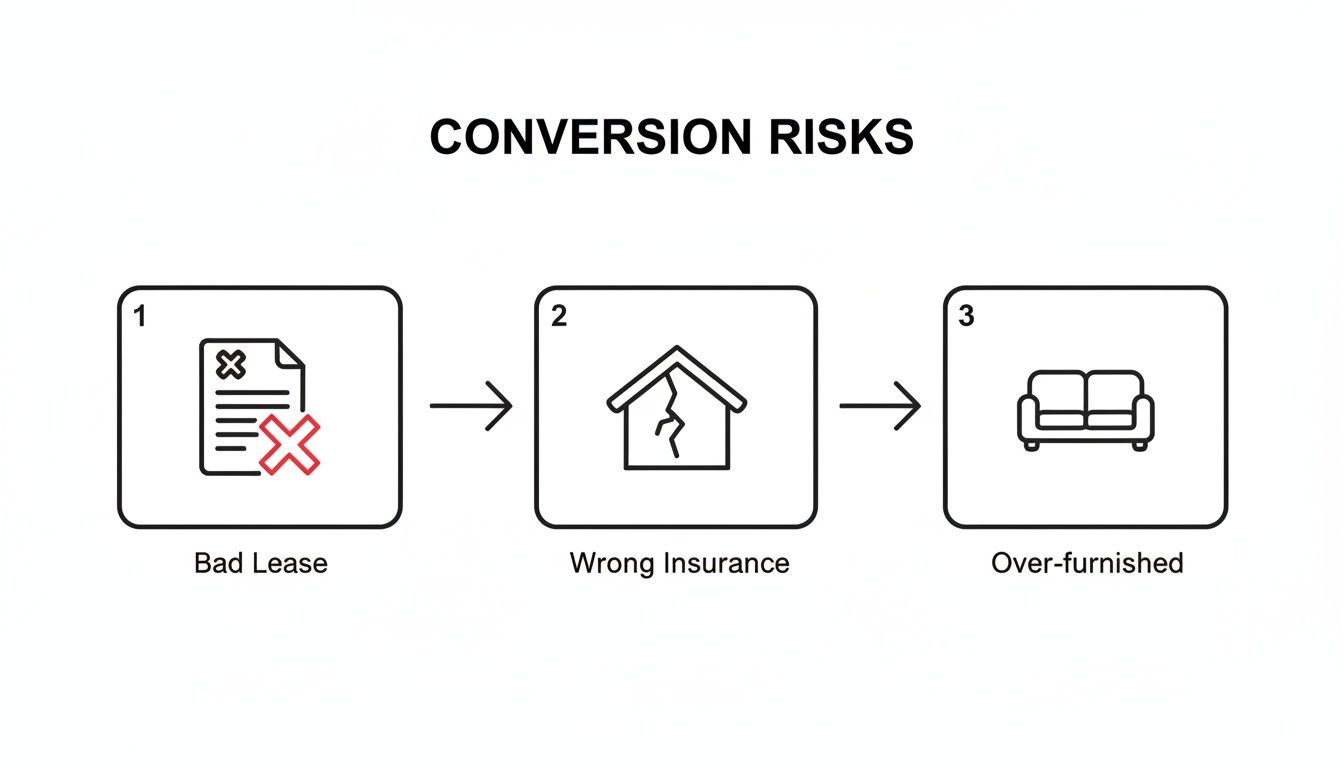
Getting these areas wrong—the lease, the insurance, and the property's presentation—is how a profitable asset quickly becomes a costly liability.
Your Essential STR to Long-Term Rental Checklist
Use this checklist to ensure no critical step is missed as you transition your Monterey property.
| Category | Action Item | Why It's Crucial |
|---|---|---|
| Property Prep | Declutter and depersonalize the space. | Allows prospective tenants to envision their own life and belongings in the home. |
| Property Prep | Conduct deep cleaning and necessary repairs. | Presents a professional, move-in-ready property that attracts high-quality applicants. |
| Financials | Perform a local long-term rental market analysis. | Ensures your rent is competitive, realistic, and maximizes your income without vacancy. |
| Financials | Switch from STR insurance to a landlord policy. | Provides essential liability and property protection specific to long-term tenancies. |
| Legal | Draft a California-compliant lease agreement. | Your primary legal defense that outlines rules, responsibilities, and protects your asset. |
| Legal | Understand local and state landlord-tenant laws. | Prevents costly legal mistakes related to security deposits, entry, and notices. |
| Marketing | Take high-quality photos of the empty, clean space. | Attracts serious applicants and showcases the property's potential as a home. |
| Screening | Implement a consistent, multi-step screening process. | The single most important step to finding a reliable tenant who pays on time. |
Following these steps will protect your investment and set you up for a much smoother experience as a long-term landlord.
How Professional Management Simplifies Your Switch

You now have a solid roadmap for converting your Airbnb. But what if you could hand the keys to an experienced local guide to handle the entire journey for you? This is where professional property management bridges the gap. A great management partner doesn't just find a tenant; they build a strategy for your property’s long-term success.
For Monterey owners moving from Airbnb to long-term rentals, that strategy starts with deep local knowledge. Torrente provides transition support for STR owners—from decluttering to updating leases. Our house rental management service ensures every listing is locally compliant and market-competitive.
Leverage Local Data for Perfect Pricing
Setting the right rent is one of the most stressful parts of this conversion. Price it too high, and your property sits vacant. Price it too low, and you leave money on the table each month.
With deep market knowledge, we take the guesswork out of the equation. Our analysis goes beyond generic online estimators. We look at hyper-local comps in your specific neighborhood—whether it's Carmel, Seaside, or Salinas—to find a price that attracts quality applicants quickly.
From Decluttering to Lease Signing
A successful transition involves dozens of small but critical tasks. An experienced property manager acts as your project manager, turning a complex conversion into a hands-off experience for you.
Our team at Torrente Property Management manages every step:
- Property Preparation: We coordinate everything from decluttering to repairs and cleaning.
- Strategic Marketing: We create a compelling listing with professional photos and market it widely.
- Rigorous Screening: Our multi-step process includes credit, background, and rental history checks.
- Compliant Paperwork: We draft and execute ironclad, California-compliant leases.
This comprehensive approach is a lifeline for owners who don't live locally. We become your trusted eyes and ears on the ground.
Expand Your Reach with Bilingual Service
Monterey County is a diverse community. A property manager who only communicates in English is missing a large pool of qualified tenants. Our bilingual (English/Spanish) team is a significant advantage in this market.
We conduct showings, answer questions, and manage tenant relations fluently in both languages. This inclusive approach builds stronger landlord-tenant relationships from the start. It's one more way we simplify the switch and secure your investment's future.
Frequently Asked Questions (FAQs)
Making the switch from an STR to a long-term lease brings up many questions. Here are clear, straightforward answers to the most common concerns we hear from owners in Monterey, Carmel, and Pacific Grove.
How do I figure out the right monthly rent for my former Airbnb?
Ignore your old nightly rates, as that pricing model is irrelevant for long-term rentals. A professional market analysis is the correct approach. We compare your property to similar long-term rentals in your specific neighborhood to set a competitive price that attracts quality tenants quickly.
Will I earn less money with a long-term rental?
While gross income might look lower, your net profit is often higher and more dependable. You eliminate frequent cleaning fees, restocking supplies, and high utility bills between stays. A long-term rental creates a predictable, stable return on your investment.
What is the biggest legal mistake to avoid when converting?
The biggest mistake is using a generic, downloadable lease and not following California's strict tenant laws. The legal landscape for landlords is complex. An experienced local property manager ensures all your paperwork is fully compliant, protecting you from potential disputes and fines.
Do I have to get rid of all the furniture?
Not always, but you must depersonalize the space to make it feel like a blank canvas. Most long-term tenants in the Monterey Bay area prefer an unfurnished home. A professional can help you decide what to keep, store, or stage to appeal to the widest pool of renters.
How quickly can I get a tenant in my converted Airbnb?
With a well-executed strategy, the transition can be fast. The process involves preparing the property, targeted marketing, and thorough screening. A professional property manager can often place a qualified, long-term tenant within 30 to 45 days, minimizing vacancy.
Make the Smart Switch Today
Shifting from a short-term rental to a long-term tenancy is a strategic move toward financial stability. By preparing your property correctly, setting a competitive rent, and ensuring legal compliance, you can build a reliable income stream. This approach protects your asset and provides peace of mind.
If you're in Carmel, Pacific Grove, or Seaside and considering the switch, we can help you get rental-ready fast with a plan built for local conditions. Contact Torrente Property Management today at (831) 582-8916 to schedule a transition consultation.

Sell or Rent? A Guide to Managing Your Monterey Rental
Planning to sell your Monterey home but the market has you hitting pause? You're not alone. The smart move isn't always selling right away. Sometimes, turning your property into a rental is a powerful strategic pause.
Managing a rental in Monterey when you plan to sell means thinking ahead. It’s about setting up a flexible lease, keeping the home in great shape for tenants and future buyers, and knowing when to switch back to a sale.
Rethinking Your Sale in the Monterey Market
Putting a "For Sale" sign on hold doesn't have to be a bad thing. In fact, seeing it as a smart delay can put you in a stronger financial spot later. The Monterey Bay real estate market has its own unique rhythm. If you play it right, those seasonal shifts can work in your favor.
Many homeowners become landlords by accident. A recent report showed that nearly 3 out of 4 landlords (74%) started out this way, usually because of market changes or personal plans. By renting out your home, you can have a tenant cover your mortgage, build equity, and wait for a better seller's market without feeling financial pressure.
The Monterey Advantage: Renting First
Our local market is different. The flow of tourism, military moves, and the school calendar create clear busy and slow seasons for both rentals and sales. Residents of Monterey and Salinas know the market here shifts with the seasons.
- Seasonal Demand: Google searches for “rent my home in Salinas” and “Monterey property management” spike during Q2 and Q3. This is driven by military relocations and families moving before school starts. Listing your home for rent then means you’ll likely find great tenants faster.
- Weather and Curb Appeal: Let's be honest, our famous fog season can make it tough for a home to look its best for buyers. Renting for a bit gives you time to do simple upgrades—like landscaping or new outdoor lights—that will make the home shine when you finally list it.
- Financial Cushion: A rent check is more than just income; it's a tool. You can use that cash for upkeep or save it for your next home. Understanding your property's real income potential is the first step. To do this well, you need to know current market values and have solid strategies for pricing a home for sale.
Shifting from a sale to a rental isn't a failure—it's a financial strategy. In Monterey, it lets a tenant pay down your mortgage while you wait for the perfect moment to sell for top dollar.
This approach is all about balance. You need to keep your tenant happy while also thinking about your long-term sales goals. It depends on smart planning with your lease terms, maintenance, and communication. A big part of that is understanding the numbers. You can learn more about the financial side by reading our guide on what net operating income is.
Crafting a Lease That Keeps Your Sale Options Open
When you rent out your Monterey home but plan to sell it later, the lease agreement is your most important tool. It’s not just a standard contract. It’s a document that must protect you as a landlord today while giving you the flexibility to sell tomorrow.
Get the lease terms right, and the change from landlord to seller can be easy. Get them wrong, and selling can become a huge headache.
This decision tree helps show the choice many Monterey homeowners face—whether to sell right away or become a landlord first.
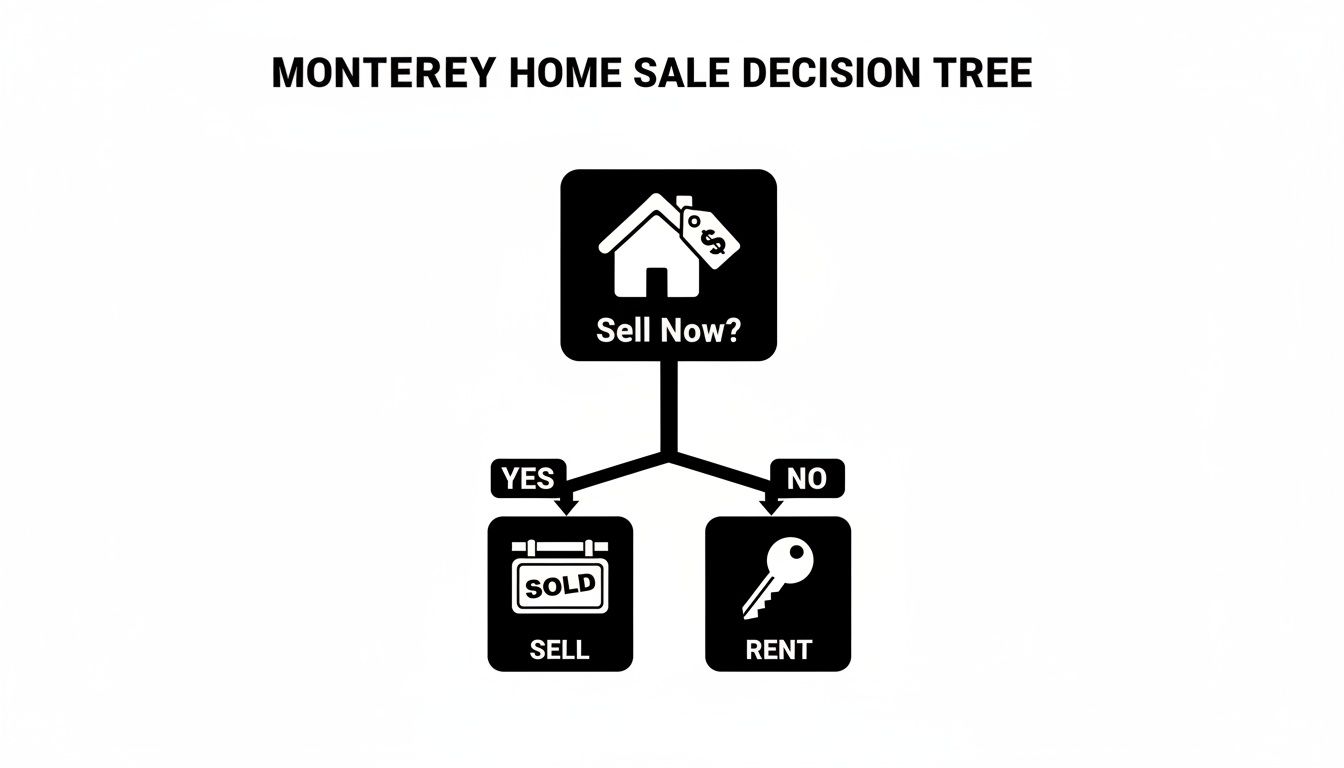
As the graphic shows, renting for a while can be a smart path toward a sale. It all comes down to setting things up correctly from the start.
Fixed-Term vs. Month-to-Month Leases
Here’s the first big reality check: in California, a landlord can't just break a fixed-term lease to sell the property. The lease actually moves to the new owner, who becomes the new landlord. This simple fact shapes your two main options.
A fixed-term lease, usually for one year, offers you stability and guaranteed income. Your tenants feel secure, and you have a predictable cash flow. The big downside is that it makes it very hard to sell to a buyer who wants to live in the home themselves.
On the other hand, a month-to-month lease provides maximum flexibility. When you're ready to sell, you can give the tenant proper notice to leave—usually 30 or 60 days, depending on how long they've lived there. The trade-off is less stability, since the tenant can also leave with the same short notice.
For owners in Monterey and Salinas, a month-to-month lease is often the smarter choice when a sale is on the horizon. It gives you the power to time your listing with peak local demand, like the summer moving season.
The Must-Have "Sale of Property" Clause
No matter which lease you choose, you must include a "Sale of Property" clause. This section clearly explains the process if you decide to put the house on the market. It’s all about removing confusion and preventing problems later.
Your sale clause should clearly state:
- Tenant's Duty to Cooperate: The tenant must allow reasonable access for showings to potential buyers.
- Notice for Showings: California law requires 24-hour written notice for entry. Your clause should restate this legal rule.
- Lease Transfer: It should clarify that if the property is sold, the lease and security deposit will transfer to the new owner.
Having this in writing from day one sets clear expectations. It tells the tenant that a sale is possible and defines their role in the process. Of course, it’s vital to follow all regulations, which you can learn more about in our guide on landlord-tenant laws in California.
Handling Tenants and Showings with Confidence
Showing your home while a tenant is living there can be tricky. Your success depends on two things: clear communication and respecting their rights. A good, cooperative relationship isn't just nice—it’s a strategy that can help you sell faster and for a better price.
The process starts with being open. Let your tenants know you're planning to sell as early as you can, long before a "For Sale" sign appears. This simple heads-up can prevent a lot of stress and surprise, turning a tense situation into a team effort.

Providing Legal Notice for Showings
California law is very clear about a tenant's right to "quiet enjoyment." You can't just drop by with a real estate agent and expect a tour. As the landlord, you must give at least 24 hours of written notice before entering the home for a showing.
This notice must include the date, an approximate time, and the reason for the visit. Even if your tenant verbally agrees to a visit, always follow up in writing. This creates a paper trail that protects everyone from misunderstandings.
In Monterey County, many residents have busy schedules, from military personnel to hospitality workers. Try to work with your tenant to set up a showing schedule that causes the least disruption, like a two-hour window on specific days.
Getting the rules right is essential. For a deeper look at your duties, you should review the specifics on tenant rights in California to make sure you're compliant.
How to Encourage Tenant Cooperation
A tenant who is on your side can make all the difference. When your property is clean and easy to show, it sells faster. To encourage this, think about offering some incentives for their help.
Practical incentives that work well include:
- A Monthly Rent Discount: A small rent reduction while the house is for sale shows you appreciate the inconvenience.
- Gift Cards: A simple gesture, like a gift card to a local coffee shop after a busy week of showings, can build a lot of goodwill.
- Professional Cleaning: Offer to have the home professionally cleaned once or twice a month. This is a win-win: the property is always ready for a viewing, and your tenant has one less chore.
- "Cash for Keys": Sometimes, you need the property empty to attract more buyers. A "cash for keys" agreement, where you offer money to help them move out early, can be a smart investment.
Making Showings Easier for Everyone
Constant visitors are stressful for anyone. The key to keeping a good relationship with your tenants is to minimize that disruption. Luckily, technology can help.
Using tools like virtual tours for realtors can be a game-changer. A great virtual tour lets serious buyers explore the home online. This cuts down on the number of in-person visits, so only the most interested people need to walk through the door.
Another good strategy is to schedule an open house for a few hours on one day of the week, instead of booking many individual appointments. This bundles the disruption into one predictable time block for your tenant.
Maintaining Your Property for Renters and Buyers
A well-kept home does two jobs at once. It attracts great tenants and keeps its value for a future sale. When you manage a rental in Monterey with an eye on the market, upkeep is about more than just fixing things. It's about smart improvements that appeal to both renters today and buyers tomorrow.
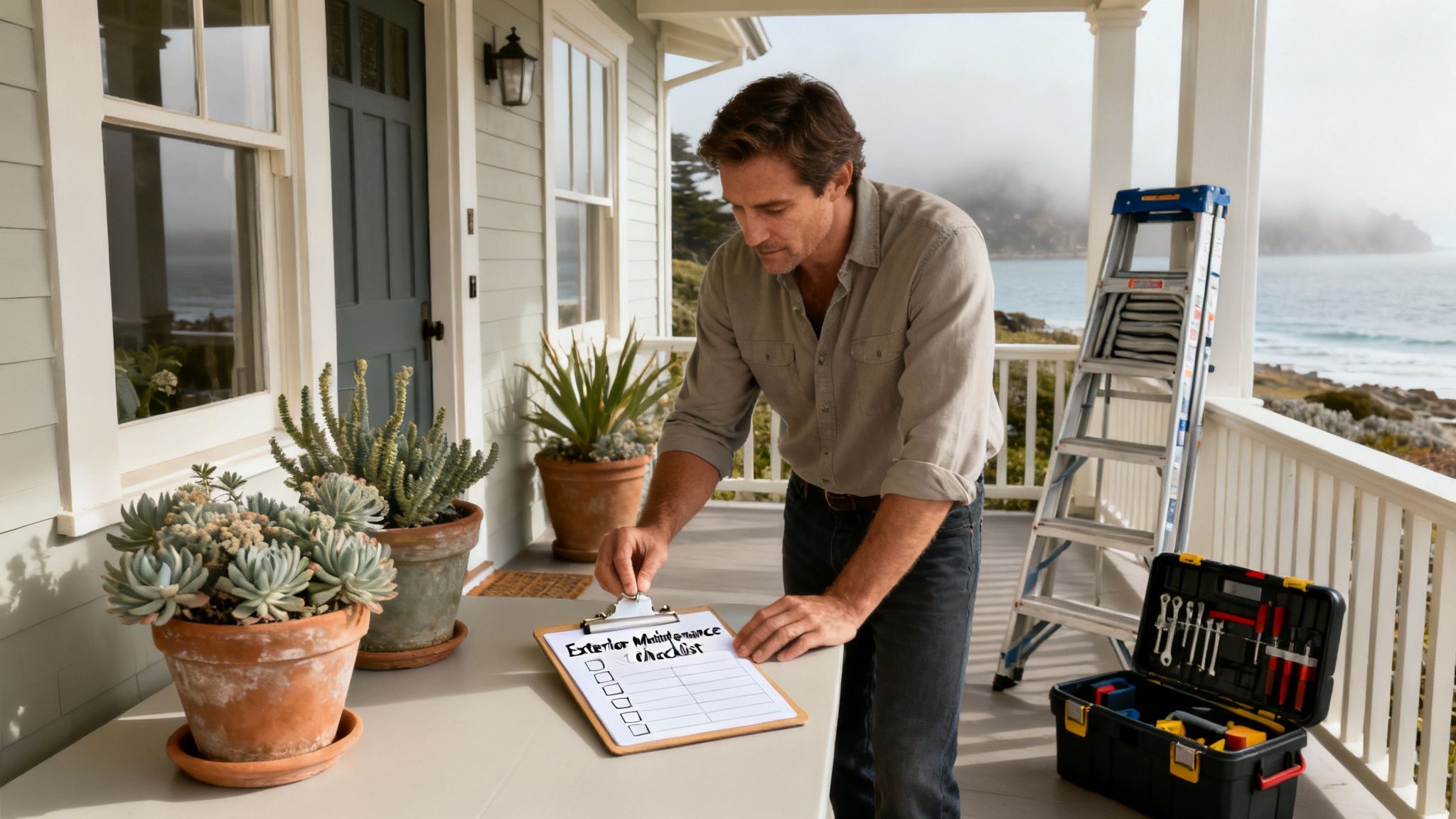
This balancing act means focusing on durability, neutral style, and curb appeal. The goal is to make the switch from a rental to a sale-ready listing as smooth as possible.
Prioritizing High-Impact Maintenance
Not all maintenance tasks are equal. When your property has to please two different groups, you need to focus on repairs that give you the biggest bang for your buck. Your focus should be on tasks that prevent costly future problems while also making the home look good.
Regular inspections are your best tool. A simple walkthrough every six months helps you catch small issues—a leaky faucet, a loose gutter—before they become big projects. This proactive approach shows tenants you care and keeps the property in top shape.
The Monterey Curb Appeal Checklist
In coastal towns like Monterey and Pacific Grove, the damp, foggy air can be tough on a home's exterior. Curb appeal is a buyer's first impression and a tenant's daily welcome.
Here are a few low-cost, high-impact tasks for our local climate:
- Combat Fog-Induced Wear: Regularly pressure wash siding and walkways to remove mildew. A fresh coat of paint on the front door can also work wonders.
- Boost Exterior Lighting: Foggy evenings can make a property feel gloomy. Upgrading to brighter, modern outdoor lights enhances safety and makes the home look more inviting.
- Focus on Hardy Landscaping: Choose salt-tolerant, low-water plants that do well in the Monterey Bay climate. A well-kept, low-fuss yard is a huge plus for everyone.
Strategic upkeep is about more than just repairs. It’s about preserving your asset’s value. Every small improvement you make for a tenant is also an investment in your future sale.
Choosing Finishes for Renters and Buyers
When something needs to be replaced, think neutral and durable. Your goal is a clean, welcoming space that lets renters and buyers imagine themselves living there.
- Flooring: Choose durable, easy-to-clean flooring like luxury vinyl plank (LVP) instead of carpet. It holds up well to traffic and has a modern look that buyers love.
- Paint: Stick to neutral paint colors like soft grays or off-whites. These colors make rooms feel larger and brighter.
- Fixtures: Update old light fixtures, faucets, and cabinet hardware with simple, classic designs. These small changes can modernize a whole space on a small budget.
The good news is that keeping your property as a rental is a smart financial move. The Monterey rental market remains strong, making it a profitable choice while you wait for the right time to sell.
Monterey vs. National Rental Market Snapshot
| Metric | Monterey, CA | National Average | Key Takeaway for Owners |
|---|---|---|---|
| Average Rent | $2,842/month | $1,732/month | Monterey's higher rents provide significant income to offset carrying costs. |
| Year-Over-Year Growth | ~9.5% | ~3.1% | The local market is appreciating faster, making it a strong asset to hold. |
| Vacancy Rate | Extremely Low | ~6.6% | Low vacancy means less downtime between tenants and a steady stream of rental income. |
This data shows that with a limited supply of only 99 available rentals for thousands of renter-occupied households, you're in a great position to attract quality tenants.
By focusing on smart maintenance, you create a property that works hard for you as a rental and is ready for a successful sale. For more ideas, check out our guide for smart maintenance tips for your rental property.
Understanding the Financial and Tax Implications
When you rent out your Monterey home, you’re stepping into a new role. You're no longer just a homeowner; you're running a small business. This shift comes with serious financial and tax issues that every new landlord needs to understand.
Getting this right protects your investment and sets you up for a more profitable sale later.
Calculating Your Rental Profit and Loss
Rental profit seems simple: rent collected minus your expenses. But for tax purposes, the details matter. You must keep perfect records of every dollar you spend to maintain the property.
Common expenses you can deduct include:
- Property Management Fees: The cost of hiring a pro to manage the property is fully deductible.
- Repairs and Maintenance: This covers everything from fixing a leaky faucet in a Salinas rental to landscaping in Carmel.
- Property Taxes and Mortgage Interest: These are still major deductions, just like when it was your primary home.
- Insurance Premiums: Your landlord insurance policy is a necessary—and deductible—business expense.
Keeping these records organized does more than just make tax time easier. It also gives you a clear financial picture to show potential buyers when it’s time to sell. Our guide on rental property tax deductions breaks it all down.
Understanding Depreciation
One of the biggest financial perks of owning a rental is depreciation. The IRS lets you deduct a portion of your property's value each year for wear and tear. This is a powerful "on-paper" loss that can lower your taxable rental income.
But there's a catch. When you sell, the IRS requires you to "recapture" all the depreciation you claimed, and that amount gets taxed. You must discuss this with a tax professional to avoid a nasty surprise.
The Capital Gains Exclusion Clock Is Ticking
This is the big one. The Capital Gains Exclusion is a critical tax rule for anyone planning to sell their former home. This rule allows you to exclude up to $250,000 of profit from your home's sale from taxes (or $500,000 if married).
To qualify, you must have owned and lived in the property as your main home for at least two of the five years right before the sale.
This "2-out-of-5-year" rule creates a ticking clock the moment a tenant moves in. If you rent out your Monterey home for more than three years, you lose this huge tax benefit. For many homeowners, this timeline is the biggest factor in their decision to sell.
A common strategy is to rent for less than three years. This lets you earn rental income while the market improves without giving up a valuable tax break. And with our strong local rental market, that income can be large. A quick look at Monterey rent market trends on Apartments.com shows that rental rates are consistently high.
Questions About Renting Before Selling
Deciding to rent out your home before selling it brings up a lot of questions. Juggling the roles of landlord and seller in Monterey County means understanding local rules, tenant rights, and the financial side of things.
Here are quick, clear answers to the most common concerns we hear from property owners.
How quickly can I sell if my tenant has a lease?
The answer is almost always in your lease agreement. If your tenant has a fixed-term lease (like for one year), that lease stays with the property. The new owner becomes the landlord and must honor the agreement.
If your tenant is on a month-to-month lease, you have more freedom. In California, you can give a 30-day notice to tenants who have been there less than a year, or a 60-day notice for those who have lived there longer. This lets you sell the property vacant to a wider range of buyers.
Do I have to tell my tenant I’m selling?
Yes, you absolutely should. Being upfront is a smart move. Let your tenant know you plan to sell as early as you can. This builds trust and helps set expectations for showings. A surprised tenant is often an uncooperative one.
How much notice do I need for showings?
California law is very clear: you must give your tenant at least 24 hours of written notice before entering the property for a showing. The notice needs to state the date, a reasonable time frame, and the reason for entry. Even if your tenant says okay verbally, always follow up in writing.
Can a tenant refuse to allow showings?
Legally, a tenant can't block you from showing the property if you have given proper notice. But in reality, they can make it difficult. This is where a good relationship and a solid lease help. If you have trouble, start with a calm conversation and consider offering a small incentive, like a gift card, for their cooperation.
What happens to the security deposit when I sell?
The security deposit is the tenant's money. When you sell, you have two clear options. You can transfer it to the new owner and notify the tenant in writing. Or, you can return it to the tenant (minus any legal deductions), and the new owner would collect a new deposit. Most sales just transfer the deposit to the new owner.
Is renting before selling a good idea in Monterey?
For many local homeowners, it’s an excellent strategy. The Monterey rental market is very strong. According to RentCafe, 62% of housing units are renter-occupied with an average rent of $2,712. That income can cover your mortgage while you wait for the perfect time to sell. You can explore more about local rental market trends to see the numbers yourself.
If you’re managing a rental in Salinas or anywhere along the Central Coast, Torrente Property Management can help you time it right and manage it well. Reach out today for a no-pressure rental strategy review. Contact us at (831) 582-8916.

7 Trends Changing Apartment Management for 2026
The world of rental properties is changing fast. For apartment owners in Monterey Bay, keeping up is key to success. Old ways of managing properties no longer work as technology and renter needs evolve. According to the National Apartment Association, 75% of renters say tech amenities are a must-have when picking a home. This shows that people want modern, efficient, and responsive management.
This guide will cover the 7 trends transforming apartment property management in 2026. We will share useful tips for owners in Salinas, Monterey, and Carmel. You will learn how new tech can make your work easier, meet the demands of today’s renters, and protect your investment for the future.
What to Expect Inside
We will look at everything from AI-powered tools to smart-building tech and the importance of online reputation. Each trend is explained with simple steps you can take. This will help you keep your apartments competitive and profitable.
1. AI-Powered Screening Cuts Risk Before Move-In
One of the biggest changes in property management is using Artificial Intelligence (AI) to screen tenants. This technology helps you find the best renters and avoid problems down the road. It makes the screening process smarter and more accurate.
AI tools look at an applicant's information to spot red flags that a person might miss. This helps catch things like fake documents or a history of late payments. For apartment owners, this means fewer issues, more reliable tenants, and a steady income. According to industry data, 65% of property management companies now use AI for tenant screening, showing how fast this trend is growing.
Why It Matters for Monterey Bay
In a place like Monterey County, finding great tenants is crucial. A good screening process protects your property and your peace of mind. Using AI helps you make decisions based on data, not just a gut feeling. This leads to a safer and more stable rental community.
Key Takeaway: AI screening isn't just about speed. It's about making smarter, safer choices that protect your investment from the start.
2. Virtual Tours and Tenant Portals Are the New Standard
Today’s renters expect convenience. One of the top trends transforming apartment property management in 2026 is the use of digital tools like virtual tours and online tenant portals. These features are no longer just nice to have; they are essential.
Renters, especially younger generations and people working from home, want to see properties online before visiting. They also want an easy way to communicate, pay rent, and request repairs. A recent study found that 80% of renters prefer online tours, and 72% want to use digital channels to talk with their property manager. Apartments that don't offer these tools risk losing out on the best tenants.

Making Your Property Stand Out
In competitive areas like Salinas and Monterey, offering 3D virtual tours can make your listing stand out. An online portal where tenants can handle everything from their phone shows that you are a modern, responsive landlord. These tools save time for everyone and create a better rental experience.
Key Takeaway: Digital tools make life easier for you and your tenants. They help attract modern renters and keep them happy.
3. Maintenance Follow-Up Matters More Than Ever
Good maintenance is more than just fixing a problem. It's about making sure the job is done right and that the tenant is satisfied. Many owners get frustrated when their property manager just sends a contractor without checking the work. This can lead to repeat problems and unhappy tenants.
In a competitive market, poor maintenance follow-up can cause good tenants to leave. A hands-on property manager takes the extra step to confirm the repair was done correctly. This shows tenants you care and helps prevent small issues from turning into big, expensive ones.

The Torrente Approach
At Torrente Property Management, we believe in proactive service. We don't just send a plumber; we follow up to ensure the work is high-quality and the tenant is happy. This hands-on approach builds trust and leads to lasting fixes, not just quick patches.
Key Takeaway: Following up on maintenance shows you value your property and your tenants. It's a simple step that makes a huge difference in tenant retention.
4. Reputation is Retention
What people say about your property online matters. Happy tenants leave positive reviews, and a good online reputation helps you fill vacancies faster. This is why managing your online brand is one of the most important trends transforming apartment property management in 2026.
A strong reputation is built on excellent service. This includes responding quickly to emergencies, checking in with tenants, and making sure they feel heard. When tenants feel valued, they are more likely to renew their lease and recommend your property to others. This creates a cycle of positive reviews and reliable renters. Explore some effective reputation management strategies for apartments to learn more.
Building Trust with Proactive Service
Proactive service means solving problems before they happen. It's about regular check-ins and having a 24/7 emergency response system. This level of care protects your online reputation and keeps your apartments filled with tenants who respect your property.
Key Takeaway: A good reputation is your best marketing tool. It attracts great tenants and keeps them for the long term.
5. Local Oversight Means Faster Fixes and Safer Investments
If you own property but live out of town, you need someone you can trust on the ground. A local property manager provides the oversight needed to protect your investment. They can inspect the property, handle issues quickly, and act like the property is their own.
Having a local team in the Monterey Bay area means faster response times. Instead of waiting for an out-of-town manager to coordinate repairs, a local expert can get things done right away. This prevents small problems, like a minor leak, from becoming major expenses.
The Value of a Local Expert
Torrente’s team is based right here in Monterey. We provide hands-on oversight to build trust and ensure your property is well-maintained. We inspect, report, and respond quickly, giving you peace of mind that your investment is in good hands.
Key Takeaway: Local property management isn't just a convenience; it's a necessity for protecting your asset and ensuring it runs smoothly.
6. ESG Goals Are Shaping Property Upgrades
ESG stands for Environmental, Social, and Governance. It's a framework that helps property owners make responsible choices. By 2026, focusing on ESG goals will be a key trend in property management. This means making upgrades that are good for the planet and your bottom line.
Installing energy-efficient windows, LED lighting, or solar panels can lower utility bills. These green features also attract tenants who care about sustainability. Focusing on ESG shows you are a forward-thinking owner, which can increase your property's value. Data from the U.S. Department of Energy shows that energy-efficient buildings can see significant long-term savings.
Why ESG Matters in Monterey
In a community like Monterey that values nature, having an eco-friendly property is a big plus. It helps you meet local regulations and attract tenants who share those values. These upgrades are smart investments that pay off in lower costs and higher tenant satisfaction.
Key Takeaway: Investing in green upgrades is good for the environment, good for your tenants, and good for your wallet.
7. Cybersecurity is Non-Negotiable
As property management becomes more digital, protecting sensitive information is crucial. One of the most important trends transforming apartment property management in 2026 is cybersecurity. You collect a lot of personal data from tenants, and you have a responsibility to keep it safe.
Strong cybersecurity means using secure software for payments and communications. It also involves training your team to spot online threats. A data breach can be very costly and damage your reputation. Taking steps to protect tenant information builds trust and reduces your risk. Referencing expert advice, like these Top 10 AI Security Best Practices for 2026, is a good starting point.
Protecting Your Digital Assets
Work with a property manager who takes cybersecurity seriously. This includes using multi-factor authentication and secure cloud storage. Protecting your data is just as important as protecting your physical property.
Key Takeaway: In a digital world, strong cybersecurity is essential for protecting your business and your tenants.
FAQs About Apartment Property Management Trends
What is the most important trend for apartment owners to focus on?
While all these trends are important, focusing on the tenant experience often has the biggest impact. Happy tenants are more likely to stay, which reduces turnover costs and keeps your income steady. A great experience includes good communication, fast maintenance, and modern conveniences.
How can I afford to implement these new technologies?
Start small. You don't have to do everything at once. Begin with high-impact, low-cost changes like improving your online listings with better photos or a basic virtual tour. Then, you can plan for bigger upgrades like smart-home tech as part of your long-term budget.
Is AI screening fair to all applicants?
It's very important to ensure any AI tool you use complies with Fair Housing laws. A professional property manager will use systems that are designed to be unbiased. These tools focus on financial history and other objective data to make fair and consistent decisions.
How does a good reputation really help my property?
A good online reputation acts like free marketing. When potential tenants search for apartments in your area, positive reviews make your property stand out. It builds trust before they even contact you, which can lead to shorter vacancies and higher-quality applicants.
Why is a local property manager better than a national company?
A local manager understands the Monterey Bay market. They know the right local contractors, understand local laws, and can be at your property quickly in an emergency. This hands-on approach often leads to better maintenance, happier tenants, and a more secure investment.
Conclusion: Get Ready for the Future of Property Management
The way we manage apartments is changing. By embracing these 7 trends transforming apartment property management in 2026, you can protect your investment and increase your profits. From using AI for smarter screening to focusing on tenant happiness, these changes will help you succeed.
If you're a property owner in Monterey or Salinas looking to simplify apartment management and boost tenant satisfaction, Torrente Property Management is here to help. Let’s start with a free consultation—and give your investment the attention it deserves.
Contact Torrente Property Management Inc. today at (831) 582-8916 or visit us at TorrentePropertyManagement.com.

Don't Just Watch: Why Cameras Alone Can't Protect Your Second Home
Relying only on cameras to watch your second home is like having a smoke detector that only flashes a light on your phone. It tells you there's a problem but does nothing to solve it.
Cameras are great for keeping an eye on things. However, they are passive witnesses, not active problem-solvers. They show you a disaster unfolding, but they are powerless to stop it.
Why Your Cameras Give a False Sense of Security
For second-home owners in beautiful Monterey Bay, I hear a common question: “Do I really need an estate caretaker if I already have cameras?” It seems logical, but it overlooks one simple truth: cameras can see, but they can't act.
This disconnect between seeing a problem and solving it is the risk of relying on cameras alone to watch your second home. A recent report shows that water damage and freezing are the second most common cause of home insurance claims (Insurance Information Institute).
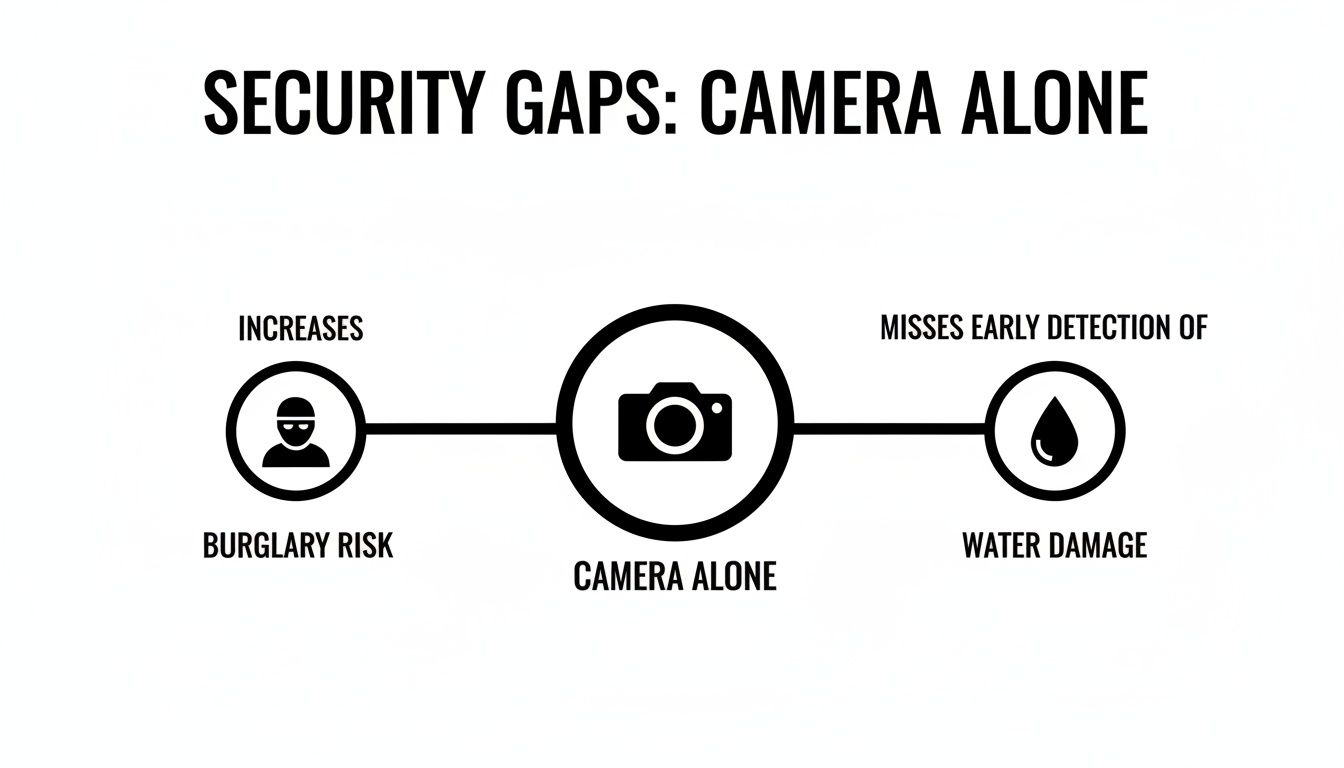
As you can see, a camera is just one piece of the puzzle. It leaves your property exposed to major risks that technology cannot fix from hundreds of miles away.
The Limits of Digital Eyes
Think of your camera system as a silent observer. It's great at recording events but has zero ability to physically step in.
This creates a critical gap between getting an alert on your phone and getting a problem fixed on the ground. Peace of mind comes from knowing someone is there to handle it.
A smart device provides an alert, but a local caretaker provides the solution. Blending technology with in-person human oversight is the only way to truly protect your investment.
From Passive Witness to Active Protector
The most expensive damage to unoccupied homes often comes from issues that never trigger a motion alert.
It’s the slow leak under a sink or the HVAC system that fails during a cold snap. These problems fester quietly, turning minor fixes into major, costly renovations.
This table shows the difference between what your camera can do and what an on-site professional can handle.
Camera Monitoring vs. On-Site Caretaker
| Security Task | Cameras Alone | On-Site Caretaker |
|---|---|---|
| Detect a Break-In | Records video and sends an alert. | Investigates the alert and coordinates with police. |
| Prevent Water Damage | Records a flood as it happens. | Shuts off the water, finds the source, and calls a plumber. |
| Identify Pests | Cannot see subtle signs like nests. | Spots early signs and arranges for pest control. |
| Check HVAC Systems | Cannot confirm if the system is running. | Physically checks the unit and schedules maintenance. |
| Address Storm Damage | May show a fallen branch, not a roof leak. | Walks the property, inspects the roof, and arranges repairs. |
The gap is clear. Technology is a tool, not a total solution.
This is exactly why smart second homeowners rely on local property managers to bridge the gap. Combining your tech with scheduled, in-person inspections creates a powerful defense.
The Silent Dangers Your Security Camera Cannot See
Security cameras are fantastic for catching things you can see, like a person walking up your driveway. But what about the threats that don't make a grand entrance?
These unseen dangers are where the risk of relying on cameras alone to watch your second home becomes a costly reality.
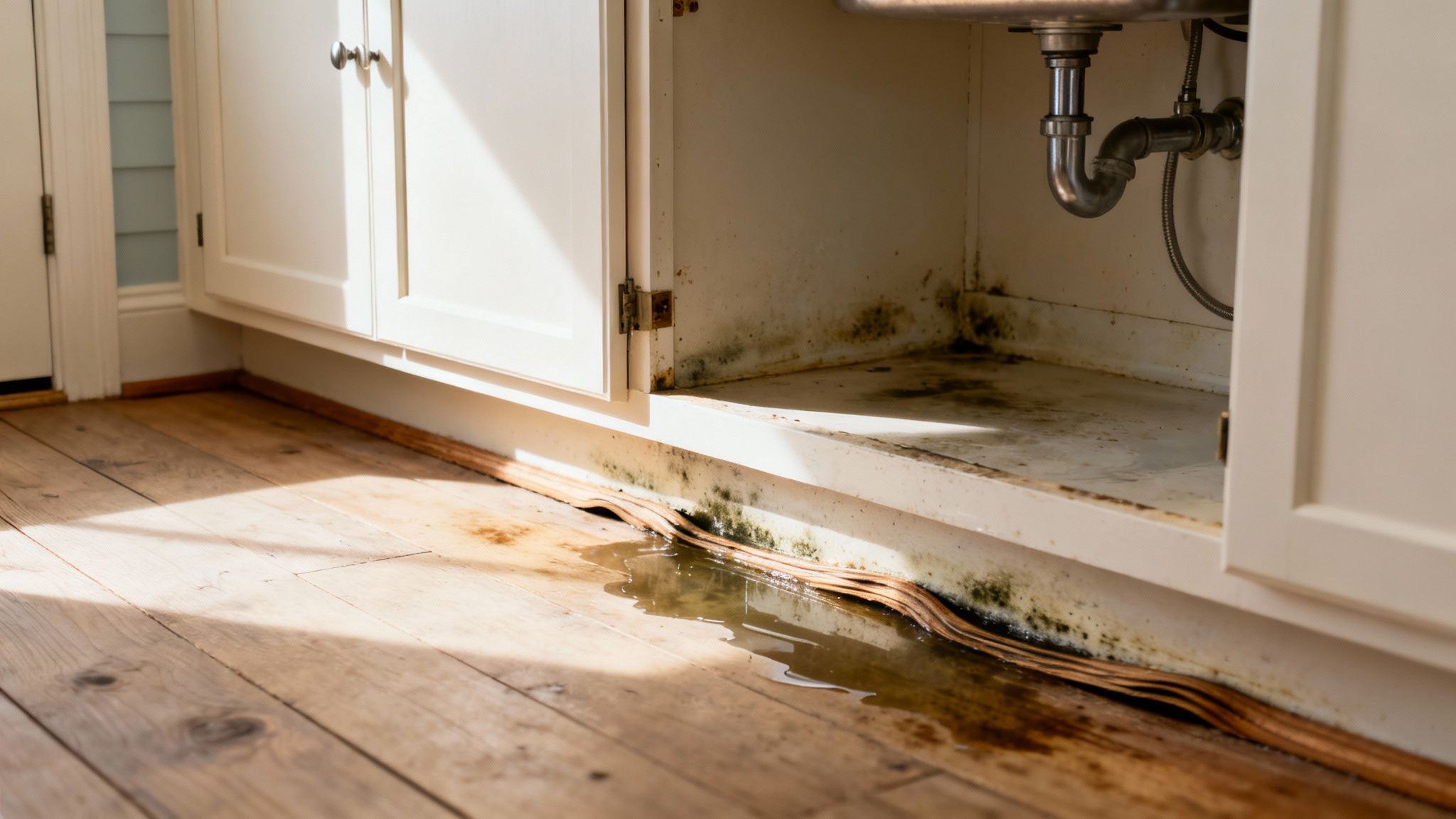
Catastrophic Water Damage from Tiny Leaks
The number one silent threat to any vacant property is water. A camera pointed at your living room won’t see the slow drip from a hidden pipe.
This tiny leak can continue for weeks, completely unnoticed. One online owner said, “no one checked my property for 3 months and a small leak became major damage.”
By the time the damage is visible on camera, it’s too late. These issues silently escalate from a simple fix into a massive renovation project.
HVAC Failures and Frozen Pipes
Imagine a cold snap hitting the Carmel area while you're away. Your smart thermostat might send an alert, but your camera can’t tell you why your home is cold.
If your HVAC system fails, pipes can freeze and burst. A single burst pipe can release hundreds of gallons of water per hour, causing catastrophic flooding.
A physical inspection would catch the temperature drop and allow for an emergency repair, preventing the disaster entirely. For more proactive tips, explore our guide on how seasonal homeowners can protect their property while away.
Subtle Signs of Pest Infestations
Rodents and insects don't announce their arrival. They find small, hidden entry points outside your camera's field of view.
What a camera misses, a person will see. This includes droppings, gnaw marks on wiring, or nesting materials tucked away in corners.
Unseen Roof and Structural Damage
Winter storms can lift shingles or damage flashing. Your camera, aimed at entry points, will never see this.
A small, unnoticed roof leak can lead to wood rot and mold. What could have been a simple repair transforms into a major structural problem.
Why an Alert Is Not the Same As Action
Receiving a notification on your phone is one thing. Getting the problem solved is another. This is where technology falls short.
An alert tells you a disaster is happening. A local professional stops it from getting worse. What this means is tech provides alerts—but not action.
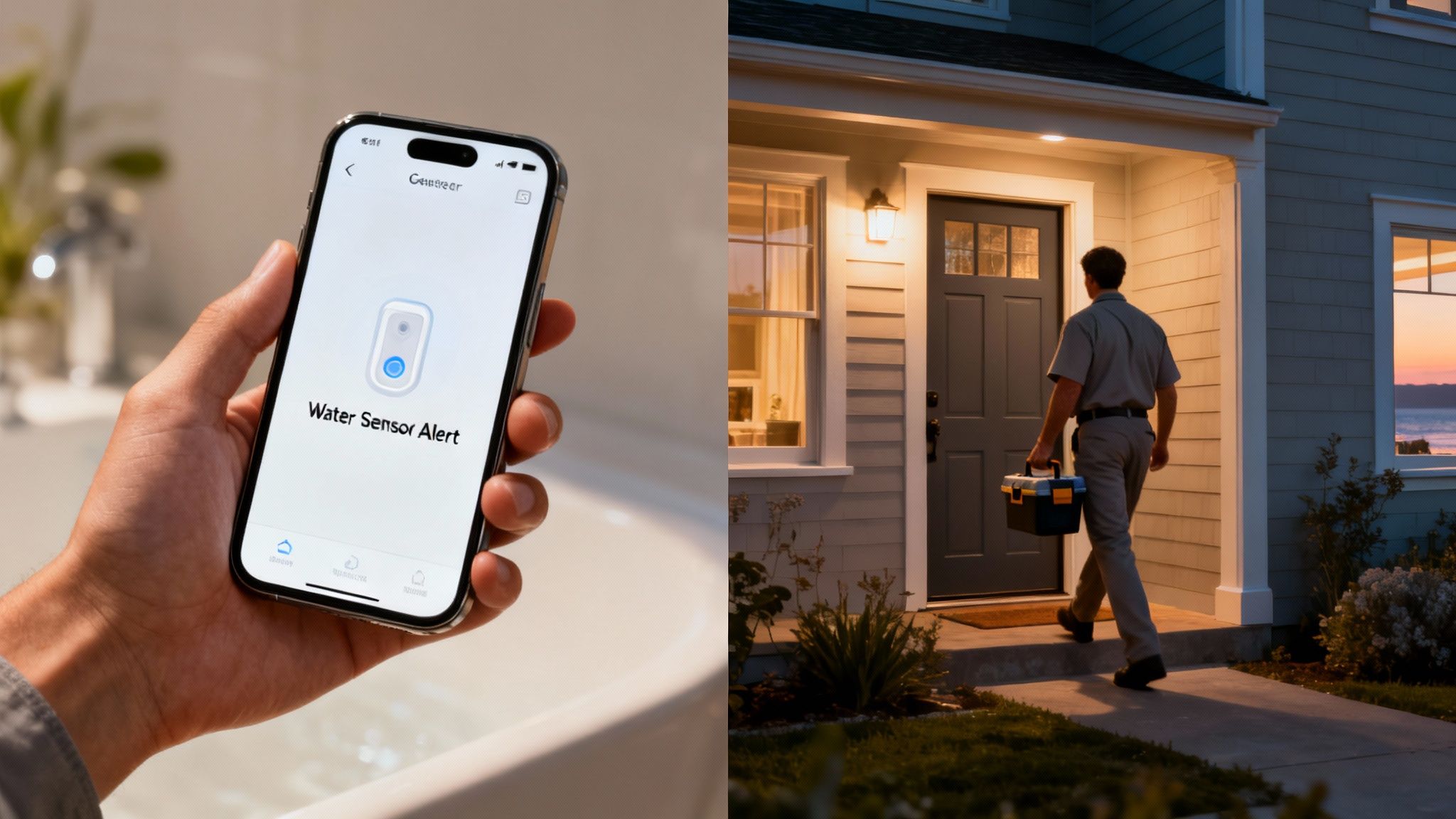
The Helpless Feeling of a Remote Emergency
Imagine you get an alert: a pipe has burst at your Carmel property. You open your camera app and watch in horror as water floods the floor.
Now the panic sets in. You start frantically searching online for an emergency plumber who is available, trustworthy, and willing to go to an unoccupied home.
All the while, you are completely helpless. The alert worked perfectly, but it couldn't solve the actual problem.
From Frantic Scramble to Controlled Response
A professional property manager is your active responder on the ground. Instead of a panicked search for help, the process is simple.
When an alert comes through, you make one call—to your trusted local partner.
A smart device provides an alert, but a local caretaker provides the solution. They turn a stressful, long-distance scramble into a calm, controlled response.
A professional already has a network of vetted, reliable emergency vendors. This quick action can be the difference between a minor cleanup and a catastrophic renovation.
The Critical Difference Between Data and Action
Understanding this difference is key, as many common mistakes in CCTV monitoring security lead to delays.
- Technology Provides Data: A camera shows you a broken window.
- A Caretaker Provides Action: They board up the window and coordinate with police.
- Technology Is Reactive: It alerts you after an event starts.
- A Caretaker Is Proactive: They conduct regular inspections to prevent issues.
The core message is simple: technology is a valuable tool, but it is not a complete solution. Pairing your smart devices with professional oversight creates a comprehensive safety net.
Protecting Your Investment and Your Insurance Policy
Beyond physical risks, leaving a second home unmonitored is a major financial gamble. Many insurance policies contain a "vacancy clause" that can put your entire investment at risk.
Insurance companies see empty properties as a higher risk. They have specific rules for what makes a home "vacant," which can kick in after just 30 to 60 days.
Understanding the Vacancy Clause
A vacancy clause can limit or even void your coverage if your home is unoccupied for too long.
For example, if a small leak causes major damage over three months, your claim could easily be denied. This is not just a maintenance nightmare; it's an insurance nightmare.
The Real-World Consequences
When a vacancy clause is triggered, the results can be severe. Your policy might stop covering damage from vandalism or burst pipes.
In the worst case, the insurance company could void your policy entirely. To appreciate the value of protection, it helps to understand how insurance generally works.
The Solution: Documented Inspections
The best way to satisfy insurance requirements is with scheduled, documented inspections by a professional caretaker.
These regular visits prove that the property is being monitored. A professional provides detailed reports that serve as crucial proof, ensuring your home remains fully insured.
This is a key reason that Monterey property owners are turning to professional caretaking. It’s about making sure your financial safety net is there when you need it.
The Smartest Approach: A Human and Tech Partnership
The best way to protect your second home isn't a choice between technology and a caretaker—it's about combining them. This integrated strategy creates a powerful defense that truly covers all the bases.
Think of your smart home system as the first line of defense. Your cameras and leak detectors are fantastic tools for instant alerts.
The crucial next step is to pair your smart system with scheduled, professional walkthroughs. A caretaker can catch what cameras can’t—and act fast to fix it.
From Digital Alert to Decisive Action
When your system sends a notification, a local caretaker can be on-site to investigate immediately. This blend of tech and touch is the most effective way to manage the risk of relying on cameras alone to watch your second home.
Real-world cases show smart tech can’t detect water leaks under sinks, HVAC failure, roof damage, or rodents. Tech provides alerts—but not action.
The Comprehensive Home Watch Checklist
What should a professional caretaker look for? A thorough inspection is a systematic check of your property’s interior and exterior.
Interior Inspection Checklist
- Security: Check that all windows and doors are securely locked.
- Plumbing: Inspect under sinks and behind toilets for leaks or moisture.
- Appliances: Ensure refrigerators and freezers are running correctly.
- HVAC System: Check thermostat settings and confirm the system is operating.
- Electrical: Look for tripped breakers and test smoke detectors.
- Pest Activity: Search for any signs of insects or rodents.
- Overall Condition: Note any unusual odors or sounds.
Exterior Inspection Checklist
- Security: Walk the perimeter to check fences, gates, and outdoor structures.
- Damage: Inspect the roof, siding, and windows for any damage.
- Landscaping: Make sure the yard is maintained to avoid looking unoccupied.
- Pest Entry Points: Check for any gaps or cracks in the foundation.
- Mail & Flyers: Remove any items to maintain a "lived-in" appearance.
This two-pronged approach ensures that no matter the problem, it will be detected quickly and handled effectively.
Frequently Asked Questions
Do I really need an estate caretaker if I have cameras?
Yes. Cameras can only show you a problem; they can't fix it. A caretaker provides the on-site action needed to handle emergencies like water leaks, HVAC failures, or security breaches, protecting your home from major damage.
What do cameras miss that a person would catch?
Cameras can't detect hidden issues like slow water leaks under a sink, the smell of gas, a failing furnace, or subtle signs of a pest infestation. A person performing a physical walkthrough can spot these problems before they become costly disasters.
How do professional inspections help with my insurance?
Many insurance policies have a "vacancy clause" that can reduce or void your coverage if a home is empty for 30-60 days. Regular, documented inspections by a professional service prove the home is being cared for, which helps keep your policy in full effect.
What happens when a problem is found?
A professional caretaker will immediately contact you with a report and photos. With your approval, they will use their network of trusted local vendors to manage the repair from start to finish, saving you the stress of finding help from afar.
Can I just ask a neighbor to check on my house?
Relying on a neighbor can strain your relationship and puts them in a difficult position during an emergency. A professional caretaker is insured, bonded, and has a network of emergency contacts, offering a reliable and comprehensive solution without burdening a friend.
If you’re managing a second home in Monterey or Carmel from afar, don’t rely on tech alone. Torrente offers trusted local estate care services that work with your devices to truly protect your investment. Contact Torrente Property Management today at (831) 582-8916 to let's talk.
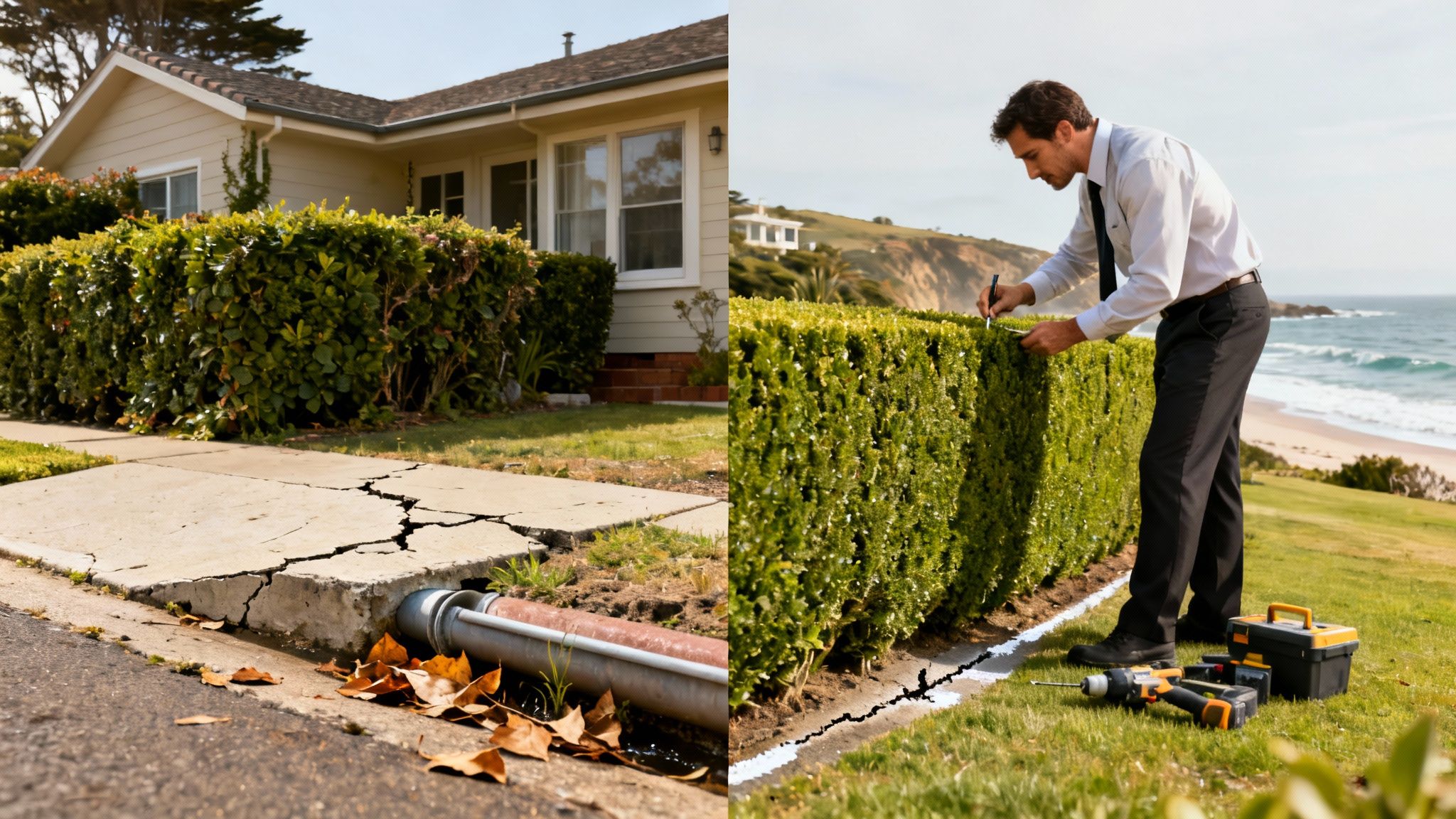
5 Common Estate Care Mistakes Central Coast Homeowners Make in 2026
Owning a home on California's Central Coast is a major investment. But when a property sits vacant, even for a short time, it faces risks many owners overlook. In fact, vacant homes face a much higher risk of vandalism and theft, according to the Insurance Information Institute. Protecting your investment means more than just locking the doors.
This guide will show you the 5 estate care mistakes Central Coast homeowners make in 2026. We will cover why assuming "no news is good news" is so dangerous and how to keep your home safe. These tips will help you protect your property's value and avoid stress.
1. Assuming “No News Is Good News”
One of the biggest mistakes is thinking silence means your property is fine. Damage often starts small and goes unnoticed for months. A tiny leak can turn into a huge repair bill if not caught early.
Many homeowners believe that if they don't hear about a problem, one doesn't exist. But regular, documented check-ins are key. They help prevent small issues from becoming five-figure repairs. This is especially true for second homes in places like Carmel or for military families deployed from Monterey.
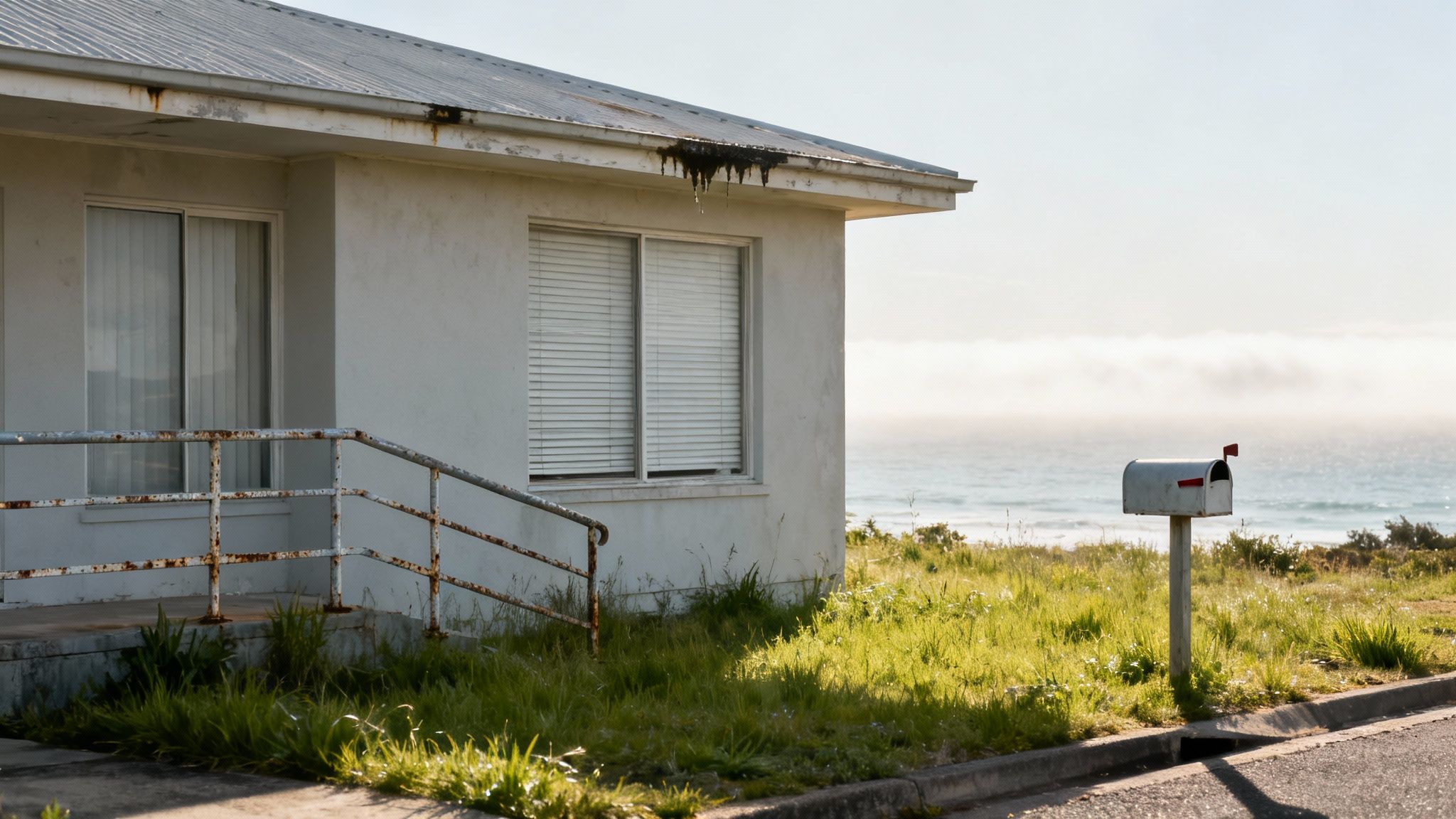
Why This Is a Costly Mistake
When a vacant home is not checked, small problems grow. A slow drip under a sink can cause mold and rot that costs thousands to fix. Pests can move in and cause damage to wiring and insulation.
An empty property is also a target for break-ins and vandalism. Without someone checking on it, your home can look abandoned. This invites trouble that regular visits can help prevent. You can find more practical security tips to prevent home break-ins to protect your asset.
2. Relying Only on Cameras or Neighbors
Security cameras are helpful, but they have limits. They can't smell a gas leak or spot a new water stain on a ceiling. They also can't check for roof damage after a big storm in Salinas.
Neighbors can be a great help, but they aren't property experts. They mean well, but they won't check your plumbing, HVAC systems, or crawl spaces. Physical inspections by a professional are essential to catch problems that technology and neighbors will miss.
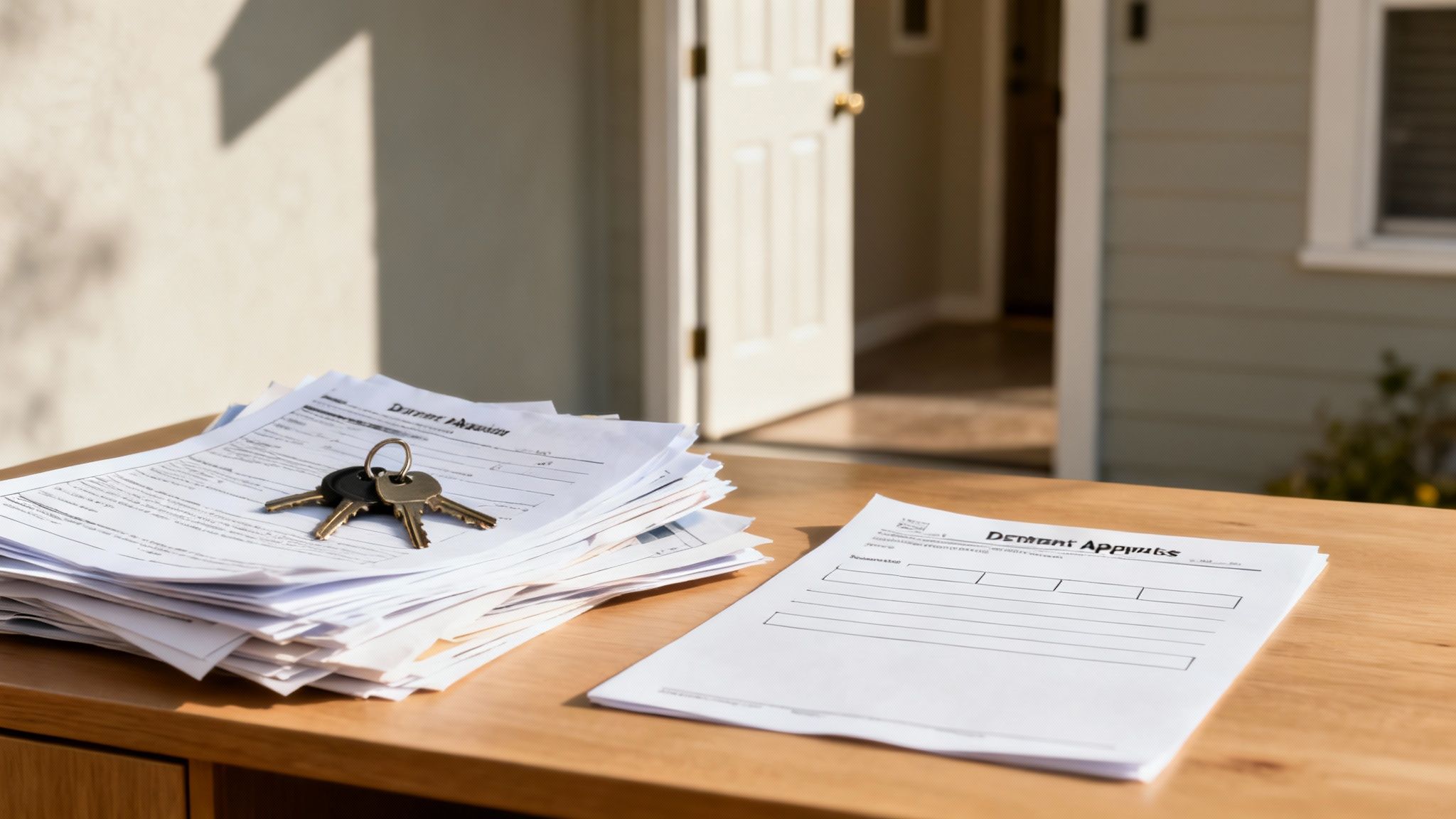
Why On-Site Checks Matter
A professional caretaker does more than just look around. They run faucets to check for leaks, test smoke detectors, and look for signs of pests. These simple actions can save you thousands in future repairs.
A physical check also creates a visible presence at the property. This can deter potential criminals. Professional security patrol services in California add another layer of protection that cameras alone cannot provide. For total peace of mind, a hands-on approach is best.
3. Ignoring Coastal Wear and Tear
Living on the Central Coast is beautiful, but the weather can be tough on houses. The fog, salt air, and moisture in areas like the Monterey Peninsula cause damage over time. This coastal wear and tear happens faster than many homeowners realize.
Salt in the air causes metal to rust and corrode. Moisture can lead to mildew and wood rot. Vacant homes deteriorate even faster without regular care designed for our local climate. Simple tasks like rinsing off salty buildup can make a huge difference.

Local Climate Demands Local Care
A home in Carmel faces different challenges than a home in Salinas. The coastal fog means you need to check for mildew and moisture damage more often. Window seals, exterior paint, and metal fixtures all need special attention.
Ignoring these local factors is a mistake that can devalue your property. A good estate care plan includes tasks specific to the Monterey Bay environment. Find out more about our specialized vacant property inspections and upkeep in Monterey County.
4. Forgetting That Insurance Doesn’t Love Neglected Homes
Your homeowner's insurance policy is there to protect you, but it has rules. Many insurance companies require proof of routine inspections for vacant properties. If you can't show that your home has been cared for, your claim could be delayed or even denied.
This is a critical mistake that can cost you everything. Professional estate care creates a paper trail of photos and inspection logs. This documentation proves you've been responsible and protects you if you need to file a claim.

Protect Your Coverage
Without proper records, you are at the mercy of the insurance adjuster. A simple log from a caretaker service can be the difference between a paid claim and a huge out-of-pocket expense.
Before leaving your home vacant, call your insurance agent. Ask about any special requirements for unoccupied homes. Understanding your policy is a key part of responsible property ownership. We offer estate caretaker and maintenance services on the Monterey Peninsula to help you meet these requirements.
5. Choosing Reactive Help Instead of Preventive Care
Waiting for something to break before you call for help is the most expensive way to manage a property. A reactive approach almost always costs more than preventing the problem in the first place. This is one of the most common estate care mistakes Central Coast homeowners make.
Preventive care focuses on scheduled inspections and early issue detection. This approach saves homeowners money and stress over time. It's about fixing a small leak before it becomes a flooded kitchen. Torrente's estate caretaker services are built on this proactive model.
The Value of a Proactive Plan
A proactive maintenance plan saves money in several ways:
- Fewer Emergencies: Regular check-ups catch problems before they become costly crises.
- Lower Repair Costs: Small fixes are much cheaper than major restorations.
- Longer System Life: Well-maintained systems like HVAC and plumbing last longer.
- Maintained Value: A well-cared-for home holds its value better in the market.
Investing in preventive care is one of the smartest financial decisions a homeowner can make. Learn more about smart maintenance for your rental property, including key tips and a helpful checklist.
Frequently Asked Questions (FAQs)
Why is professional estate care important for a vacant home?
Professional care is crucial because it prevents small issues from becoming expensive disasters. Regular inspections catch things like leaks, pests, and security risks early, saving you money and protecting your home's value.
How often should my vacant Central Coast property be inspected?
We recommend bi-weekly or monthly inspections. This frequency is often enough to catch problems before they escalate and can help satisfy insurance requirements for vacant homes.
Can't my neighbor just watch my house for me?
While neighbors can be helpful, they aren't trained to spot potential issues with plumbing, electrical, or structural systems. A professional provides detailed, documented inspections that a neighbor simply cannot.
What are the biggest risks for vacant homes in coastal areas?
In coastal areas like Monterey and Carmel, the biggest risks are moisture-related. This includes mold, mildew, wood rot, and corrosion from salt air. Vandalism is also a significant risk for any unoccupied property.
How does estate care help with my homeowner's insurance?
Many insurance policies have clauses that can void coverage if a home is left vacant and unmonitored. Professional estate care provides the documentation needed to prove you are actively maintaining the property, which protects your coverage.
Protect Your Investment the Right Way
Avoiding these five common mistakes is key to protecting your Central Coast home. Proactive care is always cheaper and less stressful than reacting to a disaster. A well-maintained property holds its value and gives you peace of mind.
Remember these key takeaways:
- Regular inspections are your best defense against damage.
- Cameras and neighbors aren't enough; you need physical checks.
- Coastal weather requires a special maintenance plan.
- Documentation is critical for your insurance coverage.
- Preventive care saves money and protects your investment.
If you're a homeowner in Monterey, Salinas, or elsewhere on the Central Coast with a vacant or seasonal property, we’d love to help you protect it year-round. Let’s start with a free estate care consultation to make sure your home is truly looked after.
Contact Torrente Property Management Inc. today at (831) 582-8916 to secure your peace of mind.

The Legal Shifts Reshaping Rental Management in California
The world of California property management is changing fast. A rental property used to be a simple investment, but now it demands serious legal awareness. For landlords, this isn't just a small update—it's a whole new playbook.
Understanding the New Landlord Playbook
The legal shifts across California are making casual landlording a thing of the past. As tenant rights expand, the state is adding new rules that require proactive compliance, detailed records, and clear communication.
For property owners in Monterey, Salinas, or Pacific Grove, understanding these changes is the only way to avoid expensive legal trouble.
This isn't just a local trend. A recent analysis shows states like California are focusing more on billing fairness and resident protections. Just collecting rent is no longer enough; landlords must now act with a higher degree of professional oversight.
The Shift from 'Nice to Have' to 'Must Do'
Until recently, many landlord tasks were just good business practices. The 2025 updates changed that. Two new rules show how much the ground has shifted:
- Mandatory Credit Reporting Offers: Landlords must now offer tenants the option to have their on-time rent payments reported to a major credit bureau. This helps renters build credit with their largest monthly expense.
- Required Photo Documentation: Taking move-in and move-out photos used to be a smart way to handle security deposit disputes. Now, it's a mandatory step to create an official visual record.
These laws turn optional best practices into required duties for every landlord in California.
This isn’t just about more paperwork. It’s about raising the professional standard for the entire industry. The state now views landlords as regulated service providers with strict rules.
The Widening Compliance Gap
With every new law, the gap between professional property managers and DIY landlords gets wider and more dangerous. Many self-managing owners use outdated lease templates from the internet or simply don't know their new obligations. That kind of mistake is a lawsuit waiting to happen.
For a refresher on the basics, you can review our guide on key landlord-tenant laws in California.
Failing to follow even one of these new rules can cause serious problems, including:
- Hefty Fines: State and local agencies are increasing enforcement and issuing penalties.
- Costly Tenant Lawsuits: Tenants are more informed about their rights than ever before.
- Voided Lease Clauses: An improper lease can make it impossible to enforce critical terms.
Staying ahead of the legal curve is about protecting your entire asset from legal battles. For property owners here in Monterey County, deep local expertise is your best defense.
Key Legal Shifts for Landlords At a Glance
| New Legal Requirement | What This Means for You | The Risk of Getting It Wrong |
|---|---|---|
| Mandatory Credit Reporting Offer | You must give all tenants the option to have their rent payments reported to a credit bureau. | Failure to offer this can lead to fines and tenant disputes over fair housing practices. |
| Required Photo Documentation | Taking detailed photos at move-in and move-out is no longer optional; it's legally required. | Without a visual record, you could easily lose a security deposit dispute and face penalties. |
| Strict Just-Cause Eviction Rules | You must have a legally valid, documented reason to end a tenancy for anyone who has lived in a unit for 12 months. | An improper eviction can lead to a wrongful eviction lawsuit, costing you thousands in damages. |
| Statewide Rent Increase Caps | Annual rent increases are capped at 5% plus local CPI, or 10% total, whichever is lower. | Exceeding the cap can void the increase and expose you to legal action. |
These changes represent a major shift in how rental properties must be managed. Informal agreements are gone, replaced by a legal framework that demands professionalism.
Navigating Rent Control and Fee Transparency Rules
For California property owners, figuring out rent increases and fees has become a real challenge. The old way of setting a price and adding fees no longer works. New laws now define how much you can raise rent and what you can charge for.
The main law is the Tenant Protection Act (AB 1482). This statewide law puts a firm cap on annual rent increases. As a landlord, you can raise rent by no more than 5% plus the local Consumer Price Index (CPI), or a flat 10%, whichever is lower.
How Rent Caps Work in Practice
That "5% plus CPI" rule isn't a fixed number. For example, the CPI in Monterey County could be different from Santa Cruz County. This means properties just a few miles apart could have different maximum rent hikes.
It’s also critical to get the timing and notices right. You can't just raise the rent anytime. Proper written notice is mandatory. For a deep dive into the timelines, our guide on California rent grace periods breaks down everything you need to know.
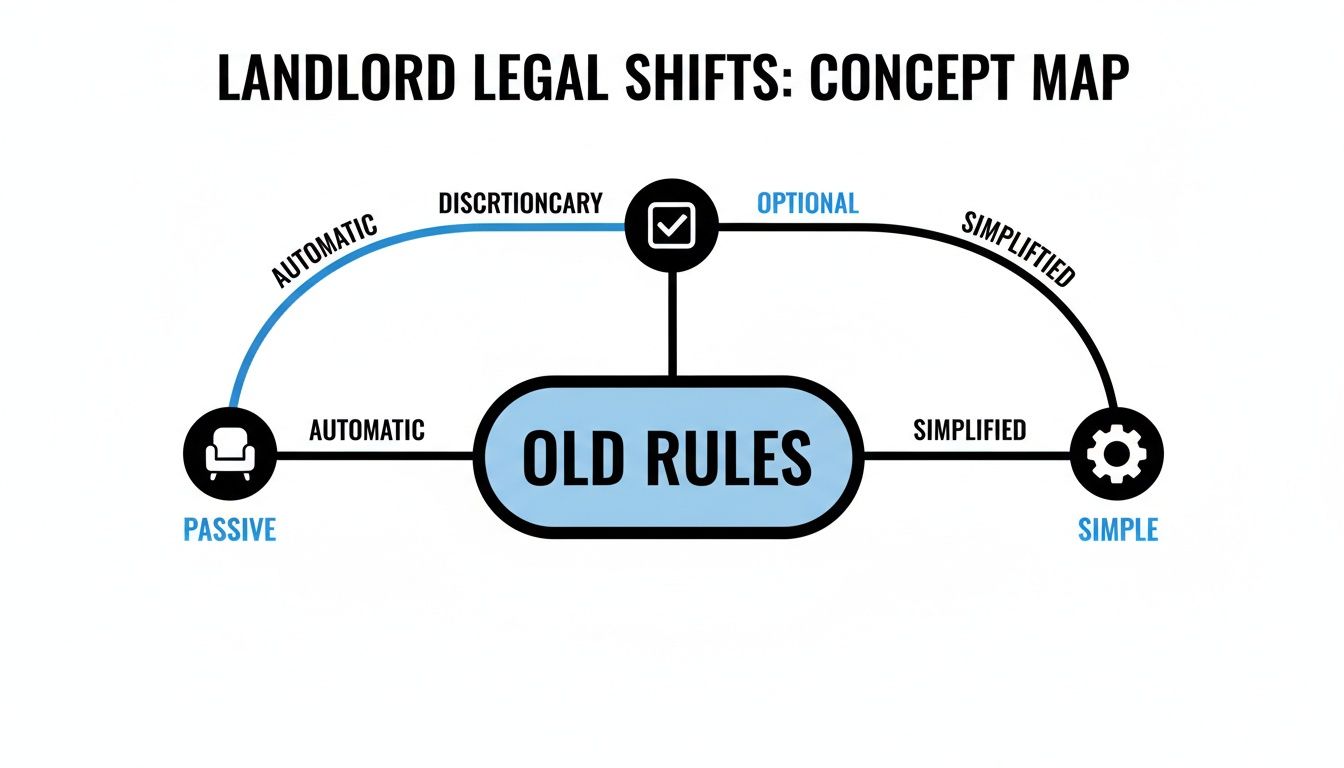
This visual shows the shift from a passive management style to one that demands active legal compliance.
The End of Hidden "Junk Fees"
One of the biggest legal shifts is the new ban on "junk fees." This change is about giving tenants a clear, all-in price for a rental unit from the start.
A new law requires that any advertised rental price must include all mandatory, recurring fees. If you require a monthly pet fee or landscaping charge, you must bundle it into the single rent price you advertise.
The goal here is total transparency from the very first advertisement. It's a shift from 'price plus fees' to just 'price.'
To stay compliant, property owners should review their fee structures now. It’s essential to know the difference between mandatory and optional fees.
- Mandatory Recurring Fees: These must be included in your advertised rent. Think monthly pet fees or required parking charges.
- Optional or One-Time Fees: These don't need to be in the base rent, but you must disclose them clearly. This includes things like late fees or returned check fees.
For landlords in competitive markets like Carmel and Pacific Grove, this transparency helps attract good tenants. Getting this wrong could lead to accusations of false advertising.
The Growing Risks of DIY Landlord Management
For years, managing your own rental in Monterey or Salinas seemed like a smart way to save money. But recent legal changes have turned this simple side hustle into a high-stakes job. The risks for DIY landlords have never been higher.
Many self-managing owners fall into costly traps. The most dangerous is using outdated lease templates from the internet. These generic documents rarely include the specific clauses now required by California law.
A small mistake—like forgetting to offer credit reporting—can quickly become an expensive dispute or lawsuit. As tenant rights expand, so does your personal liability.
The Gap Between Casual and Compliant
The difference between a casual landlord and a professional one is now a huge legal and financial gap. Treating your rental as a side business is no longer safe in California’s strict regulatory climate.
The burden isn’t just legal; it hits your bottom line. Understanding strategies for improving cash flow can impact your ability to meet new obligations. Proper management protects both your compliance and your profit.
The new laws assume a professional level of knowledge. Ignorance of a new rule is no excuse in court. Your rental property is a business, and it must be run like one.
This new reality creates risks for landlords who aren't legal experts. We explore this more in our article on the hidden costs of managing your own rental.
Common Pitfalls for Self-Managing Landlords
Many landlords are unprepared for today's legal requirements. Here are some of the most frequent errors we see:
- Improper Record-Keeping: Failing to document everything, from maintenance requests to move-in/move-out reports. This makes defending against security deposit claims nearly impossible.
- Outdated Lease Agreements: Using a lease that lacks mandatory disclosures on rent control and tenant rights. A single missing clause can make your lease unenforceable.
- Ignoring Local Ordinances: Focusing only on state laws while missing stricter rules in Monterey, Pacific Grove, or Salinas.
Each of these mistakes creates an opening for legal challenges that can wipe out years of rental income.
Mastering New Habitability and Security Deposit Rules
A tenant's right to a safe home has always been a key part of California law. But recent updates have tightened the rules around "habitability" and security deposits. For landlords in the Monterey Bay area, this is a critical update to your operations.
These legal shifts impact what you must provide. An appliance like a stove, once an amenity, is now often seen as a required part of a livable unit. You must keep these core features in good working order.

The Evolving Definition of Habitability
California’s implied warranty of habitability means your rental must be fit to live in. This always covered big things like working plumbing. But the scope is widening to a more modern view of what "livable" means today.
Managing these standards involves budgeting for maintenance. For instance, knowing dryer vent cleaning prices in California helps you plan for this essential safety task.
This means you have a clear duty to:
- Keep gas, heating, plumbing, and electrical systems safe.
- Maintain any major appliances included in the lease.
- Ensure common areas are clean.
- Handle pest problems and make repairs in a timely manner.
Our complete guide to the warranty of habitability in California breaks down what landlords must provide.
New Rules for Security Deposit Handling
Security deposits are now under a much brighter legal spotlight. The process for returning a deposit has strict deadlines and documentation rules.
The most important rule is the 21-day deadline. After a tenant moves out, you have 21 calendar days to return their deposit or provide an itemized statement of deductions. Missing this deadline could force you to return the entire deposit.
Landlords can no longer treat the 21-day deposit return window as a flexible guideline. It is a hard deadline with significant consequences.
The Power of Ironclad Documentation
If you deduct from a security deposit, you need proof. Meticulous documentation is no longer just good practice; it's your only defense. The state requires detailed records to justify any claim of damage beyond normal wear and tear.
Your documentation strategy should include:
- A Detailed Move-In Checklist: Walk through the unit with the tenant and have them sign a checklist noting the condition of everything.
- Dated Photos and Videos: Take photos and videos of the property's condition before the tenant moves in.
- Thorough Move-Out Inspection: When they move out, conduct a final walkthrough to compare and document any new damage.
- Itemized Receipts: If you make deductions for repairs, you must provide the tenant with copies of invoices or receipts.
Without this proof, you'll find it nearly impossible to defend your deductions in a dispute. The burden of proof is on the landlord.
Your Proactive Compliance Strategy in Monterey Bay
Keeping up with California’s rental laws isn't just about avoiding fines—it’s about protecting your real estate investment. A reactive approach is a recipe for disaster. Property owners in Monterey Bay need a proactive strategy that anticipates legal changes.
This means replacing outdated practices with a system built on expertise. As the legal shifts reshaping rental management in California continue, professional oversight is the only way to protect your profitability.
Your Compliance Shield in Action
Think of a professional partner like Torrente Property Management as your compliance shield. Our approach is built on legally-sound processes that protect you from common landlord traps. We stay current on legal updates so you don’t have to.
Our strategy includes:
- Legally-Vetted Lease Agreements: Our leases are drafted and updated by legal experts to include every new state and local disclosure.
- Rigorous Photo Documentation: We have a strict protocol for photo and video documentation at move-in and move-out. This creates a clear visual record.
- Routine Compliance Audits: We regularly review your property’s paperwork to catch potential issues before they become costly disputes.
Staying Ahead of the Legal Curve
Staying current is a full-time job. California's Tenant Protection Act (AB 1482) continues to enforce strict rent increase caps. Looking ahead, the rules limit annual hikes to 5% plus the local Consumer Price Index (CPI), or a 10% total, whichever is lower.
This is the kind of detailed knowledge that separates proactive management from reactive problem-solving. It’s not just about knowing the laws exist; it’s about understanding how they apply to properties in Monterey, Pacific Grove, and Salinas. For a broader look at what's on the horizon, you can explore California's evolving property management laws.
By entrusting your property to a team that puts compliance first, you minimize risk. It lets you focus on your investment's income and growth.
The Local Advantage in Monterey, Salinas, and Carmel
Navigating state law is only half the battle. Many cities in the Monterey Bay area have their own specific ordinances. Our local expertise ensures your compliance strategy is tailored to both state mandates and local rules.
If you’re renting out a property in Monterey, Pacific Grove, or Salinas, Torrente’s team is ready to review your current processes for compliance. Start 2026 ahead of the legal curve with a local expert.
FAQs: California Rental Law Changes
What is the biggest mistake a self-managing landlord can make?
The most costly mistake is using an old or generic lease template from the internet. California law now demands specific disclosures be included in the lease agreement. A missing clause can make your lease unenforceable.
How does the 'just cause' eviction rule work?
Once a tenant has lived in your property for 12 months, you can only end their tenancy for a specific, legally-approved reason. These reasons include "at-fault" causes (like not paying rent) or "no-fault" causes (like you deciding to move in). For "no-fault" evictions, you must provide financial relocation assistance.
Do these new laws apply to my single-family home rental?
Many single-family homes are exempt from statewide rent caps and "just cause" rules, but this is not automatic. The home must not be corporate-owned, and you must provide the tenant with a specific written disclosure of this exemption in the lease. If you forget this notice, the laws apply to your property.
What documentation is essential to stay compliant?
Your best defense is a strong paper trail. Your compliance toolkit must include dated photos/videos from inspections, signed copies of all notices, itemized receipts for any deposit deductions, and a written log of tenant communications. Explore our resources on understanding tenant rights in California for more info.
How can Torrente help if I already have a tenant?
It's never too late to get compliant. We can perform a full audit of your current lease and practices. If we find gaps, we’ll create a plan to fix them, often by drafting a new, compliant lease addendum for your tenant to sign.
Navigating California's complex rental laws doesn't have to be a burden. With a proactive approach and expert guidance from Torrente Property Management, you can protect your investment and focus on its growth. We are ready to review your processes and help you stay ahead of the legal curve.
Contact Torrente Property Management today at (831) 582-8916 to reduce risk and gain peace of mind. https://torrenteproperties.com

How to Check on Your Property When You're Not There
You own a rental in the beautiful Monterey Bay area but live in another city—or even another state. The big question on your mind is, "What’s the best way to check on my property when I’m not there?" You need to know your investment is safe, but how can you trust someone else to handle it for you?
This is a common concern for property owners. In fact, a significant number of rental properties are managed by owners who live miles away. That distance can create a lot of uncertainty. According to the U.S. Census Bureau, individual investors own over 70% of rental properties with 2-4 units, many of whom are not local.
Without the right systems in place, a small issue can quickly become a major headache.
The Risks of Managing from a Distance
When you can't be there in person, you open yourself up to risks that local owners don't face. A slow leak under a sink can turn into a costly flood, and an unlocked window could become an invitation for theft.
Many owners try to manage from afar by relying on tenants to report problems. This common misstep can be expensive. Tenants aren't trained to spot preventative maintenance issues, and waiting for them to flag a problem means you're already in reactive mode.
Without regular inspections, local vendor relationships, and an awareness of local laws, you risk property damage, long vacancies, or legal compliance issues.
Choosing Your Path to Peace of Mind
To protect your property, you have two main paths to consider. Each offers a different level of involvement and effectiveness.
- The DIY Tech Approach: You can set up your own system of smart home devices like security cameras, motion sensors, and smart locks. Technology gives you real-time alerts on your phone.
- Professional Property Management: This involves hiring a local expert to conduct regular, physical inspections. A professional checks for security issues and hidden maintenance problems, and they handle emergencies for you.
The reality is that technology, while powerful, has blind spots. A camera can’t smell a gas leak or see mold growing behind a wall. True peace of mind comes from combining technology with human expertise.
The best strategy is a hybrid one. By pairing smart home devices with the reliable oversight of a professional property manager, you create a complete defense system for your investment.
Comparing Your Remote Oversight Options
Deciding on the best way to check on your property when you’re not there usually boils down to a few common strategies. Let's look at the trade-offs.
Relying on a neighbor or friend is often the first thought. While well-intentioned, this informal approach has serious blind spots. A friendly glance can’t spot a slow leak, and it puts your friend in an awkward position if a real emergency happens.
The Do-It-Yourself Tech Route
Another popular path is using smart home devices. With security cameras, smart locks, and water sensors, you get instant alerts on your phone. This gives you a real-time view of your property, which is great for security.
But technology can only see so much. A camera won't tell you if pests are in the attic or if the coastal fog in Pacific Grove is causing mildew on an exterior wall. These are slow-burn issues that only a physical inspection can catch.
This flowchart lays out the two main paths for remote property oversight, helping you decide between a hands-on, tech-focused approach or a professionally managed one.
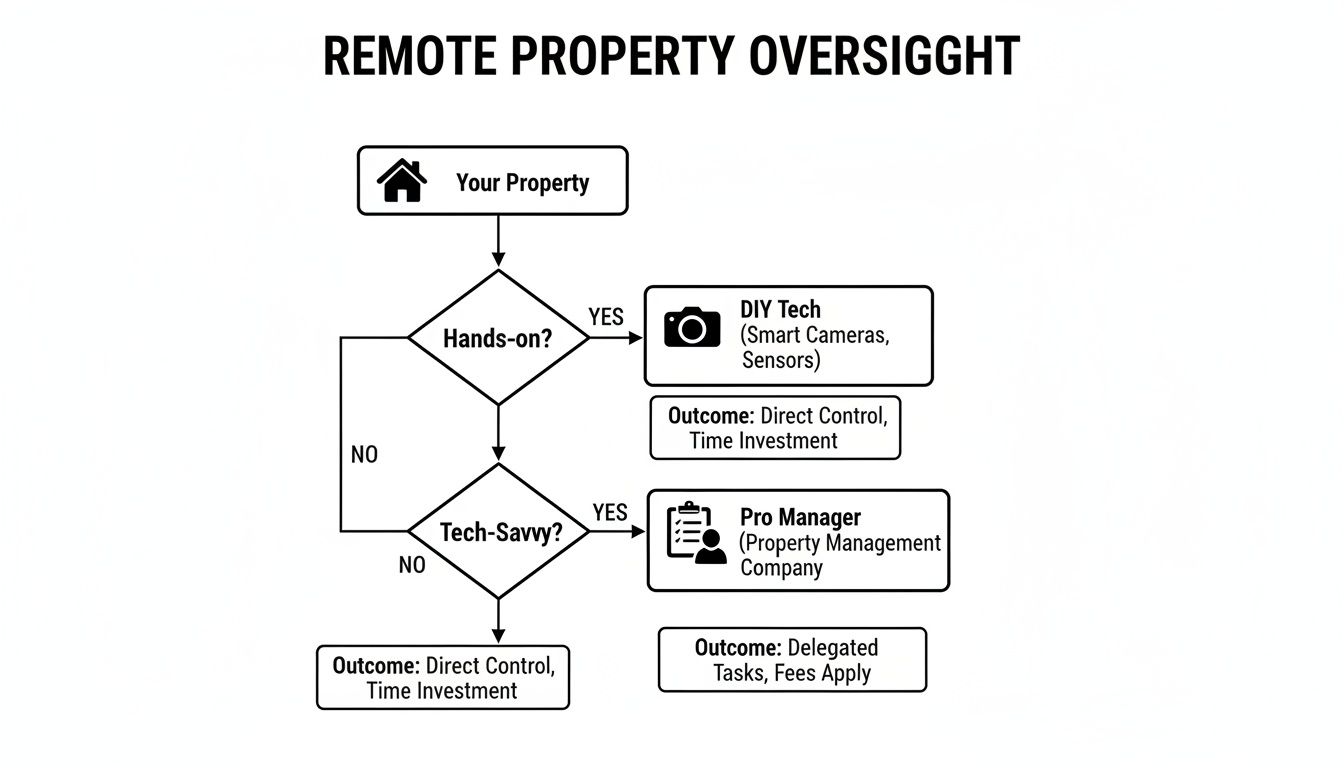
While DIY tech is great for alerts, professional management provides comprehensive care and problem-solving. This is crucial for protecting your asset long-term.
Remote Property Oversight Methods: A Comparison
| Oversight Method | Best For | Pros | Cons |
|---|---|---|---|
| Neighbor/Friend | Short-term absences; very low-risk properties. | Free; builds community relationships. | Unreliable; lacks expertise; creates social obligation. |
| DIY Smart Tech | Tech-savvy owners who want direct control and immediate security alerts. | Instant notifications; 24/7 visual access; one-time setup cost. | Can't detect maintenance issues (leaks, pests, mildew); requires self-monitoring; no on-the-ground response. |
| Professional Caretaker | Owners needing scheduled, detailed physical check-ins. | Proactive maintenance checks; detailed reports; reliable presence. | Limited scope (usually just inspections); may not handle tenant relations or complex repairs. |
| Property Manager | Absentee owners wanting comprehensive, hands-off asset protection. | Full-service (inspections, maintenance, emergencies, tenant relations); local vendor network; 24/7 response. | Highest cost; requires finding a trusted local partner. |
The Professional Management Advantage
The most thorough option is hiring a professional property management company. This approach is about having a local expert proactively protecting your investment.
A professional brings several key advantages:
- Scheduled, Detailed Inspections: Professionals follow a detailed checklist to inspect everything from plumbing and electrical systems to the roof and foundation.
- Preventative Maintenance: They identify and fix small issues before they become disasters, saving you money and stress.
- Local Vendor Network: If a repair is needed, a property manager has trusted vendors in the Salinas, Monterey, and Carmel areas.
- Emergency Response: When an urgent issue arises, they are on the ground and ready to act immediately, 24/7.
For many out-of-area owners, the real value of professional management isn't just rent collection. It’s the peace of mind that comes from knowing someone is treating your property with the same care you would.
The right choice depends on your property’s needs and your comfort level with risk. For more strategies, our ultimate guide on how to manage a rental property remotely provides more detail.
Using Technology for Remote Monitoring
Technology gives you a powerful set of eyes and ears on your property. An effective setup is more than just a single camera at the front door. It’s a connected system of devices that work together to give you a full picture of what’s happening.
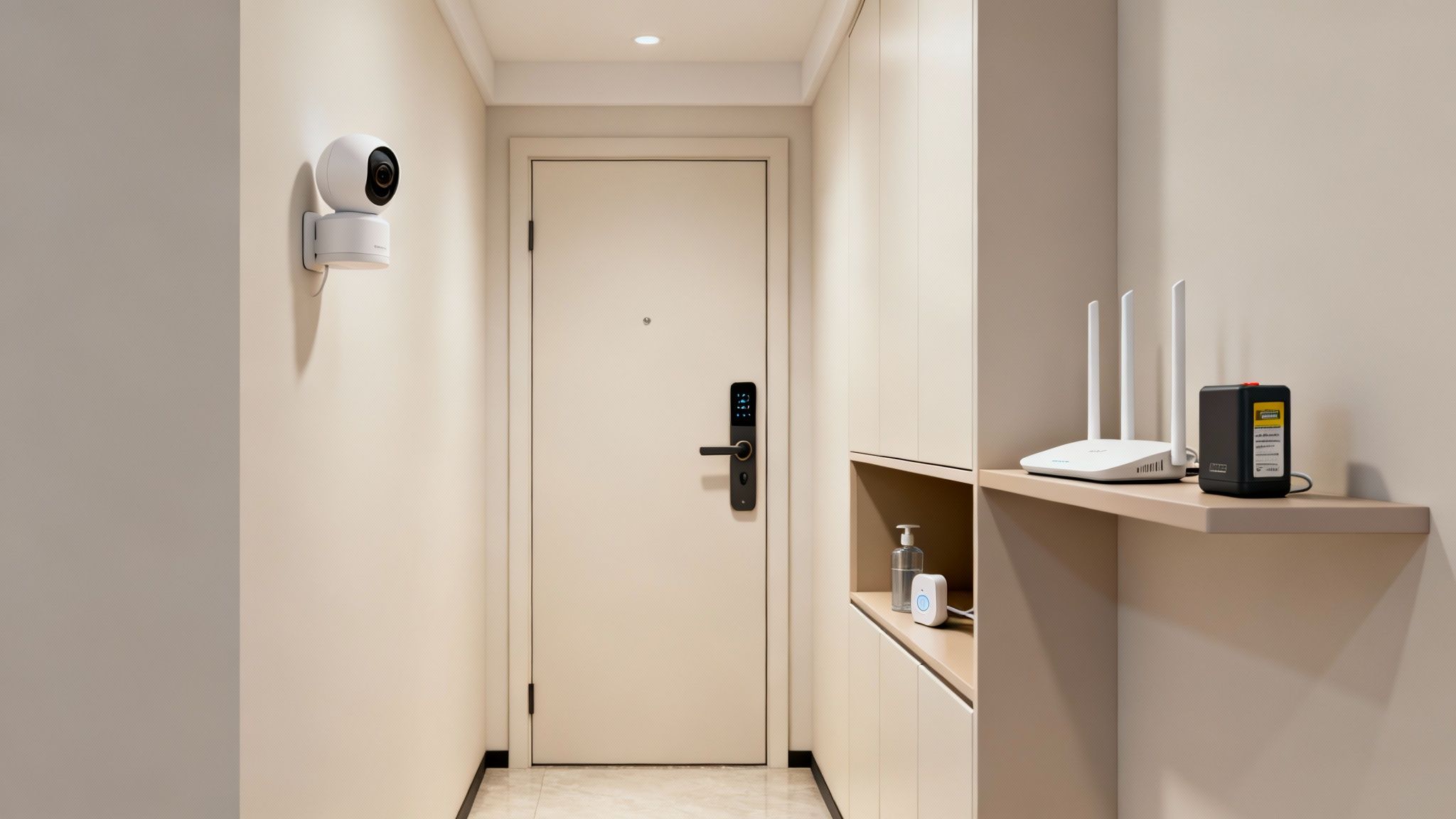
A reliable security system is the foundation of any remote monitoring strategy. Today’s smart cameras offer live feeds, motion alerts, and two-way audio right on your phone.
Key Components of a Smart Monitoring System
A layered approach should cover security, access, and environmental conditions. We recommend these essential tools:
- Smart Security Cameras: Position them at every key entry point. Be aware of tenant privacy laws if the property is occupied.
- Smart Locks: Grant temporary access to a plumber or property manager without a physical key. You also get a notification every time the door is locked or unlocked.
- Environmental Sensors: These are lifesavers. A simple water leak sensor can prevent a disaster. Temperature sensors can alert you if the furnace fails.
Our guide on property management software and tech tools can help you explore solutions. For a deeper dive on cameras, this practical guide to protecting your property with a trail camera with remote viewing offers great insights.
Why a Monitored Alarm System is Important
A professionally monitored alarm system connects everything to emergency services. When a sensor trips, it alerts a professional monitoring center that can dispatch police or fire for you.
This oversight is a huge deterrent. Research shows that most burglars will move on if they see a home has a security system.
Key Takeaway: Technology is a great tool for remote monitoring, but it is a supplement, not a replacement, for human oversight.
The Power of Professional Inspections
Smart technology is a fantastic first line of defense, but it can't see everything. A slow leak in an attic or the early signs of pests are invisible to a digital sensor.
This is where regular, physical property inspections prove their worth. They are the single best way to protect your investment from afar.

A professional inspection is a systematic review of your property designed to catch small issues before they become costly emergencies.
What a Comprehensive Inspection Covers
An expert actively tests systems and looks for hidden warning signs. Here’s what a professional checks:
- Signs of Water Intrusion: Looking for discoloration, soft spots, and leaks.
- HVAC System Functionality: Running the heat and A/C to ensure they work properly.
- Appliance Checks: Testing major appliances to confirm they are in good working order.
- Safety Device Tests: Physically testing smoke and carbon monoxide alarms.
- Pest and Rodent Activity: Searching for evidence of pests before an infestation takes hold.
- Exterior Integrity: Examining the roof, gutters, and siding for damage.
Proactive care is the best form of asset protection. An expert who understands Monterey County’s climate—from coastal fog to summer heat in Salinas—can save you thousands.
For high-tech options, it's worth understanding how modern drone inspection techniques can help with hard-to-reach areas like roofs. A local expert with a network of vetted vendors is your greatest ally.
How We Give Remote Owners Peace of Mind
Figuring out what’s the best way to check on my property when I’m not there is simple with a dedicated local partner. Most of our clients live out of town, so we built our systems specifically for them. We know you need a trusted steward for your investment.
Our approach is guided by one philosophy: treat every property like it’s our own. This means proactive care, clear communication, and total transparency. We give you a direct line of sight into your property's health from anywhere in the world.
Your Digital Window into Monterey Bay
We give every remote owner 24/7 access to a secure online portal. It's your personal dashboard for everything happening at your property.
Log in anytime to see:
- Detailed Financial Statements: Track income and expenses in real-time.
- Inspection Reports with Photos: See exactly what our team sees during property checks, from the landscaping in Salinas to the roof in Carmel.
- Maintenance Requests and Updates: Follow a repair from the initial request to the final invoice.
This access gets rid of the guesswork. You don’t have to hope things are being handled—you can see the proof for yourself.
The Bilingual Advantage
Clear communication is key. In a diverse region like Monterey County, our bilingual (English/Spanish) team is a huge advantage. We can communicate clearly with tenants and coordinate with maintenance professionals, ensuring nothing gets lost in translation.
Our goal is to give you total control without the daily stress. Learn more about why Torrente is the best choice for your Monterey-Salinas rental property.
Frequently Asked Questions (FAQs)
What is the best way to check on my property when I’m not there?
The best approach is a combination of smart technology and professional oversight. Smart devices provide instant alerts, while a property manager offers regular inspections and handles on-the-ground issues.
How often should my vacant property be inspected?
We recommend weekly or bi-weekly inspections for vacant homes. This frequency is critical for catching small issues like leaks or pests before they become major problems, especially with our coastal climate.
Are security cameras enough to protect my property?
Cameras are a great deterrent but cannot detect internal issues like a burst pipe or a failing HVAC system. They are a valuable layer of security but should be paired with physical inspections for complete protection.
Can I rely on my tenant to watch the property?
Relying on tenants for property oversight is not recommended. They are not trained to spot maintenance issues, and it can create liability concerns for you as the owner.
How do I stay informed about my property from far away?
A professional property manager should provide a secure online portal. This gives you 24/7 access to inspection reports, photos, financial statements, and maintenance updates so you are always in the know.
The best way to check on your property when you're not there is to hire a team you trust. At Torrente Property Management, we treat your Monterey Bay home like our own. Whether your property is in Carmel, Pacific Grove, or Salinas, our team is on the ground and ready to help.
Contact us today at (831) 582-8916 to learn how we help out-of-town owners stay in control.
Monterey STR Ban: What's Next for Your Rental?
For years, owning a second home in Monterey County felt like having a golden ticket for short-term rental income. But with new county rules, many homeowners feel blindsided, wondering what to do next. That reliable asset has suddenly become a source of anxiety.
Simply put, short-term rentals are on the way out in Monterey County for many residential areas. This shift is forcing homeowners to rethink how they generate income from their properties.
Your Vacation Rental Faces a Major Shift
Platforms like Airbnb and Vrbo created a profitable path for property owners. But for many in communities from Pebble Beach to Big Sur, that path is closing. This is not a small rule change—it directly impacts your investment.
It's understandable why so many homeowners feel caught off guard. A dependable income stream seems to be drying up right before their eyes.
Understanding the New Ordinance
So, what is actually changing? Monterey County has decided to ban rentals under 30 days in most unincorporated residential areas. This new rule affects second homes and vacation properties.
This effectively ends the weekend getaways and week-long stays that defined the vacation rental market here for years. You can read more about how new STR regulations may change your rental strategy in our detailed guide.
The Risk of Doing Nothing
This new reality presents a tough choice. Do you risk steep fines by operating illegally, or do you let your valuable property sit empty?
The risk of doing nothing is real. You face uncertain income, possible fines, and a vacant home racking up mortgage, tax, and maintenance bills during prime earning seasons.
The Opportunity in Long-Term Leasing
This challenge also creates a fantastic opportunity for stability. Switching to a long-term leasing model isn’t just a backup plan. It’s a path to stable, protected income with far less stress.
Instead of managing a constant revolving door of guests, you can secure a single, qualified tenant who cares for your property.
You don’t need a stream of strangers to make your home work for you—just one qualified tenant, placed by a professional.
The STR era may be ending in some areas. But your property can still bring in income, retain value, and remain well cared for—with the right partner.
Understanding the New 30-Day Rental Minimum
To understand why short-term rentals are on the way out in Monterey County, we must look at the new ordinance. The rule is simple: for most properties in unincorporated residential zones, renting for fewer than 30 consecutive days is banned.
This change targets the weekend trips and weekly stays that have defined the market. If your property is in one of these areas, you can no longer legally rent it for a quick holiday.
What Is an Unincorporated Area?
An "unincorporated area" is a region not part of an official city. Instead, it is governed directly by the county. Many of Monterey County’s most popular vacation spots fall into this category.
Key communities affected by this ban include:
- Pebble Beach: Famous for its iconic golf courses and beautiful coastline.
- Carmel Highlands: A stunning community known for its dramatic ocean views.
- Parts of Big Sur: The legendary, rugged stretch of California's central coast.
If your property is in one of these residential zones, this new regulation is now your reality. It is a major change that requires a new strategy.
Why the County Made This Change
Monterey County did not make this decision in a vacuum. The main reason for the ban is the severe local housing shortage. A recent report showed that a Monterey County resident earning the median income can afford less than 15% of the homes on the market.
County officials hope to turn vacation rentals back into long-term homes for residents. This isn't just a local issue. Cities across the country are cracking down on short-term rentals to protect their housing stock. As a property owner, it is vital to know the rules. You can learn more about landlord-tenant laws in California to stay informed.
The High Cost of a Vacant Property
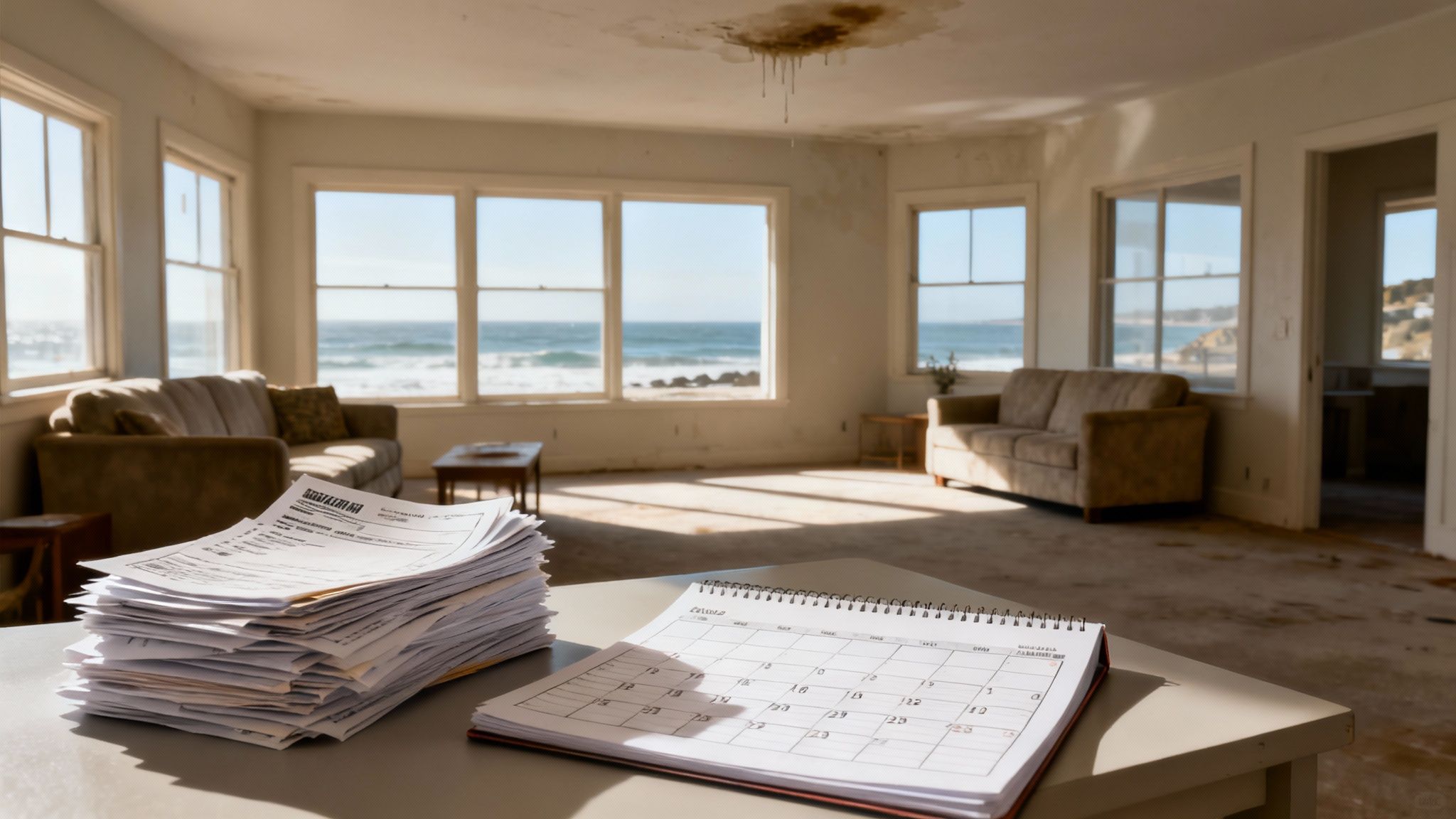
As short-term rentals are on the way out in Monterey County, some owners may wait to see what happens. But letting a valuable property sit empty is often the most expensive mistake you can make.
An empty home becomes a liability. It drains your finances and reduces your property’s value day by day.
The Financial Drain of an Empty Home
An unoccupied home can quickly turn into a money pit. The bills keep coming, turning your asset into a recurring expense.
Think about these ongoing costs:
- Mortgage Payments: Your largest monthly bill doesn’t go away when guests do.
- Property Taxes: Monterey County requires taxes to be paid, regardless of rental activity.
- Insurance: Insurers often charge more for vacant properties due to higher risks of damage or break-ins.
- Utilities: Basic utilities are needed to prevent issues like burst pipes in cold weather.
Unseen Dangers in Vacant Properties
An empty home is a magnet for problems that can go unnoticed for weeks. The longer a property sits empty, the higher the chance of something going wrong.
These risks include:
- Water Leaks: A small leak can lead to major water damage and mold.
- Pest Infestations: Rodents and insects love quiet, undisturbed spaces.
- Security Risks: Empty homes are targets for vandals, squatters, and burglars.
A vacant property isn't just an asset that's not earning—it's an asset at risk. Active oversight is the only way to protect your investment.
For owners worried about these issues, Torrente’s vacant property inspections and upkeep services offer peace of mind. We ensure your home is secure and maintained, preventing small problems from becoming expensive disasters.
Pivoting to Profit with Long-Term Leasing
Hearing that short-term rentals are on the way out in Monterey County can be discouraging. But this is a chance to pivot to something more stable: long-term leasing. This is a strategic move to secure your income and lower your stress.
Instead of the endless work of bookings and cleanings, you get one qualified tenant who makes your property their home. This model provides consistent monthly income without seasonal slumps.
The Power of Predictable Income
The biggest benefit of long-term leasing is financial stability. You get a predictable revenue stream that makes budgeting easy.
Consider these advantages:
- Reduced Workload: No more adjusting rates, answering tourist questions, or coordinating check-ins.
- Less Wear and Tear: A long-term tenant is often easier on a property than a stream of vacationers.
- Stable Occupancy: Once you find a great tenant, you can expect a year or more of steady rental income.
One Big Sur client, for example, saw 95% occupancy within two months of switching from a struggling STR to long-term leasing with our help. This highlights the stability that professional management can bring.
Finding the Right Tenant Is Key
The success of a long-term rental depends on finding a quality tenant. This is where professional help is essential.
Rigorous screening—including credit checks, rental history, and background checks—ensures you find a responsible tenant. Our expert tenant placement services handle every step for you. Owners often have questions about legal details, like whether a lease needs to be notarized. An expert partner ensures everything is done correctly.
Making a Seamless Transition with Torrente
The move away from vacation rentals doesn't have to be stressful. It’s a chance to adopt a more stable investment model. Torrente Property Management is a respected, Monterey-based firm ready to help.
We specialize in converting former STRs into thriving long-term rentals. With three generations of local experience, we can guide you through this change profitably. We understand that short-term rentals are on the way out in Monterey County, so we have tailored our services to help you make this switch with confidence.
Your Path to Stable Long-Term Income
Switching from an STR to a long-term rental is about finding the right tenant. We treat your property like our own, finding qualified tenants who will care for your home.
This decision tree breaks down the two paths owners now face.
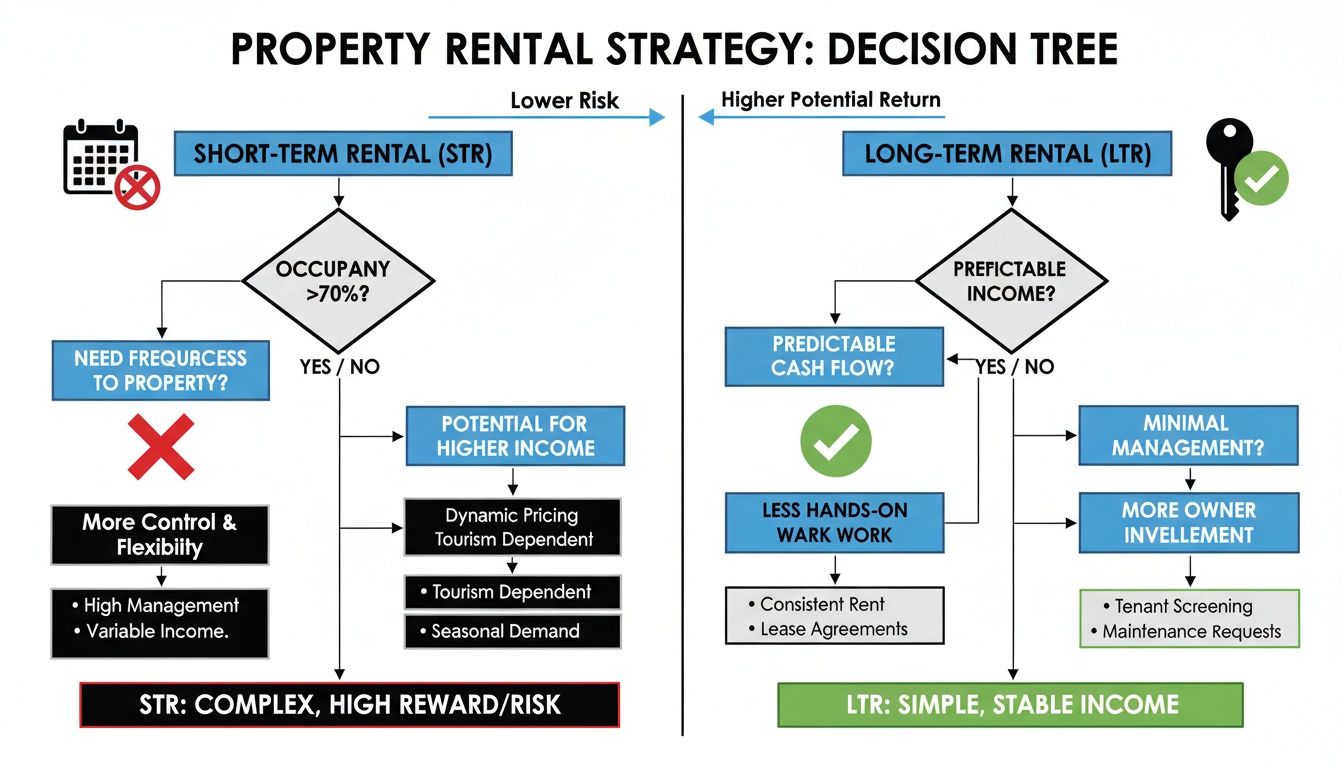
The STR path is now full of risk. The long-term rental route offers a clear line to consistent income and peace of mind. Using the best software for property managers helps streamline the process, something we handle for all our clients.
An Alternative for Seasonal Owners
Not ready for a full-time tenant? Our Vacant Home & Estate Caretaker service is ideal for seasonal owners. It provides active oversight when you're away.
We offer regular property inspections, security monitoring, and maintenance coordination. This ensures your home is safe and cared for, even when it’s empty. Learn more by reading our guide on how to choose a property management company.
What's Your Next Move Before the Ban?

The era of unregulated short-term rentals is ending in parts of Monterey County. But this doesn't mean your property's potential is over. Waiting is a financial risk.
Making a strategic shift to long-term leasing is the clearest path to a stable future. With the right local partner, your property can keep generating income, appreciate in value, and stay well-cared-for.
The STR era may be ending in some areas, but your property can still bring in income, retain its value, and remain well cared for—with the right partner.
Whether you're ready to switch to a long-term rental or prefer our Vacant Home & Estate Caretaker services, we have a solution. The time to decide is now, because short-term rentals are on the way out in Monterey County.
Don’t let your property's future be decided for you. Let Torrente help you make a smooth, profitable transition—before the ban takes effect. Contact Torrente Property Management today at (831) 582-8_9_16.
FAQs About the Monterey County STR Ban
Navigating new regulations can be confusing. Here are answers to common questions from property owners.
1. When does the new STR ban officially start?
The new ordinance, which sets a 30-day minimum rental period in unincorporated residential areas, is set to take full effect in early 2026. This gives property owners a window to plan their transition to a compliant strategy like long-term leasing.
2. Is a long-term rental as profitable as an STR?
While STRs can have high nightly rates, they also come with vacancies and high management effort. Long-term rentals offer consistent, year-round income you can count on, often resulting in a more stable and predictable net annual income with far less hassle.
3. What if I don't want a full-time tenant in my second home?
Our Vacant Home & Estate Caretaker service is the perfect solution. We provide regular inspections, security monitoring, and maintenance coordination to protect your property while it’s unoccupied. This keeps your home in pristine condition, ready for your visits.
4. What should I do with my furnished vacation rental?
You can rent your property fully furnished to attract premium tenants, such as corporate relocations, who will pay more for a move-in-ready home. Alternatively, you can remove the furniture to appeal to a wider range of long-term renters.
5. What are the risks of ignoring the new rules?
Ignoring the ban is a risky strategy. Monterey County is increasing enforcement, and owners of illegal STRs face substantial fines. Complying with the new rules protects your investment and provides peace of mind.

Monterey County’s STR Crackdown: What You Can Do
If you own property in unincorporated Monterey County, new rules are changing how you can make money from your investment. The county plans to ban short-term rentals (STRs) under 30 days by 2026. This directly affects homeowners in areas like Pebble Beach, Big Sur, and the Carmel Highlands.
This news can feel stressful, but there is a clear solution. Switching to a long-term rental strategy is the best way to protect your income. This move ensures you follow the new laws and keep earning steady, reliable rent payments.
Understanding the Monterey County STR Ban

The rental rules have changed for many property owners in beautiful areas like Pebble Beach and Big Sur. Monterey County is moving to ban rentals of less than 30 days in all unincorporated residential zones. This ban will fully start in 2026 and targets rentals on sites like Airbnb and VRBO.
It is important to know that this ban does not affect cities like Monterey or Carmel-by-the-Sea. Homeowners in those cities follow a different set of local rules. For more on those city-specific rules, check out our guide on the new STR regulations in Carmel and Pacific Grove.
Who Is Affected and Why?
The new rules target homeowners in unincorporated areas who rent their properties to tourists. The county made this decision for a few key reasons:
- Housing Shortages: There aren't enough affordable homes for local residents. The county wants to move STR properties back to the long-term rental market to help solve this problem. Over 50% of renters in Monterey County spend more than 30% of their income on housing, highlighting the need for more affordable options (Source: National Low Income Housing Coalition).
- Legal Pressure: Lawsuits against the county’s old STR rules forced officials to take stronger action.
- Community Pushback: Many residents complained about the noise, traffic, and parties from short-term rental guests.
This change creates uncertainty for homeowners who rely on STR income. However, it also opens the door to a more stable investment model. Long-term leasing is a compliant and stress-free way to protect your property and income.
Short-Term vs. Long-Term Rentals Under New County Rules
| Feature | Short-Term Rentals (Now Banned) | Long-Term Rentals (Your Best Option) |
|---|---|---|
| Income | Unpredictable and seasonal. | Stable, predictable monthly income. |
| Management | Constant work with guests, cleaning, and turnover. | Much less work after a tenant moves in. |
| Legal Status | Now illegal in unincorporated areas, with risk of fines. | Fully legal and compliant with new county rules. |
| Wear and Tear | High due to frequent guest turnover. | Lower, as tenants treat the property like their own home. |
| Community Impact | Often caused problems like noise and parking issues. | Tenants become part of the community and help create stability. |
This comparison shows why long-term leasing is now the smarter choice. It offers a secure and hassle-free alternative to the old STR model.
Why Long-Term Rentals are a Smart Move

The county’s new rules may seem like a setback, but they offer a chance to build a more stable investment. Switching from vacation rentals to long-term leases is a great way to protect your income and property value.
A long-term tenant provides predictable monthly income, so you no longer have to worry about the ups and downs of tourism. It also makes your property fully compliant with the new laws, removing the risk of fines.
The Benefits of a Long-Term Tenant
Switching to a long-term rental model makes owning your property simpler and less stressful.
Long-term rentals stabilize your investment with much less effort. You can say goodbye to constant guest messages and cleaning schedules. The best part is trading the worry of weekend guests for the security of a reliable tenant. This reduces your headaches and ensures your property is treated like a home, not a hotel.
Long-term tenants also provide better legal protection under established California landlord-tenant laws. This is much safer than fighting a losing battle against STR bans.
Less Wear and Tear on Your Property
One of the best benefits of a long-term lease is less damage to your home. Frequent STR guests can cause a lot of wear and tear, leading to costly repairs.
Long-term tenants have a reason to keep their living space in good shape. Because it's their home, they treat it with more care. This means fewer repair calls for you and a well-maintained property for years to come.
Consistent and Reliable Income
While high nightly STR rates look good, they don't tell the whole story. You have to factor in empty nights during the off-season, booking fees, and supply costs. A long-term lease provides a clearer and more stable financial picture.
With a long-term strategy, you get:
- Predictable Monthly Income: Rent arrives on time each month, making budgeting easy.
- Fewer Vacancies: A year-long lease means almost 100% occupancy, ending costly gaps between guests.
- Lower Costs: No more daily cleaning bills, high utility costs, or marketing fees.
This model creates a strong foundation for your investment. For owners affected by Monterey County’s short-term rental crackdown, this financial stability is the most powerful reason to make a change.
Transitioning from an STR to a long-term rental can feel overwhelming. Professional help makes all the difference. Expert tenant placement services can manage every detail, from marketing your home to drafting a strong lease, to find you a great tenant.
How We Protect Your Investment

Navigating these new rules alone can be tough. Marketing your property, screening tenants, and learning landlord-tenant laws takes time and effort. This is where a trusted local expert can help.
At Torrente Property Management, we have over 25 years of experience turning complex challenges into simple solutions. We are a trusted local partner with deep knowledge of Monterey County laws. We protect your investment by handling every detail of the transition, so you can enjoy stable rental income without the stress.
Our Detailed Tenant Screening Process
Finding the right tenant is the most important step in protecting your property. Our screening process is very thorough and designed to find responsible people who will treat your home with respect.
Our process includes:
- Credit and Background Checks: We review credit reports and run background checks to ensure reliability.
- Rental History Verification: We call previous landlords to confirm on-time payments and good tenancy.
- Income and Employment Confirmation: We verify that applicants have a stable income to afford the rent.
This careful process helps us find the best candidates for your property. It is the foundation of a successful long-term rental strategy.
Bilingual Services to Reach More People
In a diverse community like Monterey County, clear communication is vital. Our team is bilingual (English/Spanish), which gives your property a big advantage.
By speaking with a wider pool of potential tenants, we attract more high-quality applicants. This allows us to be very selective and find the perfect match for your home. We handle all leasing and maintenance communications in both languages, which builds trust from the start.
Full-Service Property Management
After we find a great tenant, our work continues. We draft strong lease agreements that follow all California and local laws to protect you.
From there, we manage everything:
- Rent Collection: We handle all payments and provide you with clear financial statements.
- Maintenance Coordination: We use our network of trusted local vendors to handle repairs quickly.
- Regular Inspections: We conduct routine inspections to make sure your home is well-maintained.
The county’s decision to ban STRs was a firm one, as detailed in this report on the county’s STR ban. This makes professional management more important than ever.
For owners who don't live in the area, our services are even more valuable. We also offer options for absentee owners. Our professional caretaker services can secure and maintain your home while it's empty.
Specialized Care for High-Value Homes
Your property is a major investment, especially if it’s a high-value home in a community like Pebble Beach. It needs a management strategy that reflects its worth. In response to Monterey County’s short-term rental crackdown, a one-size-fits-all approach is not enough.
We understand that not every owner can immediately switch to a full-time rental. You may use your home seasonally or need time to make decisions. For these situations, we offer services tailored for high-value homes.
Estate Caretaker Services for Absentee Owners
For owners who need flexibility, our Estate Caretaker Service is a perfect solution. This service is designed to protect your property when it is unoccupied, giving you complete peace of mind.
Our caretaker program includes:
- Scheduled Property Inspections: We conduct regular walkthroughs to check for issues like leaks or security problems.
- Security Monitoring: We ensure your alarm systems are working and act as the local contact for any alerts.
- Upkeep Coordination: We manage landscaping and repairs to keep your property in top condition.
This hands-on approach keeps your home secure and well-maintained. You can learn more about our estate caretaker and maintenance services on the Monterey Peninsula.
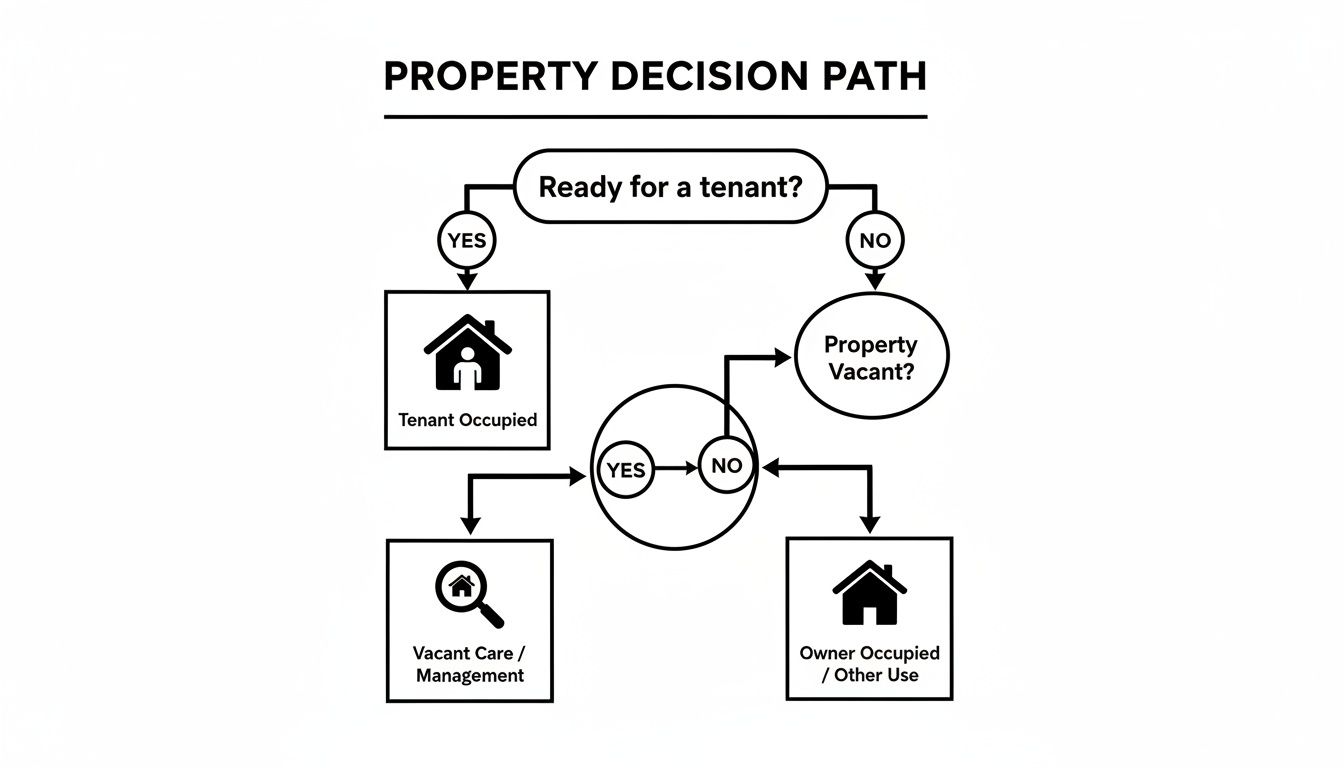
Frequently Asked Questions (FAQs)
Does this ban affect my property in the city of Monterey or Carmel?
No. This ban only applies to unincorporated residential areas of Monterey County, like Pebble Beach and Big Sur. Incorporated cities such as Monterey and Carmel-by-the-Sea have their own separate rules for short-term rentals.
What if I only rent my home for a few weeks a year?
The ban applies to all rentals under 30 days, no matter how often you rent the property. Even occasional rentals during events are no longer allowed in unincorporated residential zones under the new rules.
What happens if I ignore the ban and keep using Airbnb?
Ignoring the ban is risky. You could face large fines, legal orders to stop renting, and other penalties from the county. With more enforcement, the chances of getting caught are high.
I'm not ready for a full-time tenant. What can I do?
We understand. Our Estate Caretaker Service is the perfect option if you're not ready for a long-term tenant. We will inspect, secure, and maintain your property while it's vacant, giving you time to decide your next steps.
How can Torrente help me transition my property?
We handle every detail to make the switch from STR to a long-term rental smooth and profitable. We market your property, screen for high-quality tenants, draft a compliant lease, and manage all day-to-day operations for you.
If you’re affected by STR changes, now is the time to protect your income with a smart, long-term rental strategy. Torrente can help. With over 25 years of local experience, Torrente Property Management is here to guide you.
Contact Torrente Property Management today at (831) 582-8916 for a personalized consultation. Let us help you secure your investment's future.